
Reviewed · ATHENS WALKING TOURS
Medieval Athens Walking Tour with Late Lunch and Wine
Walk medieval Athens without the usual rush. This half-day route takes you from monasteries and Ottoman worship spaces to the Byzantine and Christian Museum, then finishes with a three-course lunch and local wine. It is a good fit if you want Athens that goes beyond marble temples and photo lines.
I like that the tour is built around places many people skip, like Petraki Monastery and the church of Kapnikarea, so you get a clearer picture of what Athens looked like through Byzantine and Ottoman times. I also like the timing, a late lunch at the museum restaurant, so you do not have to play guess-the-menu roulette right after sightseeing. One thing to consider: admissions for the church of Kapnikarea and the Ottoman-era Fethiye Mosque are not included, so you will pay those on site.
Key takeaways before you go
- Late lunch with wine included, so food planning stays simple and you get back to a comfortable seat after walking
- Petraki Monastery, with its long monastic story and Byzantine-style church details you would miss on your own
- Byzantine and Christian Museum, housed in a former palace and packed with over 25,000 artifacts from the medieval Christian world
- A real mix of eras, including Ottoman Athens at Fethiye Mosque and medieval Christian Athens at Kapnikarea
- Private group format, so you stay with your group and your guide can set the pace
Medieval Athens is not what you think, and that is the point
Most first-timers arrive in Athens thinking it is all about classical Greece. This tour gently corrects that. You trade the usual highlights for the layers people often overlook: medieval Christian life, Byzantine art, and the Ottoman footprint that still shapes the city’s corners.
The big win is the combination. You get guided time at a major museum, then you step outside for streets and churches that make those museum themes feel real. And you end with a late lunch, which matters more than it sounds when you are walking in the Greek midday heat.
You can also read our reviews of more walking tours in Athens


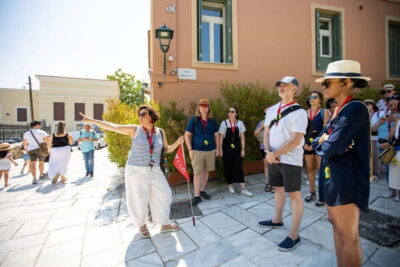
Meeting at Monastiraki, then settling into a walk that makes sense
You meet near Pl. Monastirakiou 6, with the tour starting at 12:30 pm. Since there is no hotel pickup, you will want to plan your arrival so you are already in the center of things. Think of it as an easy afternoon start rather than a frantic morning sprint.
The tour runs about 4 hours, which is a practical length for a half-day experience. You are walking enough to see real neighborhoods, but the schedule keeps room for museum time and stops that do not feel like a checklist.
This is also a private tour in the sense that only your group participates. That is useful if you are traveling with friends, a couple, or anyone who prefers questions answered at the pace of the group.
Byzantine and Christian Museum: the heart of the medieval story
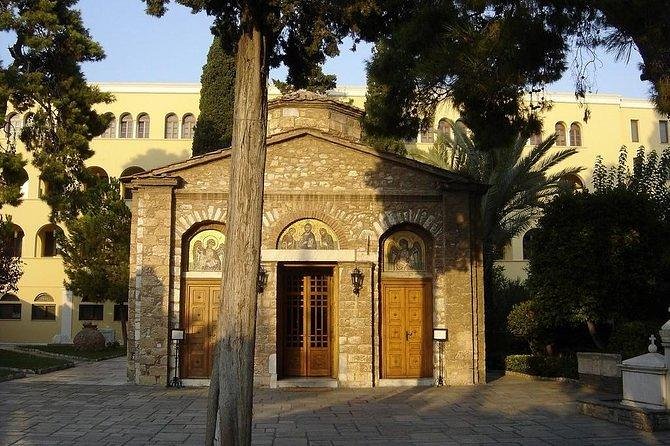
The tour begins with the Byzantine and Christian Museum for about 1 hour, and the admission ticket is included. The museum sits in a former palace connected with a Greek duchess, so the setting already hints at status, power, and culture, not just display cases.
Inside, you are guided through exhibitions that include more than 25,000 artifacts tied to Byzantine Greece, with dates spanning from 600 BC to the mid-15th century. That range is wider than what the phrase Byzantine and Christian might suggest, and your guide helps you make sense of how the religious and artistic world evolved over time.
What I like about this part is the variety you are pointed to. You see religious artifacts and paintings, and you spend time with Coptic Christian paintings plus mosaics. Those are the kinds of details that can be fascinating on your own, but they are even better with interpretation in place, because you understand what you are looking at and why it mattered.
A quick heads-up for timing: one review notes that the museum can be half closed on Sundays. If you are booking a Sunday, I would treat your visit as best-effort and be ready for the fact that the route inside might be shorter or less complete.
Petraki Monastery: a living place, not just a building
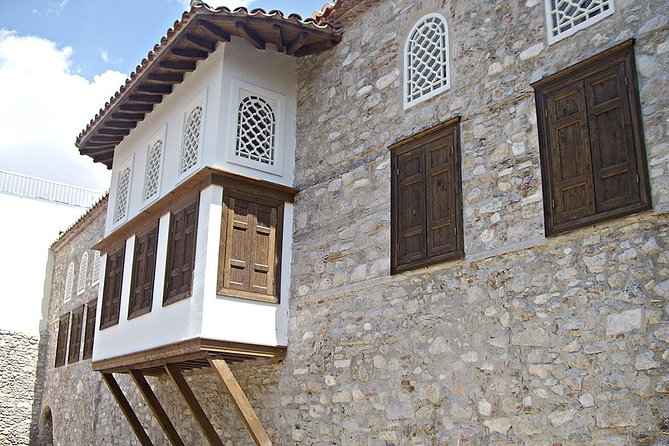
After you get your bearings, you visit Petraki Monastery, described as having around 1,000 years of history and still being inhabited by monks. This is where the tour becomes more than sightseeing. When a place is still used, you tend to notice how space, routine, and architecture work together.
The monastery church is Byzantine-style, and it is presented as one of the best examples in southern Greece. Even if you are not a Byzantine-art specialist, your guide helps you spot the design choices that make the church feel distinct, rather than simply old.
Then there are the 18th-century frescoes, thought to be connected with the hagiographer Georgios Markou. Frescoes can become background noise on a fast stop, but with a guide, you are more likely to catch what makes them special and how they fit into the monastery’s Christian storytelling.
One practical consideration: stepping into a monastery can mean you should dress respectfully and keep your voice down. The tour is usually smooth, but you will feel more comfortable if you treat it as a place with rules, not just a photo stop.
Plaka on foot: where medieval Athens turns into real street life
Next comes Plaka, with about 2 hours assigned to the neighborhood. There is no admission ticket for Plaka itself, so this is pure walking and looking.
Plaka is famous today, but what makes this tour approach useful is that you walk with an intentional lens. Instead of wandering randomly, you move through the neighborhood with medieval and Ottoman Athens in mind, so storefronts, street shapes, and nearby church spaces start to tell a bigger story.
The main drawback is also the typical one for central Athens: you will be on foot, and some streets can feel crowded. The tour’s pacing and guided direction help, but you should still plan comfortable shoes and expect that midday foot traffic can make the walk feel slower than the clock suggests.
You can also read our reviews of more wine tours in Athens





Fethiye Mosque: the Ottoman layer you can still read
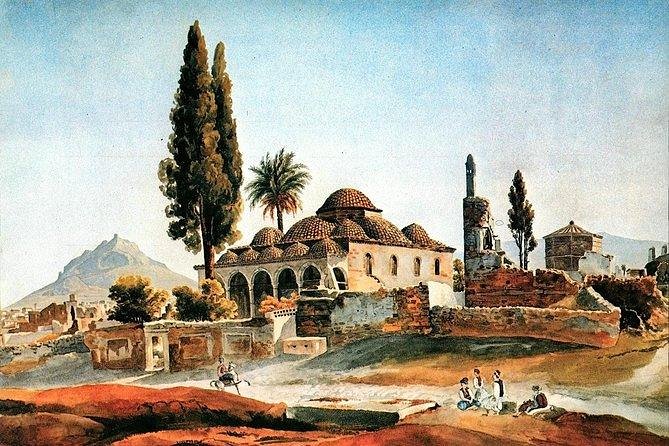
You then visit the Ottoman-era Fethiye Mosque for about 30 minutes. Admissions for the mosque are not included, so expect to pay on site if entry is available during your visit.
The tour frames Fethiye Mosque as the most important mosque of the Ottoman era in Athens. Even if you only have a brief stop, that context matters, because it helps you understand why this particular structure has cultural weight beyond its age.
This is also a good place to slow down and notice how Ottoman-era architecture interacts with modern street life. You are not just looking at a building; you are seeing how religious and civic space shaped neighborhoods, and how those spaces still influence where people move today.
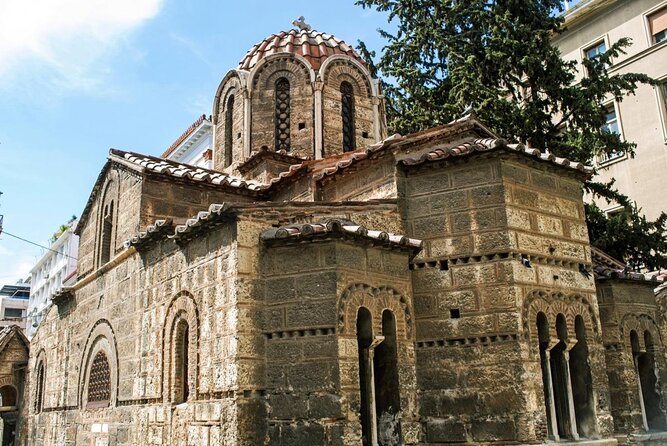
Church of Kapnikarea: medieval Christian Athens in the open air
The tour includes church of Kapnikarea, listed as an 11th-century medieval church, with about 20 minutes allocated. As with the mosque, admission is not included, so plan for a small extra cost if the church requires it.
This stop works best when you treat it as a shortcut to comprehension. Your guide’s framing connects what you saw in the museum and monastery to what is still standing on the street. You begin to see how art, faith, and everyday life blended in medieval Athens, instead of staying trapped in gallery lighting.
Because the visit is short, you should pay attention early. The things you want to notice, like icon and architectural details, are the ones you will want your guide to point out before the group moves on.
Late lunch at the museum restaurant: where the tour cashes out
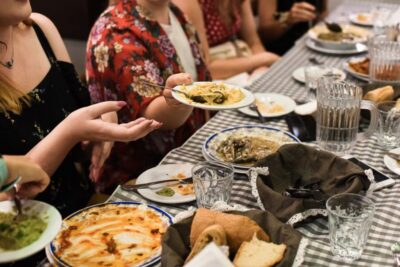
The tour ends back at the museum restaurant area for a 3-course lunch with a glass of local wine included. This is a key value moment, because it saves you from organizing lunch while you are already tired and thinking about the next stop.
The meal is described as Medieval Greek-themed. You get a starter and main dish, plus shared salads and a shared dessert platter. Shared desserts can be fun with a group, but if you prefer something more controlled, you might find it a little different from a typical set menu arrangement.
I also like that the lunch is scheduled after the main sightseeing. By the time you sit down, you have a better mental map of what you just learned. That makes it easier to stay in the medieval theme, even if the food is the break you need.
One note from reviews: the dinner is described as super, which suggests the restaurant handles both food quality and service attention well. Even if you only catch this one meal, it is the part that turns a museum-heavy morning into something that feels complete.
Price and value: $243.10 with admissions and wine on your side
At $243.10 per person, the tour is not cheap by any Athens standard. But when you look at what is included, it starts to make sense for a short, guided experience.
Included basics you should factor into your value math:
- Museum admission for the Byzantine and Christian Museum
- A 3-course lunch plus a glass of wine
- A local guide
Then there are extra items not included:
- Admissions for Kapnikarea and the Fethiye Mosque
- Anything in Plaka, though Plaka itself has no admission fee
So you are paying for guide time plus a structured medieval route plus a meal that you do not have to arrange yourself. That is often worth it when you only have a half-day and you care about getting the most meaning out of the time you have.
Also keep in mind the minimum of 2 people per booking. If you are traveling solo, that matters. If you are two travelers, the cost splits in a more comfortable way, and private pacing becomes a real benefit.
When to book and what can change day to day
Your tour starts at 12:30 pm, so it is a good choice when you want a late morning free for other plans, or when your schedule makes mornings tricky.
Because the museum can be partly closed on Sundays per a review, I would be extra glad you have the rest of the walking portion built in. That does not fix a short closure, but it helps you avoid feeling like you booked a plan that is all dependent on one room.
If you want maximum comfort, plan your shoes and water. This is central Athens, and the stops are spaced so you are not just stuck in one queue, but you are still walking enough to feel it.
Who this tour fits best
This is a strong match if you:
- Want medieval Athens, not just ancient Athens
- Like museum visits but do not want to wander without a plan
- Appreciate guided interpretation for art details like frescoes, paintings, and mosaics
- Prefer having lunch solved for you, especially with wine included
It may be less ideal if you:
- Hate walking
- Want a long, unhurried museum day with no set schedule
- Are determined to minimize any extra on-site fees, since church and mosque admissions are not included
A quick word on guides, and why it matters
Guide quality is the difference between a tour that is just facts and one that helps you see. The strongest praise centers on the guides’ attention and explanations. One review calls out Ephtimia as excellent, with clear interest in showing what mattered and making the information stick.
That is exactly what you want in a route like this. Medieval Athens is layered, and without guidance, it can feel like random old stones. With the right guide, the pieces connect.
Should you book this medieval Athens walking tour with late lunch?
If you want a half-day plan that actually teaches you something and still ends with a real meal, I would book it. The value comes from the built-in structure: museum time with admission included, plus monastery and church stops that turn medieval themes into lived-in street scenes, and then a three-course late lunch with wine that saves you time and stress.
Book it especially if you are visiting Athens for the first time and feel you are missing the Byzantine and Ottoman layers. And if your visit falls on a Sunday, go in with flexible expectations for the museum, then lean on the walking stops and the guided context to carry the day.
FAQ
How long is the Medieval Athens Walking Tour?
It lasts about 4 hours.
What time does the tour start and where do I meet?
The tour starts at 12:30 pm. The meeting point is Pl. Monastirakiou 6, Athina 105 55, Greece.
Is this a private tour?
Yes. It is listed as private, with only your group participating.
What is included in the price?
The price includes a 3-course meal with a glass of wine, entry to the Byzantine and Christian Museum, and a local guide.
Do I need to buy tickets for the Byzantine and Christian Museum?
No. Entry to the Byzantine and Christian Museum is included.
Are admissions included for the church of Kapnikarea and the Fethiye Mosque?
No. Admissions for the Church of Kapnikarea and the Fethiye Mosque are not included.
Is hotel pickup included?
No. Hotel pickup and drop-off are not included.
Can I use a mobile ticket or paper voucher?
Yes. You can present either a paper or an electronic voucher.
What is the cancellation policy for a full refund?
You can cancel up to 24 hours in advance for a full refund. If you cancel less than 24 hours before the start time, the amount paid is not refunded.
More Walking Tours in Athens

More Tours in Athens

More Tour Reviews in Athens
- All Day Cruise -3 Islands to Agistri,Moni, Aegina with lunch and drinks included
★ 5.0 · 4,958 reviews


Not for you? Here's more nearby things to do in Athens we have reviewed






Athens Walking Tours, compared.
 ★ 4.6Acropolis and Parthenon Guided Walking TourFrom $385,882 reviews
 ★ 5.0Greek Food Walking Tour in AthensFrom $874,740 reviews
 ★ 4.7Acropolis: Acropolis and Parthenon Guided Walking TourFrom $363,442 reviews
 ★ 5.0Acropolis monuments & Parthenon Walking Tour with Optional Acropolis MuseumFrom $422,678 reviews
 ★ 4.5Athens Acropolis and Parthenon Walking TourFrom $411,355 reviews
 ★ 5.0Athens Authentic Greek Food Walking Tour (Small Group)From $83809 reviews
 ★ 4.4Early Morning Acropolis & Old Athens Guided Walking TourFrom $28748 reviews
 ★ 4.9Ultimate Food Walking Tour with 15 TastingsFrom $93567 reviews
Browse the lists this tour appears in