
Reviewed · ATHENS ACROPOLIS & PARTHENON TOURS
Athens Acropolis and Parthenon Walking Tour
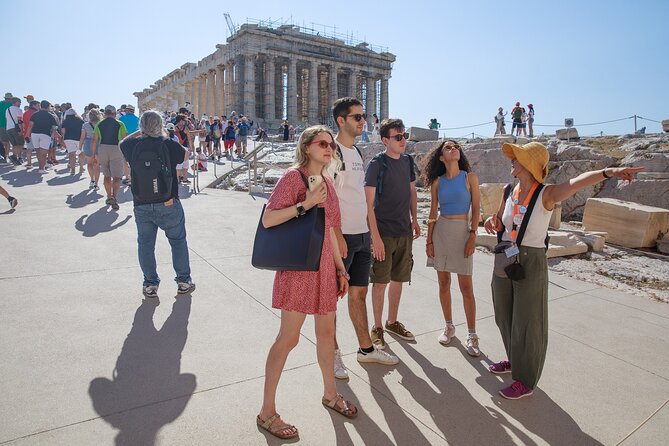
The Acropolis hits fast, if you plan right. This 2-hour walking tour is built to help you see the big UNESCO sights efficiently, with a licensed guide and headset-style earsets so you do not miss the stories.
I like the stop-by-stop pacing. You get solid time at major monuments, plus a logical route that keeps you moving while still letting you look up, take photos, and understand what you are seeing. I also like the small-group feel (max 24), because the guide can actually explain things at human volume, even in crowded areas.
One possible drawback is the steep, uneven hill walk and strict entry times. If you are slow, have mobility limits, or hate uphill movement in heat, this can feel like more effort than you expected.
Key things to know before you go
- Licensed guide plus earsets: clear commentary even when it is busy and windy.
- Two ticket options: admission is either included via an upgrade or paid separately (plan for the extra €30 if not upgraded).
- Early start at a yogurt-bar meeting point: you will climb as a group at your chosen time slot.
- Multiple Acropolis-area stops: not just Parthenon, you also hit Dionysus, Asclepios, and Herodes Atticus.
- Time-sliced viewing: you will see a lot, but it is not a long, museum-style linger.
- Practical limits on-site: security checks take time, and there is no waiting for latecomers.
Entering The Acropolis: From a Yogurt Bar to UNESCO Views
The tour starts at a clear meeting point near the base of the Acropolis, at LUKUMAΔΕΣ, Dionysiou Areopagitou 3. You meet your guide and group at your scheduled time, then head uphill together. The route is designed to get you to the UNESCO-listed core without wasting your day in aimless wandering.
Once you are in the Acropolis zone, expect airport-style security. On peak days, waits can be 30 minutes or more, and the entry times are strict. That means you should arrive a little early for the security line and regroup, so you are not the person doing a last-minute sprint.
The climb itself is not just uphill, it is also on uneven archaeological ground. You will be walking on surfaces that are bumpy and sometimes unstable, so comfortable shoes really matter. If you are traveling with someone who tires easily, this is the part that can decide whether the day feels fun or stressful.
You can also read our reviews of more walking tours in Athens


Price and value: What $41.12 really buys you
The headline price is $41.12 per person for about 2 hours with a licensed guide. That base price gives you more than just “someone to point at ruins.” You also get earsets, an Athens map for after the tour, and a guide magazine filled with ideas for the rest of your time in the city.
The big variable is the Acropolis entrance fee. The entry ticket is not included unless you select the option with an admission upgrade. The fee listed is €30.00 per person. If you skip the upgrade, plan for that extra cost and make sure your entrance ticket is valid. The tour instructions are also clear that you need a valid entrance ticket to join.
So is it good value? For most first-time visitors, yes, because the Acropolis is one of those sites where context changes everything. If you go unguided, you will still see impressive structures, but you might not connect why they mattered to Athenians or what each building was doing in daily civic and religious life.
Also, if you choose the admission option, the tour includes help with skipping ticket-office lines for the Acropolis of Athens and Museum, which can be a big time saver when lines are long.
Earsets, group size, and how the guide keeps the day on track
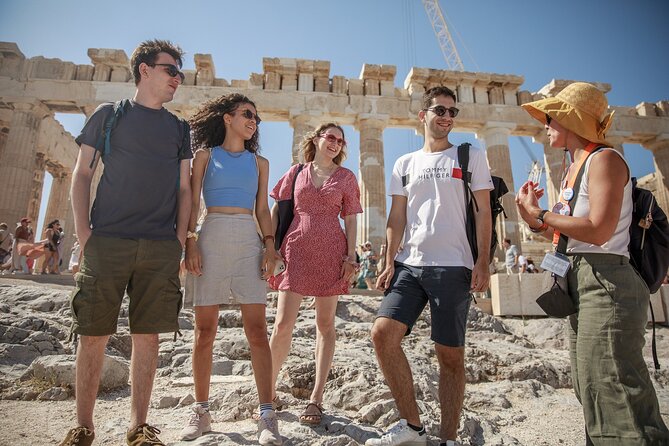
The tour uses personal earsets so you can hear the guide clearly while walking and while other visitors are around. This is not a luxury add-on. It is the difference between catching a few facts and actually understanding how everything fits together.
The group size caps at 24 people, which helps the guide manage the pace. In the reviews, the standout theme is that guides are attentive and keep explanations clear, plus they answer questions without making you feel rushed. You will also get a practical rhythm: brief stop, focused explanation, then a move to the next vantage point.
You might even catch the difference between a “ruins tour” and a “story tour.” Guides are praised for turning mythology and classical culture into something you can picture, like drama beginning in Athens and public buildings tied to gods, festivals, and power.
Stop-by-stop: Dionysus to the Parthenon without the wasted wandering
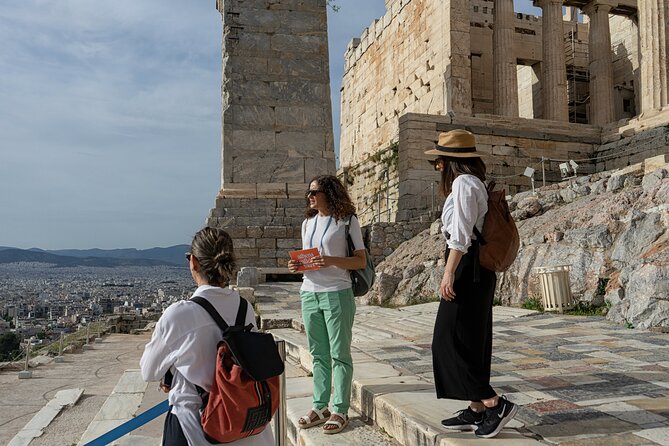
This is where the tour earns its keep. You do not just do one monument. You move through a chain of sites that explain how the Acropolis functioned as a religious and cultural center.
Acropolis base to the hilltop monuments
You start at the Acropolis stop, then work your way upward. Your guide points out the key landmarks on the hill and helps you understand the role of the major monuments in classical Greek culture. This early framing is useful because it gives you a mental map before you start seeing the details.
- All Day Cruise -3 Islands to Agistri,Moni, Aegina with lunch and drinks included
★ 5.0 · 4,958 reviews




Theatre of Dionysus, where drama started
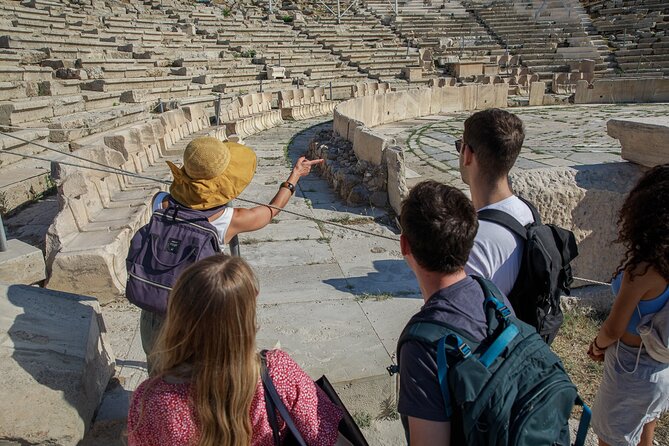
One stop focuses on the Theatre of Dionysus, often called the birthplace of theater. The guide ties Aeschylus, Sophocles, and Euripides to the setting where drama first echoed for ancient Athenians. Even if you know little mythology, the guide’s explanation can make the stones feel like a stage set.
Here is what I suggest you do: listen to the story first, then look for the shape of the theater space. You are not just viewing a ruin. You are trying to picture crowds, performances, and civic gatherings.
Temple of Asclepios, a medicine sanctuary
Next comes the Temple of Asclepios, a sanctuary dedicated to Asclepius, the god of medicine. This stop adds a different mood to the day. Instead of politics and pageantry, you get a place associated with healing and gratitude. It is a good contrast after the energy of the lower approach.
If you like when a site has a “human” theme, this is one of the stops that helps the Acropolis feel more real.
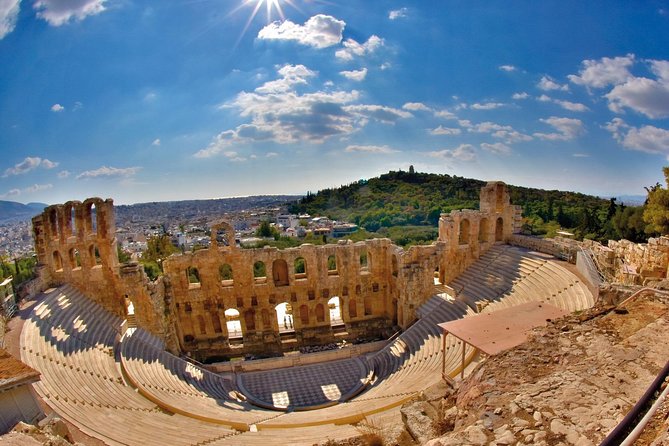
Odeon of Herodes Atticus, ancient stone, living performances
Then you reach the Odeon of Herodes Atticus, a stone theater built in 161 AD. The guide explains why it still matters today as a performance space. That continuity helps you see the Acropolis as a living cultural idea, not just a set of relics.
In practical terms, this is also a great place to slow down for a moment. Even with a time limit, you can usually get a better look at the structure and imagine sound carrying through the space.
Philopappos Hill (Hill of the Muses), views with a Roman touch
The tour includes a pause at Philopappos Hill, also called the Hill of the Muses. You get a view of the city below, plus a look at the striking monument of Philopappos, a Roman benefactor. This stop is short, but it helps break up the day by giving you perspective.
I like this kind of stop because it helps your photos look smarter. You can frame the Parthenon area with a wider city view instead of only close-up stones.
Temple of Athena Nike, for victory and tight viewpoints
A quick stop covers the Temple of Athena Nike, dedicated to Athena as goddess of victory. It is perched on the southwestern edge of the Acropolis, which means the views are excellent and the space is tight. Even with limited time, your guide can show you where to look and why this temple’s message fit the civic identity of Athens.
Propylaea, the grand gate into the sacred zone
Then comes the Propylaea, the grand marble gateway. The guide connects the feeling of entering a sacred, official space to the architectural design. Even if you think of “a gate” as simple, this one is meant to create anticipation.
If you only look at it as a photo backdrop, you miss the point. Look at it as a transition, from ordinary city space into a ceremonial world.
Erechtheion and the Caryatid Porch
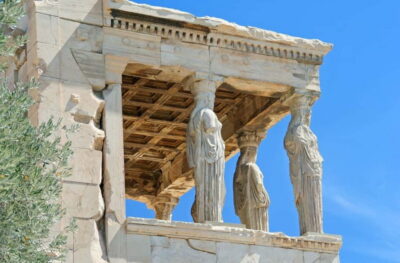
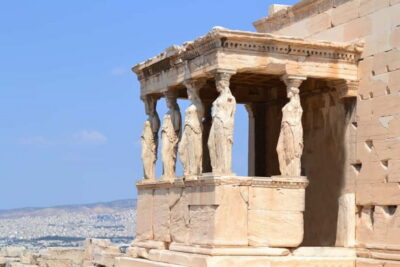
The tour includes Erechtheion, known for its architectural beauty and historical importance. The big highlight here is the Caryatid Porch, with six graceful female columns (statues) supporting the structure.
This is the stop where many people start to feel the tour’s value. A good guide makes the Caryatids feel like more than decoration, and helps you understand how architecture served worship and identity.
Parthenon, the final big wow
Finally, you stand before the Parthenon, dedicated to Athena Parthenos. Your guide presents it as a masterpiece and helps you connect it to classical Athens. The tour gives you about 25 minutes here, which is enough time to see the building from different angles and absorb at least a few key ideas.
If you want the “I get it now” moment, aim to pause and look longer than you normally would. Do not rush your gaze. Watch how light and perspective change as you move, because that is part of how the Parthenon reads.
What you should look for at the Parthenon and why the guide time matters
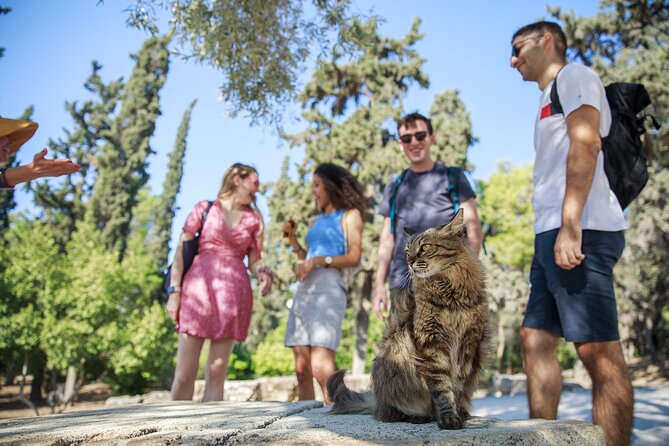
You can take the Parthenon photo in 10 seconds. The point of this tour is getting past that and understanding the why.
The guide’s explanations focus on classical Greek culture and the function of each monument on the hill. That means you leave with more than names. You understand the connections, like how Athens used temples, festivals, and public rituals to shape civic identity.
At the Erechtheion, you should pay attention to the Caryatids as visual storytelling. At Propylaea, pay attention to the feeling of arrival and order. At Temple of Athena Nike, try to link the victory theme to the city’s self-image. This kind of guidance turns the Acropolis into something you can read, instead of something you just stand next to.
In the reviews, guides like Alexia, Dora, Victor, Elena, Andrea, Hermes, Annie, and Phillipa show up again and again for clear explanations and patient answering of questions. That matches what you want here. The Acropolis does not reward “wing it” energy.
Pace, comfort, and practical tips that save your day
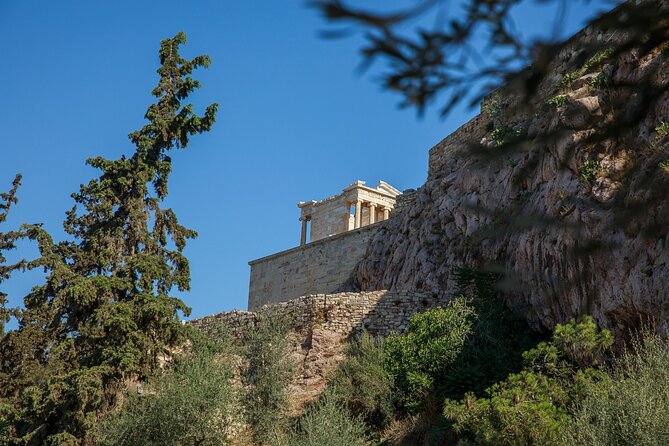
This tour takes walking seriously. You should plan for moderate physical fitness. It is a steep climb and involves uphill sections, uneven ground, and lots of steps.
Here is how to make it smoother:
- Wear comfortable shoes with grip. The surfaces are not flat, and they can feel unstable.
- Bring water, plus sunscreen and a hat. Sun can be relentless at elevation.
- Expect no convenient shelter. In rain, guides sometimes keep you out of harsher weather where possible, but conditions can still affect hearing and comfort.
- Know the site limits: airport-style security is real, and you might find there are no toilets once you are inside the site where you need them.
- Baby strollers are not allowed on the Acropolis archaeological site. There is also no cloakroom at the side entrance used, so for babies and small kids, a baby pouch is recommended.
Also keep an eye on hearing. The earsets help a lot, but weather can make sound tricky. If it is very windy, you might still have moments where you need to angle yourself closer to the guide to catch everything.
How to fit this tour into your Athens plan
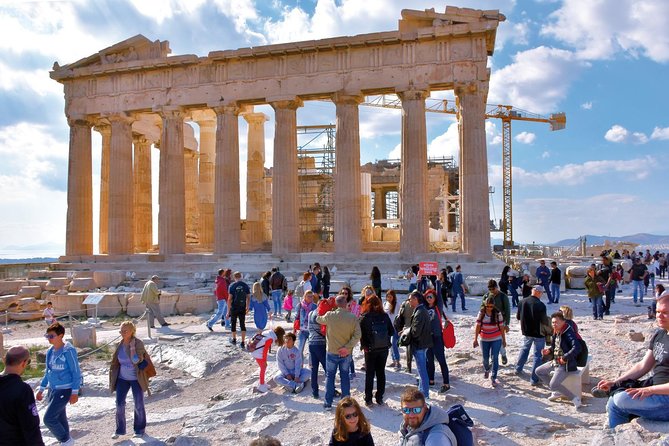
This is ideal when you have limited time and want the essentials of the Acropolis fast and meaningful. Because the tour includes an Athens map and a guide magazine, it is easy to build a follow-on plan without losing time.
After the tour, you can use the map to explore areas on your own, especially if you want slower streets and less crowding. The walking tour also sets you up for the bigger question: what parts of Athens do you want to connect next, the nearby museum option, or other neighborhoods where you can see how modern Athens sits on top of ancient layers?
If you are the kind of traveler who likes a guide to give you the structure, then you go wandering with purpose, this format works well.
If, instead, you are a person who wants to linger 60 minutes per monument or you plan to spend a lot of time in museum galleries, you might find the tour’s time slicing a little tight. In that case, consider pairing this with extra time elsewhere on a separate day.
Should you book this Acropolis and Parthenon walking tour?
Book it if:
- You want a guided walkthrough that connects each monument to classical culture.
- You value earsets, especially if crowds and noise make self-guided visits hard to enjoy.
- You are short on time and want a route that hits Parthenon plus several key stops on the way.
Skip or adjust your plan if:
- You dislike steep uphill walking on uneven surfaces.
- You are hoping for a slow, museum-like pace with long dwell time at each structure.
- You are very sensitive to sound issues and windy weather, since earsets can only do so much when the conditions are rough.
My take: for $41.12, plus the optional entry upgrade decision, this is a practical way to make the Acropolis make sense. You get a guided route, clear audio support, and a map to keep your Athens day from turning into a frantic checklist. Just show up early for security, wear good shoes, and let the guide do the heavy lifting of storytelling.
FAQ
How long is the Athens Acropolis and Parthenon Walking Tour?
It lasts about 2 hours.
Is the tour in English?
Yes, the tour is offered in English.
What is the meeting point?
The meeting point is at LUKUMAΔΕΣ, Dionysiou Areopagitou 3, Athina 117 42, Greece.
Is the Acropolis entrance fee included in the price?
Not unless you select the option that includes an admission ticket. The entrance fee is listed as €30.00 per person if not selected.
Does the tour include skip-the-line access?
If you select the admission ticket option, it includes skip the lines at ticket offices for the Acropolis of Athens and Museum.
What kind of group size should I expect?
The maximum group size is 24 travelers.
Do I need moderate physical fitness?
Yes. The tour involves a steep walk with uphill sections, so moderate physical fitness is recommended.
Are baby strollers allowed on the Acropolis site?
No, baby strollers are not allowed on the Acropolis archaeological site.
What should I bring for the tour?
Wear comfortable shoes and clothes, and bring suncreen and a hat. It is also recommended to bring a bottle of water.
What happens if the weather is poor?
The experience requires good weather. If it is canceled due to poor weather, you will be offered a different date or a full refund.
More Walking Tours in Athens



More Tours in Athens


More Tour Reviews in Athens
- All Day Cruise -3 Islands to Agistri,Moni, Aegina with lunch and drinks included
★ 5.0 · 4,958 reviews
Not for you? Here's more nearby things to do in Athens we have reviewed









Athens Acropolis & Parthenon Tours, compared.
 ★ 4.4Acropolis & up to 5 Archaeological Sites Combo PassFrom $4812,619 reviews
 ★ 4.2Acropolis Ticket with Optional Audio or Live GuideFrom $4211,055 reviews
 ★ 4.8Acropolis, Parthenon & Acropolis Museum Guided TourFrom $409,316 reviews
 ★ 4.6Acropolis and Parthenon Guided Walking TourFrom $385,882 reviews
★ 4.8Acropolis, Parthenon & Acropolis Museum Guided TourFrom $413,579 reviews
★ 4.6Acropolis and Parthenon Guided Walking TourFrom $385,882 reviews
★ 4.8Acropolis, Parthenon & Acropolis Museum Guided TourFrom $413,579 reviews
 ★ 4.0Acropolis Ticket with Audio GuideFrom $473,575 reviews
 ★ 4.7Acropolis: Acropolis and Parthenon Guided Walking TourFrom $363,442 reviews
 ★ 5.0Acropolis monuments & Parthenon Walking Tour with Optional Acropolis MuseumFrom $422,678 reviews
Browse the lists this tour appears in