
Reviewed · ATHENS PRIVATE TOURS
Indulge to the beauty of Greece with the 4 days Classical Greece private tour
Delphi to Meteora stole the show. This is a smart way to see the best classical sites in Greece without the stress of trains and timing, because you get private transportation and free time to breathe between major stops. I like how the plan strings together big-name sites with a real sense of travel, not just a check-list.
Two things I really appreciate: comfortable, all-in transportation that keeps you moving efficiently between regions, and standout days at Delphi and Meteora that feel like the heart of Greece’s ancient and Byzantine worlds. One thing to consider up front is the pace. This is a long-drive itinerary with moderate walking, and entrance fees at major sites are not included.
Key highlights to know before you go
- A private, all-in travel day flow across Athens, the Peloponnese, Central Greece, and Thessaly
- Delphi and Meteora are the show-stoppers, and this tour gives them real time
- Comfortable hotel stays with breakfast for three nights, so mornings start easily
- You get breaks and free time instead of nonstop marching
- A driver who knows the context, plus optional licensed guides inside for extra cost
Athens to the Peloponnese, Delphi, and Meteora, in one tight loop
If your idea of classical Greece includes both ancient ruins and Greek myth with actual physical places attached, this trip hits the sweet spot. You start in Athens, then work your way through the Peloponnese, then up to Delphi, and finally into Meteora’s monastery world. It’s a lot of geography, but the structure is logical: each day has a clear theme, and your overnight stays place you close to the next big hit.
The value is in the way the tour removes friction. You don’t have to research bus schedules, fight ticket lines on your own, or second-guess where to stand for views. You also get time to explore on your own pace at certain points, which matters on days packed with stops. A few hours of free wandering in places like Nafplio or around Delphi can make the ruins feel less like homework.
The tone is practical too. You get moderate walking, comfortable logistics, and reminders to wear good shoes and plan around summer heat. If you like learning history, you’ll enjoy the context your driver shares along the way. If you just want to see places and soak up the vibe, the big sites still do the heavy lifting.
You can also read our reviews of more private tours in Athens


Price and logistics for a private group of up to 2
The price is $3,275.19 per group for up to 2 people. That sounds steep until you break down what you’re actually getting: private transportation, an English speaking professional driver, three breakfasts, and three nights in comfortable accommodation. For a two-person group, private tours like this can be a better deal than you’d expect, especially compared with booking separate transport plus hotels plus site guides.
What you should budget mentally: entrance fees are not included, and food and drinks are on you. The itinerary includes major archaeological sites and museums, and those tickets add up. Also, your driver is not a licensed guide inside sites. You’ll get helpful guiding until you enter, and if you want a licensed state guide for inside interpretation, that’s available for an extra cost (based on availability).
So the real question for value is fit. If you and your travel partner want to move together, see a lot in four days, and avoid planning headaches, the price can make sense. If you’re traveling solo on a tight budget and you like controlling every detail yourself, you might prefer a cheaper shared tour or public transport plan.
Day 1 in the Peloponnese: Corinth Canal, Ancient Corinth, Mycenae, and romantic Nafplio
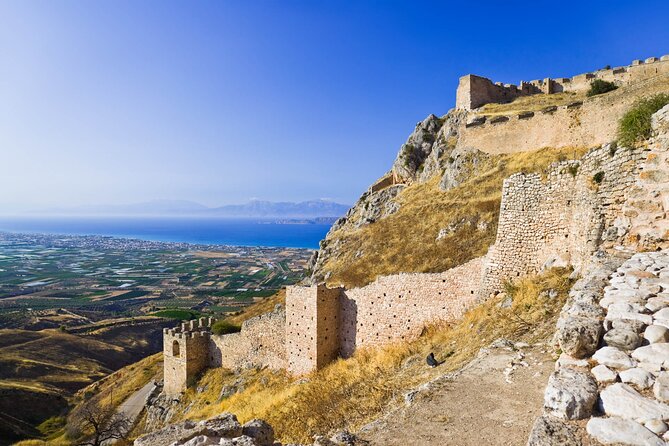
Day 1 sets the tone with three layers of Greece. You start with something modern that still connects to the ancient trade routes.
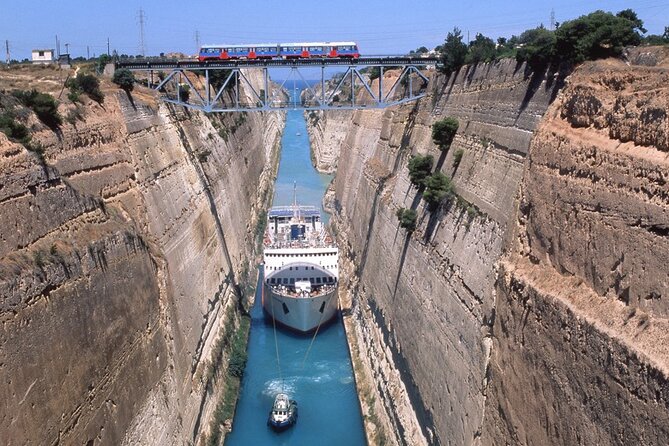
Corinth Canal
The Corinth Canal is one of those stops that’s quick but oddly satisfying. It cuts the narrow Isthmus of Corinth, so it separates the Peloponnese from the mainland like an island. You’ll hear how ideas for a canal stretch back centuries, including plans associated with Periander in the 6th century BC, long before it was ever completed. Even if you just take a few photos, it helps you understand why Greece’s geography shaped its history.
Ancient Corinth
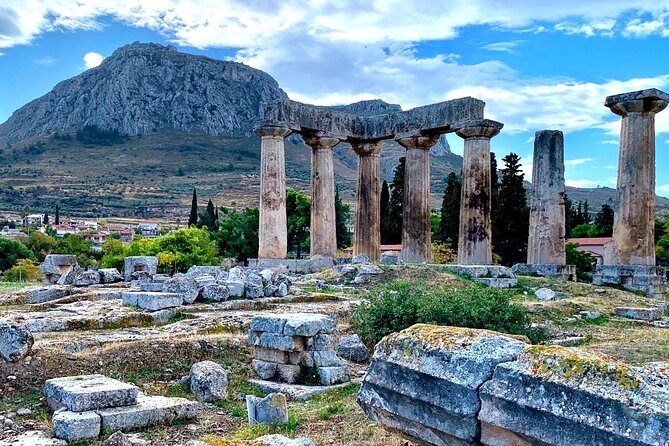
Next is Archaia Korinthos, where the story goes way beyond the Roman postcard version of Corinth. You’ll see how early settlement goes back deep into prehistory, and how Corinth’s real superpower was location. It sat at the intersection of land routes toward the Balkans and waterways linking western Mediterranean traffic with the east, including Asia Minor and areas connected to Syro-Palestine.
This stop is great if you like the idea of cities growing because of networks, not just because of kings. It also pairs well with the next site, because it sets up why the region was so connected.
More Athens tours and experiences for the shortlist


Mycenae, the kingdom of Agamemnon
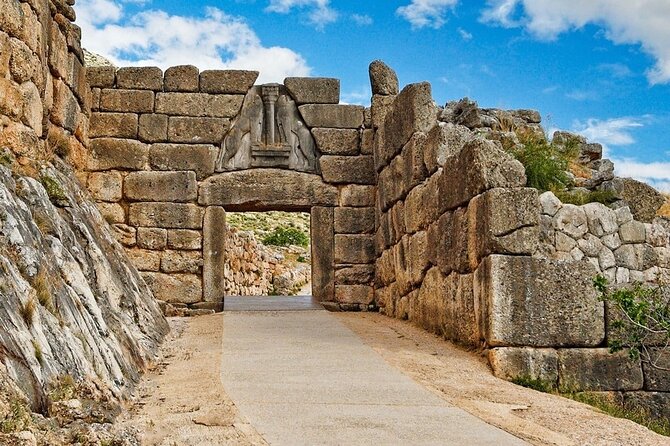
Then you head to Mycenae, the late Bronze Age power tied to myth and Homeric storytelling. The site is famous as a palatial center and is often described as rich in gold, because the Mycenaean world was wealthy and influential. Myth is part of the appeal here, but the physical remains also matter: think walls, palace structures, and the sense of a planned capital.
This is one of those stops where a guide’s framing really helps. Mycenae isn’t just a pile of stones. It’s a window into how Greek civilization developed long before classical Athens.
Nafplio for atmosphere and a first dose of downtime
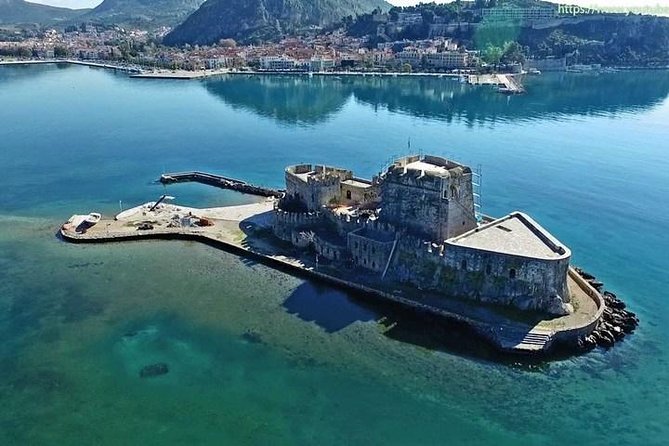
Finally, you arrive in Nafplio, one of the most charming towns in the Argolis area. It’s tied to myth too, but what you’ll feel is the architecture. This town moved through cycles of decline and renewed importance across Roman, Byzantine, Frankish, Venetian, and Ottoman periods. You’ll notice the mix: castles and medieval walls alongside Ottoman fountains and Venetian or neoclassical buildings.
The best part is the feel of the evening. You get time to explore at your own pace, which makes Nafplio more than a stop between ruins. It also turns the day from nonstop history into a place where you can actually relax.
Day 2 in the valley of the gods: Olympia and the Olympic Games origins
If Day 1 is about location and early power, Day 2 is about religion and sports as culture.
Ancient Olympia
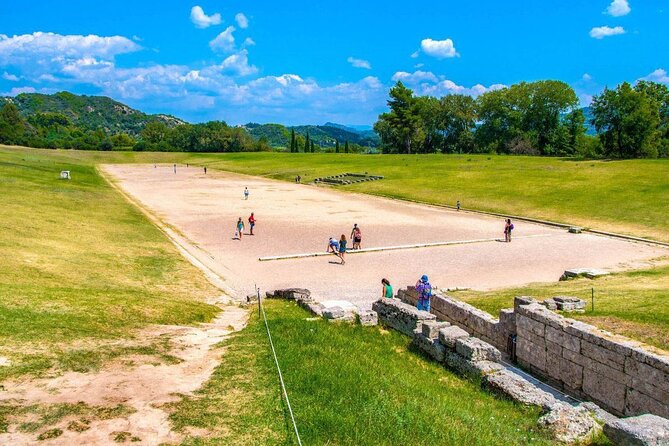
You visit Olympia, in the western Peloponnese, often described as the valley of the gods. This is the birthplace of the Olympic Games, founded in 776 BC, when Greek city-states would unite and conflicts would pause so the games could happen in the spirit of sportsmanship.
What makes Olympia work on a tour is that the site is readable. You can connect the temples dedicated to Hera and Zeus, the athletic training areas, and the stadium layout to the idea of a huge sacred event. It feels like a place designed for gatherings, not just worship.
The museum option
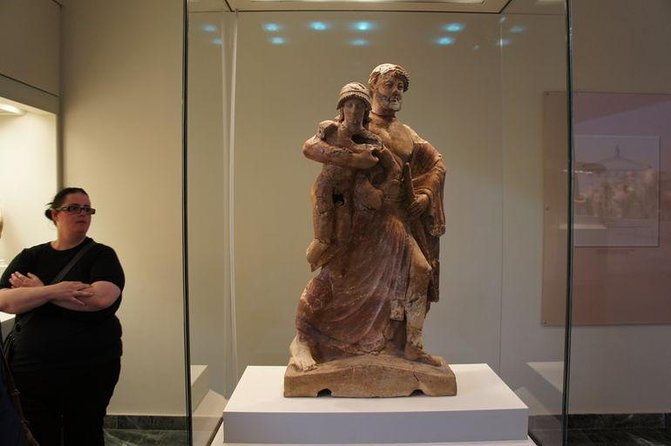
Olympia also has museums close by, and the tour plan includes time around museum-level context. You’ll be able to see finds connected to the sanctuary and its games, including notable sculptures and a collection of ancient bronzes. Even if you’re not a museum person, Olympia’s museum helps you see what you’re looking at outside, because it puts names and objects to the ruins.
One practical note
Entrance fees are extra here. If you’re traveling in high season, I’d treat tickets as part of your prep, not an afterthought.
Your day ends with an overnight near the next leg, keeping you positioned for the move toward Delphi.
Day 3: Delphi and the oracle feeling, then on to Kalambaka
This is the day with the kind of magic that’s hard to fake. Delphi can feel like ancient meaning made physical.
Delphi sanctuary at the foot of Mount Parnassos
Delphi sits at the foot of Mount Parnassos and was seen as the center of the world. The myths are part of the charm: Zeus sends two eagles to find the navel of the world, and their meeting point becomes Delphi. You’ll also hear the Apollo story, including Python being killed by Apollo and the oracle tradition linked to the Pythia.
But Delphi is also architectural. You’ll walk through the sacred area and see how the sanctuary functioned as a religious and cultural center. It’s not only about one temple. It’s the whole layout that makes it click.
Temple of Apollo and the Doric drama
You then focus on the Temple of Apollo, built in the Doric order. It went through major phases, including early construction in the 7th century BC, rebuilding after a fire, destruction tied to an earthquake, and later reconstruction. That timeline is useful because it stops the place from feeling frozen in time. Delphi kept being remade.
The omphalos concept
A key theme is the omphalos, the navel-stone symbol. You’ll learn that this idea was tied to the belief that Delphi marked the Earth’s center. Even if you only catch a portion of the story, the omphalos concept gives you a mental frame while you walk around the ruins.
Tholos of Athena Pronaia
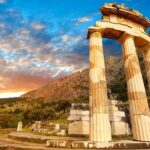
Next is the Tholos of Athena Pronaia, a circular monument that’s one of the most characteristic buildings at Delphi. It’s known for its Classical architecture: a multi-level base, an outer ring of Doric columns, and a mix of structural styles. The tour framing helps you see it as more than a photo spot, especially because its purpose is still discussed, with links to cult practices.
After Delphi, you travel north toward Kalambaka, and you’ll pass through Central Greece. The route includes stops for views and transitions, including areas such as Thebes, Livadia, and Arachova. You’ll overnight in the Kalambaka area, setting you up for Meteora early enough to see it without feeling rushed.
This is also a day where the review-minded tip shows up in real life: long drives mean bring snacks and water. Your driver handles the driving, but you handle your comfort.
Day 4 Meteora monasteries, then Thermopylae on the way back
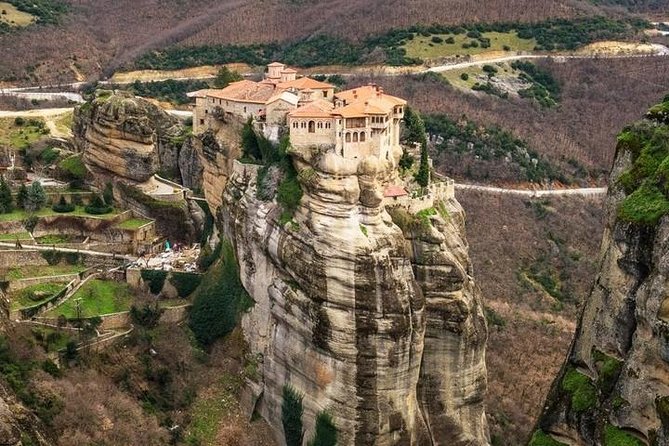
Day 4 is the big finale, and it’s packed in a good way. You start with Meteora, where monasteries perch on rock pillars more than 600 meters high. Then you close with Thermopylae and the Leonidas monument before returning toward Athens.
Meteora: monasteries built on top of the rocks
Meteora is the kind of place where your brain keeps trying to figure out how anyone built anything up there. It holds one of Greece’s largest Eastern Orthodox monastic complexes, and the area has UNESCO recognition from 1988.
You’ll visit multiple monasteries. The best way to enjoy this day is to accept that it’s physically and visually intense. You’ll climb steps and move between viewpoints, but the payoff is the geometry of the rocks and the way monastery buildings cling to them like they belong there.
Great Meteoron
The Holy Monastery of the Great Meteoron is the oldest and largest among the extant monasteries, founded shortly before the mid-14th century by Saint Athanasios the Meteorite. It has a commanding position, and it’s one of those stops that makes Meteora feel like a real living tradition, not just a tourist spectacle.
Other monastery stops
The tour also includes stops at monasteries such as:
- Saint Nicholas Anapafsas (associated with early monastic life in the 14th century)
- Saint Stephen (with foundations starting in the 14th century and later developments)
- Varlaam (linked to Varlaam and later 16th century church work)
- Holy Trinity (Agia Triada), which you reach by crossing a pedestrian path and climbing 145 carved steps
- Rousanos, which today operates as a nunnery after restoration
Even if you don’t memorize every founding date, you’ll feel the difference in how each building sits on the rock. Some monasteries are larger, some are more intimate. The variety matters.
Kastraki and KALABAKA area atmosphere
You also get context around Kalambaka and Kastraki, the towns at the base of Meteora. This matters because after you’ve been staring up at rock pillars, it’s nice to look down and see how the modern visitor base supports the old monastic network.
Thermopylae and the Leonidas monument
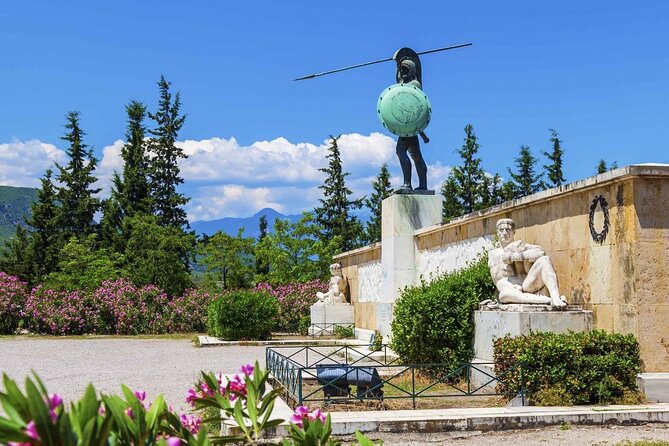
Before you head back, you stop at Thermopylae, famous for the Hot Gates idea and the 480 BC battle between Greeks and Persians. The tour frames the story of Leonidas and the Spartans and the betrayal tied to a turning point that let the Persians outflank the Greek defenses.
Then you see the Leonidas Monument near the national road connecting Athens to Thessaloniki. The inscription is included in the tour notes, so you can read it and understand why this place still carries a message about duty and sacrifice.
The driver, guidance style, and how inside-site interpretation works
One of the smartest parts of this tour is the role split between the driver and any licensed site guide.
Your professional English speaking driver gives history and culture context until you enter archaeological sites and museums. Once you’re inside, the driver is not licensed to lead you through the collections like a state-licensed guide. The company can arrange a licensed guide at an extra cost, subject to availability.
This matters because it changes what you should expect. You should expect a clear overview and smooth storytelling at the points where context helps most: on the way in, at key orientation moments, and around the main themes of each site. If you want deeper inside interpretation, you’ll need to add licensed guide time.
In practice, this model can be a good deal. You avoid waiting for a full-time guide in every step of a museum. At the same time, you can upgrade interpretation when you care most, like Delphi or a specific monastery.
What about free time, comfort, and staying sane on long days?
The tour includes free time to explore at your own pace, and that’s not a small detail. On heritage trips, the biggest risk is feeling trapped in a guided script. Here, the plan builds in moments where you can slow down, take photos, and get your bearings fast.
Comfort also comes from the basics:
- air-conditioned vehicle
- private transportation
- three breakfasts included
- comfortable accommodation for three nights
The review-style takeaway that lines up with what you’ll feel: Meteora and Delphi are the heavy hitters, so you’ll appreciate not having to scramble for hotels last minute. The accommodation at those areas is positioned to make mornings manageable.
Still, the day-to-day reality is walking and timing. You should be ready for moderate walking and wear comfortable shoes. In summer, sunscreen and a hat are not optional if you want to enjoy the stops instead of just surviving them.
Practical tips to make the most of this private classical tour
Here’s how you turn a great plan into a great trip.
Plan for entrance tickets and skip the last-minute stress
Entrance fees to archaeological sites and museums are not included. The tour suggests you pre-purchase admission tickets where possible. If you can’t, they can buy tickets in advance for you with a small service fee, but you shouldn’t count on finding everything available on the day.
Bring snacks for the driving days
There are longer stretches of time in the car between major sites. The simplest upgrade to your comfort is packing snacks and water. You’ll thank yourself at the moments when you want to avoid hunger turning into impatience.
Use the mobile ticket and show up ready
You’ll get a mobile ticket, and pickup is arranged from the main entrance of your hotel. If you’re at a cruise port, you meet the driver/guide just outside the terminal exit with a sign showing your name.
Moderate fitness is enough, but pick good shoes
You only need moderate physical fitness, not athletic conditioning. The big thing is being comfortable on stairs and uneven ground, especially on Meteora.
Should you book the 4 days Classical Greece private tour?
Book it if you and your travel partner want a private way to stitch together the classics without logistical stress. This tour is built for people who want Delphi and Meteora to be the centerpiece, not just a quick stop on the way somewhere else. The driving plan, hotel nights, and breakfast included make it easier to keep your energy up.
Skip or consider alternatives if you strongly prefer independent travel, you’re on a tight budget where entrance fees and guide upgrades matter a lot, or you don’t like long days with car time. Also, if you need a lot of interior interpretation at every site, budget for the possibility of adding licensed guides, because the driver cannot lead inside the archaeological spaces.
If you want a smooth, high-value classical itinerary with real context, this one is a solid pick.
More Private Tours in Athens


More Tours in Athens



More Tour Reviews in Athens
- All Day Cruise -3 Islands to Agistri,Moni, Aegina with lunch and drinks included
★ 5.0 · 4,958 reviews


Not for you? Here's more nearby things to do in Athens we have reviewed





Athens Private Tours, compared.
 ★ 5.0Best of Athens Half Day Private TourFrom $913,714 reviews
 ★ 5.0Athens Full Day Private TourFrom $2442,903 reviews
 ★ 5.0Athens Greece Full Day private tourFrom $683785 reviews
 ★ 5.04 Hours – Athens & Acropolis Highlights Private TourFrom $181681 reviews
★ 5.0Athens Full Day Private TourFrom $205667 reviews
★ 5.04 Hours – Athens & Acropolis Highlights Private TourFrom $181681 reviews
★ 5.0Athens Full Day Private TourFrom $205667 reviews
 ★ 5.0Lake Vouliagmeni Thermal Spa And Temple Of Poseidon Private Full Day TourFrom $171578 reviews
 ★ 5.0Acropolis and Acropolis Museum Private Tour with Licensed ExpertFrom $188445 reviews
 ★ 5.0Athens Highlights Half Day Private TourFrom $305407 reviews
Browse the lists this tour appears in