
Reviewed · ATHENS ACROPOLIS & PARTHENON TOURS
Acropolis and Acropolis Museum Private Tour with Licensed Expert
The Parthenon makes more sense with a guide. This private 3-hour experience pairs the Acropolis with the Acropolis Museum, led by fully accredited experts who explain what you’re seeing and how it connects to Athens’ Golden Age.
I love the pacing: about 80 minutes on the hill, then about 80 minutes inside the museum, with time to ask questions and set your own rhythm. I also love the stop sequence, including the Theatre of Dionysus and the sweep of temples around the Parthenon, so you get the whole story, not just a photo line.
One consideration: admission tickets are not included, so you’ll need to budget extra for the Acropolis and museum entries. If you choose add-ons like the Agora, expect more walking and rough cobbles.
Key highlights you should know
- Licensed guide access at both the Acropolis and the Acropolis Museum so you get interpretation on-site
- Parthenon time with construction and myth explained, not just what it looks like
- Theatre of Dionysus visit, often described as the world’s oldest, with a huge original capacity
- A tight 80-minute museum block designed to pair masterpieces with on-the-hill context
- Private group format, so you move at your pace and can ask questions freely
- Whisper communication system for groups of 6 or more, to keep everyone hearing clearly
Why this 3-hour private format works for first-timers
Athens’ top sights are famous for a reason, and they’re also easy to misunderstand if you show up with only a guidebook. This tour is built around the idea that you learn the site while you’re standing in front of it, then you immediately verify and deepen that understanding in the museum.
For me, the value is the pairing. The Acropolis is where the “why” lives, the museum is where you see the “what” up close, plus models and interpretive tools. You get both in about three hours, which is the kind of timing that fits a real vacation schedule.
You also get the private part. This is not a big-bus production. It’s just your group, and your guide can slow down, repeat, or focus on what you care about most. That matters at the Acropolis, where crowds, stairs, and sun can make self-guided visits feel rushed.
Pricing-wise, the headline cost is $188.65 per person for the tour. Then you add admissions separately. In other words, you’re paying for expert guiding and time management, not for museum entry itself.
You can also read our reviews of more private tours in Athens


Meeting at Acropoli Metro, Makrygianni Street, and a fast orientation moment
Your guide meets you at the Acropoli Metro Station street level at 7 Makrygianni Street, close to the Acropolis Museum. That location is practical. You’re already in the right neighborhood, and you’re not playing guess-the-directions with the steep streets once the tour begins.
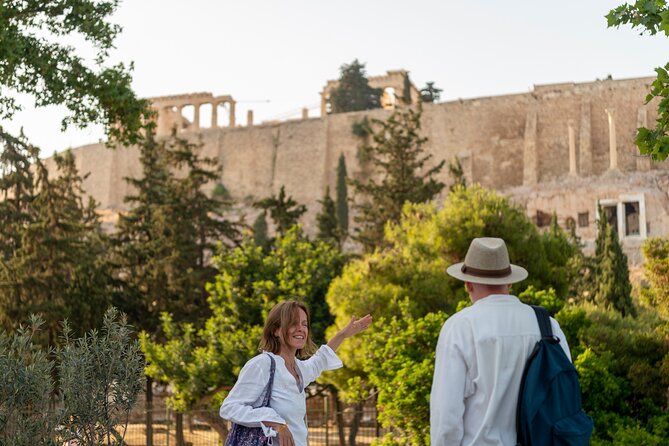
The start also gives you something useful right away: your guide sets the stage with an introduction to the Acropolis and points out how the area links to earlier civilizations. You’ll even get an ideal perspective to view the surrounding wall connected to the earlier Mycenean Civilization. It’s a simple orientation trick that makes the climb feel less like walking into chaos and more like stepping into a timeline.
Expect the tour to feel like a guided route with a clear flow. The guide is there to help you focus, not to just lead you from sign to sign.
Acropolis time: Theatre of Dionysus, Propylaia, and a real Parthenon walkthrough
The hill portion runs about 80 minutes, and it’s packed in a way that still feels coherent. You’re not just seeing random highlights. The sequence is designed to build up to the Parthenon and then connect it to the surrounding religious and civic life.
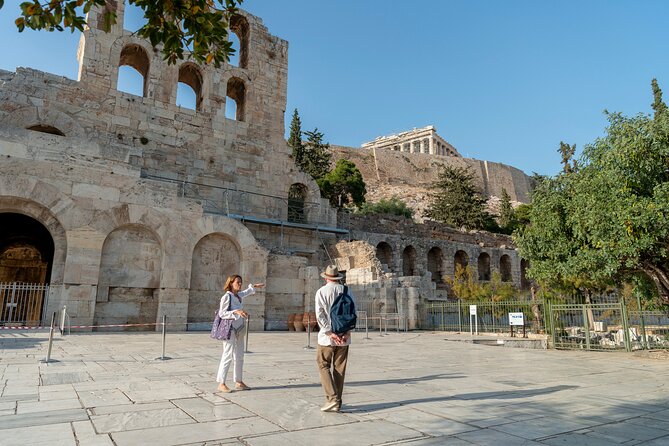
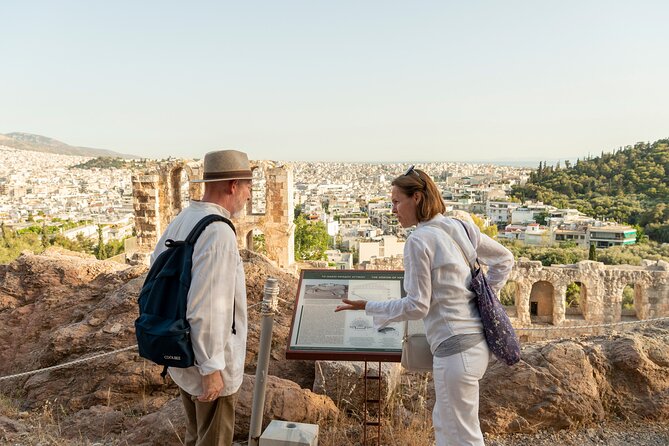
One early stop is the Ancient Theatre of Dionysus. It’s described as built in the 4th and 5th century BC in a natural amphitheater on the Acropolis slopes, and it’s considered the world’s oldest. The key payoff here is how it reframes Greek theatre. You’re not only looking at stone seats. You’re imagining premieres, performances, and the cultural importance of drama in public life.
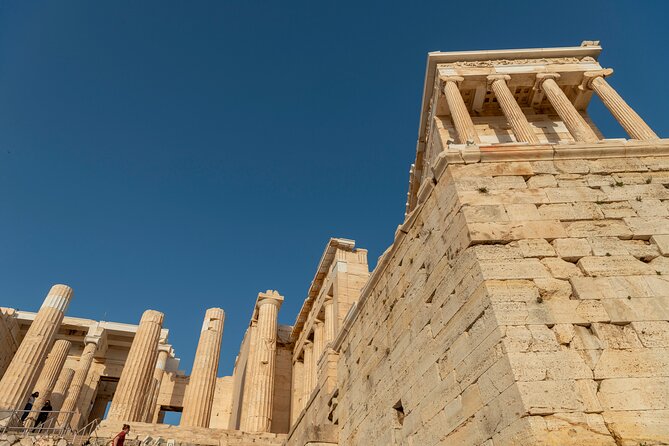
Then you move toward the monumental entrance area, the Propylaia gateway and the approach that frames the temples as they come into view. There’s a legend about an enormous bronze statue of Athena, and the idea that the tip of her upheld spear could be seen by incoming ships in the sunlight. Whether you treat the legend as literal or symbolic, your guide uses it to explain how the Acropolis announced power and identity from far away.
From there, you’ll cover classic temple landmarks around the top:
- Odeon of Herodes Atticus, a marble amphitheater built in AD 161, still functioning as a theatre today
- Temple of Athena Nike, an early Classical Ionic temple dedicated to Athena, described as largely restored and positioned to overlook the city
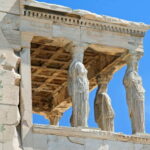
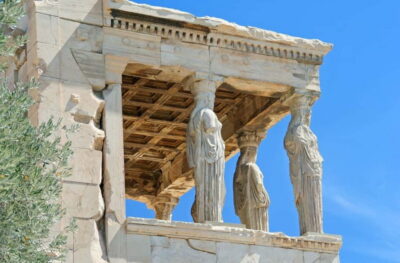
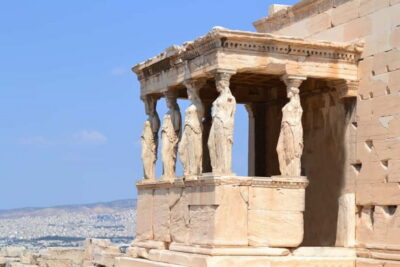
- Erechtheion, dedicated to both Zeus and Athena, with a focus on its myth connections and major statues you’ll later see in the museum
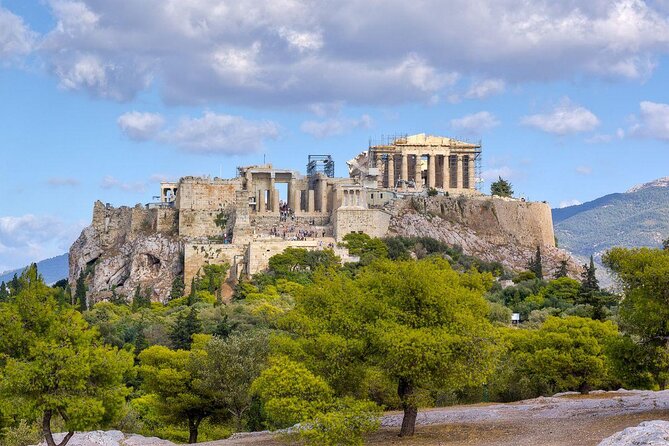
- Parthenon, the heart of the Golden Age era, where your guide takes time to explain construction, mythology, and historical importance
The Parthenon moment is the one I think will matter most to you. On your own, it’s easy to stare at the sight and miss the logic. With a licensed expert, you’ll get the “how” and “why” behind the engineering choices and the religious purpose that shaped the whole complex.
Note on tickets: Acropolis admission is not included in the tour price. The entry fee is 30 Euro. If you want skip-the-line-style help, the provider says they’ll contact you after booking to ask whether you need them to purchase tickets for you, so your guide has everything ready. If you don’t reply, they assume you bought tickets yourself and you’re responsible for timing.
Why the Theatre and gateway stops make the Parthenon feel less random
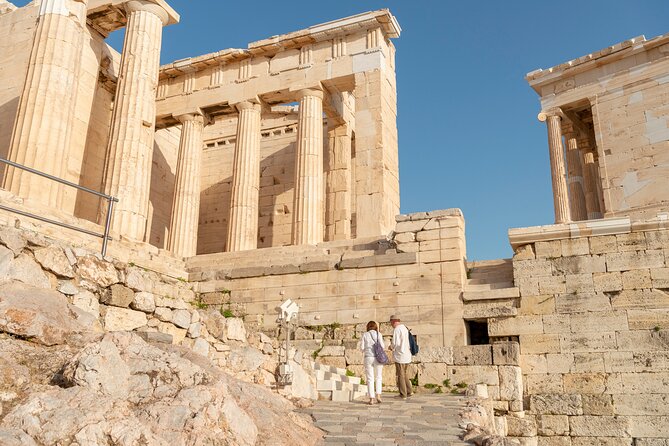
The Acropolis can trick you. You might arrive thinking it’s mainly “one building to see.” But the guide route makes it clear that it’s a whole ceremonial, political, and cultural zone.
The Theatre of Dionysus is a great example. Theatre was not entertainment on the side. It was tied to the religious calendar and civic life. When you stand there, you understand why the Acropolis wasn’t just a sacred viewing platform. It was a stage for shared identity.
And the gateway and temple approach do something subtle. They teach you how the Greeks used perspective, placement, and procession routes to control what visitors experienced first. That’s why Propylaia and the approach sequence matter. They help you read the complex like a designed experience instead of a random collection of ruins.
Acropolis Museum: where models and original pieces lock in the meaning
After the hill, you shift to the Acropolis Museum for about 80 minutes. This stop is the payoff for anyone who likes to connect what they saw in the open air to what survives inside.
The museum shows original masterpieces from the Acropolis along with models, videos, and interactive installations. Your guide focuses on the most significant pieces and explains the stories of myth and legend behind them. The practical value is that museum interpretation removes the guesswork that comes with ruins.
One nice detail here is the pairing effect. You’re not going to the museum as a separate day activity. You’re going while the Parthenon, Athena-related myths, and the surrounding temples are still fresh in your mind. That makes the museum feel like confirmation, not a second lecture.
Also, museum spaces tend to feel cooler once you get inside, which helps on hot days. Several guides in the program get praised for managing the flow well, so you’re less likely to feel stuck in a bottleneck.
Museum admission is also not included. The Acropolis Museum entry fee is 20 Euro.
You can also read our reviews of more museum experiences in Athens





City pacing, questions, and what private guiding looks like in practice
Private guiding is one of those things that sounds fancy until you experience what it changes. At the Acropolis, it can mean:
- You can ask follow-up questions without feeling rushed or shuffled along.
- Your guide can adjust based on your group’s energy, interests, and pace.
- You can spend more time where something clicks for you, like Parthenon architecture or a specific myth detail tied to a temple.
In the guide reviews, names like Betty, Eva, Nicole, Catherine, Vicki, Lydia, Maria, Lisa, Effy, Valia, and Natalia come up repeatedly, and the common thread is storytelling and making details understandable on the spot. You can treat that as a hint that this company tends to select guides who turn stones into meaning, not just facts.
A small logistics note: there’s a whisper communication system included for groups of 6 or more. That’s a practical feature if your group is larger, because the noise level around major sites can be loud.
Timing tips that actually help at the Acropolis
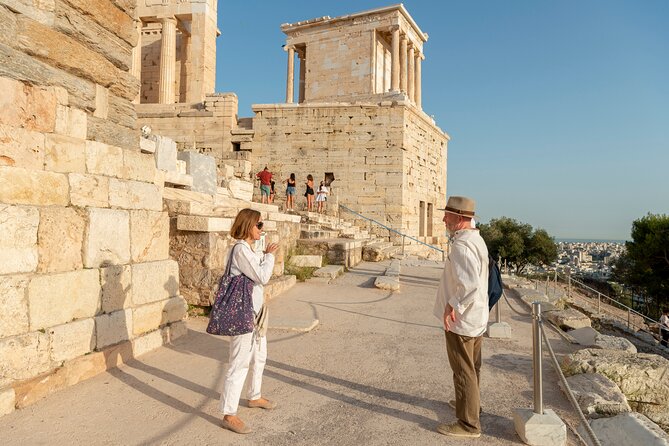
The Acropolis has a real crowd problem, and weather can add heat fast in summer. A practical approach is to go early, ideally close to opening hours in warmer months. One review described that around 8:00 am in late July, crowds were manageable, while by 10:00 am it got hotter and more crowded on the hill.
So if your schedule allows, pick a morning slot. If you’re doing the Acropolis only option, the provider recommends a time after lunch for a crowd-free feel and golden light, which can be ideal for photos and city views.
If you’re choosing the standard Acropolis and Museum option, you’re still splitting your day across open air and indoor museum time. That alone helps you ride out peak heat better than doing everything outside.
Admission costs and ticket planning, so you do not get surprised
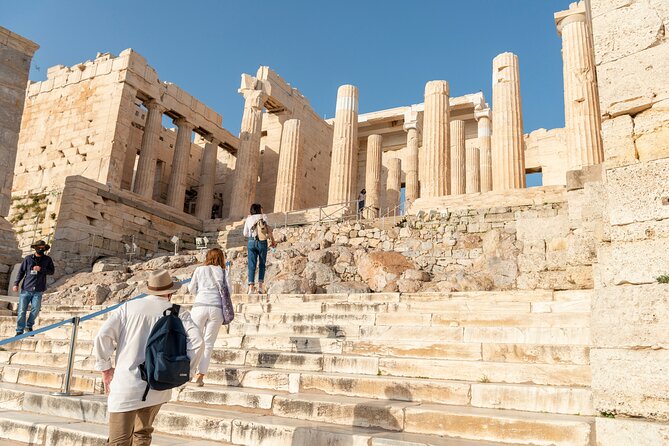
Here’s the clean math you should keep in mind. The tour price covers the private guiding experience, but it does not include site admission.
For the main option:
- Acropolis admission: 30 Euro
- Acropolis Museum admission: 20 Euro
Total admissions: 50 Euro per person (in addition to the $188.65 tour price)
If you select an option that includes the Ancient Agora, the Agora entrance fee is listed as 20 Euro extra.
Also, keep an eye on messages after booking. The provider states they contact you to ask whether you want them to purchase skip-the-line tickets so your guide has them ready. If you do not reply, they assume you bought tickets for the correct time slots and they are not responsible for delays.
If you’re trying to keep your day smooth, this is where you earn back time.
Choosing the right option: Acropolis only, Agora add-on, or a 5-hour city tour by vehicle
This tour has multiple ways to fit your interests. Here’s how to choose without overbuying.
Acropolis only (shorter, for extra self time)
This option is about 90 minutes and ends inside the Acropolis, which can be useful if you want extra time for photos and views after your guided portion. The provider suggests booking after lunch for golden light and a less crowded experience.
Best for: you want a focused hit on the hill and you like wandering afterward.
Acropolis and Museum (best balance for most first-timers)
This is the core 3-hour pairing, with about 80 minutes on the hill and about 80 minutes in the museum. It’s ideal if you want your guide to explain how the Parthenon and temple myths translate into objects you can see up close indoors.
Best for: you want understanding, not just landmarks.
Acropolis plus Ancient Agora (more walking, richer city layers)
This is a 3-hour option that includes the Acropolis and the Ancient Agora. One caution is explicitly stated: there is some walking distance between sites with rough cobbles, and it is not recommended for anyone with limited mobility. The tour ends at the Agora.
Best for: you want the Athens city fabric, not only the sacred hill.
City tour by luxury vehicle (5 hours, if you want more than ruins)
There’s also a 5-hour private city tour by vehicle with return transfers included. It includes stops like Temple of Zeus, Hadrian’s Arch, the Olympic Stadium, Athens Trilogy, and Syntagma Square and Guards. A licensed professional guide accompanies you at the Acropolis and Acropolis Museum as part of the plan.
Best for: you want Athens highlights with less hassle getting between points.
Who this private licensed tour is best for
This is a strong match if you:
- Want a private pace with the freedom to ask questions.
- Prefer a guided route that connects the Acropolis to what you’ll see in the Acropolis Museum.
- Like history told through stories, symbols, and the meaning behind architectural choices.
It’s also a good fit for families when the guide is strong with pacing. One review mentioned a guide being great with kids and extending time when needed.
If you have mobility concerns, pay attention to add-ons. The Agora option is explicitly flagged as not recommended with limited mobility due to cobbles and walking distance between sites. The standard Acropolis and Museum plan still involves walking on uneven ground at the hill, so be honest with yourself about stamina.
Should you book this Acropolis and Acropolis Museum private tour?
Book it if you want the most efficient way to understand Athens’ most famous sacred complex, without spending your day bouncing between signs. The pairing of hill and museum is the smart move, and private guiding helps you turn Parthenon views into actual meaning.
Skip it, or at least compare, if:
- You don’t want to deal with extra admissions fees.
- You prefer a longer, self-paced museum day over the fixed split of about 80 minutes each.
- You have limited mobility and are considering the Agora add-on.
If you can handle some walking and you’re ready to spend your time learning rather than guessing, this is a high-value way to experience the Acropolis with the kind of interpretation that makes the stonework feel alive.
FAQ
How long is the Acropolis and Acropolis Museum private tour?
It’s approximately 3 hours, with about 80 minutes at the Acropolis and about 80 minutes at the Acropolis Museum.
Where do we meet the guide?
Meet at the Acropoli Metro Station street level at 7 Makrygianni Street, close to the Acropolis Museum.
Is the tour in English?
Yes. The tour is offered in English.
Is admission to the Acropolis included in the price?
No. Acropolis admission is not included, and the fee is listed as 30 Euro per person.
Is Acropolis Museum admission included?
No. The Acropolis Museum admission is not included, and the fee is listed as 20 Euro per person.
Can you add other parts of Athens to the tour?
Yes. You can upgrade to add the Agora of Athens, the Acropolis Museum, or a city tour by vehicle, depending on the option selected.
Is this tour truly private?
Yes. It’s described as a private tour/activity, with only your group participating.
Where does the tour end?
If you book the Acropolis and Museum option, it may end at the Museum. If you book Acropolis only, it may end in the Acropolis. If you include the Ancient Agora option, the tour ends at the Agora.
Are there return transfers for the city tour by vehicle option?
Yes. The City Tour Luxury Vehicle option includes return transfers, so they will meet you at your hotel or cruise ship terminal.
Are service animals allowed?
Yes. Service animals are allowed.
More Private Tours in Athens


More Tours in Athens


More Tour Reviews in Athens
- All Day Cruise -3 Islands to Agistri,Moni, Aegina with lunch and drinks included
★ 5.0 · 4,958 reviews



Not for you? Here's more nearby things to do in Athens we have reviewed









Athens Acropolis & Parthenon Tours, compared.
 ★ 4.4Acropolis & up to 5 Archaeological Sites Combo PassFrom $4812,619 reviews
 ★ 4.2Acropolis Ticket with Optional Audio or Live GuideFrom $4211,055 reviews
 ★ 4.8Acropolis, Parthenon & Acropolis Museum Guided TourFrom $409,316 reviews
 ★ 4.6Acropolis and Parthenon Guided Walking TourFrom $385,882 reviews
★ 4.8Acropolis, Parthenon & Acropolis Museum Guided TourFrom $413,579 reviews
★ 4.6Acropolis and Parthenon Guided Walking TourFrom $385,882 reviews
★ 4.8Acropolis, Parthenon & Acropolis Museum Guided TourFrom $413,579 reviews
 ★ 4.0Acropolis Ticket with Audio GuideFrom $473,575 reviews
 ★ 4.7Acropolis: Acropolis and Parthenon Guided Walking TourFrom $363,442 reviews
 ★ 5.0Acropolis monuments & Parthenon Walking Tour with Optional Acropolis MuseumFrom $422,678 reviews
Browse the lists this tour appears in