
Reviewed · DELPHI DAY TRIPS FROM ATHENS
4day Spanish tour in Epidaurus Mycenae Olympia Delphi and Meteora
Ancient Greece, packed into four nonstop days. What makes this circuit work is the mix of major classical sites plus a Spanish guide who keeps the story moving from sea to mountains, with headsets so you can stay with the explanations. The main thing to consider is the trade-off: you spend serious time on a luxury A/C coach, and the pace can feel like long bus days if you hate riding between stops.
My second favorite part is the on-the-ground value: entrance fees are included, you get skip-the-line access at key archaeology sites, and the itinerary pairs ruins with museums instead of treating them like quick photo stops. In Spanish, guides named in past groups include Gogo, Fanery Aguirre, George C. Panagos, Magdalena Kotsakinou, Elena, Estela, and Zoe, and the consistent theme is clear talk about history, art, and mythology.
Key highlights you will actually feel on this trip
- Spanish-only guiding with headsets, so you can hear the story even on busy sites and in museums
- Skip-the-line access plus included entrance tickets, which saves both time and hassle
- Mycenae + Epidaurus in one sweep, giving you palace culture and theater craft back to back
- Olympia and Delphi museums, where objects help make the ruins make sense
- Meteora monasteries in two visits, timed as the spiritual side of the journey
- A quick Thermopylae stop with the Leonidas monument before heading back toward Athens
A fast reality check on the pace, bus time, and what you get for $728.56
This tour is built for people who want the core Ancient Greece highlights in a short window. You are not doing a relaxed slow travel loop with lots of free time. Instead, you are doing a classic circuit: ruins, museums, views, then repeat the rhythm the next day.
The price, $728.56 per person, is easier to judge when you look at what is covered. Entrance fees are included, transportation is handled by luxury A/C coaches, and you get three breakfasts and three dinners plus hotel rooms in 3 or 4 star properties. Add skip-the-line access and headsets, and the trip stops feeling like you are paying for driving only.
The trade-off is travel time. One past participant complained about roughly 6 to 7 hours of coach time on some days, and that lines up with what this route implies on a map. If you love cracking jokes with your seatmates and people-watching through the window, you will be fine. If you get cranky from long rides, you will feel the schedule.
More Athens tours and experiences for the shortlist
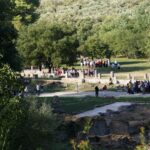
Starting in Athens: the Melina Mercouri Monument pickup at 8:00 am
The tour begins at the Melina Mercouri Monument on Leof. Vasilisis Amalias 54 in Athens, with a start time of 8:00 am. It matters because you can plan your morning around one fixed departure point, and you avoid the chaos of hunting for a meeting spot.
Also, this is a group format with a maximum of 55 people. That size is big enough to be comfortable on a coach, but small enough that your Spanish guide can still move the group along without treating you like a silent crowd.
You will also have WiFi on board and headsets to hear the guide. In other words, you are not stuck hoping you can hear over the bus engine and chatter.
Day 1: Corinth Canal photos, Mycenae walls and royal tombs, then Epidaurus theatre
Corinth Canal, a 20-minute snapshot
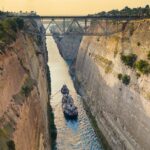
The first stop is the Corinth Canal, basically a short photo break. You get enough time to see the canal that connects the Saronic Gulf and the Corinthian Gulf, but it is not a deep dive. This is a good opener because it sets the geography in your mind before you head to the inland power centers of the Mycenaean world.
Mycenae: Gate of the Lions, Cyclopean Walls, and the Royal Tombs
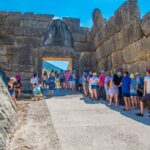
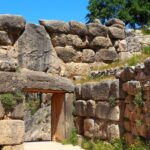
Next comes Mycenae, one of the most intense “place names become real” stops on the route. You visit the Gate of the Lions, the Cyclopean Walls, and the Royal Tombs area. You also get to see the Treasure of Atreus, described as the royal tomb of Agamemnon, plus a visit to the local museum.
Why this part matters: you are moving from modern Greece into a world where walls and tombs were political statements. Even if you are not a hardcore archaeologist, the scale of the fortifications and the museum context help you understand why Mycenae mattered.
- All Day Cruise -3 Islands to Agistri,Moni, Aegina with lunch and drinks included
★ 5.0 · 4,958 reviews

Epidaurus Ancient Theatre: the best reminder that Greeks cared about sound
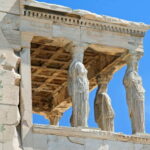
After lunch-free touring time (lunch is not included), you move to Epidaurus for the Ancient Theatre of Epidaurus. You spend about an hour at the classical theater from the 4th century BC, famous for harmony and excellent acoustics.
This is the stop where the tour can feel almost magical, because it is one of those places where you can sense design thinking, not just dates. It also contrasts nicely with the palace themes of Mycenae. Walls and tombs on one side, performance and public space on the other.
Overnight toward Olympia
By the end of Day 1, you depart Epidaurus and travel to Olympia for an overnight stay. This sets you up for an early start where the next day’s archaeology is the main event.
Day 2: Olympia archaeology site and the museum, then onward to Delphi via the Rio-Antirrio bridge
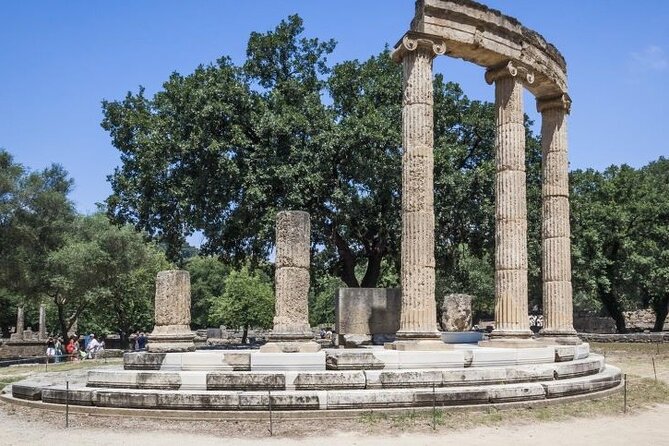
Olympia archaeological site: sport as a religious center
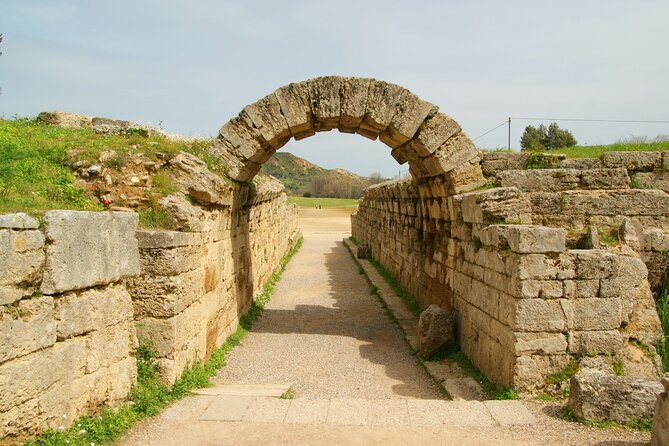
Day 2 starts with the archaeological site of Olympia. You get about two hours, plus a museum visit afterward. Olympia is not only about athletes. It is about a whole cultural system, where games, ritual, and power were connected.
You will see the core remains of the sanctuary, and the time allocation is enough that you do not feel rushed from one corner to the next.
Olympia Museum: Praxiteles’ Hermes and object-based learning
Next is the Archaeological Museum of Olympia. You get around an hour and you see treasures from Olympia, including the statue of Hermes by Praxiteles.
This matters because it trains your eye. Ruins are harder to picture without objects. A museum like this gives the “what you are actually looking at” moments that photographs rarely do.
The Rio-Antirrio bridge crossing: a big modern connector in the middle
As you travel from Olympia to Delphi, you cross the Rio-Antirrio bridge. The bridge connects the Peloponnese with mainland Greece across the Corinth Strait. It is a long span at 2,883 meters and was built with techniques meant to handle extreme conditions.
This is a practical break in the middle of a travel day. You get a chance to reset mentally before Delphi starts piling on.
Day 2 evening arrival in Delphi: why the timing works
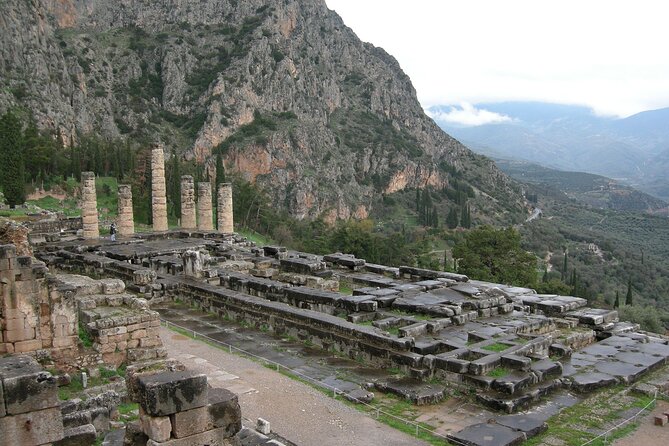
When you arrive at Delphi, you are not arriving blind. You have already seen Mycenae and Olympia, and you have trained your brain to connect sites with museums. That makes the Delphi day on Day 3 feel more coherent, not like random stops stapled together.
Day 3: Delphi’s Temple of Apollo and the Delphi Museum, plus Arachova for crafts
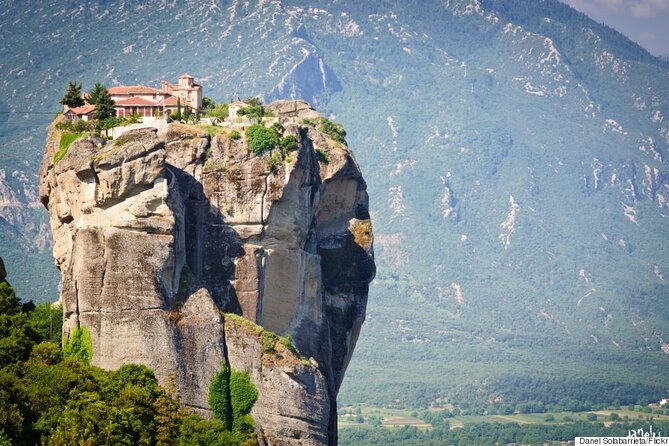
Temple of Apollo and the Via Sacra sequence
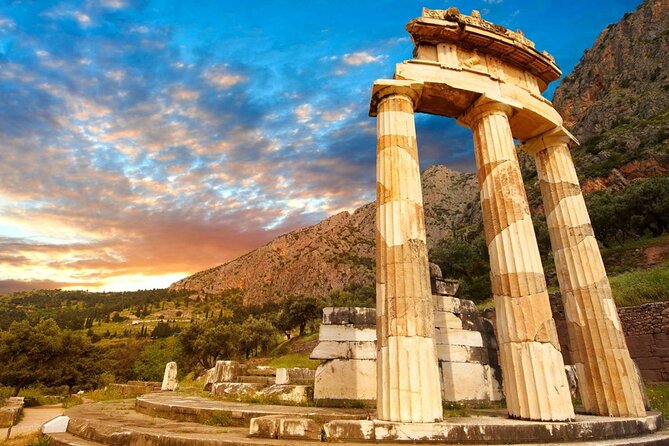
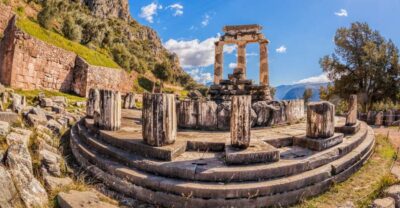
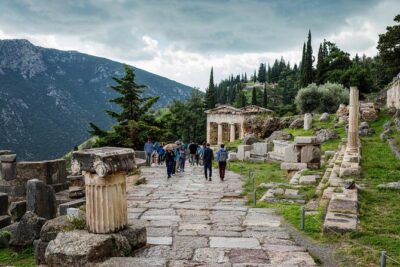
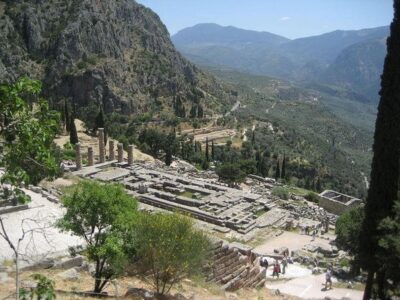
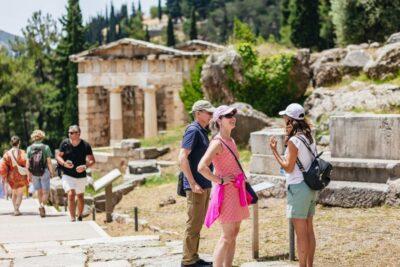
Day 3 begins at the Temple of Apollo in Delphi. You get about 1 hour 30 minutes at the archaeological site, touring via the Via Sacra, including the Treasury of Athens and the Temple of Apollo area. You also get a panoramic view from the height near the local theater.
This part is valuable because Delphi is not a “one building” site. It is a system of spaces, paths, and sightlines. Even with a group pace, you get the sense of movement through the sacred area rather than only standing still and staring.
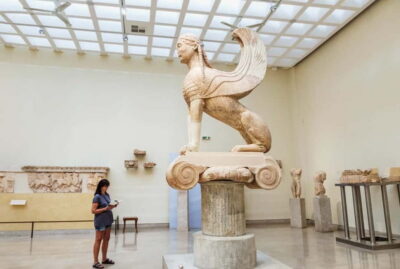
Delphi Archaeological Museum: the bronze Auriga and the value of objects
After the ruins, you go to the Delphi Archaeological Museum for about 45 minutes. One standout object is the bronze figure called L’auriga de Delphi, described as a young Delphic athlete, one of the oldest empty bronzes.
This museum visit helps you understand that Delphi was not just spiritual. It was also athletic, artistic, and deeply connected to patronage and craftsmanship.
Arachova stop: a 20-minute craft and village pause
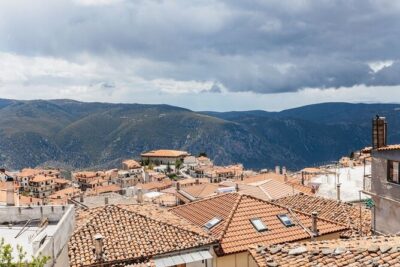
Then you pass by Arachova for around 20 minutes. Arachova is known for local crafts. This is not a long shopping detour. It is a quick flavor stop, helpful if you like picking up small handmade items without losing half a day.
Travel onward to Kalambaka
You depart Delphi with destination to Kalambaka. That shift sets you up for the big payoff of Day 4: Meteora.
Day 4: Meteora monasteries in two visits, Thermopylae with Leonidas, return to Athens
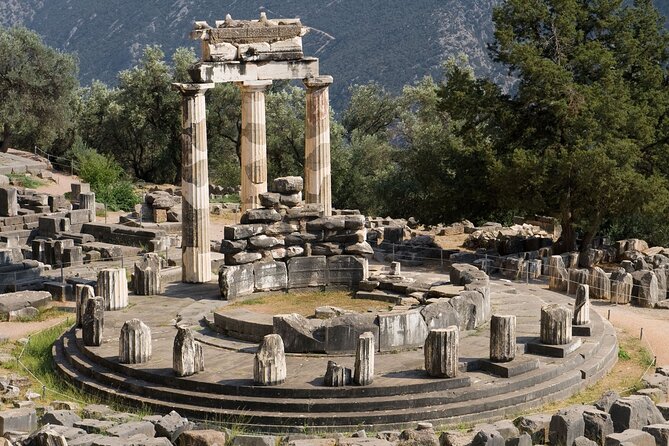
Meteora monasteries: two monastery visits focused on Byzantine art
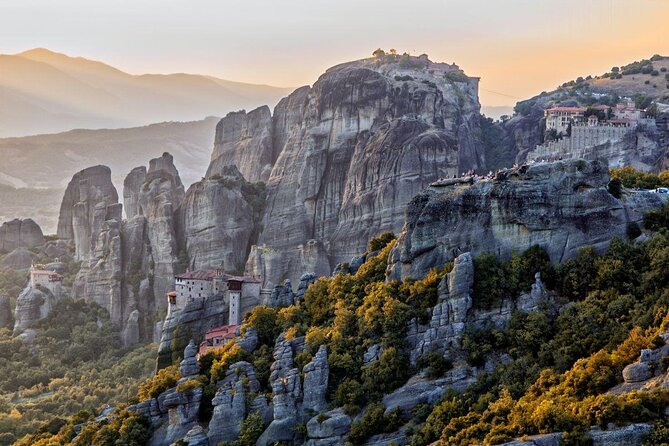
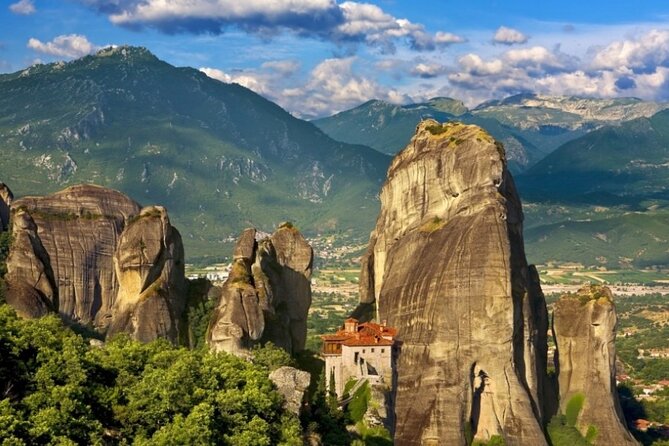
Day 4 starts with Meteora. You visit two monasteries in the morning, about two hours total. Meteora monasteries are on the Thessaly plain in northern Greece, and they are UNESCO listed since 1988. The visit focus is Byzantine art.
This is the part that many people describe as their favorite because you are going beyond ancient temples into a different Greek story, medieval spirituality with major art. Meteora also feels visually dramatic in a way that is hard to fake in a photo.
One practical note: monastery visits often involve uneven ground and steps. The tour does not provide specific difficulty guidance, so if you have mobility issues, you might want to assess your comfort level before booking.
Thermopylae brief stop: the Leonidas monument
After Meteora, you make a brief stop at the Leonidas monument in Thermopylae, where the famous battle took place in 480 BC. You get about 20 minutes.
This is a short historical waypoint. It is not a full guided history tour of the battlefield, but it gives you a respectful context for the name Thermopylae before you head back.
Return to Athens
The tour ends back at the original meeting point in Athens. You get to wrap the circuit with the sense that you have covered a lot of Greece’s most classic regions in one organized sweep.
The guide and Spanish narration: why it changes how you experience the ruins
A major reason this tour scores well is the guide. The Spanish guiding is described in multiple reviews as professional, organized, and strong on history, art, and mythology. Names that came up in past groups include Gogo, Fanery Aguirre, George C. Panagos, Magdalena Kotsakinou, Elena, Estela, and Zoe.
What I like about this format is that you are not relying on your own reading to connect things. Headsets help you keep up when the group moves. And because the guide’s job is to tie sites together, the itinerary feels like a story from one day to the next, not a grab bag.
If you care about understanding why each site looks the way it does, Spanish narration is a huge plus. If you are just chasing photos and facts, you can still enjoy it. But you will likely get more out of it with the guide’s explanations turned up.
Hotels, breakfasts, dinners, and the hidden costs to plan for
This package uses 3 or 4 star hotels with breakfast and dinner included. You get breakfast three times and dinner three times. Lunch is not included, and drinks are also not included.
That means you will be choosing lunch on your own during free time or at meal breaks. It is not a problem, but it does change how you budget day to day.
Also, there is a hotel fee per room per night not included. For 3 star hotels, it is listed as 1.5 euros in winter and 3 euros in summer. For 4 star hotels, it is 3 euros in winter and 7 euros in summer. This is usually the type of city or lodging fee that feels small until you multiply it by nights and rooms. If you travel in a group, you will want to confirm how it is collected.
One helpful detail from past participants is that hotel names can vary by departure, but examples mentioned include Neda in Olympia and Olympique in Delphi.
When this tour is a smart choice, and when it is not
It suits you best if:
- You want a first big taste of mainland Greece in a short time
- You like guided explanations for history, mythology, and art
- You are okay with moving hotels and spending long stretches on a coach
- You appreciate having entrance fees handled and skip-the-line access
You might want to think twice if:
- You dislike long bus days and prefer fewer stops per day
- You want lots of free time for wandering without a schedule
- You need very flexible mobility support for stairs or uneven ground at ancient sites and monasteries
This circuit is about coverage and momentum, not lingering.
Practical packing tips based on how the days play out
You are touring archaeological sites, museums, and monasteries. Bring comfortable shoes you trust on uneven surfaces and stairs. You will also want sun protection because outdoor sites are part of the plan, and Meteora can be exposed.
Since lunch is not included, having a simple strategy helps. If you are the type who likes choosing carefully, plan on snacks or a quick meal during the available breaks.
And because you get headsets, you should be ready to listen. I suggest keeping your phone camera for your own time, not as a substitute for paying attention to what the guide is saying.
Should you book this 4-day Spanish classics circuit?
Book it if you want the biggest Ancient Greece hits in one organized package and you value expert Spanish narration that connects ruins to museums. The included entrance fees, skip-the-line access, and headsets are real quality-of-life upgrades, and the itinerary hits the highest-impact sites: Mycenae, Epidaurus, Olympia, Delphi, and Meteora.
Skip or consider alternatives if your top priority is slow travel, lots of free time, or avoiding long coach rides. The schedule is built for many sites in a few days, and that means bus time is part of the deal.
If you fit the first group, you are likely to leave feeling you got more than a highlight reel. You will have a guided storyline across Peloponnese, Central Greece, and Thessaly, and that is the kind of structure that helps the places stick.
FAQ
What is included in the tour price?
The tour includes entrance fees, accommodation in 3 or 4 star hotels with breakfast and dinner, a professional Spanish guide throughout, luxury A/C coach transportation, WiFi on board, headsets, skip-the-line access, and dinner for three nights plus breakfast for three mornings.
What is not included?
Lunch and drinks are not included, nor are tips and personal expenses. There is also a hotel fee per room per night not included: for 3 star hotels it is listed as 1.5 euros in winter or 3 euros in summer, and for 4 star hotels it is listed as 3 euros in winter or 7 euros in summer.
Where does the tour start, and what time?
The tour starts at the Melina Mercouri Monument, Leof. Vasilisis Amalias 54, Athina 105 58, Greece. The start time is 8:00 am. It returns back to the same meeting point.
What is the group size?
The tour has a maximum of 55 travelers.
What languages are used?
The guide is exclusively in Spanish.
How long is the tour?
The duration is 4 days, approximately.
More 4-Day Experiences in Athens
More Tours in Athens
More Tour Reviews in Athens
- All Day Cruise -3 Islands to Agistri,Moni, Aegina with lunch and drinks included
★ 5.0 · 4,958 reviews
Not for you? Here's more nearby things to do in Athens we have reviewed



Delphi Day Trips from Athens, compared.
 ★ 4.6Mythology of Delphi, Museum and Arachova Guided TourFrom $314,008 reviews
 ★ 4.6From Athens: Delphi Full Day V.R. Audio Guided TourFrom $303,028 reviews
 ★ 4.8From Athens: Small-Group Delphi, Museum & Arachova Day TripFrom $342,476 reviews
 ★ 4.5Delphi English Day Trip from Athens with Official GuideFrom $782,199 reviews
 ★ 4.7Delphi Guided Trip with Optional Lunch and EntryFrom $331,553 reviews
 ★ 4.5Historical Delphi One Day Tour with Arachova Stop & Expert GuideFrom $341,247 reviews
 ★ 4.5Premium Delphi Day Trip with an Expert Guide, Museum & LunchFrom $381,100 reviews
 ★ 4.5From Athens: Delphi and Meteora 2-Day Guided TourFrom $271825 reviews