

Reviewed · ATHENS PRIVATE TOURS
4 Days Classical Private Tour/ Corinth,Mycenae,Nafplio,Sparta,Olympia,Delphi
If your travel style is history with a plan, this fits. You get a private Classical circuit that hits major ruins, multiple UNESCO sites, and the kind of smooth pacing that matters when you are covering a lot of ground in Greece. I love the private group setup, especially with hotel pickup and drop-off that saves time and stress, and I love the onboard Wi-Fi for those longer Peloponnese drives. The main catch is that many museums and archaeological admissions are not included, so you will want to budget for tickets on top of the tour price.
One highlight for me is how the experience can feel personal, even though you are seeing big-name places like Mycenae and Delphi. In one standout case, the guide Nikolaos was described as thoughtful and deeply into the stories, with a knack for scenic, less-traveled roads and patience when questions came up.
My only consideration: you will be doing a lot of site time across four days, including stairs at Palamidi Fortress and plenty of walking through exposed ruins. If you want everything fully explained by a licensed archaeologist at each stop, the tour driver is not the person who will do that walk-and-talk level of interpretation, so you may want to add guides where it counts.
Key Points to Know Before You Go
- Private, English-speaking driver-led days that focus on logistics so you can concentrate on seeing the sites
- Onboard Wi-Fi to make long drives feel less like time spent in transit
- Four UNESCO World Heritage Sites included in the route: Mycenae, Olympia, Delphi, and Mystras
- Practical pickup and drop-off directly to your Athens accommodation (or Piraeus and other requested locations)
- Flexible vehicle sizes from sedan/SUV to minibus, with kids under 10 traveling free where noted
A Private Route Through the Classics

This tour is built for people who want the Greek mainland highlights without the daily headaches of renting a car, finding parking, or playing calendar Tetris. In four days you cover the Peloponnese backbone first, then pivot toward central Greece for Delphi, all with private transportation and a schedule that keeps you from bouncing back and forth.
What makes it especially appealing is the mix of sites where you can feel the layers of time. Corinth gives you early Classical context, Mycenae brings you into Bronze Age power, Sparta frames the militarized mindset of antiquity, and Delphi adds the oracle dimension. Add in Mystras, and you also get Byzantine-era depth, not just ancient Greece.
If you like your travel days structured but not rigid, this approach works well. You still do plenty of walking, but the big decisions, ticket logistics between stops, and driving are handled for your group.
You can also read our reviews of more private tours in Athens


Getting Around: Pickup, Wi-Fi, and the Driver-First Approach
Your day starts with pickup from Athens, Piraeus, or the airport, with the default start time set for 8:00 am. If you are traveling in summer, you will likely want to start earlier than 8:00 to make the most of daylight for the ruins.
The vehicle options matter because the route includes long road stretches and multiple packed stops. You can travel in a sedan or SUV (up to 3 adults or a family of 4 as described), a minivan for 1 to 7 people, or a minibus for groups up to 14. That flexibility makes the private format realistic for everything from couples to small families.
On top of that, there is onboard Wi-Fi and a mobile ticket, which helps on days where you are constantly switching locations. You can use the time to plan lunch stops, check opening times, or simply relax before the next site.
One more practical point: the driver is described as an experienced English-speaking tour driver and leader for the four days, but they are not positioned as a licensed archaeological guide for the walking portions at each site. If you want that full “read the stones with me” interpretation inside the ruins, the tour offers archaeological guides at an added cost.
Day 1: Corinth Canal, Ancient Corinth, Mycenae, and Nafplio’s Palamidi
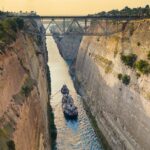
Day 1 is where the itinerary earns its pace credit. You start with a quick, dramatic photo stop at the Corinth Canal, the man-made channel linking the Aegean and Ionian seas. You get time to walk across a pedestrian bridge and admire the canal from high above. It is short, but it sets a tone: this trip is not only about static ruins, it is also about the geography Greece created.
From there you move into Ancient Corinth, a major city with layers from Classical to Roman times and a strong connection to Saint Paul’s letters. You can spend around an hour walking the remains and picturing how this place functioned as both a city and a stage for early Christian history. There is also a separate ticket structure for winter vs summer, so it is worth knowing whether you are traveling in peak season.
Next you visit the Temple of Apollo at Ancient Corinth. It is an early Doric-style temple built around 550 BC on top of older foundations, and it dominates a rocky hill. Even when you are standing among ruins, the layout makes it clear why the Greeks tied architecture to civic identity.
After the temple, the Archaeological Museum of Corinth is a smart counterweight. It is built and extended in the 20th century and brings prehistoric through Hellenistic, plus Roman and Byzantine finds, into one place. If you have limited time on this trip, museums like this help you decode what you are looking at outdoors.
Then the day snaps into Bronze Age mode with the Treasury of Atreus, also called the Tomb of Agamemnon. The name comes from older scholarship, but what you truly appreciate here is the monumental tholos structure, dated to around 1250 BC. It is called one of the most impressive Mycenaean survivals, and the scale is part of the impact.
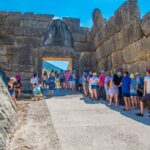
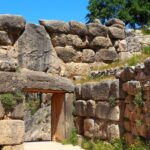
From the tomb you head to the Archaeological Site of Mycenae, focusing on the Acropolis and its defensive walls, the Lions Gate, and the corbelled tholos tombs. Mycenae is where you start feeling how ancient power worked before the Classical era became the “default story.” Plan for at least 1.5 hours at the citadel area so you do not feel rushed.
Right next door, the Archaeological Museum of Ancient Mycenae gives context to the excavations around the citadel. It is not only about objects, it is about connecting those objects to the site you just walked through.
The day ends in Nafplio, where you overnight. You also get Palamidi Castle, built in the Venetian fortification style. It is famous not only for the fortress views over the Argolic Gulf and Nafplio, but for the stair climb, reported as 913 steps on one route and effectively over a thousand to reach the top. If you have knee limits, this is the stop to think about in advance.
Day 2: Nafplion Museums, Acronafplia, Sparta, and UNESCO Mystras
Day 2 starts close to your base in Nafplio with the Archaeological Museum of Nauplion. The museum is housed in a Venetian structure that covers the central Syntagma Square area, which means you are not just stepping into a museum, you are also seeing how the building sits in the town. A standout described here is the Bronze Suit of Dendra, displayed with related equipment.
Then you head up to Acronafplia Fortress, Nafplio’s oldest castle. You get free time to explore on foot, including sections that are under restoration, plus views toward the bay and surrounding mountains. The value of Acronafplia is practical, too: from the fortress you can mentally map Nafplio, so the town looks clearer afterward.
You may also stop in Argos, one of the oldest continuously inhabited cities in the world, with a habitation record stretching back thousands of years. The emphasis here is on scale and continuity. You do not need a long visit to appreciate what “ancient and lived-in” really means when a modern city still sits on top of earlier settlement layers.
Next up is Sparta proper, starting with the Archaeological Museum of Sparta. It is the oldest provincial archaeological museum in Greece, and the neoclassical building dates to 1874 to 1876. If you like museums for building the mental model before ruins, this stop is useful.
Then you get the Acropolis and Ancient Theater area. Sparta is not presented here as a set of prettily preserved columns, it is presented as a city-state whose power was tied to institutions and disciplined life. Even the Thucydides perspective you get while visiting underscores why later ages had trouble reconciling Sparta’s fame with its surviving structures.
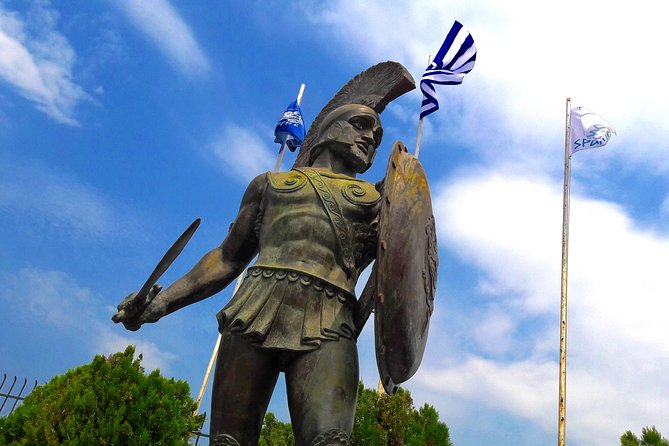
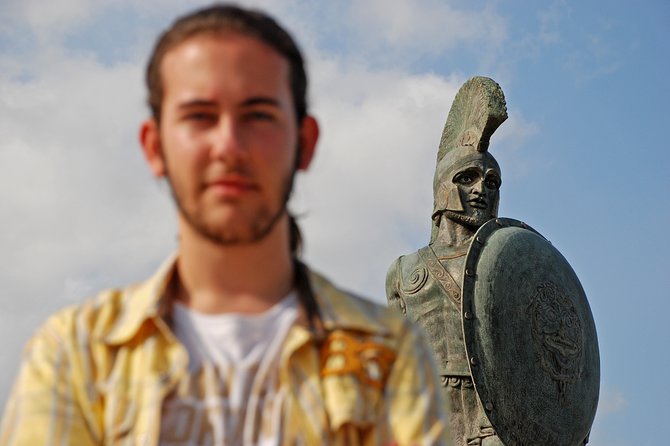
At the Leonidas-related sites, you visit the Leonidas Monument, near a stadium area, plus the tomb structure believed to be Leonidas’s remains. The story is anchored in Thermopylae, including the famous response Molon labe, come and get them. Even if you only spend 15 minutes here, it lands as a strong emotional pivot from the more general Spartan context.
The day’s big UNESCO turn is Mystra (Mystras), the medieval ruins built on an amphitheater-like setting around a fortress established in 1249. It is a UNESCO World Heritage Site, and the reason you want it on this route is simple: you get Byzantine civilization shaping a steep, defensible place, not just the classical “Greece as marble” story. The area’s mix of fortress and religious buildings also explains why Mystras became the capital of the Despotate of the Morea at one point.
Day 3: Olympia’s Sanctuary World, the Museums, and the Trip Toward Delphi
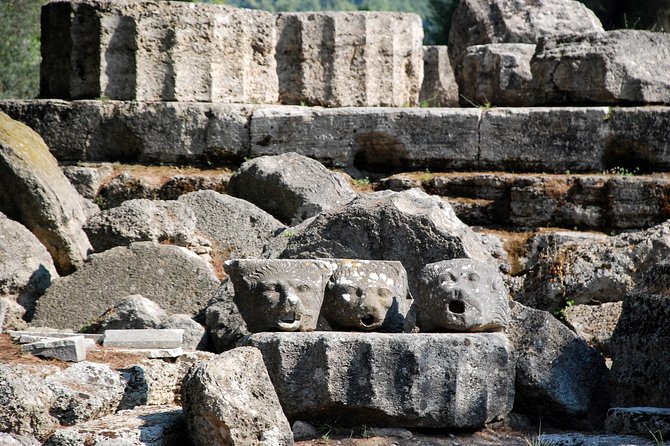
Day 3 begins at Olympia, one of the most influential ancient Greek sanctuaries. You are in Elis, in a valley near the confluence of the Alpheios and Kladeos rivers, and in antiquity it hosted the Olympic Games starting in 776 BC. Walking the archaeological site is more than sightseeing because you can feel how the sanctuary functioned as a stage, built to host repeated, high-profile events.
You also have time at the Olympia Museum, where major finds are exhibited. The museum connections matter here because some of the most famous sculptures you hear about in Greek art studies are represented in person, including the Hermes of Praxiteles and the Nike of Paionios. If you care about how the classical eye looked at the human body, this museum is a morale booster after a day of walking.
There is also time for the Museum of the Olympic Games, which focuses on how the Games worked as a system, including the original events and even the reality of what happened to women who tried to watch. It is a shorter stop, but it adds a more human and social layer to the sport myth.
From Olympia, the itinerary shifts with a scenic transport moment: the Rio-Antirrio Bridge crossing area. You take a ferry from Rio to Antirrio, around 20 minutes, and you can admire the bridge. It is a modern contrast that works well after the ancient athletic setting.
Then you pass through stops on the way, including Nafpaktos (historically linked to Lepanto) and Galaxidi, a small port with a double-harbor feel. These places can be gentle breaks. They also help you understand that your trip is not only about ruins, it is about living coasts and road geography.
Finally, you reach Mount Parnassus, with an overnight stay in the traditional village area on the slopes. You get scenic views over olive groves and countryside, plus a sense of how mountains were tied to myths like Dionysus, Apollo, and the Muses. This is also a smart night choice because it positions you for Delphi on Day 4.
More Athens tours and experiences for the shortlist
Day 4: Delphi’s Oracle Site, Museums, Athena Pronaia, and Your Return
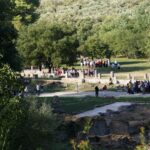
Delphi is the emotional center of this trip for many people, and this plan gives you time to experience it in two layers. First you go to the Temple of Apollo at Delphi, where the oracle, the Pythia, was consulted across the ancient Classical world. Delphi is UNESCO World Heritage, and you will see the site stretching across a Mount Parnassus slope above the coastal plain and valley of Phocis.
Even if you are not reading every inscription, the layout helps. Delphi was treated like the world center, symbolized by the omphalos stone monument. The site also shows how many major Greek city-states built monuments here, which is a powerful way to visualize Greek unity expressed through shared religious space.
After the outdoor experience, the Delphi Archaeological Museum helps you connect dots. It focuses on the history of the sanctuary and includes architectural sculpture and statues tied to the oracle’s influence from the 8th century BC through Late Antiquity. This stop is often the difference between seeing ruins and understanding what those ruins were for.
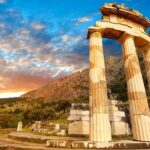
You also visit the Tholos of Athena Pronaia, a circular building built between 380 and 360 BC, made of Doric columns on the outside with Corinthian-order interior columns. The structure’s measurements are impressive, and the building is a great way to end your Classical and oracle storyline with something architectural rather than narrative.
The route includes additional stops back toward Athens, such as Livadia, tied to the oracle of Trophonius and discussed as important even in Plutarch’s era. You also visit the Archaeological Museum of Thebes, which covers a long chronological range from Paleolithic to Post Byzantine periods. The practical benefit of these added stops is that they round out the experience beyond the headline sites, without turning the day into a nonstop grind.
The tour returns you to Athens in the evening, which keeps your travel day from swallowing your last hours.
Price and Value: What You Pay for, What You Still Need to Budget
At $1,376.08 per person, this is not a bargain-basement option. The value comes from the private logistics: pickup and drop-off in Athens, air-conditioned transportation, fuel, toll roads, parking, and ferry tickets, plus a professional English-speaking driver-led experience.
The big separate cost item is accommodations and admissions. Accommodation is not included in the base tour price, and the add-on is listed starting at €160 per double room per night (weekend-holidays higher). There are also notes that the driver’s room is complimentary, but you still need to reserve lodging for yourself for the nights where the itinerary says you overnight.
Admissions are another budget line. The tour data lays out a general winter vs summer ticket level of €10 per person in winter and €20 per person in summer for archaeological sites and museums, with multiple sites included. Some specific stops are listed as free, so your exact total will vary, but you should plan for at least some ticket spend.
If you are the kind of traveler who hates “surprise costs,” add admissions and overnight lodging to your mental total before you book. If you are more flexible and just want a smooth, well-paced plan, the private transportation piece is where you feel your money working.
The Real-World Practicalities: Museums, Closures, and Comfort

Museums and archaeological sites have closures, and this tour clearly notes that museums are closed on Tuesdays (with museum-only closures noted). There are also specific holiday closures, and the opening hours shift between winter and summer seasons.
That matters because Greece can mean early mornings for access. The tour also provides seasonal timing guidance, with winter operating around 8:30 am to 15:30, and summer around 8:00 am to 20:00. Your plan starts at 8:00 am by default, and in summer it is suggested to start earlier for the best flow.
Comfort-wise, pay attention to steps and walking intensity. Palamidi Castle is the obvious one, with a long stair climb to the top. You also have multiple archaeological sites that are outdoors and exposed. Bring footwear you can walk in for longer stretches, and treat midday heat as a factor in summer.
Finally, if you want deeper interpretation, you have the option to hire archaeological guides at an additional charge. Since the driver is not the licensed guide for every site walk, this is the way to get that extra layer without turning the trip into a classroom.
Should You Book This Tour?
I would book this tour if you want a private, efficient way to see the core Peloponnese anchors and then reach Delphi without logistics chaos. It is especially good for groups that want to travel together and have a driver who can keep you moving, help with pacing, and answer questions. The itinerary also balances big landmarks with museum time, which is the best formula for not leaving feeling like you only took photos.
Skip or reconsider if you dislike ticket budgeting or you want a long, fully guided archaeology lecture at every stop. The admissions and optional guide costs are real, and some stops involve stairs and walking. Also, if you have limited mobility, you will want to think carefully about Palamidi Fortress and other outdoor sites.
If you do book, plan your energy for Day 2 and Day 3. That is when the mix of museums, cities, and UNESCO-era experiences stacks up. Bring comfortable shoes, set aside a little extra time for ticket lines at peak season, and you will get what this route is built to deliver, a memorable run through Greece’s most influential eras.
FAQ
What time does the tour start and where does pickup happen?
Pickup starts around 8:00 am. Traveler pickup and drop-off are offered from and to your hotel or apartment in Athens, Piraeus, or the airport, and you can request another location.
Is this tour private or shared with other groups?
This is a private tour/activity. Only your group will participate.
What is included in the tour price?
Included items cover pickup and drop-off in Athens (or Piraeus), air-conditioned transportation, the driver accommodation (complimentary), private transportation with fuels, toll roads, ferry tickets, and parking fees, plus a professional English-speaking tour driver or leader. Onboard Wi-Fi is also listed as a feature.
Are archaeological site and museum tickets included?
No. Admission fees are not included. The tour provides guidance of €10 per person in winter and €20 per person in summer for archaeological sites and museums, and the visit includes multiple sites and museums.
Can I hire an archaeological guide for specific sites?
Yes. An archaeological guide for each site can be hired at an additional charge of €180 per booking, if requested in advance.
Are there hotels included for the nights on the route?
Accommodation for you during the overnight nights is not included. The tour lists an additional cost starting at €160 per double room per night (with weekend-holiday pricing noted as higher).
Are there any days when museums are closed?
Museums and sites in the country have specific closure days. Museums are closed on Tuesdays (museums only), and there are additional closures on certain holidays listed in the tour details.
More Private Tours in Athens


More Tours in Athens


More Tour Reviews in Athens
- All Day Cruise -3 Islands to Agistri,Moni, Aegina with lunch and drinks included
★ 5.0 · 4,958 reviews

Not for you? Here's more nearby things to do in Athens we have reviewed






Athens Private Tours, compared.
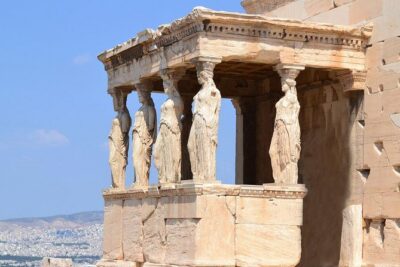 ★ 5.0Best of Athens Half Day Private TourFrom $913,714 reviews
 ★ 5.0Athens Full Day Private TourFrom $2442,903 reviews
 ★ 5.0Athens Greece Full Day private tourFrom $683785 reviews
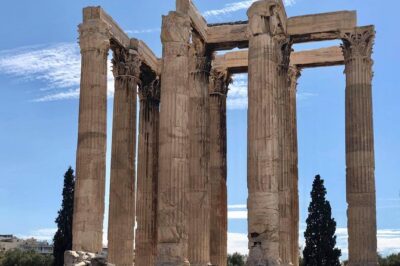 ★ 5.04 Hours – Athens & Acropolis Highlights Private TourFrom $181681 reviews
★ 5.0Athens Full Day Private TourFrom $205667 reviews
★ 5.04 Hours – Athens & Acropolis Highlights Private TourFrom $181681 reviews
★ 5.0Athens Full Day Private TourFrom $205667 reviews
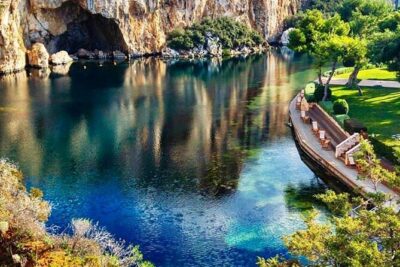 ★ 5.0Lake Vouliagmeni Thermal Spa And Temple Of Poseidon Private Full Day TourFrom $171578 reviews
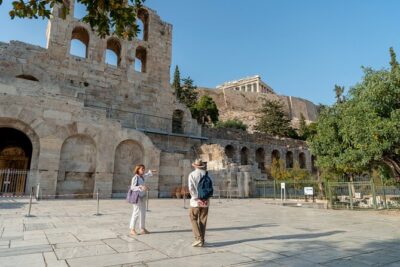 ★ 5.0Acropolis and Acropolis Museum Private Tour with Licensed ExpertFrom $188445 reviews
 ★ 5.0Athens Highlights Half Day Private TourFrom $305407 reviews