
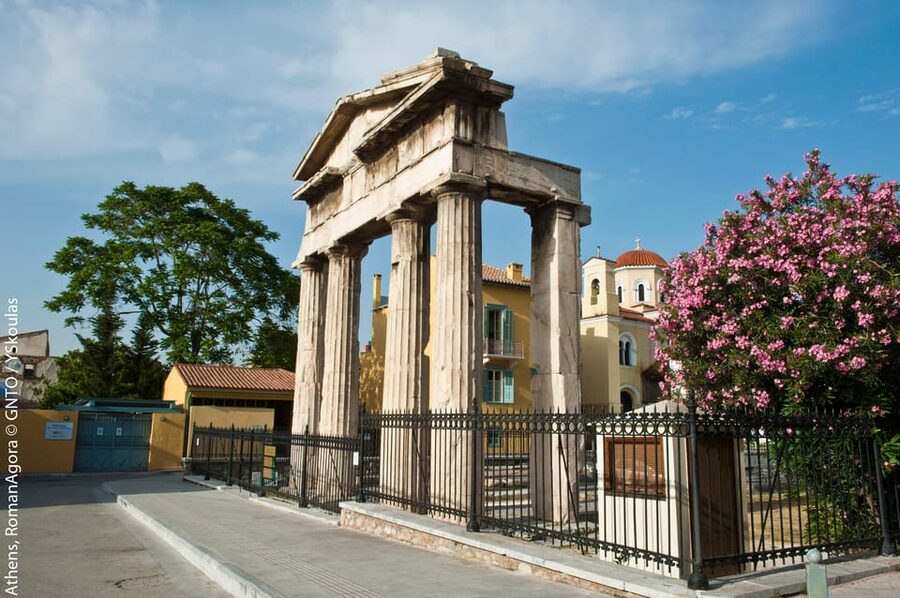
Reviewed · ATHENS WALKING TOURS
Highlights and Hidden Gems of Athens Walking Tour
Athenian history becomes easier when you see it grouped. This 2-hour walk lines up big-name sights along Dionysius Areopagitou and links them to the bigger story, plus you get archaeology-focused explanations and myths as you go. I also like that you’re not stuck staring at stones, the guide adds what’s changing in town and where to eat and drink like a local.
The main drawback is simple: with only 2 hours, the experience depends heavily on how engaging the guide is in your time slot. If you want long, super-detailed deep explanations at every stop, you may feel slightly rushed.
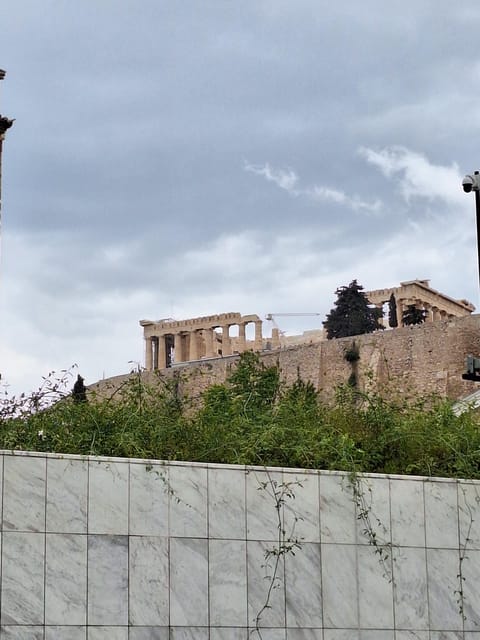
Still, this is a smart way to get your bearings fast. You’ll climb Areopagus Hill for photos, pass the Ancient Agora and Roman Forum area, then finish near the Metro so you can keep exploring and grab a meal on Makrygianni Street.
Key things you will notice on this walk
- Dionysius Areopagitou as your open-air map: a long stretch where major monuments and museums sit close together
- Areopagus Hill photo moment: a climb tied to the ancient law-court idea, with a great view
- Agora plus Roman Forum stop: a quick way to feel Athens layering Greek and Roman eras
- Monastiraki and Plaka vibes: you end in neighborhoods known for atmosphere and easy wandering
- Local food and bar recommendations: you get ideas for your next steps after the tour
- Short duration, big coverage: more than 15 monuments in about 2 hours, so it’s great for a tight schedule
Walking the monument corridor on Dionysius Areopagitou
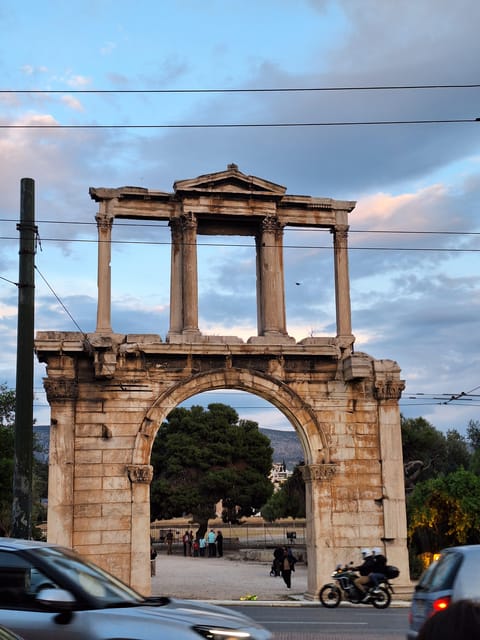
If you have limited time in Athens, this start is practical. The tour walks along Dionysius Areopagitou street, described as one of the most significant streets in the city, and it’s the kind of route that makes sense on foot. Instead of jumping randomly between places, you get a continuous historical thread, with major sites clustered together.
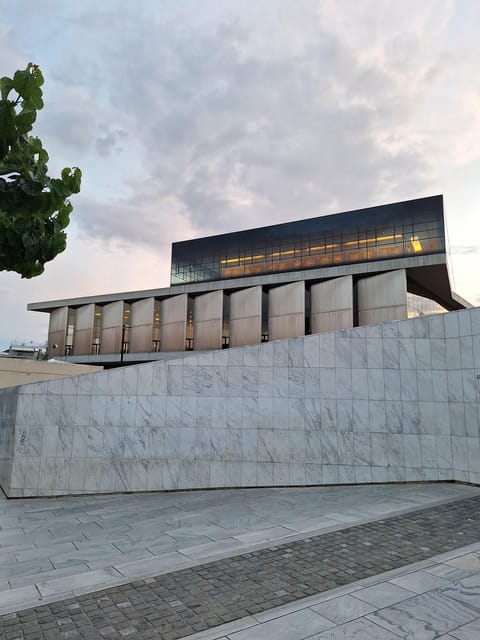
What I like is how this street is treated as a whole experience. Yes, you see monuments, but the guide also explains what’s around them and why that matters in the city’s overall layout. You also hear about the aristocratic style of the area hosting archaeological sites and museums like the new Acropolis Museum, plus the Odeion of Herodes Atticus.
One good way to use this early section: keep your camera ready, but also pause long enough to let the guide put the landmarks into words. When monuments get explained in the right order, you stop feeling lost and start feeling oriented.
You can also read our reviews of more walking tours in Athens


Climbing Areopagus Hill, the ancient law-court viewpoint
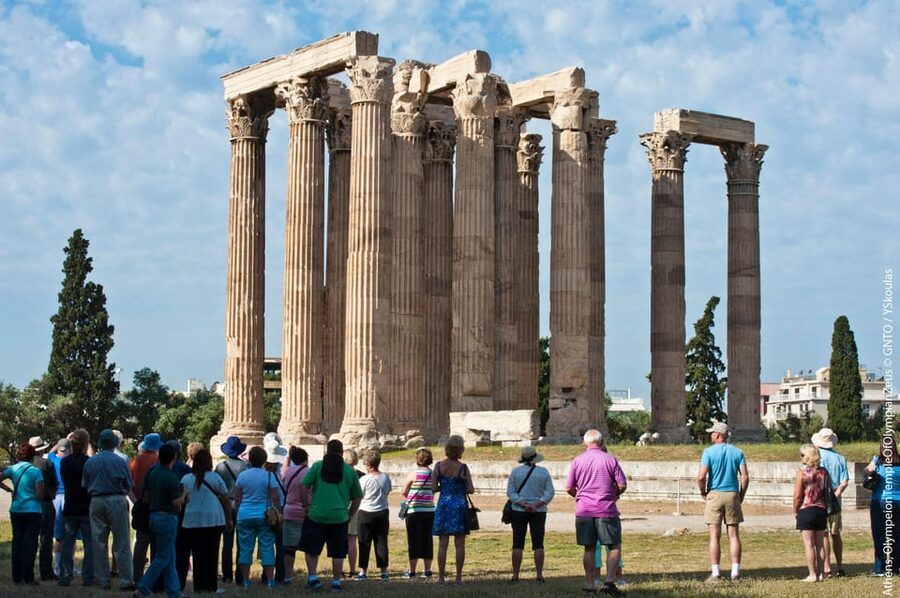
Next comes the climb. You’ll go up to Areopagus Hill, described as the most ancient law court idea in the world, and the payoff is a view that’s meant for photographs. In practical terms, this stop does two jobs for you.
First, it gives you a higher perspective on where everything sits. Athens can look like a pile of impressive sites until you understand their relationship. Second, it gives you a natural break in the walking, so you can stretch and reset your brain before the Agora area.
I recommend taking the climb slowly. Even if you feel fine at ground level, a hill can add up when you’re also visiting multiple sites. If you’re traveling with mobility needs, you’ll still be in good hands since the tour is wheelchair accessible, but you should ask your guide about pacing during the walk so the schedule feels comfortable.
Ancient Agora and Roman Forum: where the timeline starts to click
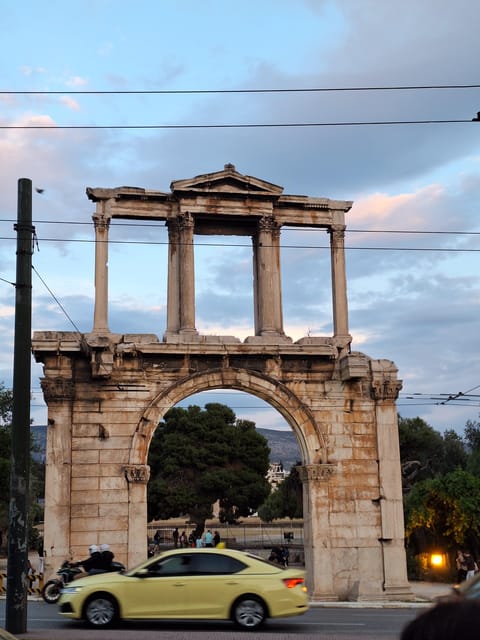
After the view, the walk turns more grounded and street-level. You’ll encounter the Ancient Agora and then the Roman forum. The value here is that you’re not just looking at one era. You’re seeing how Athens layers over time, with different civilizations using the same general kind of public space and turning it into something recognizable.
What makes these stops useful for most people is that they help you shift from landmark collecting to understanding how cities work. The Agora and the Roman Forum type of spaces were meant for public life, movement, and big gatherings. When your guide ties myths and facts to what you see, the stones stop being random and start being meaningful.
If you’re the type who loves photos, you’ll get opportunities here too. But don’t only shoot wide angles. Try to notice smaller details in the masonry and layout from the direction your guide walks. You’ll get more out of the explanation when you can mentally match it to what you just saw.
Monastiraki Square and Plaka: ending in the real Athens mood
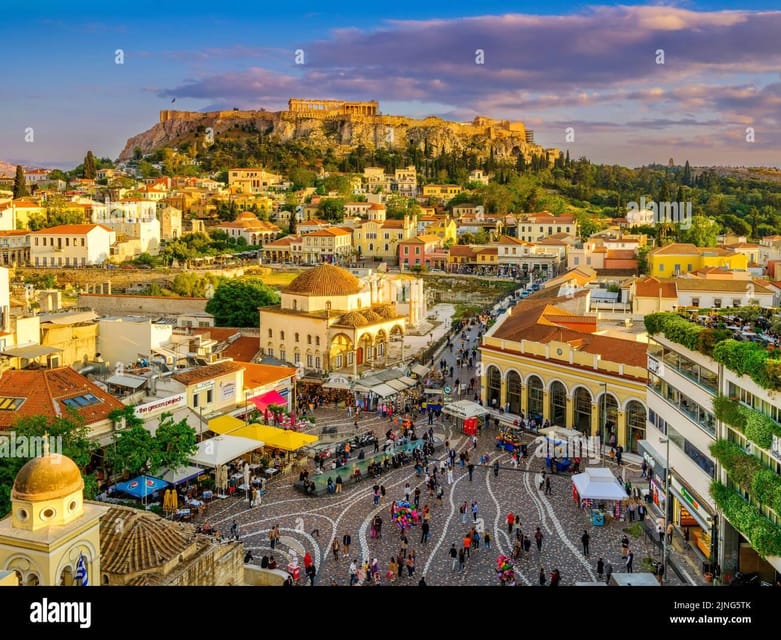
The tour has a feel-good ending. After the more monumental history stops, you head toward the Monastiraki square area and the Plaka neighborhood, described as charming and lively. This is where Athens stops feeling like a museum and starts feeling like a living city.
The guide also uses this section to help with your next moves. You’ll talk about city trends and you’ll get ideas for places to eat and drink like a local. Since the tour ends close to the Acropolis Metro station area on Makrygianni Street, you’re not forced to scramble for transport or food right after you’re tired. You can simply keep walking a few minutes and pick something that fits your mood.
Practical tip: if you’re hungry, don’t wait until the end of the tour to think about it. Ask your guide for food or drink suggestions when you’re close to the finish. You’ll save yourself time and you’ll get options that match what’s around you in the moment.
Why the price can be good value for tight schedules
At $43 per person for about 2 hours, this tour is priced like a “high output” experience. That matters because you’re covering more than 15 monuments, plus a hill climb, plus neighborhood atmosphere. For a lot of visitors, the real cost is not money, it’s time. A 2-hour overview can be the difference between seeing Athens as a blur and seeing it as a plan.
What makes the money feel worth it is the combination:
- archaeology-based context and myths tied to what you’re seeing
- city tips for museums, sightseeing, and local food and bars
- a route designed to reduce backtracking
The short duration means there’s less time for wandering off on your own. But it’s also why the tour works well if you want a fast start on day one, or a history-and-food bridge between longer museum visits.
One consideration: if you’re already a hardcore Athens history person with a deep museum plan, you might prefer a longer tour. Here, the goal is getting you oriented and giving you ideas to use afterward.
- All Day Cruise -3 Islands to Agistri,Moni, Aegina with lunch and drinks included
★ 5.0 · 4,958 reviews




What a great guide adds, and the one thing to watch for

The tour is meant to be guided, not just walked. The promise is that the guide shares archaeology expertise, explains interesting myths behind monuments, and gives you practical recommendations: sightseeing, museums, food, and bars.
In the best examples, that human touch shows up as relaxed clarity. One guide named in feedback is Matina, and she’s described as relaxed and very educated, making it easy to follow along even when a child was present. That kind of guiding style can turn a short tour into a memory you can actually use later.
At the same time, another experience described a guide who was less engaged and didn’t add many details. So here’s the practical takeaway: if you care about stories and facts, come with a curious mindset. Ask quick questions on the spot. If the pace feels too fast, ask for a slower explanation at the next stop. A guided walk lives or dies on interaction.
How to plan your day around this 2-hour route

This tour ends near the Acropolis Metro area, and that’s a smart place to finish. It makes it easier to connect to other plans without losing momentum. Use it like this:
- If you’re doing the Acropolis Museum or other big indoor stops later, treat this tour as your map. You’ll recognize names and locations faster.
- If you’re planning a second walk through Plaka and the Monastiraki area, save some energy for that portion. The neighborhoods are the payoff zone.
- If you’re trying to fit in food, schedule a meal after the tour while you still feel fresh. The guide will point you toward options close to where you finish.
Pack like it’s a walking tour, because it is. Wear comfortable shoes and bring sunscreen if it’s sunny. Athens sun can be sneaky, and you’ll want your legs and attention for the hill climb.
Should you book this Athens walking tour?
Book it if you want a 2-hour Athens crash course with archaeology context, plus practical food and museum tips. It’s especially useful if you’re short on time and want to see more than 15 monuments without turning the day into a logistics puzzle.
Skip or reconsider if you’re looking for long, highly detailed explanations that replace a full museum visit. This tour is designed as an overview, then a springboard for your next steps.
If you’re the kind of traveler who likes to get oriented first and then explore at your own pace, this one is a solid fit. You’ll finish with a clearer sense of where things are, what connects, and where to go for your next bite.
FAQ
How long is the Athens walking tour?
The tour lasts 2 hours.
How much does it cost?
It costs $43 per person.
Where do I meet the guide?
You meet outside of the Acropolis metro station in Makrigianni street, on a pedestrianized road with restaurants and cafes.
Where does the tour end?
It concludes at Makrygiani Street, close to the Acropolis metro station, where there are familiar restaurants and cafes.
What sites are included along the route?
The tour includes Dionysius Areopagitou street, a climb to Areopagus Hill, encounters with the ancient Agora and the Roman forum, and time in the Monastiraki square and Plaka area. It also mentions nearby stops and sights including the new Acropolis Museum and the Odeion of Herodes Atticus.
Is the tour wheelchair accessible?
Yes, the walking tour is wheelchair accessible.
What is included in the price?
The included items are a guide and the walking tour.
What does the guide cover during the walk?
You’ll hear archaeology expertise, facts and myths behind monuments, and practical tips and recommendations. The guide also shares ideas about city trends and places to eat and drink like a local, including sightseeing and museum recommendations.
Is there free cancellation and can I pay later?
Yes. Free cancellation is available up to 24 hours in advance for a full refund, and you can reserve now and pay later.
More Walking Tours in Athens



More Tours in Athens

More Tour Reviews in Athens
- All Day Cruise -3 Islands to Agistri,Moni, Aegina with lunch and drinks included
★ 5.0 · 4,958 reviews
Not for you? Here's more nearby things to do in Athens we have reviewed








Athens Walking Tours, compared.
 ★ 4.6Acropolis and Parthenon Guided Walking TourFrom $385,882 reviews
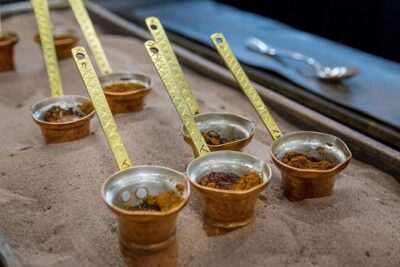 ★ 5.0Greek Food Walking Tour in AthensFrom $874,740 reviews
 ★ 4.7Acropolis: Acropolis and Parthenon Guided Walking TourFrom $363,442 reviews
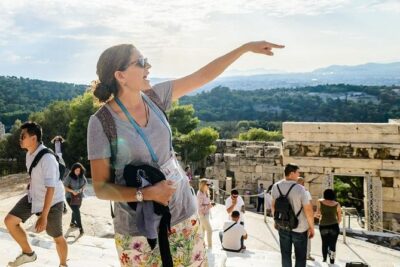 ★ 5.0Acropolis monuments & Parthenon Walking Tour with Optional Acropolis MuseumFrom $422,678 reviews
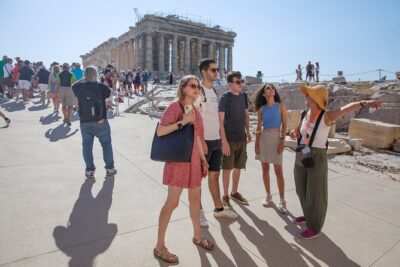 ★ 4.5Athens Acropolis and Parthenon Walking TourFrom $411,355 reviews
 ★ 5.0Athens Authentic Greek Food Walking Tour (Small Group)From $83809 reviews
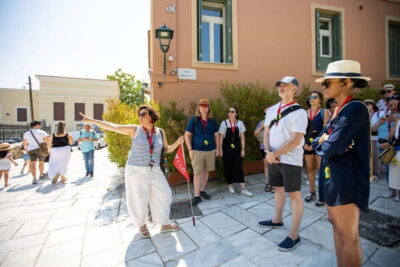 ★ 4.4Early Morning Acropolis & Old Athens Guided Walking TourFrom $28748 reviews
 ★ 4.9Ultimate Food Walking Tour with 15 TastingsFrom $93567 reviews
Browse the lists this tour appears in