
Reviewed · ATHENS ACROPOLIS & PARTHENON TOURS
Guided Walking Tour of the Acropolis in Athens in Spanish
You will walk where Athens learned to speak. This guided Acropolis tour uses a smart start on the southeast side to avoid the main entrance crush, and it comes with a Spanish speaking official guide who connects monuments to the stories people tell about Athena and the sacred rock.
Two things I really like for planning: the pace is relaxed enough for photos, and the guide keeps a good balance of history, art, and time to look up close. The one thing to watch is money and tickets, since the Acropolis entrance is not included in the tour price, so you’ll need to add about €20 on top.
Key Highlights You’ll Feel Right Away
- Small group size (max 15), so questions and back-and-forth actually work.
- Southeast side start to dodge the busiest main entrance area.
- Spanish speaking official guide focused on legends and what you’re seeing.
- Photo-friendly timing built into a 1 hour 30 minute walk.
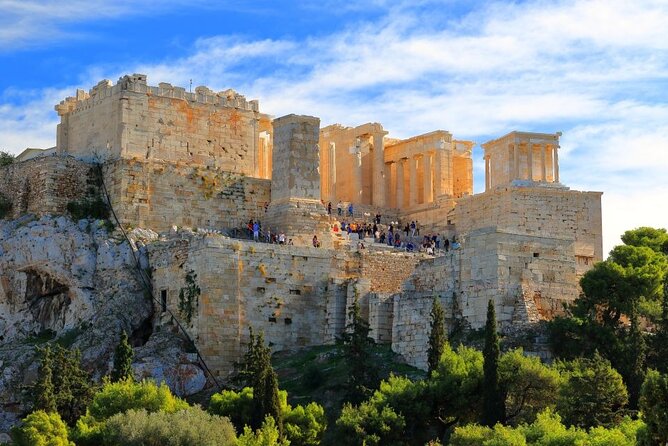
- Icon stops with big payoff, including the Parthenon and the Erechtheion.
- One guided route that also includes theater and sanctuaries, not just temples.
Southeast Entrance Strategy and Spanish-Led Storytelling
The Acropolis is famous, but it is also busy. What makes this tour feel practical is that it begins on the southeast side, not the main entrance. That simple routing choice matters because you spend less time in bottlenecks and more time getting oriented on the rock.
I also appreciate that the tour is built around an official Spanish speaking guide, not a generic lecture. The guide explains legends tied to the archaeological site while you move between monuments dedicated to Athena and other figures. It’s the kind of framing that helps your brain stop treating everything like stone props and start seeing how the sacred layout connects.
One more subtle win is the group size, capped at 15. With a smaller pack, the pace feels human. In places where you expect a strict line, you get a little breathing room, which is handy on uneven ground and with lots of stairs.
You can also read our reviews of more walking tours in Athens


Price and Tickets: What Costs Extra
The tour price is $33.57 per person, and the duration is about 1 hour 30 minutes. That’s the guide and the walking plan. The catch is clear: Acropolis admission is not included. The entrance ticket is listed separately as €20.
For value, I like to think of it like this. If you have never been to the Acropolis, paying for a guide can save you from wandering through random sights without a “why.” You also gain a route that covers key monuments in a short window and includes practical context for what you’re seeing, including multiple temples and other standout structures beyond the Parthenon.
If you are already comfortable buying the entrance ticket and reading on your own, you might question whether the extra cost is worth it. But if you want the stories and the structure, the price plus the entrance fee can feel reasonable for a guided experience in the most iconic archaeological site in Greece.
One logistics note: there is no hotel pickup or drop-off, so plan on getting to the meeting point yourself.
Meeting Point Near Makrigianni, Then Straight Up the Rock
You meet at Makrigianni, Athina 117 42, Greece, and the tour ends at the Acropolis of Athens after visiting the full site. It’s near public transportation, which is helpful if you don’t want to depend on a taxi or if you are combining this with other Athens stops.
What you should expect is a walking tour that focuses on the top area, with short stops that add up. Even though each individual segment is not long, the Acropolis setting is still the Acropolis, so your legs will get a workout. That’s why the tour recommends comfortable walking shoes and bringing a bottle of water.
If you are traveling in hot months, this is where starting earlier or choosing a time with gentler heat can help. The tour duration is fixed enough that you cannot “slow it down” too much, so hydration and footwear are not optional.
Stop by Stop: From Dionysus Theater to the Parthenon Crown
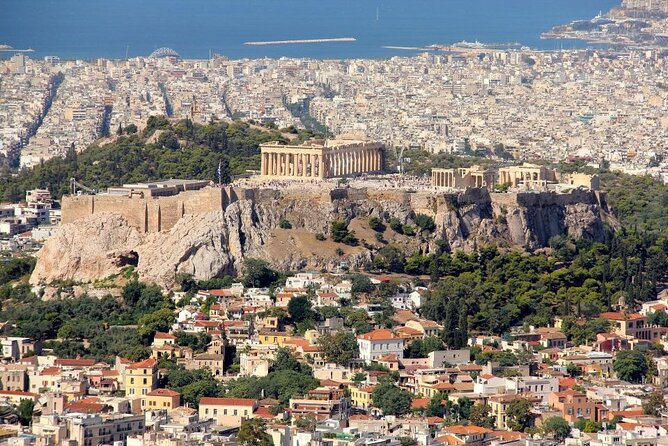
This is not a random grab bag of ruins. It is a route that moves through major themes: performance and civic life (the theater), healing and sanctuary spaces (Asclepios), the impressive engineering of the Odeon, and then the core “who we are” symbols up on the rock.
Below is what each stop means for your visit, plus what to watch for.
Acropolis Site Visit: Orientation on the Sacred Rock
The first stop is the Acropolis itself. This is where the tour visits the archaeological site and the temples of the place, with about 1 hour 30 minutes allocated for the walking flow. Admission ticket is not included, so you’ll need to secure that separately.
This opening part is about getting oriented. You learn how the monuments relate to each other, and you start connecting the legends of Athena to the spaces designed to honor her. If you have ever felt lost at big archaeological sites, this is the antidote: the guide gives you a route so your time does not evaporate in guesswork.
Potential drawback: because the time is limited, you might feel a tiny bit “on the move” rather than leisurely. If you love reading every sign, you will probably want to add extra time before or after the tour.
You can also read our reviews of more guided tours in Athens



Theater of Dionysus: Where Drama Had a Home
Next comes the Teatro Di Dioniso, and the tour treats it as a highlight: it was the largest theater in ancient Greece. You get about 10 minutes here.
Even if you are not a theater person, this stop is a useful mental switch. The Acropolis is not only temples and gods. It is also public life, audience space, and the idea that culture mattered enough to build on stone.
What to watch for: stand where you can understand the scale. A theater feels different when you can see how the seating and the performance area relate.
Temple of Asclepios: Healing and Sanctuary Space
Then you’ll visit the Temple of Asclepios, described as a sanctuary made in honor of the gods Asclepius and Hygieia, with about 10 minutes allotted.
This is one of those stops that makes the tour feel more complete. It reminds you that “sacred” does not always mean “worship-only temples.” Some sanctuaries were about healing and protection, at least in the way the ancient world organized beliefs.
A practical note: because it is a shorter stop, focus on catching the basic layout first, then use the remaining time to look carefully at details you might miss when you are rushing.
Herodes Atticus Odeon: The Best Preserved Monument
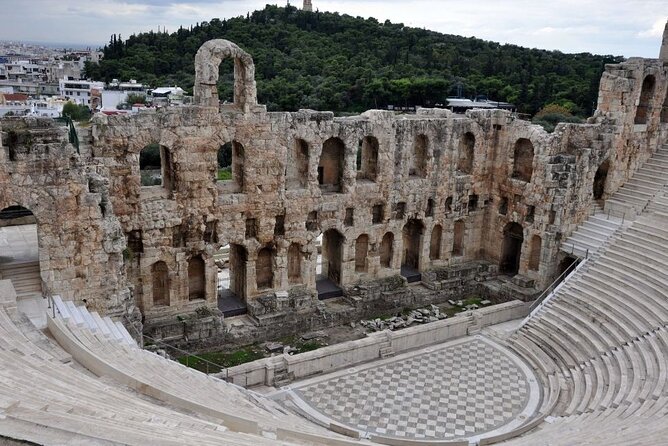
After that, you get the Herod Atticus Odeon, noted as the best preserved monument in the entire enclosure of the Acropolis of Athens, with around 10 minutes.
This matters because “best preserved” usually means less confusion and more clarity. When a structure holds its shape, you can better imagine what it was doing, and it is easier to compare it to other ancient performance spaces.
Drawback to plan for: 10 minutes goes fast. If you want extra time here, consider arriving with more flexibility or pairing this with self-guided time later.
Temple of Athena Nike: A Protective Goddess
Next is the Tempio Di Athena Nike, dedicated to the protective goddess of the city, again with about 10 minutes.
This stop keeps the focus on Athena, but with a different angle. Instead of only thinking about Athena as the main deity, you get the idea of protection, which helps explain why certain elements of the Acropolis feel like symbols of safety and identity.
What to watch for: pay attention to how it sits within the broader sacred layout, because the positioning changes how you read the monument.
Propylaea: The Access Point into the Fortress Space
Then comes the Propylaea, described as the access point to the interior of the fortification of the Acropolis of Athens, with about 10 minutes.
This is a “gateway” stop, and gateways are not glamorous on paper, but they are crucial for understanding how the Acropolis works. Propylaea is where you mentally shift from “outside city” to “inside sacred space,” and the guide’s legends and explanations help connect that feeling to meaning.
If you are the kind of person who likes architecture, this is worth a slower look during those 10 minutes. If you are rushing, you can miss why it feels like a threshold.
Parthenon: The Emblem of the City
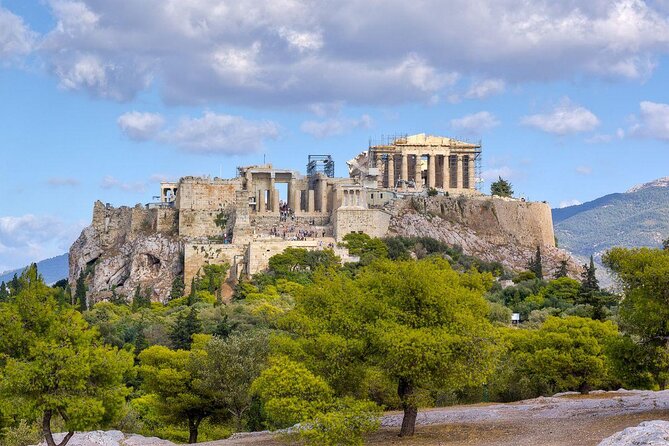
The Parthenon is the star, with about 30 minutes here. It is described as the most famous and important symbol of the entire archaeological site, the emblem of the city, and the crowned temple on top of the sacred rock.
This time allocation is smart. The Parthenon deserves it. You get enough minutes to see it from different angles, absorb scale, and take photos without feeling like you are in a timed sprint.
My practical advice: do not only shoot the most obvious postcard angle. Use your time to look slightly left and right, and try to understand how the structure “sits” on the rock. The view is part of the monument.
Erechtheion: Sacred Temple and the Caryatid Focus
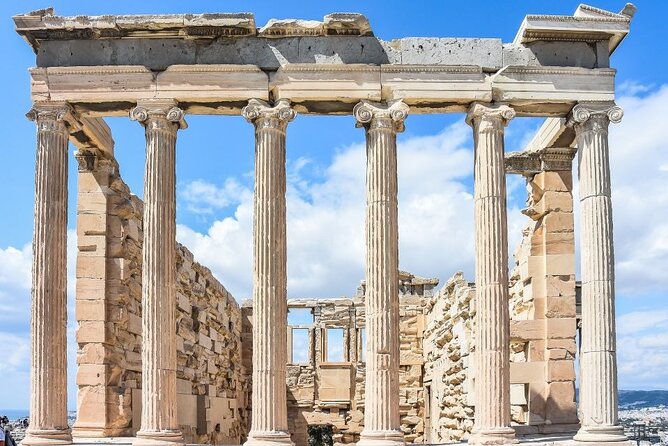
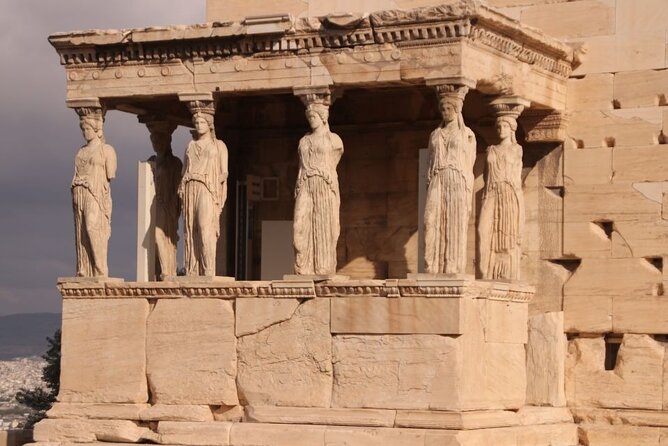
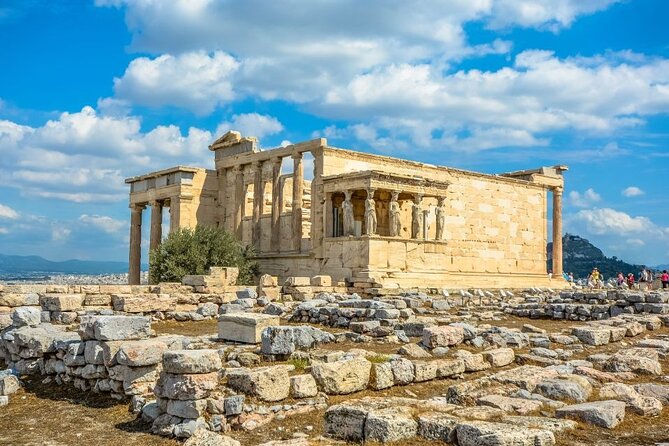
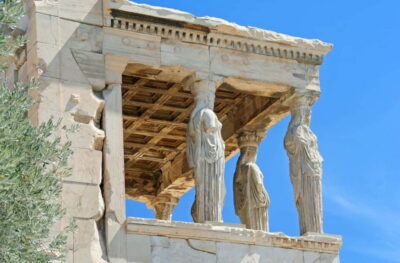
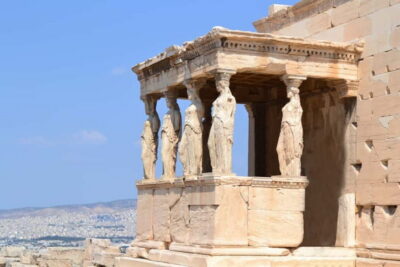
The last monument stop is the Erectheion (Erechtheion), described as the most sacred temple in the entire enclosure of the Acropolis of Athens and famous for the Caryatids, with about 10 minutes.
This is the stop that can surprise you if you assumed the Acropolis was only the Parthenon. The tour’s choice to end with the Erechtheion gives the visit a satisfying emotional arc: the famous symbol first, then the sacred, famed-detail temple.
Potential drawback: Caryatids are a signature feature, so those 10 minutes can feel short if you want a close study. If you care a lot about sculpture, be ready to spend time again after the tour if you can.
Pacing, Dialogue Level, and Why It Feels Worth It
The tour is built around a tight schedule, but it does not feel like constant speed-walking. The biggest compliment you can look for in an Acropolis guide is the ability to give enough information without swallowing your photo time. In this case, the tour is timed to include free time for pictures and a conversational pace.
I also like that the guide focuses on the legends of the archaeological site while you walk. That means you are not only reading stone labels. You are building a story as you move, and that makes the monuments easier to recall later, even when you are back in your hotel and sorting your photos.
A name that shows up in the experience feedback is Juan, praised for detailed explanations of Greek history and art periods. Even if your guide is someone else, you can expect the same type of approach: practical commentary, tied to what you are seeing right then, not generic facts recited from a script.
Views Over Athens: Where to Pause Without Losing Time
A guided Acropolis route is not complete without the city view factor. This tour is designed so you get extraordinary views of Athens along the way, which is one of the reasons people end up talking about the Acropolis long after the photos fade.
My advice is to choose your “pause moments” before you start taking pictures. For example:
- Take one wide shot first, so you remember the big picture.
- Then take a second set of photos closer to the monument features.
- Finally, stand for a minute without shooting to actually see the city spread out.
This tour includes multiple iconic stops, so you may not feel like you are stuck waiting in one place. Still, the rock itself rewards slow looking. Bring that energy and you will get more out of the limited time.
What to Bring, What to Expect, and Small Timing Wins
This is a walking tour with real steps. The tour recommends comfortable walking shoes, and I agree. Also bring a bottle of water. That’s not a nice-to-have, it’s how you keep the tour enjoyable instead of draining.
A small but useful planning point: covid-19 measures can affect activities, so check local restrictions before you go. It’s a short tour, but rules can change in ways that affect entry flow.
If you are traveling with mobility limits, the tour says most travelers can participate, but that should still be read in context: you will be on uneven archaeological surfaces, and the Acropolis is never flat. If you want to be confident, think about whether you can comfortably handle a one-and-a-half-hour walk with several stops.
Finally, note that this tour uses a mobile ticket. If you travel with spotty cell service, make sure the ticket is accessible on your device ahead of time.
Who This Guided Walk Is Best For
This is a smart choice if you:
- Want a Spanish speaking official guide to connect legends to visible monuments.
- Prefer a route that covers major highlights in about 1 hour 30 minutes.
- Like getting enough information for context, without losing all your photo time.
- Are traveling in a small group and value dialogue and questions.
It is also a good match for first-timers to Athens who want the Acropolis to feel structured. If you already know a lot and plan to do a deep self-guided study, you might feel the time is too short. But for most visitors, a guided route with clear stops and a manageable pace hits the sweet spot.
Should You Book This Acropolis Guided Walking Tour?
If your priority is getting organized, seeing the big monuments, and having your questions answered in Spanish, I would book it. The best part is the combination of a small group, a smart southeast start that avoids the worst crowd flow, and a guide who keeps a good rhythm so you can actually enjoy the site instead of just racing through it.
My only hesitation would be if you already have Acropolis tickets, you dislike guided groups, or you want long unstructured time at one monument like the Parthenon or the Erechtheion. In that case, you might prefer a self-guided visit.
If you want the Acropolis to make sense while you are standing on it, this tour is the kind of plan that saves you time and frustration, and it gives you a story you can carry back down the hill.
FAQ
How long is the Guided Walking Tour of the Acropolis?
The tour lasts about 1 hour 30 minutes.
What language is the guide?
The tour includes a Spanish speaking official tour guide.
Where do I meet for the tour?
The start is Makrigianni, Athina 117 42, Greece.
Where does the tour end?
The tour ends at the Acropolis of Athens, after visiting the full site.
Is the Acropolis entrance ticket included in the price?
No. The entrance to the Acropolis is listed as €20 and is not included.
What is included in the tour price, and what is not?
Included: a Spanish speaking official tour guide and a guided tour of the Acropolis. Not included: the Acropolis entrance ticket (€20), hotel pickup and drop-off, and personal expenses.
How big is the group?
This tour has a maximum of 15 travelers.
What should I bring or prepare before I go?
Bring a bottle of water and wear comfortable walking shoes. It is also recommended to check local Covid-19 restrictions applicable to activities.
What is the cancellation policy?
You can cancel for a full refund up to 24 hours in advance of the experience start time.
More Walking Tours in Athens



More Tours in Athens

More Tour Reviews in Athens
- All Day Cruise -3 Islands to Agistri,Moni, Aegina with lunch and drinks included
★ 5.0 · 4,958 reviews



Not for you? Here's more nearby things to do in Athens we have reviewed









Athens Acropolis & Parthenon Tours, compared.
 ★ 4.4Acropolis & up to 5 Archaeological Sites Combo PassFrom $4812,619 reviews
 ★ 4.2Acropolis Ticket with Optional Audio or Live GuideFrom $4211,055 reviews
 ★ 4.8Acropolis, Parthenon & Acropolis Museum Guided TourFrom $409,316 reviews
 ★ 4.6Acropolis and Parthenon Guided Walking TourFrom $385,882 reviews
★ 4.8Acropolis, Parthenon & Acropolis Museum Guided TourFrom $413,579 reviews
 ★ 4.0Acropolis Ticket with Audio GuideFrom $473,575 reviews
 ★ 4.7Acropolis: Acropolis and Parthenon Guided Walking TourFrom $363,442 reviews
 ★ 5.0Acropolis monuments & Parthenon Walking Tour with Optional Acropolis MuseumFrom $422,678 reviews
Browse the lists this tour appears in