
Athens makes real ideas feel physical on this 3.5-hour walk. You follow a route through the city center where philosophy and politics were practiced, argued, and built into public life. The guide, Panos, turns stones into stories, with stops that connect big concepts to specific places.
I especially love the Ancient Agora angle, because you see where civic life happened, not just where ruins sit. I also love the Tower of the Winds segment, where science meets everyday survival with weather and wind tracking. The route ends with big viewpoints from Philopappos Hill, so your last minutes feel like a reward.
One drawback to plan around: it is a walking tour rain or shine, and it is not suitable for people over 70. You will also want comfortable shoes, since the pace is steady and there are a few steps at the end.
Key things to know before you go
- Panos tells the story as if it is still happening, linking philosophy, politics, and everyday civic space.
- Tower of the Winds is more than a photo stop, a wind indicator and clock tied to early meteorology.
- Pnyx Hill and Philopappos Hill finish strong, with democracy history and wide views over Athens.
- You cover the core center of Athens, including Monastiraki and Plaka areas between major sites.
- Small group size (max 15) keeps the walk lively and question-friendly.
- Admissions are not included for several major sites, so budget time and money for entries if you want to go inside.
Starting at the Statue of Theseus, Getting Oriented Fast
You meet in front of the statue of Theseus, across the road from the train station. It is an easy, practical meeting point, and it also helps you start with the idea that Athens is layered, not single-layered. You are not just chasing monuments, you are learning how the city center worked.
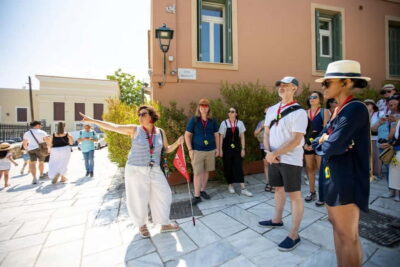
From the jump, the tone is clear: this is a walking tour that uses history to explain how people thought. Expect a guide like Panos to keep moving between ideas and the exact stones you are standing on. Reviews consistently praise his storytelling flow and his ability to explain complex political shifts and philosophical themes in plain language.
If you prefer tours where you can ask questions and hear follow-ups, this format fits well because the group stays small. The main consideration is simple: you are walking a lot for 3.5 hours, and it runs rain or shine.
You can also read our reviews of more walking tours in Athens
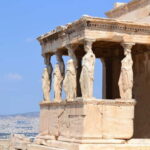


Kerameikos and the Athens of Speeches and Public Life
The tour begins around Kerameikos Archaeological Site, which is tied to burial grounds for prominent Athenians for centuries. That detail changes the tone of your visit. Instead of only seeing monuments as art objects, you see Athens as a society where status, memory, and public life were tightly connected.
This is also where you learn about the setting for Pericles’ famous speech, a moment that is often quoted but less often understood in context. With the guide’s framing, Pericles stops being a name and starts being a symbol of how Athens persuaded its citizens and rallied them around civic values.
Then you move onward toward the modern city center, with Monastiraki Flea Market on the way. This is one of those stops that works as a contrast. You go from burial ground and civic memory to street life and antique trading, and you get a sense of how old Athens keeps threading through modern Athens.
Drawback to factor in: if you hate walking through market areas, Monastiraki can feel like it belongs to a different type of trip. The trade-off is that it keeps the tour grounded in how Athens actually feels today.
The Ancient Agora: Where Democracy and Daily Decisions Intersect
The Ancient Agora of Athens is the star setting for the tour’s promise: birthplace of democracy. It is also more than a big open ruin. You learn how the agora functioned as a hub for political, commercial, administrative, and social activity, meaning decisions were made in public, not behind closed doors.
This is where the philosophy angle clicks. Instead of treating thinkers as isolated geniuses, the walk connects philosophical ideas to civic life, laws, debate, and public reasoning. Reviews praise how Panos explains the flow of political regimes and ties philosophical topics like rational thought and ethical ideas back to the real places where people argued.
You also get a chance to understand how civic space shapes thinking. When you stand in an area built for discussion, politics stops being abstract, and philosophy stops being only books.
One practical note: the Ancient Agora and surrounding areas involve uneven ground and a fair bit of walking. If your feet get cranky easily, take it slow in the middle and do not rush the group when you want to look closely.
Tower of the Winds: Early Science You Can Actually Picture
The Tower of the Winds is one of those Athens sights that feels surprisingly current. It is an octagonal marble tower in the Roman Agora that served as a wind indicator and also a clock. That sounds like a trivia fact until the guide explains why it mattered.
You learn it was used as a kind of early meteorological station, with the idea that weather forecasting could guide daily choices. In a city where wind and conditions affect travel and daily work, this is not just science for scientists. It is practical public information.
Then you keep linking that practicality to broader themes: how ancient Athens and later Roman Athens organized knowledge, measurement, and civic life. It is a strong shift from “theory” to “systems,” and reviews often highlight how the guide brings science into the same story as philosophy and politics.
If you enjoy educational stops that still look cool in photos, you will probably like this one a lot. The only thing to watch: admissions for the Tower of the Winds are not included, so plan on potential entry costs if the tour includes paid access at that stop.
Pnyx Hill and Philopappos Hill: Democracy on a Viewpoint
If you want the walk to end with meaning, the finale delivers. The tour heads to Pnyx Hill, a historic location for democracy. This is where you learn the physical setting for civic assembly, so “democracy” stops being a slogan and becomes a lived activity in a specific landscape.
From there, you reach the Philopappos Hill area, including the ancient Greek mausoleum of the Philopappos Monument. The mausoleum detail matters because it shows how public memory and status were built into the city’s high points. And yes, you also get the payoff: views from the hilltop.
Several reviews mention how the viewpoints and the philosophical framing land together. That combination is the secret sauce here. You are not just looking at Athens, you are thinking about what kind of thinking produced the society you are seeing.
One consideration: this part of Athens can feel more exposed. Bring water when it is warm, and keep your phone ready for panorama photos, because you will want them at the end.
- All Day Cruise -3 Islands to Agistri,Moni, Aegina with lunch and drinks included
★ 5.0 · 4,958 reviews
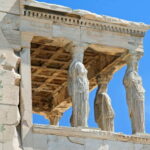




Hadrian’s Library, Plaka Pass-By, and the Acropolis Glance-Over
After the Agora and wind tower, you move through the city with a mix of major sites and atmosphere. You visit Hadrian’s Library and see the Roman Agora area nearby, with the guide connecting what you are seeing to education, public culture, and the idea that Athens valued structured learning.
Then you pass through Plaka, with its small scenic houses and narrow streets. Plaka is not the main academic lesson, but it helps you reset your brain. The tour keeps the tempo, and the neighborhood walk-through gives you a sense of where modern Athens lives right alongside its ancient roots.
Finally, you pass by the Acropolis, the citadel above Athens on a rocky outcrop. Since the tour is not built as an Acropolis-focused climb, you get a thoughtful pass-by instead of a full summit day. If you have already planned a separate Acropolis visit, this works nicely as a “what’s beyond the main hill” companion.
Practical note: admissions for Hadrian’s Library, the Roman Agora, and the Tower of the Winds are not included, so check what you want to enter versus what is covered from outside.
Guide Power: How Panos Turns Politics Into a Walk You Remember
This is the tour’s biggest differentiator. Again and again, the standout detail is Panos as the guide, described as warm, funny, and able to connect major ideas like democracy and philosophical theories to the exact places you visit.
What makes his approach work is the balance between big-picture narrative and on-the-ground specifics. Reviews say he explains the development of philosophy alongside political regimes in ancient Athens, and you feel the structure as you walk. That is why a 3.5-hour tour does not feel like a rushed highlight reel. It feels like a guided reasoning session on foot.
You also get the benefit of a group size capped at 15, which means the guide can respond to questions without losing momentum. Several comments also mention how accessible the philosophy is, including for kids, though a 10-year-old may find it a bit much at times.
If you like learning that makes you ask follow-up questions, this kind of storytelling is where the value is hiding.
Price and Value for $49, Minus the Paid Entries
At $49 per person for about 3.5 hours, you are paying for three things: a structured route through the center, a live English guide, and the intellectual framing that connects the sites. The small-group size is part of that value too.
The main cost you might add is admissions, since entry for Athens, Hadrian’s Library, the Roman Agora, the Tower of the Winds, and the Ancient Agora of Athens is not included. If you plan to go inside each of those, budget accordingly. If you are fine with what you can see from the route and focus on the guide’s explanations, you may find the cost stays closer to the stated price.
Also note: the tour runs rain or shine, which matters in Athens when weather can switch quickly. For most people, that reliability is a plus, as long as you come equipped with comfortable shoes and accept that you will still walk.
Who Should Book This Walk (and Who Might Skip It)
I think this tour is a strong match if you want Athens to feel like a thinking city, not just a sightseeing city. It is ideal for first-time visitors who want the “why” behind the landmarks, and for anyone who likes philosophy, politics, or science as part of history.
It also makes sense for families, since kids up to 14 join for free. That said, pace and focus matter. One review notes that the content may be a lot for younger kids, while older teens or older children can follow better.
It is not suitable for people over 70, and if mobility is a concern, keep that in mind. If you are sensitive to heat, plan your timing and hydration, because this is a walking-heavy route with a steady tempo.
Should You Book Athens: Philosophy and Democracy Walking Tour?
If you want Athens explained through the themes that shaped it, book it. This walk is built for meaning: democracy and philosophy tied to real urban spaces, plus science shown through the Tower of the Winds. The standout reason is Panos’s ability to make complex ideas feel connected to where you stand.
Skip it if you only want classic monument photos and do not care about context, or if your walking tolerance is limited. Also consider the extra budget for admissions since key sites are listed as not included.
FAQ
Where does the tour start?
You meet in front of the statue of Theseus, opposite the train station, across the road.
How long is the Athens Philosophy and Democracy walking tour?
The duration is 3.5 hours.
Is the tour guided, and what language is offered?
Yes, it is a live guided tour in English.
What is included in the price?
The price includes a group size of max 15 and children up to 14 years old join for free.
Are site admissions included?
No. Admissions are not included for Athens, Hadrian’s Library, the Roman Agora, the Tower of the Winds, and the Ancient Agora of Athens.
Does the tour run in bad weather?
The tour takes place rain or shine.
Is there a cancellation option?
Yes. You can cancel up to 24 hours in advance for a full refund.
More Walking Tours in Athens



More Tours in Athens

More Tour Reviews in Athens
- All Day Cruise -3 Islands to Agistri,Moni, Aegina with lunch and drinks included
★ 5.0 · 4,958 reviews
Not for you? Here's more nearby things to do in Athens we have reviewed








Athens Walking Tours, compared.
 ★ 4.6Acropolis and Parthenon Guided Walking TourFrom $385,882 reviews
 ★ 5.0Greek Food Walking Tour in AthensFrom $874,740 reviews
 ★ 4.7Acropolis: Acropolis and Parthenon Guided Walking TourFrom $363,442 reviews
 ★ 5.0Acropolis monuments & Parthenon Walking Tour with Optional Acropolis MuseumFrom $422,678 reviews
 ★ 4.5Athens Acropolis and Parthenon Walking TourFrom $411,355 reviews
 ★ 5.0Athens Authentic Greek Food Walking Tour (Small Group)From $83809 reviews
 ★ 4.4Early Morning Acropolis & Old Athens Guided Walking TourFrom $28748 reviews
 ★ 4.9Ultimate Food Walking Tour with 15 TastingsFrom $93567 reviews
Browse the lists this tour appears in