
Reviewed · ATHENS ARCHAEOLOGICAL MUSEUM TOURS
Athens: National Archaeological Museum Private Guided Tour
Two hours to make sense of Athens’ antiquities. This private tour is built for clarity, not just checklists, and it brings the museum’s big stories down to something you can actually follow. I especially like seeing the Antikythera mechanism with context, and I like the way the licensed guide helps you target the main collections without getting buried in 11,000-plus finds. One consideration: the museum is huge, so in 2 hours you will see highlights, not every masterpiece.
The experience is led by archaeologist guide Christos Theodoropoulos, in a private group up to 6. You also get a plan to move through the museum efficiently, with languages offered including English, and you can ask questions as you go. If you’re expecting a slow, open-ended wander with no structure, you may want to budget extra time after the guided portion.
Key things that make this tour worth your time
- Antikythera mechanism explained in a way that connects science, technology, and ancient culture
- Licensed archaeologist guide who can translate big timelines into clear takeaways
- A museum route that saves your legs in a place with thousands of objects
- Five permanent collections in focus, from prehistory through late antiquity
- Private pacing for your group (up to 6), with room for questions
- Sometimes special access, like a jewelry-room look when timing allows
Why the National Archaeological Museum feels like Athens in miniature
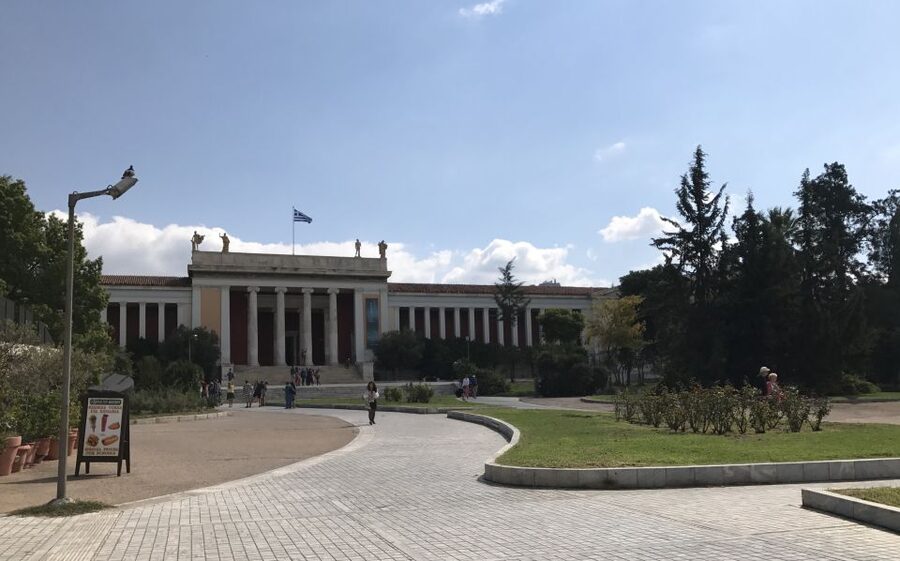
If you only have one museum afternoon in Athens, the National Archaeological Museum is the one to lean on. It’s the largest museum in Greece and it functions like a hub that gathers the finds from excavations across the country, not just what’s in the city. Over time it grew from a storage goal into a national showcase, so the building holds a sweeping panorama of Greek civilization.
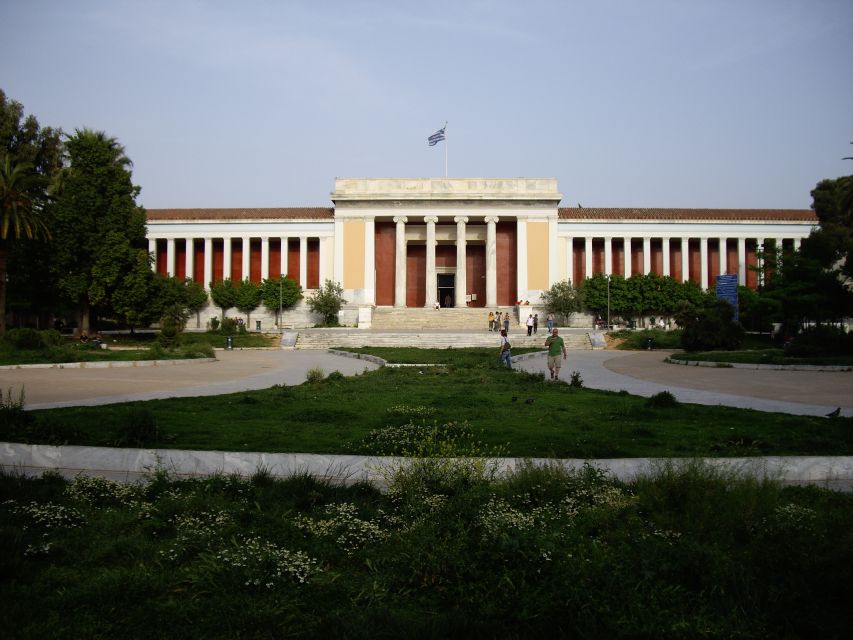
The setting also helps. You’re touring a neoclassical building from the late 1800s, designed by L. Lange and remodeled by Ernst Ziller. Once you step inside, you get that grand, museum-at-work feeling: lots of galleries, multiple floors, and a serious sense that these objects were meant to be studied.
Here’s what makes this tour practical: the museum is packed. With more than 11,000 exhibits and around 8,000 square meters of space, a self-guided visit can turn into a fast, tiring blur. The guided approach turns the museum into a storyline you can remember.
You can also read our reviews of more guided tours in Athens


Christos Theodoropoulos and the value of a real specialist
This isn’t a casual museum host. The tour is guided by a licensed archaeologist, and the biggest payoff is how quickly your brain gets organized.
In my view, the best guides do two things at once:
1) they help you understand what you’re looking at, and
2) they help you decide what matters most.
That’s exactly the energy you get here. Christos Theodoropoulos is known for answering questions and adjusting the route for the pace of the group. People describe the tour as a crash course in ancient Greek history, but not as dry lectures. It’s more like you’re learning a map to the museum while you’re walking it.
The experience is also private, up to 6 people, which matters because it changes how the time is used. Instead of everyone being herded through the same rhythm, the guide can slow down where you care and speed up where you don’t.
Languages offered include Turkish, English, German, and Greek, so you can match the tour to what’s easiest for you.
The Antikythera mechanism stop: the science behind the myth

The Antikythera mechanism is one of those objects that can stop a whole room. It’s often described as a world-first kind of tool, and in this tour you see it with the right kind of framing.
What I like about including it in a museum highlights tour is that it breaks the stereotype that archaeology equals only statues and pottery. You get ancient ingenuity, the idea that the Greeks were thinking mechanically and mathematically, not just artistically.
You also get to connect it to the broader museum message: Greek civilization wasn’t one thing. It evolved through major phases, and technology, art, and belief systems developed side by side.
If you’re the type who likes a “why does this matter” moment, this is your moment.
The route through major collections in a tight 2-hour window
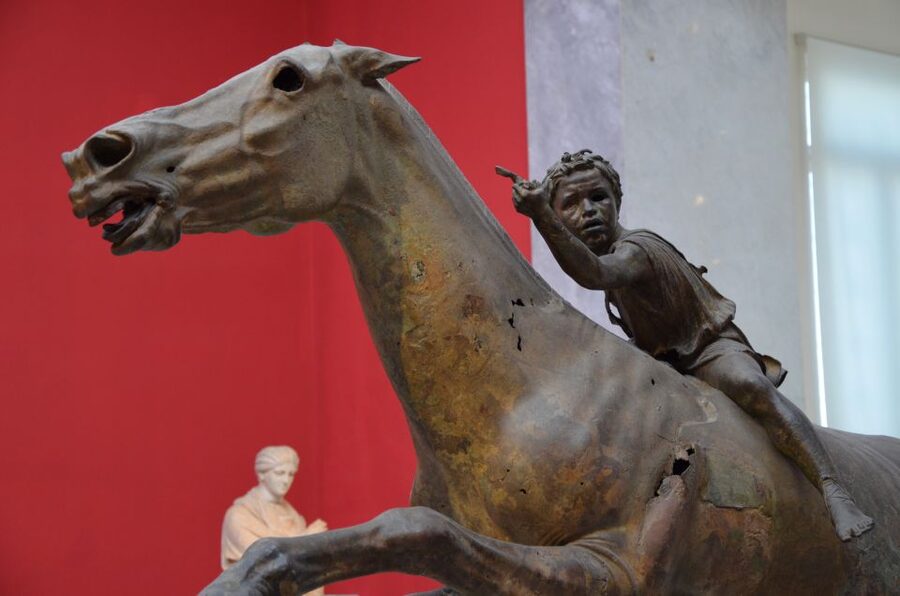
The National Archaeological Museum’s permanent displays are organized into five large collections. In a 2-hour guided tour, you can’t hit everything. The smart plan is to focus on the through-lines, so you leave with the ability to walk the museum afterward and recognize what you’re seeing.
Here’s the kind of sweep you can expect the guide to use, since the museum’s core collections cover these eras:
Prehistory through early Greece: where the story starts
One of the largest collections covers prehistoric antiquities, spanning from the Neolithic period through the Cycladic and Mycenaean eras to around 1050 B.C. It also includes finds from the prehistoric settlement at Thera.
This matters because it gives you the foundation for later Greek culture. Without this start, the classics can feel like they dropped from the sky. With it, you see how long development was under way.
You can also read our reviews of more private tours in Athens




Sculpture from the 7th to the 5th century B.C.
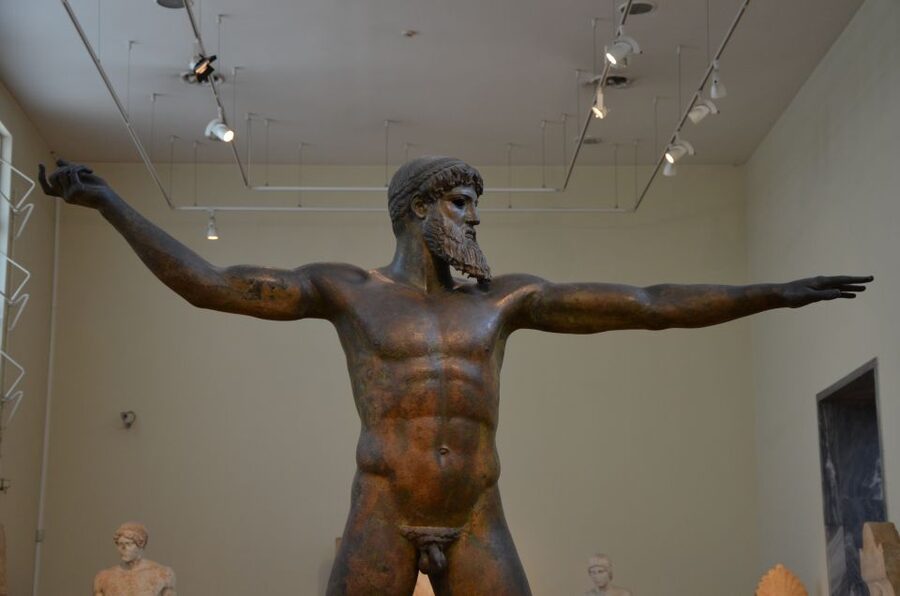
The Sculptures Collection tracks the development of ancient Greek sculpture roughly from the 7th to the 5th centuries B.C., including standout masterpieces. This is where you start noticing shifts: style, proportions, and how artists aimed for realism and expression.
In a fast museum visit, sculpture can become “pretty things.” With a guide, it becomes a timeline you can feel.
Vases and minor objects: everyday life with artistic control
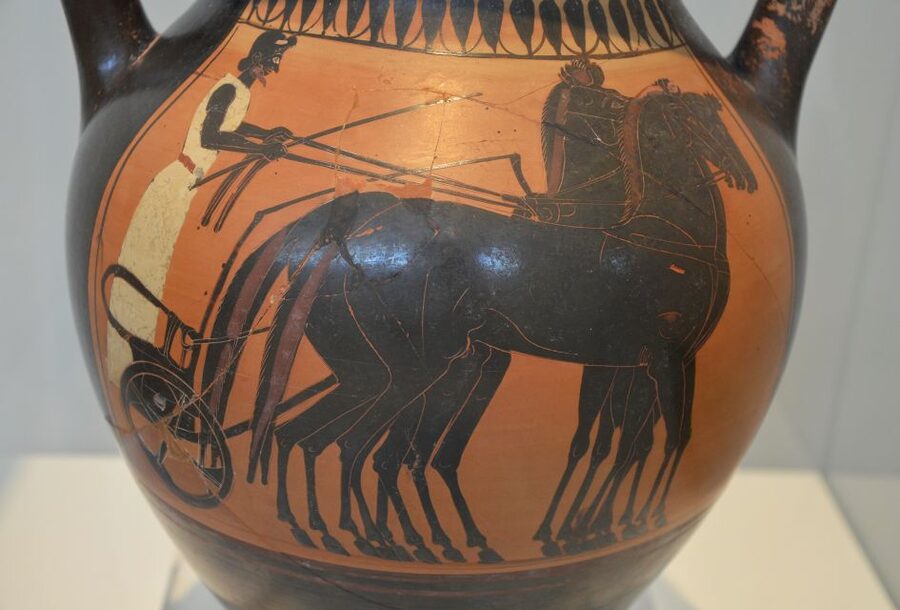
The Vase and Minor Objects Collection includes ancient Greek pottery from around the 11th century B.C. through the Roman period. It also features the Stathatos Collection, a major group of minor objects from all periods.
I like this portion because it’s less intimidating than big statues. Vases tell stories. They show scenes, symbols, and social details that feel closer to daily life.
Even if you don’t collect art, you’ll probably remember motifs and styles once someone points out what to watch for.
Bronze works: small scale, big technique
The Bronze Collection includes fundamental statues, figurines, and minor objects. Bronze artifacts can look deceptively “simple” if you only notice form. With context, you start seeing craftsmanship and how objects were made for function, display, or both.
Egyptian and Near Eastern antiquities in Greece
One collection is especially distinctive: the only Egyptian and Near Eastern Antiquities Collection in Greece. It includes objects from the pre-dynastic period (around 5000 B.C.) to the Roman conquest.
This is a great reality check. Ancient Greece didn’t exist in a vacuum. Trade, influence, and contact shaped tastes and interpretations.
How to enjoy the museum without getting lost
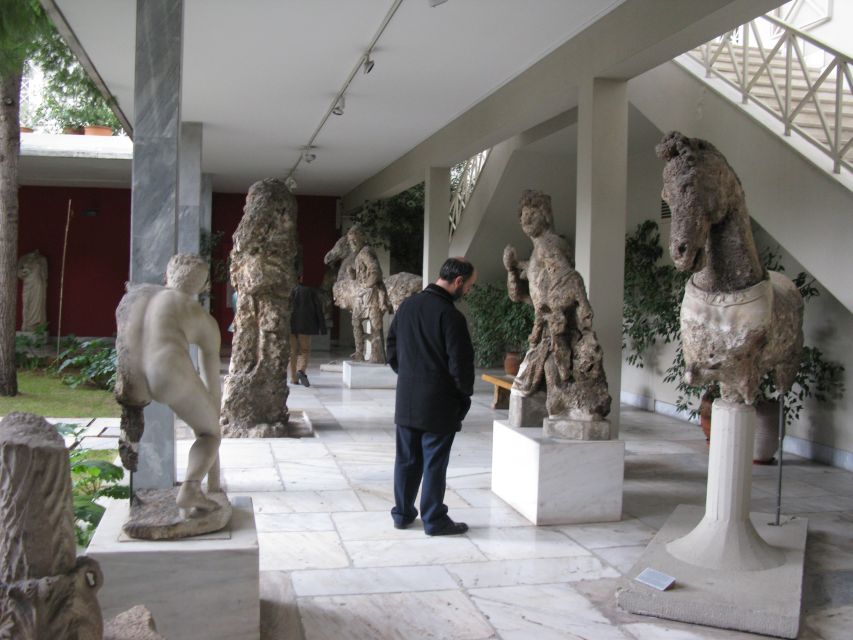
The museum’s layout is logical once you know what you’re looking for, but on your first visit it can feel like a lot. There are multiple floors, and galleries stack up fast.
The tour helps because the guide effectively gives you a route built around the building’s structure. A recurring theme in the experience is that the guide keeps things moving at a pace that works for a 2-hour window, while still making time for questions.
One practical tip: wear comfortable shoes and expect that you’ll likely want to linger after the guided portion. Even with a strong route, a museum this large rewards a second look. Some people also mention that continuing to explore after the tour makes the visit feel more complete.
Also, if you have a specific interest, say it early. For example, there are mentions of a jewelry-room look being arranged when timing allowed. That kind of detail is exactly why a private guide can outperform a generic self-guided route.
Price and value: $400 per group up to 6
Let’s talk money in a way that actually helps you decide.
The price is $400 per group, for up to 6 people, with the museum entry ticket (10 €) not included. So your real cost depends on how many people are in your group and whether you would otherwise hire a guide.
Here’s the value math:
- If you’re traveling solo or as a couple, the per-person cost is higher.
- If you’re a family or small group, the guide’s expertise spreads across the group.
But the bigger value point is time. In a museum this large, you pay for efficiency plus interpretation. A guide helps you avoid wandering randomly, and that’s where the money earns back quickly. If you’re the kind of person who wants to understand why artifacts matter, the licensed archaeologist is the difference between seeing objects and actually learning something you can use.
If you have limited time in Athens, this becomes especially appealing, because it gives you a strong orientation in one outing.
Who this tour suits best in Athens
This is a good fit if you want structure but not a stiff, scripted lecture.
You’ll likely enjoy it most if:
- you care about ancient Greek art and archaeology and want it explained clearly
- you have limited time and want to see the museum’s strongest highlights
- you’re traveling with a mix of ages, since the private pace can work for everything from teenagers to adults
- you want a guide who will answer questions and adjust within the 2-hour time window
It may be less ideal if:
- you want to spend hours slowly reading labels and going room by room
- you’re on a strict budget and would rather pay only for entry and map yourself
Quick planning notes before you go
This tour runs for 2 hours, and it’s private. You meet at the steps in front of the main entrance of the museum. The contact address listed is 44 Patission Street, 10682. Another starting location is listed as 28is Oktovriou 42, so if you’re coordinating with the guide, make sure you confirm the exact pickup point you’ll use.
If you’re flying through Athens, it’s also worth knowing that entry ticket is separate. You’ll need to factor in that 10 € museum ticket cost.
Should you book this Athens National Archaeological Museum private tour?
I’d book it if you want the museum’s main ideas without the usual first-visit confusion. This is especially smart for small groups because the $400 per group up to 6 pricing spreads well, and the licensed archaeologist guide helps you make the most of the limited 2-hour time.
Skip it only if you’re set on a slow, self-guided museum day and you’re comfortable interpreting things on your own. The museum is well labeled and easy to navigate once you’re inside, but the guiding value is in the connections, the prioritizing, and the way the tour turns thousands of years into something you can follow.
If your goal is to leave Athens with a clearer sense of how ancient Greek culture developed, this private guided visit is one of the most efficient ways to get there.
More Guided Tours in Athens

More Tours in Athens


More Tour Reviews in Athens
- All Day Cruise -3 Islands to Agistri,Moni, Aegina with lunch and drinks included
★ 5.0 · 4,958 reviews



Not for you? Here's more nearby things to do in Athens we have reviewed









Athens Archaeological Museum Tours, compared.
 ★ 4.8Acropolis, Parthenon & Acropolis Museum Guided TourFrom $409,316 reviews
★ 4.8Acropolis, Parthenon & Acropolis Museum Guided TourFrom $413,579 reviews
★ 4.8Acropolis, Parthenon & Acropolis Museum Guided TourFrom $409,316 reviews
★ 4.8Acropolis, Parthenon & Acropolis Museum Guided TourFrom $413,579 reviews
 ★ 5.0Acropolis monuments & Parthenon Walking Tour with Optional Acropolis MuseumFrom $422,678 reviews
 ★ 4.4Acropolis Museum Ticket with optional Audio GuideFrom $302,652 reviews
 ★ 4.1Parthenon & Acropolis Museum with Audio or Live Tour OptionFrom $702,446 reviews
 ★ 5.0Acropolis, Parthenon and Acropolis Museum Guided TourFrom $411,778 reviews
 ★ 4.3National Archaeological Museum Ticket & Audio GuideFrom $311,330 reviews
 ★ 4.5Acropolis of Athens and Acropolis Museum TourFrom $56944 reviews
Browse the lists this tour appears in