

Reviewed · ATHENS WALKING TOURS
Athens: History of Rebellion Walking Tour
Rebellion in Athens is not a museum story, it is street-level. This 2.5-hour walking tour threads Ottoman-era resistance, the rise of the Greek Revolution, and today’s protest culture into one clear route. I like the way it spotlights Exarchia’s activism instead of only the headline sites, and I also like that the pace leaves room for questions and talk. One thing to weigh: it is politically honest, so it may feel like too much if you want a purely neutral, “just the facts” Athens walk.
You will start in Monastiraki Square in front of Pantanassa Church, looking for your guide holding a sign that says Athens City of Rebellion. From there, you move toward Syntagma Square and the Hellenic Parliament, then cut into Exarchia for a side of Athens most visitors miss. Since it is walking and standing for much of the time, plan on comfortable shoes and expect a hands-on, discussion-friendly format.
5 Key Things You’ll Get From This Athens Rebellion Walk
- A timeline you can feel, moving from Ottoman rule to modern social struggles as you walk
- Syntagma Square with context, so protests make sense beyond TV images
- Exarchia on foot, with stories tied to anarchism, refugees, the LGBT+ community, and artists
- Small groups and real conversation, which keeps the tour from turning into a lecture
- Extra stops that break the usual route, including a couple of short “secret” and “quiet detour” moments
Monastiraki To Syntagma: Why This Walk Starts Where Athens Is Loud
If you picture Athens as marble and museum steps, this tour nudges your mental map in a better direction. It begins in Monastiraki, a classic starting point because the streets there act like a funnel, pulling you from everyday Athens into deeper historical layers. You then head toward Syntagma Square, which is basically the city’s protest stage and a natural place to talk about power, legitimacy, and public pressure.
What I like is the tour’s basic logic: Athens’ big turning points did not happen in a vacuum. As you walk, you get the “why” behind events, not just the “what.” That makes the later stops feel connected, instead of like random highlights stitched together.
One practical consideration: you are on your feet for about 2.5 hours, and the route includes several guided moments. If you get tired easily, go early, drink water before you start, and keep an eye on your pace. This is the kind of walk where paying attention matters, because you will be asked to think about what you see, not just listen.
You can also read our reviews of more walking tours in Athens


Ottoman Rule To The Greek Revolution: The Story Behind the Streets
A huge part of this experience is the transition from Ottoman-era control to the Greek Revolution. You start near Monastiraki and move through the city with the Ottoman period as the backdrop, so key ideas like resistance and popular action feel grounded in real streets, not distant dates. You also pass the Metropolitan Church of Athens, which works as a visual pause before you get back into the rebellion story.
As you go, the tour frames the Greek Revolution as something that grew out of pressure from the public, not just decisions made far above ordinary life. That matters for how you understand Athens today. If the city is still arguing with itself about justice, identity, and who gets to lead, you can trace those impulses back to earlier struggles.
Expect the guide to connect dots between past and present, including the way people organize when they feel squeezed. This is not a history stroll that stays politely neutral. It treats resistance as a human theme, the kind you can recognize across time, even when the details change.
Syntagma Square And the Hellenic Parliament: Protest History in Plain Sight
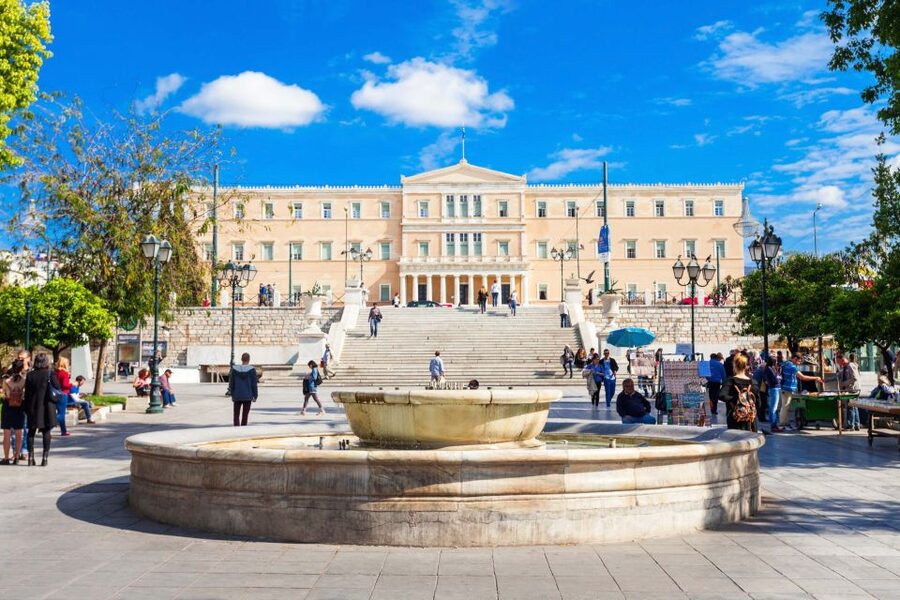
When you reach Syntagma Square, you are stepping into the rhythm of modern political life. The tour explains why this area keeps showing up in demonstrations and public statements, and it helps you read the space with better instincts. Instead of just seeing the big buildings and wide sidewalks, you learn what they symbolize when tensions rise.
From there, you visit the Hellenic Parliament, which is one of those places that feels like a landmark until you attach meaning to it. The payoff is that you start understanding why crowds gather, why slogans matter, and why some eras feel more fragile than others.
You also see the Tomb of the Unknown Soldier. Even if you already know it exists, the stop becomes more useful when it is tied to the theme of civic sacrifice and national narratives. It is a short moment, but it anchors the tour’s broader argument: societies do not just fight for territory, they fight for stories about themselves.
If you like politics explained in a way that connects to actual streets, this middle section is where the tour becomes more than sightseeing.
Kolonaki, the Academy of Athens, and the Athens That Trains Your Eye
Not every stop here screams rebellion. Kolonaki is one of those “you thought you already knew this city” stretches, and that is exactly why it works. Passing through it is a reminder that Athens contains different social worlds side by side, and the city’s tensions do not all play out in the same neighborhoods.
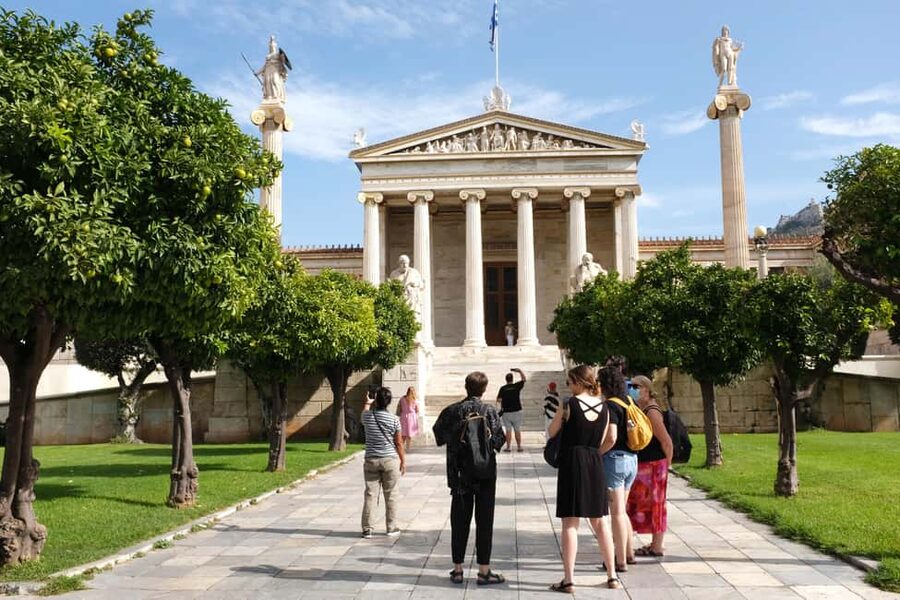
Then you get to the Academy of Athens, a guided stop that helps you think about institutions and authority. When you pair it with the tour’s earlier political context, it stops feeling like just another classic facade. You start noticing how culture, education, and official structures connect to questions like who gets access, who gets heard, and how change happens when the system feels closed.
Two small “quiet detour” moments also happen along the way. They are short, but they serve a purpose. The guide uses them to slow you down, focus your attention, and point out details you would otherwise miss.
I like these kinds of micro-stops because they teach you how to look on your own after the tour ends. You leave with a better habit, not only facts.
Exarchia: When Activism Is Part of the Neighborhood, Not a Poster
The tour’s biggest emotional and educational payoff is Exarchia. This neighborhood is described as a hot spot for resistance and activism, welcoming anarchists, refugees, the LGBT+ community, and artists. That mix is not presented like a trend report. It is explained as a lived social stance, the way the community tries to survive and stay human under pressure.
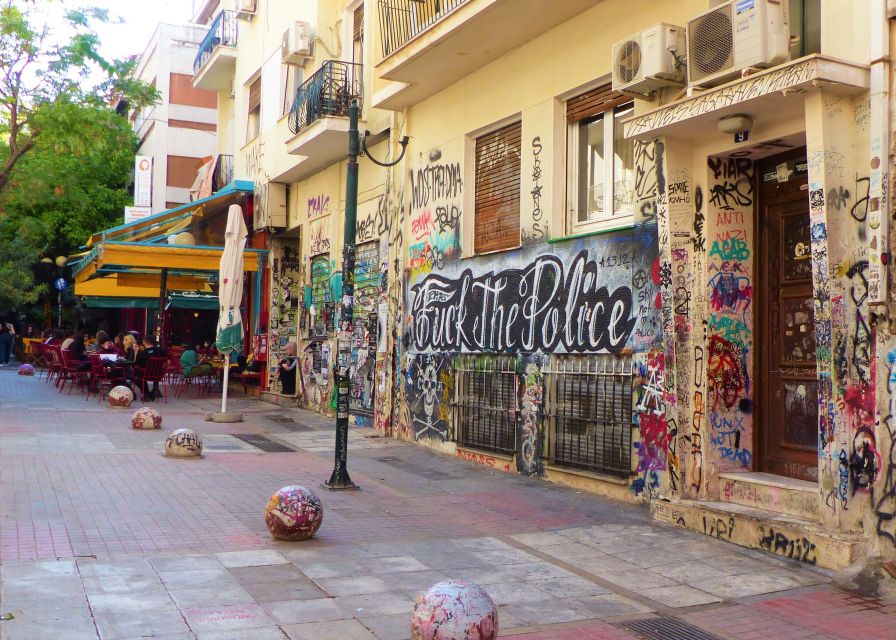
You get a guided Exarchia segment plus an additional stop at Exarchion Square at the end. Along the route, the guide talks about the neighborhood’s role in Athens’ social justice struggles, including tensions around police repression and gentrification themes. The key is how the tour frames Exarchia: not as a spectacle, but as a real community with real stakes.
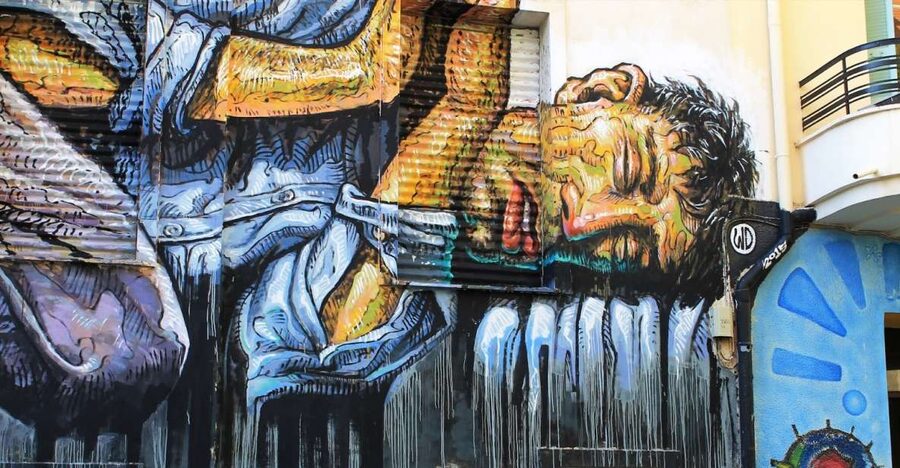
This is also where you get the most conversation. Many people walk away with an understanding of how the neighborhood’s creativity and organizing energy are linked. You might also notice street art and graffiti more clearly, because the guide treats them as messages, not background noise. One of the strongest points from prior participants is that the guide asks questions that push you to think critically about what you see.
A fair warning: Exarchia is intense, and the tour does not sugarcoat why people resist. If you want a strictly ceremonial Athens experience, Exarchia might feel too political. If you do want to understand modern Greek life, it is one of the most meaningful parts of the city.
You can also read our reviews of more historical tours in Athens




Price, Pacing, and What to Bring for This 2.5 Hour Walk
The price is $44.04 per person for about 2.5 hours, and you get a live walking tour with a guide. For Athens, that is not a bargain-bus tour price, but it also is not inflated for what you get. The value comes from the format: you are paying for interpretation, not just proximity to famous sights.
Several practical points make or break the experience:
- Wear comfortable shoes. You will be walking and standing.
- Bring a sun hat and sunscreen if you are going in warm months.
- Carry water so you can stay present while you listen.
- Expect to spend significant time outdoors, with guided moments at multiple stops.
Group size matters here. The tour is offered as private or small groups, and that usually means more questions and less waiting for the whole group to catch up. If you like dialogue and want the guide to tailor explanations to your curiosity, small-group format is a major plus.
Also, language options are English and French. If you are not fully confident in either, plan to use your best listening ear from the start, because the story moves through time quickly.
Should You Book the Athens City of Rebellion Walking Tour?
Book it if you want Athens as a living argument, not just a set of ancient highlights. You will leave with a clearer sense of how resistance shaped both the city’s central political spaces and neighborhoods like Exarchia. It is a strong choice if you like history that connects to present-day issues, and if you enjoy asking questions as you walk.
Skip it if you want a neutral tour that stays away from political struggle. This one is for people who are comfortable with themes like fascism, oppression, protest culture, and how communities organize for social justice.
If this tour is on your list, I suggest doing it early in your trip. It tends to give you better city context, so the rest of Athens clicks faster.
FAQ
Where does the Athens City of Rebellion tour start?
The meeting point is in Monastiraki Square in front of Pantanassa Church. The guide will have a sign that says Athens City of Rebellion.
How long is the walking tour?
The tour lasts 2.5 hours.
What is the tour price per person?
The price is $44.04 per person.
What sites do we pass or visit during the tour?
You’ll visit or pass several central Athens spots, including Monastiraki, the Metropolitan Church of Athens (pass by), Syntagma Square, the Hellenic Parliament, the Tomb of the Unknown Soldier, Academy of Athens (guided), and Exarchia (guided), with additional short guided stops.
What are the tour languages?
The guide offers live narration in English and French.
Is the tour suitable for people with mobility impairments?
No, it is not suitable for people with mobility impairments.
What should I bring?
Bring comfortable shoes, a sun hat, sunscreen, and water.
Does this tour include a guide?
Yes. The experience includes a walking tour and a guide.
More Walking Tours in Athens



More Tours in Athens


More Tour Reviews in Athens
- All Day Cruise -3 Islands to Agistri,Moni, Aegina with lunch and drinks included
★ 5.0 · 4,958 reviews



Not for you? Here's more nearby things to do in Athens we have reviewed









Athens Walking Tours, compared.
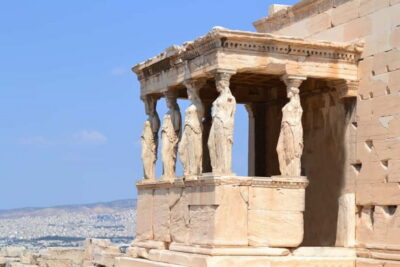 ★ 4.6Acropolis and Parthenon Guided Walking TourFrom $385,882 reviews
 ★ 5.0Greek Food Walking Tour in AthensFrom $874,740 reviews
 ★ 4.7Acropolis: Acropolis and Parthenon Guided Walking TourFrom $363,442 reviews
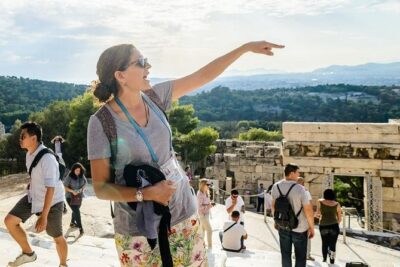 ★ 5.0Acropolis monuments & Parthenon Walking Tour with Optional Acropolis MuseumFrom $422,678 reviews
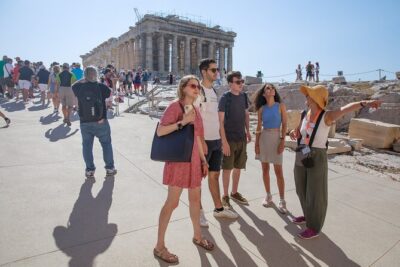 ★ 4.5Athens Acropolis and Parthenon Walking TourFrom $411,355 reviews
 ★ 5.0Athens Authentic Greek Food Walking Tour (Small Group)From $83809 reviews
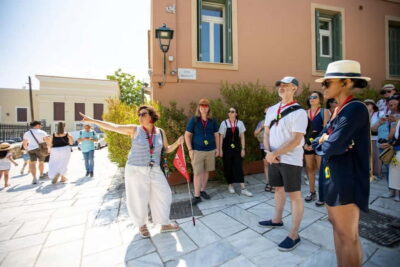 ★ 4.4Early Morning Acropolis & Old Athens Guided Walking TourFrom $28748 reviews
 ★ 4.9Ultimate Food Walking Tour with 15 TastingsFrom $93567 reviews
Browse the lists this tour appears in