
Reviewed · ATHENS WALKING TOURS
Athens: Women in Ancient Greece Guided Walking Tour
Athenian women change how you see the stones. This Women in Ancient Greece guided walk threads myth, daily life, and civic space into one easy 2-hour route, with stories tied to places you already recognize.
I especially love how it takes the usual Athens checklist and swaps in a women’s perspective at every stop. You’re not just looking up at famous ruins, you’re being told what women actually navigated, from goddesses shaping roles to real names like Sappho and Aspasia.
One thing to consider first: the tour involves steps and is not suitable for wheelchair users or people with mobility impairments or heart problems. Also, you’ll enjoy most sights from the outside, since tickets to archaeological sites are not included.
Key points worth knowing before you go

- A women-only lens on iconic stops, including the Ancient Agora and the Acropolis area from a different angle
- Mythology with real-life connections, from Athena and Penelope to Pandora and the effects on social expectations
- A guide who keeps it interactive, with lots of room for questions and conversation (many tours are led by Maelle)
- Short, efficient walking segments that fit into a morning without feeling rushed
- Exterior views, not museum tickets, so it’s best for stories plus atmosphere, not for in-depth ticketed sites
- A scenic finish at Filopappou Hill, with a final payoff view after Pnyx
Why this women-focused walk makes Athens feel new
Athens is famous for democracy, philosophy, and monuments carved in stone. What this tour does differently is ask a simple question: where do women fit into that story, and who gets left out when history is told by the loudest voices?
You get that answer through a mix of mythology and social reality. Expect stories tied to Athena, Penelope, Demeter, and Pandora, then comparisons to what women faced day to day in the ancient city. The result is not just facts. It’s a way of seeing that changes the meaning of what you’re standing in front of.
And yes, there are the big names. You’ll hear about Sappho and Aspasia, plus Agnodice, a figure associated with defying expectations. You’ll also hear the kind of dramatic tales that stick, like the story connected to kidnapped Spartan girls and the idea of a mysterious women’s festival in Athens. It sounds like legend at first, but the guide uses it to explain social boundaries and what people believed.
If you like Athens because it’s more than ruins, this tour leans hard into the human side, including the tensions between private life, public rules, and the gendered limits of civic space.
You can also read our reviews of more walking tours in Athens



How the 2-hour route works (and where you start)
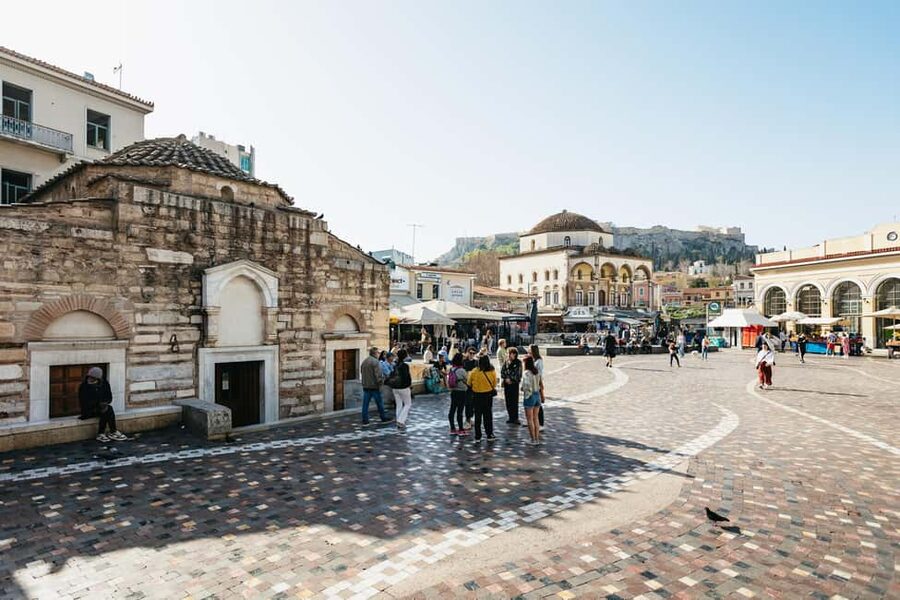
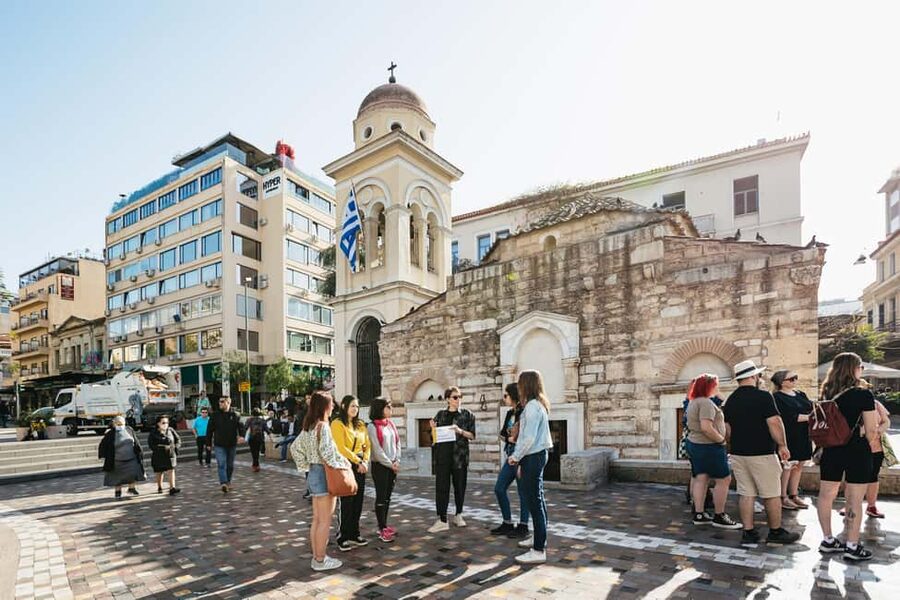
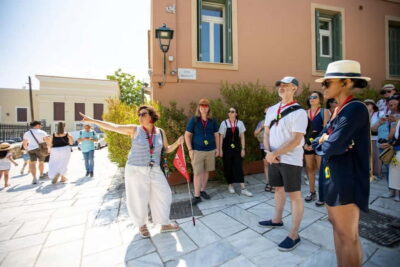
This is a 2-hour walking tour, built for comfortable pacing rather than long bus rides or slow museum time. You meet your guide on Monastiraki Square in front of the Church Pantanassa. The guide holds a sign that says Women in Ancient Greece, so it’s easy to find the right group.
The route moves through classic central Athens: Monastiraki and Plaka down to the Ancient Agora, up to Pnyx, and then finishes around Filopappou Hill. You also get chances to look up at the Acropolis as part of the flow, which matters here because the tour keeps flipping the usual perspective. Instead of only treating the Acropolis as the star, the guide keeps tying it back to roles women lived under and myths women used to explain the world.
Practical reality check: it includes steps. I’d think of this as a city-walk with occasional uneven ground, not a flat promenade. Bring what the tour suggests, sun hat, sunscreen, and water, and plan for a bit of heat, especially if you go in summer.
One detail I really like for readers: the guides tend to be proactive about comfort. On hot days, this kind of tour lives or dies on small choices like finding shade to pause and reset your brain before the next story.
Monastiraki, Plaka, and Hadrian’s Library: the intro stops that set the tone

The tour begins with a quick orientation stop around Monastiraki, then moves fast into the character of the neighborhood. This matters because the stories aren’t delivered in a vacuum. Monastiraki and Plaka give you the everyday Athens feel, which makes it easier to understand how ancient life would have blended into the city’s rhythm.
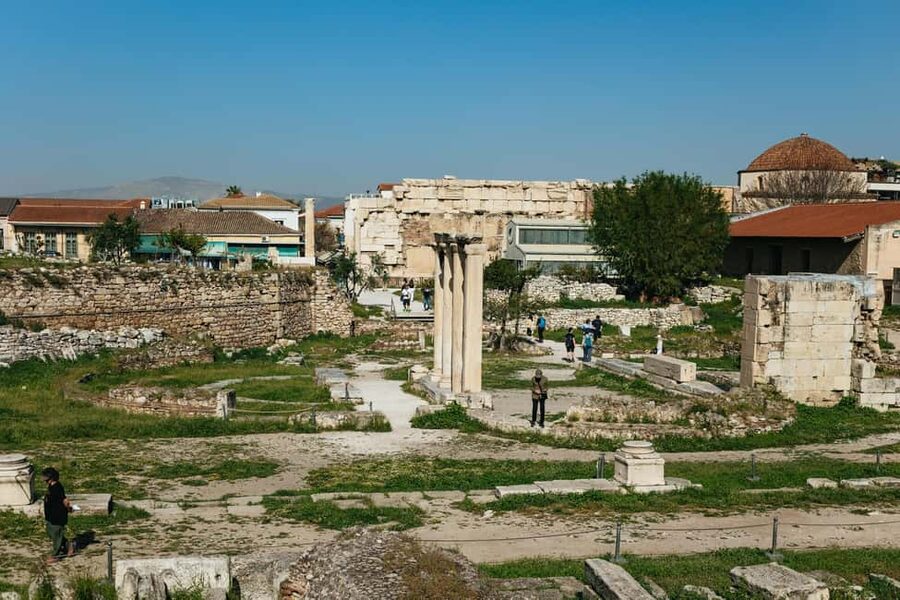
From there you head toward Hadrian’s Library area. You’re not touring inside ticketed space, because tickets to archaeological sites are not included. But the guide uses the exterior setting to show how public buildings and cultural institutions tied into civic identity. In a women-centered tour, that means asking: who had access, who watched from the edges, and how myths helped explain the rules.
Then you move through Plaka for a short stretch. Plaka can feel like a postcard district, but on this walk it’s used as context. You learn how myths, gender roles, and family structures shaped what women did and where they were expected to be, even as the city’s streets and squares kept pulling people into public life.
These early stops are short on purpose. They’re there to do two jobs: get you oriented fast, and prime you to notice the rest of the walk in a different way.
Gate of Athena Archegetis and the secret stop: where women’s myth becomes architecture

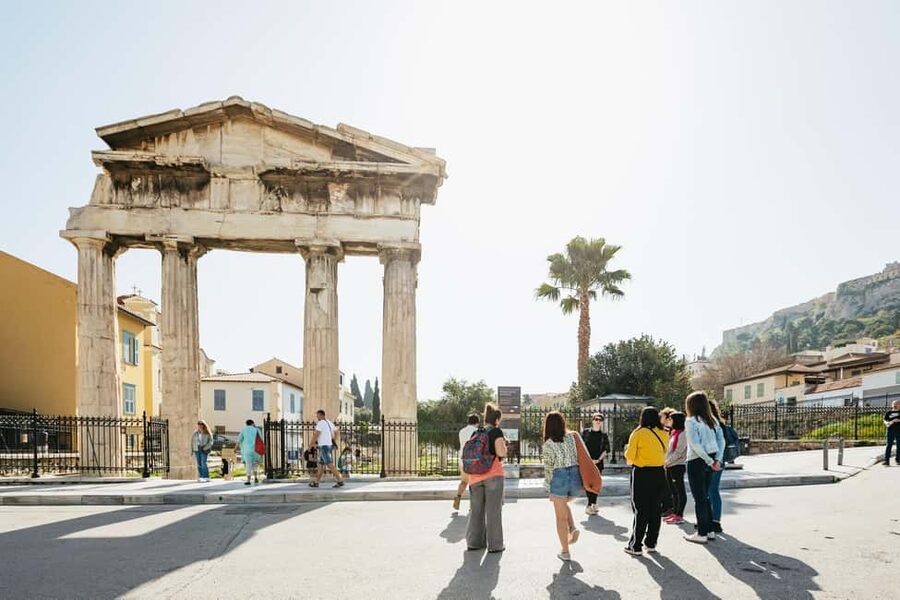
One of my favorite parts of the route is the way it uses specific named spaces to keep the theme consistent. The tour includes a stop at the Gate of Athena Archegetis. Athena is not just a character from a myth book here. The guide frames her as a symbol connected to civic ideals and the gendered logic of who belongs where.
When you stand near a gate tied to a goddess, it changes how you read that stone. You start seeing mythology as more than stories for entertainment. It’s part of how societies justify social order. That’s the backbone of the tour’s theme: mythology shapes the societal role of women, and architecture reflects belief.
Then comes a secret stop with its own guided explanation. The exact location isn’t listed in the standard overview, but the presence of a secret stop usually signals two things: the guide knows how to manage attention, and the tour includes at least one moment that doesn’t feel like a copy-paste Athens itinerary.
This is also where the guide’s style matters. The tours are led in English and French, and many guests highlight that the guide keeps things friendly and responsive. In practice, that usually means you get more than a lecture. You get answers, plus chances to ask about mythology, daily life, and how Greek society worked beyond the famous male names.
Ancient Agora: the civic heart, told with missing voices restored
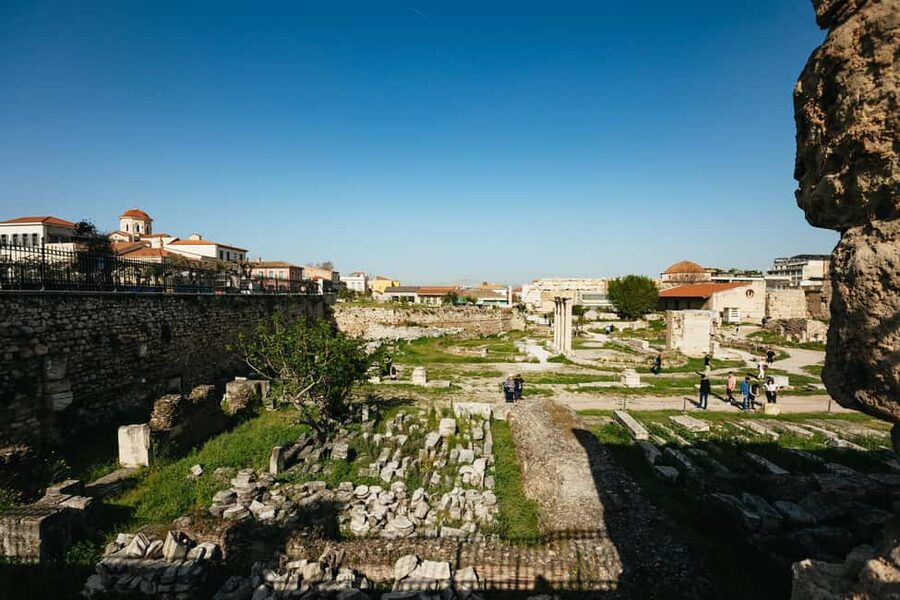
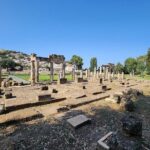
The Ancient Agora stop is where Athens stops being scenery and becomes argument. The Agora is where public life happened. On this tour, the guide uses that setting to talk about democracy and civic spaces while also explaining the limits imposed on women.
You’ll hear how the societal role of women was influenced by myth and cultural expectations. That’s why the tour doesn’t just list women as side notes. It connects women’s stories to the functioning of society, including what people believed about women’s duties, status, and visibility.
This is also one of the places where you’ll likely notice how the guide balances big historical themes with stories that feel human. Expect tales that connect legendary figures to social expectations, and not in a simple superhero way. The focus is on how someone like Aspasia fits into the edge cases of history and what her story implies about access, education, and reputation.
Because tickets are not included, you’re mostly viewing from outside. That’s fine for this tour, because the value is the guided narrative. You’re here for interpretation and context, not for entering a ticketed site and reading plaques.
You can also read our reviews of more guided tours in Athens




Pnyx and the first democratic votes: learning democracy with a gender lens
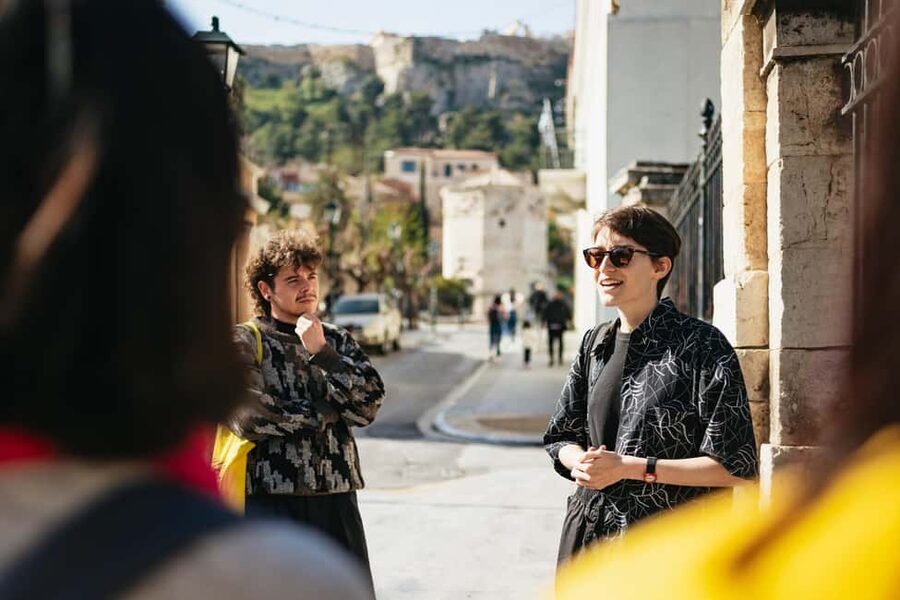
Next up is Pnyx, where the first democratic votes were cast. That line alone pulls you into the civic core of Athens. But the tour turns the dial toward questions that most sightseeing skips.
What does it mean to have democracy, if large parts of the population are excluded from political voice? The guide uses women’s myths, role expectations, and stories of defiance to frame what citizenship and participation meant in practice. You’re not just hearing about democracy. You’re learning how the system was shaped, who it served, and how cultural storytelling reinforced boundaries.
This is also a thoughtful stop for anyone interested in how traditions live on. Multiple tour writeups stress that the stories create reflection, including connections to modern issues around minorities and equal rights. You don’t need to get political to feel the weight of it. The contrast between public politics and private constraints does the work.
The pacing here is important. Pnyx can be exposed, so the guide’s habit of finding better standing spots or making short pauses can make a real difference on a hot day. Bring water, and listen for those moments when the guide prompts questions. This is often when the tour feels most alive.
Filopappou Hill and the final viewpoint: a scenic finish with context
After Pnyx, you get a brief viewpoint moment on the way, then the walk ends at Filopappou Hill. The hill finish is smart. It gives you time to look out over Athens after hearing how social life worked inside it.
Before the finish, the guide has you gaze up at the Acropolis, which ties the walking route into one bigger visual story. The Acropolis becomes less of a distant symbol and more of a reference point for everything you’ve heard about gender roles, myth, and public space.
Then you end back at two drop-off locations near Rovertou Galli 69. In other words, you’re not rushed into an abrupt exit. You get a gentle landing after the thematic climb from Agora to civic votes to views.
This end matters because it helps you process the tour. Athens can be overwhelming when you only see monuments. Filopappou Hill gives you breathing room and a last chance to look at the city with new questions in mind.
Price and value: what $44.04 buys you in real terms

At $44.04 per person for a 2-hour guided walk, the value depends on your goal.
If you want ticketed site entry, this is not that. Tickets to archaeological sites are not included, and you’re mostly doing exterior views. If you want a museum style experience with long inside time, look elsewhere.
But if you want story-driven context that changes how you interpret famous places, this price makes sense. What you’re paying for is a themed guide, English or French interpretation, and a structured route that keeps the focus on women in ancient Athens and beyond. The included guide is also the product, and the reviews put a lot of weight on the guide’s ability to answer questions and keep a conversational tone.
It’s also a good fit if you enjoy myth tied to daily life. The tour doesn’t treat mythology as fancy decoration. It uses it to explain social expectations, including the way goddesses and famous women became part of the cultural explanation system.
Finally, the small gift and the option for a private tour add value if you want flexibility or quieter interaction.
Who should book this Athens women’s tour, and who should pass
I think this tour is best for you if:
You want Athens with meaning, not just photos. You’re interested in the roles women played in ancient society, and you like when mythology connects to real social rules. You also like a guide who asks questions and keeps the group engaged.
It’s also a good choice if you care about democracy and want that story told with limits included. Pnyx becomes more than a stop on a route. It becomes a prompt for thinking about inclusion and exclusion in civic life.
You should pass if:
You need wheelchair access, because it’s not suitable for wheelchair users. It also is not suitable for people with mobility impairments due to steps. And if heart problems are part of your health situation, this walk may not be right for you.
Also remember that food and drink aren’t included. Plan a snack or hydration plan before and after, especially in warm months.
Should you book the Athens Women in Ancient Greece walking tour?
Book it if you want Athens to feel personal and you like your history with a viewpoint. The women’s lens is the whole point, and it’s delivered through specific named figures like Sappho, Aspasia, and Agnodice, plus goddess-linked themes like Athena and Pandora. The stops hit major areas like the Ancient Agora and Pnyx, but the narrative keeps shifting the meaning of those places.
Skip it if you want ticketed access to archaeological sites or a mostly indoor experience. This is a walking tour with outside views, steps, and a tight 2-hour format.
If you’re trying to decide between your usual Athens hits and something more unusual, this is a strong option. It doesn’t replace the Acropolis. It helps you understand the society around it, including the voices history often pushed to the margins.
FAQ
Where do I meet the guide for the Athens Women in Ancient Greece tour?
Meet on Monastiraki Square in front of the Church Pantanassa. Your guide will be holding the sign Women in Ancient Greece.
How long is the guided walking tour?
The tour lasts 2 hours. Starting times vary, so you should check availability for the schedule.
Are tickets to the archaeological sites included?
No. Tickets are not included, and the tour focuses on exterior views of the sights.
What languages is the tour offered in?
The live tour guide speaks English and French.
Is the tour wheelchair accessible?
No. The tour is not suitable for wheelchair users, and it includes steps.
What should I bring with me?
Bring a sun hat, sunscreen, and water.
Is a private tour available?
Yes. A private group option is available if you select it.
More Walking Tours in Athens



More Tours in Athens


More Tour Reviews in Athens
- All Day Cruise -3 Islands to Agistri,Moni, Aegina with lunch and drinks included
★ 5.0 · 4,958 reviews



Not for you? Here's more nearby things to do in Athens we have reviewed











Athens Walking Tours, compared.
 ★ 4.6Acropolis and Parthenon Guided Walking TourFrom $385,882 reviews
 ★ 5.0Greek Food Walking Tour in AthensFrom $874,740 reviews
 ★ 4.7Acropolis: Acropolis and Parthenon Guided Walking TourFrom $363,442 reviews
 ★ 5.0Acropolis monuments & Parthenon Walking Tour with Optional Acropolis MuseumFrom $422,678 reviews
 ★ 4.5Athens Acropolis and Parthenon Walking TourFrom $411,355 reviews
 ★ 5.0Athens Authentic Greek Food Walking Tour (Small Group)From $83809 reviews
 ★ 4.4Early Morning Acropolis & Old Athens Guided Walking TourFrom $28748 reviews
 ★ 4.9Ultimate Food Walking Tour with 15 TastingsFrom $93567 reviews
Browse the lists this tour appears in