
Reviewed · ATHENS WALKING TOURS
Athens Highlights: Myths & Philosophers Private Walking Tour
Four hours of Greek ideas on foot.
This private walking tour stitches together Socrates and Plato with Athens landmarks, so you see the city as a living textbook for 2,500 years of thought and myth. I also love the way the route uses Epicurus and his Garden as a real stop, with time for a Greek coffee break to slow down and talk. The one drawback to factor in is simple: it is a walking tour and it is not suitable for people with mobility impairments.
What makes it work is the guide. The experience is led in English by an expert who can steer the conversation based on what you care about, and you can end up with guides like Bianca or John, who bring storytelling and plenty of time for questions.
Key things that make this Athens philosophy tour worth your time

- Landmarks connected to specific philosophers, not just random sightseeing
- Myth meets philosophy, with Apollo and Athena used as a way to compare ideas and values
- A real Garden moment for Epicurus, plus a chance to talk over Greek coffee
- Stoicism at the Poikile Stoa, where the philosophy story has a physical address in Athens
- Anafiotika and the Acropolis foothills, with Cynics nearby in the conversation
- Tower of the Winds and Aiolos, adding myth flavor to a standout Athens viewpoint
Why Athens stops feel different when they come with ideas
Athens can be loud in the usual way, crowds, buses, phone cameras. This tour slows all that down by pairing places with the people and beliefs tied to them. You do not just look at a monument, you learn what kind of questions Greek thinkers were asking at that spot, and how myth and philosophy shared the same stage.
The result is that the city feels more personal. You start noticing patterns, like how gods could represent competing values, or how different schools of thought argued for different ways to live. If you like learning that has a practical angle, you will enjoy how often the guide connects the past to modern life without turning it into a lecture.
You can also read our reviews of more walking tours in Athens


Meeting near Panepistimio and getting the city into your head
You meet outside Panepistimio Metro Station, with an option that starts around the University area depending on what you booked. From there, you walk into central Athens at a pace that lets you actually take in buildings, statues, and street layouts.
This early part matters more than it sounds. Getting oriented in the right neighborhood helps the rest of the tour click, because you will keep seeing the same streets and landmark angles again later from different directions. The tour also builds momentum quickly, so you feel like you are starting in the middle of a story rather than catching up to it.
The Trilogy of Athens (Theofilus Hansen) and 19th-century sculptors with 2,000-year context
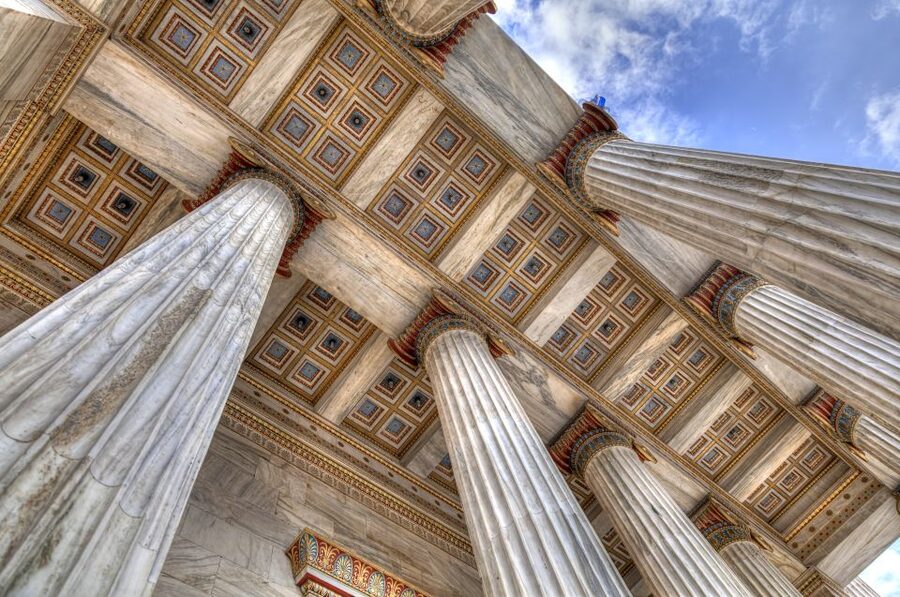
One of your first big “wait, look at that” moments is the Trilogy of Athens by the architect Theofilus Hansen. Even if you are not an architecture person, it is a good start because it gives you a modern Athens frame, then pulls you backward into Greek antiquity.
You also see statues by famous 19th-century sculptors. That contrast is fun. Athens is not frozen in time, it keeps getting reinterpreted, rebuilt, and re-themed. The guide uses this to talk about how Socrates and Plato fit into a longer chain of ideas, so you see philosophy as something people kept reshaping, not just something that ended.
Socrates, Plato, Apollo, and Athena at the landmarks where values clash
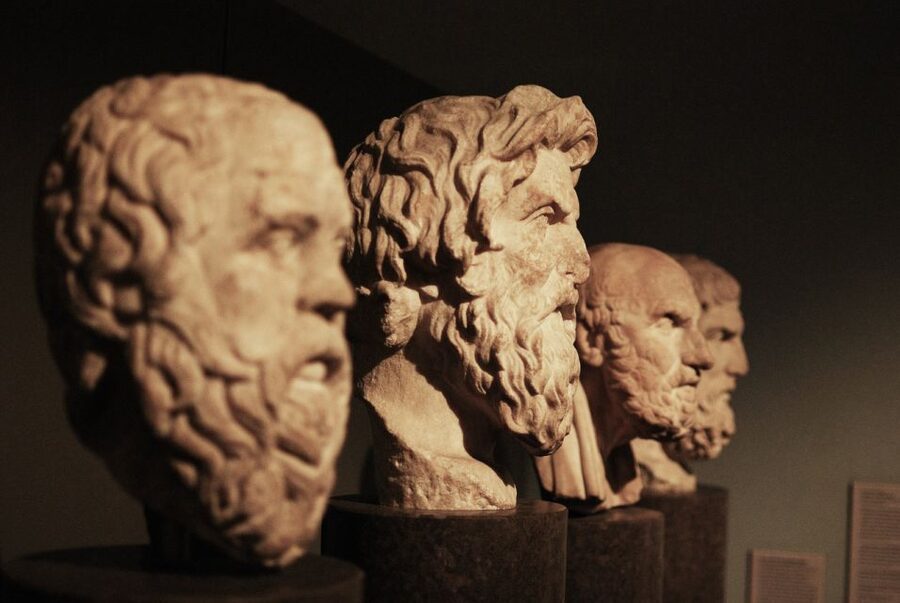
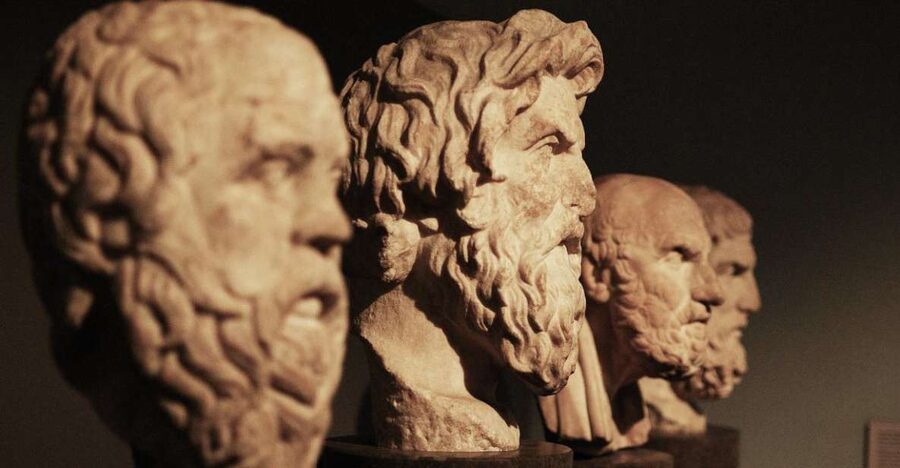
After you get your footing with Hansen and the sculptural stops, the tour moves into the philosopher core. You spend time talking about Socrates and Plato, and how their backgrounds and approaches shaped what came later.
Then you shift into myth with Apollo and Athena. The clever part is that these two gods are treated as different from each other but still share overlapping themes. You end up with a cleaner way to remember them, because the guide uses comparison: how one god’s association might line up with one kind of thinking, and how the other’s might map to another.
This section is a highlight if you like ideas that feel human. The conversation is not just “who said what.” It is about why certain arguments kept returning in Greek culture, and how myth gave people a language for values.
Epicurus in the National Gardens, plus a Greek coffee reset in Thissio
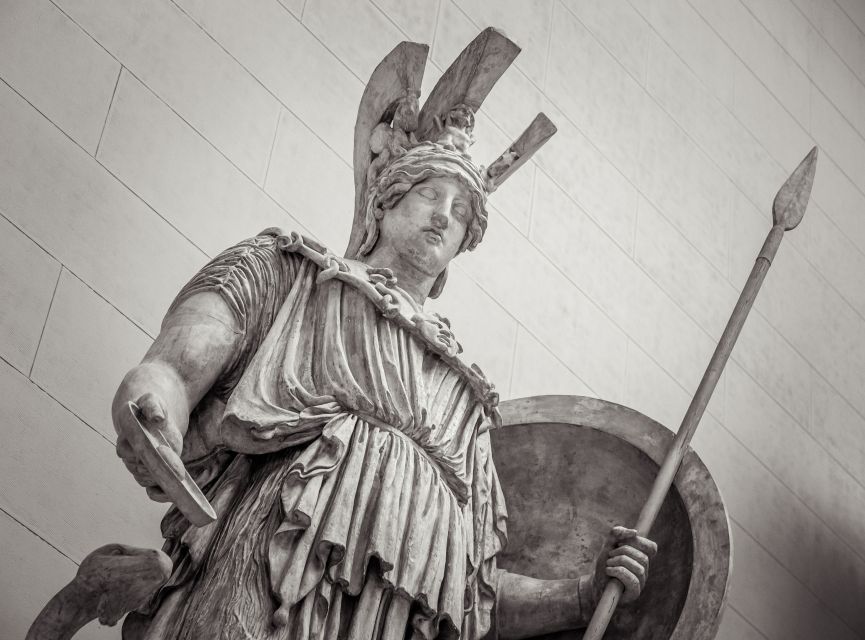
Next comes the National Garden area, where you learn about Epicurus and his school, often called the Garden. This is the kind of stop that makes the tour feel different from standard “see the sights” walks, because it gives philosophy a physical setting.
Epicurus works well as a teaching point because he represents a more lived, everyday approach to well-being. Instead of only chasing abstract ideas, the guide frames his thinking as connected to how you live day to day. If that is your style, you will probably find yourself paying extra attention to how the guide explains the Garden concept.
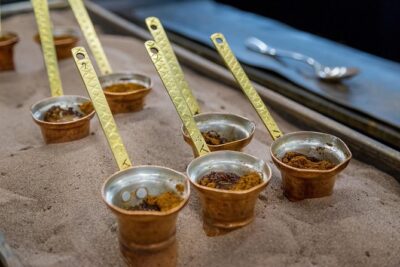
Then you take a pitstop for Greek coffee at a cozy cafe in the Thissio area. This break is more than a caffeine moment. It creates a reset in the middle of the tour, and it gives you time to ask follow-up questions about pre-Socratic thinkers while you are sitting down with a real view of Athens street life.
Depending on the day and guide, you might also have time for a more scenic terrace drink break. If that happens, take it. The whole point of the pause is to let the philosophy conversation land while you can still enjoy the setting.
You can also read our reviews of more private tours in Athens




Ermou Street to Kapnikarea: Aristotle and the Lyceum in a busy city corridor
You head down Ermou Street, one of Athens’ main shopping streets, named after Hermes the god and merchant. The street name is a small detail, but it is useful. It reminds you that Greek religion and daily commerce were not separate worlds. People thought about gods in the same spaces where they bought things and traded news.
At this stage, the tour also slows enough to admire Kapnikarea, an 11th-century temple. Seeing it here, in the middle of an active modern corridor, helps you understand Athens as layered. You are constantly shifting eras, and the guide uses that layering to keep the story moving rather than getting stuck in one time period.
From there, you move to Aristotle and the Lyceum philosophical school. This is a strong match for the walking format because Aristotle’s approach feels organized, structured, and grounded. It is the kind of school story that helps you remember what each thinker contributed, not just their names.
Monastiraki, the Ancient Agora area, and where Stoicism takes its first stand
Monastiraki and the surrounding blocks get you into the thick of central Athens again, and then you head toward the Ancient Agora area. This is where the tour starts anchoring philosophy in actual spaces tied to specific movements.
One standout stop is at the Poikile Stoa, described as the place where Stoic philosophy was born. That matters. When you hear about Stoicism as an idea, it can sound abstract, like a slogan. But connecting it to a named place gives you a mental image: a specific setting where this thinking made sense to people in their real world.
If you are studying for class, teaching, or just trying to understand why a philosophy spread, this section gives you the kind of concrete details that make later recall much easier.
Plaka and Anafiotika at the Acropolis foothills, with Cynics near the conversation
You then move into the Plaka area and Anafiotika, sitting at the foot of the Acropolis. This is a very “slow your pace” zone, with streets that feel more intimate than the big boulevards. It is also an ideal backdrop for thinking about different schools, since the vibe is close to the roots of what makes the Greek city feel Greek.
The tour brings in Cynic philosophers close to this area. Cynicism, in the Greek sense, has a sharp edge, and the guide uses Athens surroundings to make that attitude easier to grasp. Instead of presenting Cynicism as only a set of claims, the tour shows it as a posture toward life, rules, and comfort.
You also get time to look up at the skyline, and the Acropolis keeps showing up in fragments. That physical sense of elevation makes the next portion feel like a payoff rather than another stop.
Tower of the Winds, Aiolos, and the myth that turns into a viewpoint
One of the most memorable landmarks on the walk is the Tower of the Winds. You learn about Aiolos, the keeper of the winds, tying a myth figure to a building made for watching and tracking nature.
This is one of the best “aha” moments because the tour shows how myths can be a way of explaining the natural world, and how stories helped people make sense of things they could observe. The guide keeps it practical, so you end up remembering the myth because it connects to a physical feature.
After that, you wrap toward the end with more myths about the Olympian gods, leading you up to Areopagus Hill. The final viewpoint is the kind of scene that makes you stop talking for a second. You get a breath of Acropolis views and time to reflect on how the route has been building toward this exact line of sight.
How much walking you should plan for, and who this tour suits best
This is a 4-hour private walking tour, so you should expect steady on-foot time through central Athens. The activity is not suitable for people with mobility impairments. If you have knee issues, ankle problems, or you tire quickly, you will likely find it challenging even if the pacing is guided.
That said, it is a great fit for people who want more than photos. You should book this if you like:
- Philosophy topics, even if you are not an academic
- Mythology explained in a way that connects to values and daily life
- A structured route that still leaves room for questions
- A guide who can tailor the conversation, with examples like Bianca, John, and Effie showing up in English-language leadership
It also works nicely as a first Athens experience. If you start your trip here, you end up with a mental map of where big ideas live in the city.
Price and value: what $100 gets you for a private 4-hour Athens walk
At $100 per person for 4 hours, the value depends on what you want. If you only want a standard “top sights” route, this might feel pricier than a group tour. But if you want the thinking behind the sights, it is a fair deal.
Here is what you get for the money:
- An expert tour guide in English
- One Greek coffee or other traditional refreshment per person
- All taxes and fees included
Entrance fees are not included. That is normal for walking tours, but it matters for budgeting. If there are specific sites you are hoping to go into, you might need to pay separately.
The biggest value is the private format. Since it is private, you can ask questions without waiting for a group to quiet down. Based on how the guide experience is described, guides like John can adjust the tour to match a high school class prep style, and guides like Bianca can keep the conversation interactive with practical, life-friendly discussion.
Should you book this Athens Highlights: Myths and Philosophers tour?
Book it if you want Athens to make sense beyond the surface. This walk turns mythology and philosophy into a route you can remember, from Hansen’s Athens architecture and Socrates and Plato, to Epicurus in the Garden, then Stoicism at the Poikile Stoa, and finally the myth of Aiolos by the Tower of the Winds.
Skip it or plan carefully if you:
- Need an accessibility-friendly route, since it is not suitable for mobility impairments
- Know you struggle with multi-hour walking on uneven streets
- Only care about entrance tickets and museum time, since the tour focuses on what you see from the street and landmark areas
If you are the type of person who likes talking things through, you will get a lot out of this one. It is less about memorizing dates and more about learning how different Greek thinkers asked similar questions in different ways, then walking off with a clearer way to interpret what you are seeing.
FAQ
How long is the Athens Highlights: Myths & Philosophers Private Walking Tour?
The tour duration is 4 hours.
Where do we meet for the tour?
You meet outside Panepistimio Metro Station, with a second starting option listed around the University area. The exact meeting point can vary depending on the option booked.
What is included in the price?
The price includes an expert tour guide, 1 Greek coffee or other traditional refreshment per person, and all taxes and fees.
Are entrance fees included?
No, entrance fees to points of interest are not included.
Is the tour private and is it available in English?
Yes. It is a private group, and the live tour guide speaks English.
Is the tour suitable for people with mobility impairments?
No, it is listed as not suitable for people with mobility impairments.
More Walking Tours in Athens



More Tours in Athens


More Tour Reviews in Athens
- All Day Cruise -3 Islands to Agistri,Moni, Aegina with lunch and drinks included
★ 5.0 · 4,958 reviews



Not for you? Here's more nearby things to do in Athens we have reviewed








Athens Walking Tours, compared.
 ★ 4.6Acropolis and Parthenon Guided Walking TourFrom $385,882 reviews
 ★ 5.0Greek Food Walking Tour in AthensFrom $874,740 reviews
 ★ 4.7Acropolis: Acropolis and Parthenon Guided Walking TourFrom $363,442 reviews
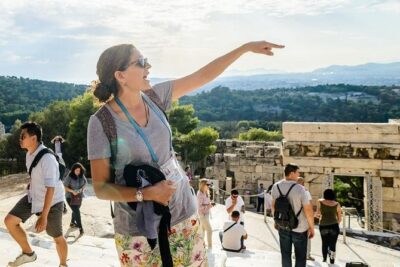 ★ 5.0Acropolis monuments & Parthenon Walking Tour with Optional Acropolis MuseumFrom $422,678 reviews
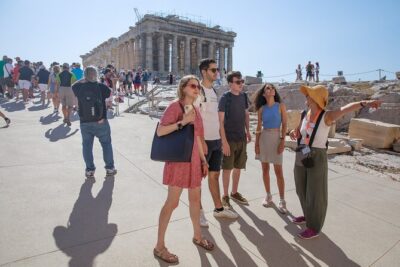 ★ 4.5Athens Acropolis and Parthenon Walking TourFrom $411,355 reviews
 ★ 5.0Athens Authentic Greek Food Walking Tour (Small Group)From $83809 reviews
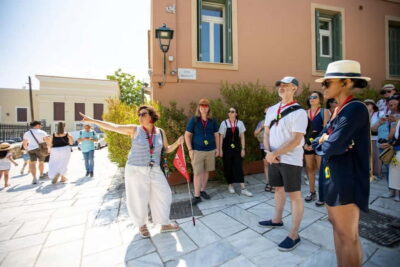 ★ 4.4Early Morning Acropolis & Old Athens Guided Walking TourFrom $28748 reviews
 ★ 4.9Ultimate Food Walking Tour with 15 TastingsFrom $93567 reviews
Browse the lists this tour appears in