

Reviewed · ATHENS WALKING TOURS
Small-Group Women History in Ancient Greece Walking Tour
Athens can feel like one long parade of stones. This tour gives you a different lens, on how women lived, loved, studied, and were judged. I love the small-group pace and Maelle’s storytelling style, and I also love how the stops connect myths to daily rules you can picture. One drawback to consider: the walk is not recommended if you have mobility issues, since it’s a city walking route with some uphill sections near the end.
You’ll start in Monastiraki and finish at Philopappos Hill with views toward the Acropolis. Along the way, you’ll hear myth and history side by side, with women like Athena, Penelope, Pandora, Sappho, Aspasia, and Agnodice brought into real Athenian street corners. The value here is simple: most Athens tours hit the big male names. This one fills the gap, without feeling like a lecture.
Key highlights you will actually feel on the walk

- Women’s-eye Athens route that reframes major landmarks through daily life, not just legends
- Maelle’s narrative flow, which ties mythology to social rules you can imagine
- A small maximum group size of 12, so questions do not get ignored
- Free viewing at every stop, and no archaeological-site entry required for the market segment
- A smart mix of themes, education, marriage, festival life, public space, and politics
- Ending at Philopappos Hill, where the Acropolis view makes the whole story land
Women’s-eye Athens: what makes this tour different
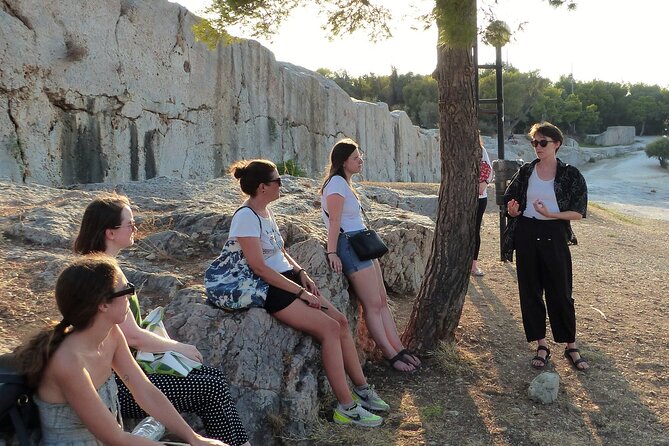
Most walking tours race through Athens like they’re speed-running a textbook. This one slows you down and changes the subject on purpose. You still walk by famous places, but the guide pulls you toward what you usually do not hear: how women fit into the household, how they were educated or excluded, and how even small roles shaped the society around them.
What I like is the balance. You get myths, yes, but they are not decoration. They explain attitudes, fears, and ideals. And you also get social reality, including marriage expectations, Eros as a concept, and women’s limited access to public life like marketplaces and civic voting.
It’s also a good reset for your overall Athens visit. If you plan to do other classics-heavy tours, this one becomes the missing piece, the angle that makes the rest of the ancient city feel more complete.
You can also read our reviews of more walking tours in Athens



Monastiraki meeting, then straight into daily life stories
You begin in Monastiraki Square, a lively starting point that also helps you understand the contrast between modern Athens and the ancient one under your feet. The tour is about 2 hours, and that time works well for a focused neighborhood walk. You are not stuck for a half day, but you also avoid the problem of a short tour that forgets to connect the dots.
From the first minutes, Maelle frames the theme: women were not a side note in ancient Greece, they were central to how households ran, how status was protected, and how cultural ideals were formed. That framing matters because it changes how you read every next location. You stop looking for random carvings and start looking for meaning.
Hadrian’s Library: education, access, and what girls did not get
One early stop takes you to Hadrian’s Library. The big idea here is education, and specifically what access girls and women had in ancient Athens. Even if you know the basic headlines about who studied what, this stop pushes you beyond that.
You begin to understand education as a social filter. If men had the public voice, then schooling connected to public power. Women’s schooling, when it happened, would carry different expectations. When it did not happen, the gap helped enforce household roles and strengthened the idea that a woman’s influence should stay private.
Practical note: you’re there for a short window, so the guide’s job is to give you the “why it mattered” story, not a slow museum-style explanation. This is a walking tour, so you’ll want to bring a curious mindset and be ready to listen closely while moving.
Marriage, love, and the symbolism of Athena at the city’s edges

As the walk continues, you reach a religious site connected with the All-Great Taxiarchs and the Virgin Mary Gregorousa. It sounds like a modern stop, and it is, but the guide uses it as a pivot into ancient concepts of marriage and love. You compare how marriage could be understood in Athens and Sparta, and you also explore EROS as a kind of passionate love, not just romance as a modern feeling.
Then you move toward the Gate of Athena Archegetis. This is where the tour leans into myth in a very practical way. Athena is not treated like a distant statue goddess. The guide connects Athena to the ideals surrounding women’s lives, including married life and the cultural myths that helped define what was considered proper or powerful.
Two things I find useful here. First, the stories give you language for thinking about ancient gender rules. Second, the guide does not force a single interpretation. You get multiple threads, and you start noticing how religion, social status, and myth all reinforced each other.
A women-only festival, then the marketplace women were kept out of
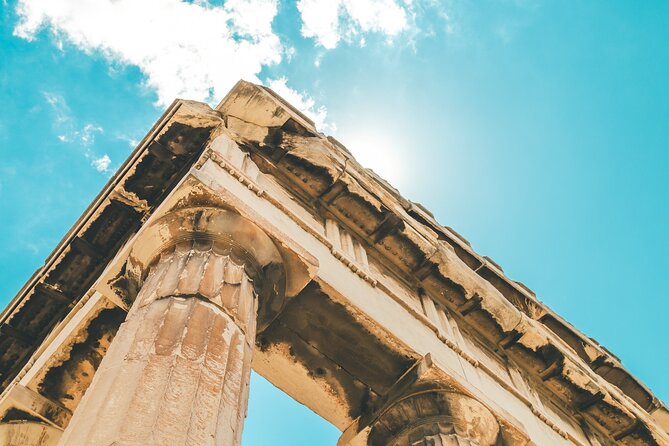
One stop focuses on a mysterious ancient festival dedicated exclusively to women. That alone is eye-opening. Even if you’ve heard about festivals in Athens, you do not often hear about ceremonies designed for women alone. The takeaway is not just that women had roles, but that those roles were structured and separated in specific ways.
Then the tour shifts to the Ancient Agora of Athens, the marketplace and public center. The guide’s angle is what matters for your understanding: women’s public presence was restricted, and the market area became a symbol of who was allowed in public life and who was not. You also learn about the lives of female slaves or courtesans in the city, which adds uncomfortable realism. It is not an easy topic, but it makes the city feel like a place where social power played out every day.
Important detail: there is no entrance into the archaeological site for this part. You see it from outside, while the guide gives context so you still feel oriented. For many people, this is a perk. It keeps the tour moving and reduces time spent navigating crowded ruins, while still giving you the big picture.
If you have only two days in Athens, this segment helps you avoid a common mistake: treating the Agora like a set for movies. Here, it becomes a living system of rules.
You can also read our reviews of more historical tours in Athens






Areopagus trials and the woman-rights story you won’t forget
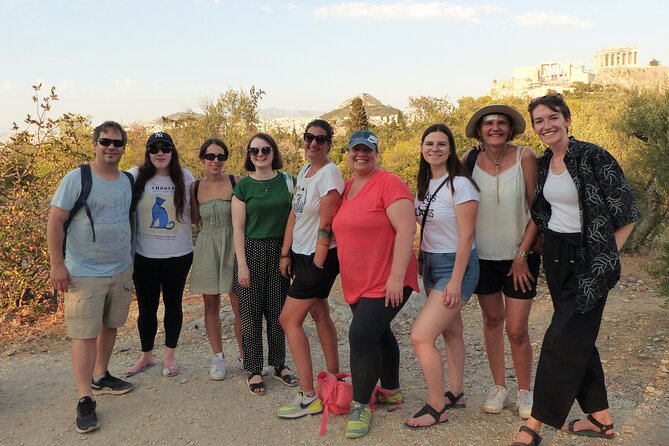
The Areopago stop is short in time, but it carries weight. The guide explains this is a place associated with trials of the worst sinners in ancient times, and then uses that setting to tell an inspiring story about a woman who risked a death sentence to change women’s rights.
This is one of the most powerful parts of the whole tour because it shows resistance and consequences. You are not just learning what society did to women. You’re also learning what it cost when women pushed back. That is the kind of story that sticks, especially if you usually focus on political events that center male leaders.
The practical value here is emotional clarity. When you hear about women’s restrictions elsewhere on the walk, this stop provides a human consequence and a reason the topic matters beyond trivia. It’s history as cause and effect.
Pnyx and democracy: politics with a missing voter
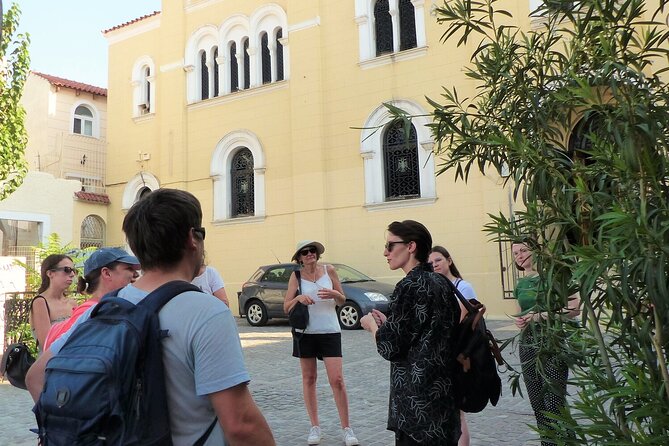
Next comes Pnyx, where democracy all began in the sense that the assembly space shaped civic life. Here, the guide points out a brutal contrast: only male citizens voted. That statement is not meant to shock you. It’s meant to explain why women’s influence had to operate through indirect routes.
And then comes the twist that makes this stop more than a complaint about exclusion. The guide introduces a woman who influenced politics during Athens’s Golden Age. Even if your knowledge of ancient Greek politics is basic, this part helps you understand that power does not always show up as a ballot. Sometimes it shows up as persuasion, relationships, and proximity to decision-makers.
If you enjoy mythology, you might expect this stop to stay in myth. Instead, it stays grounded in political reality. That mix is a recurring strength of the tour.
Ending at Philopappos Hill: the Hill of the Muses and Acropolis views

The final stretch brings you to Philopappos Hill. The guide connects it to the Hill of the Muses, which ties in beautifully with the overall theme. Women are linked here through creativity and inspiration, not only through limits.
You also get the view. The meeting point here is chosen for a reason: it’s one of the best viewpoints on the Acropolis, and you finish with the city opening out in front of you. The visual payoff matters because it closes the loop. After two hours of focusing on human lives, you get to look at the monuments again, but with new questions in your head.
In plain terms, you leave with two memories: the stories, and the skyline that now feels less like a postcard and more like a stage where social roles mattered.
Price and value: why $44.71 can make sense
At $44.71 per person for about 2 hours, you’re paying for a focused, thematic walk with a guide who clearly knows how to connect details into a story. This is not a long bus excursion where you only get a fraction of a guide’s attention. It’s a small group capped at 12, and that size usually means more back-and-forth, not just listening while strangers stream past.
You also get practical savings built in. The stops are listed with admission ticket free for each stop. And for the Agora segment, you do not need to buy an archaeological site ticket since you see it from outside. That reduces the “surprise costs” that can turn a decent tour into an expensive afternoon.
It’s also booked pretty far in advance on average, around 37 days. That’s often a sign of demand, which means you should not wait until the last minute if your schedule is tight.
Who should book this women’s history tour in Athens
This is a great match if you fall into any of these categories:
- You already know the major ancient landmarks and want a fresh angle, something different from the usual male-centered walkthroughs
- You like story-driven history, where myths like Athena, Penelope, Pandora, Sappho, Aspasia, and Agnodice are used to explain attitudes and roles
- You want a small-group experience where you can ask questions without feeling lost in the crowd
- You’re traveling with someone who loves feminism, gender history, or just better-rounded storytelling
It is not ideal if you have mobility limitations. The tour is described as not recommended for travelers with mobility issues, so plan accordingly. Also remember it’s an outdoor walking route, so comfort will depend on the weather and the pace.
How to get the most from the walk (without overthinking it)
A theme-heavy tour can either land or flop. Here’s how you make it land.
First, come with at least a light interest in myth and social rules. You do not need to study Greek history beforehand, but the tour works best when you enjoy connecting stories to everyday life.
Second, expect questions. The guide is friendly and inclusive in the way she handles topics, including when the content gets uncomfortable, like restrictions and punishment. If something sounds confusing, ask. This tour is designed for conversation.
Third, wear shoes you can trust. This is Athens on foot, with transitions from flat areas to streets that feel like they’re heading uphill even if the map says otherwise. Good traction matters more than fashion.
Finally, use it as a starting point for your wider Athens day. After this walk, you will likely look at other ancient sites with a different mental checklist: Who had access? Who had a voice? Where did daily life happen?
Should you book this Women History in Ancient Greece walking tour?
If your Athens trip includes at least one “big classics” day, I think this tour is a smart counterbalance. It gives you a viewpoint that most people never get, and it does so in a way that stays grounded in real places, not just abstract talking points.
The case to book is strongest if you want storytelling that feels personal and relevant, guided by Maelle, with a small-group setting and short stops that keep the route focused. If you have mobility concerns, or if you prefer long museum-style time at a single site, you may find the walking format less comfortable. But for most visitors, it’s one of the best ways to make Athens feel human again.
FAQ
How long is the Small-Group Women History in Ancient Greece Walking Tour?
The tour lasts about 2 hours.
Where does the tour start and where does it end?
It starts at Pl. Monastirakiou 2, Athina 105 55, Greece, and ends at Philopappos Hill, Φυλής 215, Athina 117 41, Greece.
What is the group size limit?
The tour has a maximum of 12 travelers.
Are there entrance fees for the stops?
The tour info lists admission ticket free for each stop. The Ancient Agora segment is also described as no entrance to the archaeological site, with viewing from outside.
What topics does the guide cover?
You’ll focus on daily lives of women in ancient Greece, with stories involving mythological figures like Athena, Penelope, Pandora, and also figures such as Sappho, Aspasia, and Agnodice. The tour also discusses education, marriage, EROS, a women-only festival, women’s roles in public space, and a woman-rights story connected to the Areopago.
Is the tour suitable for people with mobility issues?
It is not recommended for travelers with mobility issues.
Is there a mobile ticket?
Yes. The tour includes a mobile ticket.
What is the cancellation policy?
There is free cancellation up to 24 hours in advance for a full refund. The tour also requires good weather, and if it is canceled due to poor weather, you will be offered a different date or a full refund.
More Walking Tours in Athens



More Tours in Athens



More Tour Reviews in Athens
- All Day Cruise -3 Islands to Agistri,Moni, Aegina with lunch and drinks included
★ 5.0 · 4,958 reviews



Not for you? Here's more nearby things to do in Athens we have reviewed









Athens Walking Tours, compared.
 ★ 4.6Acropolis and Parthenon Guided Walking TourFrom $385,882 reviews
 ★ 5.0Greek Food Walking Tour in AthensFrom $874,740 reviews
 ★ 4.7Acropolis: Acropolis and Parthenon Guided Walking TourFrom $363,442 reviews
 ★ 5.0Acropolis monuments & Parthenon Walking Tour with Optional Acropolis MuseumFrom $422,678 reviews
 ★ 4.5Athens Acropolis and Parthenon Walking TourFrom $411,355 reviews
 ★ 5.0Athens Authentic Greek Food Walking Tour (Small Group)From $83809 reviews
 ★ 4.4Early Morning Acropolis & Old Athens Guided Walking TourFrom $28748 reviews
 ★ 4.9Ultimate Food Walking Tour with 15 TastingsFrom $93567 reviews
Browse the lists this tour appears in