
Reviewed · ATHENS WALKING TOURS
Athens: Guided Walking Tour of Ancient Athens
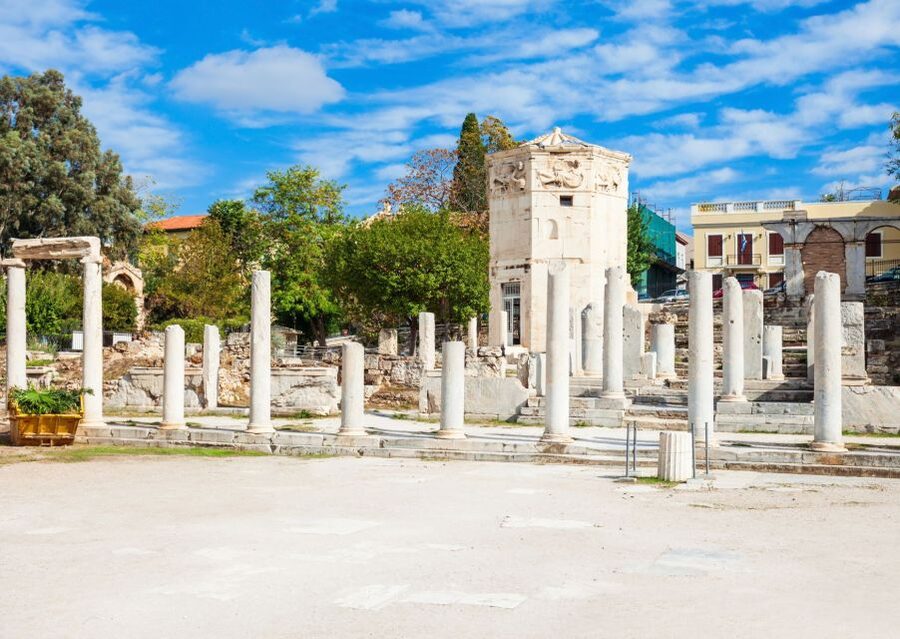
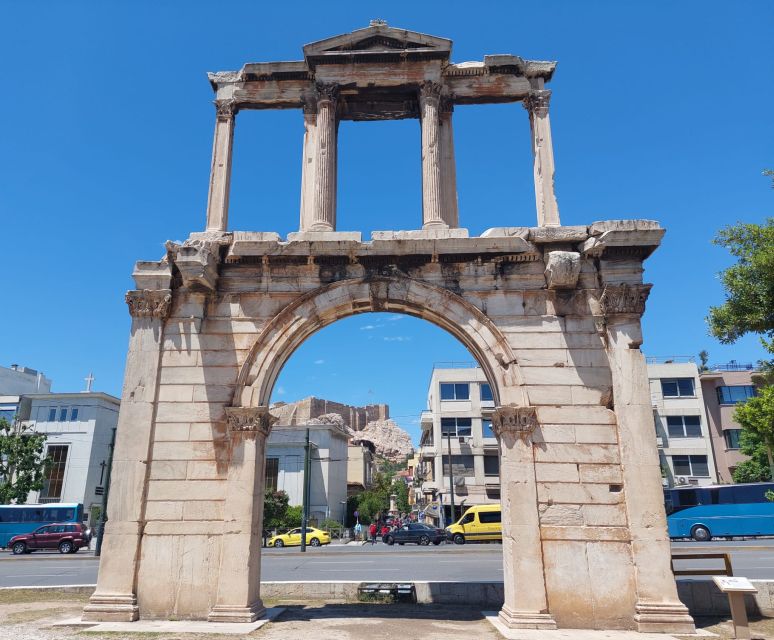
Ancient Athens becomes easier when someone points things out. This guided walking tour of Ancient Athens turns a short stroll into a clear timeline, with Roman Agora and Hadrian’s Library on the route. You also get a walk around Plaka, so your first look at the city feels organized, not random.
Two things I really like: the explanations are praised for being clear and friendly (guides like Juan and Lorena get standout notes), and you do not have ticket hassle because you do not enter the archaeological sites. One thing to consider, though: since you stay outside, this is not the best choice if your top priority is walking inside big sites like the Parthenon area.
Key things to know before you go
- Meet at the Gate of Athena at the entrance to the Roman Agora, outside the archaeological site
- No entry tickets needed because you are not going inside any archaeological sites
- Official Spanish-speaking guide who ties history, mythology, philosophy, and culture to what you see
- Roman Agora and Hadrian’s Library are key stops, so you see more than the usual headline sights
- Plaka highlights help you connect monuments to neighborhoods and street-level Athens
A 2-hour Ancient Athens walk that actually helps
Athens can feel like a puzzle the first time you see it. You look up, you spot a column, you snap a photo, and then you realize you do not really know what you are looking at or how it fits together.
This tour helps with that fast. In just two hours, you get a guided route that combines major ancient landmarks with the lived-in feel of central Athens, especially around Plaka. The promise is simple: you focus on the classical period themes and “relevant monuments,” and your guide adds the stories that make the stones make sense.
You can also read our reviews of more walking tours in Athens


Why it is a smart use of limited time
If you only have a day or two in Athens, a walking tour is a practical way to get your bearings. You start at a specific place (the Roman Agora entrance area) and you end up with a mental map you can use later, whether you return for photos, pick up museums, or plan a longer ticketed site day.
The Gate of Athena meeting point, and why it matters
You meet outside the archaeological site at the Gate of Athena, which is the entrance to the Roman Agora. That detail is more than just trivia. It sets the tone: you are not starting at a random plaza where people drift off in every direction. You start at an actual landmark edge.
From there, the walking plan keeps you oriented around the ancient core. Since the tour is 2 hours long, starting at the right spot means less time searching and more time learning what you are seeing.
What I would do differently if I were solo
If you are arriving new to Athens, I would treat the first 10 minutes like a settling-in period. Listen carefully as the guide sets up how the ancient city connects to what you see on the ground today. That context makes everything later easier, including the route through Plaka.
Roman Agora and Hadrian’s Library: the “outside view” that still teaches
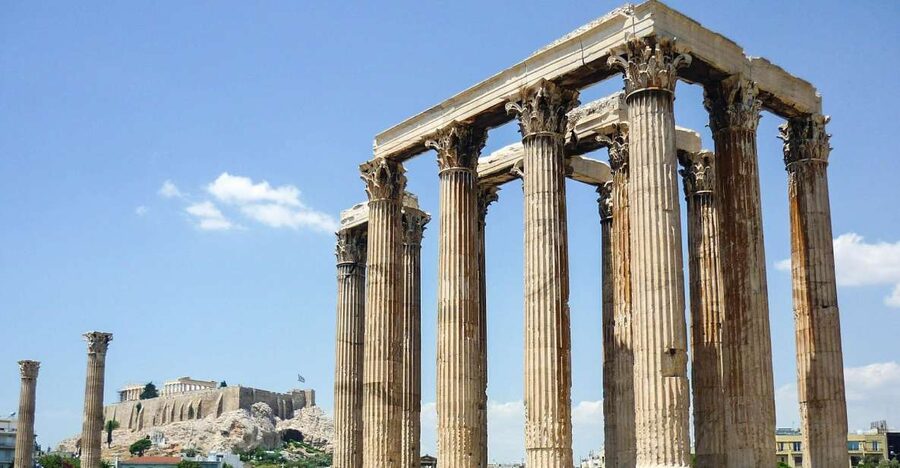
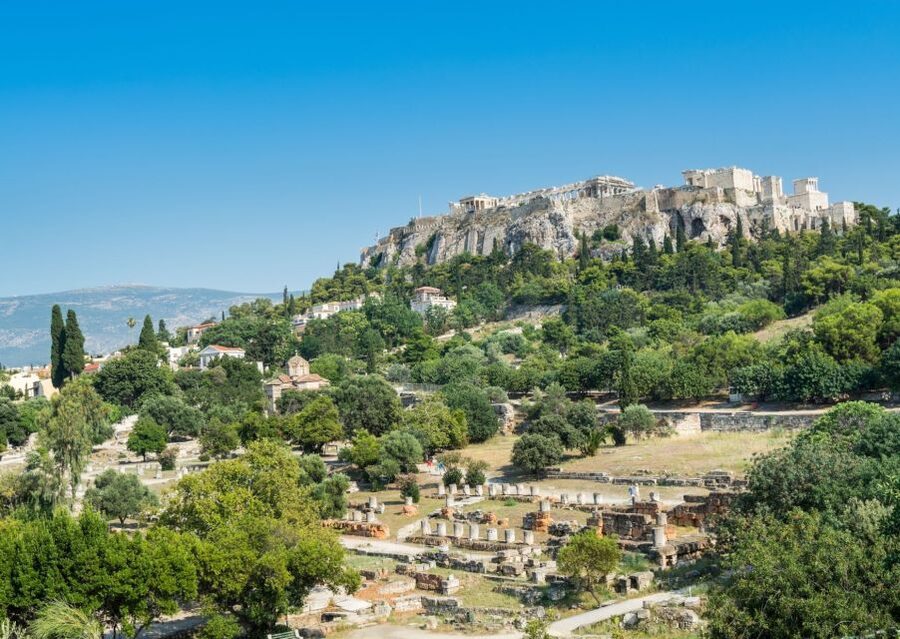
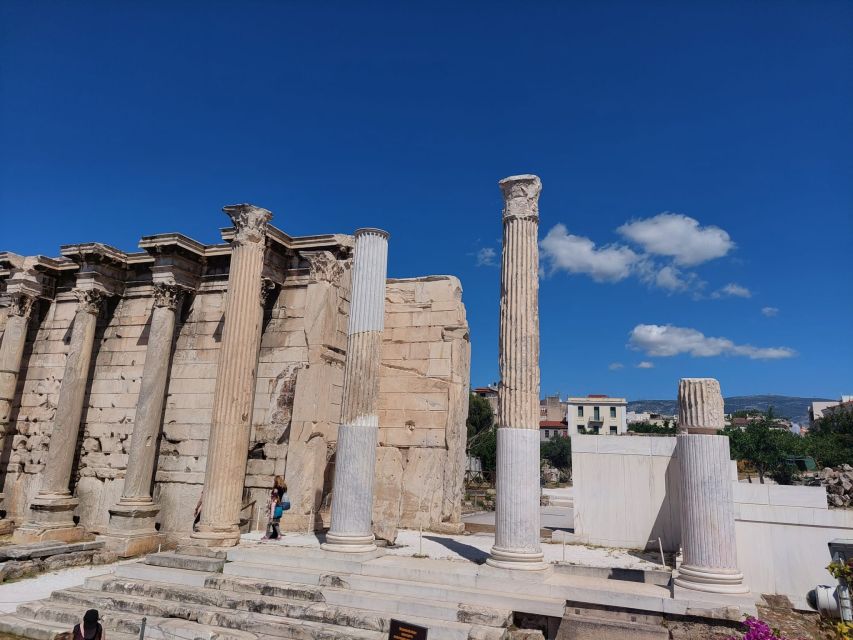
The heart of this tour focuses on Roman Agora and Hadrian’s Library among other archaeological sights along the route. Even though you are not entering the sites, you still get the guided interpretation at the exact places where you can see the layout, shapes, and remnants.
Here is what that means for you in real life: you are not paying for entrance time or working around “line stress.” Instead, you get to understand what each place represented and how Athens evolved over time, with your guide using history and myth to connect the visible remains to the bigger story.
You can also read our reviews of more guided tours in Athens



What you can do with this information later
Outside viewing can be surprisingly useful. Once you have the guide’s explanation, you will likely notice more details on your own:
- architectural fragments and how areas relate to each other
- where civic life might have happened versus ceremonial or cultural spaces
- how the classical story continues into later periods, including Roman-era Athens
If later you decide to add a ticketed visit inside major monuments, you will already have the context. That is one reason people end up loving tours like this even when they are not the “inside ticket” type.
Plaka walk: turning a famous neighborhood into a history map
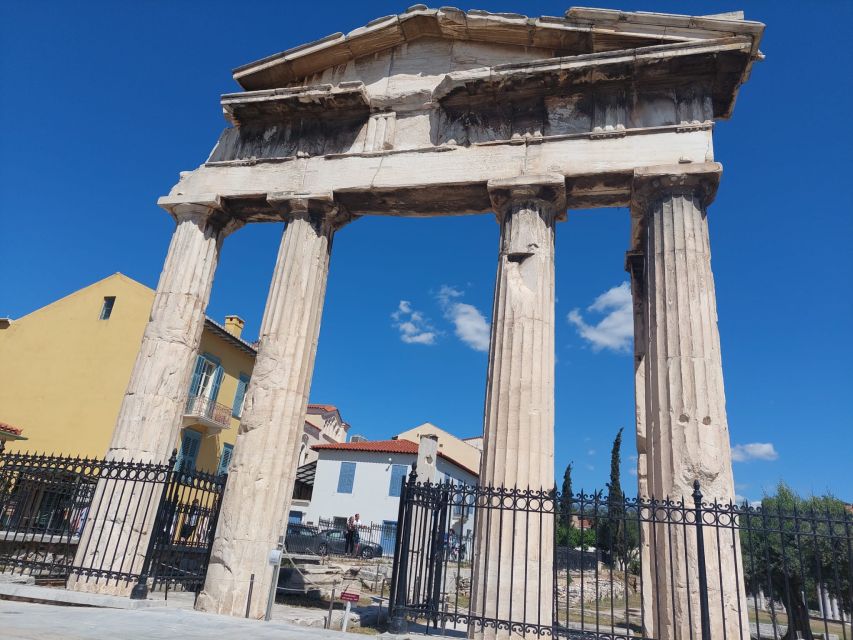
The tour includes a walk around Plaka and its most relevant tourist attractions. Plaka is often treated like a photo stop, but guided walking helps you do something better: you connect the neighborhood to the ancient surroundings rather than treating it as separate from the monuments.
You get two benefits at once:
- You cover the key central sights without needing a full day of wandering.
- You gain story-based orientation, so you know what to look for when you pass it again later.
A practical way to use Plaka during your trip
I suggest you treat Plaka like your “repeatable area.” After this tour, come back for a slower look. Once you understand the ancient context from the walk, your second stroll tends to feel more meaningful. You are no longer just taking pictures, you are reading the city.
The Spanish guide experience: why Juan and Lorena stand out
This is an official tour with a Spanish-speaking guide. The reviews put a spotlight on communication: guides are described as attentive, clear, and knowledgeable, with a friendly style.
Names that come up: Juan and Lorena. Both are praised for making the route feel interesting and easy to follow, and for explaining points beyond the usual headline stops. If you are traveling as a Spanish speaker, this is a big deal. You are not stuck piecing meaning together from fragments, and you can ask questions in a natural way as you walk.
What to do if you care about depth
One review notes an issue with a Partenon audio guide being brief for what people want. I would not rely on an audio app to fill in all the “why” behind the biggest sights. Use your guide while you have them. Ask direct questions, like what makes one monument different from another, or how the stories tie to civic life. A good guide turns random stone into something you can actually picture.
What happens on the ground, stop by stop (without ticket stress)
You should expect a walking-focused experience with guided discussion at archaeological areas. The key operational point is that you are not going to enter any archaeological sites, so you will not need entrance tickets.
That changes the “tour feel” in a good way. You spend your time learning rather than managing logistics like where to line up and how long you will be stuck waiting. It is also easier to keep a steady pace since the tour is only two hours.
A reasonable expectation about time and access
Because entrances are not part of the plan, you should not expect inside museum-level views or long site exploration. Think of it like a guided route designed to give you context and direction. If you want deeper access afterward, you can build it from here.
Price and value: is $30 for 2 hours worth it?
At $30 per person for 2 hours, you are paying for three things:
- A live official Spanish-speaking guide
- Guided interpretation at archaeological stops
- A route that includes Plaka and key ancient landmarks without ticket time
For me, the value comes from the learning efficiency. You are not just being shown a path, you are getting explanation at the right places, which often saves you money later. If you already know what you want to revisit, you will spend your paid ticket time smarter, not guessing.
Also, the tour design avoids a common Athens trap: overcommitting to ticketed sites when you are exhausted or confused about where everything is. This one is lighter on admin and heavier on orientation.
What to bring so the walk feels good
This is a comfortable-shoes kind of tour. Bring:
- Comfortable shoes
- Sunscreen
- Weather-appropriate clothing
Since Athens weather can swing quickly and sun can be intense, sunscreen is not optional. And since you are walking continuously for two hours, shoes matter more than you think.
Small pacing tip
If you tend to stop for photos a lot, that is fine, just keep moving. The best part of a guided walk is the order of explanations. When you drift too far, you might miss the moment where the guide explains something specific about the next stop.
Who should book this tour?
I think this tour is a great fit if:
- you want a guided overview that helps you understand more than the Partenon headlines
- you are a Spanish speaker and want explanations in your language
- you prefer a walk-and-learn format over standing in lines for ticketed entry
- you want a first anchor for planning the rest of your Athens days
It might be less ideal if your main goal is interior access and long exploration inside multiple archaeological sites. In that case, you will likely want to pair this with a separate ticketed visit elsewhere.
Should you book the Athens guided walking tour?
Yes, if you want a clear, organized start to Athens. At $30 and two hours, it is a practical way to get meaning out of the monuments around Roman Agora and Hadrian’s Library, then connect them to the neighborhood feel of Plaka. The guide quality is a clear selling point, with Juan and Lorena highlighted for clarity and an easy, friendly approach.
Book it with this mindset: you are buying orientation and storytelling, not deep ticketed access. If that matches your travel style, you will likely feel like you learned something the moment you stepped back onto the street.
FAQ
What language is the guided walking tour?
The tour is conducted with an official Spanish-speaking guide.
How long is the tour of Ancient Athens?
The duration is 2 hours.
Where do I meet the guide?
You meet in front of the Gate of Athena, which is the entrance to the Roman Agora. You meet outside the archaeological site.
Do I need entrance tickets to archaeological sites?
No. You are not going to enter any archaeological sites, so you will not need tickets.
What is included in the price?
Included are a Spanish-speaking official tour guide and guided tour at archaeological sites.
What should I bring for the walk?
Bring comfortable shoes, sunscreen, and weather-appropriate clothing.
Is free cancellation available?
Yes. You can cancel up to 24 hours in advance for a full refund.
Is there a reserve now and pay later option?
Yes. You can reserve your spot and pay nothing today.
Is this tour only for people who speak Spanish?
Yes, the tour is Spanish language, so it is best suited for Spanish speakers.
More Walking Tours in Athens



More Tours in Athens

More Tour Reviews in Athens
- All Day Cruise -3 Islands to Agistri,Moni, Aegina with lunch and drinks included
★ 5.0 · 4,958 reviews



Not for you? Here's more nearby things to do in Athens we have reviewed









Athens Walking Tours, compared.
 ★ 4.6Acropolis and Parthenon Guided Walking TourFrom $385,882 reviews
 ★ 5.0Greek Food Walking Tour in AthensFrom $874,740 reviews
 ★ 4.7Acropolis: Acropolis and Parthenon Guided Walking TourFrom $363,442 reviews
 ★ 5.0Acropolis monuments & Parthenon Walking Tour with Optional Acropolis MuseumFrom $422,678 reviews
 ★ 4.5Athens Acropolis and Parthenon Walking TourFrom $411,355 reviews
 ★ 5.0Athens Authentic Greek Food Walking Tour (Small Group)From $83809 reviews
 ★ 4.4Early Morning Acropolis & Old Athens Guided Walking TourFrom $28748 reviews
 ★ 4.9Ultimate Food Walking Tour with 15 TastingsFrom $93567 reviews
Browse the lists this tour appears in