
Reviewed · ATHENS ACROPOLIS & PARTHENON TOURS
Acropolis Guided Tour with Skip-the-Line Access
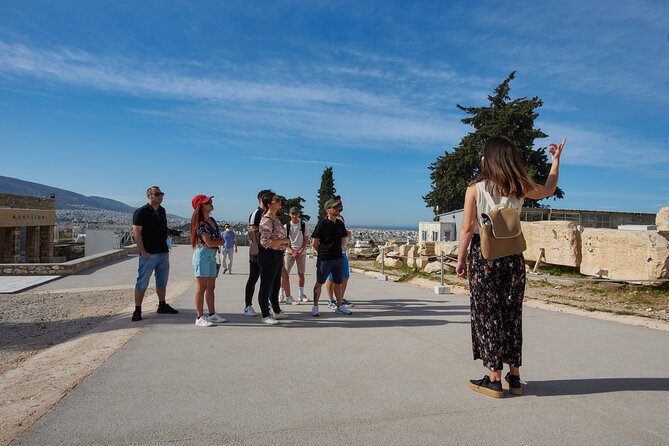
Golden hour makes the Acropolis hit differently. This 5:30 pm evening guided visit shifts the vibe from daytime crowds to softer light, with Athens stretching out below as you move between the major ruins. I also like that you get skip-the-line access plus a licensed guide, so you spend less time waiting and more time understanding what you’re looking at. One heads-up: you will walk on uneven stone and marble, with an incline and stairs, and in summer it can feel hot.
You’ll also appreciate how tightly the route focuses on the Acropolis’ big names, not just random stops. In about two hours, you cover the Sacred Rock and the signature buildings, with short, useful moments at each so you don’t feel rushed or lost.
The main drawback is simple: if you’re not into climbs or long sightseeing sessions, this might feel like a workout. Even though the ascent is gradual, you will want grippy shoes and the mindset of, Okay, I’m going up.
Key Things That Make This Acropolis Tour Worth Your Time
- Evening timing for nicer light and city views compared to the midday grind
- Skip-the-line access that helps you start the sights sooner
- Licensed guide to connect architecture, myths, and 5th-century BCE politics
- Small group size with a maximum of 15 travelers for a calmer pace
- Pentelic marble and signature design details explained clearly, like Doric versus Ionic elements
Why the 5:30 pm Acropolis Timing Changes Everything
The Acropolis is famous, but the experience changes fast based on the time of day. Starting at 5:30 pm puts you on the hill in the late-day mood, when the stone looks warmer and the city looks bigger.
There’s also a practical side. You get less pressure from peak daytime queues, and you can take photos with less glare. If you’ve ever toured ancient sites while baking in direct sun, you know why this matters.
And yes, the views are part of the payoff. Once you’re up there, the city spread feels like a reward for the climb, not just a bonus.
You can also read our reviews of more guided tours in Athens


Getting There Smoothly: Herodion Hotel Meets Your Small Group
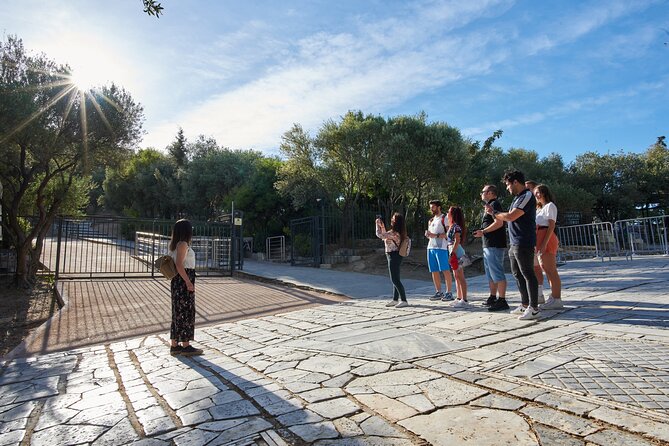
This tour meets at Herodion Hotel (Rovetou Galli 4, Athina 117 42, Greece). The experience ends back at the same meeting point, so you’re not left figuring out your next step while you’re already tired.
You’ll also be in a small group, capped at 15 travelers. That limit helps the guide manage the pace, and it keeps the moving parts under control when you’re crossing open areas of the hill.
Another detail I like: you don’t need a paper ticket. You’ll use a mobile ticket, and the tour includes Acropolis admission in the price. So you’re paying once and then just showing up ready to go.
What Skip-the-Line Access Really Means for Your Visit
Skip-the-line access is not just a convenience buzzword. It changes your mental state. Instead of starting the climb with frustration, you begin with momentum.
Since the tour is about 2 hours total, every minute counts. When you remove waiting time, the guide can spend more effort on the buildings themselves, and you get a better sense of how the site connects from one stop to the next.
This also supports a more enjoyable rhythm. You can linger briefly, take in the shapes and materials, and then move on before your energy drops.
Stop 1 on the Hill: The Acropolis as the Sacred Rock of Athens
Your first stop is the Acropolis hill, the so-called “Sacred Rock” of Athens. The name comes from the Greek roots acro (edge) and polis (city), which fits the feel of the place. It’s a high, defensive, symbolic center, not a background landmark.
The guide’s job here is to give you a framework. During Perikles’ Golden Age, the Acropolis became a showcase of ancient Greek art and architecture, especially in the 5th century BCE. You’re not just looking at random stones. You’re looking at the physical language of power, religion, and civic pride.
I like starting here because everything else makes more sense afterward. Once you understand the “apogee” idea and the cultural weight, the later buildings stop feeling like separate monuments and start feeling like a designed story.
Propylaea and Wingless Victory: Monumental Entry Through Pentelic Marble
Next up is the Propylaea, the monumental entrance to the sacred area dedicated to Athena, the patron goddess of the city. It was built by the architect Mnesicles, using Pentelic marble, and the design was considered avant-garde.
One reason this stop sticks is that it teaches you to look at entrances as meaning. A gate like this is not practical only. It’s a statement that you are moving into a different world: sacred space, civic identity, and myth layered into stone.
On the rampart near Propylaea, you’ll also come across the Ionian temple of Apteros Nike, known as Wingless Victory. It’s the setup for the next stop, and it’s a good moment to connect the names you’ll hear with what you’re actually standing near.
More Athens tours and experiences for the shortlist




Temple of Athena Nike: The Victory Statue Without Wings
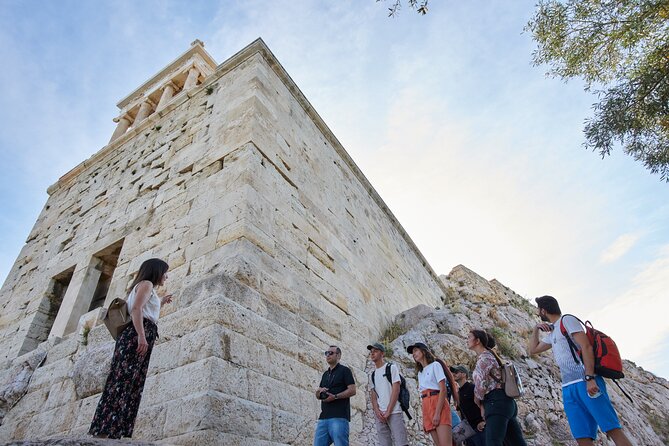
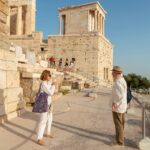
The Temple of Athena Nike sits on the southwestern edge of the Acropolis. It was built between 426 and 421 BC, and it replaced older temples, with those earlier remains preserved inside the bastion.
This stop is especially rewarding if you enjoy small-but-fascinating design meaning. The temple is named for the statue of Athena Nike, which symbolizes victory. In many versions, Nike has wings, but in this case the statue does not. That’s why it’s called Athena Apteros, meaning wingless.
I find that detail helpful because it keeps you from treating the temple as a generic symbol. The story becomes specific, and once you know why the name changes, you’re more likely to notice the temple’s role in the broader sacred program.
Parthenon: The Signature Masterpiece You Can See from a Mile Away
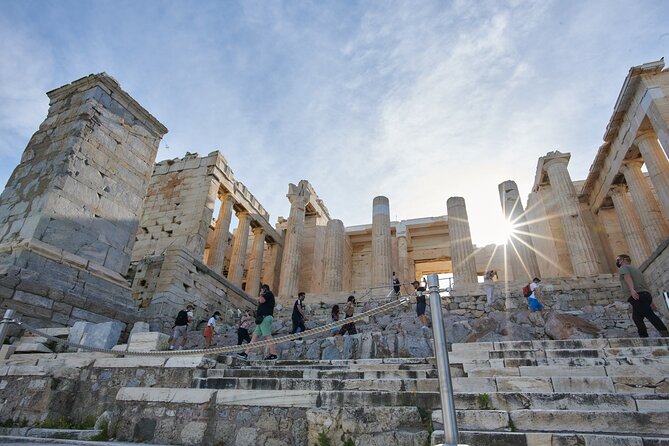
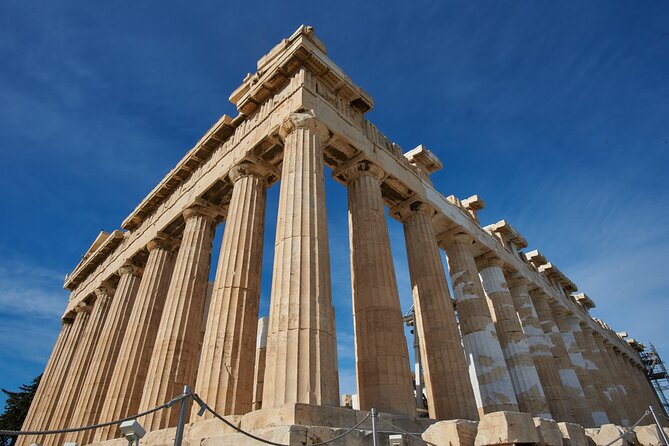
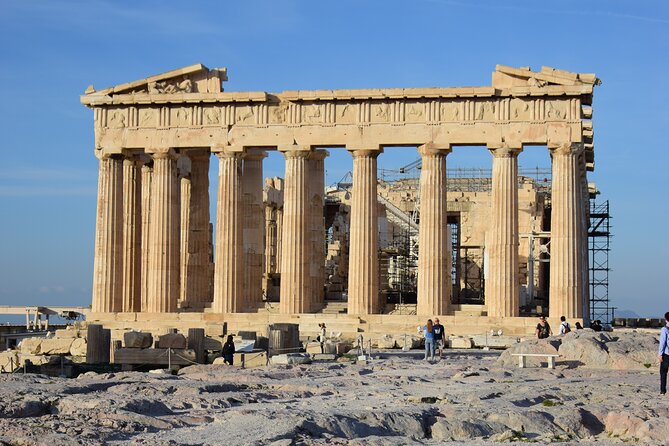
The biggest anchor stop is the Parthenon. It’s dedicated to Athena Parthenos, meaning Athena the Virgin, and it was built between 447 and 438 B.C.E. The whole structure is tied to Doric design and Pentelic marble, which is part of why it still reads as the international symbol people recognize instantly.
If you like architecture, this stop gives you concrete things to look for:
- Doric form with eight columns on each narrow side and seventeen columns on each long side
- A mix of sculptural elements, with Doric metopes and triglyphs plus an Ionic frieze
The sculptural program also helps you understand the Parthenon as more than a temple. The metopes depict major myth battles, including Gigantomachy on the east, Amazonomachy on the west, Centauromachy on the south, and scenes from the Trojan War on the north.
And it’s connected to Pericles’ building program. The Parthenon was the pinnacle of that era’s ambitions, and standing there, it’s hard to miss how much it was designed to represent a whole worldview.
At about 30 minutes here, you have enough time for the “Oh wow” phase and also the “Wait, here’s why this matters” phase.
Erechtheion and the Porch of Caryatids: Myth Measured in Stone

After the Parthenon, you’ll move to the Erechtheion, built between 421 and 406 BC. The name links back to Erechtheus, a mythical king associated with Athens.
This is one of my favorite stops on any Acropolis route because the details feel human. The materials are varied: Pentelic marble, plus a frieze of Eleusinian grey stone with white relief figures, and foundations in Piraeus stone. Even the paving is part of the storytelling, since it was thought to preserve traces of Poseidon’s trident when it struck and produced salt water.
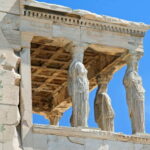
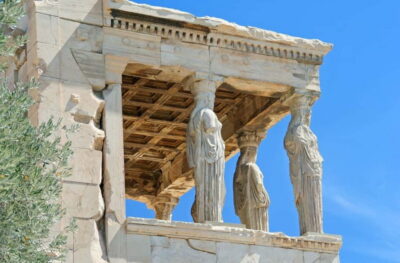
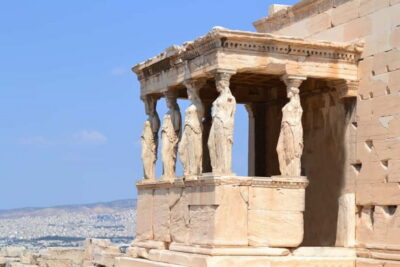
Then comes the showpiece idea: the porch of the Karyatides. Instead of columns, the structure uses six female statues to support the roof. The information here matters because the originals and casts are split across major collections: five of the Karyatides are in the Acropolis Museum, and one is in the British Museum, while the figures on the building are casts.
That changes how you look at the Erechtheion. It becomes a living lesson on how heritage moves, and why “what you see” and “what you know” should travel together.
You’ll spend about 15 minutes at this stop, which is enough to take in the myth details without feeling like you’re rushing through a masterpiece.
Theatre of Dionysus: Where the City Dionysia Happened
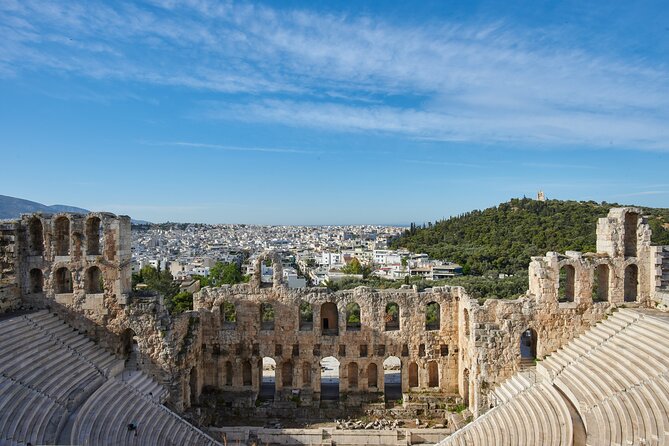
The final stop is the Theatre of Dionysus on the south slope of the Acropolis. This site was part of the sanctuary of Dionysus Eleuthereus.
The timing is part of the story. The first orchestra terrace was constructed around the mid- to late-sixth century BC, and it hosted the City Dionysia, a major event tied to Dionysus.
Even if you’re not a theatre person, this stop gives you context for Greek culture beyond temples. It shows that the Acropolis was not only religion and government, it was also performance and community identity.
Expect about 10 minutes here, enough for a grounded sense of how the slope and seating relate to the performances that took place.
Footwear, Heat, and the Realistic Pace You Can Expect
The tour covers multiple key structures with walking between them. Based on the practical advice from people who’ve done this route, I’d plan like you’re visiting a working archaeological site, not a smooth museum floor.
You’ll be on rocks and marble ground, so comfortable walking shoes with good grip are a must. The climb and stairs are described as gradual, but your legs will still feel it, especially if you’re arriving straight from city streets.
Also, summer heat is real. The evening timing helps, but it may still feel warm. If you get heat-sensitive, dress smart and don’t treat this as a casual stroll.
The good news is that this route tends to feel manageable once you’re moving. You’re not sprinting between stops, and the guide’s pacing matters.
Price and Value: Is $156.20 a Smart Deal?
At $156.20 per person, this isn’t a budget impulse buy. But for what you’re getting, it can feel fair.
Here’s why the value holds:
- Licensed tour guide included in the price
- Skip-the-line Acropolis access, which matters at a high-demand site
- Acropolis ticket included, so you’re not paying extra separately
- A route that concentrates on the core buildings most people come for, plus the Theatre of Dionysus
You’re also paying for organization. A guided evening visit of this scale takes planning to make flow well. Without a guide, it’s possible to see the Parthenon and still leave with only surface-level understanding. With a guide, you’re getting the meaning behind what you’re looking at, like why Athena Nike is wingless or why Doric and Ionic elements work together on the Parthenon.
If you’re the type who likes learning while walking, this price starts to look like a rational spend, not just a tourist tax.
Who This Tour Fits Best (And Who Might Prefer a Different Time)
This tour fits best if you want a focused, guided run through the Acropolis at a time when the site feels calmer. The English offering and small-group size make it a strong option for most visitors who can handle walking on historic stone.
I especially think it works for:
- First-timers who want the “main buildings” without turning it into a research project
- People who prefer evening atmosphere over midday glare
- Anyone who wants a guide to connect myths, architecture, and the 5th-century BCE context
If you strongly dislike inclines, or if walking in heat is an issue for you, you may want to compare with a daytime option that might match your comfort level better. This tour does say most travelers can participate, but it still involves a climb and uneven surfaces.
Should You Book the Acropolis Evening Guided Tour?
I’d book it if you’re excited by the idea of seeing the Acropolis in late-day light and you want help making sense of the buildings as you go. The combo of skip-the-line access, a licensed guide, and a two-hour small-group structure is built for people who want both beauty and context, without spending your whole day stuck in queues.
I’d think twice if you’re set on a totally low-walking experience. This is a hill. It has stairs. It has stone underfoot. Go in with the right shoes and expectations, and you’ll be happy you chose the evening timing.
In short: if you want the Acropolis to feel like a story rather than a checklist, this is the kind of tour that does that job.
FAQ
What time does the tour start?
The tour starts at 5:30 pm.
How long is the Acropolis guided tour?
It runs for about 2 hours.
Is there a licensed guide included?
Yes. A licensed tour guide is included in the price.
Does the tour include skip-the-line access?
Yes. You get skip-the-line Acropolis access.
What language is the tour offered in?
The tour is offered in English.
Is an Acropolis ticket included?
Yes. The Acropolis ticket is included, and admissions for the listed stops are included.
Where do I meet for the tour?
You meet at Herodion Hotel, Rovetou Galli 4, Athina 117 42, Greece. The tour ends back at the meeting point.
Is hotel pickup and drop-off included?
No. Hotel pickup and drop-off is not included.
What if I need to cancel?
You can cancel for free up to 24 hours before the experience’s start time for a full refund. Cancellation timing is based on the local time where the experience takes place.
More Guided Tours in Athens

More Tours in Athens


More Tour Reviews in Athens
- All Day Cruise -3 Islands to Agistri,Moni, Aegina with lunch and drinks included
★ 5.0 · 4,958 reviews



Not for you? Here's more nearby things to do in Athens we have reviewed









Athens Acropolis & Parthenon Tours, compared.
 ★ 4.4Acropolis & up to 5 Archaeological Sites Combo PassFrom $4812,619 reviews
 ★ 4.2Acropolis Ticket with Optional Audio or Live GuideFrom $4211,055 reviews
 ★ 4.8Acropolis, Parthenon & Acropolis Museum Guided TourFrom $409,316 reviews
 ★ 4.6Acropolis and Parthenon Guided Walking TourFrom $385,882 reviews
★ 4.8Acropolis, Parthenon & Acropolis Museum Guided TourFrom $413,579 reviews
★ 4.6Acropolis and Parthenon Guided Walking TourFrom $385,882 reviews
★ 4.8Acropolis, Parthenon & Acropolis Museum Guided TourFrom $413,579 reviews
 ★ 4.0Acropolis Ticket with Audio GuideFrom $473,575 reviews
 ★ 4.7Acropolis: Acropolis and Parthenon Guided Walking TourFrom $363,442 reviews
 ★ 5.0Acropolis monuments & Parthenon Walking Tour with Optional Acropolis MuseumFrom $422,678 reviews
Browse the lists this tour appears in