
Reviewed · ATHENS ACROPOLIS & PARTHENON TOURS
Private 4-hour Walking Tour of Acropolis and Acropolis Museum in Athens
Four hours, one hill, endless stories. This private tour pairs the Acropolis Museum with a guided walk across the Acropolis, so you see the big monuments and understand what you are looking at. I like the fact that admission is included, which helps you spend your time inside rather than stuck in queues.
You also get a guide who keeps the day moving at a human pace. In the feedback I reviewed, standout guides named Anna, Kathy, Ioanna, Maria, and Nikos are praised for staying friendly, setting expectations early, and letting the group go at a comfortable speed.
The main drawback is simple: you will walk and climb. Bring water and plan for sun, steps, and a bit of uphill effort before you settle into the views.
Quick Takeaways Before You Go
- Admission included for both the Acropolis and the Acropolis Museum, so you can focus on the sights.
- Private guide for 4 hours means you can ask questions and avoid getting lost in the crowds.
- Museum first, Acropolis second helps the statues and friezes make more sense before you see the ruins.
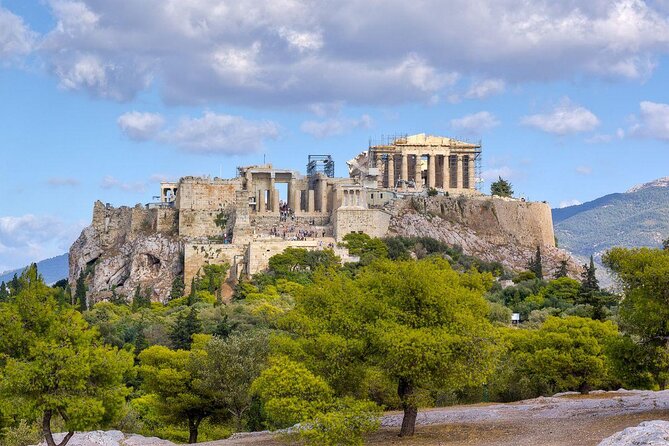
- Stops cover the skyline: Parthenon, Temple of Athena Nike, Erechtheion, plus smaller but fascinating sites.
- Relaxed pacing is part of the value, especially if your group wants to linger rather than rush.
Why This Acropolis + Museum Mix Works So Well
The Acropolis is the kind of place where a guide can change everything. Without context, you tend to bounce from landmark to landmark. With the right explanation, you start noticing patterns, myths, and how the buildings connect to the archaeology.
I like this format because it hits two different layers of the story. The Acropolis Museum puts objects back into focus, from sculptures to architectural details. Then the Acropolis gives you the big picture in real space, where you can see why everything was built where it was.
Also, it is private. That matters on the Acropolis, where the crowd rhythm can push you faster than you want to go.
You can also read our reviews of more walking tours in Athens


Price and What You Are Really Paying For
At $383.55 per person for a 4-hour private walking tour, this is not a budget deal. But the value calculation shifts once you look at what is included.
You are paying for:
- A private official guide for the full 4 hours
- Entrance tickets to the Acropolis
- Entrance to the Acropolis Museum
- Local taxes covered
Transportation is not included, so you will handle getting yourself to the start point. And since it is private, your cost per person depends on how many people share the booking. If you are traveling as a pair, the price can feel steep, but the guide time and included admission are still doing real work for you.
If your goal is a guided, interpretive visit that saves you time and stress, this tends to make sense. If your goal is to simply wander, you could do it cheaper on your own. But you would be trading that context and skip-the-queue benefit for lower cost.
Meeting at the Acropolis Museum, Then Heading Up
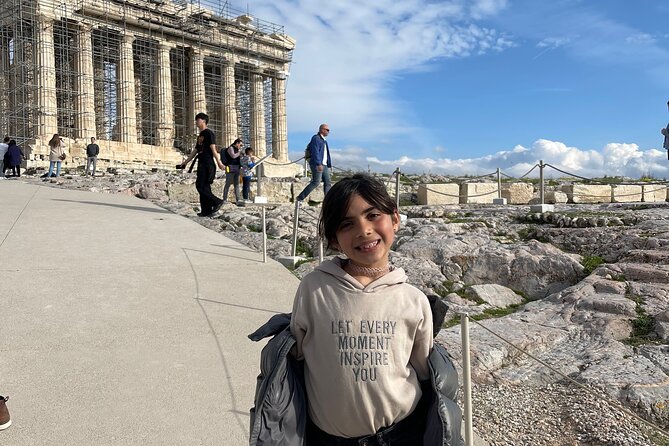
The tour starts at the Acropolis Museum, at Dionysiou Areopagitou 15, Athina 117 42. Pickup is offered, and the guide meets you in front of the museum or at a nearby place.
This is a practical setup. Starting at the museum means you begin in the most controlled environment first, where you can get oriented before the heat and stairs kick in.
The tour ends back at the meeting point, so you are not left figuring out how to get back down. And since it is listed as near public transportation, you should be able to reach the museum without a complicated plan.
One more useful detail: you get a mobile ticket, which typically helps reduce friction at entrances.
Acropolis Museum: Get Oriented Before You Walk the Ruins
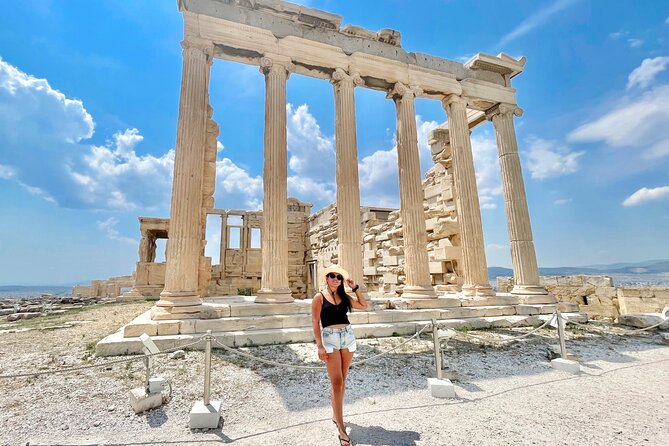
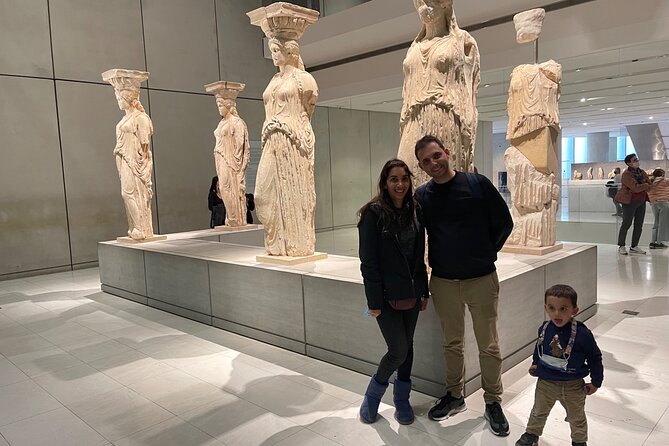
You spend about 1 hour at the Acropolis Museum, and it is a smart move. The museum is where the story gets translated from myth and stone into objects you can actually study.
What you will see here is organized into five sectors, depending on where the pieces came from and what era they connect to:
- Acropolis Slopes: everyday objects, reliefs, votive offerings, and decorative elements
- Archaic: works before the Persian Wars, including kores and pediment sculptures
- Parthenon: the Parthenon frieze, metopes, pediments, plus related inscriptions
- Propylaea, Athena Nike, Erechtheion: items tied to those specific parts of the complex
- 5th century BC to 5th century AD: inscriptions, reliefs, statues of gods and heroes, plus Classical, Hellenistic, and Roman leftovers
A detail I found especially helpful is how the museum layout and orientation relate to what you later see outdoors. In the guide feedback, Anna was praised for explaining how the building design mirrors the Parthenon in orientation and dimension. That is the kind of explanation that makes your outdoor visit feel less random.
You will also get context about how ruins discovered at the building site were excavated and then made visible through the floors. So instead of thinking of it as only a display hall, you start to see it as part archaeology lab, part museum.
If you tend to rush museums, this stop is still workable. One hour gives you enough time to grasp the main themes without turning the day into a classroom.
Acropolis Entrance: Admission Included, So You Can Focus
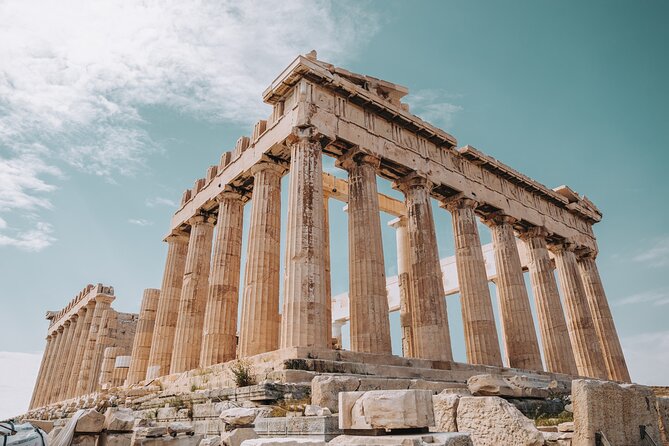
After the museum, you move to the Acropolis for about 1 hour. Admission is included, and the tour is designed to avoid you spending your precious time queuing for tickets.
This matters because the Acropolis can feel like a series of bottlenecks: entry points, tight pathways, and popular viewpoints. Having tickets sorted by the tour means you spend less time waiting and more time looking.
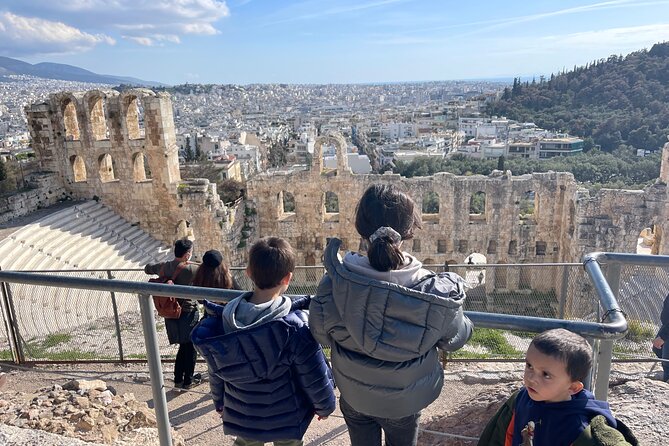
The Acropolis itself sits high above the city, on a hill 156 meters above sea level. Even if you know the headlines, once you stand up there, you understand how strategic this spot was.
Your guide will help you connect the monuments to the sacred enclosure, major religious festivals, and key city events tied to ancient Athens. It is not just sightseeing. It is learning how the place functioned as a religious and civic center.
You can also read our reviews of more private tours in Athens




Parthenon Time: The Big Symbol, Explained
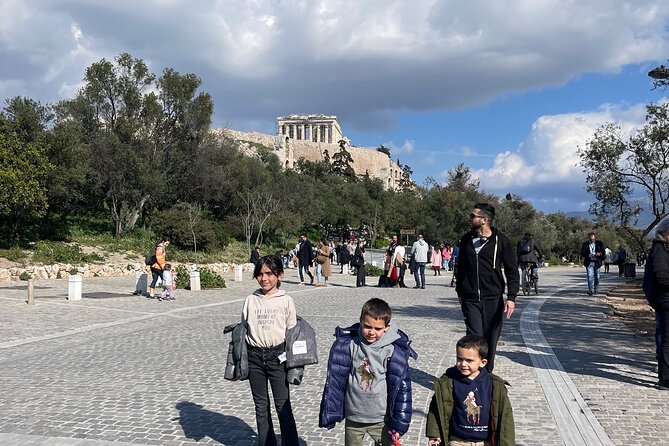
The Parthenon stop is about 20 minutes, and it is enough if you are getting real interpretation. The Parthenon is the main building of the Acropolis complex and one of the strongest symbols of classical architecture in ancient Greece.
It was built between 447 and 432 BC, originally to house a colossal cult statue of Athena Parthenos made from wood, ivory, and gold, reportedly about 12 meters tall.
Here is what helps most during this short window: your guide can point out what makes the building so recognizable and how its design served both aesthetic and religious purposes.
You will likely spend your time doing two things:
- Looking at the architecture and appreciating proportions
- Listening for the myth and purpose behind what you see
If you are the kind of person who wants a moment to take photos without feeling rushed, ask your guide to pause at your favorite viewpoint. The private format makes that easier than in group tours.
Propylaea Gate and the West-Side Fortification Story
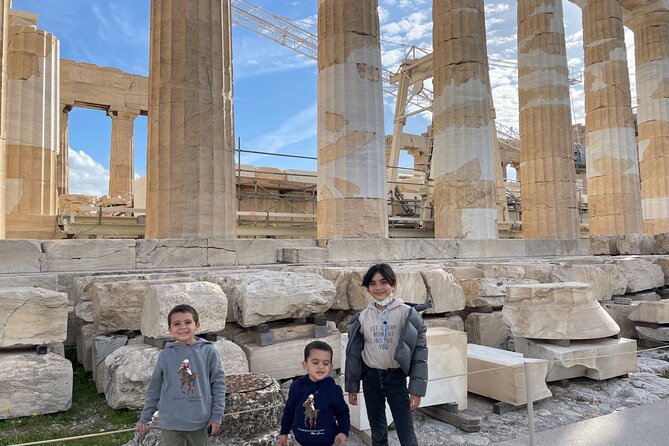
One of the cooler details on this tour is that it does not only jump to the most famous temples. It includes a west-side access point built in the 3rd century AD to protect the sacred precinct, possibly after the destructive invasion of the Herulians.
This is described as the current access gate west of the Propylaea, built into a strong fortification wall erected to the west of the Propylaea. The gate is named after a French archaeologist who investigated this area in 1852.
Why does this matter? Because it shows how the Acropolis changed over time. People often imagine it as frozen in a single ancient moment. But standing at these later defensive elements makes it clear the site kept being used, protected, and reshaped.
The gate and adjacent towers reused earlier building material from structures like the choregic monument of Nikias from the late 4th century BC. Even the idea of reuse is a clue. Athens was not only building. It was recycling, adapting, and preserving history in layers.
Temple of Athena Nike: Two Temples, Two Different Ages
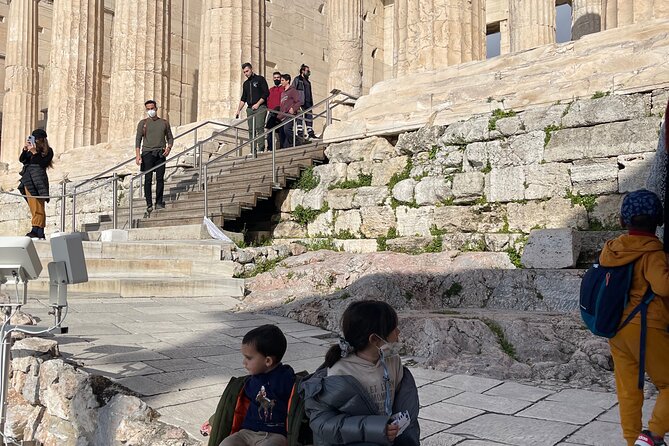
The tour includes the Temple of Athena Nike area more than once, and the details point to two related but different stories.
The small Ionic temple (426 to 421 BC)
This stop is about 15 minutes. The temple was built between 426 and 421 BC, replacing older temples whose remains were preserved inside the bastion.
It had relief friezes with different themes on each side:
- East side: gods gathering around Zeus enthroned
- Other sides: warfare themes, including Greeks vs. Persians and Greeks vs. Greeks
- One side highlights the battle at Marathon (490 BC) led by Athenians, in a victorious context
Even if sculptural remains of the pediments are limited today, the frieze themes give you something concrete to look for in the concept of the temple.
Older Athena Polias remains (and why you may notice less)
Later, the tour also includes the remains associated with an older Temple of Athena Polias, likely built in the 6th century BC on earlier foundations. This one was damaged by Persians in 480 BC and again after 406 BC, and it was never rebuilt.
Your guide can help you understand why you are seeing remains rather than a restored full structure. In this case, you are shown the altar remnants visible in the bedrock to the east of the building.
So you get a double education: one about the temple that was built, and one about the temple that was damaged and left as traces.
Erechtheion: The Caryatids Moment
The Erechtheion stop is about 15 minutes, and this is where many people feel the Acropolis become personal.
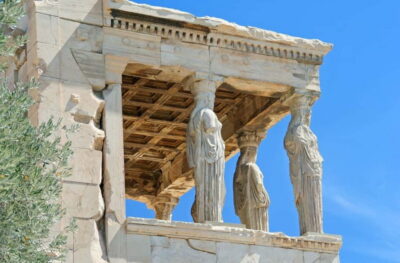
The Erechtheion was built to house religious rituals that earlier temples held. It also had to deal with an uneven terrain, and it avoided disturbing sacred shrines such as areas tied to Poseidon (Erechtheus) and Hephaestus.
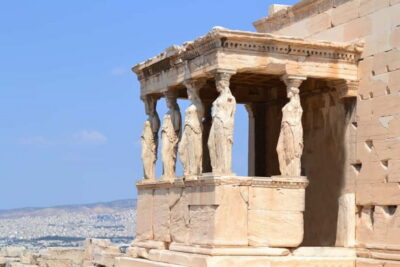
The big visual feature is the second portico roof support by six female statues known as Caryatids. They are famous because they look like they casually support the weight of the roof on their heads.
Even within 15 minutes, you can get a lot from this stop if your guide points out:
- Why the uneven site shaped the design
- How the architecture solved practical problems without losing artistic character
- What the Caryatids are doing symbolically, not just visually
This is one of the best places to slow down, because it is easy to stand there and just stare.
The Smaller Stops That Make the Day Feel Complete
After the big hitters, the tour includes a set of shorter stops, each about 10 to 15 minutes, that add depth. These are the places many guidebook-style stops skip.
Sanctuary of Artemis Brauronia
This is about 15 minutes. It is dedicated to Artemis Brauronion, tied to women about to give birth and women who have just given birth.
The sanctuary likely served as a complement to a related sanctuary at Brauron in Attica. It includes a pi-shaped Doric stoa with columns along the facade, a rear wall parallel to the southern fortification wall, and enclosed wings that stored sanctuary treasures.
Today, what you mostly see are foundation cuttings in bedrock. That can feel underwhelming if you expect full walls. But with interpretation, it becomes a lesson in what archaeologists actually preserve.
Temple of Rome and Augustus
This stop is about 10 minutes. It was erected in the late 1st century BC and dedicated to the goddess Rome and to Octavian Augustus.
Architecturally, it is small and circular, with a single row of nine Ionic columns and no interior wall. Your guide can show you how these Roman-era layers fit into a site that already carried centuries of Greek religious importance.
Monument of Agrippa
About 15 minutes. The monument commemorates Eumenes II of Pergamon’s victory in the chariot race of the Panathenaic games in 178 BC. The top originally featured a bronze quadriga, a four-horse chariot.
Later, the city of Athens dedicated another version of the chariot to Marcus Agrippa around 27 BC. Only the pedestal is preserved today, made from gray-blue Hymettus marble, with a height described as 8.91 meters.
This stop is great for a practical reason: it trains your eye to notice scale and structure, not just names.
Walking, Heat, and Where This Tour Fits Best
Even with a well-paced guide plan, this is still a walking tour. You will go uphill to the Acropolis, and your route includes multiple stops across the complex.
One review tip that is worth taking seriously: bring water, because there are sellers up there. If you plan to do photos, bring a phone battery or small power bank too, since you will be in sun for a long time.
This tour fits best if:
- You want the big monuments with real explanations
- You prefer a guided flow rather than wandering with confusion
- You like museums but also want the outdoor payoff
- Your group values a relaxed pace, not a sprint through the ruins
It may be less ideal if you dislike stairs and steep paths, or if your energy is limited. The tour is private, but the Acropolis terrain is not.
Booking Smart: How to Get the Most From Your 4 Hours
This tour is often booked about 66 days in advance, which tells you demand is steady. If you have fixed dates, booking earlier can help you lock in your preferred time.
Since the format is private, you should also think about your group style. If your group loves questions, you will get value from that. If you are more of a quiet observer, tell your guide what pace you want so the commentary matches your mood.
Also, remember that food and drinks are not included. The tour is short enough that you might not need a full meal, but you do want a water plan.
Finally, because transportation is not included, make sure you are clear on how you are getting to the museum at the start. Starting point clarity saves time and lowers stress.
Should You Book This Acropolis and Acropolis Museum Walking Tour?
I would book it if you want less guesswork and more meaning. The combination of the Acropolis Museum first, then the outdoor monuments, is a strong way to understand what you are seeing, especially with a guide who can keep the day structured.
I would hesitate only if your priority is lowest cost or minimal walking. At $383.55 per person, you are paying for private guiding plus included admission, so you should feel confident you will use the guide time.
If you want a 4-hour route that hits the skyline highlights, the key museum sectors, and the smaller stops that add texture, this is a very solid match.
More Walking Tours in Athens



More Tours in Athens


More Tour Reviews in Athens
- All Day Cruise -3 Islands to Agistri,Moni, Aegina with lunch and drinks included
★ 5.0 · 4,958 reviews



Not for you? Here's more nearby things to do in Athens we have reviewed








Athens Acropolis & Parthenon Tours, compared.
 ★ 4.4Acropolis & up to 5 Archaeological Sites Combo PassFrom $4812,619 reviews
 ★ 4.2Acropolis Ticket with Optional Audio or Live GuideFrom $4211,055 reviews
 ★ 4.8Acropolis, Parthenon & Acropolis Museum Guided TourFrom $409,316 reviews
 ★ 4.6Acropolis and Parthenon Guided Walking TourFrom $385,882 reviews
★ 4.8Acropolis, Parthenon & Acropolis Museum Guided TourFrom $413,579 reviews
★ 4.6Acropolis and Parthenon Guided Walking TourFrom $385,882 reviews
★ 4.8Acropolis, Parthenon & Acropolis Museum Guided TourFrom $413,579 reviews
 ★ 4.0Acropolis Ticket with Audio GuideFrom $473,575 reviews
 ★ 4.7Acropolis: Acropolis and Parthenon Guided Walking TourFrom $363,442 reviews
 ★ 5.0Acropolis monuments & Parthenon Walking Tour with Optional Acropolis MuseumFrom $422,678 reviews
Browse the lists this tour appears in