
Reviewed · ATHENS WALKING TOURS
Athens Highlights: Myths & Philosophers Walking Tour
Talking philosophy in Athens feels oddly practical. This private walking tour turns big-name Greek ideas into street-level stories, and it’s built for real Q&A as you go. I especially like how the route connects philosophers to places you can actually stand in front of, like the Academy of Athens and the Ancient Agora. If you’re expecting a quick highlights loop, note this is a solid 4 hours of walking and a few stops have admission tickets you’ll handle yourself.
At $102.80 per person, the value comes from more than just seeing famous landmarks. You get coffee and/or tea plus bottled water, and the tour format is designed to slow you down enough to make sense of myth and philosophy, not just collect photos. One practical note: the experience requires good weather, so have a backup day in mind if you travel during changeable seasons.
Key Points to Know Before You Go
- Private Q&A pacing so your questions shape the conversation, not a fixed script.
- Real-philosophy locations tied to thinkers like Socrates, Plato, and early philosophers you may never hear about on standard tours.
- A mix of major and lesser-noticed stops, from the Academy area to Anafiotika near the Acropolis.
- Coffee and/or tea plus bottled water included, which matters on a 4-hour walk.
- Some ticketed sites (not everything is free), so factor in a little extra cost for entrances.
- Hilltop ending with views from the Areopagus, plus myth stories tied to the skyline.
Why This Tour Works: Myths Meet Real Ideas

Most Athens tours do one thing well: show you where the monuments are. This one does something rarer. It links myths and philosophers into one walkable story, so the city feels like it has an internal logic. You’re not just told who Plato was. You’re given the why, the argument behind the argument, and the way earlier thinkers wrestled with ethics, logic, and nature.
The second reason I like it is how the guides seem to teach through conversation. In past groups, guides named Bianca, John, Gianni, and Effrosyni have been described as warm, engaging, and willing to talk like people. That matters because philosophy can feel distant on a museum wall. Here, it becomes something you discuss while standing by the sites that inspired it.
One drawback to plan for: 4 hours can feel long if your walking stamina is limited, especially in warm weather. A previous family suggested a shorter version could work for some groups. If you’re traveling with anyone who gets tired fast, wear good shoes and think about bringing water and taking the natural breaks the guide offers.
You can also read our reviews of more walking tours in Athens


Price and Value: What $102.80 Buys You
$102.80 per person is not a bargain price in Athens terms, but it’s also not sky-high for a private experience. The value is in what you get with that money:
- A private format (only your group participates), so you’re not competing with a big crowd for attention.
- Coffee and/or tea plus bottled water are included, saving you time and small expenses during the walk.
- A themed route that hits both sightseeing and ideas. You’re paying for interpretation, not just access.
The cost can rise a bit if you want to enter the sites that require tickets. The tour notes that admission tickets are not included for a few stops. So treat the headline price as the base, then budget for any entrance fees at the ticketed locations.
Meeting Point to Areopagus: How the Walk Gets You Oriented
The tour starts at Panepistimio, Athens 106 79 and ends at Areopagus Hill, Theorias 21, Athina 105 55. That start-to-finish flow is smart. You begin on the university-side edge of central Athens and work your way toward the hill where mythology and city views naturally meet.
You can expect a stop-and-walk rhythm. Each main location is paired with a short story, then you move again. The itinerary is roughly 4 hours, and several stops have a listed time around 15 minutes, with a longer stop around Anafiotika in the Plaka area.
Practical tip: this is a walking day. Even when some stops are quick, you’re still transferring between sights. Build in the mindset of a slow stroll, not a sprint.
Stop 1: The Academy of Athens and the Ideas Behind the Schools

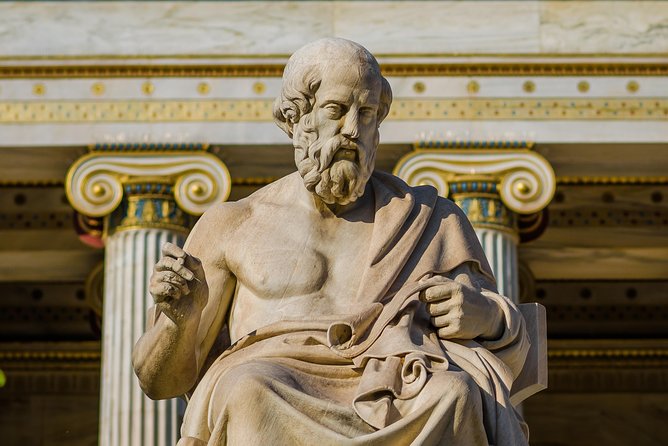
Your first stop is the Academy of Athens area, with time to see the Trilogy of Athens and connect it to the philosophical movements of ancient Greece. This is where the tour’s theme comes into focus. You’re not starting with random facts. You’re starting with the question of what “thinking” meant in ancient Athens, and how different schools developed their own way of approaching truth, ethics, and human life.
What to like here is the grounding. The Academy stop gives you a sense that philosophy had institutions, public debates, and a physical presence in the city. It helps the rest of the walk make more sense, because you’re not learning in a vacuum.
One practical consideration: admission tickets are not included for this stop. If you want to go inside, plan for that cost and arrive ready for a bit of on-site time.
Stop 2: The Hellenic Parliament and the Presidential Guard Tradition
Next you’re in front of the Hellenic Parliament, where the tour highlights the Changing of the Presidential Guard. This is a shift in tone, and that’s a good thing. After philosophy and ideas, Athens reminds you it’s also theater, ceremony, and national identity.
This segment is also a great “reset” moment. The guide can connect civic life to the broader themes of how societies organize themselves. Even if you’re not focused on politics, it gives you a break from constant historical lecturing.
Time is listed around 15 minutes, and admission here is free. So it’s a low-cost way to add a very Athens-feeling scene to the day.
- All Day Cruise -3 Islands to Agistri,Moni, Aegina with lunch and drinks included
★ 5.0 · 4,958 reviews




Stop 3: National Garden, Where Philosophy Sounds Like Science

At the National Garden, the focus turns to how Greek philosophy fed applied sciences. You’ll get connections involving democracy, physics, astronomy, and ethics.
This stop works well if you’ve ever wondered whether ancient thought was only “head in the clouds.” Here, it’s framed as practical thinking. The guide’s job is to show you how questions about the universe, how people should live, and how communities should govern all belong to the same family of ideas.
Admission is free here, and the time is about 15 minutes. It’s not a long break, but it can be a welcome one. Garden walking is easier on the senses than more crowded streets.
Stop 4: Ermou Street and Hermes, the Mischief in Greek Myth
The tour then heads to Ermou Street and ties the walk to stories around Hermes, the mischievous god. This is mythology used as a lens, not just a list of names. When the guide explains Hermes in the context of the day, you start noticing how myths functioned as cultural memory, teaching tools, and entertainment.
This stop is only about 15 minutes, and admission is free. Think of it as a quick, story-shaped breath between larger historical zones.
If you enjoy playful myth explanations that don’t talk down to you, this is often the kind of moment that makes the whole tour feel personal.
Stop 5: Ancient Agora of Athens and the Birth of Stoic Thought
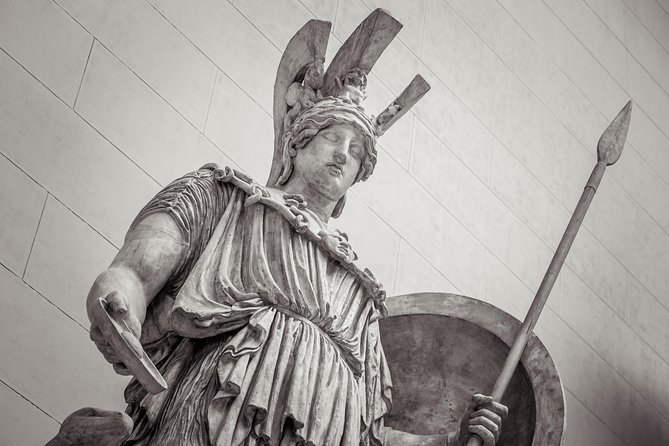
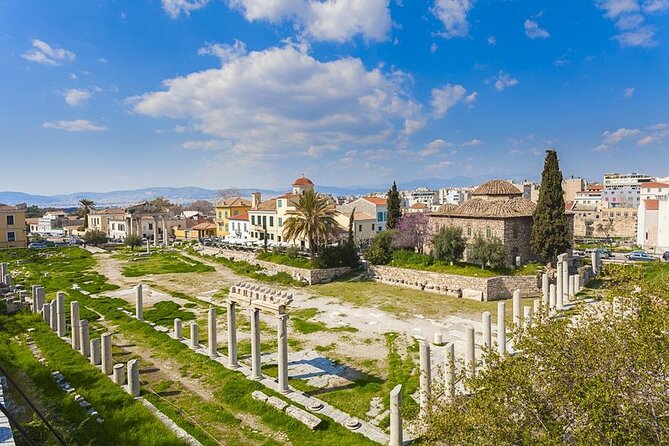
Next is the Ancient Agora of Athens, with a specific emphasis on where Stoic philosophy is said to have been born, in the Poikile Stoa.
This is one of the more important intellectual stops on the route. The Agora is where the city’s public life happened, so it’s a natural place to talk about how people built arguments about virtue, reason, and how to live in a world you can’t control.
Admission tickets are not included here. So if you want to enter or get closer access, factor that into your day. Even if you don’t pay for entries, the guide’s interpretation can still help you connect what you’re seeing to what the philosophers argued.
Stop 6: Tower of the Winds and Aiolos, Keeper of the Winds
At the Tower of the Winds, the tour connects the structure to Aiolos, keeper of the winds. This is one of the best examples of how the tour mixes myth, science, and real architecture.
The tower is visually distinctive, and the guide’s story can make it more than a “cool old building.” If you like when a tour connects engineering to story, you’ll probably enjoy this stop a lot.
Admission is not included for this point. It’s a short stop at about 15 minutes, so even if you only view from nearby, you’ll likely still get the main connection the guide wants you to understand.
Stop 7: Anafiotika in Plaka, Where Cynics Get Attention
Now you’re in Anafiotika, near the Plaka area on the foot of the Acropolis. The tour focuses on Cynic philosophers, with time listed around 20 minutes.
This is where the day gets more atmospheric. The Plaka side streets feel different from the more formal zones. A good guide uses that physical change to talk about how philosophical ideas could challenge social norms. Cynicism, in this context, is often presented as a way of questioning what people value, and how performance can replace substance.
Admission is free here. It’s also an excellent photo-and-walk area, but the real value is that the guide keeps the philosophy tied to how the neighborhood feels, not separated from it.
Stop 8: Areopagus Hill, Myths and the Acropolis View
The tour ends at Areopagus Hill, with views of the Acropolis and myth stories about the Olympian gods. This closing stop is the emotional finish line. You’ve spent the day threading philosophy through Athens’ streets, and then the city opens up visually.
It’s also a strong place to summarize the big themes without turning the day into a lecture. From up here, ideas about gods, morals, and human choices feel more grounded. The city looks like what the stories described: a place where the divine and everyday life rubbed shoulders.
Admission is free, and time is listed at about 15 minutes. If you love viewpoints, this is the part to take slowly. Don’t rush the photos.
What You’ll Learn, in Plain English
You came to Athens for ancient places. You’re also learning how ancient Greeks framed questions we still ask today. The big names often include Socrates and Plato, and the route also brings in other thinkers such as Thales of Miletus and later schools like Stoics and Cynics.
The tour’s style seems designed to keep philosophy from becoming a textbook. Based on how guides like Bianca and John have been praised, you can expect explanations that connect ideas to the real world around you, plus moments where you can ask follow-up questions. Some groups mention it feels like a Socratic circle. That’s a good sign.
If you want history as a story with tension and meaning, not just dates, this tour is a strong match.
Who This Tour Suits Best
This is ideal if you fall into one of these buckets:
- You love philosophy, myths, or both, and you want them tied to real locations.
- You’re tired of big group tours where you hear facts but don’t get to ask questions.
- You’re traveling with teens or young adults who can handle discussion, not just monuments.
- You prefer a slower pace where the guide adjusts to the group’s interests.
It may be less ideal if you want a fast Athens hit with minimal walking. This is also not the best choice if you’re visiting during poor weather, since the tour requires good weather.
Small Planning Tips That Make the Day Easier
Here are a few practical things to do before you start:
- Wear comfortable walking shoes. Even short stops add up.
- Bring or buy water. Bottled water is included, but having a comfortable supply helps.
- If you care about paying less on entrances, plan which stops you want to enter, since some admission tickets are not included.
- Consider booking a day you can be flexible with weather, since rain or poor conditions can force changes.
Also, since this is offered in English and uses a mobile ticket, make sure your phone is charged and ready.
Should You Book This Tour?
I’d book this if you want Athens to feel like more than stone. The private format, the mix of myth plus philosophy, and the way you’re invited into conversation make it a smart pick for anyone who likes ideas and wants them connected to the places that shaped them.
Skip it or think twice if you’re short on time, hate walking, or you strongly prefer a mostly free sightseeing route with zero entrances. A little ticket planning is part of the deal, and 4 hours is a real commitment.
If you want to do just one “thinking tour” in Athens, this is the kind of experience that can leave you a bit more curious than when you arrived.
FAQ
How long is the Athens Highlights: Myths & Philosophers walking tour?
The tour runs about 4 hours.
Where does the tour start and end?
It starts at Panepistimio, Athens 106 79, Greece, and ends at Areopagus Hill, Theorias 21, Athina 105 55.
Is the tour private or group-based?
It’s a private walking tour, and only your group participates.
What’s included in the price?
Coffee and/or tea and bottled water are included.
Are entrance fees included for the sights?
Entrance fees are not included. Some stops are listed as admission ticket not included, while others are free.
What language is the tour offered in?
The tour is offered in English.
What should I bring or expect on the walk?
Expect walking throughout the day, and bring comfortable shoes. Bottled water is included, and there is coffee and/or tea available as part of the experience.
Is it offered year-round?
The experience requires good weather. If it’s canceled due to poor weather, you’ll be offered a different date or a full refund.
What is the cancellation policy?
You can cancel for a full refund up to 24 hours in advance. If you cancel less than 24 hours before the start time, the amount paid is not refunded.
More Walking Tours in Athens



More Tours in Athens

More Tour Reviews in Athens
- All Day Cruise -3 Islands to Agistri,Moni, Aegina with lunch and drinks included
★ 5.0 · 4,958 reviews
Not for you? Here's more nearby things to do in Athens we have reviewed








Athens Walking Tours, compared.
 ★ 4.6Acropolis and Parthenon Guided Walking TourFrom $385,882 reviews
 ★ 5.0Greek Food Walking Tour in AthensFrom $874,740 reviews
 ★ 4.7Acropolis: Acropolis and Parthenon Guided Walking TourFrom $363,442 reviews
 ★ 5.0Acropolis monuments & Parthenon Walking Tour with Optional Acropolis MuseumFrom $422,678 reviews
 ★ 4.5Athens Acropolis and Parthenon Walking TourFrom $411,355 reviews
 ★ 5.0Athens Authentic Greek Food Walking Tour (Small Group)From $83809 reviews
 ★ 4.4Early Morning Acropolis & Old Athens Guided Walking TourFrom $28748 reviews
 ★ 4.9Ultimate Food Walking Tour with 15 TastingsFrom $93567 reviews
Browse the lists this tour appears in