
Reviewed · ATHENS WALKING TOURS
Athens City of Rebellion Private Walking Tour
Rebellion has routes, and Athens has many. This private walk threads together older uprisings and today’s activism, so the city’s famous landmarks start to feel personal instead of just postcard pretty. You’ll follow the story from Monastiraki through Ottoman memories, wartime sites, and student-led liberty struggles, ending in Exarchia, a neighborhood known for political and creative energy.
I especially like how the tour connects big turning points to specific places you can stand on, like the Ottoman past at Tzisdarakis Mosque and the resistance echoes around Syntagma Square. The guide, Maëlle, is praised for being both learned and genuinely fun to talk with, which matters on a topic this heavy. I also like the practical format: it’s a private tour, and all the stops you visit are admission-ticket free, so you mostly pay for the human guidance and the time.
One possible drawback: this is a history-and-resistance focus, so it’s not ideal if you want only classic Athens highlights and light stories. Also, it is not recommended for walkers with walking difficulties, since it’s still a multi-stop walk.
Key highlights to know before you go

- A private, small-group feel where your questions actually get answered, with Maëlle as the go-to guide on this theme
- Resistance history mapped to real locations, including Ottoman-era traces and wartime sites you can see at street level
- Exarchia as the closing chapter, including citizen initiatives and street-level activism you can observe in motion
- No paid entry fees at the stops, since each listed stop is free to access
- A timeline that keeps moving, from Ottoman occupation to modern fights over rights and dignity
Price and logistics for this 2.5-hour private resistance walk
This tour costs $86.82 per person for a 2 hours 30 minutes walk (approx.). The value here is less about paid attractions and more about having a guide connect the dots between eras, then showing you where those dots land in Athens today.
It’s also the kind of booking that helps you plan. This experience is commonly booked about 88 days in advance, so if your dates are fixed, I’d lock it in earlier rather than later. You’ll use a mobile ticket, and the tour meets at Pl. Monastirakiou 2, Athina 105 55 and ends at Themistokleous 68, Athina 106 81 near Exarchia Square.
Two logistics notes matter. First, it’s near public transportation, which helps for getting to the start and for navigating after the tour ends. Second, it’s not recommended for travelers with walking difficulties, so consider your comfort with a steady walk and multiple stops.
You can also read our reviews of more walking tours in Athens


Monastiraki Square to start: getting your bearings before the hard stories
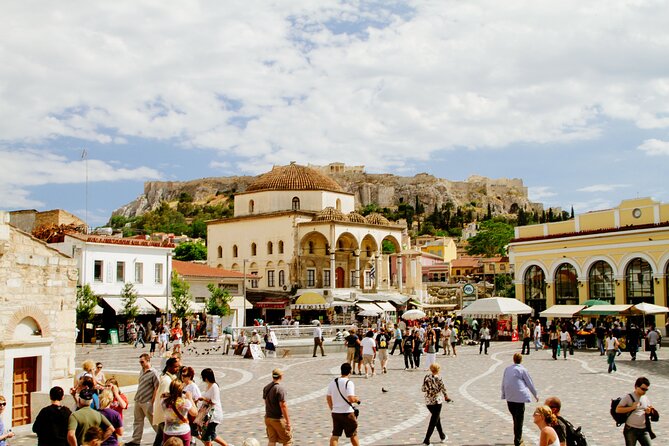
The tour begins at Pl. Monastirakiou 2, right in the orbit of Monastiraki. This is a smart starting point because it’s a busy, landmark-rich area where you can orient yourself, then pivot quickly into the theme of resistance.
You’ll get your first orientation on Monastiraki as an emblematic square, and that matters because the tour is not just “see this, then that.” It’s more like, “notice what this city kept, what it changed, and what it refused to forget,” then let the guide build that idea as you walk.
What I like about starting here is that it keeps you from feeling lost when the narrative turns to difficult periods. You’re grounded in the present Athens streets first, then the past arrives at street level.
Tzisdarakis Mosque: Ottoman Athens and the roots of revolution
Next comes Tzisdarakis Mosque, with a focus on the Ottoman past of Greece. Standing here, you can imagine what the city might have looked like if the skyline included a minaret over the Acropolis area, which is the kind of mental image the guide uses to make history feel spatial.
This stop also sets up a key idea: the Greek revolution against the Ottomans didn’t appear out of nowhere. You’ll learn how the resistance story has origins, and you’ll connect those origins to later events you’ll see further along the route.
A practical upside: the stop is short, around 10 minutes, so you get context without dragging you through a long sit-down. The only watch-out is the topic itself, Ottoman occupation era history can feel emotionally intense, even when delivered thoughtfully.
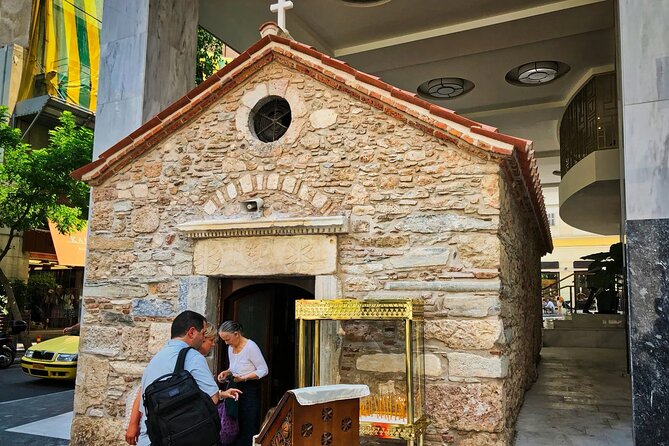
Ayìa Dynami (Holy Church of the Sacred Power): resistance in sacred spaces
The next stop is Holy Church of the Sacred Power (Ayìa Dynami), where the focus turns to how people used places of faith during the Ottoman occupation. You’ll learn that the church was used by members of the Greek resistance, and that detail changes how you look at a church building.
Instead of thinking only about architecture, you’ll think about function under pressure: where did people meet, hide, plan, and protect information when authorities were hostile? That question stays with you as you move toward state-centered spaces later in the tour.
Time-wise, it’s again about 10 minutes, so the visit works well even if you’re tired. Just be ready for a shift in tone, this is where the tour begins to feel more than sightseeing.
Syntagma Square: palace remnants, Nazi headquarters, and symbols of resistance

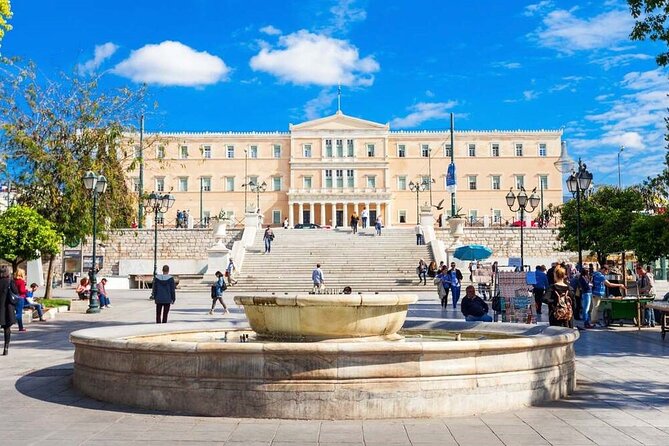
At Syntagma Square, the tour zooms into the kind of place where power is on display. Syntagma is described as a symbolic resistance location, and you’ll be guided past layers of meaning that include the old palace area, the tomb of the unknown soldier, and stories tied to Nazi headquarters.
This stop is not just about naming what happened. You’ll get a sense of why symbols matter in resistance movements, because squares like this become stages where regimes try to control narratives, and where opponents try to reclaim them.
The visit runs about 15 minutes, so you’ll likely get a fast, concentrated hit of context. That’s good for most people, but if you prefer slow, detailed museum-style pacing, you might want to spend additional time on your own after the tour finishes near your interests.
You can also read our reviews of more city tours in Athens






Hotel Grande Bretagne: a luxury address with dark wartime shadows
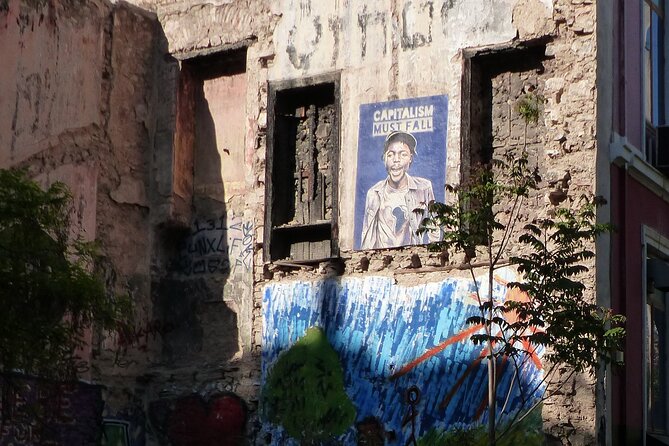
Then you’ll reach the Hotel Grande Bretagne, a Luxury Collection Hotel area. Today it’s a high-end hotel, but the guide points out that the building has seen darker moments, including periods when Nazis were in power in Athens.
This is one of those stops that changes your perception fast. It teaches you to notice how the city can hold contradictions in the same view, wealth and tragedy sharing a skyline line.
I like this stop for its honesty. Athens doesn’t always present tough history in a single dramatic monument. Sometimes it shows up in plain sight, embedded in familiar streets and buildings. The stop is listed as free admission, so you’ll get the story without paying extra to access interiors.
Tomb of the Unknown Soldier and Hellenic Parliament: power after victory

From there, the tour includes a short visit to Tomba Del Milite Ignoto (the Tomb of the Unknown Soldier), about 5 minutes. Even though it’s brief, it’s placed intentionally, because the unknown soldier becomes a symbol tied to national identity, sacrifice, and how states frame legitimacy after conflict.
After that, you’ll move to the Hellenic Parliament, where you’ll learn about the Old Palace of the First King in Athens following victory. The key here is learning how the same spaces that reflect ruling authority can also serve as a backdrop for civic identity and political change.
This part of the walk helps you see resistance history from both angles. Not only the fight against oppression, but also what happens after, including how power gets reorganized and justified.
National and Kapodistrian University of Athens: students as engines of liberty
Next is the National and Kapodistrian University of Athens, with about 10 minutes on the ground. The theme here is that students and universities became a key factor in the fight for citizens’ liberties.
This stop is valuable because it shows resistance isn’t only street battles or wartime plots. It can be education, organizing, protest, and ideas spreading through institutions. If you’ve ever wondered why Athens has a reputation for intense political debate, this is one of the route points that helps explain it.
The tour keeps the timing tight here, so you get the idea without turning it into a long lecture. If you want to extend the topic, you’ll have plenty of angles to chase later on your own.
Navarinou park and Exarchia’s citizen initiatives: resistance as daily action
As you move toward Navarinou, you’ll hear about the park as a citizen initiative in the heart of Exarchia. The idea is that activism isn’t only reactive. Sometimes it’s proactive, people build spaces and community projects that keep political values visible.
This stop is around 10 minutes, and it works as a bridge. Up to this point, the tour has leaned heavily on historical turning points. Navarinou helps shift the question from what happened before, to how people keep choosing action now.
Even if you’re not into politics, you may find yourself noticing small details: community signage, wall messages, the feel of who uses the space and how. That’s part of the tour’s strength. It trains your eyes.
Exarchia Square and the current resistance epicenter
The final and biggest emotional shift comes in Exarchia, specifically around Exarchia Square. This is framed as today’s resistance epicenter, and you’ll see the neighborhood discussed through multiple lenses: crisis, police violence, gentrification, and the arts and organizing that keep showing up anyway.
You’ll also learn that Exarchia has welcomed anarchists, refugees, queers, and artists. That list matters because it shows resistance here is not one single brand. It’s a network of people pushing for dignity, safety, and voice.
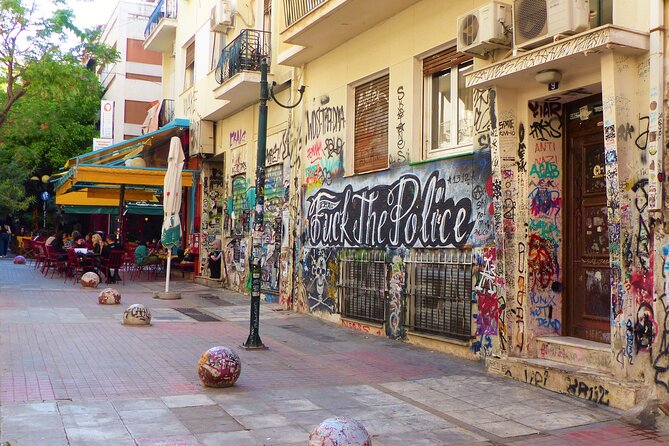
Expect to see expressive street art or citizens’ initiatives during several parts of the Exarchia walk. You won’t just hear a storyline, you’ll also watch it in the environment as you pass along the neighborhood streets.
This last stretch is also where the reviews you’ll care about start to make sense. The guide’s passion and the chance for conversation give the history a human edge, so by the time you finish in Exarchia, the tour stops feeling like a list of events and starts feeling like an explanation of Athens today.
Who this tour fits best
This walking tour is a strong match if you:
- Want Athens viewed through resistance and civil rights, not only classical ruins
- Enjoy story-driven walking tours where the guide turns places into context
- Like asking questions and getting answers in a private setting
It’s a weaker match if you:
- Want a straightforward highlights route with minimal heavy topics
- Have limited walking ability, since this is still a multi-stop urban walk
If it’s your first day in Athens, I can see why it works well. It gives you a lens that makes later visits to other neighborhoods feel more meaningful.
Should you book the Athens City of Rebellion private walking tour?
Book it if you want Athens with a point of view and you’re okay with the topic getting serious. This is not a “quick photo tour.” It’s built around the idea that past resistance shaped the city you walk through today, and it uses specific places to prove that.
Skip it if your travel goal is mostly light, tourist-only sightseeing. The route includes Nazi-era references and modern issues, so you’ll get thoughtful context, not denial. And if your walking is limited, don’t force it, this is not the format for that.
If you do book, I’d schedule it on a day with good weather, since the tour requires it. Then wear comfortable shoes and come with curiosity. This is one of those experiences where the city’s streets start talking back.
FAQ
How long is the Athens City of Rebellion Private Walking Tour?
The tour lasts about 2 hours 30 minutes.
What does the tour cost per person?
The price is $86.82 per person.
Is this tour private or group-based?
It is a private tour/activity, and only your group will participate.
Where does the tour start and end?
It starts at Pl. Monastirakiou 2, Athina 105 55, Greece. It ends at Themistokleous 68, Athina 106 81, Greece near Exarchia Square.
Are there admission fees at the stops?
The tour indicates admission ticket free for the listed stops.
What’s included in the price?
All fees and taxes are included.
Is transportation included?
Private transportation is not included.
Who can join this tour?
The tour is adapted to anybody over 10 years old, and most travelers can participate.
Is it suitable for travelers with walking difficulties?
It is not recommended for travelers with walking difficulties.
Do I need good weather for the tour?
Yes, the experience requires good weather. If it’s canceled due to poor weather, you’ll be offered a different date or a full refund.
What is the cancellation policy?
You can cancel for free up to 24 hours in advance for a full refund.
Can I use a mobile ticket?
Yes, the tour uses a mobile ticket. Confirmation is received at time of booking.
More Walking Tours in Athens



More Tours in Athens

More Tour Reviews in Athens
- All Day Cruise -3 Islands to Agistri,Moni, Aegina with lunch and drinks included
★ 5.0 · 4,958 reviews



Not for you? Here's more nearby things to do in Athens we have reviewed







Athens Walking Tours, compared.
 ★ 4.6Acropolis and Parthenon Guided Walking TourFrom $385,882 reviews
 ★ 5.0Greek Food Walking Tour in AthensFrom $874,740 reviews
 ★ 4.7Acropolis: Acropolis and Parthenon Guided Walking TourFrom $363,442 reviews
 ★ 5.0Acropolis monuments & Parthenon Walking Tour with Optional Acropolis MuseumFrom $422,678 reviews
 ★ 4.5Athens Acropolis and Parthenon Walking TourFrom $411,355 reviews
 ★ 5.0Athens Authentic Greek Food Walking Tour (Small Group)From $83809 reviews
 ★ 4.4Early Morning Acropolis & Old Athens Guided Walking TourFrom $28748 reviews
 ★ 4.9Ultimate Food Walking Tour with 15 TastingsFrom $93567 reviews
Browse the lists this tour appears in