

Reviewed · CITY TOURS
Athens City of Rebellion Small-Group Walk
Athens has a rebel heartbeat. This small-group walk follows how resistance shaped the city, step by step, from Ottoman rule to today’s street-level activism.
I especially liked how Maelle’s storytelling made modern Athens click fast, including the tricky connections between the classical world and more recent figures and royal politics. I also like the route choices, because you move through places tied to occupations and dissent, then finish in Exarchia, where you can still feel the city arguing with power.
One thing to consider: this is not the tour for slow walkers. It is designed for easy-to-moderate walking, and it is not recommended if you have walking difficulties.
Key highlights before you go
- Small group size (max 6) means real Q and A, not rushed line reading
- Maelle’s approach leans on clear context, so you understand more than you memorize
- Exarchia is part of the story, not just a neighborhood detour
- Syntagma Square’s layered resistance history connects monarchy, occupation, and protest
- Most stops are quick, free, and walkable, so you get value without entrance fees piling up
- Mobile ticket keeps things simple once you’re on the move
Why this Athens walk feels different than the usual highlights
Athens can be a geography exam. You can see the famous sites, snap photos, and still feel like you missed the “how did we get here” part. This walk is built to answer that.
Instead of treating history like a straight timeline, it treats Athens like a place where people keep reacting to power. You start with central squares, then work your way through Ottoman-era traces, Greek resistance signals, Nazi-era memory, and the role of students and citizens in pushing for liberties. Then you land in Exarchia, the neighborhood many people point to when they talk about today’s activism and street culture.
And the best part is the tone. It is not doom and gloom. It is more like getting the context behind the posters you see, the names on buildings, and the way certain streets still feel opinionated.
You can also read our reviews of more walking tours in Athens



Meet your guide and get oriented fast with Maelle

The biggest reason this tour earns 5 out of 5 so often is the guiding style. Reviews highlight Maelle as warm, organized, and passionate, with a refreshing sense of how a guided tour should feel. The effect you want is simple: you should start the tour a little curious and finish it feeling like you understand the city you just walked.
That matters because the route is focused on modern resistance. It is not the standard Athens script of temples and plaques. If you show up knowing only ancient Greece, that’s fine, but you will likely appreciate a guide who can connect the dots, including the kinds of questions that pop up when you’re trying to place names and timelines. That connection is a major theme in the guide feedback, including confusion about how well-known literary and political figures fit into Greece’s shift from Ottoman rule through monarchy and into modern society.
The 2.5-hour plan, stop by stop, and what to watch for
This walk runs about 2 hours 30 minutes and is designed as a chain of short stops. Each stop is brief, which keeps energy up, but it also means you should pay attention to what the guide is asking you to imagine. The tour is built around interpretation, not waiting in lines.
Stop 1: Monastiraki, where you begin in the middle of things
You start at Pl. Monastirakiou 2 in Athens. Monastiraki is one of those areas where the city feels layered immediately, which is perfect for this theme.
Expect a welcome at the square, then a quick setup for what you’ll learn. This is not an art lecture. It’s a historical runway takeoff. From here, the guide can shift you from today’s city rhythm into the logic of older conflicts.
Stop 2: Tzisdarakis Mosque, the Ottoman layer you can still sense
Next is the Tzisdarakis Mosque. The point here is the Ottoman past, and the guide will push your imagination in a very practical way: think about how the Acropolis might have looked if minarets had been there during Ottoman control.
This is one of those stops where you’ll get more out of it if you look around instead of staring at one object. Notice the way Ottoman-era structures fit into the modern streetscape. Then the guide connects that to how the Greek revolution against the Ottomans got its footing.
You can also read our reviews of more city tours in Athens






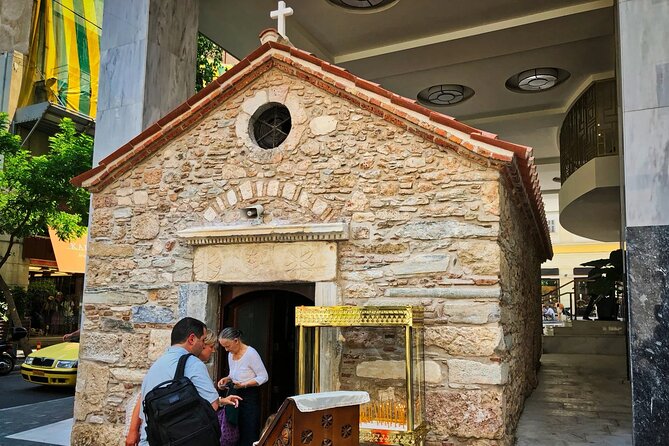
Stop 3: Ayìa Dynami (Holy Church of the Sacred Power), resistance used faith and space
The third stop is the Holy Church of the Sacred Power (Ayìa Dynami). The message here is that resistance wasn’t only battlefield heroics. It also used community spaces, including religious ones, during the Ottoman occupation.
You will get a sense of how members of the resistance may have used the church during that period. It is a short stop, but the story makes the building feel like a participant in history rather than a background detail.
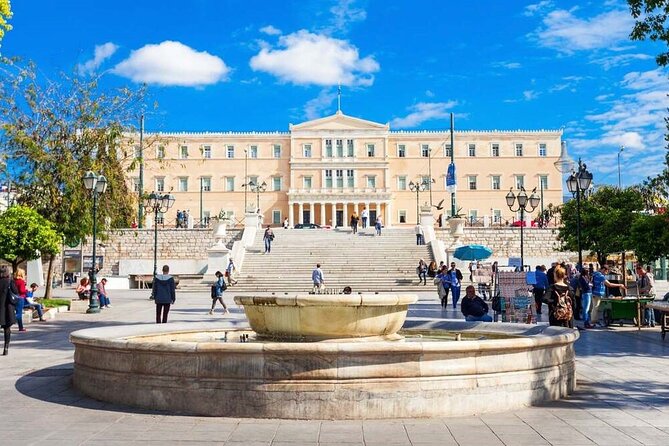
Stop 4: Syntagma Square, Athens’ big stage for dissent
Then you hit Syntagma Square, the symbolic center of resistance in Athens. The tour frames the square as a place that has seen different kinds of power struggles over time.
The guide will point out multiple historic layers, including:
- the old Palace of the King
- the tomb of the unknown soldier
- Nazi headquarters during the occupation
- the many resistance stories tied to the square
This is one of the best places to slow down, because Syntagma is also where you can compare “how a square looks now” with “how it functioned when control changed hands.” If you only know Syntagma as a political landmark in today’s news cycle, this stop adds the deep context you’re missing.
Stop 5: The Monument to the Unknown Soldier, meeting the Evzones
After Syntagma, the tour moves to the Monument to the Unknown Soldier. You’ll spend only a few minutes here, which is enough if you know what to focus on.
The guide talks about the Evzones, including the story behind their distinctive outfits and their role guarding the tomb. It’s a quick stop, but it’s memorable because it connects national symbolism with the everyday ritual of ceremonial presence.
Stop 6: The old Palace of the First King, a victory that still needed managing
Another stop centers on the old Palace of the First King in Athens after the revolution’s victory. Here the tour shifts from occupation resistance to the politics after the fighting.
Expect a story that doesn’t treat victory like the end of conflict. It treats it like the start of new questions: who governs, what legitimacy looks like, and how symbols like palaces fit into that.
Stop 7: National and Kapodistrian University of Athens, students as political engines
Next is the National and Kapodistrian University of Athens. This stop highlights students and universities as a key force in the fight for citizens’ liberties.
If you’ve ever wondered why Greek history keeps mentioning youth movements, this stop helps explain it in plain terms: education and civic energy can become a stage for resistance. You also get a sense that resistance is not only street-level protest. It can be organized, argued, and taught.
Stop 8: Navarinou, a citizen initiative in Exarchia’s orbit
Then you’ll reach Navarinou, a park described as a citizen initiative in the heart of the alternative neighborhood of Exarchia.
This is a good place to ask yourself what “ownership” means in a city. When citizens build or reshape public space, it becomes a visible argument. Even if you don’t agree with every political angle, it’s a practical way to see how people turn frustration into action.
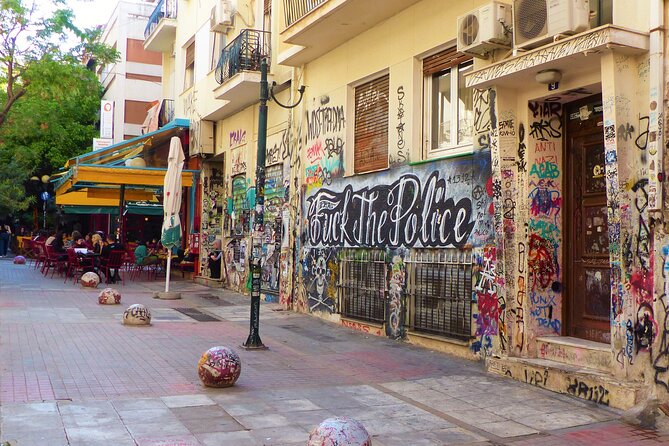
Stop 9: Exarchia, today’s resistance scene and creative pressure valve
Finally, the tour lands in Exarchia, which the experience frames as the epicenter of today’s resistance and activism.
This is where the walking tour changes from “history lesson” to “present-day context.” You’ll learn about crisis, police violence, gentrification, and how street art and citizens’ initiatives reflect years of rebellion.
You may also notice how Exarchia is described as welcoming different communities, including anarchists, refugees, queers, and artists. That mix helps explain why the neighborhood feels like a living conversation rather than a fixed museum district.
And based on the strongest feedback, this part is often what makes the tour stick. People come looking for a modern-history bridge, then leave with a better mental map of why Athens feels the way it does.
What makes the route feel cohesive instead of random
This walk could have been a collection of landmarks. Instead, it has a pattern.
You start in the central older core, touch Ottoman-era traces, then move into Greek resistance space and then into the Nazi occupation layer at Syntagma. After that, you widen the lens to civic actors like students and citizens, before you end in a neighborhood where those pressures show up as art, activism, and community organizing.
That “arc” is why the tour performs so well with people who feel lost between eras. If you’re trying to understand how Athens became the Athens you’re seeing, this is exactly the kind of structure that helps.
Price and value: $46.29 for context that changes how you look

The price is $46.29 per person for about 2.5 hours with a small group (max 6). Entrance fees are not the point, and the tour notes free admission at the stops.
So what are you actually paying for? You’re paying for a guided interpretation of modern Athens history across multiple social layers. That is where value lives here. A self-guided walking route could get you to many of the same places, but you would not get the through-line tying Ottoman occupation to revolution, occupation to memory, and civic actors to today’s Exarchia.
The best sign of value is simple: the guide is repeatedly praised for making the tour feel time-travel like, especially for recent history. If you want context that makes the city coherent, this is a strong buy for the time.
Who this tour is best for (and who should skip it)
This is an ideal match if you:
- want Athens beyond the postcard temples
- are curious about Greece’s modern political story, not just ancient milestones
- like neighborhood walks where the setting has an argument behind it, not just atmosphere
- enjoy discussions and questions in a small group
It is less ideal if you:
- have walking difficulties, because the route is not described as suitable for that
- want a low-attention, passive sightseeing style, because the tour is story-driven and asks you to look closely and imagine context
If you’re the type who gets annoyed by tours that only list dates, you’ll likely appreciate Maelle’s organized approach and the way she builds understanding step by step.
Practical tips so your walk lands well
Here are the basics that will help you get the most out of it.
Wear comfortable walking shoes. The itinerary is built from short stops, so your time on your feet adds up. Bring a light layer, since the tour depends on good weather.
Plan to ride public transportation to the start area. The tour is noted as being near transit, which is a big plus in Athens where parking and traffic can be annoying.
Keep your phone handy for the mobile ticket. That makes check-in smoother and cuts down on delay.
And one small mental tip: when the guide asks you to imagine something, take the prompt seriously for 20 to 30 seconds. That habit turns the stops into a story you can actually remember.
Weather and timing: do it when the city is walkable
The tour requires good weather. If conditions are poor, you’ll be offered a different date or a full refund.
If you can, schedule this walk earlier in your trip. Athens history is interconnected, and getting the context sooner helps you interpret everything else you see afterward.
Most people book about 15 days in advance, so if your dates are fixed, don’t wait until the last week.
Should you book Athens City of Rebellion?
I think you should book this tour if you want Athens to make sense in the modern sense. It’s not trying to replace the classics, it’s adding the political and social backbone that makes the city feel alive.
It’s also a great fit if you like small-group experiences with a guide who can explain, not just point. The consistent praise for Maelle’s refreshing approach, and the way people highlight recent history and Exarchia context, is exactly what you want from a tour like this.
Skip it only if walking is an issue, or if you prefer strictly ancient sites with minimal discussion of modern conflict and activism. If that’s your style, you might find this tour more challenging emotionally than you want.
If you do book, go in curious. You’ll walk through Athens expecting ruins and squares, then come out understanding why some streets still argue with power. That kind of perspective is the real souvenir.
FAQ
How long is the Athens City of Rebellion walk?
It runs for about 2 hours 30 minutes.
How big is the group?
The tour is a small-group experience with a maximum of 6 travelers.
What is the price per person?
The price listed is $46.29 per person.
Are there admission fees at the stops?
The tour lists free admission at each stop shown in the itinerary.
Where do I meet the guide?
You start at Pl. Monastirakiou 2, Athina 105 55, Greece.
Where does the tour end?
The tour ends at Themistokleous 68, Athina 106 81, Greece, in Exarchia Square.
Do I get a ticket on my phone?
Yes, it uses a mobile ticket.
What if the weather is bad?
The experience requires good weather. If it is canceled due to poor weather, you will be offered a different date or a full refund.
Is there free cancellation?
Yes. You can cancel up to 24 hours in advance for a full refund.
More City Tours in Athens
More Walking Tours in Athens



More Tour Reviews in Athens
- All Day Cruise -3 Islands to Agistri,Moni, Aegina with lunch and drinks included
★ 5.0 · 4,958 reviews




Not for you? Here's more nearby things to do in Athens we have reviewed










City Tours, compared.
 ★ 4.3City Sightseeing Hop-On Hop-Off Bus TourFrom $254,520 reviews
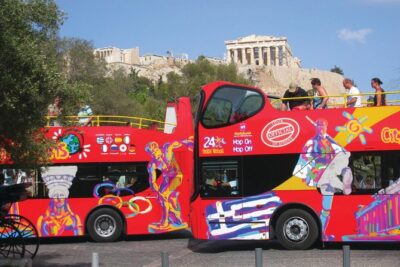 ★ 4.0City Sightseeing Athens, Piraeus & Beach Riviera Hop-On Hop-Off Bus ToursFrom $261,887 reviews
 ★ 3.9City Pass with Acropolis, Museums, Hop-On Hop-Off BusFrom $80586 reviews
 ★ 4.9City Highlights Bike tourFrom $39453 reviews
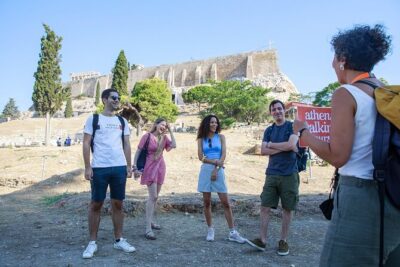 ★ 5.0The Acropolis, Athens Walking City Tour and Acropolis MuseumFrom $12442 reviews
 ★ 4.9Discover the City Electric Bike TourFrom $51414 reviews
 ★ 4.5Acropolis Walking Tour, Including Syntagma Square & City CenterFrom $56404 reviews
 ★ 5.0Athens Off the Beaten Track Private City Walking TourFrom $83304 reviews
Browse the lists this tour appears in