
Reviewed · ATHENS ACROPOLIS & PARTHENON TOURS
Visit of the Acropolis with an official guide in Spanish
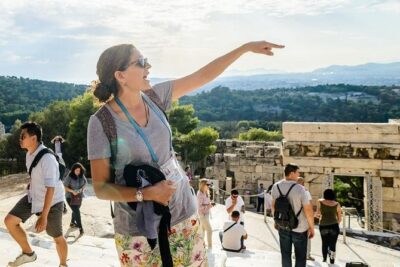
Athens makes more sense in Spanish. This official Acropolis visit gives you a Spanish-only guide and wireless audio while you connect myths, architecture, and daily life in ancient Athens. You’ll also get a smart photo time window at the end right near the top of the Acropolis.
The main thing to watch is timing and tickets: entry to the Acropolis is not included, and you need your own ticket for the 8:00 to 9:00 window. Plan that before you show up, and the rest feels smooth.
Key highlights worth your morning
- Official guide in Spanish focused on context, not just dates
- Wireless audio so you can keep up even when the group is moving fast
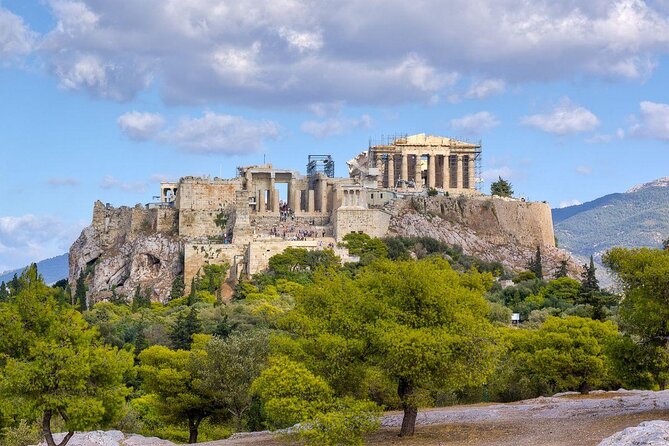
- All the major Acropolis stops in one walk, including Parthenon, Caryatids at Erechtheion, and Dionysus Theatre
- Built-in pacing (about 2 hours) with a finish near the top for extra photos
- Small-group feel with a maximum of 27 people
Why this Spanish Acropolis tour works so well
The Acropolis is famous, but it can also feel like a lot of stone if you do it on your own. What makes this tour click is that you get an official Spanish guide who ties the monuments together. You’re not just ticking off landmarks. You’re building a mental map of how ancient Athenians thought, prayed, governed, fought, and performed.
Two details matter for your experience. First, the guide uses wireless audio, so you can hear clearly while walking. Second, the route is built around the way you’d naturally encounter the space: entrance, Parthenon area, key temples, then the theatres and the rest of the hill. It’s the difference between wandering and having the place explained in the right order.
You can also read our reviews of more guided tours in Athens

Meeting point and timing, so you do not lose the thread
This tour starts at 8:30 am at the Greek National Tourism Organisation Information Point on Dionysiou Areopagitou 18. That early start is not random. It helps you get into the day before the heat and the biggest crowds build pressure.
It’s also a walking tour with no transfers. You’ll move from stop to stop on foot, and the terrain is not flat. If you have moderate physical fitness, you’ll be fine, but it’s still a climb and you’ll be standing and moving for about 2 hours total.
One more practical point: the tour ends directly at the top of the Acropolis so you can take advantage of free time and photographs. That’s a nice payoff. You get the explanation first, then you get the views without rushing to catch up to the group.
The Parthenon story you actually remember: construction, church, mosque

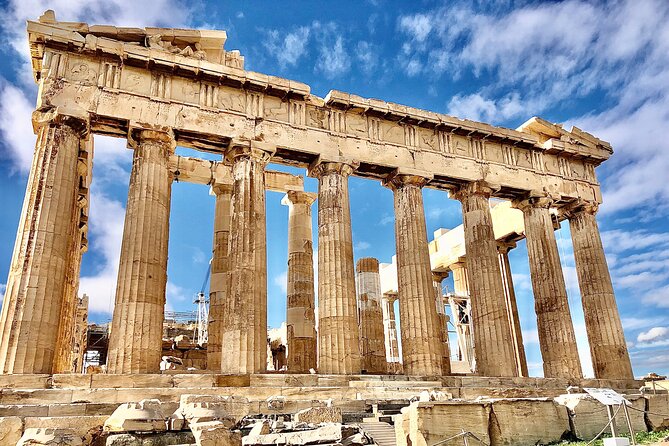
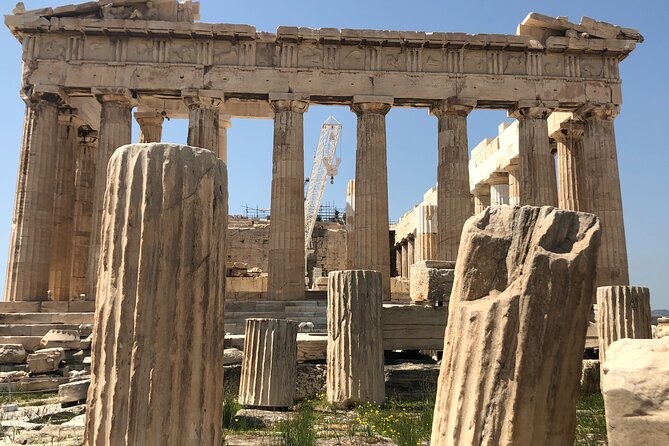
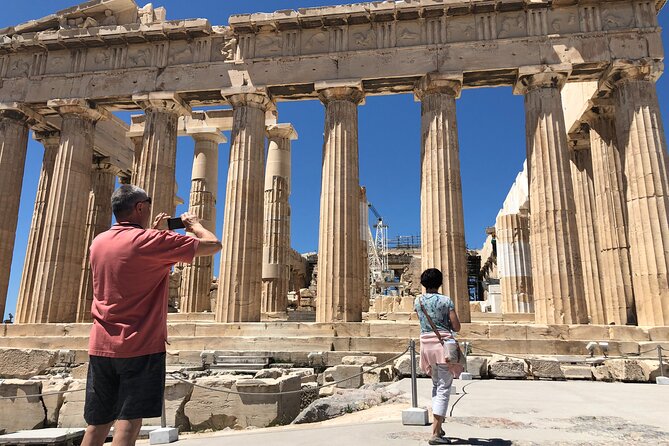
The Parthenon is the big name, and this tour treats it like more than a postcard. You spend about 20 minutes here, with an explanation that covers why the building looks so perfect from certain angles and how it was shaped by the goals of its builders.
You’ll also get the layered timeline that makes the Parthenon feel human. The guide explains phases when it became a church during the Byzantine period and later a mosque during the Ottoman occupation. That matters because it shows how the monument kept living through centuries, even while its original purpose was changing.
Then you connect the dots on decoration, looting, and the restoration work that is still in place. You might find it easier to understand the mix of what you see today and what used to be there. The Parthenon becomes a story of use, damage, recovery, and interpretation.
Propylaea and Athena Nike: the entrance that funnels the past
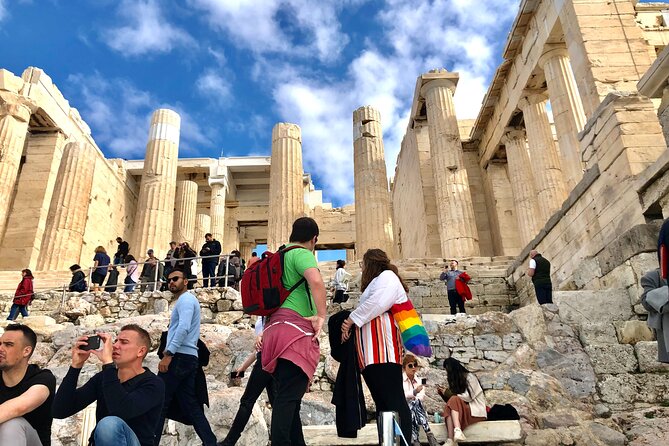
After the main Parthenon area, you move to the Propylaea, the monumental marble gateway. You only get about 10 minutes, but it’s enough time to focus on what makes it strategic.
The key idea the guide presents is the location. Because of the topography, Propylaea acted like a funnel in times of war. Standing near a structure like this, you start to understand why “defense by design” was so important for Athens.
Right after that, you visit the Temple of Athena Nike (the “goddess Athena Victorious” stop in your itinerary). This is a small but meaningful moment. It’s a structure built by Athenians after victories against the Persians, so it functions like a victory message carved in stone. If you’ve ever wondered why the Acropolis feels like it holds speeches rather than just buildings, this is one of the best places to see that.
Erechtheion and the Caryatids: when the details explain the myths
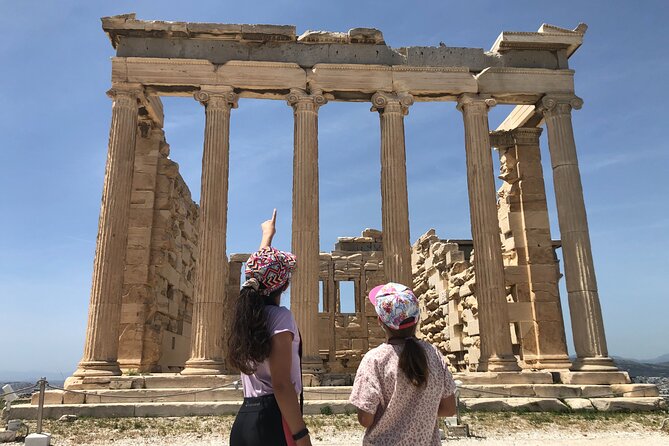
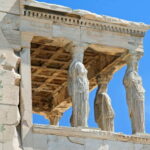
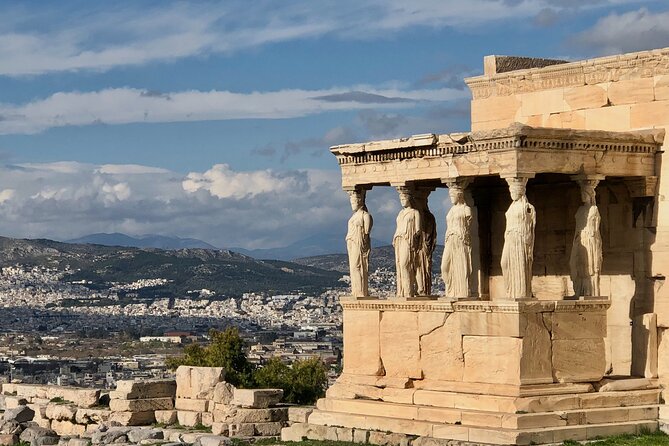
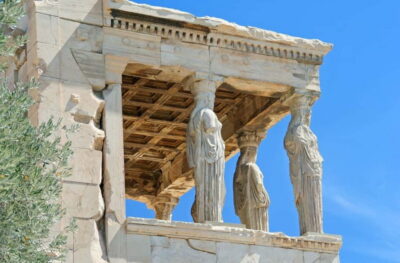
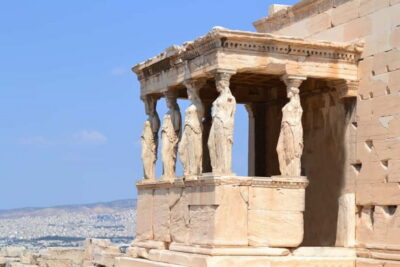
This is the stop that many people remember most visually: the Erechtheion and its Caryatids. The tour gives you about 10 minutes, and it’s exactly the right amount of time to look up, not just at the statues, but at the whole composition around them.
You’ll learn why these female-shaped columns matter, and you’ll connect them to the temple’s multiple dedications. The space was consecrated to Athena, Poseidon, and Erectios, and the guide explains the mythic background tied to Erectios as a first king of Athens.
One detail that makes this stop feel practical rather than poetic is the olive tree connection. The guide explains why the olive tree is sacred in this context. It’s the kind of small piece of meaning that changes how you read the architecture, especially if you’re not a classicist.
- All Day Cruise -3 Islands to Agistri,Moni, Aegina with lunch and drinks included
★ 5.0 · 4,958 reviews



Herod Atticus Odeon: 5,000 seats, and the festival energy
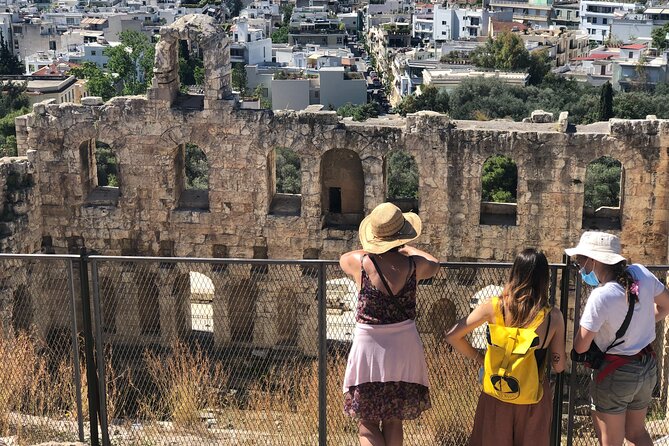
Next up is the Herod Atticus Odeon, dedicated to his wife Regina and built with a capacity of about 5,000 spectators. You’re there for about 10 minutes, and it’s a great contrast with the temples and gateways you’ve just been studying.
This stop works because it’s about performance, not only worship. The explanation connects the Roman governor story to the fact that today it is one of the only fully restored ancient buildings in use. The annual performances during the Athens festival are mentioned, which helps you picture the space not as a ruin, but as a working venue.
If you like cultural continuity, this is the moment. You’re standing in a place where the ancient idea of public spectacle still makes sense.
Asclepios and the Theater of Dionysus: the Acropolis beyond temples
Most Acropolis tours focus on temples. This one adds two stops that widen the view.
First, you visit the Temple of Asclepios, dedicated to the god of medicine. It’s a quick 5 minutes, but it changes the tone. The guide explains how ancient Athenians treated patients and what kinds of votive offerings they made in thanks. You stop thinking only about glory and start seeing practical life, including health and hope.
Then comes the Theatre of Dionysus Eleuthereus. This is one of the oldest theaters in the world and it’s built entirely of marble, with a capacity around 17,000. You get about 10 minutes, and the guide connects the placement on the slope of the Acropolis to the desired acoustics.
This is also where the big names of Greek drama enter the picture. You’ll hear that plays by Euripides, Aeschylos, Sophocles, and Aristophanes were first presented here. Even if you only know a few titles, this framing helps you see the theatre as a center of public thought, not only entertainment.
Stops are short, but the flow is smart
You might notice the time blocks: 20 minutes for Parthenon, then shorter visits for the gateway, temple, Caryatids, odeon, Asclepios, and theatre. That can sound rushed on paper, but in practice it keeps the energy up.
Because of the wireless audio and the official guide, each stop is a clear “chapter.” You look, you learn, you move. The key benefit is that you get to see everything listed without losing your place or thinking too much about what to do next.
The tradeoff is that you won’t linger forever at any single monument. If you want hours of independent wandering at one spot, this tour is not that. It is structured and efficient, so you leave with context and momentum.
Price and value: what $44.03 gets you, and what it does not
At $44.03 per person, the cost can look reasonable only if you understand what’s included. This tour provides an official Spanish guide, wireless audio, and state taxes. It also includes visits to all the mentioned monuments on the Acropolis route. And the ticket itself is a mobile ticket, which usually means less friction on the day.
What’s not included is equally important: entrance to the Acropolis is not included. You need your own ticket for the 8:00 to 9:00 window. So the real value question becomes: are you buying a guide and logistics help, plus a structured route, while you handle entry separately? For most people, the answer is yes.
Also, this tour is on average booked 25 days in advance. That tells me it is a popular Spanish option, likely because many visitors prefer a guide who explains the place in a language they can follow without effort.
If you are the type who gets more out of a place when someone connects the dots, this price makes sense. If you only want a slow walk with no explanations, you might feel you could do it cheaper on your own. But if you want the “why” behind what you’re seeing, you’re paying for that.
Who will enjoy this most
This is a good fit if you:
- Prefer Spanish-only explanations and want a clear narrative instead of random reading
- Like structured routes that hit the core Acropolis sights in a short window
- Appreciate guidance that points out what to notice visually, like where to look at Caryatids or how to understand the gateway layout
- Want a finish near the top so you can take photos without the tour ending too early
The group size is capped at 27, so it’s not a huge herd. Still, it is not private, and you should expect standard group movement.
The guide language and the pacing also make it especially useful for families and mixed-age groups. In past groups, guides such as Efi, Simon, Maria, and Ari were noted for keeping people engaged, taking the time needed to explain well, and using questions to help the group follow along. If you get one of those styles of guides, you’ll likely feel the history more clearly.
A quick checklist so your morning goes smoothly
Here’s what I’d do if you want this to be an easy win:
- Secure your Acropolis entry ticket for the 8:00 to 9:00 window before the tour day
- Wear comfortable shoes. You will be walking and standing on uneven ground
- Bring water and something light for sun protection, since mornings can still feel warm
- Plan to stay for photos after the guide finishes, since the tour ends at the top
- If you’re traveling with service animals, know that they are allowed on this experience
Should you book this Acropolis tour in Spanish?
Book it if you want to understand what you’re looking at, quickly and in order, with an official Spanish guide and wireless audio. The combination of major monuments, tight timing, and context beats a solo visit for most people who want meaning, not just views.
Skip it only if you already know the Acropolis deeply and you want long free time at just one or two spots. Otherwise, this is one of the best ways to turn the Acropolis from a list into a story.
FAQ
Is the Acropolis entrance ticket included?
No. Entrance to the venue is not included, and you need an entry ticket for the 8:00 to 9:00 time window.
What language is the guide?
The tour is with an official guide exclusively in Spanish.
How long does the tour last?
The duration is about 2 hours.
Where does the tour start and end?
It starts at the Greek National Tourism Organisation Information Point, Dionysiou Areopagitou 18, Athens 117 42. It ends at Theorias 21, Athens 105 58, and the excursion finishes directly at the top of the Acropolis.
Do I need transfers?
No. The entire visit is done on foot, and transfers are not included.
What monuments are included in the visit?
The tour includes the Acropolis monuments listed in the itinerary, such as the Parthenon, Propylaea, the Temple of Athena Victorious, Erechtheion, Herod Atticus Odeon, the Temple of Asclepios, and the Theatre of Dionysus Eleuthereus.
What is the cancellation policy?
Free cancellation is available. You can cancel up to 24 hours in advance for a full refund. If you cancel less than 24 hours before the start time, the amount paid is not refunded. Changes made less than 24 hours before the start time are not accepted.
More Guided Tours in Athens

More Tour Reviews in Athens
- All Day Cruise -3 Islands to Agistri,Moni, Aegina with lunch and drinks included
★ 5.0 · 4,958 reviews
Not for you? Here's more nearby things to do in Athens we have reviewed







Athens Acropolis & Parthenon Tours, compared.
 ★ 4.4Acropolis & up to 5 Archaeological Sites Combo PassFrom $4812,619 reviews
 ★ 4.2Acropolis Ticket with Optional Audio or Live GuideFrom $4211,055 reviews
 ★ 4.8Acropolis, Parthenon & Acropolis Museum Guided TourFrom $409,316 reviews
 ★ 4.6Acropolis and Parthenon Guided Walking TourFrom $385,882 reviews
★ 4.8Acropolis, Parthenon & Acropolis Museum Guided TourFrom $413,579 reviews
★ 4.6Acropolis and Parthenon Guided Walking TourFrom $385,882 reviews
★ 4.8Acropolis, Parthenon & Acropolis Museum Guided TourFrom $413,579 reviews
 ★ 4.0Acropolis Ticket with Audio GuideFrom $473,575 reviews
 ★ 4.7Acropolis: Acropolis and Parthenon Guided Walking TourFrom $363,442 reviews
 ★ 5.0Acropolis monuments & Parthenon Walking Tour with Optional Acropolis MuseumFrom $422,678 reviews
Browse the lists this tour appears in