
Reviewed · ATHENS PRIVATE TOURS
Private Tour of Epidaurus, Ancient Corinth & Isthmus Canal From Athens
Corinth and Epidaurus in one smooth day. I love the mix of UNESCO Epidaurus with the ruins of ancient Corinth, and I especially like the air-conditioned private vehicle with WiFi so the long day feels easy. The one drawback to plan for is that entrance fees and food are not included, so your final spend depends on what you choose to pay onsite.
What makes this tour practical is the way it strings together big, memorable stops with enough time to actually look around, not just rush through. In one experience I was with, the driver Peter kept a calm pace, explained what mattered while you drive, and made sure you had what you needed for the day.
Key Points Before You Go
- Fully private, English-first experience with hotel pickup and drop-off in Athens
- WiFi in the vehicle plus bottled water and refreshing wipes for the ride between sites
- Skip-the-line ticket service on request, which can help you start sightseeing sooner
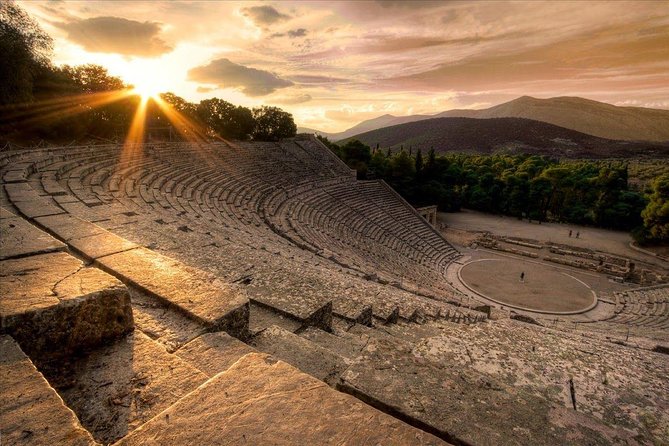
- Epidaurus Theatre focus, including the world-famous acoustics you can test with a coin or pin
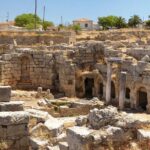
- Ancient Corinth time on the ground, from Apollo’s temple and the Agora to the museum and theatre
- Canal engineering stop, where you connect 19th century ambitions with the ancient Diolkos trackway
Private Athens Pickup and the 8-Hour Pace That Feels Manageable
The day starts with pickup from your Athens hotel, Airbnb, or apartment, then the driver brings you back at the end. The tour runs about 8 hours, which is long enough to hit all the highlights, but short enough that you are not stuck in transit all day.
You are also not stuck figuring out logistics. This is a private tour, meaning it is just your group and the driver, not a rotating crowd. That makes it easier to move at a pace that works for you, especially when you hit viewpoints like Acrocorinth.
You can also read our reviews of more private tours in Athens


Price and What $297.26 Covers (and What It Does Not)
At $297.26 per person, this tour is clearly priced for convenience and comfort, not just for access to ruins. The included value is the private first-class vehicle, pickup and drop-off, WiFi onboard, and the extra touches like bottled water, refreshing wipes, and fresh handmade Greek biscuits.
It also includes skip-the-line ticket service on request. That is useful because it can reduce waiting time, but it still sits alongside an important point: entrance fees to the sites are not included. Food and drinks are also not included, and tips are not included either.
So how do you judge whether it is worth it? If you want one driver who handles the driving, timing, and context, plus WiFi and a calm pace, the price makes sense. If you plan to self-drive and buy everything yourself, you would likely pay less, but you would also lose the convenience.
Corinth Canal and Ancient Diolkos: Big Ideas, Measured in Boats
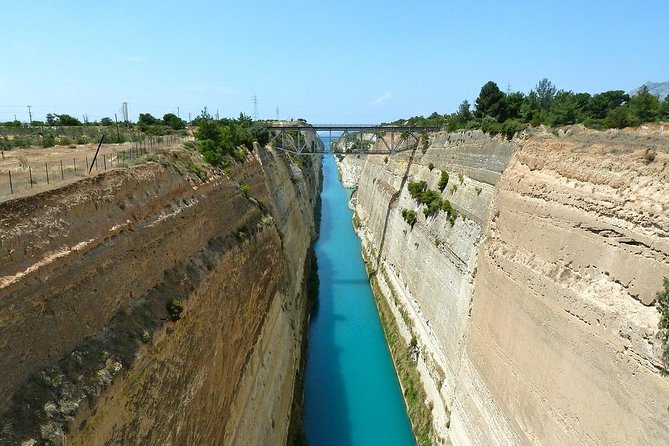
Your first major stop beyond Athens is the Corinth Canal. This is where the day shows its engineering side. The canal is described as a key project and a 19th century engineering masterpiece, and it is tied to the role it played in Mediterranean trade.
Then you do something extra that most people skip: Ancient Diolkos, the paved trackway that helped move boats overland across the Isthmus of Corinth. It is a short stop (about 45 minutes) but it changes how you see the canal. You stop thinking of the canal as just a modern water cut, and you start seeing the region as a long-running transportation challenge.
One consideration: because this is tied to transit between sites, your best results come when you treat this stop like a quick orientation. Look up from the pavement, but also use it to mentally connect to what you will see later at Corinth and Epidaurus.
Acrocorinth Fortress, Aphrodite Traces, and Frankish Fortifications
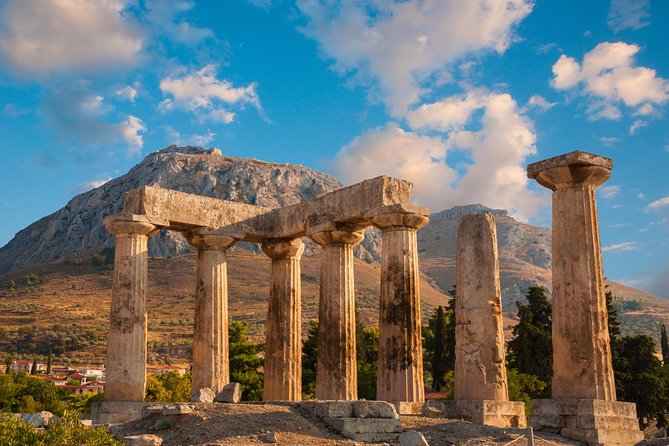
Next comes Acrocorinth, the acropolis that sits over ancient Corinth like a monolithic rock. It is also described as one of the most impressive and dominant acropoleis of the Peloponnese, and you can see why once you are there.
What you will focus on is not just the height, it is the layers. The site includes:
- A system of 3 circuit walls reinforced by towers
- Traces of a Temple of Aphrodite on the higher peak
- A Frankish Tower on the southwest edge, plus remains of churches, mosques, houses, fountains, and cisterns
This is where a private driver helps. The explanation you get while you travel between points makes it easier to read the ruins as a sequence of defenses and worship, not random stone blocks.
The possible drawback is physical. This is an acropolis and you will be on paths and slopes as you move. Wear shoes you trust and plan for walking time that is a little more demanding than the canal stop.
Upper Peirene Fountain and Geraneia Views: Short Stops With Useful Payoff
After Acrocorinth, the itinerary includes two smaller breaks that keep the day from feeling like one long grind.
At Upper Peirene Fountain, you spend about 15 minutes. It is connected to the idea of Peirene Spring, described as a gift of Asopus to Sisyphus. Even if you are not chasing myths for fun, a short myth-linked stop gives your brain a hook while you shift from fortifications to water sources and city life.
Then you head to Geraneia, also a 15-minute viewpoint. This one is all about scenery: views of Geraneia Mountain, the Corinthian gulf, and the southwest coast of the Peloponnese.
These stops work best when you do not rush. Take a few minutes to look around before you walk on, because the views help you picture how Corinth sat in relation to water and trade routes.
- All Day Cruise -3 Islands to Agistri,Moni, Aegina with lunch and drinks included
★ 5.0 · 4,958 reviews



Ancient Corinth Archaeological Museum, Apollo Temple, and the Agora
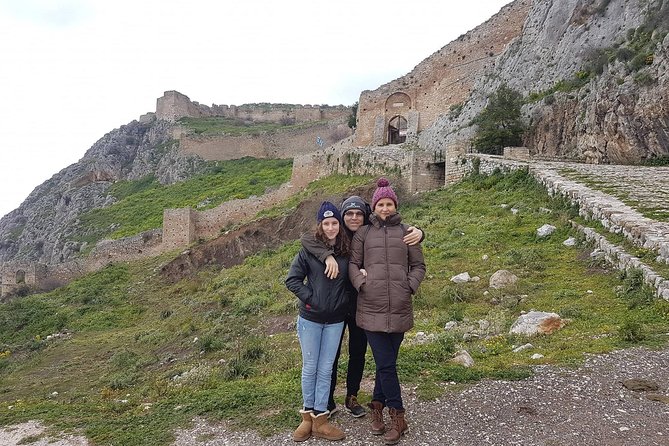
Now you get to the heart of ancient Corinth: Archaia Korinthos plus the Ancient Corinth Archaeological Museum. The day does not just name the big structures. It walks you through what each one likely means in daily terms.
The museum first, because it helps you read the ruins
The Ancient Corinth Archaeological Museum holds artifacts from the local site and nearby smaller sites. It is also a good anchor before you go outside, because it frames what you will recognize in the field.
Temple of Apollo, with those monolithic columns
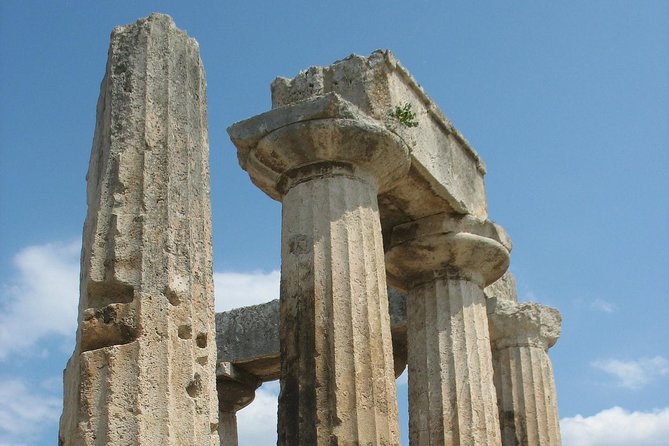
You then see the Temple of Apollo, described as one of the earliest Doric temples in the Peloponnese and the Greek mainland, with monolithic columns. It is built around 560 BCE, and the instruction to look for the monolithic columns matters here, because that is a rare architectural detail.
The Agora and the Bema connected to Paul
The Agora is laid out as a rectangular complex with central shops, small temples, and an altar, plus the notable podium or Bema where Apostle Paul addressed the Corinthians in 52 AD.
This is a smart inclusion because it gives you a place where religion, public life, and movement through the city overlap. You are not only looking at an old temple. You are seeing a civic center tied to a named person and a date given in the tour notes.
Roman buildings and the city’s long life
You also cover Roman buildings, which matters because it signals continuity. Corinth was not a one-era site. The remains you see show how layers kept being added as control and culture changed.
A practical thought: give yourself a moment to pause between structures. In a day like this, the temptation is to keep walking. Taking a short break helps the day feel coherent instead of a blur.
Lunch on a Terrace, Village Shops, and Kenchreai Port Town
You get an option for an authentic village style lunch on a terrace overlooking the archaeological site and the Temple of Apollo. Since food and drinks are not included, this is something you budget for, but it sounds like one of the best places in the region to eat with the ruins in view.
If your driver suggests a specific spot, go with it, especially if you want a smooth flow. In one experience I was with, Peter steered the group to a Greek restaurant, and the mixed grill and Greek salad were a solid, crowd-pleasing choice.
After lunch, there is time to stroll village shops for handmade souvenirs. Again, not included, but useful if you want small, real items rather than mass-produced extras.
Then you head to the ancient port town of Kenchreai (Cenchreae), described as one of the two ports of the inland Corinth. You connect it directly to a biblical moment: Acts 18:18 says Apostle Paul stopped there during his second missionary journey and had his hair cut to fulfill a Nazirite vow.
This is a good stop for people who like their ruins to come with a story. It is also a good stop for people who like coastline pacing, because it feels different from the inland city structures.
Epidaurus Theatre: Acoustics You Can Test With a Coin
Now you shift into the part many people come for: Epidaurus. It is described as one of the most popular archaeological sites in Greece, located on the northeast side of the Peloponnese in Argolis.
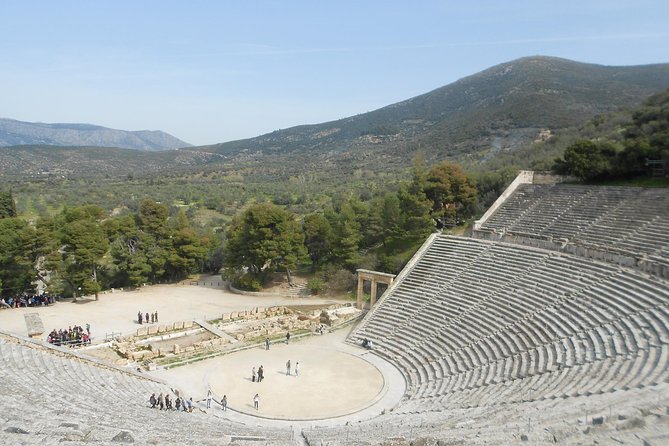
Your highlight is the Epidaurus amphitheatre. The notes call it famous for classic Greek construction and astounding acoustics. The itinerary even gives you a fun way to experience it: you can drop a pin or coin on the stage and it is said to be heard even from the last seats.
Whether you follow through or just enjoy the concept, the key is the setting. This is a place designed for performance, and it is easy to feel how the theatre and storytelling belong together.
The itinerary also points to the theatrical tradition tied to Euripides, Sophocles, Aristophanes, and Aeschylus. Even if you are not timing a show, it helps you understand why this theatre is more than stone seating.
One practical note: plan your time in the theatre. Forty-five minutes is a good chunk, but it goes faster if you try to do photo stops from every angle. Prioritize where you want to experience the acoustics from.
Epidaurus Museum and the Asclepius Sanctuary for Medicine Fans
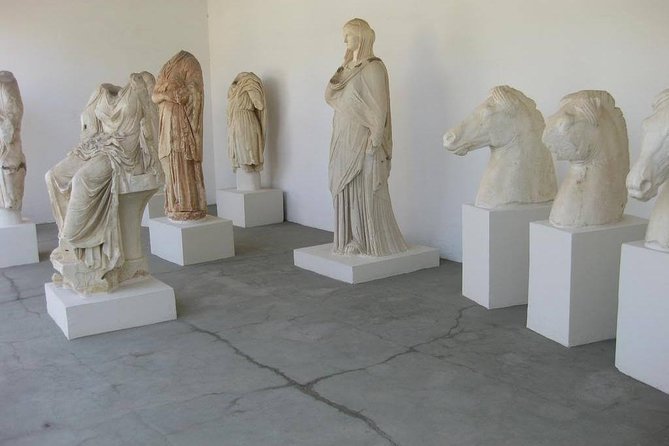
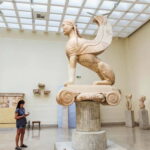
After the theatre, you head to the Epidaurus Archaeological Museum for about 45 minutes. This museum stands out in the tour description because it includes reconstructions of temples and columns with inscriptions.
That matters if you want to understand what you saw rather than just admire it. Museums like this help you interpret shapes, placements, and meanings that you might miss while you are standing in open air.
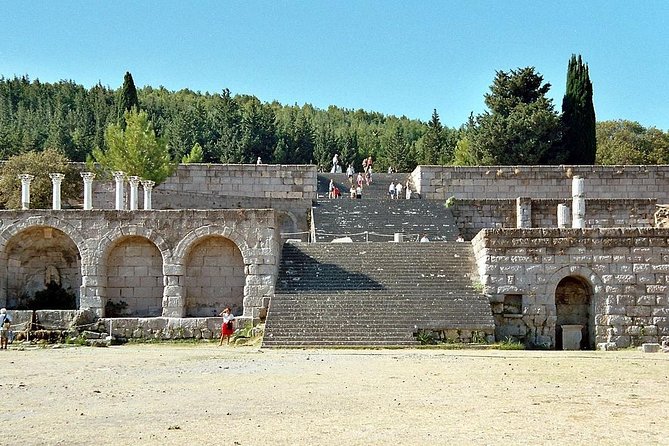
Then you visit the Asclepius, described as the sanctuary dedicated to the ancient Greek demi-god of medicine Asclepius, and as a kind of ancient medical retreat. The framing here is useful because it turns a ruin visit into a more specific story: this was a place associated with healing and care.
If you like sites that have a theme beyond politics and war, this is the emotional counterweight to the earlier fortress walls and defensive city layers.
Back to Athens: A Clean Finish to a Full Day
The tour ends with the return to your Athens hotel, Airbnb, or apartment. Pickup and drop-off are built into the experience, and that reduces stress at the end of a long day.
You should also expect that you will leave with a stack of photos and, more importantly, a clearer sense of how Corinth and Epidaurus connect geographically and culturally. The driving time, paired with the onboard WiFi and the driver’s explanations, helps the day feel like one trip instead of several unrelated stops.
If you are trying to keep the rest of your evening open, this schedule is a good candidate. You will not be stuck late with no plan.
Should You Book This Private Tour?
I think this one is a great choice if you want a private day trip from Athens that hits the major icons without the hassle of self-driving. The strongest selling points are the combination of Epidaurus and Ancient Corinth, the air-conditioned private vehicle with WiFi, and the fact that the route includes both major sites and smart supporting stops like Diolkos and Kenchreai.
I would also book it if you appreciate explanations that you can absorb while you travel between points. That is exactly where this tour seems designed to win.
Skip it or reconsider if you want to control every detail yourself, or if you are trying to keep costs at an absolute minimum, because entrance fees, food, and tips are not included.
FAQ
Is this tour fully private?
Yes. This is a private tour, and only your group participates.
How long is the Private Tour of Epidaurus, Ancient Corinth & Isthmus Canal from Athens?
The duration is listed as about 8 hours.
Does the tour include pickup and drop-off in Athens?
Yes. The driver provides hotel or apartment pickup and drop-off in Athens.
What language is the tour offered in?
It is offered in English, with fluent English speaking and multi-lingual drivers.
Is WiFi provided during the drive?
Yes. WiFi is provided in the vehicle.
Are entrance fees included in the price?
No. Entrance fees to the sites are not included.
Is lunch included?
Food and drinks are not included. The itinerary includes time to treat yourself to a village style lunch, but you pay for it.
Is there skip-the-line ticket service?
Yes. Skip-the-line ticket service is offered on request.
Is free cancellation available?
Yes, free cancellation is available. You can cancel up to 24 hours in advance for a full refund.
More Private Tours in Athens


More Tours in Athens


More Tour Reviews in Athens
- All Day Cruise -3 Islands to Agistri,Moni, Aegina with lunch and drinks included
★ 5.0 · 4,958 reviews
Not for you? Here's more nearby things to do in Athens we have reviewed







Athens Private Tours, compared.
 ★ 5.0Best of Athens Half Day Private TourFrom $913,714 reviews
 ★ 5.0Athens Full Day Private TourFrom $2442,903 reviews
 ★ 5.0Athens Greece Full Day private tourFrom $683785 reviews
 ★ 5.04 Hours – Athens & Acropolis Highlights Private TourFrom $181681 reviews
★ 5.0Athens Full Day Private TourFrom $205667 reviews
★ 5.04 Hours – Athens & Acropolis Highlights Private TourFrom $181681 reviews
★ 5.0Athens Full Day Private TourFrom $205667 reviews
 ★ 5.0Lake Vouliagmeni Thermal Spa And Temple Of Poseidon Private Full Day TourFrom $171578 reviews
 ★ 5.0Acropolis and Acropolis Museum Private Tour with Licensed ExpertFrom $188445 reviews
 ★ 5.0Athens Highlights Half Day Private TourFrom $305407 reviews
Browse the lists this tour appears in