
Reviewed · CORINTH DAY TRIPS FROM ATHENS
Full day Christian tour following Paul In Athens and Corinth
Paul’s story makes Athens feel personal. This full-day tour strings together the places tied to his time in the city, then shifts gears to Corinth, with stops around the Acropolis and then across the Saronic Gulf and Peloponnese.
What I like most is the private format for up to 3 people. You get a driver who can tailor pacing to your questions, and the route is built for a smooth day from either your Athens hotel or the Piraeus cruise port. One thing to plan around: entrance fees are not included, and the driver can guide you up to sites but typically does not accompany you inside.
Quick hits I’d plan around
- Paul’s Athens to Corinth route focuses on the story connection, not just sightseeing stops
- Private up to 3 means you can go at your pace, not the group shuffle
- Driver commentary while you’re moving helps you connect what you see with what it meant
- Port or hotel pickup in Athens makes this a realistic cruise-day option
- Mix of free and ticketed sites means you should budget time and money for entrances
Following Paul in Athens, then heading to Corinth
If you like your Bible stories with real geography, this tour does the work for you. Instead of bouncing randomly between landmarks, the day is organized around the kind of places that fit Paul’s route: first Athens, where he spoke in a civic religious setting, then Corinth, a major Mediterranean crossroads where Christianity spread quickly.
The Athens side is built to help you connect the dots. You start near the port area, ride along the coastline, and then work up toward the Acropolis area with several short stops that matter for the Paul connection. The Corinth side gives you the other half of the picture, with the canal and the ancient city remaining in ruins you can walk around.
This is not a heavy classroom day. It’s more practical than that. You’ll spend time looking, then use your driver’s explanations to interpret what you’re seeing. In the reviews, drivers like Spyros and Dimitris were praised for being on time and for making the story feel clear, even though they do not function as the person inside every museum or archaeological site.
The one drawback to keep in mind is pacing. Some stops are quick, like 5 to 20 minutes, which means you’ll want to decide early whether you want photos, extra questions, or slower walking.
More Athens tours and experiences for the shortlist
- All Day Cruise -3 Islands to Agistri,Moni, Aegina with lunch and drinks included
★ 5.0 · 4,958 reviews

Start in Piraeus: a coastal drive before the sacred sites
You can be picked up from your Athens hotel or from your cruise ship pier at Piraeus port. Meeting is straightforward: if you’re staying in town, you meet at the main entrance and let the hotel staff know your driver is coming. For cruise passengers, you exit the terminal area and find the driver holding a name sign.
From there, you ride along the coastal road of the Saronic Gulf. This matters more than it sounds. It breaks the day up nicely: you’re already in the right mood before you climb into the Athens ruins. You also get that quick Athens-by-water perspective, which helps the later scenery around the Corinth area make more sense.
Stop 1 is Piraeus with a short visit (about 20 minutes) and no entry fee for that segment. It’s not trying to turn the day into a port history lecture. It’s more of a warm-up, especially if you’re arriving by cruise and want something meaningful without losing the whole day to transit.
The Acropolis area: Areopagus to Propylaea in a logical flow
Once you’re near the Acropolis, the tour keeps things structured. Instead of trying to cover everything at once, it walks you through the “story layers” around the sacred precinct.
Areopagus, Hill of Ares, and Paul’s Unknown God
Stop 2 is the Areopagus, often linked to Paul’s famous sermon to an audience familiar with multiple cults and altars. In classical times, this was connected to councils and judicial matters, and the tour frames it as the place where Paul preached the idea of an altar dedicated to an unknown god. There’s also a bronze plaque at the base of the rock that commemorates that speech.
This is a smart stop because it gives you a specific setting. You’re not just hearing that Paul preached in Athens. You’re seeing the hill and the surrounding terrain that shaped how a speech would land with listeners.
The visit is brief (about 20 minutes), and it’s listed as free for entry. That’s good value, because you can spend your budget on the big-ticket sites higher up.
Propylaea, the gates that hint at how grand Athens was
Stop 3 is Propylaea, the monumental gateway approach. The text you’re given explains how gates changed over time, including construction and repairs after Persian destruction, and it points out that the Periclean building program tried to complete a bigger plan that did not fully finish.
This kind of stop can feel like “another building.” But it works here because it’s your setup for what comes next. When you later see the Parthenon scale and precision, you’ll understand the Acropolis wasn’t just one temple, it was an organized theatrical space.
Propylaea is quick (about 5 minutes) and listed as an entry ticket not included. Even so, it’s worth it because it lines up your mental map.
- All Day Cruise -3 Islands to Agistri,Moni, Aegina with lunch and drinks included
★ 5.0 · 4,958 reviews



Temple of Athena Nike and the Parthenon: short visits, big payoff
At Temple of Athena Nike (Stop 4), you’re taken to the southwestern edge of the Acropolis. This small Ionic temple is described with relief-carved details and specific themes tied to battles, including the Persian wars and Marathon. The tour also notes the parapet installed for visitor safety, which is a useful detail because it explains why viewing angles can feel different today than they did in antiquity.
This stop is also brief (about 5 minutes), and it’s listed as not included for admission. Here’s the practical takeaway: even if you do not linger, the orientation helps. You’re learning where victory imagery sat, and how Athena Nike fits the Acropolis story as a symbol of power and protection.
Then comes the Parthenon (Stop 5). This is your big anchor. The tour frames it as the key Doric culmination for Athena Parthenos and as part of Pericles’ rebuilding program after the Greco-Persian Wars. It also mentions the Parthenon’s role as a treasury for the Delian League.
Time matters here. You’re given about 45 minutes. That’s enough for a solid look at the structure, but it will not feel like a museum marathon. If you’re the type who likes to read every plaque, you might feel rushed. If you’re more photo-and-structure focused, it’s plenty.
Erectheion’s caryatids and the politics of monuments
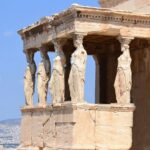
Stop 6 is the Erectheion, famous for its porch supported by the six maidens, the caryatids. The tour information makes two points that are especially useful for modern travelers.
First, it explains the preservation reality. Pollution and weathering led to removing most originals to the Acropolis Museum in 1978, replacing them with replicas. Second, it addresses what happened historically to at least one caryatid, taken by Lord Elgin in the early 1800s and later displayed in the British Museum.
Why does this matter for your visit? Because it changes how you look at what’s in front of you. You’re not just seeing pretty figures. You’re seeing how heritage decisions play out over time, and you can spot the real-world impact of those decisions.
The stop is short (about 5 minutes) with admission not included. This can be one of those places where you want a few extra minutes, just to take in the details and read the context.
Ancient Agora of Athens: the city’s long-running public center
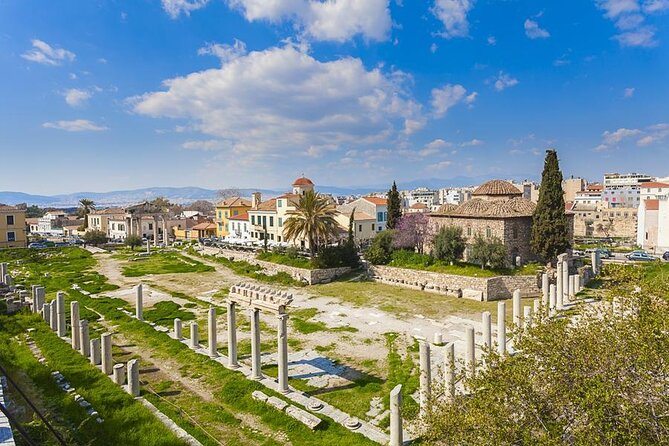
After the Acropolis, you head to the Ancient Agora (Stop 7). This is your shift from sacred precinct to daily public space. The Agora was both an assembly area and, in everyday terms, a marketplace. The tour description also emphasizes how the area stayed in use across thousands of years, meaning you’re seeing layers of the city’s rebuilding cycles.
You get about 1 hour 20 minutes. That’s the most time you’ll spend on a non-Acropolis site in Athens, so it’s your chance to slow down.
Practical advice: if you’re visiting in heat, the Agora’s open spaces can feel exposed. Wear shoes you can walk in for a while, and don’t be afraid to take short breaks. The story connection here is strong because you’re moving from Paul speaking in an Athenian public-religious setting to a place that functioned as a real center for the city’s life.
Peloponnese drive and the Corinth Canal break
Stop 8 is labeled Peloponnese and is basically a scenic transition. You’ll appreciate it if you want a mental reset between Athens and Corinth. You ride along the Saronic Gulf until you reach the Corinth Canal area.
The Peloponnese portion includes a note about local wine roads and native grape varieties, like Moschofilero-Mantinia, Agiorgitiko-Nemea, and Mavrodafni. There’s no tasting described in the tour info you have, but it’s a nice cultural nudge. It also helps you understand the region is not just ruins and highways, it’s agricultural and still alive.
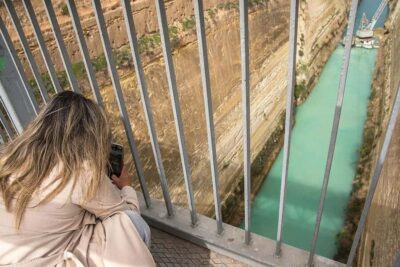
Then you hit Corinth Canal (Stop 9), about 15 minutes, and it’s free. This is one of those spots that instantly gives you the “why” behind Corinth’s historical importance. The canal links the Gulf of Corinth with the Saronic Gulf, and the tour points out that it turned the Peloponnese into a kind of island by geography.
It also gives the old-ship reality: before the canal, ships had to go around the Peloponnese, adding a long detour. The description even notes the canal was a long-time dream, tied to ideas from Periander and the older concept of moving ships over land on the diolkos.
Even if you skip monuments, this stop gives you strategic context you can carry into Ancient Corinth.
Lunch in Ancient Corinth: plan around what is and is not included
Stop 10 is time for a food moment in Corinth. You get about an hour for lunch with free time in a traditional restaurant in the Ancient Corinth area.
Important practical point: lunch is not included in the price. That means you should budget for your meal. The upside is freedom. If you prefer a quick bite, you can do it. If you want to sit longer, this is when you have it.
In one of the guides’ notes, there’s mention of getting pointed toward a good lunch place near the Ancient Corinth area, which is exactly what you want from a driver who’s operating with your schedule in mind.
If you’re traveling in a cruise day, this is also your best time to recharge before walking among more ruins.
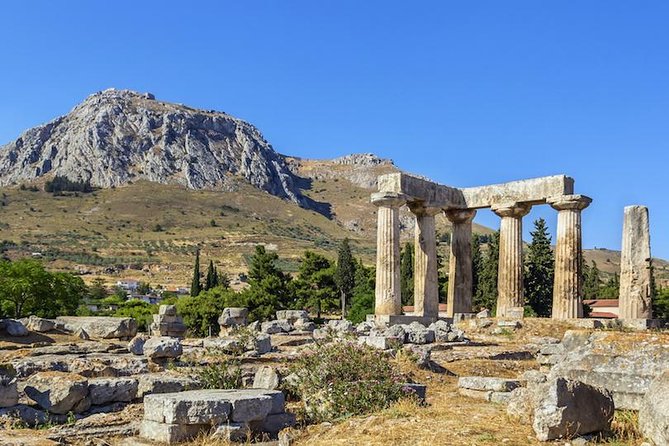
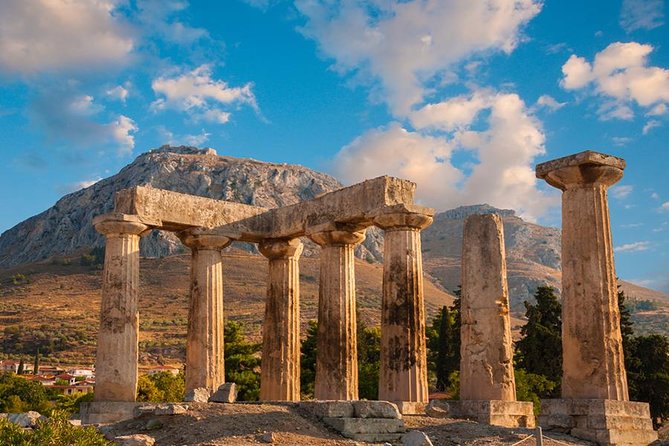
Ancient Corinth (Archaia Korinthos): where the story becomes a place
Stop 11 is Ancient Corinth, about 1 hour 20 minutes, with admission not included.
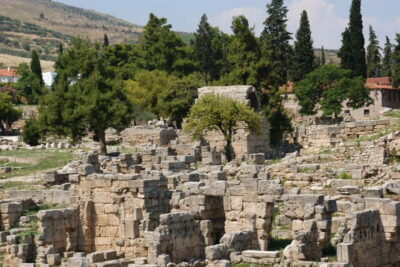
The tour frames Corinth’s growth around fertile soil plus location. It’s described as an early crossroads for land routes between the Balkans and Greece and water routes connecting the western Mediterranean to the east, including Asia Minor and Syro-Palestine. That setup helps you understand why Corinth mattered for early Christianity.
The description also mentions that Corinth was known since the Mycenaean period and that by the 8th century BC Corinthian colonies were founded, shaping Mediterranean history beyond just local trade.
For me, the value of this stop is that it ties the “Paul in Corinth” theme to geography and movement. This wasn’t an isolated town. It was a place where people, ideas, and goods traveled. That helps you see why messages spread the way they did.
If you love details, you’ll likely want more time here than you get. But 1 hour 20 minutes is still a good window for a first-time visit, especially when combined with Corinth Canal.
What makes this tour work: private pacing and driver storytelling
This tour is priced per group, not per person, and it’s private for up to 3 people. In practice, that can feel like good value because you’re paying for transportation plus historical storytelling from a driver who knows how to explain what you’re seeing.
In the reviews, drivers like Spyros and Dimitris were praised for showing up on time and keeping explanations clear. That matches the tour’s promise: the driver guides you with history and culture until you enter archaeological sites and museums. Once you’re inside, they do not accompany you, because tour drivers are not licensed to act as guides inside those venues.
So how do you get the best experience anyway?
- Give yourself permission to arrive with questions. The driver’s role is strongest when you ask what you should notice.
- Budget time for ticket lines or entry. The tour suggests pre-purchasing admission tickets because availability can be tight.
- If you really want someone licensed inside, the operator says a state-licensed guide can be arranged for an additional cost, subject to availability.
That “driver up to the door” structure is common for good reasons. It also means you should plan your time so you don’t feel like you’re losing the day at entrances.
Price and value: what $508.66 per group buys you
At $508.66 per group (up to 3), you’re not buying cheap. But you are buying a lot of practical travel value in one package.
You’re paying for:
- 8 hours approx. of private round-trip transport by air-conditioned vehicle
- pickup and drop-off from Athens hotels or the Piraeus cruise pier
- fuel surcharge and bottled water
- a professional English-speaking driver with history and culture guidance through the route
The big “value” question is entrances. The tour notes that entrance fees to archaeological sites and museums are not included. Some parts are free (like Piraeus and Areopagus, and the Corinth Canal viewpoint time), while other major stops are not included (like Parthenon and the Ancient Agora segment).
So the real budget is: the tour price plus admission fees you choose. If you’re a couple or a small family of three, private pricing can still be fair, because you’re not competing with a big group plan. If you’re solo, it can feel less economical.
Who this tour suits best
This is ideal if:
- you want a Christian-themed day that connects Paul to real places, not just a generic Athens and Corinth sampler
- you like structure, short stops with meaning, and a driver who can explain the story as you travel
- you are traveling by cruise and need Piraeus timing without guessing logistics
It may be less ideal if:
- you want a lot of museum time, because the emphasis is on key viewpoints and outside archaeology rather than long indoor galleries
- you dislike paying extra for site entries, since many of the most famous stops require tickets
Should you book this Paul’s footsteps Christian tour?
If you want an efficient, story-connected day that links Athens and Corinth to Paul’s movement, I think this is a strong booking. The private group size is a real advantage, and the driver-led explanations, highlighted by strong feedback for on-time service and tailoring, make the day feel coherent.
I’d book it especially if you’re short on time, like cruise travelers, because the port pickup in Piraeus plus the clear return drop-off at the same location removes a lot of stress.
If you have a flexible schedule and love long museum wandering, you might prefer a slower option with more indoor time and possibly a licensed guide for inside every site. But for most visitors, the mix here, especially the Areopagus connection and the Corinth Canal plus Ancient Corinth pairing, is exactly the kind of day that makes the story stick.
FAQ
What is the duration of the Paul’s footsteps Christian tour?
It runs for about 8 hours.
How much does the tour cost?
The price is $508.66 per group, up to 3 people.
Is pickup available from hotels and from the cruise port?
Yes. You can be picked up from your Athens hotel or from the cruise ship pier at Piraeus port.
What time does the tour start?
The start time is 8:00 am.
Are entrance fees included in the tour price?
No. Entrance fees to archaeological sites and museums are not included. Some stops are listed as free, while others are not.
Does the driver accompany you inside the archaeological sites and museums?
No. The driver provides guidance until you enter the sites, but tour drivers are not licensed to accompany you inside. A licensed state tour guide can be arranged for an additional cost, subject to availability.
Is lunch included?
Lunch is not included in the price. There is free time for lunch in a traditional restaurant in Ancient Corinth.
Is the tour private?
Yes. It’s private, meaning only your group participates.
If you want, tell me your travel dates and whether you’re coming by cruise or staying in Athens, and I can help you plan a realistic ticket budget for the stops that are listed as not included.
More Full-Day in Athens
- All Day Cruise -3 Islands to Agistri,Moni, Aegina with lunch and drinks included
★ 5.0 · 4,958 reviews

More Tours in Athens


More Tour Reviews in Athens
- All Day Cruise -3 Islands to Agistri,Moni, Aegina with lunch and drinks included
★ 5.0 · 4,958 reviews
Not for you? Here's more nearby things to do in Athens we have reviewed







Corinth Day Trips from Athens, compared.
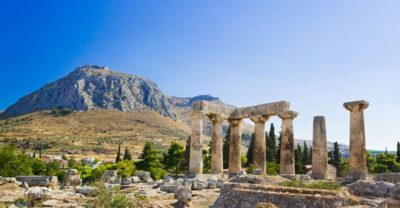 ★ 4.6From Athens: Ancient Corinth Day Trip with Canal & VR GuideFrom $411,073 reviews
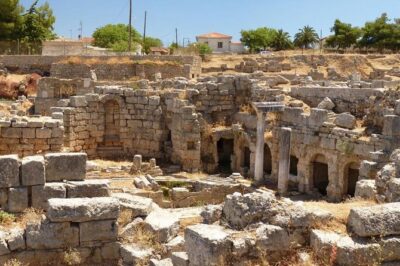 ★ 5.0Private Biblical Tour Ancient Corinth & Isthmus Canal from AthensFrom $301762 reviews
 ★ 4.8Ancient Corinth & Nafplio Full Day Trip with SwimFrom $44523 reviews
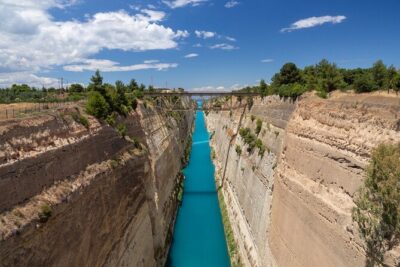 ★ 5.0Private Tour of Apostle Paul’s Footsteps in Ancient CorinthFrom $169275 reviews
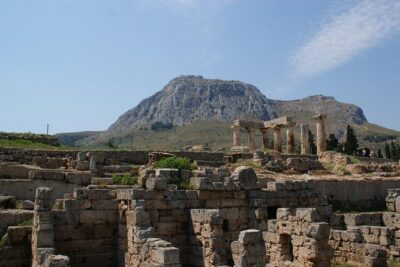 ★ 4.5Corinth Half-Day Trip from Athens with Entrance TicketsFrom $91242 reviews
 ★ 4.7Ancient Corinth & Nafplion Guided Premium TourFrom $34237 reviews
 ★ 4.4Corinth Canal, Mycenae and Nafplio Day TourFrom $33233 reviews
 ★ 4.6From Athens: Ancient Corinth Tour Official Guide & TicketsFrom $86208 reviews
Browse the lists this tour appears in