

Reviewed · ATHENS ACROPOLIS & PARTHENON TOURS
Athens: Acropolis Entry Ticket & VR Audio Guided Tour
VR plus a timed ticket beats the crowd. This Acropolis Entry Ticket & VR Audio Guided Tour gives you a smooth, mostly self-paced way to hit the big sites on the hill without wandering around clueless at the gates.
I like the pre-reserved entry time slot. It helps you avoid the worst crowd crush and reduces the time you spend waiting near the entrance.
My favorite part is the pairing of VR audio with a 9-language guided track. You’re not just reading stones, you’re listening your way through the key monuments, and the VR moments help you picture what the hill and surroundings looked like in ancient times.
One practical drawback to plan for: the experience runs through your smartphone, so if battery life or audio playback gets flaky, you may spend more time troubleshooting than sightseeing.
Key things I’d watch for
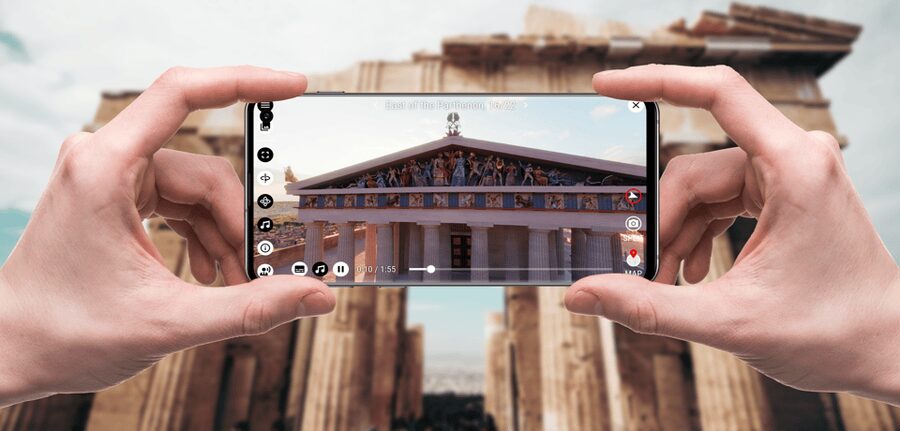
- Timed entry window: you enter only at your chosen slot or within 15 minutes before or after
- Self-guided, phone-based VR audio: headphones and a charged smartphone matter
- Multiple monument stops: Theater of Dionysus, Parthenon, Propylaea, Athena Nike, Erechtheion, and more
- VR for ancient context: you get a glimpse of how the Acropolis hill looked around that era
- 9-language audio: English, Spanish, German, Italian, Polish, Russian, Chinese, French, Portuguese, Arabic, Japanese
- Tech reality check: glare can make screens harder, and app audio can be fussy in some cases
What you are really buying for $53

At $53 per person for a 2-hour ticket, you are not paying for a person with a microphone. You are paying for two things that matter at the Acropolis: reserved entry and a VR audio route that tells you what you are looking at while you walk.
Reserved entry is a big deal here. The Acropolis is popular, and your day can get hijacked by gate lines and crowd timing. With a specific date and time slot, you head straight to the entrance area and follow instructions, instead of burning precious sightseeing hours waiting.
The VR audio part is also where the value lives. A standard museum-style approach can feel like a bunch of plaques. Here, you get a guided sequence, in multiple languages, that helps you connect names like Parthenon, Athena, and the Theatre of Dionysus to what the structures actually are. You can keep moving, pause when you want, and take in the views without needing to herd yourself through a live-group pace.
More Athens tours and experiences for the shortlist



Getting in: timed entry, QR-less PDF, and which door to use
Your ticket is sent to your email or WhatsApp (and yes, it can end up in spam). You’ll receive instructions to download the VR audio guide through the same channels the day prior.
On arrival, you go to the Main or South entrance of the Acropolis and present your PDF ticket. You can enter from the south or north entrance, depending on how you approach the site that day, but the instruction focus is clear: have the PDF ready on your mobile or printout.
A key rule: your entrance time is fixed. Once you select the date and time slot, you cannot change it. You can enter only at the selected time, or within a 15-minute window before or after. That means you should plan to arrive a bit early, then settle near the entrance so you are not late when your window opens.
Also note the practical constraints. You will need headphones (not included), and you should bring a charged smartphone. If you forget either, the experience becomes much less enjoyable because the tour runs through the app.
The phone and sun test: how to make the audio guide actually work

This tour is self-guided. That is freedom, but it comes with a reality check: the app is run from your smartphone, and sunlight can make screens hard to read. One review pointed out that the phone display wasn’t easy to see in direct sun, which is totally plausible at midday on the hill.
Here is how I’d set yourself up for success, based on how phone tours behave:
- Start with maximum screen brightness and let the app stay open while you move.
- Keep your headphones plugged in before you reach the first stops, not halfway through.
- When you notice the audio is not lining up with where you are standing, slow down instead of rushing ahead. Find your place and then resume.
There is also another tech consideration to keep in mind. Some feedback flagged problems where the audio position would jump back to the beginning after selecting a specific point. That can happen with app versions, buffering, or GPS behavior. The fix is usually patience: confirm the correct section in the app, then continue on.
If you want a hands-free vibe, this is not a “put your phone away and trust magic” kind of tour. You will be using your phone throughout. Think of it as a guided walk where your guide is in your pocket.
Your route on the hill: Theater of Dionysus to the Parthenon
The visit begins at the Theater of Dionysus before you move toward the Parthenon, which makes sense if you like a storyline. The theatre connects ancient Athens to public life and performance, then you climb into the most iconic religious and political monument area.
At the Theater of Dionysus, you are looking at a site tied to drama and civic culture. The audio track helps you interpret what you are seeing, and the order sets up the shift from everyday civic space to the sacred heart of the Acropolis.
Next is the Parthenon, the UNESCO World Heritage Site dedicated to Athena. The audio guidance is there to help you follow the logic of the building, its purpose, and its place in the larger complex. Even if you already know the basics, hearing it laid out in a clear sequence often makes the stones feel less random.
One of the best parts of this section is pacing. You are not forced into a strict group shuffle. You can spend a little longer in the spots that hook your attention, then move on when you feel ready to climb again. That matters because the Parthenon area is where people slow down the most.
What comes next: Propylaea, Athena Nike, Erechtheion
After the Parthenon, the route continues with a chain of structures that each adds a different piece of the “why it mattered” puzzle.
You can also read our reviews of more guided tours in Athens



Propylaea
The Propylaea acts like a monumental gateway. In practice, it is a breather. You come out of the biggest icon and step through a space that feels like a threshold. The audio track helps you see it as more than a wall with columns, a transition space between major parts of the hill.
Temple of Athena Nike
The Temple of Athena Nike adds a lighter, more focused moment compared with the sheer scale of the Parthenon. If you like symbolism, this is where the audio helps you connect the temple to Athena and the themes of victory and protection.
Erechtheion
Then you reach the Erechtheion, another key stop. This is the kind of structure that benefits from a guided approach because it is easy to glance, take a photo, and move on. The audio helps you slow down long enough to notice what makes it distinct, not just impressive.
As you work through these stops, you should also take breaks for views. The app does not replace the fact that Athens unfolds below you, and the mountains and Aegean Sea can be visible on clear days. Even with a short 2-hour window, this route gives you enough time to feel you’ve earned those views.
Odeon of Herodes Atticus: where the hill keeps the story going
The last major mention in the tour route is the Odeon of Herodes Atticus. Like the theatre early on, this is about performance and public assembly, but in a different setting and context.
In a self-guided format, these “culture of Athens” stops are useful because they add meaning. You get the feeling that the Acropolis is not only temples and columns, it’s also part of a civic landscape where people gathered, watched, and participated.
If you’ve got good weather, I recommend you linger here for a moment longer than you think. It’s one of those locations where the acoustics and sense of space often make you imagine what the site sounded like back then, even if you can’t confirm the sound itself. The VR audio moments earlier help your brain switch into that mode.
Audio in 9 languages: a real win if you do not want English-only
This is one of the cleaner advantages on paper. The audio guide is available in 9 languages: English, Spanish, German, Italian, Polish, Russian, Chinese, French, Portuguese, Arabic, and Japanese.
That matters because the Acropolis can feel overwhelming. When you can hear clear guidance in your own language, you spend less time decoding and more time noticing. It also helps if you are traveling with someone who is more comfortable speaking another language.
One more practical note: even though earphones are not included, the tour is designed around listening. So if you want smooth audio, bring your own wired headphones or a reliable Bluetooth set that stays connected.
Skip the line, but do not show up late
The tour includes a skip-the-line approach through a separate entrance. That is a real advantage, but only if you respect the timing rules.
Timed entry is strict: you enter only at the selected time or within the 15-minute buffer. If you stroll in whenever, you can miss the window and lose the benefit you paid for.
So what I’d do is plan your arrival strategy like this:
- Pick a time slot early enough in the day that crowds are still manageable.
- Buffer your walk time to the entrance so you are not stressed.
- Once you arrive, get set up, headphones ready, phone charged, then go in when your window starts.
This is also a reason I like the fixed format. It keeps the experience from turning into a guess-and-hope day.
Accessibility and rules: what you should know before you go

This ticket is wheelchair accessible, which is a big plus if you need that option. The route is still outdoors and involves walking on uneven stone, so you’ll want to pace yourself, but at least the overall experience is designed to be accessible.
A few rules to plan around:
- Pets are not allowed.
- Baby strollers are not allowed.
Also, the ticket details matter. This offer includes a regular adult ticket that must be purchased at full price regardless of age. If you qualify for free or reduced admission, you need to contact the Acropolis Ticket Office directly. That is not a small point, so check before you buy if pricing is sensitive for your group.
Price and value versus a live guide
This is where the trade-off becomes clear. A live guide gives real-time help, can answer questions, and can adapt to your pace. This VR audio ticket gives structure and narration, but it is still self-paced and app-dependent.
For solo travelers or couples who want flexibility and you like learning while walking, this kind of ticket is great value. It puts the time savings (reserved entry and skip-line access) plus a guided route into one purchase.
For people who want zero screen time, or who are prone to getting frustrated by app glitches, it might feel less satisfying. One review complained about audio playback problems, and another mentioned battery drain and screen visibility in sun. Those are not deal-breakers for everyone, but they are the kind of issues that can spoil the mood if you were expecting a plug-and-play experience.
If your group includes someone who hates using their phone as a guide, you might prefer a traditional tour instead.
Who this Acropolis VR audio ticket suits best
I think this works especially well for:
- Travelers who want pre-reserved entry and a planned monument route
- People comfortable using a smartphone for audio guidance
- Groups that speak at least one of the 9 supported languages and want a consistent narrative
- Visitors who enjoy structure, but still want to stop for photos and views
I’d think twice if:
- You rely on an app but have a history of spotty phone connectivity or low battery tolerance
- You strongly prefer a live guide, because this does not include one
- Your idea of touring is mostly walking without looking at a phone screen
The upside is that you can take the hill at your pace once you are inside. The downside is you need to be willing to manage the device side of the experience.
Should you book this Acropolis VR audio tour?
If you want a time-efficient Acropolis visit with an audio route in your language and VR moments that help you visualize the ancient setting, I’d say it’s worth booking. At $53, you are paying for reserved entry and a guided storyline that helps you make sense of the Parthenon area and beyond, without waiting in the crowd for hours.
Book it with two conditions in mind. First, arrive with a charged phone and your own headphones. Second, accept that you will be using your device throughout the walk, and bright sun can make screens less friendly.
If you are the type who gets annoyed when an app acts weird, or you are traveling at a time when you might not have easy access to charging, consider swapping to an option with a live guide. But if you’re ready for a structured walk that you control, this ticket is a solid way to experience the Acropolis, the Theatre of Dionysus, the Parthenon, and the rest of the hill route in one smooth 2-hour circuit.
FAQ
How long is the Acropolis entry plus VR audio tour?
The total duration is listed as 2 hours.
Do I get a live guide with this experience?
No. This is a self-guided audio tour with a virtual reality application, and it does not include a live guide or live instructor.
How do I get my ticket and instructions?
Your ticket is sent to your email or WhatsApp, along with instructions to download the VR audio guide. You should also check your spam folder.
Where do I enter the Acropolis?
You can enter from the Main or South entrance of the Acropolis, and you can also enter from the north entrance depending on how you approach. Bring and present your PDF ticket on mobile or printed.
What do I need to bring?
You should bring headphones and a charged smartphone.
What time can I enter if my slot starts at a specific time?
Entrance is allowed only at your selected time slot, or within a 15-minute window before or after.
Can I change the date or time slot after booking, and what about cancellation?
Once selected, the date and entry time cannot be changed. You can cancel up to 24 hours in advance for a full refund.
More Tickets in Athens



More Tours in Athens




More Tour Reviews in Athens
- All Day Cruise -3 Islands to Agistri,Moni, Aegina with lunch and drinks included
★ 5.0 · 4,958 reviews




Not for you? Here's more nearby things to do in Athens we have reviewed












Athens Acropolis & Parthenon Tours, compared.
 ★ 4.4Acropolis & up to 5 Archaeological Sites Combo PassFrom $4812,619 reviews
 ★ 4.2Acropolis Ticket with Optional Audio or Live GuideFrom $4211,055 reviews
 ★ 4.8Acropolis, Parthenon & Acropolis Museum Guided TourFrom $409,316 reviews
 ★ 4.6Acropolis and Parthenon Guided Walking TourFrom $385,882 reviews
★ 4.8Acropolis, Parthenon & Acropolis Museum Guided TourFrom $413,579 reviews
★ 4.6Acropolis and Parthenon Guided Walking TourFrom $385,882 reviews
★ 4.8Acropolis, Parthenon & Acropolis Museum Guided TourFrom $413,579 reviews
 ★ 4.0Acropolis Ticket with Audio GuideFrom $473,575 reviews
 ★ 4.7Acropolis: Acropolis and Parthenon Guided Walking TourFrom $363,442 reviews
 ★ 5.0Acropolis monuments & Parthenon Walking Tour with Optional Acropolis MuseumFrom $422,678 reviews
Browse the lists this tour appears in