
Reviewed · WORKSHOPS
Aristotle’s Philosophy Experiential Workshop, Lyceum, Athens
Philosophy that moves at walking pace. This Aristotle’s Philosophy Experiential Workshop at the Lyceum mixes an outdoor stroll through the ruins with interactive ethics exercises, including a card game on virtues. I especially love that you practice short bits of ancient Greek and then immediately translate the ideas into real-life choices. The one real catch: the archaeological site entry fee is extra, and most of the workshop is outdoors.
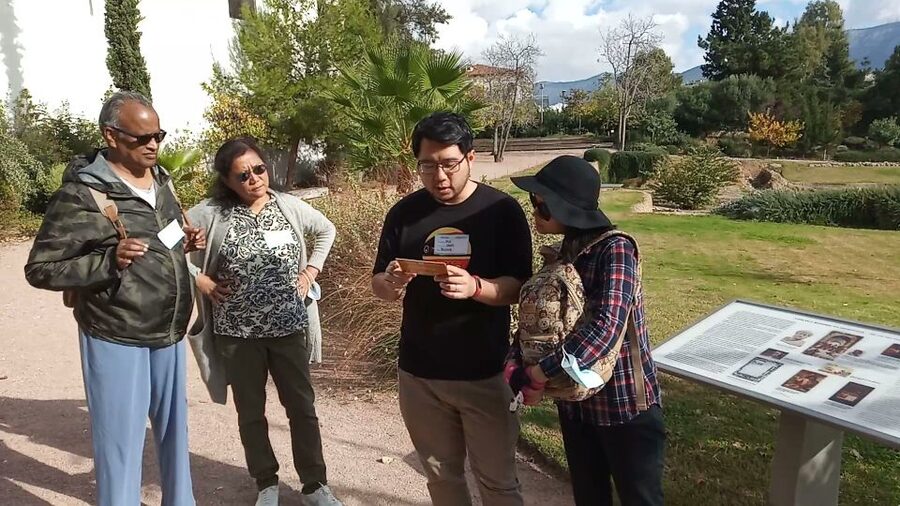
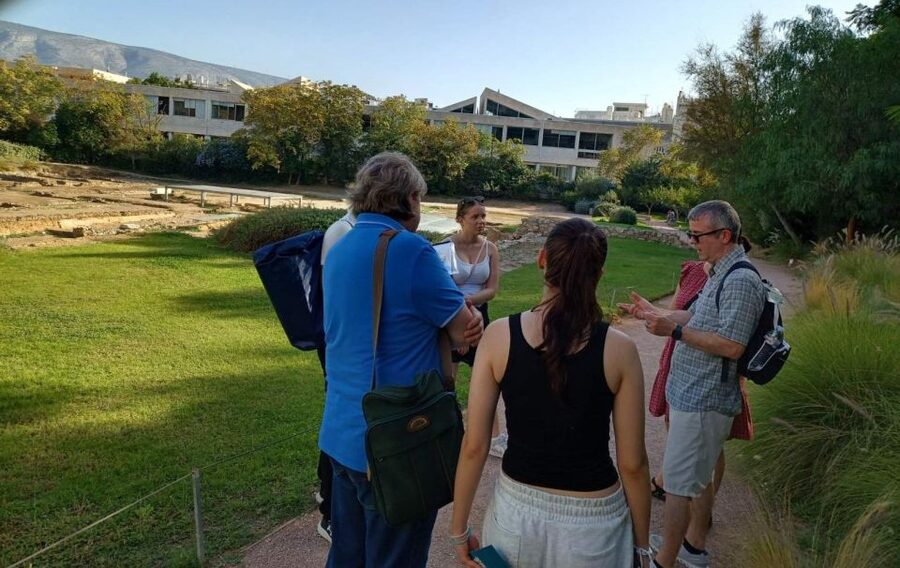
The session starts in Rizari Park under shaded trees, where you meet the facilitator and connect the thinker’s ideas through the chain Socrates to Plato to Aristotle. Then you walk over to the Lyceum archaeological area, where the setting makes the philosophy feel less like a textbook and more like a lived routine. One consideration to keep in mind, it is not a sit-and-listen guided tour, so you need to be willing to participate with the group.
If you want a gentle, structured way to get Aristotle into your daily life, this is a good fit. It also helps that the format is English-led, and the workshop runs about 100 to 101 minutes, so it feels doable even on a packed Athens day.
Key highlights worth your time
- Walk the Lyceum ruins where Aristotle taught, with the excavations in sight later on
- Card game for Virtues that turns ethical theory into something you can practice
- Ancient Greek read-aloud moment that keeps it hands-on for beginners
- Golden Mean made practical with everyday-life examples
- Short, focused session around 100 to 101 minutes, led by an English facilitator
- Rain plan nearby using the Byzantine Museum café next door
Rizari Park start: meeting the ideas behind Socrates, Plato, and Aristotle
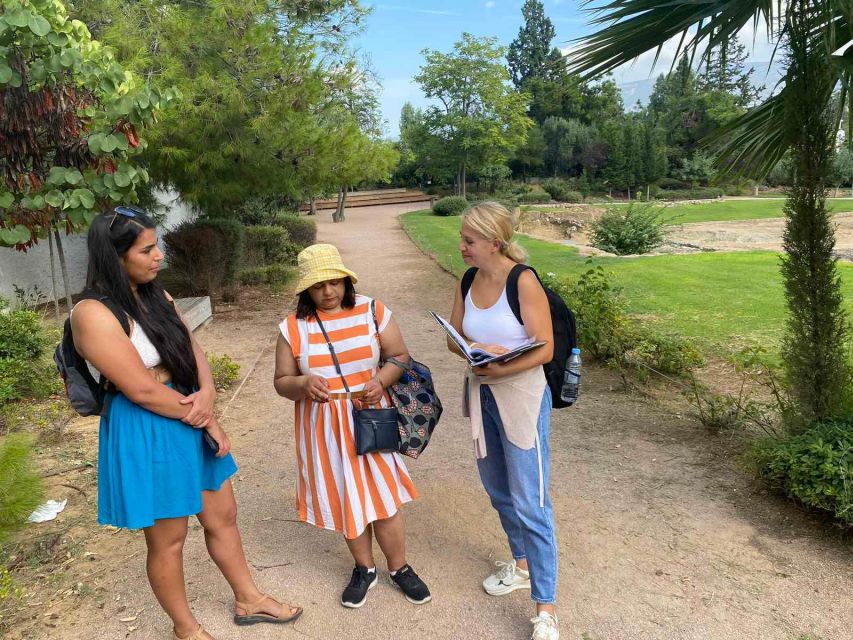
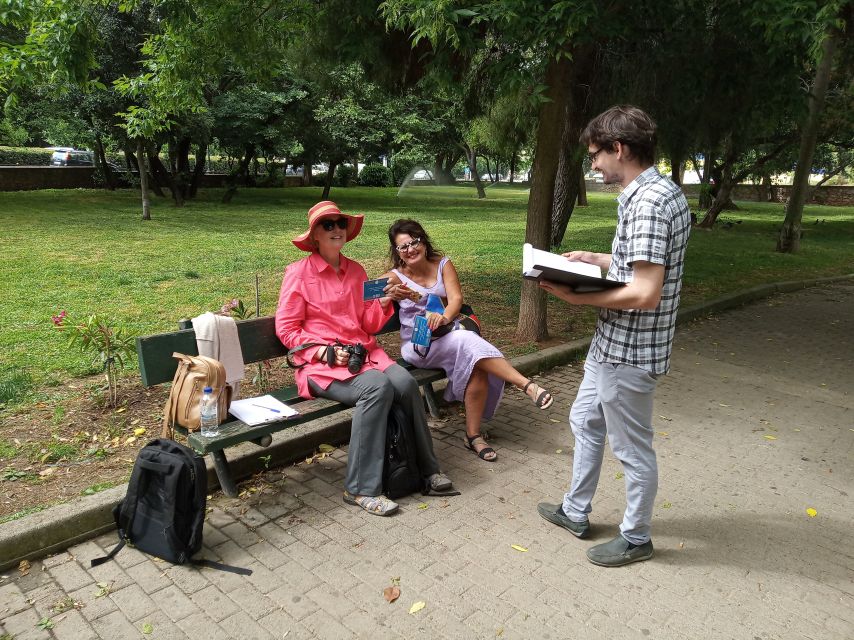
Most Athens philosophy experiences jump straight to big concepts. This one starts in a calmer place, Rizari Park, under trees and shade, which helps you settle in before you start walking.
You begin with introductions and a short discussion of the historical chain that connects three names: Socrates as teacher of Plato, and Plato as teacher of Aristotle. That context matters because Aristotle’s ethics can feel like a maze if you only meet it as isolated terms like virtues and eudaimonia. Here, you get the stepping stones first, so the workshop has a clearer path from the start.
Then you get a chance to read aloud Aristotle-related phrases in ancient Greek. It is not about perfect pronunciation. It is about breaking the ice with the material and making the workshop feel active from minute one. If you like language even a little, this moment is a memorable hook, and if you do not, it still works because the group dynamic keeps it friendly.
One smart feature of the setup is that you are not just learning definitions. You are learning how to apply Aristotle’s thinking to the idea of self-excellence in daily life. That theme keeps repeating in different forms, and the workshop design nudges you from understanding to use.
More Athens tours and experiences for the shortlist



Lyceum ruins on foot: walking where Aristotle’s students paced
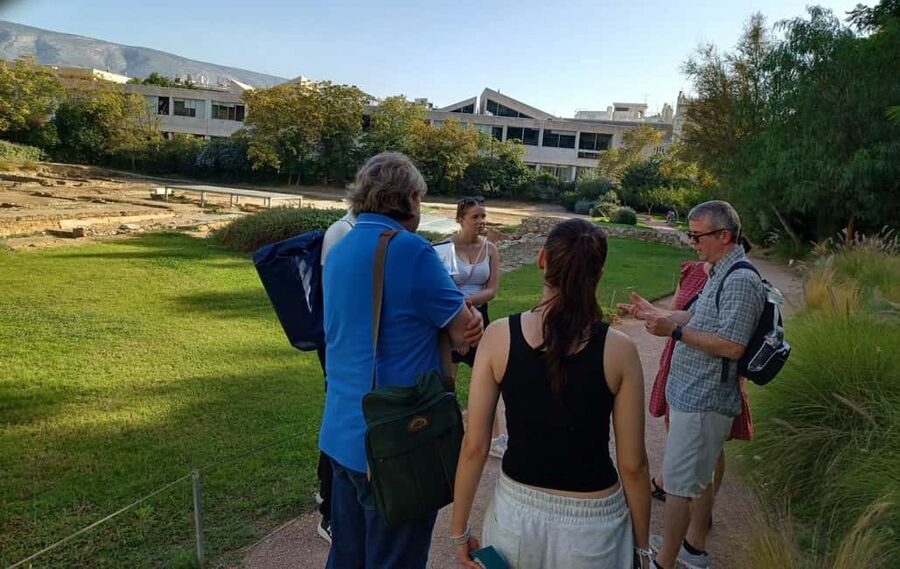
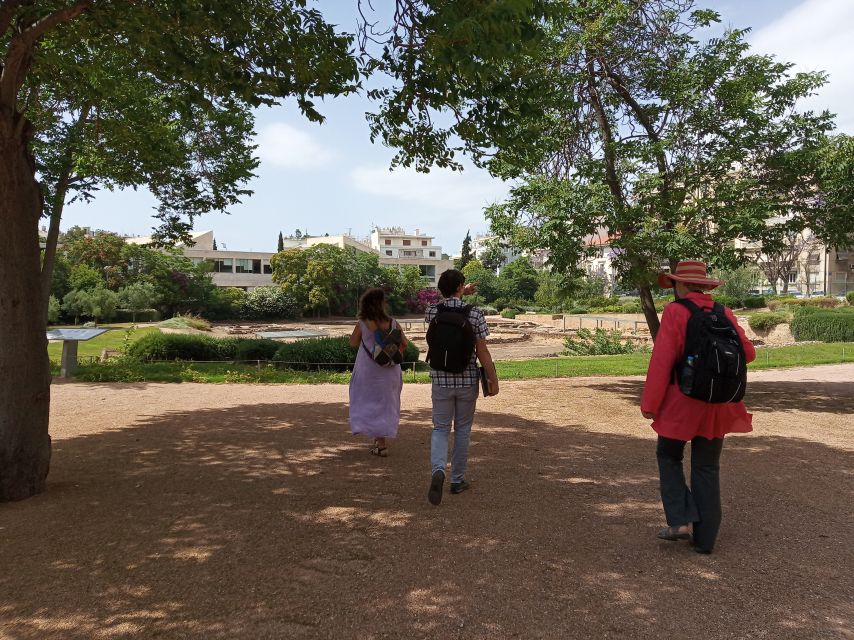
After the park opening, you head to the nearby archaeological site of Lyceum, Aristotle’s school area. You walk around the ruins at the original place where the teacher walked with his students. Even if you know zero archaeology facts, the geography helps you picture what “studying together” might have meant.
This is not presented as a typical museum-style experience. You are moving through the site with the facilitator, and the walk becomes part of the learning. The ruins give the discussion a physical anchor, which is a big reason this workshop feels more personal than a standard lecture.
As you move, you also start engaging with Aristotle’s ethical framework, not by taking notes, but by participating in the workshop structure. The facilitator keeps you connected to the main “engine” of the session: virtues as habits you can build, and a life path toward eudaimonia, often described as human flourishing.
One practical drawback to know upfront: this part is outdoors. If the sun is strong, you will feel it, and if it rains, your plan changes. The good news is that the workshop has an explicit rain option, moving to shelter at the Byzantine Museum café next door if needed.
The card game: Virtues turned into choices you can see
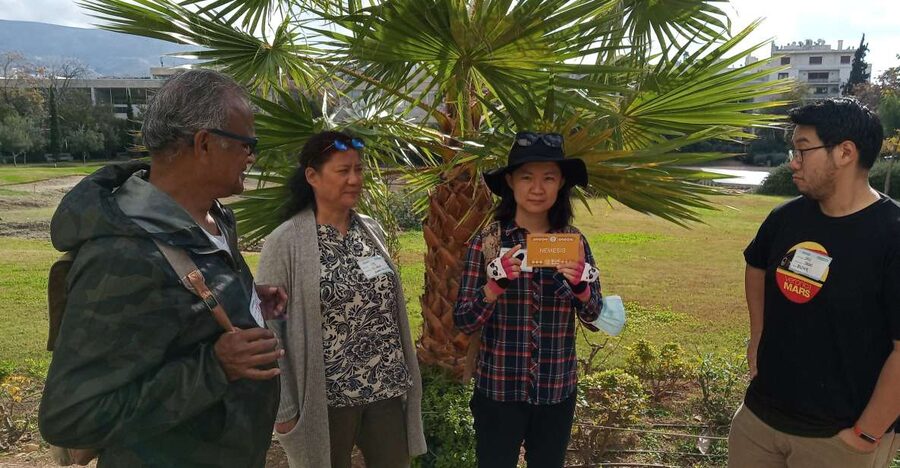
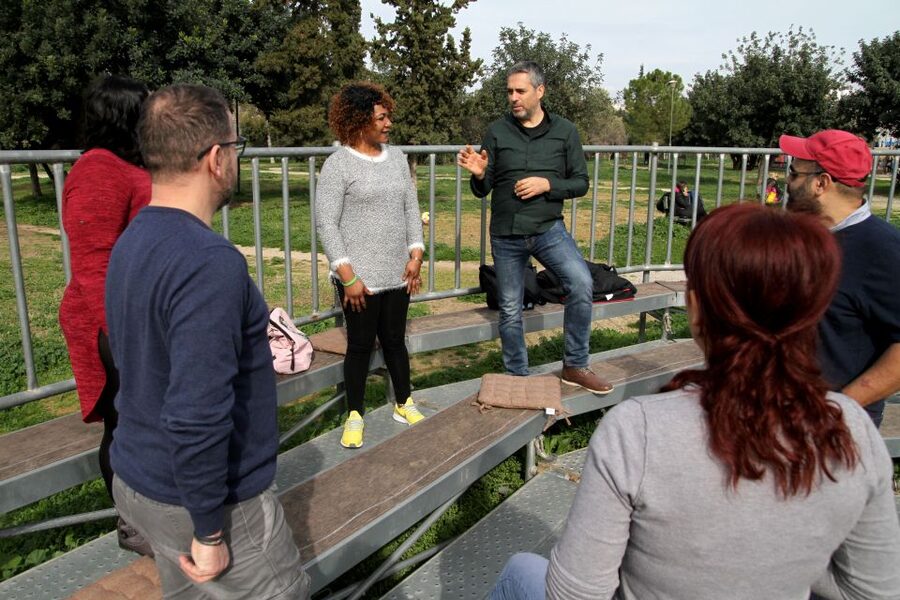
Here is the heart of the experience for most people: a playful card game built around Aristotelian Ethics. While you walk around the Lyceum area, you are not just passively observing the ruins. You are actively exploring the theory, using the game to highlight virtues as the key element.
The structure is simple enough for beginners, but it is not childish. The point is to connect virtues to situations you recognize. Aristotle’s ethics can sound abstract until you test it against “what would I do here” scenarios, and the card game gives you that testing ground without the pressure of getting anything wrong.
You get to talk with others, which is part of why the workshop lands well. Ethics is not only about ideas, it is about how you navigate real relationships and social success, in the everyday sense of getting along, responding well, and choosing actions aligned with your values. The workshop frames Aristotle’s approach as a kind of practical manual for being virtuous day to day, and the game gives you a safe way to practice that mindset.
If you like interactive activities, this is the part you will remember later. If you dislike group games, consider whether you are comfortable participating in a low-stakes way. The payoff is worth it, because the virtues discussion becomes concrete instead of theoretical.
The Golden Mean at the small amphitheater, with real-life examples
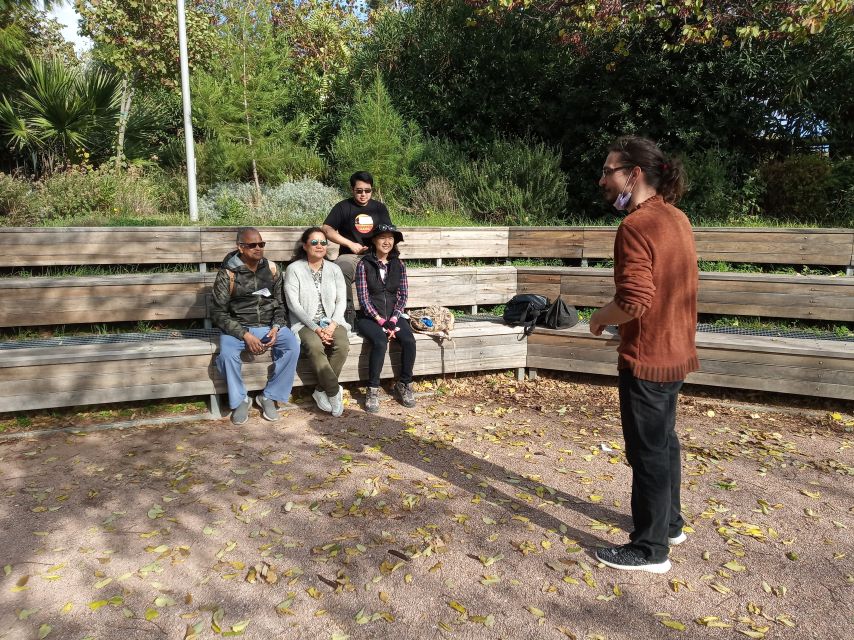
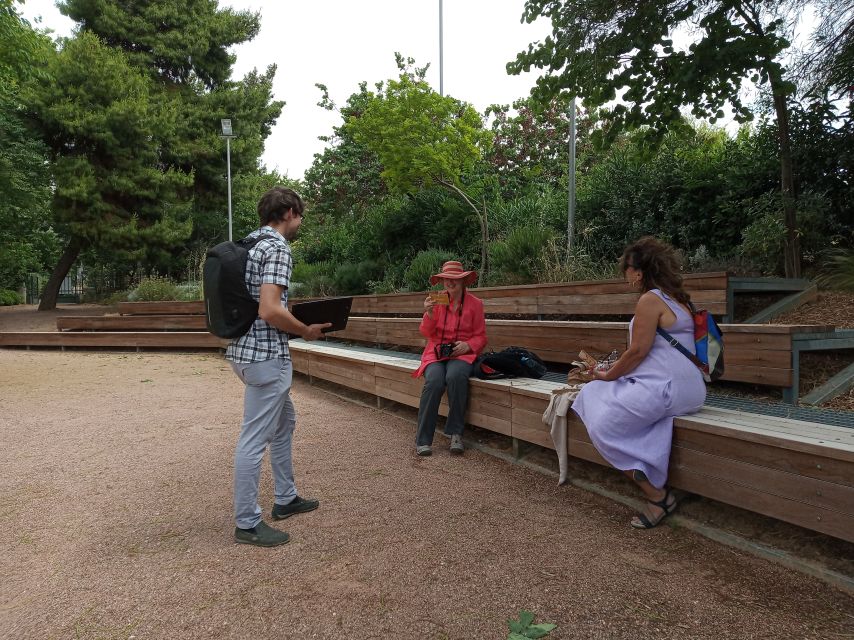
At the end, you sit in a small amphitheater with a direct view of the excavations. That visual matters. When you talk about ethics while looking at a real archaeological scene, the whole workshop feels less like a classroom and more like a conversation happening in the place the ideas were first debated.
Then the facilitator focuses on the Golden Mean, Aristotle’s idea of finding a balanced approach between extremes. Instead of treating it like a vague “be reasonable” slogan, you work through examples taken from modern daily life. That translation step is the key. Aristotle gives you a way to think, and the workshop gives you examples that help you recognize the pattern in your own routines.
Golden Mean thinking often shows up in things like habits, spending, communication, and patience, but you do not need to bring personal problems to benefit. The discussion uses everyday-style examples so you can see how a virtue aims at the right level of action, not too little and not too much.
This is also where the workshop’s “self-excellence” promise feels most practical. You end up with a clearer idea of how eudaimonia is connected to behavior over time, not one dramatic choice. It is about repeated choices that train character.
Price and value: what $90 covers, and what costs extra
The listed price is $90 per person for the 100 to 101 minute experience. It includes an English expert facilitator, all materials, and local taxes (24%).
What is not included is important for your budgeting. The archaeological site entrance fee for Lyceum costs extra: 5 EUR for full entry, 3 EUR for half entry. So your “true” total depends on what category you fall into for the site fee. If you are planning a tight itinerary, factor that in now rather than at the last second.
In terms of value, the price makes sense because you are getting a guided interactive workshop, not just a walk through ruins. You also receive materials for the card game and a structured conversation that ties virtues and the Golden Mean to daily life. If you compare it to paying separately for a standard tour guide and then trying to understand Aristotle on your own later, this experience saves effort and time.
The other value angle is the duration. At just over an hour and a half, you are unlikely to lose a whole afternoon, and you can still build the rest of your Athens day around it.
- All Day Cruise -3 Islands to Agistri,Moni, Aegina with lunch and drinks included
★ 5.0 · 4,958 reviews




Etiquette, rules, and the outdoor reality in Athens
This workshop takes place in a historical site context, so you are expected to follow heritage etiquette and respectful conduct. That includes things like soberness, cleanliness, appropriate dress, photo and video shooting behavior, and keeping noise reasonable.
There are also straightforward rules to make the experience run smoothly:
- Smoking is not allowed
- Food and drinks are not allowed
- No luggage or large bags
The facilitator can terminate participation without a refund for disrespectful behavior. That may sound strict, but it is normal for active learning in a sensitive archaeological environment, and it is there to protect both the site and other participants.
Weather matters here because the workshop is outdoors. If it rains, the plan is to find shelter and continue at the café of the Byzantine Museum next door. That is a helpful safety net, but it is still smart to bring layers you can handle and shoes that are comfortable on uneven surfaces.
Health details are also practical. Facilitators are first aid trained and certified, but they are not allowed to provide any medicines. So if you need medication, bring it with you.
Finally, it is wheelchair accessible. If you use a wheelchair, you should still check what “accessible” means for uneven ruins and walking segments, but the activity is marked as wheelchair accessible.
Who should book this Aristotle workshop, and who should skip it
This experience is designed for beginners. You do not need prior knowledge of philosophy to join, and the workshop explicitly frames itself as suitable for people without a background in the subject. If you want Aristotle in a friendly, structured format, this is exactly that.
It is also ideal if you:
- Like hands-on learning, not just listening
- Enjoy short group activities that encourage conversation
- Want to connect ethics to daily choices, like habits and interpersonal behavior
- Prefer an English-led experience with clear facilitation
It may be less ideal if you strongly dislike group participation, since the card game and discussions are part of how the workshop works. It also is not suitable for children under 15, so plan for adults and teen-age participants instead.
One more fit note: the workshop offers private or small groups. If you are traveling with friends or want a more paced environment, the smaller format can feel easier for conversation and participation.
Should you book Aristotle’s Philosophy Experiential Workshop at Lyceum?
If you want Aristotle without the usual lecture feel, I think this is a strong booking. The combination of walking the Lyceum ruins, doing an interactive virtues card game, and then discussing the Golden Mean with modern examples is a rare trio. It is beginner-friendly, time-efficient, and it nudges you toward actual self-excellence ideas you can practice after you go.
I would only hesitate if you are expecting a traditional guided archaeology tour or if you prefer activities that are fully indoors. Because this is an outdoor workshop with site etiquette rules, you need to be comfortable with standing, walking, and participating.
FAQ
How long is the Aristotle workshop at Lyceum?
The duration is 100 to 101 minutes. Starting times vary, so check availability for the specific time you want.
Where does the workshop begin?
The workshop begins at the meeting point in Rizari Park, under shaded trees. The meeting point may vary depending on the option booked.
Is the archaeological site entrance fee included?
No. You pay the Lyceum archaeological site entrance fee separately, 5 EUR full entry or 3 EUR half entry.
What language is the workshop taught in?
The instruction is in English.
Is this experience suitable for beginners?
Yes. It is described as a philosophy experience suitable for people without previous knowledge of the subject, and it is geared toward beginners.
What do we do during the workshop?
You start with an introduction and historical context about the chain Socrates to Plato to Aristotle, then read aloud some phrases in ancient Greek. Next you visit the Lyceum archaeological site, walk around the ruins, play a card game about Aristotle’s ethics and virtues, and finish with a Golden Mean discussion at a small amphitheater.
What happens if it rains?
Because it is outdoors, if it rains you might be forced to find shelter and continue at the café of the Byzantine Museum next door.
Are food and drinks allowed?
No. Food and drinks are not allowed during the session.
Can children join?
It is not suitable for children under 15.
What is the cancellation policy?
There is free cancellation up to 24 hours in advance for a full refund.
More Workshops & Classes in Athens


More Tour Reviews in Athens
- All Day Cruise -3 Islands to Agistri,Moni, Aegina with lunch and drinks included
★ 5.0 · 4,958 reviews
Not for you? Here's more nearby things to do in Athens we have reviewed










Workshops, compared.
 ★ 5.0Classic Cooking Class with Market Visit and WineFrom $831,101 reviews
 ★ 4.9Food Market Visit and Cooking Class with WineFrom $811,087 reviews
 ★ 5.0Greek Cooking Class in Athens Including Rooftop Dinner with Acropolis ViewFrom $120826 reviews
 ★ 5.0Greek Small-Group Athens Cooking Class & DinnerFrom $118574 reviews
 ★ 5.0Greek Cooking Class & Dinner on a RooftopFrom $108383 reviews
 ★ 4.8Greek Cuisine Cooking Class and 3-Course DinnerFrom $115270 reviews
 ★ 5.0Traditional Greek cooking class and lunch or dinner with an Acropolis viewFrom $114250 reviews
 ★ 5.0Athens Airport Private Transfer by Mercedes-Benz E Class Wagon to City CenterFrom $131232 reviews
Browse the lists this tour appears in