
Reviewed · CORINTH DAY TRIPS FROM ATHENS
From Athens: City & Corinth Guided Day Tour
Acropolis views hit you fast. This Athens and Corinth day pairs Acropolis icons with the Acropolis Museum, then brings you to the St. Paul altar in ancient Corinth. I love the way the route helps you connect ideas, not just monuments, and I really like the practical mix of guided stops and breathing-room breaks. One catch to plan for: entrance fees and lunch are not included, and the driver cannot escort you inside each site.
You also get real door-to-door convenience with round-trip transfers from Athens or Piraeus, plus cold water, Wi-Fi, and a mobile phone. The group stays private, up to 3 people, so the day feels more like a custom history walk than a cattle-car schedule.
If you want a single day that covers Athenian democracy, Corinth’s early Christian roots, and the Roman world in between, this is a strong use of time. Just remember you’ll do a lot of walking, and the Acropolis can be slippery.
Quick hits: what makes this day tour work
- Acropolis plus museum pairing to make sense of what you’re seeing on the hill
- St. Paul moments in Corinth alongside Roman-era ruins and the Temple of Apollo area
- Corinth Canal and the Diolkos stop for a quick but meaningful connection to sea travel history
- Photo-rich Athens viewpoints like Mount Lycabettus and the Panathenaic Stadium
- Private, small-group pace that’s flexible enough to breathe without losing the highlights
How the Athens-to-Corinth route saves your time
The big value here is compression. You’re starting in Athens, then heading southwest to Corinth for an ancient-city full reset, and finally returning to Athens. Even with an hour scenic drive each way, you still end up with a full sampling of both cities, instead of doing only one and feeling like you missed the other half of the story.
The transport matters too. You’re not just riding in silence. This is a driver/guide model, and the day includes English commentary while you move between sights. Past groups have been guided by people like Nikos, Takis, Nokios, Odysseus, and Spiros, and the common thread is clear storytelling and a willingness to adjust when schedules change.
The practical rhythm I’d expect from this itinerary is simple: short photo stops, longer site time where it counts, and one meaningful block of free time in Corinth for lunch and shopping. That balance helps if you don’t want to spend the entire day stuck listening, but you also don’t want to wander completely blind.
You can also read our reviews of more guided tours in Athens


Acropolis of Athens: what to focus on before you climb
The Acropolis part is the headline for a reason. This is where Greek identity and political mythology fuse into one place, and the silhouettes do the work even before you read a thing.
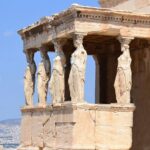
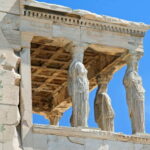
From the time you enter the area, the key is knowing what you’re looking for. You’ll be set up to take in the main icons: the Parthenon, the Erechtheion with its famous Karyatides, the Propylaea, and the reconstructed Temple of Athena Nike. That list is more than trivia. It helps you see the Acropolis as a layered project, not one single monument.
What I like about doing it with a plan is that you can move with purpose. You’ll also stop at viewpoints so you can photograph the hill and understand the geometry of the sacred space. If you’re tempted to race ahead, don’t. The best feeling on the Acropolis is slow looking, then turning your head again.
Practical heads-up: the Acropolis can be slippery, especially in humid weather or after morning moisture. Wear comfortable shoes with good grip. Also, plan for sun exposure, and in summer, dress light and avoid dark colors if you can.
Acropolis Museum: the shortcut to making the hill make sense
After the outdoor monuments, the Acropolis Museum is the payoff. The museum is open from 8 AM to 8 PM, and tickets cost €10. More importantly, it’s designed to help you interpret what you just saw.
A big reason this pairing is worth your time: the museum turns scattered parts and carved details into a clearer story. You’ll move from the scale of temples to the scale of human craftsmanship. That context makes the Parthenon and surrounding structures feel more real, not just photographed.
It’s also voted one of the world’s top museums, so don’t treat it like a detour. It’s part of the main event.
One more practical note: the tour says the driver cannot escort you inside the sites. So you will rely on signage, your own reading, and what your guide shared before arrival. That’s normal, but it’s good to know so you don’t expect someone to stay physically with you inside every room.
Zeus, Athens viewpoints, and the modern city built on old ideas
Once you’ve handled the Acropolis, the day shifts to the broader Athens picture. You’ll see the Temple of Zeus (described as the largest temple of ancient Greece), and you’ll pass or stop for other major city landmarks tied to the Roman and later eras.
One of the smartest inclusions is Mount Lycabettus for panoramic views over Athens. It’s not just about a pretty skyline. Seeing the city layout from above helps you understand why the ancient sites feel so connected to the modern streets. You also get an easy chance to take photos that you can’t recreate from ground level.
You’ll also visit Panathinaiko Stadium. It hosted the first modern Olympics in 1896, so it’s a rare place where ancient sports culture and modern national pride overlap. Even if you’re not a sports person, it gives you a tangible link between centuries.
Then there’s the human texture: the changing of the guards at the Parliament. It’s short, but it changes the mood from stones to people in uniforms.
Neoclassical Athens and a Troy connection you might not expect
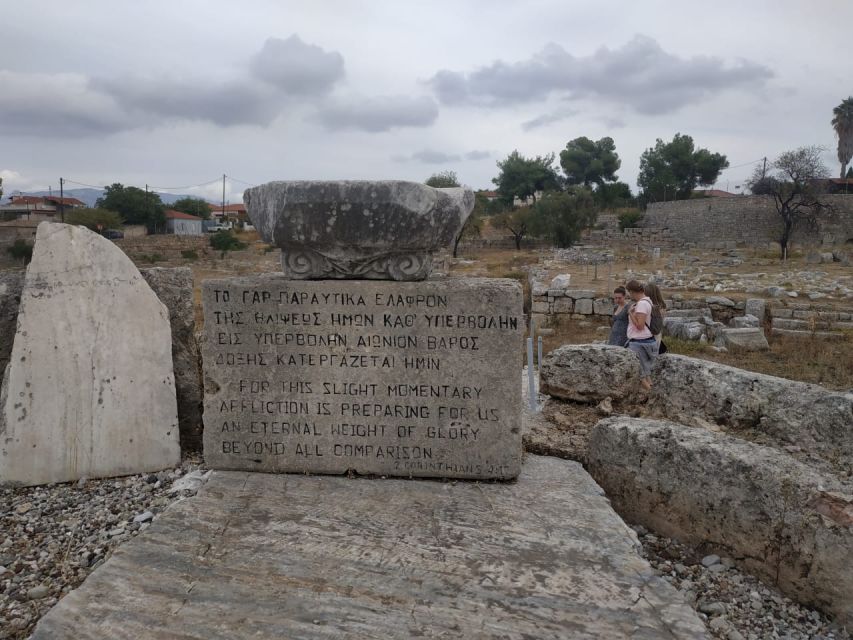
The itinerary also includes city center views with Neoclassic buildings, including the University of Athens, the Academy of Art and Sciences, and the National Library. These aren’t random stops. They show you how Greece projected education, law, and national identity after independence by copying classic forms.
One particularly memorable detail is the residence of Sleiman. He was a German archaeologist credited with finding Troy. This is one of those sidelight stops that makes a day tour feel smarter. It hints at how modern archaeology grew into a global obsession, and why names like Troy keep popping up in the Greek conversation.
You can also read our reviews of more city tours in Athens






Corinth Canal, Diolkos, and the story of moving ships
After Athens, the trip goes by scenic drive and includes a stop at the Corinth Canal for photos. It’s a dramatic slice through geography, and it instantly makes the region feel strategic. You’re looking at a modern cut through an ancient problem: how to move ships safely and efficiently in a rough sea region.
Right after that, you’ll learn about the Diolkos. This was the system the Corinthians used to pull ships over land, instead of sailing around the bottleneck. Standing there for a short guided visit is enough to connect the dots between ancient logistics and the canal’s later impact.
Even if you don’t think you care about maritime history, this is one of those stops that gives you a new lens on where Corinth sits on the map.
Ancient Corinth: ruins, Roman layers, and the St. Paul altar
Ancient Corinth is the emotional center of this tour for many people, because it’s where the stones line up with early Christian stories.
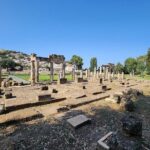
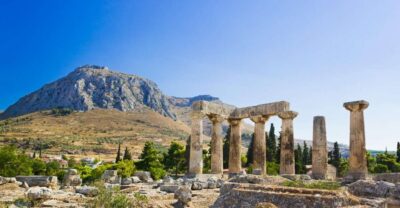
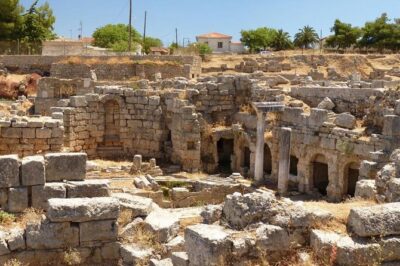
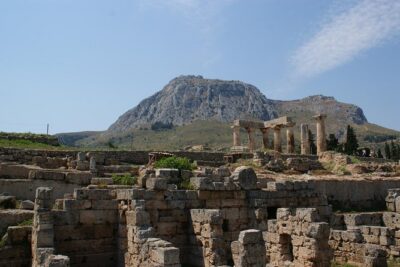
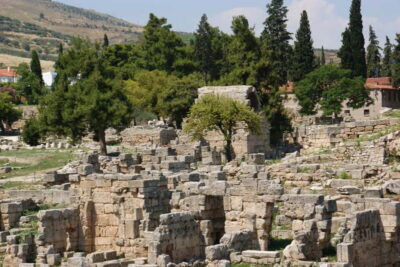
You’ll visit the site area where you can see ruins of two theaters and the Temple of Apollo. You’ll also get a look at Roman-period temples. That mix matters because Corinth wasn’t stuck in one time period. It kept evolving. The ruins show you a city that absorbed new powers and new ideas.
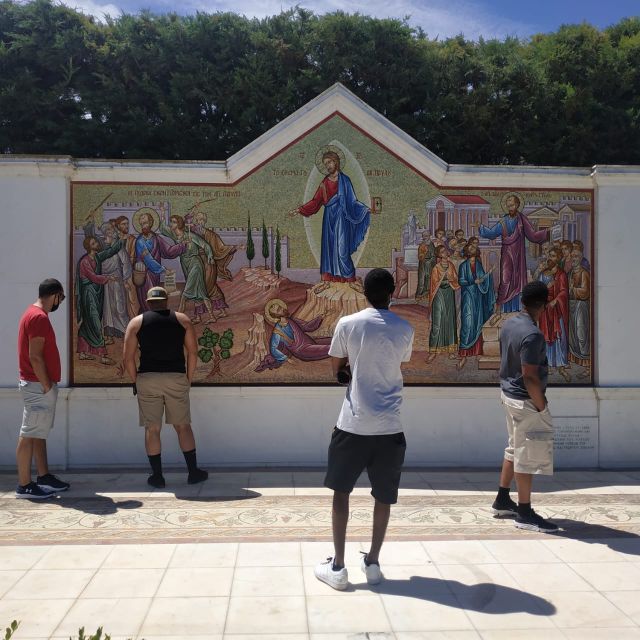
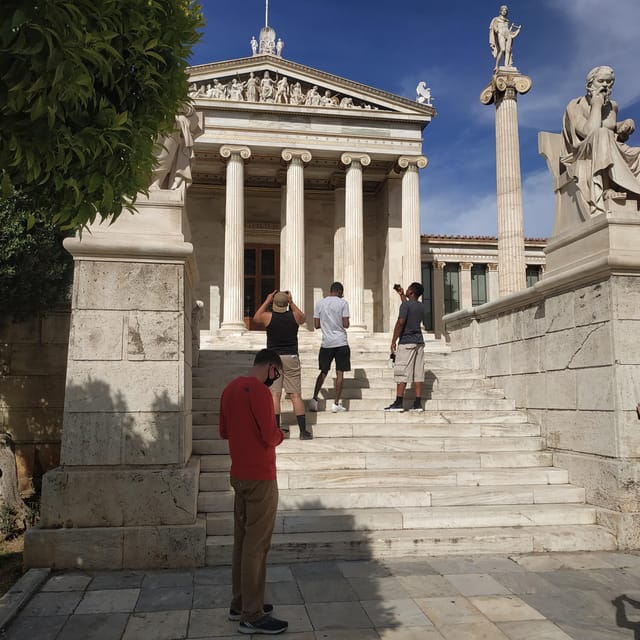
The most meaningful stop is near the altar associated with St. Paul speaking about Christianity. Even if you keep your personal beliefs separate from the facts, it’s hard not to feel the weight of the moment. You’re standing in a place that’s tied to the spread of a religion, not just an empire’s footprint.
There’s also an Acrocorinth visit for scenic views on the way. It helps you understand the geography that made Corinth defensible and important. From above, the modern roads and the old city layout make more sense.
Corinth Museum: Roman emperors in context
You’ll then visit the Corinth Museum. The description highlights Roman emperors’ statues and a large collection of artifacts from multiple periods.
This museum is a smart way to avoid the common ruins problem: you see broken columns, then you leave with unanswered questions. The museum fills some of those gaps by giving you objects that survive. You can connect what you see outside to what used to be there in daily life, politics, and imperial display.
If you like history that goes beyond temples, this is also where the human power struggle becomes easier to picture.
Lunch, free time, and how to make the most of the break
In the itinerary, there’s a break in Corinth for lunch, free time, and shopping. Lunch isn’t included, so you’re choosing your own meal, and that flexibility can be a good thing. It also helps you avoid feeling trapped in one set menu and one timeline.
Here’s how I’d use that time if you want photos and not just food: take a slow walk first to settle into the area, then have lunch, then do a final pass for souvenirs. That order helps because you’re not rushing while your energy is still fresh.
Also, if you’re the type who likes planning, you can treat this as your buffer for anything the day changed. Sometimes the order of visits can change due to unforeseen circumstances, and that free stretch is what keeps the day from feeling broken.
Tickets, timing, and what you should budget before you go
This tour skips the ticket line, which is a nice time saver. But entrance fees are not included, so you’ll still want a clear budget in mind.
The provided details include:
- Acropolis Museum tickets cost €10
- Acropolis multi-tickets cost €30 and can include admission to the Temple of Zeus, Ancient Agora, Roman Forum, Kerameikos, and the Theater of Dionysos
- Corinth costs €8 in summer and €4 in winter
Hours also matter:
- The Acropolis Museum runs 8 AM to 8 PM
- The Acropolis is open 8 AM to 7 PM in summer, and 8:30 AM to 3 PM in winter (Nov 1 to Mar 31)
So even though you get help at the start, you still need to be ready to pay and be on time for the openings. Think of this as guided routing plus key site time, not a fully ticket-paid package.
One more logistical point: the tour notes that the driver cannot escort you inside the sites. That means your guide can set you up, but you’ll do the walking and exploring yourself inside each ticketed area.
Value and price: when $471 per group is fair
The price is listed as $471 per group up to 3 people, for about 9.5 hours. Whether that feels fair depends on what you’d otherwise spend if you tried to self-plan.
Here’s what you’re paying for:
- Round-trip transfers from your Athens accommodation or the port
- An English-speaking driver/guide for a full day
- Cold water, Wi-Fi, and a mobile phone during the tour
- Skip-the-ticket-line help
- A private group setting
If you’re traveling as a pair or with a friend, the per-person value can look very reasonable compared to booking separate half-day guided pieces plus transit. The biggest hidden value is the reduce-stress factor. Instead of figuring out transport, where to start, and how to connect Athens to Corinth efficiently, you show up, ride, and follow a plan.
Where it gets less perfect is that entrance fees and lunch still cost extra. Also, a private group means the tour price assumes you’ll fill that group size. If you’re traveling solo, it’s still a great day out, but the math depends more on what alternatives you’re comparing.
Who this tour suits best
This Athens and Corinth day tour fits best if you want:
- A focused highlights route with major sites in both cities
- St. Paul context mixed into the ancient ruins experience
- A private small-group feel, up to 3 people
- Enough free time in Corinth to eat and shop without racing every minute
It might not be ideal if you want an all-day guided “stay with me inside every room” experience, since the driver cannot escort you inside each site. It also may feel like a lot of walking if you’re not comfortable on uneven stone and potentially slippery surfaces at the Acropolis.
Should you book the Athens and Corinth full day?
I’d book this if you’re doing first-time Athens and want Corinth on the same trip without stretching into a multi-day plan. The combination of Acropolis monuments plus Acropolis Museum makes the Athens half coherent, and the Corinth side delivers the meaningful St. Paul connection alongside Roman-era sights.
To decide confidently, check two things:
- Are you okay paying entrance fees separately and buying lunch yourself?
- Do you want a structured day with set highlights, plus a real free break, instead of an all-walking-you-everywhere tour?
If yes, this is a practical, high-value day that helps you leave with stories you can actually remember, not just photos.
FAQ
How long is the Athens and Corinth guided day tour?
It lasts about 9.5 hours.
What is the group size for this private tour?
It’s a private group for up to 3 people.
Where are pickup and drop-off locations?
Pickup and drop-off are available from Athens or Piraeus options. The itinerary includes pickup from Athens or Piraeus, and drop-off to Athens or Piraeus.
What is included in the tour price?
Round-trip transfers from your preferred Athens location, an English-speaking driver/guide, cold drinking water, and mobile phone plus Wi-Fi are included. The tour also skips the ticket line. Entrance fees and lunch are not included.
What entrance tickets should I budget for?
Acropolis Museum tickets cost €10. Acropolis multi-tickets cost €30. Corinth costs €8 in summer and €4 in winter. Tickets for other sites are not included, so planning extra budget for site entry is smart.
Is lunch included?
Lunch is optional, and it is not included in the tour.
Can I get a full refund if I cancel?
Yes. Free cancellation is available up to 24 hours in advance for a full refund.
What should I bring or wear?
Bring a passport and wear comfortable shoes. The Acropolis can be slippery, and in summer it’s best to wear light clothing and avoid dark colors.
More Guided Tours in Athens

More Tours in Athens

More Tour Reviews in Athens
- All Day Cruise -3 Islands to Agistri,Moni, Aegina with lunch and drinks included
★ 5.0 · 4,958 reviews



Not for you? Here's more nearby things to do in Athens we have reviewed










Corinth Day Trips from Athens, compared.
 ★ 4.6From Athens: Ancient Corinth Day Trip with Canal & VR GuideFrom $411,073 reviews
 ★ 5.0Private Biblical Tour Ancient Corinth & Isthmus Canal from AthensFrom $301762 reviews
 ★ 4.8Ancient Corinth & Nafplio Full Day Trip with SwimFrom $44523 reviews
 ★ 5.0Private Tour of Apostle Paul’s Footsteps in Ancient CorinthFrom $169275 reviews
 ★ 4.5Corinth Half-Day Trip from Athens with Entrance TicketsFrom $91242 reviews
 ★ 4.7Ancient Corinth & Nafplion Guided Premium TourFrom $34237 reviews
 ★ 4.4Corinth Canal, Mycenae and Nafplio Day TourFrom $33233 reviews
 ★ 4.6From Athens: Ancient Corinth Tour Official Guide & TicketsFrom $86208 reviews
Browse the lists this tour appears in