
Reviewed · ATHENS PRIVATE TOURS
8 Days Peloponnese: Sightseeing, Historical & Tasting Private Tour from Athens
Peloponnese is history with camera angles. This private, small-group style road trip is built for Greek history and photography, with long scenic photo stops and the kind of timing that helps you catch morning light and golden hour views.
I love how the route mixes major ancient sites with quieter places people often skip, like the cave monasteries in the Vouraikos gorge and the hill towns of Mani. I also like that your driver is Nikolaos, a professional artist and photographer who thinks in composition, not just facts.
The main drawback to plan around is cost creep from sites and seasonal ticket pricing, plus a bit of walking and steps at places like cave visits. If you want everything fully priced up front, this is the one to budget carefully for.
Key Highlights You’ll Actually Care About
- Sunrise and sunset photo timing that turns famous ruins into moodier scenes.
- Nikolaos as your driver, an artist who photographs architecture, landscapes, and people.
- A tight mix of time periods, Bronze Age palaces, Classical sanctuaries, Byzantine cities, and Venetian fortifications.
- Real countryside stops, not just parking lots, with villages and forests woven into the route.
- Monasteries in dramatic settings, including cave and cliffside monasteries tied to Greek independence.
- Hands-on food and wine culture, built into a tour style that takes breaks for taste and atmosphere.
Peloponnese by car, with history you can follow
The best part of this trip is how Peloponnese feels like one connected story. You’re not bouncing between random ruins. You’re moving through time zones, from Mycenaean strongholds and sanctuary sites, to medieval castles, to modern Greek identity moments tied to monasteries.
With pickup from your Athens or Piraeus hotel, you start with real time on the road, not wrestling with transfers. The vehicles are air-conditioned and kept clean, and the day-to-day plan is built around photo stops, not only sightseeing. That matters because you’ll spend more time looking closely, not just marching.
It also helps that the tour is explicitly private, so your pace is flexible within reason. You can ask for extra minutes at a viewpoint, or time your photos around how the light is changing, instead of rushing when the group line forms.
You can also read our reviews of more food & drink experiences in Athens


Sunrise-sunset photography, and why the timing feels different
This tour is framed as a sightseeing and photography trip, and the schedule shows it. Several days are set up for early starts, late arrivals, and golden hour breaks when you’re more likely to get soft light on stone walls, towers, and monastery cliffs.
Bring this mindset: you’re not just taking a quick phone shot at every stop. You’ll have moments where you can stop, reposition, and shoot from multiple angles. Nikolaos’ background as a photographer and portrait painter is a clue here. He’s the type who notices how buildings sit in relation to roads, sea, and sky, and he can suggest where to stand to make the scene feel dimensional.
Practical photo tip: Greece can shift quickly from bright to harsh sun. If you’re serious about sunrise or sunset, you’ll get best results by keeping your camera setup simple that morning. Quick changes, steady settings, and being ready when you arrive are more useful than complicated gear swaps.
Day 1: Corinth Canal, Diakopto, and the cliffside monasteries of Vouraikos
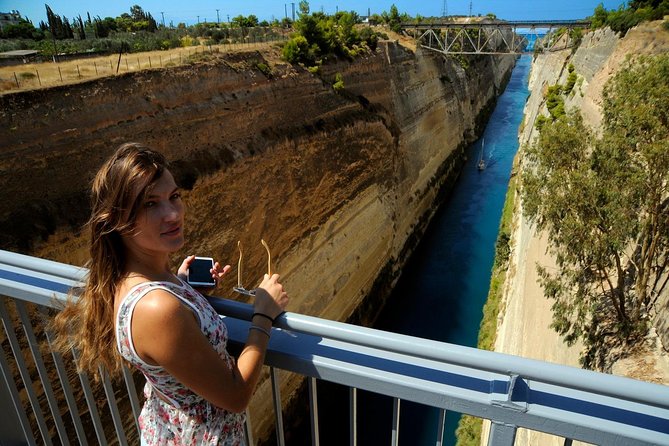
You start at Corinth Canal, a man-made passage that links the Aegean and Ionian seas, essentially slicing the peninsula’s travel logic in a way that still looks unreal. It’s also a great first-photo-stop of the trip because you get scale fast: the canal was cut by over 2,500 workers from 1881 to 1893, for 6,400 meters total. Walking across a pedestrian bridge gives you an 80-meter vantage point, so you can frame the waterway like a ribbon cutting through the cliffs.
Then you roll into Diakopto, a coastal town on the Gulf of Corinth near the mouth of the Vouraikos river. This isn’t a theme park stop. It’s more of a reset moment, letting you enjoy a coastal setting before the more dramatic gorge scenery.
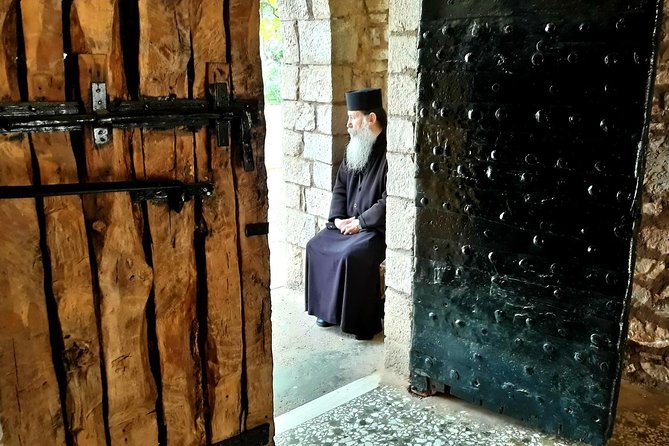
Next come the monasteries. Mega Spileo Monastery is located in a cave in a sheer cliff where the Vouraikos slopes down to the gorge. The story layer here is strong. The cave was known since antiquity, and Pausanias tells a tradition about the daughters of Proetus finding refuge there. In the early Christian centuries, hermits occupied the cave. Even if you don’t memorize every detail, the setting does the work. It’s not flat and easy, it’s carved into place.
Agia Lavra Monastery near Kalavryta is the other anchor. It’s described as the symbolic birthplace of modern Greece, and it’s tied to the Greek War of Independence. Built in the 10th century, it burned, was rebuilt, and burned again over centuries, with major losses including German forces in 1943. On 21 March 1821, the flag of the revolt was raised at the monastery of Agia Lavra by bishop Germanos III of Old Patras. Standing there gives you a different feeling about the country’s modern identity.
Day 2: Cave of the Lakes, then Olympia’s stadium feeling
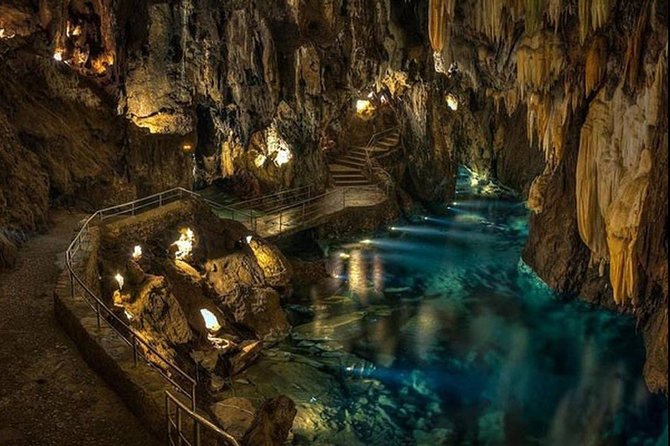
The second day starts with the kind of nature-and-history stop that makes the tour feel varied. The Cave of the Lakes near Kastria is an underground river system with three levels. In winter it runs with waterfalls when snow melts, and in summer it dries into about 13 lakes. It’s open daily in set hours, and it’s priced separately, so you’ll want to factor that into your day budget.
After that you head through Arcadian mountain country. Aroania is a big presence here, tied to the Chelmos (Snowy Mountain) area, and it’s known for snow seasons, rare plants and wildlife, plus the overall mix of traditional settlements and archaeological spots.
You’ll also pass through Lampeia, a mountain village sitting around 800 meters above sea level, and then the Dasos tis Folois oak forest. This forest is a designated Natura 2000 site and is described as Greece’s only flat forest on boundaries between Elis, Arcadia, and Achaia, with an ancient myth connection to Centaur Pholus and Hercules. Even if you’re not a mythology expert, it’s an easy stop to enjoy because the walk-through nature is quiet and photogenic.
Then you arrive at Olympia. Olympia is one of those places where the scale and layout help you understand the ancient world fast. It’s a sanctuary site in a calm valley at the confluence of rivers Alpheios and Kladeos, and it hosted the Olympic Games every four years starting in 776 BCE. The archaeological site stretches across ruins from Bronze Age to Byzantine eras, including the stadium area where the games happened.
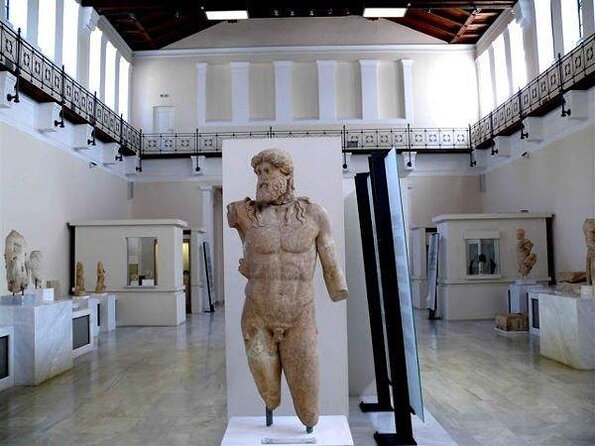
If you want a little structure after all the open-air ruins, the Museum of the Olympic Games is included. Even a short museum visit helps you connect what you saw outside to the timing, winners, and why the Olympiad date matters for Greek chronology.
Day 3: Voidokilia omega bay, Pylos fortresses, and the Navarino battle air
Day 3 is pure Peloponnese coast and symbolism. Voidokilia Beach in Messinia is shaped like the Greek letter omega, with sand forming a semicircle of dunes. On the back side is Gialova Lagoon, an important bird habitat, and the area is Natura 2000 protected.
Above the beach sit Nestor’s Cave, plus ruins of a 13th-century Frankish castle known as Old Navarino or Palaiokastro. Nearby is the tomb of Thrasymedes, Nestor’s son, from the Mycenaean period, with Neolithic finds showing the area was inhabited long before the Mycenaean era. It’s the kind of site where you can feel how later myths grew out of older landscapes.
Then you stop for Divari Beach and time for a lunch break facing the water. Gialova is known as an important bird area, with 258 species listed, including 79 in the Red Book, so the environment is a serious part of the story here.
Ormos Navarinou brings you back into history, but in a different way. The Battle of Navarino on 20 October 1827 during the Greek War of Independence was a naval showdown in the bay near modern Pylos. Allied forces from Britain, France, and Russia defeated Ottoman and Egyptian forces, pushing Greek independence forward. It’s also described as the last major naval battle fought entirely with sailing ships. That sailing-ship detail is one of those facts that makes the era feel real.
Finally you visit the castles above Pylos, with attention on the New Castle of Pylos. The niokastron was built by the Turks in 1573, handed over to the Venetians in 1686, returned to Turkish control in 1715, and later captured by Ibrahim Pasha in 1816. After that, it was liberated by the French general Maison in 1828. During World War II it served as headquarters for Italian, then German forces. Those layers give you a lot to read into the stone.
You can also read our reviews of more private tours in Athens




Day 4: Methoni castle, Diros caves, and Mani defensive towns
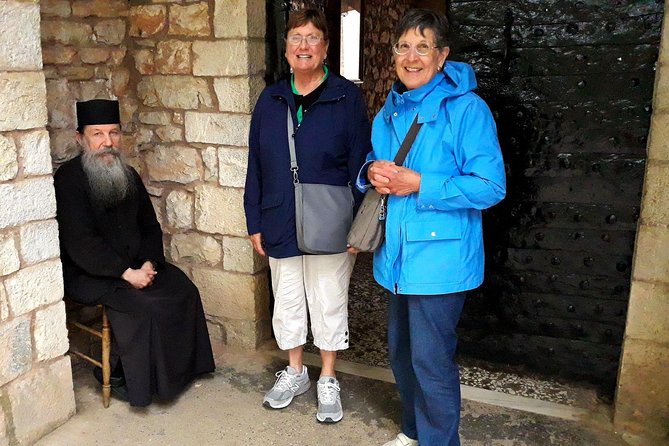
Methoni is your overnight stop, and you also get the kind of sunset photo opportunity that makes sense in this itinerary. Methoni Castle is one of the most important and beautiful castles in Greece in this region. Built by the Venetians after 1209, it sits on a rock that reaches into the sea and is separated from land by an artificial moat. The ruins still take up the whole cape and the southwestern coast, and there’s even a fortified islet with an octagonal tower.
The next morning starts with an early castle visit, which is smart because the light on stone and the sea background is easier without late-day crowds.
Then you drift toward Kalamata, but the itinerary keeps the tone scenic and human. Kalamata has ancient roots, including Homeric references tied to an earlier city, and you can treat this as a quick city reset before you shift into Mani.
Kardamili is where Mani starts to feel like another country. It’s a seaside village with cypress trees, wild olive groves, and sea views that feel made for photography. It’s a good stop to slow down and let your eyes adjust.
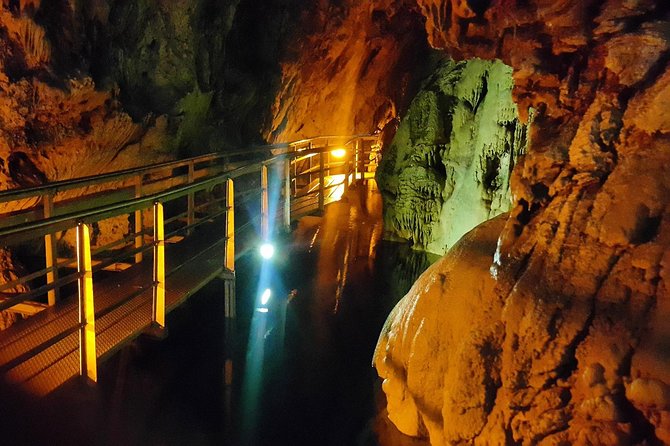
Next come the Caves of Diros, including Alepotripa and Vlichada. People come for the underground boat ride on an underground lake through narrow channels and illuminated caverns, with stalagmites and stalactites overhead. The boat tour is about half an hour, but you should plan for steps to reach the entrance. Also, guides generally give commentary in Greek only, so if you’re relying on spoken context, you might want to confirm whether English is available when you arrive.
Areopoli is the closing scene for the day. It’s a well-preserved historic town with stone paths and traditional tower houses built for social and defense reasons. The name connects to the god Ares, and the Mavromichali family chieftain Petrompeis Mavromichalis has a statue in the central square of Platia Athanaton. Even without a guide talk inside every alley, the towers tell you why this region built vertical.
Day 5: Old harbor fishing villages to Tainaron’s myth cave
Day 5 is all about Mani’s dramatic geography. Gerolimenas, at the southern end of the Mani Peninsula, is a small coastal village whose name connects to old ideas of a sacred harbor. Until the 1970s, it was reached mainly by boat, and it used to be a major fishing center with infrastructure like a shipyard and fish market. Now tourism is the main industry, but the sea still sets the pace.
Then you head to Vathia. Vathia is known for tower houses built on a hill, plus the perichora, the surrounding clusters of abandoned houses, towers, and chapels. It’s especially photo friendly in spring and summer because wild flowers cover the hillsides, and the driver guides you through this unique abandoned village setting. This stop is one of the most visually distinctive on the trip because it’s about architecture as a story of safety and status.
Cape Tainaron is the next anchor. It’s the southernmost point of mainland Greece and the second southernmost point in mainland Europe. Near the cape is a cave connected to legends about Hades, and ancient Spartans built temples here. One of the temples, dedicated to Poseidon (often called Necromandion, the death oracle), was converted into a Christian church under the Byzantine Empire, and Christian rites are still conducted there.
End with Porto Kagio, known as the modern name tied to older port names like Psamathous, mentioned by Pausanias. You also get medieval and Ottoman defensive history through a castle story. The Ottomans built a castle around 1568, the Venetians attacked and the Ottomans surrendered in 1570, then the Ottomans returned and built again around 1670. Even if you only see parts of those structures, it’s a good reminder that these coastal spots were strategic, not just pretty.
Day 6: Monemvasia’s single entrance, then Sparta’s stones and Mystra’s ruins
Monemvasia is the day’s big “wow” town. The town sits on a small island linked to the mainland by a causeway about 200 meters long. The fortress sits on a plateau, around 100 meters above sea level and about a kilometer long, with walls and Byzantine churches still visible from the medieval period. The name is connected to Greek words meaning single entrance, and its Italian form Malvasia influenced Malmsey wine.
Monemvasia’s nickname is the Gibraltar of the East. That phrase helps you get the feeling, it’s a defensive rock-city that reads as both isolated and powerful. It’s also a great place to slow down and shoot. You’ll likely want multiple angles because the causeway and sea framing changes your photos fast.
Then you move into Sparta. You’ll have time around the Archaeological Museum of Sparta, a neoclassical building built between 1874 and 1876. After that, you visit the Acropolis and Ancient Theater. Sparta in the classical era was known for its military culture, and the presentation style here connects the hoplites you read about to where you’re standing now.
Mystra is next. Mystra is described as the wonder of the Morea, built around a fortress established in 1249 by William of Villehardouin, prince of Achaia. It shifted control across Byzantines, Turks, and Venetians, and it was abandoned in 1832, leaving behind medieval ruins spread across a hillside landscape. The value of Mystra is that it’s not a single monument. It’s a whole city feeling, built like a set of terraces, with the drama coming from the setting and the layers of rule.
Finally, you can visit the Museum of the Olive and Greek Olive Oil in Sparta. Even though it sounds niche, it’s a practical way to connect everyday Greek identity to a plant and an industry that shaped centuries. The museum frames olive oil as linked to economy, nutrition, religion, art, and technology.
Day 7: Astros, Palamidi, and romantic Nafplio with fort views
Day 7 starts inland and coastal, not in the big ruin zone. Agios Petros is a traditional mountain village on Mount Parnonas at around 950 meters altitude, known for peace and fresh air, plus taverns and small stays.
Paralio Astros is an Arcadian coastal port village that has that island-like feel thanks to its alleys and traditional tile roofs. It’s also tied to modern political history. The medieval fortress above gives you wide views, and the port area connects to the 2nd National Assembly convened in April 1823.
Then you go to Palamidi Fortress, a major example of Venetian fortification architecture. Construction is described as mainly during 1711 to 1714, connected to Venetian general superintendent of the fleet Agostino Sagredo, with engineers Giaxich and Lasalle credited for a fast, engineered system. You’re going for position here. Fortress spaces are made for looking down and across.
Nafplio finishes the day. Nafplio is often called one of the most romantic cities in Greece, and it earns some of that reputation because it’s a first-capital story. It served as Greece’s first capital between 1827 and 1834. The mythology is local too, with Nafplios as the founder figure. The city also traces back to prehistoric involvement in legendary voyages, then moves through Roman decline and Byzantine flourishing, with Frankish, Venetian, and Turkish marks layered into streets and buildings.
Day 8: Nauplion museum, Akronafplia, Nemea wines, and Loutraki springs
Your final day starts with the Archaeological Museum of Nauplion, housed in a Venetian stone structure built in 1713 and connected to naval storage. Even if you don’t see everything, it’s a smart way to end because you’re moving from outdoor city views into curated context.
Then you visit Akronafplia Fortress, Nafplio’s oldest castle above the old town. Parts of its walls date back to the Bronze Age, and later rule extended the fortifications through Romans, Franks, Venetians, and Turks. The eastern parts are highlighted for a visit, and the recommendation is to explore on foot along paths within the castle instead of only staying on the main road.
Next is Ancient Nemea, the Sanctuary of Zeus. It developed from the beginning of the 6th century BC and hosted the Panhellenic Nemean Games. The site includes temples, heroons, storied treasuries, and later stadium and bath structures. After the games transferred to Argos in 270 BC, the sanctuary declined, so the ruins help you read the rise and fall of a festival landscape.
After ruins, you switch to something modern and very Greek: wine. The Cooperative Winery of Nemea, founded in 1937, is centered on the red grape Agiorgitiko. It notes an experimental bottling in collaboration with the Greek Wine Institute in 1959, and it’s now tied to growers across many members, with capacity to vinificate up to 7,000 tons. This stop is about understanding how a local grape identity stays alive.
Then you visit the Monastery of the Dormition Rock Nemea. It’s recently renovated and described as a monastery-fort with a breathtaking view over the valley and vineyards, which is exactly what you want before the day turns into pure relaxation.
Finally, you end in Loutraki on the Gulf of Corinth. Loutraki is famous for thermal springs. The area was known since antiquity as Thermai in honor of Thermia Artemis, and the resort became big for Greek and foreign visitors in the mid-20th century. There was also a historic casino timeline, including the first casino in Greece in 1928 and the reopening of a major one in 1995, plus mineral waters that are the real reason people keep coming back.
Price and logistics: is $2,659.81 per person worth it?
At $2,659.81 per person for an 8-day private Peloponnese photo tour from Athens, this is not a budget move. You’re paying for private transportation, long drives handled comfortably, and a driver who shapes the trip around photography and stops that create real value on the ground.
Here’s the honest math you should do before booking. The big ticket is covered, but admissions can still add up. Archaeological site and museum tickets depend on season: from 1 November to 31 March, it’s listed as 10€ per person per site, and from 1 April to 30 October it’s 20€ per person per site. Gratuities start at 1€ per person. Some key entries are noted as included on specific days, and the Museum of the Olympic Games is included, plus Mega Spileo and Agia Lavra are listed as included. Cave and other stops like Kastria Cave of the Lakes and Diros caves are not included, and those are often the ones you actually care about.
You also have to decide what you want for hotels. Accommodation for you is arranged through partner hotels, but it’s not included in the base price. The tour offers options, and costs are given per double room, with a driver room complimentary.
If you’re a couple or a small group and you care about sunrise-sunset photos and the coaching from Nikolaos, the value can feel strong. If you only want to tick off a list of famous monuments and you’re fine self-driving at your own pace, you might find cheaper ways to do Peloponnese. But this trip is designed for the kind of memories you make by slowing down at the right moments.
Who this tour fits best (and who should think twice)
This tour is a great match if you like mixing big-name sites with hands-on local scenery: monasteries perched in cliffs, hill towns with tower houses, and coastal geography that makes you stop even when you’ve already seen plenty of stone.
It’s also a good fit for people who want structure without feeling trapped in a strict guided script. Your driver is a professional artist, and that shows in how the days are framed.
Think twice if you hate cars and long drives. The route is wide, covering the Corinth Canal area, Kalavryta and Olympia, Pylos and Methoni, deep Mani, Monemvasia and Sparta, then Nafplio and the Nemea wine finish. You’ll be in the vehicle a lot, even with photo stops.
Should you book this Peloponnese photo tour from Athens?
If you want Peloponnese in one organized sweep, and you care about photography timing and atmospheric stops, I think this booking makes sense. The driver Nikolaos and the sunrise-sunset approach are the kind of touches that turn a sightseeing trip into something you’ll actually remember, not just a set of photos.
If you have a tight budget for admissions and cave activities, or you prefer total independence with your own schedule, you may want to compare alternatives. Either way, you’ll want to budget for seasonal site fees and the extra paid attractions that are clearly marked as not included.
FAQ
What is the start time for the tour?
The tour starts at 8:00 am.
Is pickup from Athens or Piraeus included?
Yes. Pickup and drop-off from your hotel or apartment in Athens or Piraeus are included, and you can also request another pickup location.
Is this tour private?
Yes. It is private, and only your group participates.
Are admission fees included?
Not all admissions are included. Archaeological sites and museums have separate fees depending on the season, and there are also extra-cost stops like the cave visits.
Does the tour include accommodation?
Accommodation for you is available through partnered hotels with an additional cost. The driver’s accommodation is complimentary.
What does the tour driver do, and do you get an archaeologist guide?
Your driver is a professional English-speaking tour driver with photography knowledge. The driver is not a licensed archaeological guide inside sites or museums, and you would need to hire an archaeologist guide separately if you want one.
Are there tickets involved for trains?
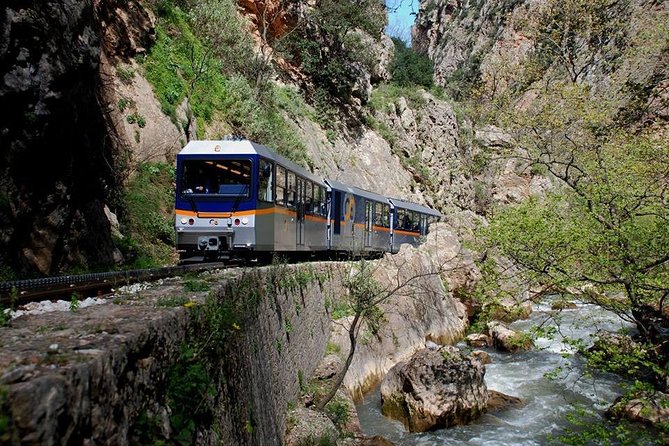
The tour data lists rack railway tickets at 10€ per person, so you may have extra train-related costs depending on what you use during the day.
Is there a mobile ticket?
Yes. A mobile ticket is part of the experience.
What kinds of participants is it for?
The tour notes that most travelers can participate. You should still expect walking and some steps, especially for cave access.
More Food & Drink Experiences in Athens



More Tours in Athens

More Tour Reviews in Athens
- All Day Cruise -3 Islands to Agistri,Moni, Aegina with lunch and drinks included
★ 5.0 · 4,958 reviews

Not for you? Here's more nearby things to do in Athens we have reviewed






Athens Private Tours, compared.
 ★ 5.0Best of Athens Half Day Private TourFrom $913,714 reviews
 ★ 5.0Athens Full Day Private TourFrom $2442,903 reviews
 ★ 5.0Athens Greece Full Day private tourFrom $683785 reviews
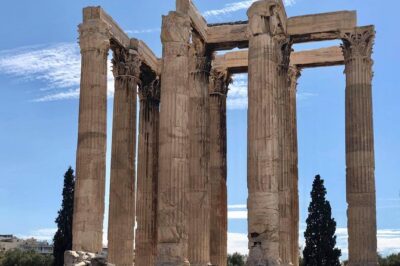 ★ 5.04 Hours – Athens & Acropolis Highlights Private TourFrom $181681 reviews
★ 5.0Athens Full Day Private TourFrom $205667 reviews
★ 5.04 Hours – Athens & Acropolis Highlights Private TourFrom $181681 reviews
★ 5.0Athens Full Day Private TourFrom $205667 reviews
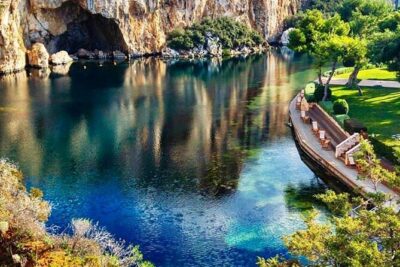 ★ 5.0Lake Vouliagmeni Thermal Spa And Temple Of Poseidon Private Full Day TourFrom $171578 reviews
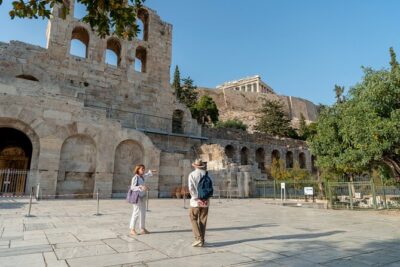 ★ 5.0Acropolis and Acropolis Museum Private Tour with Licensed ExpertFrom $188445 reviews
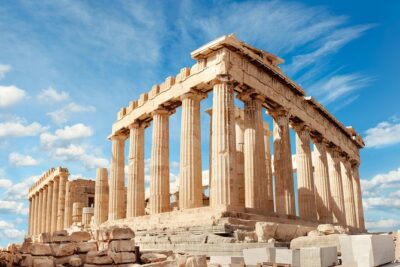 ★ 5.0Athens Highlights Half Day Private TourFrom $305407 reviews
Browse the lists this tour appears in