
Reviewed · CORINTH DAY TRIPS FROM ATHENS
The Apostle Paul’s Missionary Journey in Athens and Corinth
Paul’s footsteps map the city for you. This private Athens-to-Corinth day ties Paul’s message to real places you walk, with door-to-door pickup that keeps you from fighting transit. Add the air-conditioned ride, on-board Wi-Fi, and bottled water, and you get a day that feels both practical and meaningful.
One catch: you will do uneven stone walking and some climbs. In Greece’s heat, that matters, so plan for comfy, grippy shoes and take sunscreen seriously.
Key highlights to know before you go
- Private, small-group feel with your own driver, typically using sedan vehicles for groups of 1 to 4
- Paul’s story tied to geography, from the Agora to the Areopagus to Corinth’s Bema
- Mix of Christian and classical layers, including churches, ancient ruins, and major religious sites
- Smart downtime stops like the Corinth Canal, plus a museum visit to slow the day down
- Most site entries are free, but Ancient Agora and Ancient Corinth have paid admission
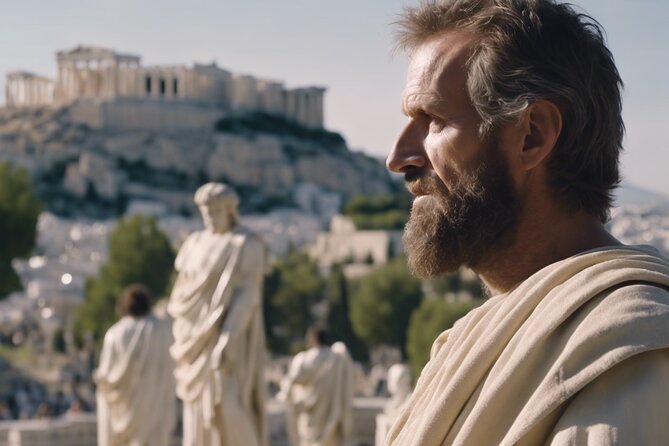
Walking where Paul argued in Athens: Ancient Agora to Areopagus
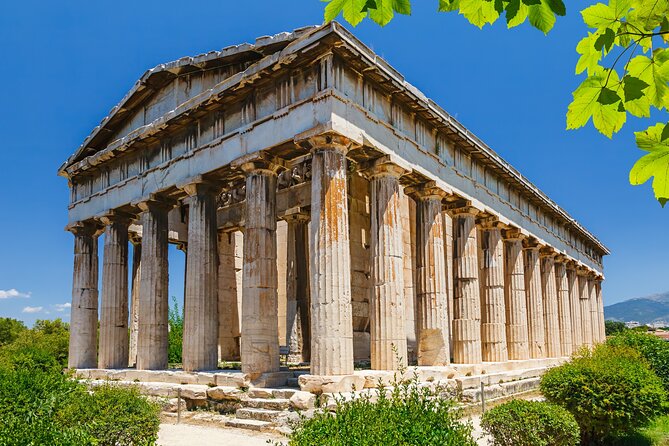
If you want Paul’s letters to feel less like page text and more like lived life, this is a strong format. The day starts at the Ancient Agora, Athens’s classic “center of everything”: politics, commerce, social life, and religion. When Paul arrived in Athens, this was where you would expect public debate to happen. You’ll spend about an hour here, and since admission is not included, you should budget for the ticket.
What I like about starting at the Agora is that it gives you a baseline. You can picture people moving between marketplaces, civic spaces, and religious sites, all in the same area. That makes Paul’s message easier to understand. Athens was not just marble and temples. It was human noise, ideas traded in public, and people testing beliefs against what they already knew.
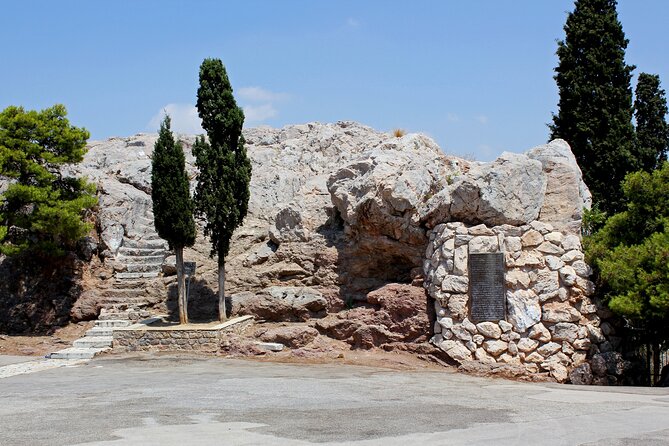
Next comes the Areopagus, just northwest of the Acropolis. This marble hill served as a kind of meeting and debate place in ancient Athens. In Paul’s story, it’s where intellectual discussion becomes part of the setting. You’ll have about 30 minutes here, and admission is free.
Here’s what to pay attention to as you look around: the Areopagus is elevated and historical. It helps you imagine how an audience would gather and listen. The tour framing also points out that the council was made up of about 100 members, including philosophers and former officials. That detail nudges you toward a useful takeaway: Paul wasn’t speaking into a vacuum. He was responding to a culture that valued argument and interpretation.
Practical note: the time at these two stops is mostly about walking and looking, not a long sit-down lesson. If you enjoy learning through place, you’ll be happy.
You can also read our reviews of more tours and experiences in Athens.


Saint Dionysius Areopagitis Church and the Athens-to-Christianity link
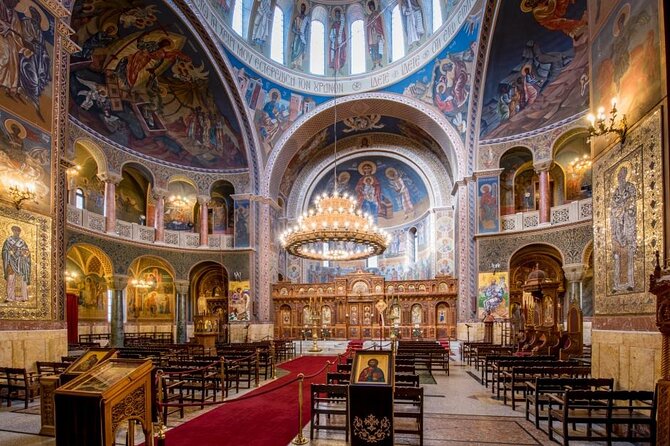
After the ancient debate spaces, you head to a real, working church in the Kolonaki area: Agios Dionysios Areopagitis Church. It’s dedicated to Athens’s patron saint, Dionysius the Areopagite, who is traditionally linked to a conversion connected to Paul. The stop runs about 20 minutes and admission is free.
Kolonaki is a more modern pocket of Athens, which is helpful. You get contrast: ancient civic spaces on one side, then a Christian site tied to an early figure on the other. Even if you do not focus on every symbol, you get the sense that Paul’s story did not stay trapped in the distant past. It fed later religious memory, and this church is one of the ways that memory shows up physically.
If you want a tip for enjoying this stop: use it as a breather. You are not just sprinting to another ruin. You can slow down, look at the space, and let the day’s theme settle in.
Corinth Canal: a quick engineering stop with real strategic meaning
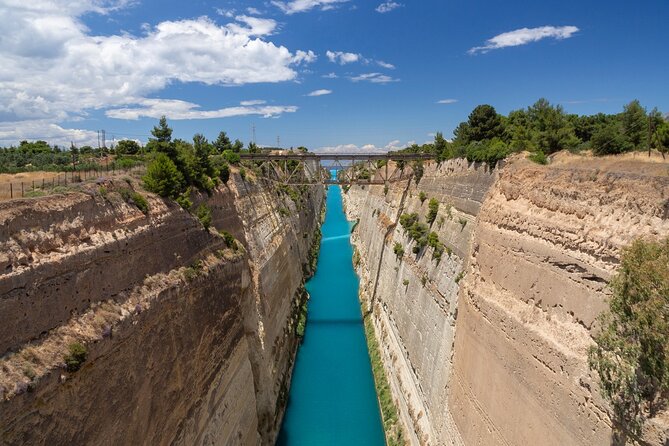
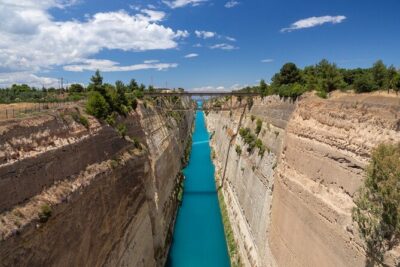
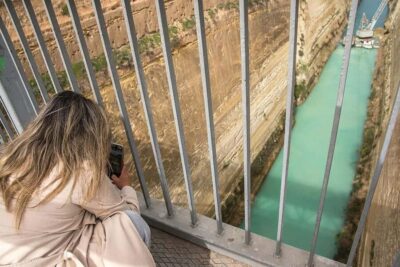
From Athens, you travel to Corinth and pause at the Corinth Canal. The stop is about 20 minutes and admission is free. This canal slices through the narrow Isthmus of Corinth, separating the Peloponnese from mainland Greece.
It may feel like a detour if you came only for Paul. But it’s actually useful context. The canal is built long after biblical times, yet it highlights why this region mattered. Control and movement through the isthmus were always strategically important. That means Paul’s journey through this corridor would not have been random travel. People, goods, and ideas moved through the same chokepoint again and again.
This stop also breaks up the day. You get a different kind of landmark, something you can photograph quickly, and it helps you reset your brain before the ancient port and Corinth sites.
Kenchreai port ruins: where travel, trade, and faith overlap
Next is the Ancient Port of Kenchreai, also tied to Corinth’s eastern harbor. The visit lasts about 20 minutes and admission is free.
This is one of the most interesting stops because it blends the practical and the spiritual. The harbor is remembered as a vital hub of trade and travel, especially during the Roman era. Much of the port is submerged or in ruins, but you can still see remnants such as storerooms, breakwaters, and sanctuaries, plus a nymphaeum. Importantly, the area also includes an early Christian basilica from the 4th century A.D.
And here is the biblical anchor: this is described as the very place Paul arrived around 51 A.D., beginning his mission in Corinth. Standing at a port site helps the story click. Paul’s letters did not get written in a silent study. They grew out of movement, visiting, settling, and interacting with a community shaped by shipping and commerce.
A drawback to be aware of: because it’s a ruin and some elements are underwater or partial, the site can feel less dramatic than a full restored monument. But if you lean into context and the layers, it’s a meaningful stop.
Ancient Corinth (Archaia Korinthos): the Bema, the Agora, and the Temple of Apollo
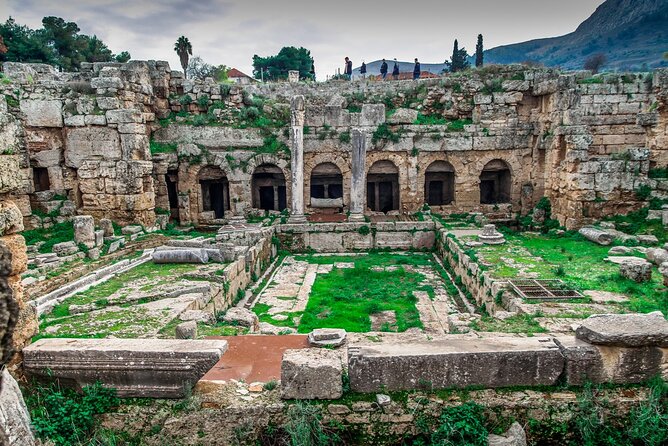
Ancient Corinth is the big payoff stop. You’ll spend about an hour here, and admission is not included.
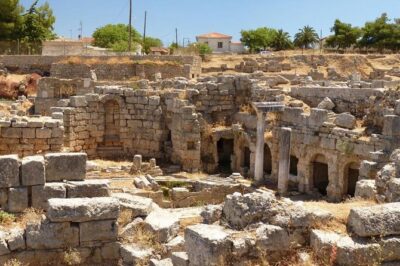
This is where the day turns from Athens theme into Corinth theme. The tour focuses on key spots tied to Paul and the everyday life of Corinthians. In the center of the city, at the Bema, Paul is believed to have addressed the local community and also faced trial before the Roman proconsul. Nearby, the Agora evokes daily market life, which is crucial because Paul’s letters respond to real people living real routines.
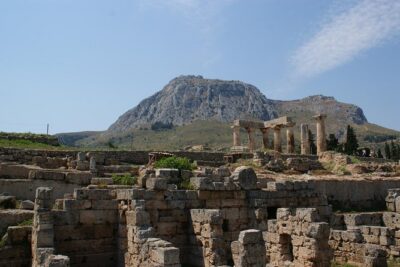
You’ll also see the Temple of Apollo, which points to how layered religious life was. Corinth was not a single-theory city. It was a working religious ecosystem with older traditions standing alongside newer ideas.
How to get more out of this stop: slow down around the Bema area and then shift your attention to the Agora surroundings. If you can, stand in a way that helps you imagine where crowds would gather. Then connect that image to what Paul wrote. It becomes less abstract, more like a message aimed at an actual community.
One practical consideration: this part of the day is more walking on archaeological ground. If your mobility is limited, this is where you should think ahead. Wear shoes you trust.
- All Day Cruise -3 Islands to Agistri,Moni, Aegina with lunch and drinks included
★ 5.0 · 4,958 reviews

Archaeological Museum of Corinth: artifacts that make the ruins easier to read
After the main ruins, you visit the Archaeological Museum of Corinth for about 45 minutes. Admission is free.
This museum stop is valuable because ruins can be hard to interpret if you only have your eyes and a vague sense of what you are looking at. The museum was established in 1932 to safeguard artifacts from the area, and the displays help you connect what you saw outside to what those objects mean.
You can expect a range of items, including prehistoric treasures and finds linked to the Sanctuary of Asklepios. The layout is also described as thoughtful, focusing on daily life, religious practices, and artistic achievements. For me, this kind of museum is the difference between seeing stones and understanding a society.
This is also your chance to cool down a bit. Even if it’s just a short break, it can make the final climb feel more manageable.
Acrocorinth: the final climb, the views, and the Aphrodite legend
The tour ends at Acrocorinth, the imposing acropolis overlooking ancient Corinth. The visit is about 30 minutes and admission is free.
This is a fortified hilltop that served as a military stronghold and a religious center through centuries. A key detail here is the Temple of Aphrodite, said to have housed up to 1,000 priestesses. Even if you treat that number as traditional rather than measured fact, it still tells you something important: this was a place where religion was part of public life, not only private belief.
What makes this ending work is the panoramic payoff. You finish with a view of the region that helps everything earlier feel connected. You start in Athens, move through a port and canal, then see Corinth from above. The top gives you a mental map.
One more note: acropolises mean uneven ground. Even if the stop is short, it can be a mini work-out. If you have any doubt, bring a water bottle mindset and keep your pace steady.
Door-to-door pickup, Wi-Fi on board, and how the day stays manageable
This tour is built around comfort for a long day. You get hotel or port pickup and drop-off, plus an air-conditioned vehicle. There is bottled water, and Wi-Fi is included on board. That matters more than people think. On a day that runs roughly 8 to 9 hours, having logistics handled lets you focus on the sites instead of timing buses and walking long routes with no shade.
It’s also a private experience, meaning only your group participates. For groups of 1 to 4, the tour uses sedan vehicles. That usually translates to less crowding and a smoother ride.
Timing can vary, but one couple reported a very early start, picked up at 7:30 am sharp, and back by around 2 pm. That gives you a feel for the rhythm: full day, but not necessarily until late evening.
Meeting points are straightforward. If you start at a hotel, the driver waits outside. If you start at the port, the driver waits at the arrival area with your name on a signboard. If you start from the airport, pickup is optional and costs extra, but the setup is similar.
Small detail that helps: you can keep your plan organized with the mobile ticket. You receive confirmation at booking, which cuts down stress when you are juggling travel days.
Price, what you get, and what to budget beyond the tour fee
The price is $200.25 per person for an 8 to 9 hour private day. That’s not cheap, but it is a value play if you compare it to renting a car and paying for the entry fees and navigation headaches yourself.
Here’s where the money goes:
- Door-to-door transport by a driver with strong history context
- Bottled water and Wi-Fi
- Entry fees are partly handled by timing, not by price inclusion
Important: entrance fees are not included for Ancient Agora of Athens and the Ancient Corinth archaeological site. Everything else listed on the route is described as free: Areopagus, the church, Corinth Canal, Ancient Port of Kenchreai, the Archaeological Museum of Corinth, and Acrocorinth.
Also, the tour does not include a licensed guide who accompanies you inside the archaeological sites and museums. Your driver provides the historical narration and interpretation, but for deeper onsite guiding, you would need an additional licensed guide arrangement.
If you want to budget cleanly, plan for:
- Tour fee ($200.25 per person)
- Paid admission at the two ticketed stops
- Your own lunch and snacks (not included)
- Optional airport pickup, if you need it
Because the tour is popular, it is often booked about 76 days in advance. If your dates are fixed, book sooner rather than later.
Who should book this Paul in Athens and Corinth day
This tour fits best if you want:
- A day that follows a theme, Paul’s life in Greece, across major sites
- A blend of biblical context with classical Athens and Corinth
- A private feel without having to drive and manage navigation
It is also a good pick for couples and small groups. The small group vehicle setup, private participation, and door-to-door pickup make it easier for people who hate logistical stress.
It might be less ideal if you have:
- Serious mobility limitations, because you will walk on uneven archaeological ground and do a hilltop ending
- A strong preference for minimal walking, since the day includes multiple stops that require getting out and moving
If you are sensitive to heat, time your pacing and keep water habits tight. Bring a hat and sunscreen, because Greece can be hot and sunny.
Should you book it? My decision guide
Book this if you want Paul’s story to feel grounded in place. The route links Athens and Corinth through debate, faith, travel corridors, ports, civic spaces, and then the hilltop view from Acrocorinth. I also like the balance of stops, a mix of paid and free sites, with the museum helping you interpret what you see in the ruins.
Skip or rethink if your priority is only the biggest blockbuster ruins and you do not enjoy walking on uneven ground. Also, factor in that you will pay some entrance fees on top, and you will not automatically have a licensed inside-site guide.
One more pro: this experience rates very highly, with a 4.9 average and 96% recommendation in the provided feedback. And you can see why. People repeatedly call out the focused attention of the private format, plus guides who explain what you are looking at rather than just moving you between locations.
FAQ
What is the duration of this Athens and Corinth Paul’s journey tour?
It runs about 8 to 9 hours.
Is Wi-Fi and bottled water included?
Yes. You get Wi-Fi on board and bottled water during the tour.
Are entrance fees included for all sites?
No. Admission tickets are not included for the Ancient Agora of Athens and for Ancient Corinth. Other stops listed on the route are described as free.
Do you provide hotel or port pickup?
Yes. Pickup is offered from Athens hotels or the port, and the driver waits outside for hotel pickup or in the arrival area with a signboard for port pickup.
Is this tour private?
Yes. It is a private tour/activity, so only your group participates.
What if the weather is bad or I need to cancel?
The experience requires good weather. If it is canceled due to poor weather, you will be offered a different date or a full refund. You can cancel for a full refund up to 24 hours in advance.
More Tour Reviews in Athens
- All Day Cruise -3 Islands to Agistri,Moni, Aegina with lunch and drinks included
★ 5.0 · 4,958 reviews
Not for you? Here's more nearby things to do in Athens we have reviewed






Corinth Day Trips from Athens, compared.
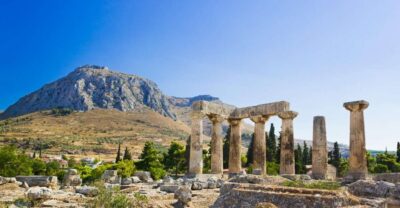 ★ 4.6From Athens: Ancient Corinth Day Trip with Canal & VR GuideFrom $411,073 reviews
 ★ 5.0Private Biblical Tour Ancient Corinth & Isthmus Canal from AthensFrom $301762 reviews
 ★ 4.8Ancient Corinth & Nafplio Full Day Trip with SwimFrom $44523 reviews
 ★ 5.0Private Tour of Apostle Paul’s Footsteps in Ancient CorinthFrom $169275 reviews
 ★ 4.5Corinth Half-Day Trip from Athens with Entrance TicketsFrom $91242 reviews
 ★ 4.7Ancient Corinth & Nafplion Guided Premium TourFrom $34237 reviews
 ★ 4.4Corinth Canal, Mycenae and Nafplio Day TourFrom $33233 reviews
 ★ 4.6From Athens: Ancient Corinth Tour Official Guide & TicketsFrom $86208 reviews
Browse the lists this tour appears in