
Reviewed · DELPHI DAY TRIPS FROM ATHENS
Best of Greece: 7-Day Tour to Real Greece of the Peloponnese, Delphi and Meteora
Your Greek week goes way beyond postcard sites. I especially love the real-feeling meals included daily, and how the route links famous ruins to small-town Greece, not just quick stops.
This is a private, only-your-group style tour with pickup from Athens hotels or Airbnb, the airport, Piraeus and Nafplio port, and even Hydra. The day-to-day flow mixes big-name sites like Mycenae, Olympia, Delphi, and Meteora with coastal viewpoints, mountain villages, and medieval stone towns.
One drawback to plan for: site entrance fees are not included (budget around €120 per person), and a few moments require moderate fitness due to stairs and active sightseeing.
Key highlights you will actually feel
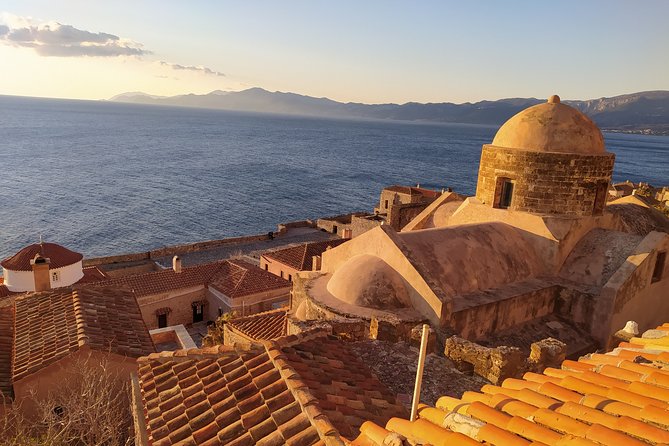
- A Peloponnese road trip that pairs ruins with everyday life, from Nafplio to Monemvasia to Arcadia towns
- Included breakfasts and 7 lunches, with help finding local food and drinks along the way
- Big hits on the map, including Mycenae, Epidaurus, Olympia, Delphi, and Meteora
- Mani Peninsula scenery plus cave time by boat, with an alternative if conditions or preferences change
- Monastery visits at Meteora over 2 days, timing set for open monasteries on the correct days
- A guide team that adapts, including flexible pacing when your group wants more time or prefers quieter stops
Why this tour feels like real Greece, not a stamp-collecting week
The best part of this route is how it treats Greece as one connected story. You start in the Argolis region with Mycenae and Nafplio, then you swing into the Peloponnese’s dramatic corners, before finishing with Delphi and Meteora. The result is that ancient sites do not feel like separate boxes, they feel like chapters.
You also get a practical advantage: transportation is handled door-to-door. With a start time of 8:00 am and pickup at multiple Athens-area points, you spend less time figuring out logistics and more time looking out the window at real scenery.
Finally, this is built around meals. Breakfasts are included most mornings, and lunches are included every day during the tour route. That matters because food stops are often where a tour either becomes boring or becomes memorable.
More Athens tours and experiences for the shortlist
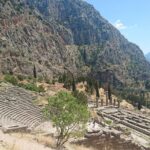

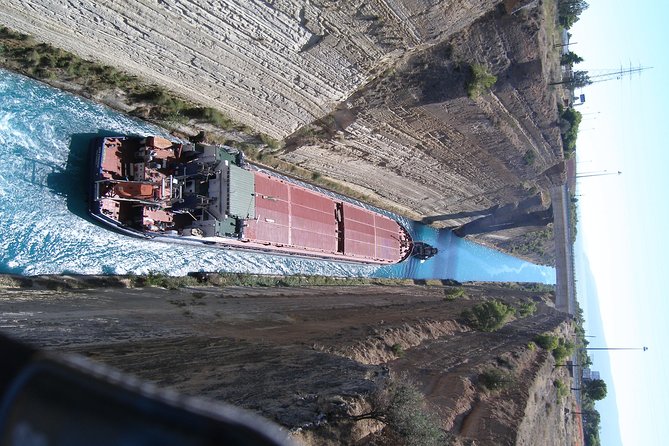
Day 1: Corinth Canal, Mycenae, Nafplio, and Epidaurus acoustics
You begin with the Corinth Canal, a quick but visually satisfying introduction. It cuts through the Isthmus of Corinth and effectively separates the Peloponnese from mainland Greece, which is a nice mental frame for the week. Even if you only stop for about 15 minutes, it sets the geography.
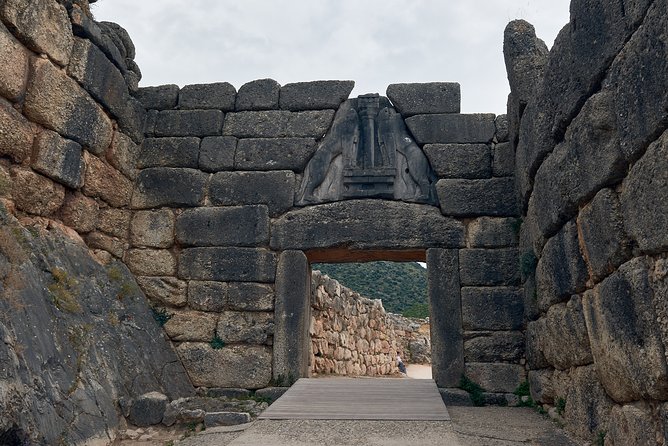
Next comes Mycenae, a UNESCO site tied to Agamemnon and the Mycenean civilization. You get time to wander the archaeological area and visit the accompanying museum. The ruins here help you understand why the Peloponnese mattered so much in antiquity.
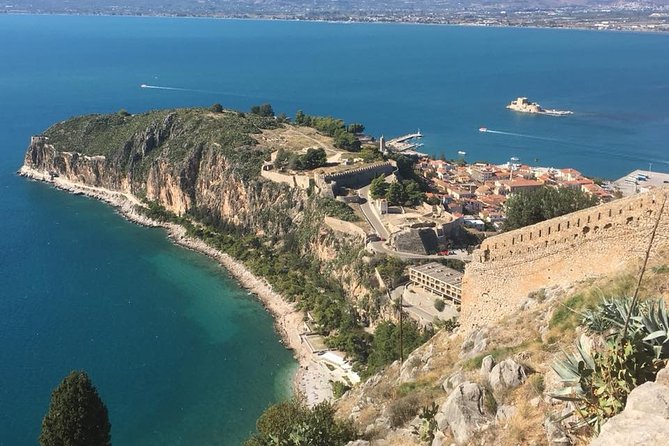
Then you arrive in Nafplio, one of the most beautiful towns in the region of Argolis. The walking is mostly your choice, and the vibe is relaxed compared to major city pacing. You also get the Palamidi Castle option, including the famous climb down and up through the old town’s steps, about 999 steps total. If stairs are not your thing, this is the day to judge your comfort early.
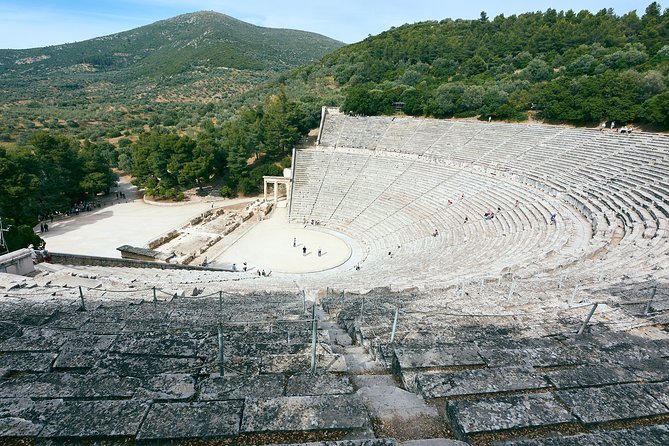
After that, you visit Epidaurus, the ancient theatre famous for its acoustics. You do not need to be an architecture expert to feel the impact here. Even with a limited time window, it’s one of those places where you understand why people still talk about it.
The day has optional add-ons too, including Ancient Corinth and an evening drop-and-pick at Nafplio port and Old Town. Those options are useful because after a full day of driving and ruins, you can either keep the momentum or slow down.
Day 2: Coastal Tyros, Parnon villages, and Monemvasia’s medieval fortress
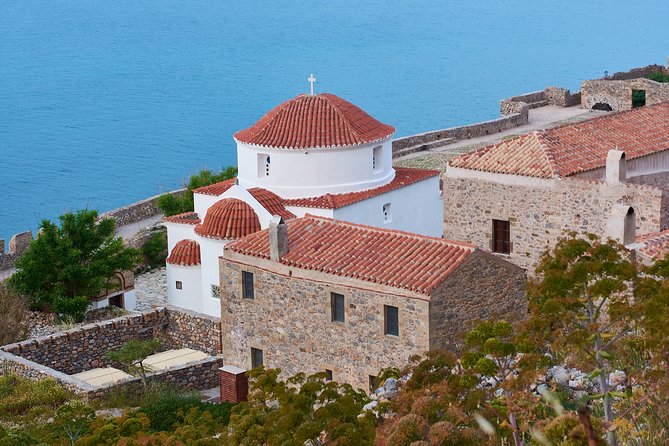
Day 2 shifts from ancient sites to scenery and small-town stops. You start with Tyros, but the route avoids the motorway for a reason: you get coastline views early, plus coffee by the water before climbing into the Parnon mountain range. That first break is a smart way to reset your eyes and energy.
You then pass through Leonidio and the Parnon range, including quick stops for views and local flavor. One small detail worth noting: Leonidio is associated with the sweet aubergine, and this is the type of regional food reference you might actually hear about again during lunch.
A cliff-hanging detour follows at the Monastery of Panagia Elona, where the scenery is the main event. It’s not a long stop, but it gives you a different kind of “Greek monument” moment, one tied to elevation and light.
Lunch time centers on Kosmas, a mountain village with traditional squares shaded by huge trees. The value here is that the lunch is not treated as an afterthought. It’s a planned experience, which is why your mid-day meal is part of the itinerary, not just something to squeeze in.
Finally, you reach Monemvasia, often described as a castle town carved into rock. This is where the week’s medieval feel kicks in, with a sea rock setting that turns your arrival into a photo moment. The key is to walk slower here, not just rush for the main view.
Day 3: The Mani Peninsula, Diros caves by boat, and Mystra’s Byzantine world
This is the day for the Peloponnese’s wild side. You start with the Mani Peninsula, often among the most striking regions in Greece, with rugged coastlines and hill towns.
Then you choose between cave experiences. Caves of Diros are a major highlight if you go, because you see formations via a guided boat with lighting designed to help you spot stalactites and stalagmites. If you prefer an alternative, Vathia is offered as a substitute, an abandoned castle village area with dramatic views. Either choice gives you something that feels different from standard ruins.
Next is Areopoli, a stone-built town where pirates were historically a concern. This stop helps Mani feel human, not just scenic. You get time to look at the town character without needing to treat it like a checklist.
Later comes Mystra, the Byzantine castletown near Sparta. You get around two hours here, plus views over the Spartan region and the Laconic olive groves. Mystra works because you can see how Byzantine architecture clings to a hillside and becomes part of the terrain.
You also stop at the Leonidas Monument near a stadium, a quick but memorable pop of modern connection to Thermopylae. It’s not the battle site itself, but it helps you carry the story forward to your final day.
Day 4: Olympia, the museum, then Arcadia villages like Dimitsana
Day 4 begins with Olympia, where the original Olympic Games date back to the 8th century BC. You have time to see key ruins, including training areas and the stadium, plus temples dedicated to Hera and Zeus. This is the day where “sport as religion” becomes real, not theoretical.
You also visit the Olympia museum, which is often the difference between seeing ruins and understanding what you’re looking at. You may see major sculptural elements, including work connected to the marble temple of Zeus and the famous Praxiteles carving of Hermes. The museum helps you feel how art and ceremony were tied together.
Then you head toward Arcadia, with a focus on stone-built mountain villages. Dimitsana is the evening stop, a place known for its beauty and popularity throughout the year. The idea is simple: you sleep in a village area so you can feel Greece’s inland pace, not just pass through.
- All Day Cruise -3 Islands to Agistri,Moni, Aegina with lunch and drinks included
★ 5.0 · 4,958 reviews


Day 5: Kastria Cave, Kalavrita train ride, and Galaxidi by the water
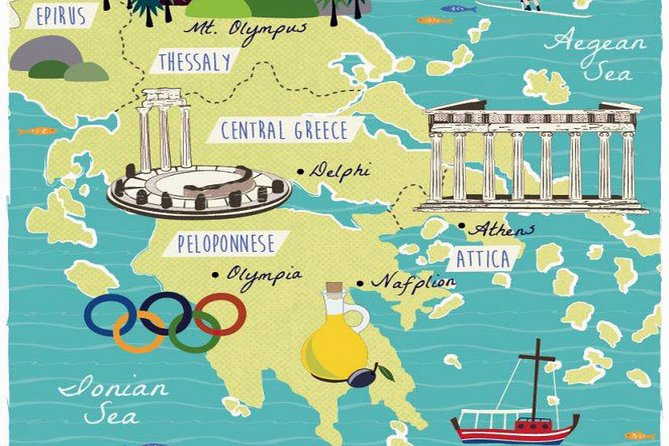
This day gives you a surprising mix: caves, mountain resort towns, a historic rack railway, and a seaside evening.
You start at Kastria Cave of the Lakes, where the big selling point is uniqueness in the cave system, with galleries and unusual stalactite formations. It’s another “guided by lighting” moment, so you get help seeing what you might miss if you only walked in.
Next is Kalavrita, your lunch stop. You can explore the town center on foot. Then you get an included time for the Odontotos Rack Railway, a narrow-gauge train that climbs through bridges and tunnels. It is about 120 years old and designed in a way that worked with the gorge rather than bulldozing through it. This is the kind of ride that turns the day from “sit and view” into “move and feel.”
If time allows, you can stop in Nafpaktos for a quick coffee and stretch, including the chance to see the Venetian Castle area. Then you reach Galaxidi, arriving early evening so you can walk by the water and enjoy local atmosphere.
This last part of the day matters because it gives you an actual evening, not another rushed checkpoint.
Day 6: Delphi museum and sanctuary, Amfissa lunch, Meteora sunset option
You move into mainland spiritual-and-historic Greece with Delphi.
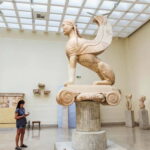
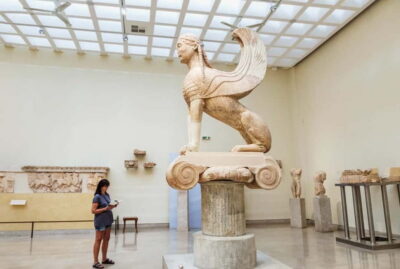
First stop is the Delphi Archaeological Museum. The value here is that it frames the sanctuary you’ll see next. You get context for the oracle of Apollo and see major pieces tied to the sanctuary, including the Charioteer and the Sphinx of the Naxians dating to 560 BC.
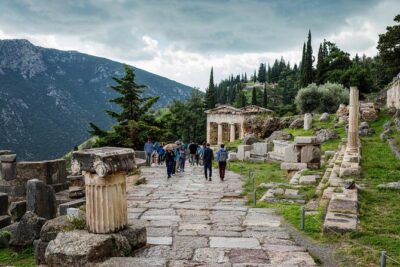
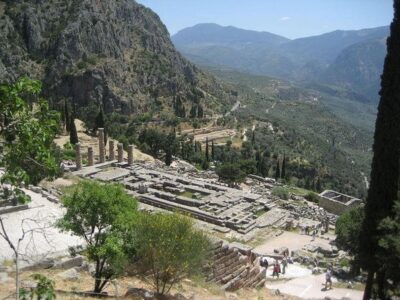
Then you visit Delphi’s ancient town and sanctuary. You walk through the sacred site concept, including the idea of the omphalos, the navel of the world. The terrain matters here, since Delphi is famous for how the site sits in relation to the surrounding mountains.
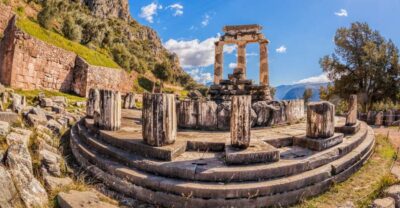
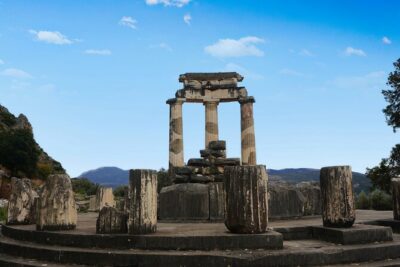
You also include Tholos of Athena Pronaia, a spot many people miss even when they visit Delphi. It’s the kind of photo moment that pays off because it connects what you see to what you learned at the museum.
Lunch is in Amfissa, described as less beaten path. You get authentic options there, and it’s a helpful pacing tool between Delphi and your next big jump.
Finally, Meteora appears on this day as an optional evening add-on. If there are no unexpected delays and time permits, you may visit monasteries in the late light for different shadows and a sunset-type feel. This is offered as extra, so you should keep expectations flexible.
Day 7: Great Meteoron, Varlaam, Holy Trinity, then Thermopylae to Athens
Day 7 is Meteora in full. You visit Holy Monastery of the Great Meteoron, the oldest and most important among the monasteries preserved today. The rocks dominate everything, and the monastery architecture makes you appreciate why people climbed up here in the first place. You get time to see two other monasteries as well: Varlaam and Holy Trinity.
Varlaam is tied to a daring ascetic named Varlaam, and the stop helps you see how small religious cells and practical structures lived on top of sheer rock. Holy Trinity is known for its historical build dates, and it is often the one that people remember for the photos. You’ll feel why once you stand there and look around.
After Meteora, you head to Thermopylae, stopping at the battlefield location with the King Leonidas statue. This is a short break, but it closes the loop from the Leonidas monument earlier, and it adds story to what you saw at modern and ancient crossroads.
You finish back in Athens around Syntagma, with the tour wrapping at the end of the day.
Hotels, lunches, and the guide approach that makes the week work
This is not just a sightseeing bus plan. Your package is built around comfort between stops, with the expectation of the best accommodation available at each location, including a 5-star unique hotel. That kind of lodging choice matters on a long loop, because you are often arriving tired but hungry, and a good room helps you recover.
Meals are included in a way that keeps you from eating random convenience food every day. Breakfasts are included for 6 days, and lunches are included for 7 days. You’ll likely notice that the mid-day meals are designed to be local and varied, not the same menu repeated.
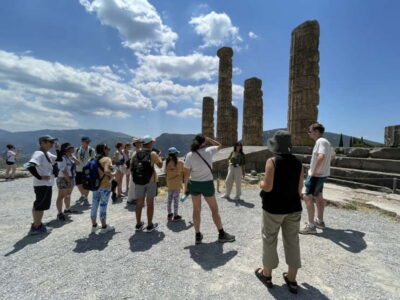
Guide style is another big factor. The operation is led by Nikos, and on different departures you may travel with a driver-guide such as Panayiotis or Theo. The common thread in the feedback is clear communication, timing, and a willingness to adapt when a group wants a different pace.
Some guides also lean into practical cultural moments like helping you try Greek coffee along the way, and keeping the day moving without turning every hour into a lecture. It’s also worth mentioning that communication before and during the tour has been described as prompt and attentive.
Price and value, plus what to budget on top
At $5,046.26 per person, this is not a cheap trip. The value case is that you are buying a private, door-to-door transport system across multiple regions, plus lodging and the bulk of daily food.
Here is the realistic budget picture:
- Entrances to sites are not included, with an estimate of €120 per person
- Professional licensed guide is optional
- Dinner is not listed as included, so you will likely handle evenings on your own or based on local suggestions from the guide
- There may be extra cost for some pickup locations outside the standard set
If you are the type who hates negotiating tickets, fighting crowds, and figuring out which bus works, this price starts to make sense. If you prefer low-cost travel and do not care about top lodging, then you might find better value elsewhere. But if you want a week that feels organized and thoughtfully paced, the pricing reflects that.
Should you book this Best of Greece tour?
Book it if you want a private week with strong structure, where the days include major Greek landmarks but also leave room for real places to breathe. The combination of Peloponnese variety plus Delphi and Meteora is a powerful one-two punch, and the included lunches are a rare detail that can make the trip feel genuinely Greek instead of purely museum-shaped.
Hold off or ask questions if stairs and long driving days are a concern for you. Palamidi’s stair climb and some active sightseeing points mean you should be comfortable with moderate walking. Also remember that entrance fees are extra, so plan for that upfront.
If you want a trip where someone handles the routing and timing while you focus on the sights and the food, this one is a solid choice.
FAQ
What time does the tour start, and where does pickup happen?
The start time is 8:00 am. Pickup is available from any Athens hotel or Airbnb, the Athens airport, Piraeus and Nafplio port, and Hydra island. Some locations may have an extra cost.
Is this tour private or shared with other groups?
It is a private tour/activity. Only your group participates.
What is included in the price?
The tour includes in-car tour information booklet, bottled water, hotel accommodation (with the best available places at each location, including a 5-star unique hotel), and meals: breakfast for 6 days and lunch for 7 days.
Are entrance fees to archaeological sites included?
No. Entrance fees are not included. The listed estimate is €120.00 per person.
Is a professional guide included?
A professional licensed guide is not included, but it is optional.
What language is the tour offered in?
The tour is offered in English.
What physical level do I need?
You should have a moderate physical fitness level. The itinerary includes active sightseeing and stairs at some stops.
Are there optional stops on this itinerary?
Yes. Examples include the Diros Caves option versus the Vatheia alternative, optional visits related to time and delays around Meteora, and optional coffee or evening exploration stops depending on time.
Can I cancel for a refund?
You can cancel up to 6 days in advance for a full refund. Cancel 2 to 6 days before for a 50% refund, and cancel less than 2 days before for no refund. Changes made less than 6 days or less than 2 days before the start time are not accepted, based on local time.
More 7-Day Experiences in Athens
More Tours in Athens

More Tour Reviews in Athens
- All Day Cruise -3 Islands to Agistri,Moni, Aegina with lunch and drinks included
★ 5.0 · 4,958 reviews
Not for you? Here's more nearby things to do in Athens we have reviewed




Delphi Day Trips from Athens, compared.
 ★ 4.6Mythology of Delphi, Museum and Arachova Guided TourFrom $314,008 reviews
 ★ 4.6From Athens: Delphi Full Day V.R. Audio Guided TourFrom $303,028 reviews
 ★ 4.8From Athens: Small-Group Delphi, Museum & Arachova Day TripFrom $342,476 reviews
 ★ 4.5Delphi English Day Trip from Athens with Official GuideFrom $782,199 reviews
 ★ 4.7Delphi Guided Trip with Optional Lunch and EntryFrom $331,553 reviews
 ★ 4.5Historical Delphi One Day Tour with Arachova Stop & Expert GuideFrom $341,247 reviews
 ★ 4.5Premium Delphi Day Trip with an Expert Guide, Museum & LunchFrom $381,100 reviews
 ★ 4.5From Athens: Delphi and Meteora 2-Day Guided TourFrom $271825 reviews
Browse the lists this tour appears in