
Reviewed · DELPHI DAY TRIPS FROM ATHENS
7-Day Grand Tour: Olympia, Delphi, Meteora, Thessaloniki
One week, four hits of classical Greece. This tour strings together Olympia, Delphi, Meteora, and Thessaloniki, with an air-conditioned vehicle and guided stops so you can skip map work and focus on the stories. I love how it compresses the biggest ancient-name sights into a single week without you juggling tickets and timing.
The second reason I like it is the people. Guides such as archaeologist Effie and the professional George are the kind who can explain what you are actually seeing, not just point at stones. Still, consider the pace, some days feel long, and there can be a mid-tour operator change that can squeeze lunch time, so keep your expectations flexible and budget for lunch.
Key things to know before you go
- A one-week route that fits the classics and Macedonia in the same trip, from Olympia and Delphi to Vergina, Pella, and Dion
- Guides with serious credentials and strong storytelling, including archaeologist Effie in the feedback
- Included breakfasts and dinners (6 of each) that help you control your day-by-day spending
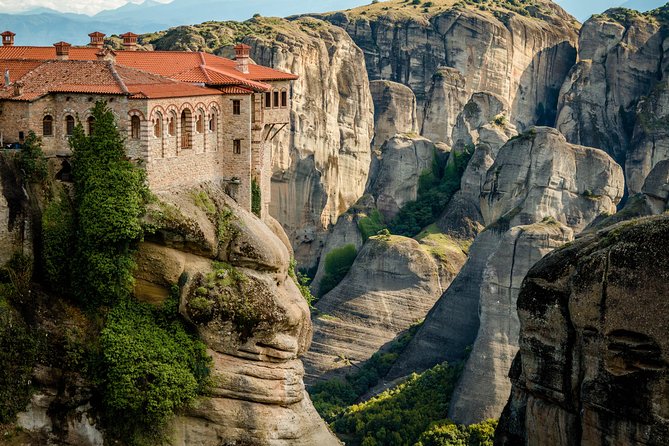
- Meteora as a highlight in the schedule, with two monastery visits and a change of bus afterward to Thessaloniki
- Thessaloniki’s Rotunda stop that mixes layers of history, from temple to church, plus early-Christian mosaics
- A real dress code for worship sites and selected museums, with knees and shoulders covered and no sleeveless tops
How This Route Turns Greece Into a One-Week Timeline
If you like classical Greece but hate the stress of logistics, this tour is built for you. In seven days, you work through the heartland and then push north, so your brain starts to connect myths, politics, and kingdoms in order. You start in Athens and then fan out across the Peloponnese, central Greece, and Macedonia. It is a lot of ancient material, but it is also a clean way to get your bearings fast.
What makes the route work is the pacing of themes. Day 1 is about the deep roots of Greek power, with Mycenae and its fortified legends. Day 2 shifts to a pan-Greek tradition of competition at Olympia. Day 3 brings you to Delphi, where mythology and religion sit side by side at the Temple of Apollo. Then Meteora changes the mood again, moving from temples to monasteries that perch above the plain. After that, Thessaloniki adds a different texture of history, and the last days lean into Macedonia, Alexander the Great’s world, and the Roman-era layers around Thessaloniki and further inland.
I also appreciate the value math here. At this price point, you are not just paying for transportation. You get 6 nights of accommodation, a professional guide, and 6 dinners plus 6 breakfasts. That matters because lunch is not included, and once you start adding museum tickets and meals on your own, your day costs rise quickly. This tour is designed to keep you from having to constantly make decisions.
One warning for your planning: with a multi-day itinerary like this, you are not going to have the slow, wandering pace of a do-nothing beach break. The trade is that you gain breadth, you see the major stops, and the tour takes care of the driving and entry flow.
More Athens tours and experiences for the shortlist

Pace, Pickup, and What the Group Size Means for Your Day
The tour starts from Amalia Hotel Athens (Leof. Vasilisis Amalias 10) at 8:30 am, and pickup from city center hotels begins about one hour earlier. You end back at the same meeting point. That structure is helpful because it reduces the guesswork about where to be and when.
Group size is capped at 40 travelers. That is big enough to feel social, but small enough that you usually hear your guide and stay together. Still, expect that your day revolves around the schedule. The feedback I saw includes comments about guides who could be very engaging but with limited time for self-exploration, especially around tight stops like Delphi.
Dress code is not optional for worship sites and some museums. You need knees and shoulders covered, no shorts or sleeveless tops, for both men and women. If you arrive in the wrong clothes, you risk being refused entry, which would throw off the day. I suggest packing a light layer you can wear over tank tops, and if you are traveling in summer, treat it as part of your comfort plan, not an inconvenience.
Finally, there is one logistics wrinkle to plan for: in the feedback, there was at least one instance where the tour shifted to another operator midway through, including schedule mismatches that tightened lunch time. That does not happen in every situation, but it is enough of a pattern in the comments that I would tell you to bring a little buffer into your mindset. If you are the type who gets stressed by schedule changes, choose your attitude in advance.
Day 1 on the Peloponnese: Corinth Canal, Mycenae, and Epidaurus
Day 1 is a strong start because it moves from geography to legend to performance. First you stop at the Corinth Canal, where you get a quick look at the bridge over the canal that connects Attica with the Peloponnese. The ticket note is free time there, so think of this as your palate cleanser and photo moment, not your main destination.
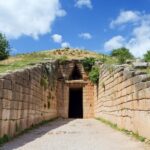
Next comes Mycenae, and this is where the tour earns its history-game reputation. You see the Lions Gate, part of the Cyclopean walls, ruins tied to the Agamemnon Palace, and the Tomb of Agamemnon. Even if you do not memorize dates, the layout helps you understand why Mycenae looms so large in Greek storytelling. The walls and gate look built to intimidate, which makes the myths feel less like abstract literature.
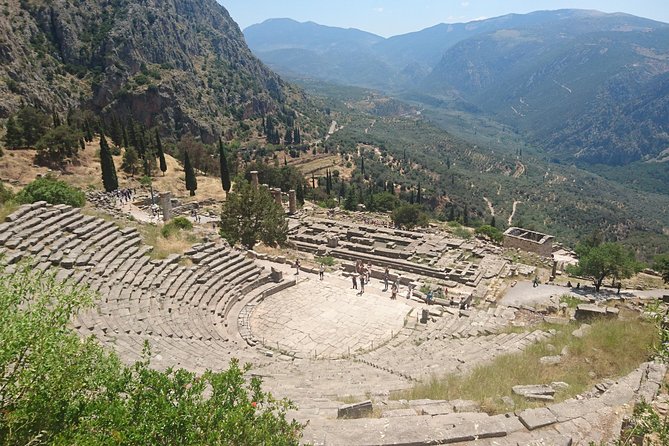
Then you finish at Epidaurus, famed for its ancient theatre and its famous acoustics. This is a stop that changes how you picture the ancient world. Instead of imagining ruins only as stone, you start thinking about sound, crowds, drama, and where voices would carry. The theatre stop is listed at about one hour, which is enough to take in the big idea without rushing through every detail.
One practical downside: day 1 is front-loaded with high-impact stops, so your body might feel it. If you have any knee or stamina concerns, take the time between stops to stretch and hydrate. The tour is marked as requiring moderate physical fitness, and day 1 is usually where that shows.
Day 2 at Olympia: Stadium Energy and a Museum Reset
Olympia is one of those places that makes Greece feel official. You start at the Archaeological Site of Olympia, including the stadium linked to the ancient Olympics. Even in ruins, you can picture what competition meant in a culture that built identity around shared festivals. There is a reason this is a headline destination.
You then add the Archaeological Museum of Olympia. I like this sequence, site first, museum second. The museum helps you see what everyday people and artists valued, and it gives context that a quick look at stones cannot. The tour keeps each stop around an hour, so you do not end up trapped in one place all day.
In terms of value, Olympia is a nice example of why guided travel works. You are not just looking at objects. Your guide can connect what you see in the stadium to the broader festival culture, which makes the site feel more alive.
If you are the kind of person who loves photos, you will also like that the site and museum break up the day visually. If you are the kind of person who wants quiet, you might not get much of it, because this is a group tour and the pace is set. But the upside is that you get through a major stop efficiently without needing to plan bus routes or ticket lines.
Day 3 in Delphi: Athena, Apollo, and the Iniochos Museum Moment
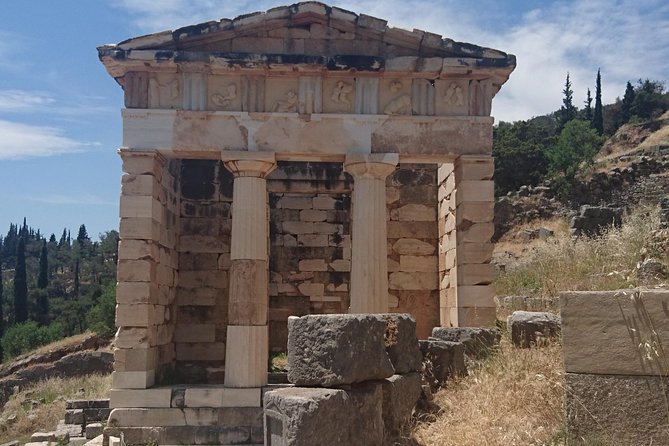
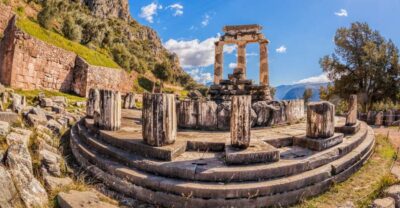
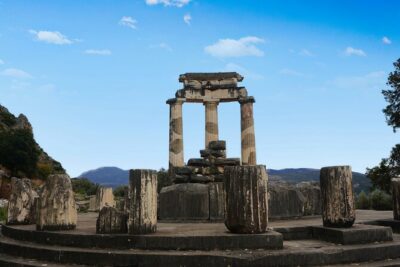
Delphi is where myth lovers tend to get a little emotional. This day starts with the Tholos of Athena Pronaia, described as an exploration of Athena’s temple area. It is listed as a shorter stop, around 30 minutes, which works well as a warm-up. You are not bogged down in one spot, and it sets the tone for what you are about to encounter.
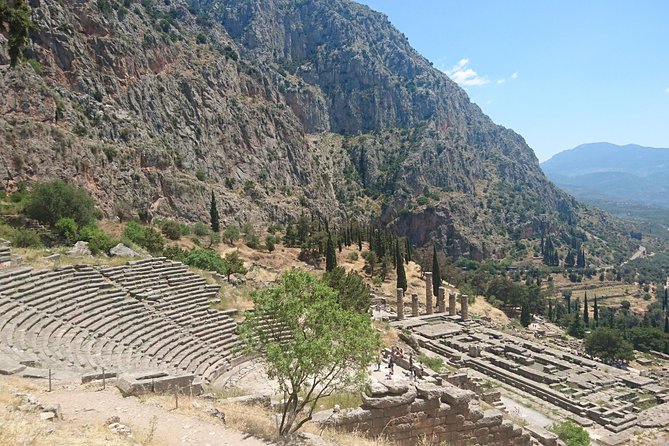
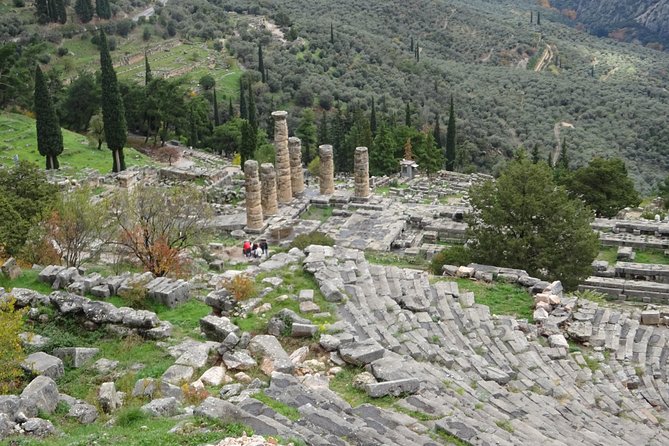
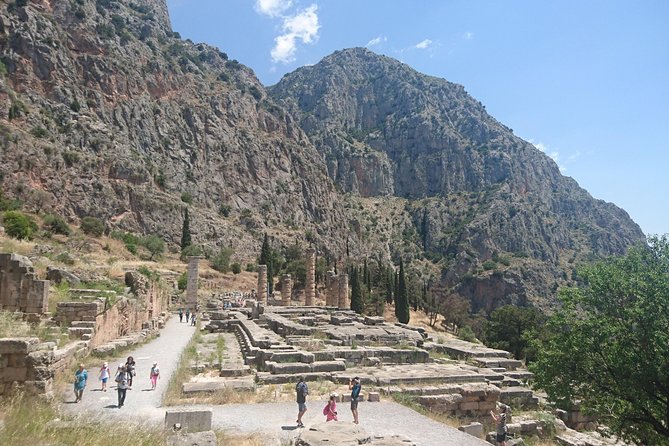
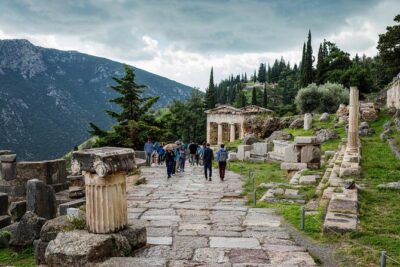
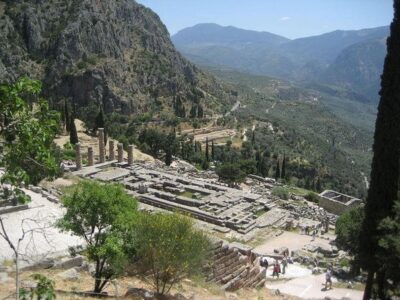
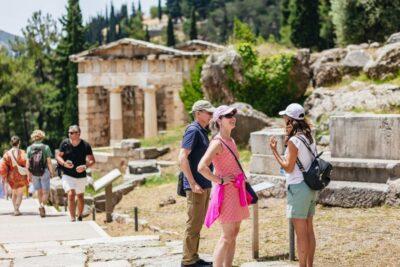
Then you visit the Temple of Apollo and the Delphi archaeological site, taking about 1.5 hours. This is the main stage of the day. Delphi is one of Greece’s “why people built this here” locations, because the setting and layout make the religious importance feel logical. You can almost see how visitors moved through the sacred space, even when the structures are only partially standing.
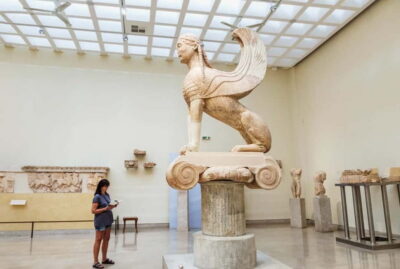
Next is the Delphi Archaeological Museum, about 1 hour, including the bronze statue associated with Iniochos. The museum time matters here. When you see a major work in a controlled setting, it helps you separate what is original from what is interpretation. That is where a good guide earns their keep.
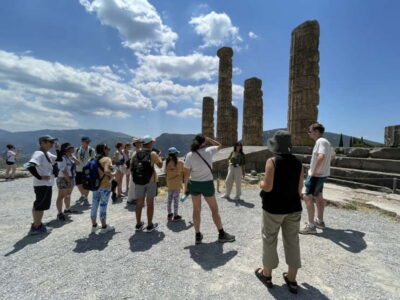
From the feedback I received, Delphi can feel a bit tight if you want longer free exploration time. If you are the type who likes to linger, you may want to mentally plan for shorter personal wandering and focus on the essentials first, your guide’s explanations during the main stops, and then any extra minutes you get for photos.
Also remember the dress code. Delphi includes selected museums and sacred spaces, so cover up before you leave your hotel.
- All Day Cruise -3 Islands to Agistri,Moni, Aegina with lunch and drinks included
★ 5.0 · 4,958 reviews

Meteora to Thessaloniki: Two Monasteries Above the Plain, Then Rotunda History
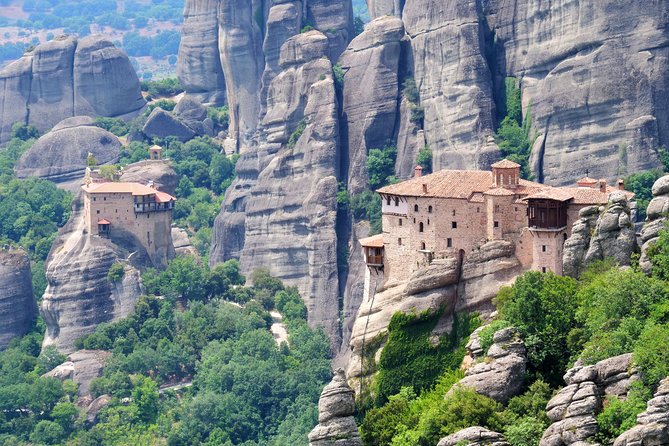
Day 4 brings Meteora, with two monastery visits. The time listed is about 2.5 hours for the stop, and your bus changes afterward for Thessaloniki. Meteora can feel unreal from the road. These are monasteries perched high above, and even if you have seen photos, being there changes your scale perception.
I like that the itinerary includes two monasteries instead of just one. With two, you get variety in views and architecture, and you are not stuck staring at one angle for the entire time. The drawback is timing: because this is a group schedule, you will move on before you reach your personal “just one more photo” moment.
Then you head to Thessaloniki and the next day focuses on one standout site: the Rotunda. The Rotunda story is compelling because it was built as a temple and then transformed into a church. The stop also highlights fine early-Christian mosaics, which is a different artistic world than the marble-and-stone you see at ancient sites. If you want a break from classical ruins, this is a good one, and it helps Thessaloniki feel like more than just a city stop.
Expect that Meteora and Rotunda are both “dress code-sensitive” days. If you show up in summer clothes, you may feel rushed at the entrance. Pack light layers and stick to covered knees and shoulders.
Northern Macedonia Days 6-7: Edessa Waterfalls, Vergina Tombs, Dion, Pella, and Thermopylae
The last stretch is where the tour steps beyond the usual classics and leans into Macedonia. That can be a major reason to choose this option, since many faster Greece itineraries stop at Delphi and then return south. Here, you keep going.
On Day 6, you start at Edessa to see the waterfalls, listed at about one hour and with free entry. It is a nice reset day, a change of pace after tombs and temples. From there you go to the Museum of the Royal Tombs of Aigai in Vergina, also about one hour, focused on the Macedonian royal family tombs. This stop is big for history context. You get a sense of power and dynasties, not just myth.
Next comes Naoussa, including a visit to Aristotle’s School (listed as about one hour). Then you continue to Veroia, where you visit St. Paul’s Berma and have time to stroll the old Jewish neighborhood and the market area, again about one hour. Even with short stays, these stops help the tour feel lived-in, not only museum-and-ruins.
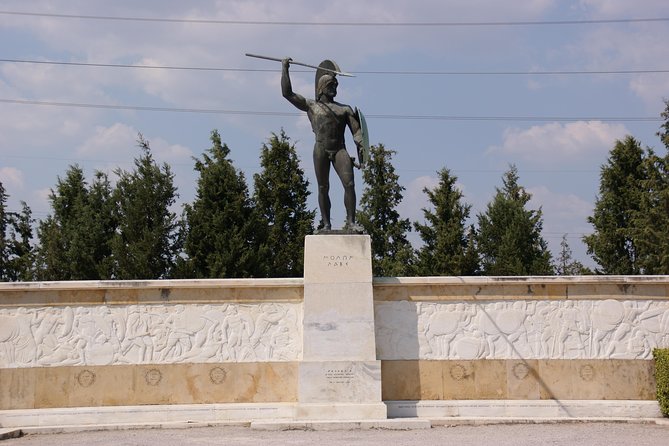
Day 7 closes with three major touches. First, Dion Archaeological Park, a sacred Macedonian town, about one hour. Then you visit the Archaeological Museum of Pella, the capital tied to Alexander the Great, about one hour. Finally, you stop at Thermopylae for about 10 minutes to see the Leonida’s monument.
Two thoughts on this ending. First, it is tight, especially the Thermopylae stop, but it gets you the key visual you came for. Second, finishing with Macedonia makes the earlier Delphi and Olympia stops feel more connected. If you like the chain from mythic Greece to historical kingdoms, this ending helps you see the progression.
Your main caution on Days 6-7 is mental. These are days with multiple stops. If you want long museum reading time or deep self-guided exploration, a tour like this will feel structured, not free. If you want an efficient sweep through big names, it fits.
Price and Value: What You Get for $1,479.60
At $1,479.60 per person for about a week, you are paying for planning, transport, and guided entry flow as much as for the sights themselves. The included 6 nights and the 6 breakfasts and 6 dinners are the real backbone of the value. Without those meals, you would be budgeting meals daily and juggling restaurants near each stop.
Lunch is not included, and that is where costs can sneak up. One piece of feedback mentioned an expensive lunch situation during a tight schedule window, so I would treat lunch as your daily variable. Carry a snack if you get peckish between stops, and plan to spend on at least one sit-down lunch or a couple of simpler options.
You should also budget for the environmental fee of 10€ per room per night starting 1/4/2025, paid directly to the hotel. That is not included in the listed total, and it can affect your final budget once you arrive.
Hotel quality in the feedback seemed mixed, with many people staying at Amalia hotels but with some differences in room condition and nearby convenience for buying incidentals like water. That is not something you can predict perfectly, so I recommend packing a small refillable bottle strategy and having a plan for buying water right away after check-in.
Should You Book This 7-Day Grand Tour?
I think you should book if your priority is seeing the major classical stops plus Macedonia in one guided swing, with breakfast and dinner handled and navigation removed. This tour also fits well if you enjoy archaeology and mythology enough to value explanations during each stop, and if you are okay with a day-by-day schedule.
I would skip it if you want lots of quiet time, long museum wandering, or a flexible pace where you can ignore the clock. The structure, plus the occasional report of mid-tour changes that can affect timing, means you will always feel like you are moving.
If you do book, come prepared for the dress code, budget extra for lunch, and keep your expectations tuned to group travel. Do that, and this itinerary can feel like a fast, memorable crash course in Greece, from sacred sites to royal tombs to the shadows of Thermopylae.
FAQ
What is the duration of this tour?
It runs for about 7 days.
What is the meeting point in Athens, and when does the tour start?
The tour starts at Amalia Hotel Athens, with a start time of 8:30 am.
Is hotel pickup included?
Pickup is offered from selected city center hotels, and it starts about one hour before departure.
What’s included in the price?
The tour includes 6 nights of accommodation, a professional guide, an air-conditioned vehicle, hotel pickup and drop-off for selected hotels, and 6 breakfasts and 6 dinners.
What is not included?
Lunch is not included, and there is an additional environmental fee of 10€ per room per night paid directly to the hotel starting 1/4/2025.
How big is the group?
This tour has a maximum of 40 travelers.
What language are the guides?
The tour is offered in English.
Is there a dress code?
Yes. For places of worship and selected museums, you must cover knees and shoulders. No shorts or sleeveless tops are allowed.
Is the tour physically demanding?
It calls for moderate physical fitness.
Can I cancel and get a full refund?
You can cancel up to 3 days in advance for a full refund, and cancellations made less than 3 full days before the start time are not refundable.
More 7-Day Experiences in Athens

More Tours in Athens

More Tour Reviews in Athens
- All Day Cruise -3 Islands to Agistri,Moni, Aegina with lunch and drinks included
★ 5.0 · 4,958 reviews
Not for you? Here's more nearby things to do in Athens we have reviewed






Delphi Day Trips from Athens, compared.
 ★ 4.6Mythology of Delphi, Museum and Arachova Guided TourFrom $314,008 reviews
 ★ 4.6From Athens: Delphi Full Day V.R. Audio Guided TourFrom $303,028 reviews
 ★ 4.8From Athens: Small-Group Delphi, Museum & Arachova Day TripFrom $342,476 reviews
 ★ 4.5Delphi English Day Trip from Athens with Official GuideFrom $782,199 reviews
 ★ 4.7Delphi Guided Trip with Optional Lunch and EntryFrom $331,553 reviews
 ★ 4.5Historical Delphi One Day Tour with Arachova Stop & Expert GuideFrom $341,247 reviews
 ★ 4.5Premium Delphi Day Trip with an Expert Guide, Museum & LunchFrom $381,100 reviews
 ★ 4.5From Athens: Delphi and Meteora 2-Day Guided TourFrom $271825 reviews
Browse the lists this tour appears in