

Reviewed · ATHENS ACROPOLIS & PARTHENON TOURS
Acropolis and Agora Tour: The Rise & Fall of Democracy
Athens hits harder when you view it through democracy. This 3-hour, small-group walk links the Acropolis and Ancient Agora to how Athenians made decisions, argued, and performed.
Two things I really like here are the tight focus on politics-as-a-lifestyle and the way the guide connects mythology, architecture, and public life without turning it into a lecture. You also get a fun takeaway map of ancient Athens, which helps you keep the story straight after the climb.
One thing to consider: the tour moves fast. If you’re expecting a long, detailed discussion of the full rise and fall of democracy, you may wish it had more time at a couple stops.
Quick hits you’ll feel right away
- Small group, up to 15 people means the pace stays human and questions actually get answered.
- A democracy lens turns famous landmarks into explanations of civic life, not just photo backdrops.
- Acropolis plus Agora in one go helps the message land, from gods and power to courts and assembly.
- Certified expert guide brings the monuments to life with patient, clear explanations.
- A take-home ancient Athens map keeps your route, themes, and names organized after the tour.
- Entry fees are extra, but you can ask to have them pre-purchased.
The democracy lens: turning famous ruins into civic stories
If you’ve ever visited Athens and felt like you were just collecting big-name sites, this route fixes that. The theme is how democracy worked in daily life, and how Athenian power was shaped by culture, religion, and public spaces. You end up thinking about who had a voice, where decisions happened, and how the city showcased authority.
On this tour, the big buildings are not just impressive. They’re clues. The Acropolis shows how Athens framed its identity through divine patronage and monumental design. The Ancient Agora shows the civic engine room, where politics, commerce, justice, and social life overlapped.
That mix is why the experience stays thought-provoking. You are not only looking up at stone. You’re also looking at how a society organized itself, and why ideas had a physical home.
You can also read our reviews of more tours and experiences in Athens.


Starting at Dionysiou Areopagitou: your route and what to carry
The tour starts at Dionysiou Areopagitou 45, Athina 117 42, with a 9:00 am departure. It ends at the Ancient Agora of Athens (Athens 105 55). That one-direction structure is handy because you don’t have to re-walk the same hill and streets later.
The operation is built for easy participation: it’s offered in English, it’s a small group (maximum 15 travelers), and it’s near public transportation. You’ll also use a mobile ticket, so you’re not dealing with printed vouchers.
Bring light. At the Acropolis, strollers, backpacks, and big bags are not allowed. So plan around that rule before you arrive at the meeting point, and keep your load small.
Stop 1 on the Acropolis: Athena’s high ground and why it matters
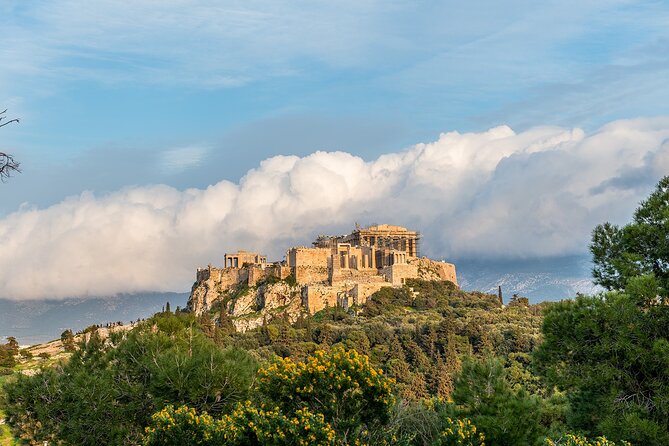
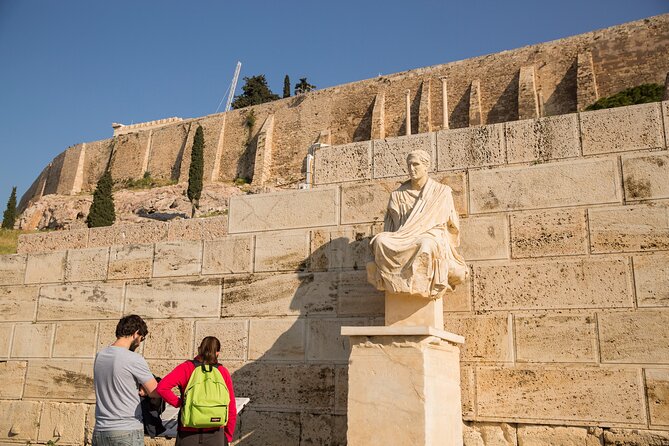
You begin at the Acropolis, the centerpiece sanctuary of ancient Athens, dedicated primarily to Athena. You’ll get about 1 hour here, and the focus is on the monument cluster that shaped how later art and culture imagined the Classical world.
The route typically passes by the Parthenon, Temple of Athena Nike, the Erechtheion, the Propylae, and the Theatre of Dionysus area as you take in the overall plan. Even when you only get brief moments at certain structures, the payoff is how the guide stitches them together.
This is not just a scenic climb. It’s a lesson in messaging. The Acropolis dominated the city for millennia, and these monuments were built to project Athens’ identity at the height of its power. When you see the pieces as a system, the place makes more sense than if you treat each temple as a standalone postcard.
Theatre of Dionysus Eleuthereus: where drama and civic life shared a stage
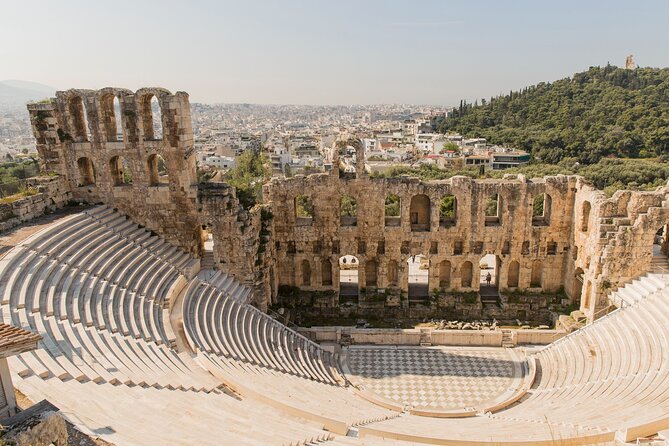
Next comes the Theatre of Dionysus Eleuthereus for about 15 minutes. This spot matters because Dionysus was tied to wine and the grape harvest, but the bigger story is cultural power.
This theatre is described as the oldest founded theatre in Athens. It’s also where major works by Aeschylus, Sophocles, Euripides, and Aristophanes were performed for the first time. Those names are not random trivia. They connect directly to how ideas traveled in public, and how performance and civic identity reinforced each other.
You’ll likely feel the contrast between the high ceremonial spaces of the Acropolis and this more human scale. A theatre is built for crowds and public attention. That makes it a strong bridge between divine patronage above and public culture on the ground.
Temple of Athena Nike and the wingless victory story
You then stop at the Temple of Athena Nike for about 15 minutes. The tour frames it through a neat idea: Nike is victory in Greek mythology, and Athena is worshipped in a form tied to winning.
There’s also a famous element of the story that helps you visualize the symbolism. It’s said the cult statue at this temple had no wings, so victory would not leave Athens. Whether you focus on the myth or the political message, it’s the kind of detail that turns a small structure into a big theme.
In other words, you’re not just seeing another temple. You’re seeing how Athens communicated confidence, control, and permanence through art and religious practice.
- All Day Cruise -3 Islands to Agistri,Moni, Aegina with lunch and drinks included
★ 5.0 · 4,958 reviews


Erectheion and the Parthenon: two ways Athens framed authority
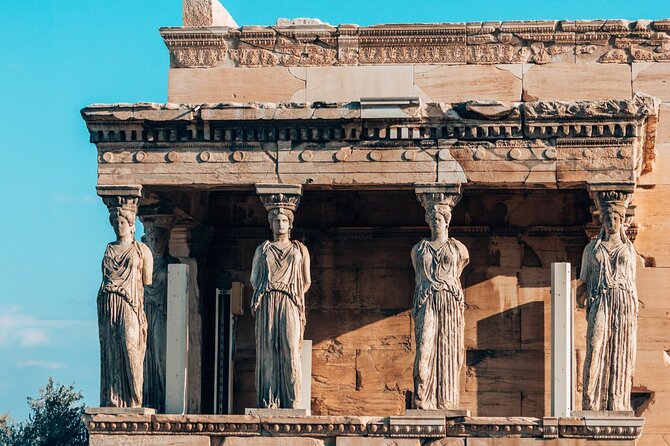
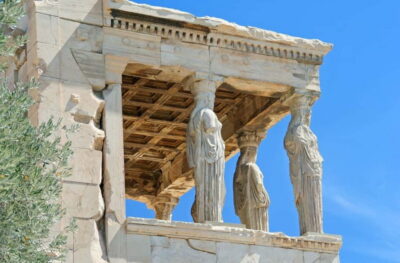
After that, you get the Erechtheion for about 15 minutes. This temple was built to house an ancient wooden cult statue of Athena, and it also functioned to glorify the city during its prime. The short stop still works because the guide’s job here is interpretation: to explain what the structure was meant to protect and honor.
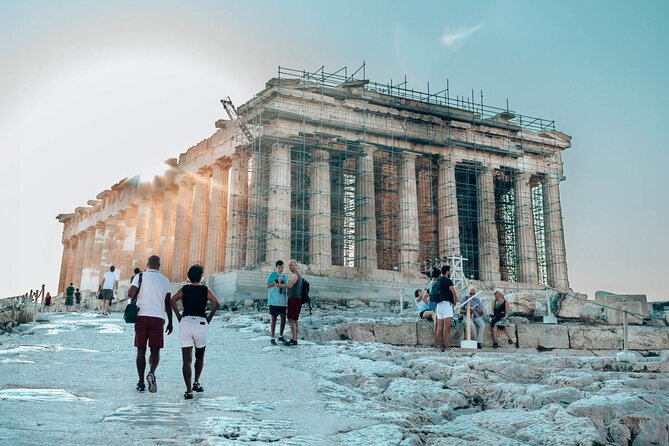
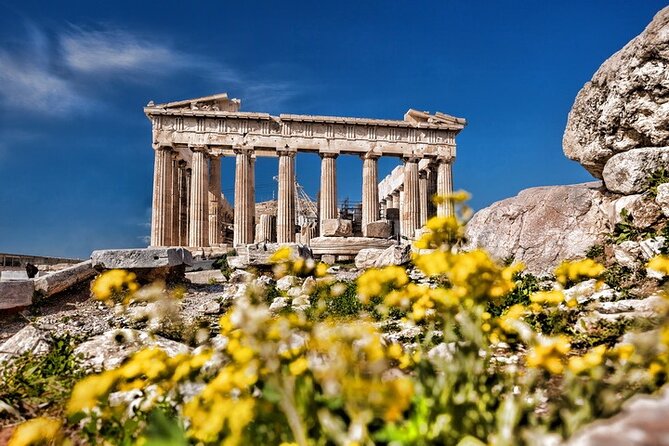
Then you move to the Parthenon for about 30 minutes. This is the big one dominating the hill. It was built in the mid-5th century BCE and dedicated to Athena Parthenos, Athena the Virgin. You’ll also learn that it’s often considered the culmination of the development of the Doric order.
What I like about this pairing is how it sharpens your sense of Athens’ priorities. The Erechtheion connects to sacred objects and lineage. The Parthenon connects to architectural perfection and civic pride. Together, they show how religion, power, and public identity were fused.
Ancient Agora: the democracy workplace you can actually walk through

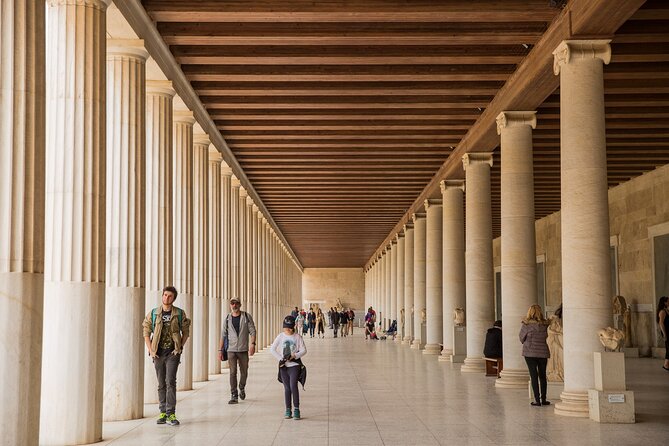
After the Acropolis, the tour shifts to the heart of ancient Athens at the Ancient Agora for about 30 minutes. This is where the story becomes practical.
The Agora is described as the focus for political, commercial, administrative, and social activity. It also served as the religious and cultural center and the seat of justice. That means it wasn’t one-purpose. It was the city’s multipurpose engine.
This is where the democracy theme stops being an idea and becomes a map in your head. When you’re standing there, you can start imagining how court decisions, public discussions, and everyday business life all shared the same ground. The result is that Athens feels less like a museum and more like a functioning society.
Temple of Hephaestus (and Athena Ergani): industry, protection, and public worship
Your final stop is the Temple of Hephaestus, noted as one of the best preserved ancient temples in the world. It is linked to worship for Hephaestus, protector of metallurgists, and Athena Ergani, protecting potters and cottage industries.
This stop is short, around 15 minutes, but it’s a smart closing move for the tour’s theme. Democracy is often thought of as speeches and votes. This adds a reminder that civic life also relied on labor, craft, and the people who kept the city working.
And because this temple is so well preserved, it gives you a clear sense of what still survives when stone is given enough care and time.
Small-group size and guide style: where the experience gets personal
The tour is run by Alternative Athens, and it’s described as a premium, small-group experience. You’ll be with a guide who’s certified, and the max group size is 15. That matters because the route is packed with names and concepts. A big group would turn it into a race.
The guide quality is a consistent theme in the feedback. I see a pattern in the kinds of comments people give about their guides, including guides named Athena, Demi, Christina, Kimon, and Vassia. Across those names, the common threads are clear explanations, patience with questions, and adapting the story to the group.
One practical note: hearing can be tricky in outdoor settings with ambient noise. Some groups are happier with audio aids, and others have felt audio could be better. If you know you struggle with hearing in busy places, plan to position yourself where you can see the guide’s face and mouth during explanations.
Map as a takeaway: why that little souvenir helps
A fun ancient Athens map is included. It’s not just a cute extra. With a tour like this, the risk is that you’ll leave with great photos but scrambled connections between sites.
The map helps you stitch the route to the themes: Acropolis monuments tied to identity and divine patronage, then a shift to the Agora as the civic and legal center. When you’re back in your lodging, that physical reminder can help you review what you saw in the right order.
Price and value: what $67.43 gets you, and what costs extra
The tour price is listed at $67.43 per person, and it runs about 3 hours. That base price covers the expert certified guide, small-group format, and the map, plus the experience itself (including the fact it’s offered in English with mobile ticketing).
What isn’t included is key: entry fees to the attractions are not included, and they’re listed as €50.00 per person. The operator can pre-purchase tickets if you let them know, which can save you time and reduce decision fatigue when you’re trying to start at 9:00 am.
So how do you judge value? You’re paying for interpretation, not just access to viewpoints. With a small group capped at 15 and a guide who ties mythology, archaeology, and civic life together, the value depends on whether you want context as you walk. If you’re the type who reads every sign and likes seeing the logic behind what you’re looking at, the price makes more sense. If you mostly want photos and you already have strong background materials, entry fees plus guide cost might feel heavier.
Timing reality check: the rise and fall theme is there, but not huge
The tour’s highlights promise a lens on the rise and fall of democracy. The schedule is built to hit major sites efficiently, which is great for first-time Athens visits. The trade-off is time pressure.
You do get a thoughtful through-line connecting places to civic ideas, but the full story of rise versus fall can feel condensed within a 3-hour structure. If that is your top priority, you’ll still leave with a strong framework, just know that it may not be a long deep lecture at every stop.
For many people, that’s actually the point. It gives you momentum and curiosity, then you can keep exploring on your own with a clearer mental map.
Who this tour suits best (and who might want something else)
I think this tour is a strong fit if you want:
- A small-group Athens experience with room for questions
- A tour that connects monuments to how Athens functioned politically and socially
- An organized route that covers both the Acropolis and the Agora without needing to plan everything yourself
It may be less ideal if you need:
- Extra time sitting with one site’s details
- A slower paced, long-form version of the democracy story
Should you book this Acropolis and Agora democracy tour?
If you’re aiming for Athens with brains attached, I’d book it. The combination of Acropolis monuments and the Agora civic setting makes the democracy theme feel real, not gimmicky. I also like that you leave with a map, and that the experience is structured for small groups, not crowds.
Before you go, do two things: plan for the Acropolis bag rules so you don’t get stuck at the last minute, and budget for €50 per person in entry fees. If you can handle the quick pace, you’ll get a smart, thought-provoking route that turns famous ruins into a story about how a society built identity, justice, and public life.
FAQ
How long is the tour?
The tour is about 3 hours.
Is the tour a small group?
Yes. It has a maximum of 15 travelers.
What time does the tour start, and where?
It starts at 9:00 am at Dionysiou Areopagitou 45, Athina 117 42, Greece, and ends at the Ancient Agora of Athens.
Are entry fees included in the $67.43 price?
No. Entry fees are not included and are listed as €50.00 per person. The operator can pre-purchase tickets for you.
What is included in the tour price?
The tour includes an expert certified guide, a small group tour, and a fun ancient Athens map. You also receive a mobile ticket.
Is it offered in English?
Yes, the tour is offered in English.
Do I need an ID for discount tickets?
If you are under 25, you need an ID card or passport for possible discounts.
More Tours in Athens


More Tour Reviews in Athens
- All Day Cruise -3 Islands to Agistri,Moni, Aegina with lunch and drinks included
★ 5.0 · 4,958 reviews
Not for you? Here's more nearby things to do in Athens we have reviewed









Athens Acropolis & Parthenon Tours, compared.
 ★ 4.4Acropolis & up to 5 Archaeological Sites Combo PassFrom $4812,619 reviews
 ★ 4.2Acropolis Ticket with Optional Audio or Live GuideFrom $4211,055 reviews
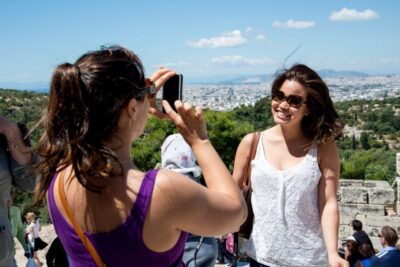 ★ 4.8Acropolis, Parthenon & Acropolis Museum Guided TourFrom $409,316 reviews
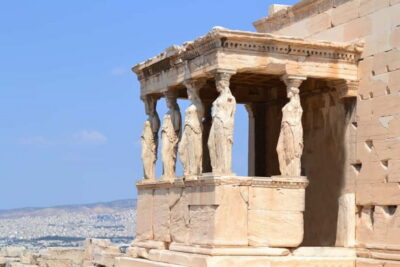 ★ 4.6Acropolis and Parthenon Guided Walking TourFrom $385,882 reviews
★ 4.8Acropolis, Parthenon & Acropolis Museum Guided TourFrom $413,579 reviews
★ 4.6Acropolis and Parthenon Guided Walking TourFrom $385,882 reviews
★ 4.8Acropolis, Parthenon & Acropolis Museum Guided TourFrom $413,579 reviews
 ★ 4.0Acropolis Ticket with Audio GuideFrom $473,575 reviews
 ★ 4.7Acropolis: Acropolis and Parthenon Guided Walking TourFrom $363,442 reviews
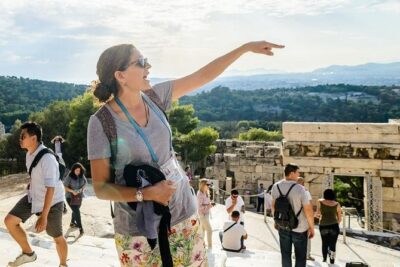 ★ 5.0Acropolis monuments & Parthenon Walking Tour with Optional Acropolis MuseumFrom $422,678 reviews
Browse the lists this tour appears in