
Reviewed · CORINTH DAY TRIPS FROM ATHENS
Ancient Olympia & Ancient Corinth Private LuxuryTour from Athens
Zeus has a way of making the drive worth it. This fully private day links Ancient Olympia and Ancient Corinth with modern car comfort and onboard Wi-Fi, so the long trip from Athens doesn’t feel like a punishment.
I love that it is truly just your group, with pickup and drop-off that can meet you at your hotel, Airbnb, or even the port. I also like that the day is built around seeing the story in layers, museum first and then ruins, so you get context before you walk through the big sites.
One consideration: you will still pay extra for site and museum entry, including the Olympia archaeological site fee and Ancient Corinth ruins, plus you cover your own lunch and tips. If you hate add-on costs, price out tickets before you book.
Key highlights worth planning around
- Wi-Fi in the vehicle keeps you sane (and reachable) during the long Peloponnese drive.
- Private group pacing means you can slow down at the spots you care about, without being herded.
- Olympia’s museum setup first helps you understand Zeus, athletes, and Olympic symbolism before walking the sanctuary.
- Philippeion history hits hard because it’s about Philip II and Alexander the Great, not just Olympian gods.
- Corinth Canal is quick but meaningful with the Periander and diolkos story in your back pocket.
- Corinth ruins plus Temple of Apollo rounds out the day beyond the headline sites.
Private luxury pick-up that keeps your day from turning into logistics
The best part of this kind of tour from Athens is also the simplest: you do not have to stitch together buses, schedules, and meeting points. Your driver can pick you up from the Athens hotel lobby, your apartment entrance, or (if needed) the airport or port arrivals area, holding a sign with your name. The tour ends back at your starting point too, which matters when you are tired, sunburnt, and trying to get dinner plans back on track.
You also get what “private” really means in practice. Groups of 1 to 3 ride in a luxurious sedan, and groups of 4 to 7 move in comfortable mini vans. Either way, you are not waiting for other parties, and you can adjust timing if your group wants more museum time or shorter walks.
You can also read our reviews of more private tours in Athens


Wi-Fi, A/C, and bottled water for the real challenge, the road
Ancient Olympia is not a quick hop. It is a full-day commitment, and you will spend a lot of hours in transit. This tour deals with that reality in a straightforward way: vehicles come with Wi-Fi, A/C, and bottled water, plus fuel and tolls are covered.
In my view, this is where “luxury” actually earns its keep. You can research what you are about to see on your phone, check messages, and then still arrive with enough energy to enjoy the ruins instead of just surviving them. One guest specifically praised the car comfort and Wi-Fi for making the long ride easier, and that matches what I’d want on a day like this.
Olympia Museum first: Zeus artifacts, Olympic context, and the Archimedes angle
You start at the Archaeological Museum of Olympia. This is smart. When you arrive at the sanctuary, everything looks monumental, but the museum gives you the why and the symbolism.
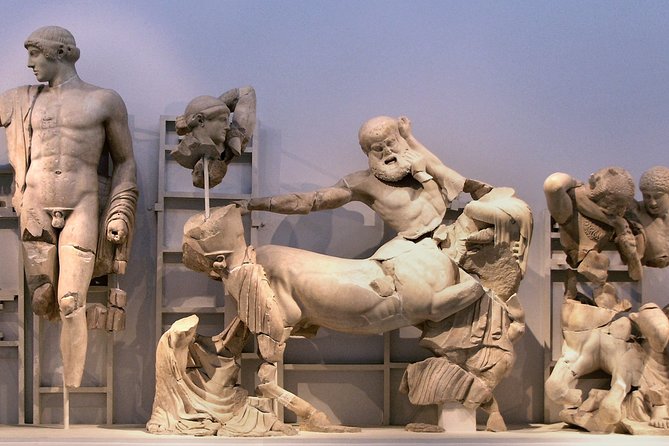
The museum highlights include major artifacts from the site, like the statue of Zeus, described as about 13 meters tall, once seated and made with ivory and gold. You also get Olympic context through the Museum of the History of the Olympic Games in Antiquity, which has been operating since 2004. That museum is based on the collection of Georgios Papastefanou, who pushed the idea of spreading Olympic education through museum displays.
One detail I really like here is the Archimedes component. The museum of Archimedes focuses on the “Greatest Mind” of classical antiquity, with replicas of his inventions and interactive elements. It’s not the usual “temple and columns” stop, and it gives you a break from religious art and athletic monuments. It also helps you remember that ancient Olympia was a cultural hub, not only a sports venue.
Practical note: museum entry is not included, so budget for tickets. The museum time is also where you can cool down if the weather is hot.
Philippeion: the circular monument tied to Philip II and Alexander
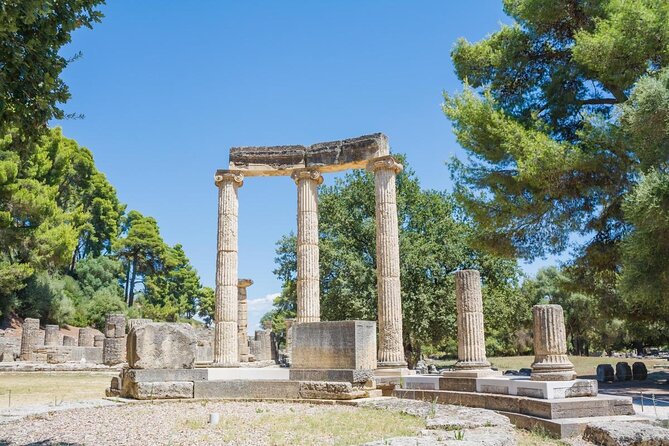
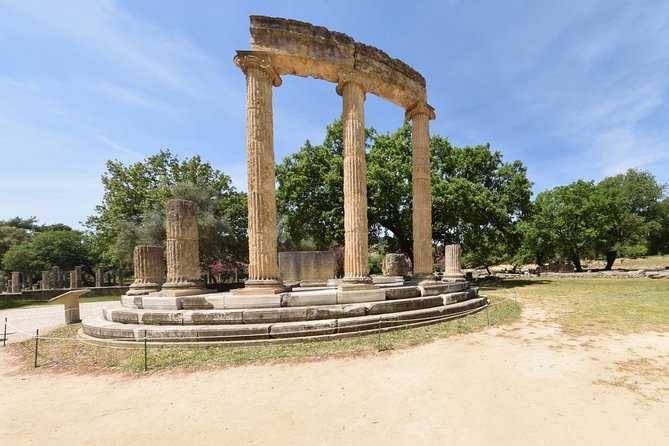
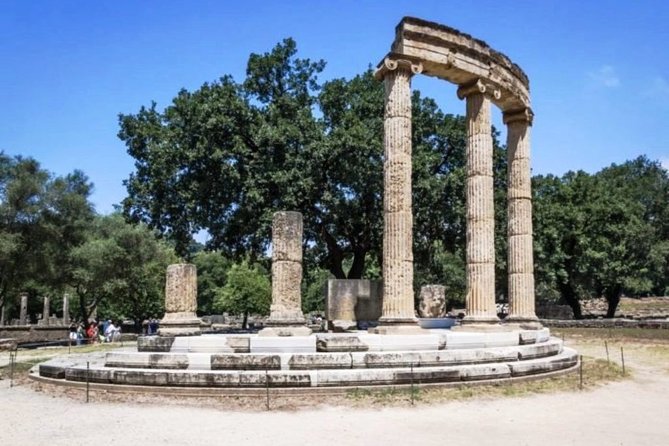
After the museum, you hit one of the most interesting structures on the Olympia ground: the Philippeion. This circular marble and limestone building was commissioned by Philip II of Macedon to commemorate his victory at the Battle of Chaeronea in 338 BC.
What makes Philippeion a standout is that it is not just another god-focused sanctuary building. It once housed statues of Philip’s family, including Alexander the Great. It is also described as the only building in Olympia dedicated to human figures rather than gods. That turns the monument into political messaging, not only religious space.
You will still be walking through ruins, so you should expect remnants rather than a fully preserved “walk-in” monument. But the payoff is that your mental map of Olympia becomes more nuanced. You are seeing how rulers used athletic and religious sites to project power.
Ancient Olympia ruins: Temple of Zeus, Hera, and the workshop reality
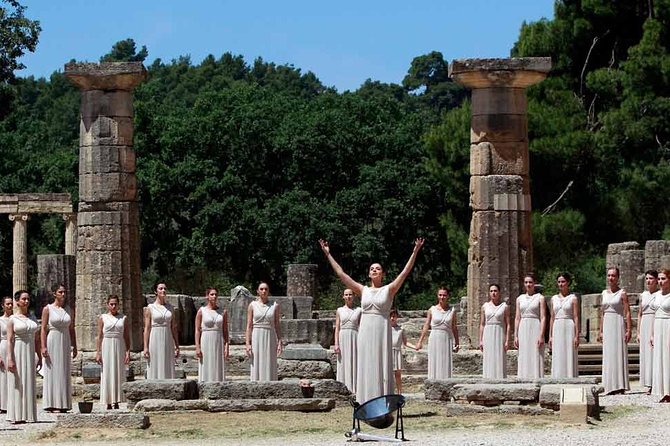
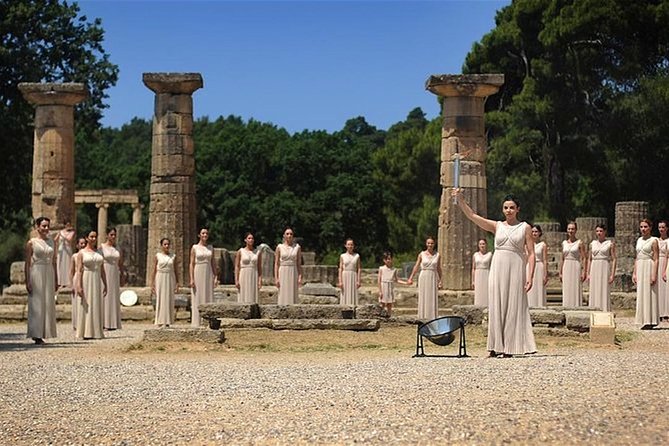
Now the sanctuary itself. You start at the Temple of Zeus, described as a 5th-century BC Doric masterpiece that housed the colossal gold-and-ivory Statue of Zeus, one of the Seven Wonders. Nearby is the Temple of Hera, dedicated to Hera and linked to the ancient Games, with the modern Olympic flame lighting taking place in the area.
Two other stops make the site feel more tangible:
- Pheidias’ Workshop, connected to the sculptor who created Zeus’s iconic statue.
- The way the sanctuary is laid out around major athletic activity, not only worship.
If you like your history grounded in how people built and worked, the workshop piece gives context. It’s easier to picture the scale of the statue and the craftsmanship when you are standing near the area associated with its creation.
- All Day Cruise -3 Islands to Agistri,Moni, Aegina with lunch and drinks included
★ 5.0 · 4,958 reviews



The stadium, palaestra, and Roman touches you can actually spot
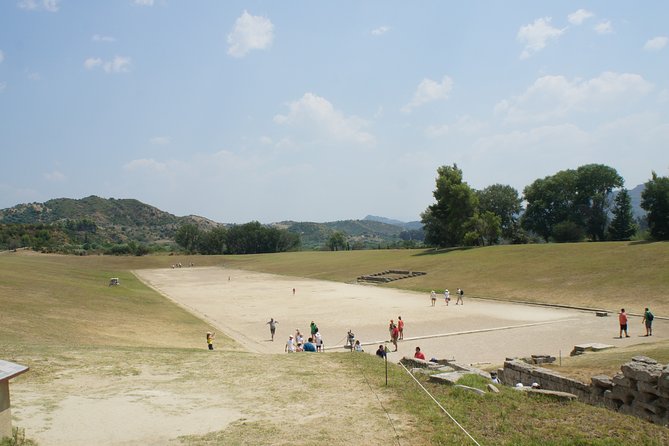
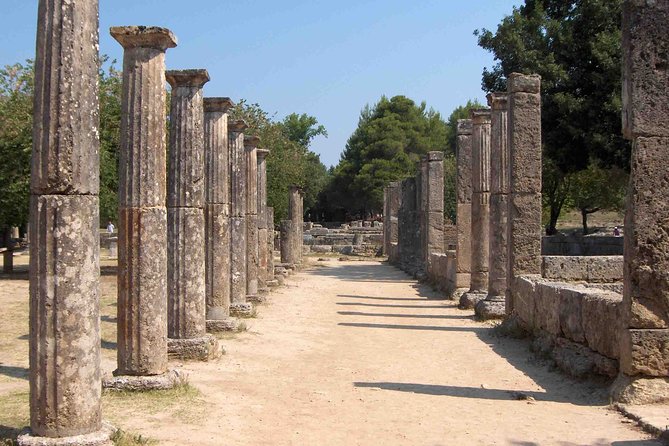
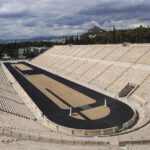
The Ancient Stadium is a key highlight. It’s accessed through a stone archway and is described as once holding about 45,000 spectators around a 192-meter track. Even if you do not measure it in your head, you can feel what that size meant for competition and spectacle.
Then you move to the palaestra, a training ground used for boxing, wrestling, and jumping. It’s the kind of place where you can almost see the routines if you slow down and pay attention to the space.
Finally, there is the Nymphaeum, a Roman fountain from the 2nd century AD. This matters because it reminds you the site did not stop being relevant after classical Greece. Roman-era upgrades and uses layered new meaning onto older sacred ground.
For your visit, the best strategy is not to sprint between monuments. A long day in the car plus a hot walk can make you lose patience. Build in small pauses, especially at the stadium and palaestra areas, to catch the scale.
Olympia village time: a real break that keeps the day from collapsing
A big reason these private tours work is the built-in downtime. You get time in Olympia village, including a chance to stroll and shop for handmade souvenirs. If you have a family who loves small crafts, this is where you might find the kind of gifts that do not look like generic tourist stock.
You can also plan a proper meal here. The tour schedule includes lunch time at a traditional Greek taverna, with classics like moussaka and souvlaki listed as examples. Meals are not included, so you are paying for what you order, but you also avoid the awkward “find food while your driver is waiting” problem.
One practical tip: eat sooner rather than later if you want a calmer sit-down. Olympia village gives you a breather after the ruins.
Temple of Zeus stop and quick photo breaks along the way
The day includes an additional Temple of Olympian Zeus stop for about 20 minutes, described as a Doric temple from the second quarter of the 5th century BC. Since the tour is a full-day route with multiple sites, this type of stop functions as a palate cleanser between heavier ruin visits.
Think of it like a chance to stretch your legs, take a few photos, and connect the day’s theme back to Zeus before you pivot to Corinth.
Corinth Canal: the engineering story behind the postcard view
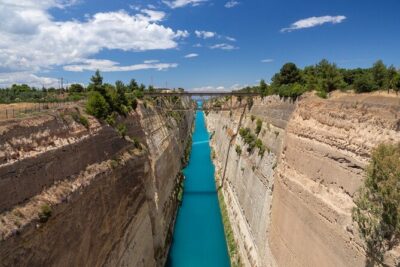
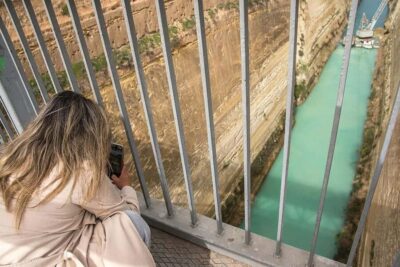
Corinth Canal is quick, but it has a strong story. The canal crosses the narrow isthmus to link the Gulf of Corinth to the Saronic Gulf, essentially separating Greece’s mainland from the Peloponnese, turning it into an island.
The fun part is the long dream behind it. The canal’s construction is late 19th century, but the idea was described as a 2000-year-old dream. Before it was built, ships had to circle the Peloponnese, adding about 185 nautical miles.
If you like ancient technology and practical plans, there is one extra layer: it’s believed Periander of Corinth conceived the idea. When the project was too complicated for the era, Periander constructed the diolkos, a stone road that allowed ships to be transferred on wheeled platforms.
Even with only a short visit, you leave with a reason to look, not just a reason to snap a photo.
Ancient Corinth: walking Paul’s world in a ruined city-state
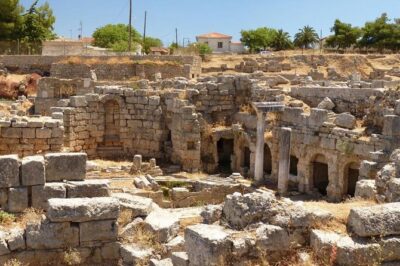
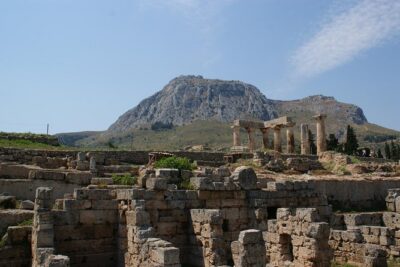
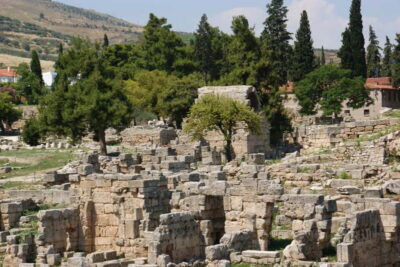
In Ancient Corinth, you get about an hour at the main area. Corinth is described as a city-state on the Isthmus of Corinth, roughly halfway between Athens and Sparta. It was important enough to have a population around 90,000 in 400 BC, and it went through a rough reset when Romans demolished Corinth in 146 BC and later built a new city.
For religious history, Corinth is known from Saint Paul’s letters to the Corinthians in the New Testament, plus references in Acts tied to Paul’s travels. Even if your interest is strictly art and archaeology, this Roman-era and early Christian connection gives the ruins extra meaning.
The best way to enjoy Corinth is to treat it like a layered story. You are not just looking at one era. You’re seeing what survived, what was replaced, and what people reused.
Temple of Apollo at Corinth: the Doric details you can spot
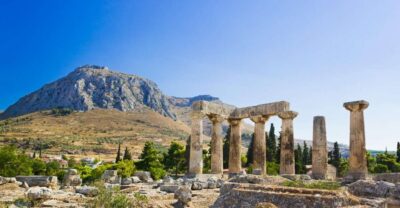
The Temple of Apollo in Corinth is described as constructed around 550 BC, with monolithic columns noted as rare in the ancient world. It is identified as one of the earliest Doric temples in the Peloponnese and the Greek mainland, built around 560 BC.
This is a useful final stop because it gives you a different “Greek architecture feeling” than Olympia. Olympia’s Zeus complex is huge and iconic, while Apollo at Corinth adds detail and early Doric character. You will also likely get a quick look at the surrounding context, since the schedule gives this area about 15 minutes.
Entry for Ancient Corinth is not included, so you will pay your admission on your own when you arrive.
Price and value: what $361.42 per person really buys you
At $361.42 per person, this is not a budget trip. But the price makes more sense when you break it into what you avoid.
You are buying:
- Fully private transport for your group (with Wi-Fi and A/C)
- Pickup and drop-off flexibility across Athens and also airport or port options
- Fuel and tolls included
- Time in multiple major stops in one day: museums, sanctuary ruins, Corinth Canal, Corinth ruins
What you are not buying:
- Entry fees for the Olympia archaeological site, Olympia museums, and the Olympic Games museum
- Entry for Ancient Corinth ruins
- Your lunch costs
- Tips and gratuities
The most honest “value check” I suggest is this: if you would otherwise take separate public transport and miss the museum context, this private format is easier and more time-efficient. If you only want the top ruins and you are comfortable doing entry tickets and navigation yourself, you might pay less going independent.
But if you want your day controlled, comfortable, and paced to your group, the cost is more defensible.
Who this private Olympia and Corinth day trip suits best
This works best for you if:
- You want a private day with a driver who helps tie the story together
- You care about seeing Olympia beyond just the headlines, including museum context and Philippeion
- You are willing to pay museum and site tickets on top of the base price
- Your group includes people who benefit from comfort on a long drive
It might feel like too much if your group wants only one site and hates structured schedules. Olympia and Corinth together are a big theme day.
From driver feedback in the past, people often remember the personality element too. Drivers such as Chris have been praised for humor and myth stories, while others like Nikos have been highlighted for being attentive and friendly. Even with that variation, the consistent theme is that the driver helps you connect dots, not just drive.
Should you book this Athens to Ancient Olympia and Corinth tour?
If you want the easiest route to two of Greece’s big ancient stories in one day, I’d book it. You get real comfort for the long travel, museum-first context at Olympia, and a meaningful Corinth Canal stop with engineering history. The private format is also the main reason this kind of itinerary feels pleasant instead of exhausting.
Book it with two expectations. First, budget extra for entry fees and your own lunch, and accept tips are on you. Second, think of this as a “lots to see” day, not a slow weekend stroll. If that fits your style, this is a smart way to do Olympia and Corinth without wasting your holiday on transport stress.
FAQ
How long is the Ancient Olympia & Ancient Corinth private tour from Athens?
The tour is about 12 hours.
What is the price per person?
The price is listed as $361.42 per person.
Is pickup offered, and where can the driver meet me?
Pickup is offered. The driver can pick you up from an Athens hotel, Airbnb residence, or the port, and for airport arrivals they meet you in the arrival hall holding a sign with your name.
Is this tour fully private?
Yes. It is a fully private tour, and only your group participates.
What language is the tour provided in?
The tour is offered in English.
What is included in the transportation and vehicle?
Transportation is via a modern first-class private vehicle, with Wi-Fi, A/C, and bottled water. Fuel and tolls are included.
Are entry tickets included for the sites and museums?
No. Entry/Admission is not included for the Archaeological Site of Olympia (listed as €20 per person), the Archaeological Museum of Olympia, the Museum of the Olympic Games, and Archaeological Site of Ancient Corinth (listed as €15 per person). The day also notes museum admissions as not included in multiple stops.
Are meals included?
Meal costs are not included. Lunch stops are scheduled, but you pay for your own food.
What is the cancellation policy?
You can cancel for a full refund up to 24 hours in advance. If it’s canceled due to poor weather, you are offered a different date or a full refund.
More Private Tours in Athens


More Tour Reviews in Athens
- All Day Cruise -3 Islands to Agistri,Moni, Aegina with lunch and drinks included
★ 5.0 · 4,958 reviews
Not for you? Here's more nearby things to do in Athens we have reviewed




Corinth Day Trips from Athens, compared.
 ★ 4.6From Athens: Ancient Corinth Day Trip with Canal & VR GuideFrom $411,073 reviews
 ★ 5.0Private Biblical Tour Ancient Corinth & Isthmus Canal from AthensFrom $301762 reviews
 ★ 4.8Ancient Corinth & Nafplio Full Day Trip with SwimFrom $44523 reviews
 ★ 5.0Private Tour of Apostle Paul’s Footsteps in Ancient CorinthFrom $169275 reviews
 ★ 4.5Corinth Half-Day Trip from Athens with Entrance TicketsFrom $91242 reviews
 ★ 4.7Ancient Corinth & Nafplion Guided Premium TourFrom $34237 reviews
 ★ 4.4Corinth Canal, Mycenae and Nafplio Day TourFrom $33233 reviews
 ★ 4.6From Athens: Ancient Corinth Tour Official Guide & TicketsFrom $86208 reviews
Browse the lists this tour appears in