
Reviewed · CORINTH DAY TRIPS FROM ATHENS
Blue Lake, Sanctuary of Hera, Mycenae, Ancient Corinth, Canal
Corinth and Mycenae in one long, comfy day. You get a tight loop of big-name ruins, plus a proper break with Perachora’s Blue Lake swim in the late part of the day. I especially like the door-to-door private transport setup, which keeps logistics simple when you want to get out of Athens fast.
Two things I like a lot: first, the day mixes landmark sites with the kind of views you only get when you drive the coast. Second, you end with time at the Sanctuary of Hera area, so the day doesn’t feel like nonstop sightseeing.
One consideration: most site entrances are not included, and with a 9-hour schedule you need to be okay with short-to-medium stops rather than lingering for hours in every room.
Key highlights worth planning for
- Private, door-to-door comfort from your Athens hotel, with WiFi, bottled water, wipes, and handmade biscuits
- Corinth Canal and the Diolkos stop, pairing modern engineering with an ancient boat “trackway”
- Mycenae’s key sights in one go, from Grave Circles to Cyclopean Walls and the Royal Palace area
- Acrocorinth viewpoint time plus Ancient Corinth landmarks like Apollo and the Agora/Bema area
- Perachora’s Blue Lake swim after the ruins, right near the Heraion setting
- Real schedule flexibility, since your driver can adjust timing so you do not feel rushed at the wrong places
How a 9-hour Corinth and Mycenae loop feels from Athens
This is built for travelers who want the heavy hitters without dealing with multiple buses, ticket counters, and tricky timing. A private vehicle picks you up from your hotel lobby and returns you there, so you can focus on the places and your own pace.
The real magic here is the order of stops. You start with Corinth’s canal and Mycenae’s Bronze Age power center, then you work down toward Ancient Corinth, and you finish with the Heraion and the Blue Lake. That ending matters. After hours among stones, columns, and walls, a swim and a final look around the sanctuary area is a reset button.
You should also know what kind of experience this is. This is not a “walk with a licensed guide into every room” format. Your driver handles the storytelling and context, and you can add a licensed guide for museum and site interiors if you want. That approach works well if you like to wander at your own speed once you understand what you are looking at.
You can also read our reviews of more tours and experiences in Athens.


Corinth Canal and the Diolkos: 19th-century engineering plus an ancient boat route
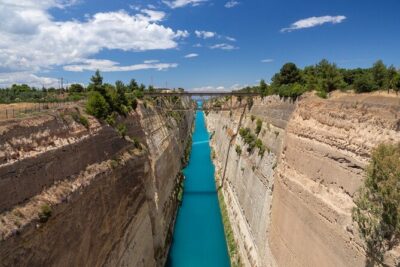
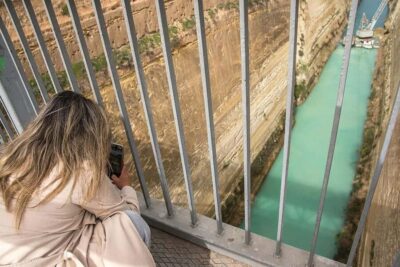
Stop 1 is all about the Isthmus of Corinth, where people have been trying to control maritime routes for centuries. You visit the Corinth Canal first, an important project that connects the waters and shows off 19th-century engineering at full scale. Even if you have seen photos, standing near it makes the scale click.
Right after, you also visit Ancient Diolkos, a paved trackway used in ancient times to move boats overland across the isthmus. This is one of those “wait, they did that?” moments. The idea of sliding ships across land, before modern canals, makes the canal stop feel more meaningful, not just impressive.
Duration is set at about 45 minutes. Since admission is marked as free for this stop, it is a low-cost way to start strong, and it gives you a buffer for the drive time. If you are the type who likes photos with context, this is a great first stop because the theme (routes and transport) carries into the rest of the day.
Mycenae’s Grave Circles and Cyclopean walls, where legends turn into stone
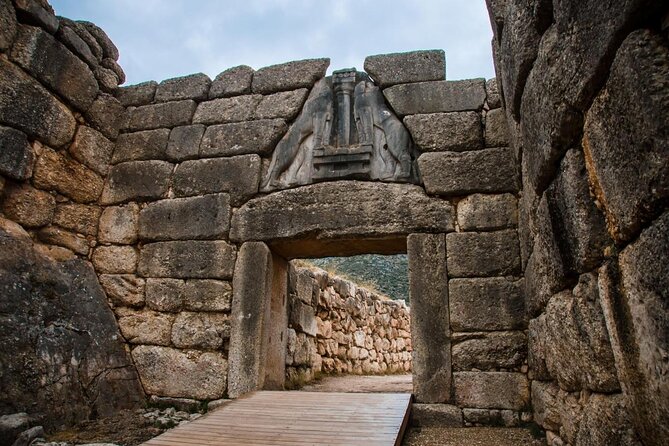
Mycenae is the heart of this outing for many people, and the itinerary hits the major visual anchors. You get Grave Circles A and B first, the royal cemeteries south of the Lion Gate. This is where the late Bronze Age shows its power, not through rulers standing around posing, but through the scale and placement of tombs.
Then comes the signature feature: the Cyclopean Walls. The description you will hear is part myth, part truth. Mycenae’s walls are built from huge limestone boulders, the kind of mass that makes you understand why ancient people told stories about superhuman builders. Standing here, you can almost feel the labor and strategy behind fortification.
You also see the Royal Palace area, which includes domestic spaces, the Throne Room Suite, a Grand Staircase, and a forecourt. The Royal Palace time shown is about 30 minutes, and the admission for that is not included. Translation for your planning: budget for entry if you want to go inside, and expect some limits if you decide not to pay entrances on the day.
If you are short on time, Lion Gate is your quick hit. It is the main entrance to the citadel from the 13th century BC, and it is perfect for a “get the shape in your head, then move on” moment. The Lion Gate stop is brief, around 15 minutes, and admission is marked as not included.
The Treasury of Atreus and the museum stop that turns gold into a real story
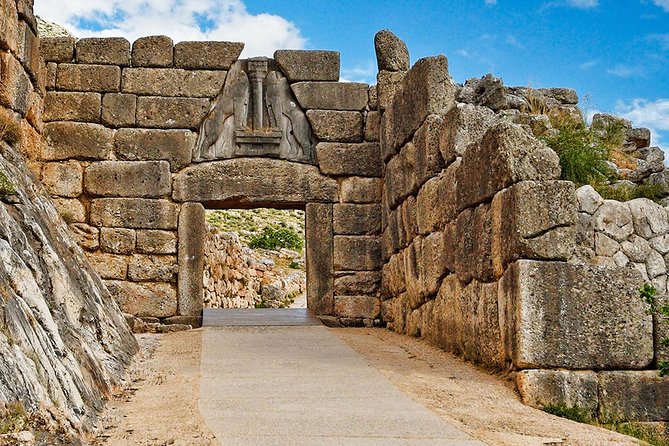
After the walls and gates, the day moves into tomb territory, where Mycenae’s wealth becomes physical. You visit the Citadel and Treasury of Atreus, a large tholos or beehive tomb around 1250 BC. The shape matters here. Tholos tombs feel enclosed and deliberate, and they help explain how the Mycenaeans thought about memory, status, and the afterlife.
Right alongside that, you also see the Tomb of Clytemnestra, another tholos tomb built around the same period and named for Agamemnon’s wife. Even if you know the myths from school, the experience lands differently when the myth is attached to an actual building form.
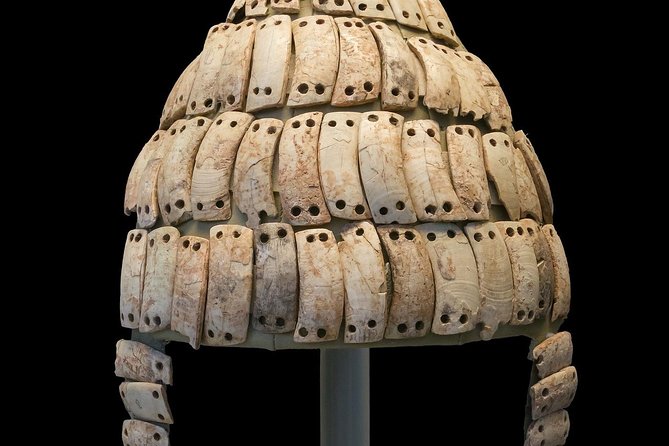
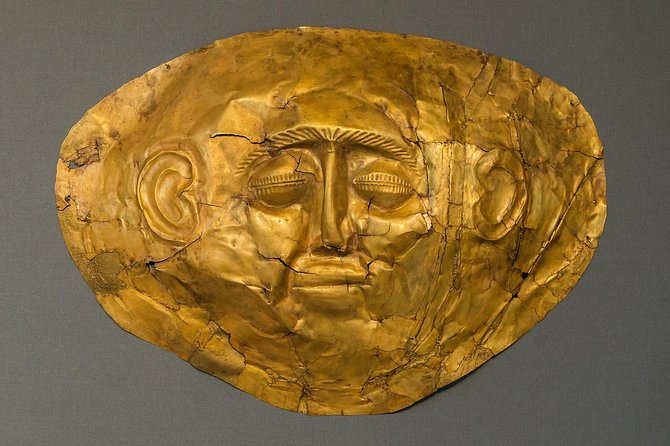
There is also an Archaeological Museum of Ancient Mycenae stop. This is one of the best places to slow down just a little, because the artifacts show what the earlier ruins suggest. The museum is where you can expect to see gold grave goods, burial masks, jewelry, weapons, worship idols, and even frescoes. Museum entry is not included, and the time is about 30 minutes, so decide before you go how much you want to focus on details versus sweeping impressions.
Acrocorinth and Ancient Corinth: forts, fountains, and Paul’s Bema area
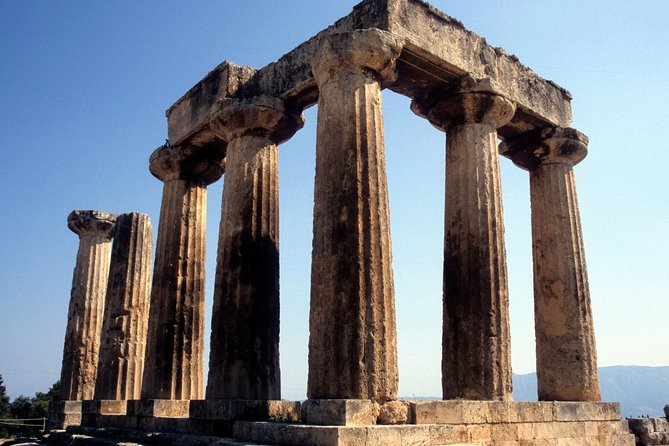
From Mycenae, the route climbs into Corinth’s high ground. Acrocorinth, the acropolis overlooking ancient Corinth, is one of the most dominant viewpoints in the Peloponnese. You spend about an hour here, which is a fair amount if you move at a calm pace.
This part is not just scenic. You also explore the gate and wall system, described as three circuit walls reinforced by towers. Then you get specific site traces on the hilltop, including the Temple of Aphrodite on the mountain’s two peaks. If you like seeing how later eras layered onto earlier places, Acrocorinth delivers.
You also see the Frankish Tower at the southwest edge of the rock. This was fortified during Frankish times, and remains of churches, mosques, houses, fountains, and cisterns remain in the structure and surrounding area. That mix of periods is a big reason Acrocorinth feels like more than a single ruin. It reads like an ongoing occupation story.
Later, you make lighter stops that keep your legs from feeling trapped in “always uphill.” Upper Peirene Fountain is a short visit, about 15 minutes. It is linked to the spring gift of Asopus to Sisyphus, and it gives you a taste of Corinth’s myth geography.
Then Geraneia provides the views. Expect a quick 15-minute viewpoint stop with outlooks over the Corinthian gulf and the southwest coast of the Peloponnese. This is a nice mental shift, from Bronze Age walls to modern coastline.
- All Day Cruise -3 Islands to Agistri,Moni, Aegina with lunch and drinks included
★ 5.0 · 4,958 reviews

Ancient Corinth’s Agora, Temple of Apollo, and the mosaic in St. Paul’s church
Ancient Corinth is set for about 3 hours, which is the longest block of the day. That matters because you need enough time to see the main pieces without feeling like you are scanning from one corner to another.
You start with fountains and street context, like Hadgimoustafa spring, built during Ottoman rule. Then you move into the Ancient Corinth Archaeological Museum, with a collection of artifacts from the site and nearby smaller locations.
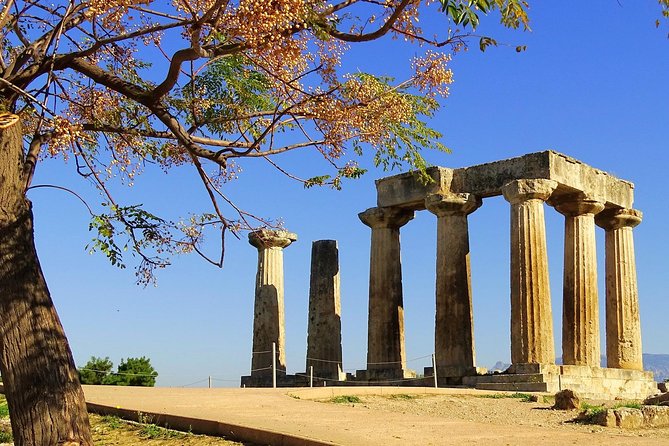
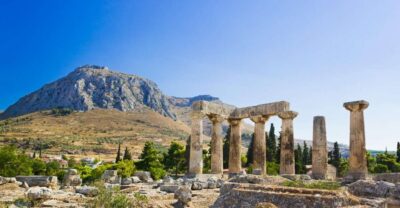
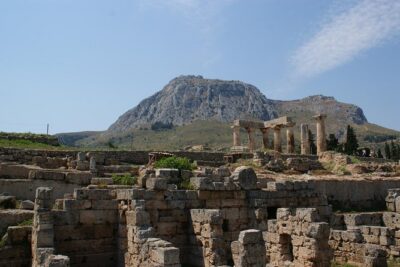
One of the “wow” moments is the Temple of Apollo. It is one of the earliest Doric temples in the region and the Greek mainland, built around 560 BC. The monolithic columns are rare in the ancient world, and this is the kind of detail that makes photos look different than they do from other temples.
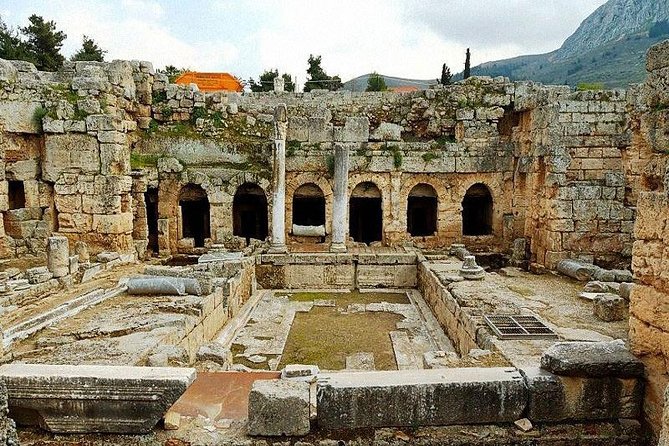
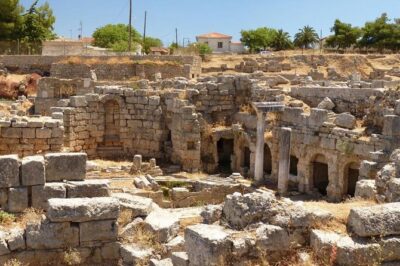
The Agora section helps you picture daily life and civic power. The Agora is described as a rectangular space with central shops, small temples, altar areas, and the podium or Bema, from which Apostle Paul addressed the Corinthians in 52 AD. There are also Roman buildings in the mix, so you see how Corinth changed as centuries moved on.
You will also see the Theatre and Odeon/Asklepieion area. If you like classical architecture but want it connected to real life, this portion helps.
And yes, there is a church stop with a story inside. St. Paul’s church includes a mosaic mural depicting Saul’s vision from Christ as he traveled to Damascus to persecute Christians. It is one of those moments where the site stops being only archaeology and becomes part of religious tradition too.
Lunch with a view, plus time for village-style browsing
This is where you get a practical perk: you can treat yourself to an authentic village-style lunch on a terrace overlooking Ancient Corinth’s archaeological site and the Temple of Apollo. The itinerary also includes time to stroll among village shops for handmade souvenirs. That is not just shopping time. It is a chance to take a slower breath and buy something that feels tied to the place.
Heraion in Perachora and the Blue Lake: the best way to cool down at day’s end
After Ancient Corinth, you shift toward Perachora for the Sanctuary of Hera, known as the Heraion, and the Blue Lake swim stop. The time here is about 1 hour.
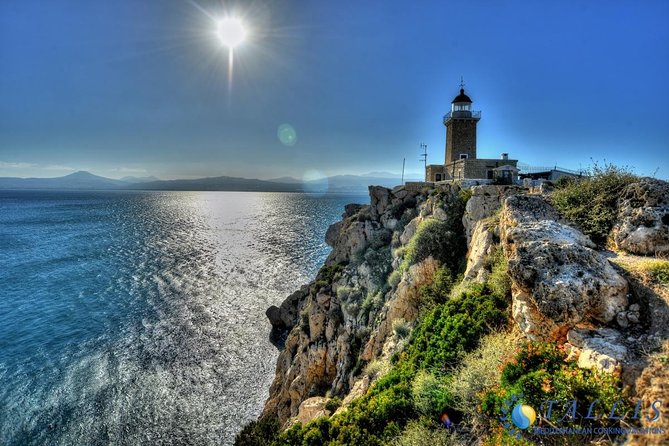
You will see the Malagavi Lighthouse area, then make your way to the Heraion and Blue Lake setting. The highlight is simple: you get refreshing time to swim and bathe under the sun. This is an ideal ending because you have done the “look, read, imagine” part of the day, and now you do the “feel it” part.
Keep in mind, entrance for Heraion and Blue Lake is marked as not included. Also, you may want to plan for weather. The day is structured for a swim, but if conditions are not right, a different option might replace it. One driver example in the provided feedback mentioned switching plans in winter and choosing another historic stop instead.
What you can expect from your private driver (and why it matters)
This tour is fully private. That means you are not squeezed into someone else’s group pace, and you can benefit from door-to-door pickup and return. The car is described as clean and comfortable, with WiFi onboard, bottled water, refreshing wipes, and fresh handmade Greek biscuits.
The driver role is a big part of why people rate this so highly. You get in-depth context about what you are seeing during the drive between sites. That is the key. It helps you walk into Mycenae or Ancient Corinth with a mental map and basic story beats, so you do not feel lost staring at stones.
Also, you are not just stuck on rails. There is flexibility if your group wants to spend more time somewhere, and a good example from feedback highlighted that the schedule can be adjusted when you stay longer at certain stops. Another detail that came up in feedback was drivers going above and beyond with timing, such as making sure there is time for a sunset visit at the Temple of Hera when possible.
One caution: your driver is not listed as a licensed site guide for entering every museum room. Feedback also points out that the driver often does not accompany you inside each site, which is fine because you get context on the way. If you want someone to physically walk you through interiors, you may need to add a licensed tour guide option.
Practical tips so the day feels fun, not exhausting
This is a long day, around 9 hours. It is not “quick hit” sightseeing. You should plan your energy like a road trip.
Bring basic comfort items: sunscreen, a hat, comfortable shoes for uneven ground, and a swimsuit if you plan to use the Blue Lake time. If you have swim shoes or quick-dry footwear, they can make that last stop more comfortable.
At Ancient Corinth, you have about 3 hours. That is enough time to do more than just take a few photos, but only if you do not try to read every label like it is a textbook. I suggest you choose your priorities: Apollo, the Agora/Bema area, and St. Paul’s church mosaic, then use the rest of the time for museums or theatre areas.
At Acrocorinth, you should expect walking around a fortress hill. Even when the itinerary keeps it to about 1 hour, it is still an acropolis. If you have mobility issues, it is worth discussing with the provider before you book so you can plan what parts you will comfortably cover.
Price and value: is 337.15 per person a good deal?
At $337.15 per person for a 9-hour, fully private day, the value depends on how you travel. If you want a hassle-free ride out of Athens, this price starts to make sense because you are paying for door-to-door service and a private vehicle, not just entry tickets.
What is included helps justify the cost. You get hotel pickup and drop-off, transportation by private luxury vehicle, WiFi onboard, bottled water and wipes, and handmade Greek biscuits. You also get a mobile ticket, and there is a skip-the-line ticket service on request. That last piece is small, but it can save time at busy sites.
The big separate cost is entrance fees and any licensed guide add-ons. The itinerary repeatedly marks site admission as not included for several major parts: the Royal Palace area, Lion Gate, tombs and museum pieces, Ancient Corinth museum and key monuments, and Heraion and Blue Lake. So when you budget, add a reasonable amount for entrances. Also budget for food, since meals and drinks are not included.
In other words: the tour cost covers the comfort and route. Your entrance-fee budget covers the archaeology.
Who should book this tour, and who might prefer something else
This tour is a great fit if you want:
- a private day trip from Athens that covers Corinth, Mycenae, Acrocorinth, and Perachora in one sweep
- a comfortable ride with real context from your driver
- a memorable ending with a Blue Lake swim and Hera sanctuary time
It may not be ideal if you prefer:
- a slow paced, museum-heavy itinerary with lots of time inside every building
- no driving and minimal walking on uneven ground
- a fully licensed guide inside every stop, because the setup is driver-based for context and a licensed guide is an add-on
Should you book this tour?
If you like the idea of seeing the top layers of Greece, Bronze Age Mycenae, classical Corinth, and then a sanctuary visit with swimming time, I think this is an excellent booking. The private door-to-door format makes it easier than DIY, and the ending at the Heraion area is the kind of payoff that makes a long day feel worth it.
I would book if you are okay paying extra for site entrances and you want a driver who helps you connect the places as you go. I would hesitate only if you want hours in museums and zero walking on hills. If you can handle a full day out of the city, you’ll come back with images that connect engineering, myths, and human scale, all in one route.
FAQ
Is this a private tour?
Yes. It is a private tour/activity, and only your group participates.
How long is the tour?
The duration is listed as about 9 hours.
What is included in the price?
The tour includes fully private transportation, hotel pick-up and drop-off in Athens, WiFi onboard, bottled water and refreshing wipes, and fresh handmade Greek biscuits. You also get a mobile ticket and can request skip-the-line ticket service.
Are entrance fees included for the archaeological sites?
No. Entrance fees are not included, and the itinerary also notes multiple stops where admission is not included.
Do I get picked up from my hotel in Athens?
Yes. Hotel pick-up and drop-off from your chosen hotel in Athens is included. The driver meets you at the lobby.
Do I need to speak Greek?
No. The tour is offered in English, and the driver is described as fluent in English and multi-lingual.
Is there a licensed guide included inside sites and museums?
Not as part of the standard package. A licensed tour guide to accompany guests into sites and museums is available as an additional cost on request.
Is the Blue Lake swim included?
The swim time at Heraion in Perachora is part of the schedule (about 1 hour). Entrance for that stop is not listed as included.
Is food included?
Food and drinks are not included. The plan includes a chance to have an authentic village-style lunch on a terrace near the Ancient Corinth area.
Can I cancel and get a full refund?
Yes. There is free cancellation up to 24 hours in advance for a full refund.
Is there WiFi in the vehicle?
Yes. WiFi on board is included.
More Tour Reviews in Athens
- All Day Cruise -3 Islands to Agistri,Moni, Aegina with lunch and drinks included
★ 5.0 · 4,958 reviews
Not for you? Here's more nearby things to do in Athens we have reviewed







Corinth Day Trips from Athens, compared.
 ★ 4.6From Athens: Ancient Corinth Day Trip with Canal & VR GuideFrom $411,073 reviews
 ★ 5.0Private Biblical Tour Ancient Corinth & Isthmus Canal from AthensFrom $301762 reviews
 ★ 4.8Ancient Corinth & Nafplio Full Day Trip with SwimFrom $44523 reviews
 ★ 5.0Private Tour of Apostle Paul’s Footsteps in Ancient CorinthFrom $169275 reviews
 ★ 4.5Corinth Half-Day Trip from Athens with Entrance TicketsFrom $91242 reviews
 ★ 4.7Ancient Corinth & Nafplion Guided Premium TourFrom $34237 reviews
 ★ 4.4Corinth Canal, Mycenae and Nafplio Day TourFrom $33233 reviews
 ★ 4.6From Athens: Ancient Corinth Tour Official Guide & TicketsFrom $86208 reviews
Browse the lists this tour appears in