
Reviewed · ATHENS ACROPOLIS & PARTHENON TOURS
Private Luxury Tour: Athens Acropolis & Iconic City Highlights
Athens gets clearer fast with a private driver-guide. I love the hotel or port pickup and the fact that the whole ride stays cool in an air-conditioned vehicle. I also like having Wi-Fi on board and a driver who can explain what you are looking at, from Pericles-era Athens to Roman and modern landmarks.
One thing to plan for: archaeological entrance fees are extra, and sites like the Acropolis and Ancient Agora require tickets beyond the tour price.
If you want a 4 to 5 hour hit list without the stress of maps, ticket logistics, and heat, this one is built for you. The private format means your group can set the pace, and you are not stuck waiting on a big bus crowd. Still, with so many stops packed in, you will get the most out of it if you come with comfortable shoes and a flexible mindset.
Key highlights to look for
- Private pickup that reduces wasted time at hotels, apartments, and cruise ports
- Air-conditioned comfort on the road in warm weather
- Driver-guide storytelling that connects sites instead of listing facts
- Wi-Fi on board to check messages while you travel between stops
- A smart mix of ticketed and free stops so you control your priorities
- Short, focused visits that keep the afternoon moving without rushing everything
Private pickup, cool comfort, and a driver-guide who keeps it moving
This is the kind of Athens tour that feels calm, even when the city is busy. The experience starts with pickup from your hotel or the cruise port area, and the driver meets you at the curb. If you are arriving by ship, the meeting setup is straightforward, with a name sign at the arrival area.
Once you are in the car, the comfort matters. You ride inside an air-conditioned vehicle, which is a big deal in Athens sun. On top of that, you get bottled water and Wi-Fi on board, so you can handle timing, weather checks, or quick messages while you move between neighborhoods and viewpoints.
The other reason this works is the driver-guide. You are not just dropped off and told good luck. The driver uses the road time to explain what you are seeing, and the pacing is typically human scale. In recent experiences, drivers such as Demetrius, Dimitrios, Pericles, and Panos were specifically praised for being friendly, punctual, and quick to answer questions. That matters because Athens rewards curiosity. When someone can explain why Parthenon details exist, the stop feels less like a checklist.
You can also read our reviews of more city tours in Athens


Acropolis first, but plan for ticket time and sun
Most Athens tours start with the Acropolis for a reason. It is the one place you really cannot fake with photos from street level. Here, you begin at the Acropolis early in the route, which gives you your best chance at clear viewpoints and a smooth flow.
The Acropolis stop is around 40 minutes, and the tour includes time on the site, but the admission ticket is not included. That is also true for several other archaeological stops later in the day, like the Ancient Agora. In practical terms, you should budget extra for tickets, then use your tour time for the walking and looking.
Because this is outdoors and exposed, come prepared. You are going to be in sun, and the tour recommends comfortable footwear, plus a hat and sunscreen. Even if the day is warm but not brutal, shade on the Acropolis is limited, so your comfort gear matters more than you think.
What you gain by doing it early is momentum. The driver-guide stories help you connect the monuments to the people and politics behind them. Instead of standing in front of stone and hoping it clicks, you learn what Pericles was aiming for during Athens’ golden age, and how the Parthenon fits into that message.
Parthenon, Athena Nike, and Erechtheion: what to actually notice
After the initial Acropolis orientation, the route focuses on the biggest names, but it does not waste your time. The schedule gives you separate stops for the Parthenon, Temple of Athena Nike, and the Erechtheion, each with a short window.
Here is how to make those minutes count:
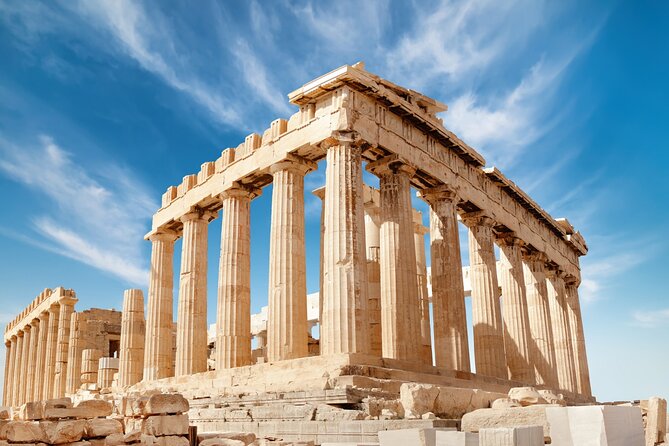
- Parthenon (about 20 minutes): Look for how the building tries to feel perfectly balanced. The Parthenon was built in the 5th century BC under Pericles’ program, and it was dedicated to Athena. Your driver’s explanations about proportions and sculptural details help you understand why this building became a global reference point for classical architecture.
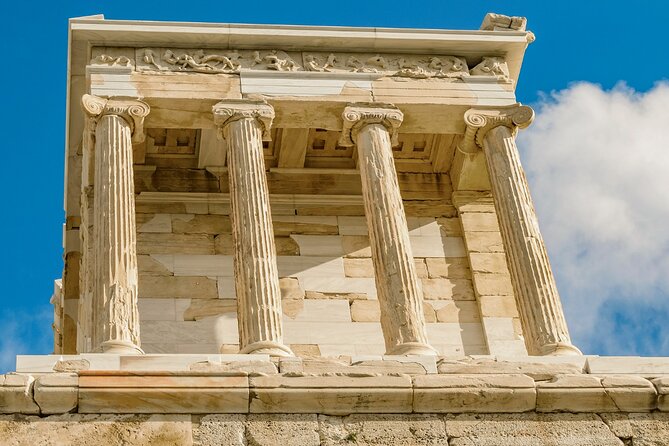
- Temple of Athena Nike (about 10 minutes): This one is smaller, so it can be easy to glance over. Don’t. It is positioned on the southwest corner of the Acropolis and relates to victory and symbol during conflict, including the Peloponnesian War context. It is a nice breather stop because you can slow down and take in the elegance without being overwhelmed.
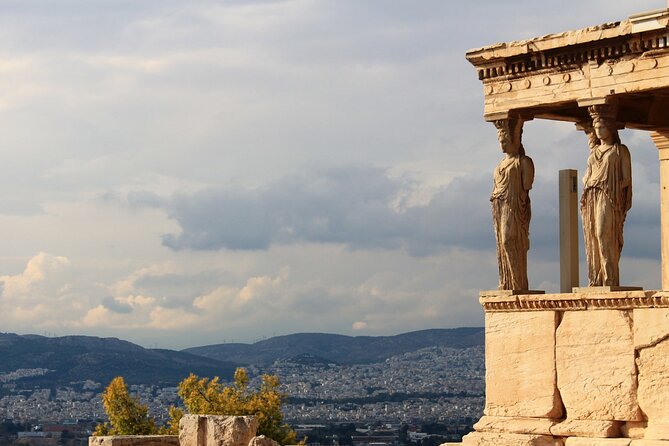
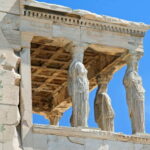
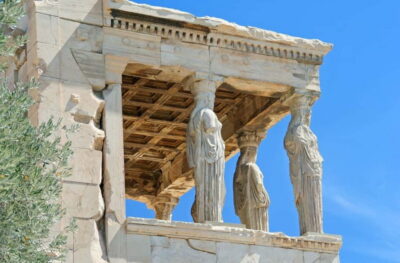
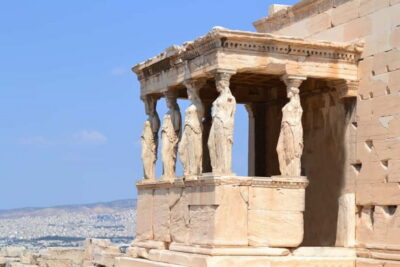
- Erechtheion (about 15 minutes): This is the one where myth meets architecture. The Erechtheion honors both Athena and Poseidon and has an asymmetrical layout, including the famous Porch of the Caryatids. If you have ever wondered why some ancient buildings feel more human and less rigid, this is where it shows. The oddness is part of the design logic.
One drawback to note: these stops are timed. You will not have an all-day slow wander. If you want to sit and sketch or take long audio breaks, you may need to speed up your pace or add extra time on your own later.
Odeon of Herodes Atticus and the story of Athens through empires
The tour does not end at Greek monuments. It keeps going by showing you the layers of Athens, Greek, then Roman, then modern.
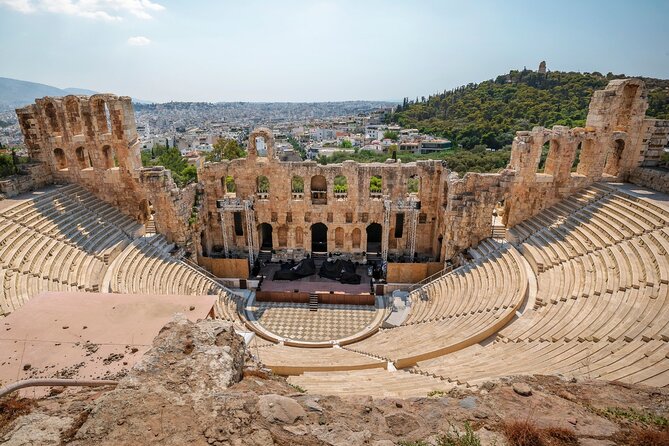
A standout stop is Herod Atticus Odeon (around 15 minutes). Built in 161 AD, it is a well-preserved theater on the Acropolis slopes. What is cool is that it bridges eras. You get the ancient setting, but you also learn it is still used for performances today. If you like connections between past and present, this stop does that quickly.
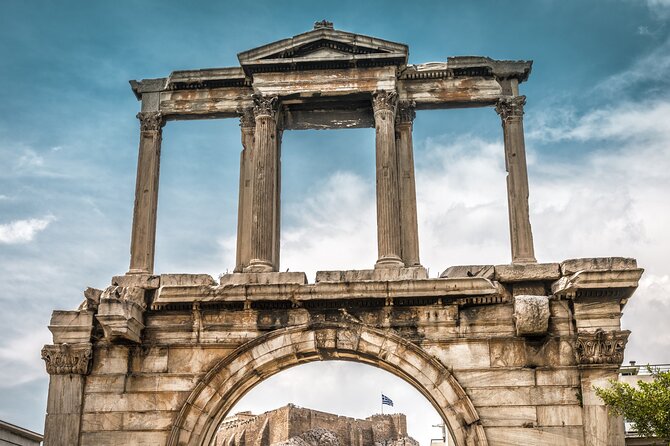
Then you move to the heart of the city for Hadrian’s Arch. This is a Roman monument made of Pentelic marble, built in 131 AD. The arch marks the shift between the older city area and the newer Roman city associated with Emperor Hadrian. If you stand under it and glance up, you get a physical sense of how Athens kept rewriting itself over centuries.
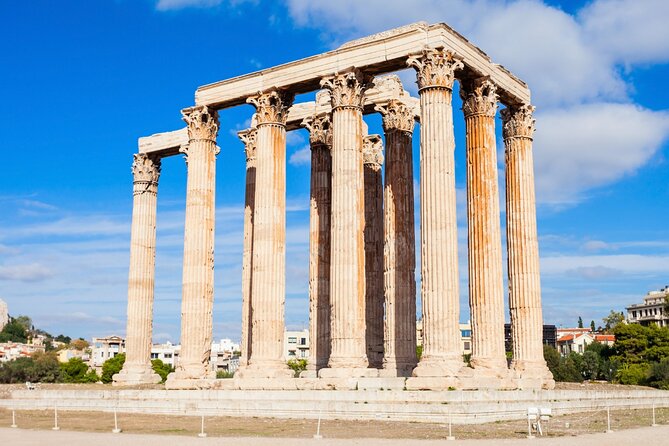
You also visit Temple of Olympian Zeus (about 20 minutes). Construction started in the 6th century BC and finished under Hadrian in the 2nd century AD. The site feels huge even in a short visit. You will see towering columns where an enormous Zeus statue once stood, and your driver-guide can explain why the scale mattered to both Greek and Roman rulers.
Panathenaic Stadium and a quick hit of Olympic-era pride
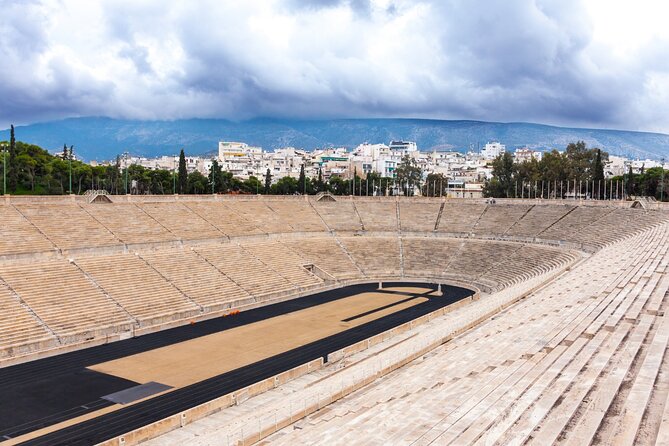
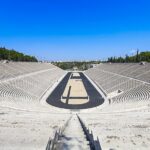
Next up is the Panathenaic Stadium (around 15 minutes). This is one of those places where it is hard not to get a little excited, because it connects ancient athletics to modern events.
The stadium was built in 330 BC for the Panathenaic Games. Later, it was reconstructed in marble by Herodes Atticus. Then it hosted the first modern Olympic Games in 1896. That is the key idea you should carry into the stop: this is not only about ancient ruins, it is also about how Athens helped shape global sports culture in the modern era.
In a timed tour, the stadium visit is best for looking and orientation. Don’t expect a long sit-down. But you will leave with a clear mental picture of why this place keeps coming back in Olympics conversations.
You can also read our reviews of more private tours in Athens




Presidential Mansion, Parliament, and Syntagma Square without the confusion

For a break from stone monuments, you get a modern Athens loop. The tour includes stops at the Presidential Mansion (about 15 minutes). The palace is the former Royal Palace and now serves as the residence of Greece’s president. You may also be able to witness a changing of the guard by the Evzones, who wear traditional uniforms. Even when the ceremony is not happening on your exact timing, the structure and setting make sense.
Then you head to the Hellenic Parliament area, the building that now houses Greece’s parliament and symbolizes the shift from monarchy to democracy. Nearby is Syntagma Square, often called Constitution Square. It is the central point where modern Athens meets its historical story, with hotels, cafes, and major streets feeding into it.
This part is useful even if you already know the names. It gives you a mental map of where you are in the city, so later walks in Plaka or the Agora feel less random.
Lycabettus views plus the Athenian Trilogy buildings
Mount Lycabettus (about 20 minutes, free) is your viewpoint moment. It is the highest point in Athens and it offers panoramic views, including the Acropolis and the Aegean Sea. In a half-day tour packed with monuments, this stop is a relief. It helps you reset visually, and it makes the city’s layout click.
After the view, you get the neoclassical Athens that many visitors skip. The tour passes key buildings tied to education and intellectual life, including the Academy of Athens and the University of Athens (Panepistimio), plus additional stops along the same corridor.
A couple highlights you will want to notice:
- The Academy of Athens was designed by Danish architect Theophil Hansen. Its façade includes sculptures of Plato and Socrates, giving you an immediate feeling for how public Greek identity ties to philosophy.
- The tour also includes the National Library of Greece at Panepistimiou 32, again associated with Theophil Hansen, with marble columns and a grand staircase. It is a short look, but it is one of those moments where architecture alone tells you what the city values.
These stops are mostly exterior. That is the point. They add variety without demanding extra museum time, and they keep your afternoon moving.
Plaka and the Ancient Agora: where Athens feels human
You end with two major “civic life” stops, plus a pass through Plaka. Plaka sits beneath the Acropolis and is known for its cobbled streets, neoclassical buildings, and the classic old-Athens feel. Even if you are only passing through, it gives you that slower rhythm and sets you up for an independent walk afterward if you want one.
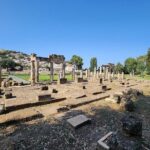
The big ticket sites here are the Ancient Agora of Athens (about 30 minutes) and the Roman Agora (about 15 minutes). The Ancient Agora includes the Temple of Hephaestus, often considered one of the best-preserved temples from the ancient world. This is a smart choice for your tour, because it shifts from temples and empires to day-to-day civic life: politics, religion, and public space in one area.
Then you get the Roman Agora in the Plaka district. This was a marketplace in Roman times, and you can see the way the architecture reflects that commercial and civic purpose through the columns and structures that remain.
A practical consideration: again, admission fees apply to archaeological sites. Also, these stops involve walking in real streets and uneven ground. If you come in with flip-flops or shoes you regret, you will feel it.
Price and what you really get for $154.24 per person
At $154.24 per person, this tour is not the cheapest way to see Athens landmarks. But it is also not trying to be a bargain bus ride. It is built around private transportation, air-conditioned comfort, pickup and drop-off, bottled water, and a driver-guide who handles the historical storytelling while you ride.
Here is where the value comes from:
- Private format: Your group of 1 to 4 rides in a luxurious sedan, which is handy for luggage. If you have 5 to 7 people, you use a comfortable mini van. Either way, this is much easier than trying to coordinate multiple taxis or train transfers with a tight schedule.
- Time efficiency: The stops are short but meaningful, so you get a lot of “big idea” landmarks in one go. The total duration includes travel time between sites, which is how half-day tours should be judged.
- Comfort in heat: Air-conditioning and a cool reset during transfers may sound small until you experience Athens in warm weather.
- Wi-Fi and mobile ticket: Not everyone values it, but on a half-day plan, being able to check messages, maps, or last-minute updates matters.
What can reduce value for some people is the extra cost of entrance tickets. The tour notes about €30 per person for archaeological site admissions. If you already plan to buy those tickets yourself, the added tour cost is mainly what you are paying for: pickup, transportation, and the driver-guide narrative. If you would rather self-drive and roam slowly, you might find a do-it-yourself plan cheaper. But if you want structure and calm, the price starts looking fair.
Also note: the tour does not include a licensed guide to accompany you inside archaeological sites. Your driver-guide can explain the context, but you should expect to explore the sites yourself once you arrive.
Should you book this Athens highlights tour?
Book it if you want an easy way to see major Athens landmarks in a half-day, especially if you are arriving by cruise or you hate wasting time on transit. It is a strong fit for first-timers, couples, and small groups who want to connect the dots, from Pericles-era monuments to Roman Athens and then to modern Athens around Syntagma Square.
Skip or reconsider it if you want long stays at each site, or if you prefer roaming at a slow, independent pace. The schedule is packed, and the stops are designed to move.
If the weather is hot, bring your sun gear and lean into the air-conditioned ride. If you want a smooth day where someone handles timing and the historical connections while you focus on looking, this tour is a solid pick.
FAQ
Is pickup from a hotel or cruise port included?
Yes. Pickup is available at designated locations. For hotel or apartment pickups, the driver waits outside your location. For cruise port pickups, the driver greets you at the arrival area with a sign showing your name.
How long is the Athens Acropolis and city highlights tour?
It runs about 4 to 5 hours, including the time spent traveling between stops.
What is included in the tour price?
The price includes private transportation, an air-conditioned vehicle, Wi-Fi on board, bottled water, and expert English-speaking tour driver-guides. It also includes convenient hotel or cruise ship pickup and drop-off service. Your mobile ticket is included.
Are entrance fees included?
No. Entrance fees for archaeological sites are not included and are listed as about €30 per person.
Do I need a separate licensed guide inside the archaeological sites?
No licensed guide is included to accompany you inside the archaeological sites. The driver-guide provides historical context, and you will explore the sites on your own.
What vehicle will we use for a private group?
Groups of 1 to 4 people travel in luxurious sedan vehicles. Groups of 5 to 7 people travel in comfortable mini vans.
What language is the tour offered in?
The tour driver-guide provides the experience in English.
Where does the tour end?
The tour ends at the original meeting point.
More City Tours in Athens



More Tours in Athens


More Tour Reviews in Athens
- All Day Cruise -3 Islands to Agistri,Moni, Aegina with lunch and drinks included
★ 5.0 · 4,958 reviews



Not for you? Here's more nearby things to do in Athens we have reviewed








Athens Acropolis & Parthenon Tours, compared.
 ★ 4.4Acropolis & up to 5 Archaeological Sites Combo PassFrom $4812,619 reviews
 ★ 4.2Acropolis Ticket with Optional Audio or Live GuideFrom $4211,055 reviews
 ★ 4.8Acropolis, Parthenon & Acropolis Museum Guided TourFrom $409,316 reviews
 ★ 4.6Acropolis and Parthenon Guided Walking TourFrom $385,882 reviews
★ 4.8Acropolis, Parthenon & Acropolis Museum Guided TourFrom $413,579 reviews
★ 4.6Acropolis and Parthenon Guided Walking TourFrom $385,882 reviews
★ 4.8Acropolis, Parthenon & Acropolis Museum Guided TourFrom $413,579 reviews
 ★ 4.0Acropolis Ticket with Audio GuideFrom $473,575 reviews
 ★ 4.7Acropolis: Acropolis and Parthenon Guided Walking TourFrom $363,442 reviews
 ★ 5.0Acropolis monuments & Parthenon Walking Tour with Optional Acropolis MuseumFrom $422,678 reviews
Browse the lists this tour appears in