
Reviewed · WORKSHOPS
Philosophy Experiential Workshop at Plato’s Academy Park -Athens
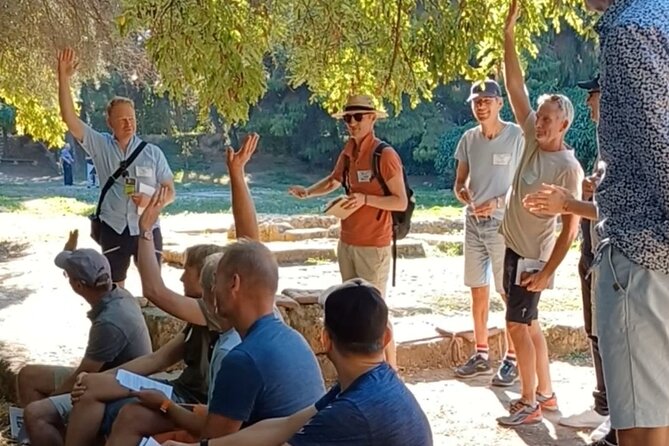
Plato’s ideas become a live conversation here. You start at Plato’s Academy Park and Allegory of the Cave turns into a real discussion, not a textbook detour. This is an educational workshop that moves from a small digital museum into the ruins where Greek philosophy started.
I especially love the hands-on, question-driven format that makes abstract ideas feel usable. I also like the small group size, capped at 10 people, which gives you space to speak and actually test your thoughts.
One thing to consider is that this is an outdoor, historical-site experience, so good weather matters. If conditions are poor, the workshop can be canceled or rescheduled, and museum timing can also shift.
Key highlights at Plato’s Academy Park
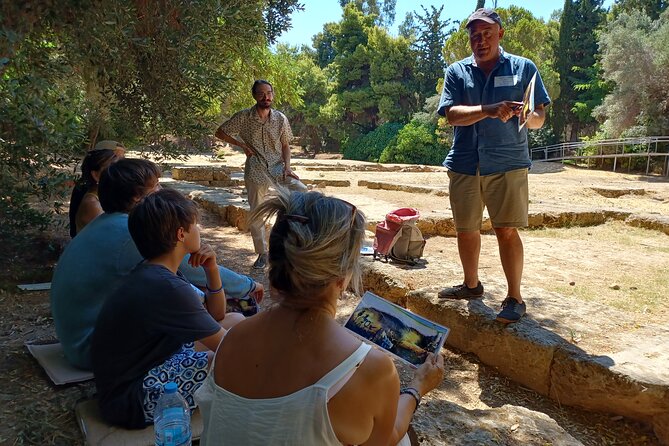
- Socratic method discussion of Plato’s Allegory of the Cave, led as a guided conversation
- Reading and interpreting ancient Greek texts during an interactive philosophy warm-up
- Socrates, Plato, and Aristotle connected through a timeline-style walk inside the park
- Role-play debate using a real replica water-timer, so the argument pacing feels ancient
- Small group workshop (max 10) that keeps it from turning into a lecture
Where philosophy feels real: Plato’s Academy Park in Athens
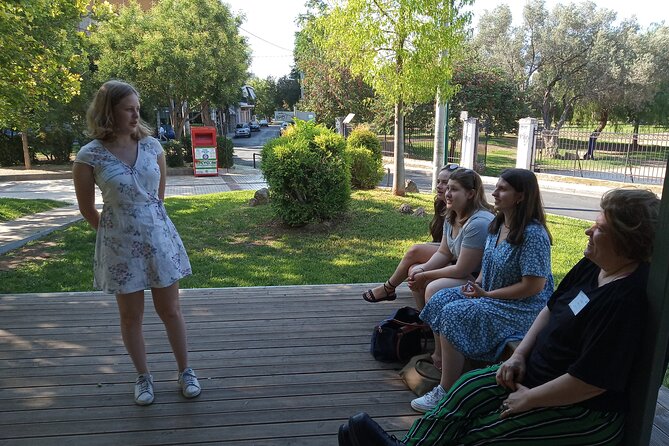
This workshop is designed for people who want meaning, not just scenery. You’re in Athens, at the place tied to the world’s first academy, and you use that setting to make big ideas easier to hold in your head.
Instead of a “look, then leave” tour, you get a facilitator who brings the session alive step by step. The timing and activities are built to keep you thinking, reading, speaking, and debating, even if you have zero background in philosophy.
The vibe is family-friendly, but not childish. It’s made for adults and teenagers 14 and up, and it keeps enough structure that younger teens do not feel lost.
More Athens tours and experiences for the shortlist



Starting at Plato’s Academy Digital Museum, even if it’s closed
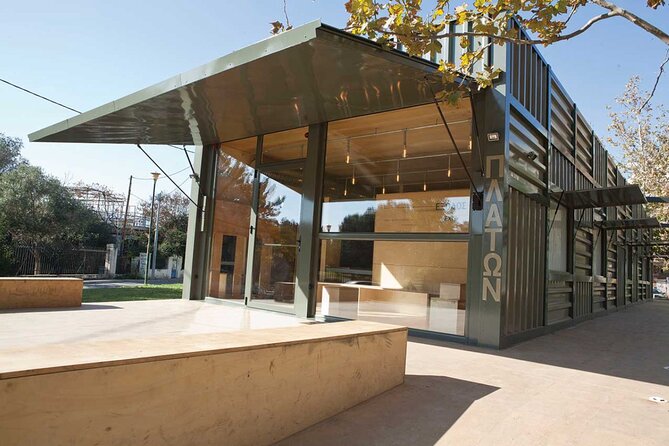
You begin at Plato’s Academy Digital Museum at Alkmeonos 1, Athina 104 42, Greece. The museum visit is brief but useful, because it gives you the basic context before you start using Plato’s ideas in conversation.
Important practical detail: Plato’s Digital Museum is open Tuesday to Friday from 10:00 AM to 4:00 PM. If your day falls outside those hours, you won’t lose the value. The plan swaps the museum stop for an engaging discussion that covers the same key insights.
That swap is a smart touch for travelers who like to keep moving. You are not stuck waiting around for a closed building, and you still get the orientation you need before stepping into the park.
If you prefer a less museum-like start, you can view it as the workshop’s “primer.” You come out with the main concepts, so the later debate has something real to grab onto.
The philosophy warm-up: ancient texts, explained in plain English
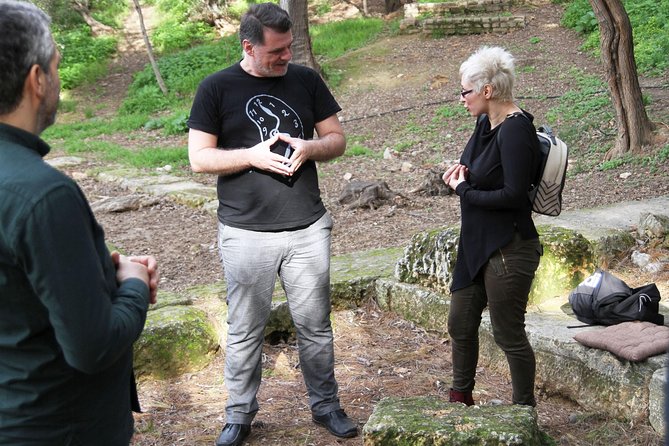
After the initial context, the workshop begins a warm-up built around reading and interpreting ancient Greek texts. You are not expected to already know difficult terms. The session is designed for plain English, with no heavy jargon.
What makes this part work is the way it’s interactive. Instead of you passively hearing translations, you read and interpret, then talk through what you think the text is saying.
This is a good moment for skeptical minds too. If you think philosophy will be stiff and distant, this is where you see how it can become practical. Even a short exchange can shift how you understand what comes next.
For families, this warm-up is also a built-in “hook.” Teens who might roll their eyes at a lecture often lean in when they get to interpret something themselves.
Walking through the park: Socrates, Plato, and Aristotle as a timeline
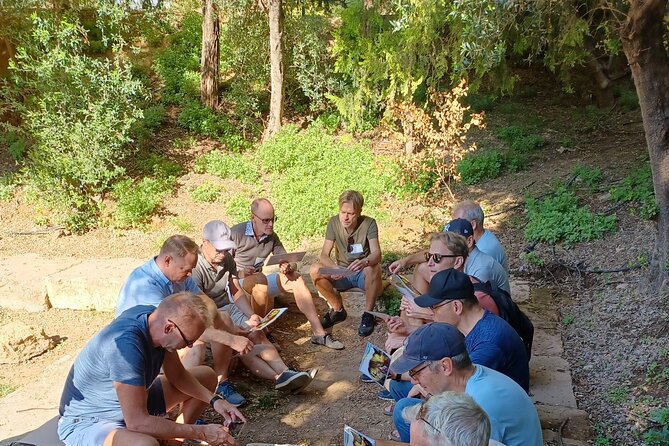
Next you stroll through Plato’s Academy Park toward the ancient Gymnasium ruins. While you walk, the philosophy instructor sets the scene with a timeline of Greek philosophical heritage, connecting Socrates, Plato, and Aristotle.
That timeline matters because it prevents the ideas from feeling like random quotes floating in time. You start to see philosophy as a chain, with each thinker responding to the other and extending the conversation.
At the ruins, the facilitator sets the context for what you are about to discuss. This is also where the location does real work for you. Sitting in a park tied to these origins makes the discussion feel less abstract.
One more thing to be aware of: there’s a small chance that archaeological excavation is happening during your visit. If that’s the case, you’ll see the Gymnasium ruins from a short distance and the group will settle at a different spot in the park. The workshop still happens.
Allegory of the Cave with the Socratic method: you do the thinking
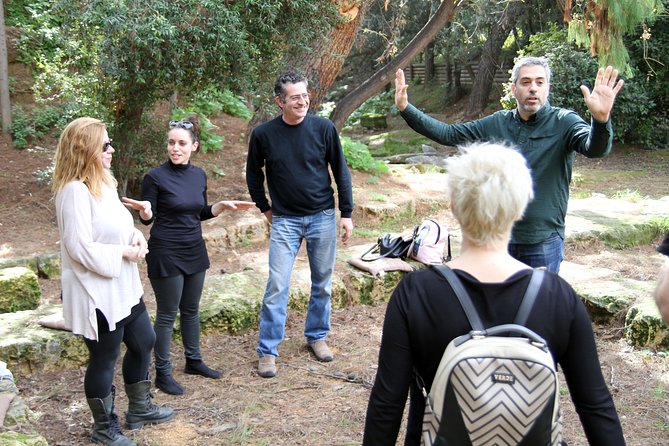
The core mental workout here is the discussion of Plato’s Allegory of the Cave. This part is led using the Socratic method, meaning you don’t just hear answers. You get guided through questions that test your assumptions.
You can expect a dynamic talk, not a lecture. The goal is to connect the allegory to how people form beliefs, how they interpret reality, and how change can be uncomfortable at first.
The setting amplifies this. When you discuss ideas about shadows, truth, and learning, you’re surrounded by an environment steeped in the history being referenced. It makes the allegory feel less like a “school assignment” and more like something people still struggle with today.
You’ll likely find yourself debating your own ideas too. The structure nudges you to clarify what you really mean, then listen to how others interpret the same concepts.
- All Day Cruise -3 Islands to Agistri,Moni, Aegina with lunch and drinks included
★ 5.0 · 4,958 reviews



Role-play debate with a water-timer replica, like the ancient agora
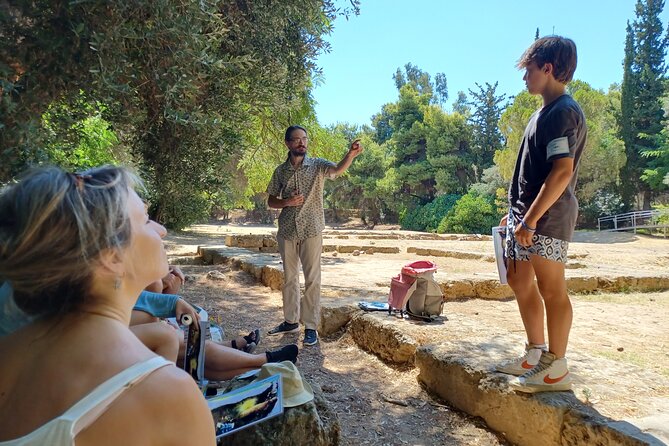
After the Cave discussion, the workshop shifts into a role-play debate. You use a real replica of an ancient water-timer, which adds a practical constraint to the conversation.
That might sound like a gimmick, but it actually changes the whole feel. With time pressure and a simple way to take turns, the debate starts to resemble the style of argumentation people practiced long ago. The water-timer also forces brevity, so you can’t hide behind long speeches.
This is one of the most praised parts of the experience because it turns philosophy into a group activity. You’re not just talking about ideas, you’re practicing the mechanics of argument, questioning, and responding.
If you enjoy games, theater, or group discussion formats, this is where it clicks. If you are shy, the facilitator’s role helps move things along so you still get a place in the conversation.
Either way, you walk away with the strongest kind of learning: the ideas stuck because you used them.
Optional extra hour: Aristotle’s philosophy game on virtue and choice
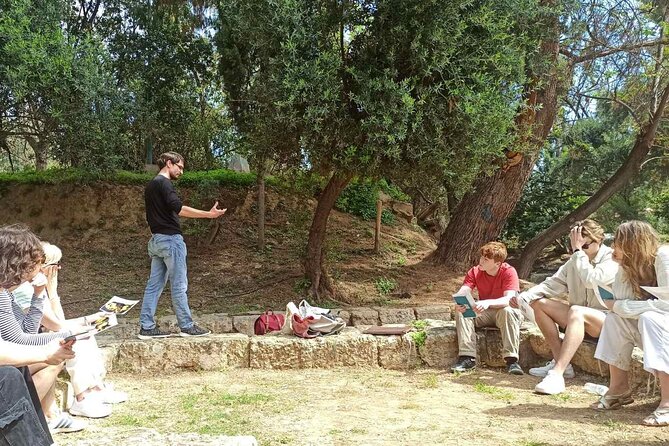
If you want more, there’s an option to enhance your experience with an additional hour on Aristotle’s philosophy. This add-on includes a thought-provoking game focused on virtue and choice.
This extra hour is a nice match if you felt the Cave debate was great but want a clearer path to “how to live.” Aristotle’s angle tends to lean into practical decision-making, and the game format helps you keep it active rather than abstract.
It’s also a smart choice for longer-attention-group travelers, like families with teens or couples who want to turn the day into more than just a site visit.
You can ask for the private option too, which is available upon request.
Who should book this workshop, and who might skip it
This works best if you like interactive learning and group conversation. You do not need previous knowledge, and the workshop is built for plain English, so you can join without cramming Greek philosophy first.
It’s also a good family-friendly pick, since it’s designed for adults and teenagers 14 and up. If you’re traveling with teens, the “read, talk, debate” style often lands better than a standard walk-and-point tour.
If you’re looking for silence, quick photos, and a checklist of must-see sights, this might feel too active. This is not a passive guided tour, and the facilitator may guide you out of certain behaviors if you disrupt respect for the historical site.
Because it is a historical cultural experience, you’ll need to follow etiquette rules like dress code and keeping noise reasonable. The facilitator can terminate participation without refund if behavior is disrespectful.
Price and value: what you’re paying for
The price is $53.92 per person for about 2 hours. On the surface, it’s not the cheapest thing in Athens, but the value comes from what your ticket buys: a structured workshop with an expert facilitator, liability insurance, and local VAT 24%.
Most importantly, you are paying for active learning, not just access. The content includes museum orientation, text interpretation, Socratic discussion, and a role-play debate with a water-timer replica.
That matters if you think of travel as time spent wisely. This format uses your two hours efficiently, with minimal downtime and maximum mental involvement. For many people, it ends up feeling more worthwhile than an “I saw it” tour.
The small group cap of 10 travelers also boosts value. It increases the odds you’ll participate, ask questions, and not get lost in a crowd.
If you want a private option, you may get better tailoring, but it depends on request availability.
Practical tips for your best experience in Athens weather
Plan this workshop with weather in mind. It’s an outdoor experience, and if it’s canceled due to poor weather, you’ll be notified at least 3 hours ahead. You can then choose a different date, a similar workshop, or a full refund.
Also remember that museum operating hours can change and sometimes close without announcement. That’s why the alternative plan for museum content is important, but it also means you should not treat the museum stop as guaranteed on every day.
Arrive ready for light walking and park time. Comfortable shoes help, because you’ll be strolling through the park and spending time around the ruins.
Since the workshop takes place in a public space, you consent to photo and video shooting that may happen during the session. You can withdraw consent in writing at any time, but the default assumption is that some media may be captured.
One more practical note for logistics: the meeting point is the Digital Museum, and the session ends back at the meeting point. So you can plan nearby meals or museum time before or after without needing complex transfers.
Should you book this philosophy workshop at Plato’s Academy Park?
Book it if you want philosophy that actually moves your brain, not philosophy as a lecture. The combination of Socratic method, reading and interpreting texts, and the water-timer role-play makes this one of the more memorable ways to experience this part of Athens.
Skip it if your idea of a good trip is mostly quiet, fast sightseeing, and minimal participation. This workshop asks you to talk, think, and engage with the group, and it runs on outdoor conditions.
If you’re traveling with teens or you like interactive education, it’s also a strong fit. And if you are curious about Plato but want the practical follow-up, consider the optional Aristotle extra hour.
FAQ
How long is the Plato’s Academy Park philosophy workshop?
It lasts about 2 hours. There is also an option to add an extra hour focused on Aristotle’s philosophy.
Is the workshop offered in English?
Yes. The workshop is offered in English.
Where does the workshop start, and where does it end?
It starts at Plato’s Academy Digital Museum, Alkmeonos 1, Athina 104 42, Greece. It ends back at the same meeting point.
Do I need prior knowledge of philosophy or ancient Greece?
No. The workshop is suitable for people without previous knowledge, and it uses plain English with no difficult terminology.
What age is the workshop suitable for?
It’s suitable for adults and teenagers over 14. Underaged participants cannot book alone, and at least one adult must book and supervise them.
What happens if the Digital Museum is closed on your day?
If the museum is closed, the brief museum visit is replaced with an engaging discussion that covers the same key insights.
What if the weather is bad?
Because it is outdoor, it requires good weather. If it is canceled due to poor weather, you will be notified at least 3 hours ahead and offered the option of a different date, a similar workshop, or a full refund.
Is there free cancellation?
Yes, you can cancel for a full refund if you cancel at least 24 hours in advance of the experience start time. If you cancel less than 24 hours before, the amount paid is not refunded.
More Workshops & Classes in Athens


More Tour Reviews in Athens
- All Day Cruise -3 Islands to Agistri,Moni, Aegina with lunch and drinks included
★ 5.0 · 4,958 reviews
Not for you? Here's more nearby things to do in Athens we have reviewed








Workshops, compared.
 ★ 5.0Classic Cooking Class with Market Visit and WineFrom $831,101 reviews
 ★ 4.9Food Market Visit and Cooking Class with WineFrom $811,087 reviews
 ★ 5.0Greek Cooking Class in Athens Including Rooftop Dinner with Acropolis ViewFrom $120826 reviews
 ★ 5.0Greek Small-Group Athens Cooking Class & DinnerFrom $118574 reviews
 ★ 5.0Greek Cooking Class & Dinner on a RooftopFrom $108383 reviews
 ★ 4.8Greek Cuisine Cooking Class and 3-Course DinnerFrom $115270 reviews
 ★ 5.0Traditional Greek cooking class and lunch or dinner with an Acropolis viewFrom $114250 reviews
 ★ 5.0Athens Airport Private Transfer by Mercedes-Benz E Class Wagon to City CenterFrom $131232 reviews
Browse the lists this tour appears in