
Reviewed · METEORA DAY TRIPS FROM ATHENS
Meteora: A Private Journey to the Monasteries in the sky
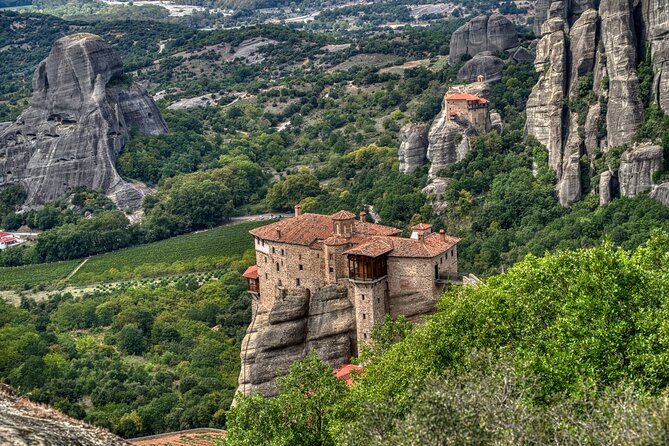
A day like this turns Greece into a movie set. The drive from Athens sets the mood fast, then you climb into Meteora, where monasteries sit on towering rock pillars. What I like most is the mix of serious history and big wow views as the landscape changes mile after mile.
I also love how the itinerary spreads your time across several monasteries, not just one. You get a solid 3.5-hour block at Meteora plus shorter visits to Rousanou, Varlaam, Great Meteoron, Agia Triada (Holy Trinity), St. Stephen, and St. Nicholas Anapafsas, and then you add a moving stop at Thermopylae. One thing to consider is the day runs long, and some monasteries involve stair climbing, plus there’s a cash-only entrance situation and a dress code.
Key highlights before you go
- Private, hotel pickup from Athens hotels, apartments, or cruise ships, with A/C and bottled water.
- English driver-guide who can talk the whole way but cannot enter the sites with you.
- Six monastery stops at Meteora, each with time to look closely at frescoes and churches.
- Thermopylae battlefield stop on the return route, including the Leonidas and Thespians monuments.
- Cash-only monastery fees, plus a dress code for women (scarf or long skirt or dress).
- Reviews call out safe driving and storytelling from Alexander, plus help with what to eat if you have diet needs.
Athens to Meteora: why the early start matters
This tour is built for mornings, and that’s not a random choice. You leave Athens early and head north while the day is still fresh, which helps you beat some crowds at the first Meteora stops. It also means you arrive with daylight, so you can actually enjoy the stairways, bridges, and rock walls rather than rushing through everything.
On the drive, expect classic northern Greece variety. You’ll pass out of the city into farmland and open countryside, with cotton fields mentioned along the way, then gradually move toward hills and the mountain presence that starts to dominate the horizon. As Meteora comes closer, the rock formations start to appear more clearly, and that “wait, those rocks have monasteries on them” feeling hits all over again.
If you care about photos, the timing is your friend. You’ll have daytime light at the monasteries, and the tour’s pacing leaves room to stop for pictures during the day, plus sunset-view opportunities were specifically noted in reviews.
You can also read our reviews of more private tours in Athens


Your ride setup: private transport, comfort, and limits
The tour is private, meaning it’s only your group in the vehicle. That matters because Meteora days can turn stressful if you feel rushed by a bigger group schedule. Here, you can usually move at the rhythm of your own pace, within the overall plan.
Your transportation includes A/C and bottled water, which is a real quality-of-life detail on a long day. Pickup and drop-off are included from your accommodation or cruise ship, and if you’re coming from a cruise, the driver waits right outside the arrivals terminal holding a sign with your name.
Two practical notes you should plan around:
- The English driver-guide is an expert Athenian guide, but they cannot enter the sites with guests. You’ll be going into monasteries yourself as part of your visit plan.
- The tour duration runs about 11 to 14 hours, including travel time. This is not a quick in-and-out day. It’s a full-day classic.
Stop at Meteora: the rock-world you can’t fake
Meteora is the main event, and the tour gives you a long first block of time. You’ll spend about 3 hours 30 minutes at Meteora, with an admission ticket marked as free for this stop. That time is your chance to orient yourself, soak in the rock formations, and then connect the dots between what you see outside and what you’ll notice inside the churches.
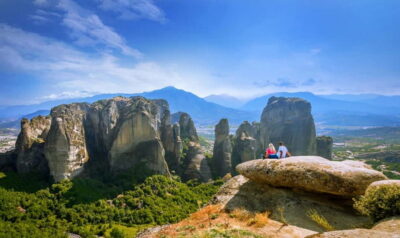
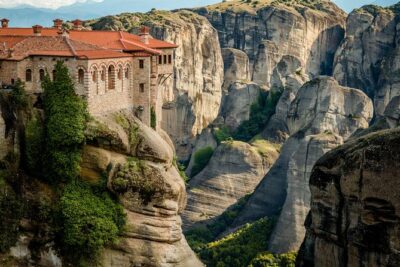
What makes Meteora special is the setting. Monasteries are not sitting on flat ground like most historic sites. They’re perched on stone towers, so every approach includes stairs, bridges, narrow paths, or steep climbs depending on where you go. That physical element is part of the story. You feel how the location supported seclusion and focus.
If you’re visiting for the art, your “first impression” matters. Start by looking at the frescoes and church spaces once you’re inside each monastery later in the day, but use this early block to spot angles for photos and to plan your routes between stops.
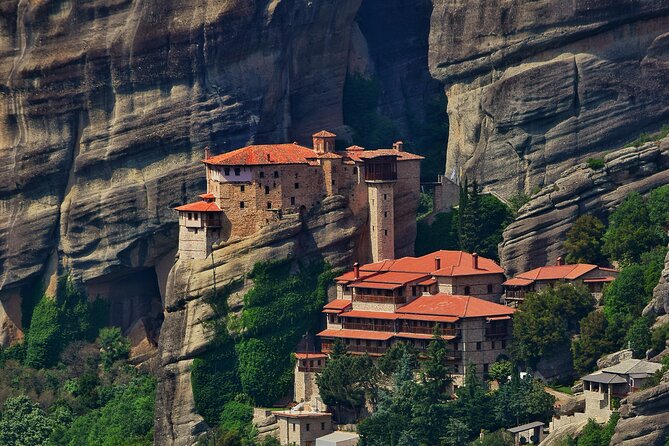
Rousanou (St. Barbara): a calmer first monastery
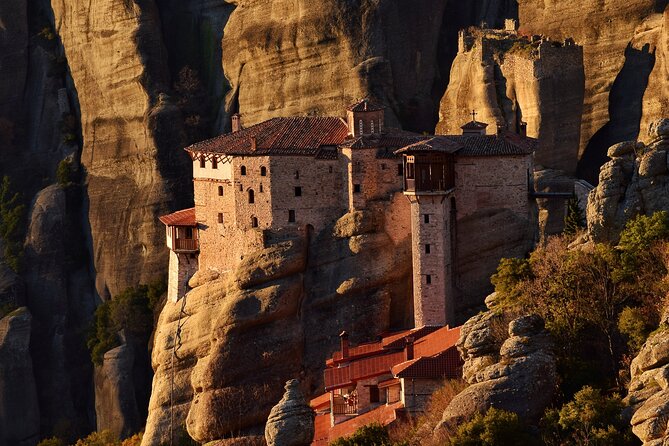
Rousanou is one of the more accessible monasteries in the area, and that shows up in how the visit feels. It’s described as relatively easy to reach via staircases and bridges, so you’re not starting your climb stress at the first religious stop.
The monastery is dedicated to St. Barbara and dates back to the 16th century. It’s currently a convent for nuns, so the tone is quietly reflective. Inside, you’ll find frescoes depicting Bible scenes, plus panoramic views over the valley and the rock formations.
Time here is about 45 minutes, which is enough to look slowly, take photos from the right angles, and still keep the day moving.
Varlaam: impressive frescoes and museum time
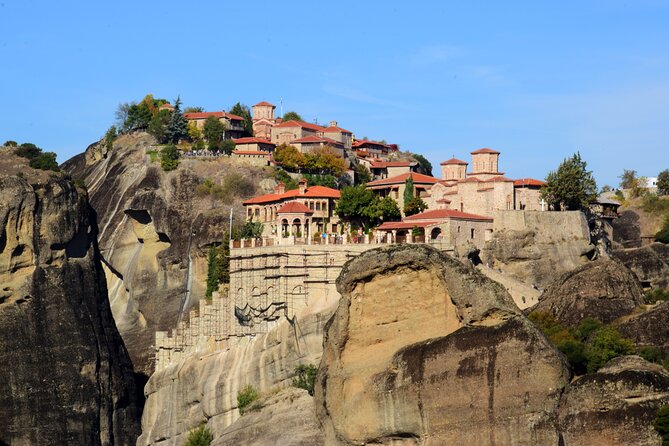
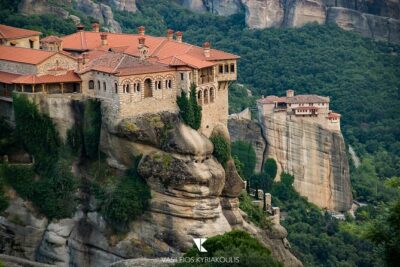
Varlaam is considered one of the most significant and visited monasteries in Meteora. It sits atop a high sandstone rock formation, and while it sounds similar to Rousanou, the “feel” is different because of the scale and the artistic emphasis.
Founded in the mid-14th century and expanded in the 16th century, Varlaam honors the monk Varlaam, who first ascended the rock and set up an early chapel. The visit focus includes Byzantine architecture and standout frescoes, especially in the Church of All Saints.
You’ll also have a museum component with religious artifacts and manuscripts. That’s a nice balance if you’re not only interested in church interiors. Time is again about 45 minutes, so prioritize what matters most to you: the church frescoes, then the museum, or vice versa.
- All Day Cruise -3 Islands to Agistri,Moni, Aegina with lunch and drinks included
★ 5.0 · 4,958 reviews

Great Meteoron: the largest and most historically central stop
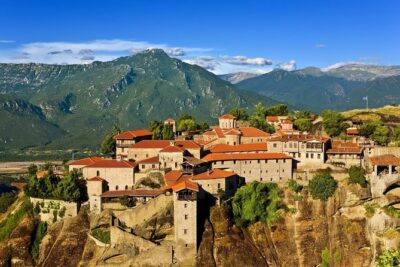
Great Meteoron, also called the Holy Monastery of the Transfiguration of Christ, is the biggest and often the most historically important site you’ll visit on this day. It’s perched on Meteora’s highest rock formation, which makes the exterior view feel dramatic before you even step inside.
This monastery was founded in the 14th century by Saint Athanasios the Meteorite, and it played a key role in preserving Orthodox Christian traditions, including during the Ottoman period. Inside, you can spend time with frescoes, the main church, and museum displays, including icons, manuscripts, and artifacts.
It’s scheduled for about 45 minutes as a stop. That time is tight for people who love museums, but it’s workable if you decide upfront what you want most. I like treating Great Meteoron as your “main church” anchor, then letting the smaller monasteries become quieter contrast.
Agia Triada (Holy Trinity): remote, steep, and movie-famous
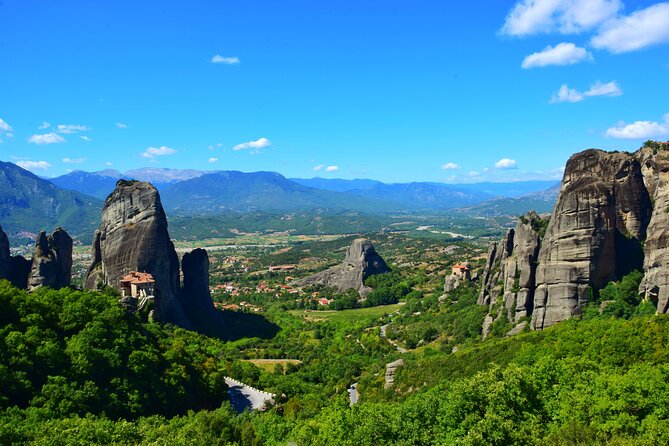
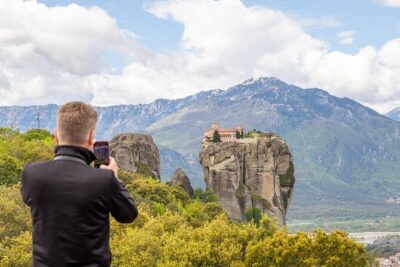
Agia Triada (Holy Trinity) is often the monastery people recognize from film. It’s described as isolated, perched on a solitary rock pillar, and featured in James Bond’s For Your Eyes Only.
Access is part of the experience here. You’ll deal with a steep staircase carved into the rock, so it adds effort and, at the same time, boosts the sense of seclusion. Inside, the monastery includes frescoes, relics, and a small chapel dedicated to the Holy Trinity.
If you’re sensitive to stairs, you should factor this into your day pacing. This stop is about 45 minutes, but the climb in and out is where the time can feel heavier than the clock suggests.
St. Stephen’s Monastery and St. Nicholas: two different “end of day” vibes
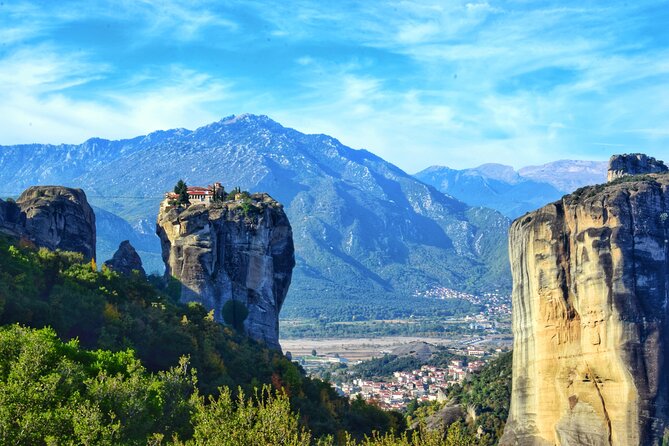
St. Stephen’s Monastery is one of the more accessible options because it’s located on a relatively flat rock. That makes the visit feel gentler after the steeper climbs earlier in the day. It’s also described as warm and welcoming, since it’s currently a convent for nuns.
You’ll see a 16th-century church dedicated to St. Stephen and another modern church dedicated to St. Charalambos, plus an impressive collection of relics. The complex also includes lush gardens, and you’ll get views over the plains of Thessaly.
Then you finish with St. Nicholas Anapafsas at Meteora. This one is one of the six active monasteries, but it’s smaller because the rock foundation limits space. It’s described as one of the first monasteries visitors encounter when ascending the rocks of Meteora. Still, the frescoes are a big draw, including work by the Cretan painter Theophanes Strelitzas.
These two stops together create a nice contrast. St. Stephen can feel like “resting,” and St. Nicholas feels like “quiet detail.”
Thermopylae: adding weight after the monasteries
On the way back to Athens, you stop at the Thermopylae battlefield. This is where the day gains emotional weight. You’ll see the statue of King Leonidas, the emblem of the Spartans’ stand in 480 BC against overwhelming Persian forces. There’s also a nearby monument honoring the 700 Thespians.
There’s an information center too, so you’re not just walking around monuments. You get context about the battle’s strategy and its lasting legacy. Even on a time-limited stop, it’s the kind of place where you naturally slow down, because the story is hard to ignore.
Time here is about 45 minutes. It’s enough for the main highlights plus reading the key panels.
Price and value: what $387 buys you (and what costs extra)
At $387.21 per person, this isn’t a budget bus ride. It’s a private day built around long travel time and multiple sites.
Here’s what’s included:
- Pickup and drop-off from your Athens accommodation or cruise ship
- Comfortable transportation with A/C and bottled water
- An English driver-guide (expert, fluent in English)
- Time at Meteora and all listed stops
- A mobile ticket is mentioned
What costs extra:
- Lunch is not included
- A licensed tour guide is not included, though you can request one for an additional cost depending on availability
- Monastery entrance fees are extra, and the fee is €5 per person per monastery, paid in cash
This itinerary lists six monasteries with entrance fees: Rousanou, Varlaam, Great Meteoron, Holy Trinity (Agia Triada), St. Stephen, and St. Nicholas. If you visit them all, budget about €30 cash per person for monastery entrances. That adds up, but it’s still a reasonable add-on for six major stops.
If your goal is convenience plus a smooth, story-filled day, the price makes sense. If you’re traveling solo and you’re purely chasing the lowest cost, there may be cheaper group options. But for a day this long, private transport is where the value lives.
Dress code, cash-only rules, and comfort tips that matter
This tour has a few practical rules that can throw you off if you ignore them.
Women’s dress code: you’re required to wear a long skirt or dress, or cover legs with a scarf. Monasteries sell scarves for €3 on site.
Men: long pants are suggested.
Cash-only entrances: monasteries accept only cash. You’ll want to bring euro bills and be ready to pay at each monastery stop.
Physical reality check: the tour is for people with moderate physical fitness. Some monasteries involve stairs and steep approaches, especially Agia Triada. If stairs are tough for you, you should plan for slower pacing and consider skipping the steepest option when possible, but that depends on the tour’s exact flow.
What to pack: comfortable shoes are a must. Also bring a scarf even if you don’t need it yet, because it’s better to be prepared.
Who this tour fits best
This private day works especially well if:
- You want a safe, relaxed driver for the long Athens to Meteora drive
- You like history that’s explained in plain language, not just read from plaques
- You want multiple monasteries, without having to coordinate transport yourself
- You’re traveling as a couple, family group, or small circle that values flexibility
In reviews, I noticed a strong theme about comfort and safety, plus a driver-guide who tells Greek history, mythology, and everyday life stories along the route. That storytelling angle is a big part of why the long day feels easier than it looks on paper.
Should you book this private Meteora and Thermopylae day trip?
Book it if you want a one-day plan that hits Meteora’s big names and adds Thermopylae on the way back, all with hotel pickup and private transport. The big wins are convenience, the number of monasteries, and the smooth ride with friendly, story-focused guidance from your driver.
Skip it or rethink it if:
- You hate stairs and steep climbs, or you know you’ll struggle with multiple uphill approaches
- You want lunch included or you’re trying to keep every cost fully predictable
- You can’t do cash on hand for monastery entrances
If you’re the type who likes to see a lot, but also wants it to feel organized and calm, this is a strong Meteora base day.
FAQ
What is the duration of the Meteora private journey?
It runs about 11 to 14 hours, including travel time.
Do you get pickup from Athens hotels or cruise ships?
Yes. Pickup and drop-off are included from your Athens hotel, Airbnb, or cruise ship. Cruise pickup includes the driver waiting outside arrivals with a sign.
Is there an English guide on the tour?
You’ll have an English driver-guide who is fluent in English. Note that they cannot enter the sites with guests.
Are monastery entrance fees included in the price?
No. Entrance fee for each monastery is €5.00 per person, and monasteries accept only cash.
How many monastery stops are included?
The itinerary includes six monastery stops: Rousanou, Varlaam, Great Meteoron, Holy Trinity (Agia Triada), St. Stephen, and St. Nicholas Anapafsas.
Is lunch included?
No. Lunch is not included.
What is the dress code for monastery visits?
Women must wear a long skirt or dress, or cover legs with a scarf. Scarves are available at the monasteries for €3. Men are suggested to wear long pants.
Is the tour suitable for people with mobility concerns?
It’s best for travelers with moderate physical fitness. Some monasteries require climbing stairs.
Can I cancel for free?
Yes. Free cancellation is available, and you can cancel up to 24 hours in advance for a full refund.
More Private Tours in Athens


More Tour Reviews in Athens
- All Day Cruise -3 Islands to Agistri,Moni, Aegina with lunch and drinks included
★ 5.0 · 4,958 reviews
Not for you? Here's more nearby things to do in Athens we have reviewed


Meteora Day Trips from Athens, compared.
 ★ 4.7Meteora Monasteries Day Trip with Caves and LunchFrom $662,964 reviews
 ★ 4.8Meteora Monasteries Day Tour with LunchFrom $652,196 reviews
 ★ 4.8Meteora Tour with Local Guide and Greek LunchFrom $631,561 reviews
 ★ 4.5Meteora Monasteries, Caves & Coastal Stopovers with LunchFrom $881,432 reviews
 ★ 4.5Meteora Monasteries & Caves DayTrip from Athens with Greek LunchFrom $87879 reviews
 ★ 4.5From Athens: Delphi and Meteora 2-Day Guided TourFrom $271825 reviews
 ★ 4.54-Day Classical Greece Tour: Epidaurus, Mycenae, Olympia, Delphi, MeteoraFrom $766732 reviews
 ★ 4.5Meteora Monasteries, Hermit Caves Tour with PickupFrom $87724 reviews
Browse the lists this tour appears in