

Reviewed · CORINTH DAY TRIPS FROM ATHENS
Biblical Corinth: St. Paul and His Letters to the Corinthians
Paul’s world becomes real fast. This private day trip strings together the key places tied to St. Paul’s preaching, from Athens’ Areopagus Hill to Corinth’s Bema and the port of Kenchreai. You get onboard Wi-Fi, bottled water, and a driver who can turn ruins into stories you can actually picture.
I especially liked two things. First, the private pace means you can linger at the view points and not feel swept along. Second, the driver commentary adds context as you travel, and many guides are strong at explaining what you are looking at once you arrive, like Alex or George, who are repeatedly praised for answering questions and keeping things easygoing.
One consideration: this is not a licensed guided walk inside the archaeological sites by default. Your driver is very helpful, but they do not enter the ruins with you. If you want that extra layer, you may need to request a licensed tour guide and pay the add-on.
Key highlights that make this day trip worth it
- Paul-centered route: You visit spots tied to his messages, travels, and the world behind his letters.
- Private timing: Your group moves at your pace, with a driver who can adapt when you need breaks.
- Onboard Wi-Fi: Easy for maps, translation, and messaging while you head out from Athens.
- Iconic stops beyond ruins: Corinth Canal, Diolkos remnants, and Isthmia give you the trade-and-movement context Paul lived in.
- Big, memorable views: Akrokorinthos (the fortress hill) rewards the climb with sky-high outlooks.
- Food built in: Lunch in Corinth is offered, with an included Greek traditional option if you choose it.
Why this Corinth day trip feels different from a normal highlights tour
If you like the idea of connecting biblical text to real streets and real stone, this route makes that job easier. The places you visit are not random. They map onto the themes that show up in Paul’s letters to the Corinthians: community life under pressure, faith versus the surrounding culture, and practical choices that shape a church.
What I like is how the day keeps switching settings while staying focused on Paul. You start in Athens, where ideas and philosophy ruled. Then you shift to the Corinth isthmus, a transport hub where ships and merchants turned movement into daily life. Finally, you end in Corinth itself, where courts, temples, and crowds formed the backdrop for Paul’s work.
The result is a day that helps you ask better questions while you walk. Not just What is here? But Why did this place matter to Paul, and what did people around him believe?
You can also read our reviews of more tours and experiences in Athens.

Getting picked up in Athens and keeping the day comfortable
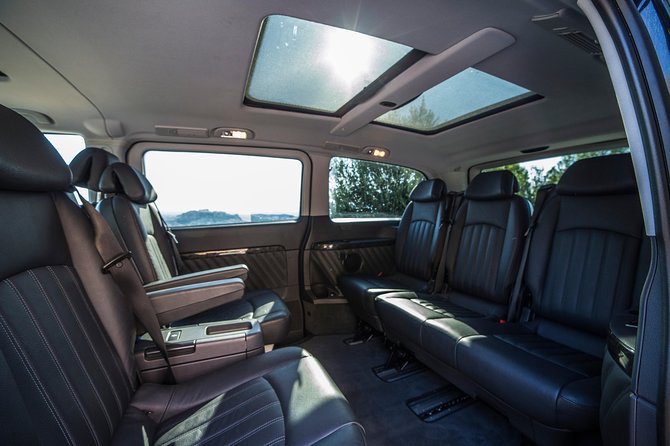
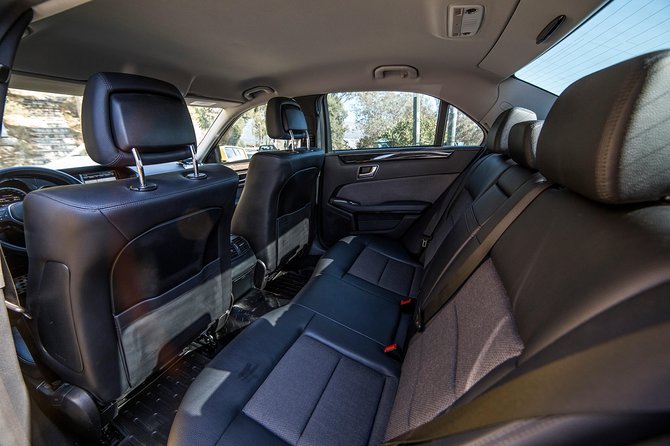
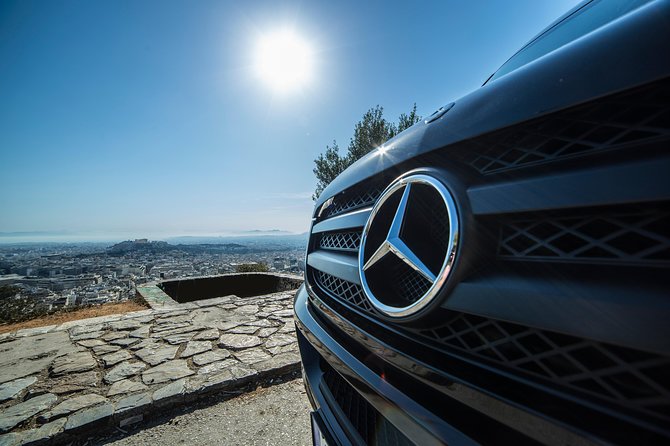
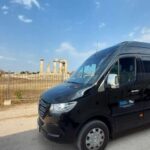
This is a true private experience, so your group rides together in an air-conditioned vehicle and you are not stuck counting minutes with a big bus crowd. Pickup and drop-off are handled at your hotel or port gate, and the schedule is adjustable when you request your preferred start time.
The onboard perks are small but useful. Wi-Fi helps when you want to pull up maps or check the next stop. Bottled water keeps you from rationing sips during the transitions. And since the driver can answer questions along the way, you can save some brainpower for actually taking in the sites.
One practical tip: confirm your exact meet-up spot before departure. Reviews mention smooth pickup when the company is clear on where you are standing, which matters a lot in Athens when entrances can look identical from the street.
Areopagus Hill, Mars Hill, then the Corinth Canal’s steep views
You begin at Areopagus Hill in Athens, tied to the sermon Paul delivered in front of the Athenian council. This is where you get that famous tension between the city’s existing worldview and Paul’s message about the unknown God. Even if you have heard the story before, standing in the setting helps it land as a real moment of public speaking, not just an idea from a page.
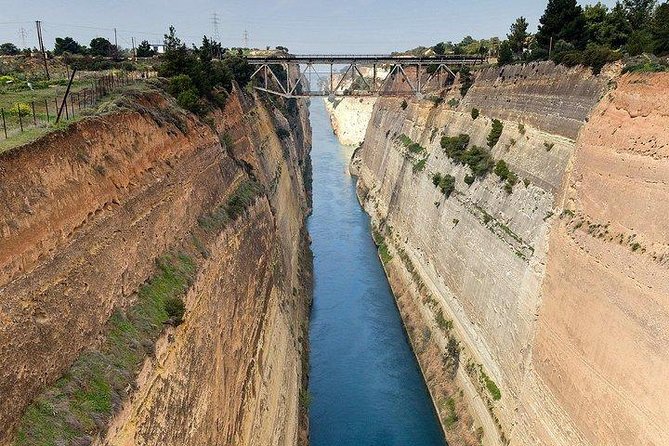
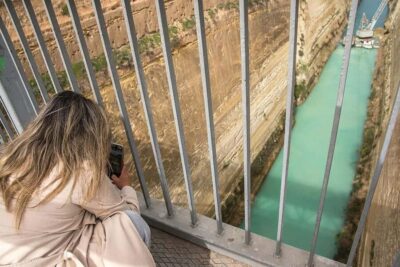
Next comes the Corinth Canal, one of Greece’s most impressive pieces of engineering. It slices through the narrow Isthmus of Corinth, separating the Peloponnese from the mainland. From the high viewpoints, you see the limestone walls dropping sharply and you get a sense of why this area mattered for moving goods and people. It is also a useful reminder that the geography Paul navigated was not abstract. The isthmus shaped travel routes, and travel shaped culture.
If you can handle a couple of short stretches and viewpoints, this sequence is a win because it gives you context before you start walking through ruins. You learn the shape of the region first, then the stone sites start to make stronger sense.
Diolkos and Isthmia: trade routes and athletic crowds where Paul’s message met real life
After the canal, you stop at the Diolkos. This was an ancient overland track that let ships travel across the isthmus before the modern canal existed. The idea is simple: instead of relying on long detours, people moved vessels across land. That means you can picture commerce and maritime traffic as part of daily reality in Paul’s world.
Then you move into Isthmia, tied to the Isthmian Games, held in honor of Poseidon. This matters because Paul’s area was not only religious. It was social and public, with festivals drawing people from across the Greek world. In the Bible, Paul is associated with this region through his tentmaking work, and this stop helps you imagine him interacting with crowds of athletes and visitors, not just “studying scripture in private.”
You also visit the Archaeological Museum of Isthmia, where the focus is on how religion and daily life worked together around the sanctuary. One standout detail here is the display of glass panels from Kenchreai, a nearby port linked to Paul’s sailing route. Seeing artifacts from the port area connects the dots between Paul’s preaching and the logistics of travel.
On the archaeological site itself, you get the Temple of Poseidon area and the stadium setting where the games happened. The theme in these stops is contrast, pagan worship and athletic ritual alongside early Christian message. That contrast is not just theological. It’s cultural. You are watching a frontier of belief take shape in the same places people celebrated festivals and made deals.
There is also a theater component at Isthmia, originally connected to musical contests, with Roman mosaic decoration featuring sea creatures and myth scenes. Even if you focus on the Paul angle, this helps you understand that the Roman-era surroundings would have felt familiar to visitors from all over the Mediterranean.
Ancient Corinth: Temple power, the Bema court, and the city Paul actually worked in
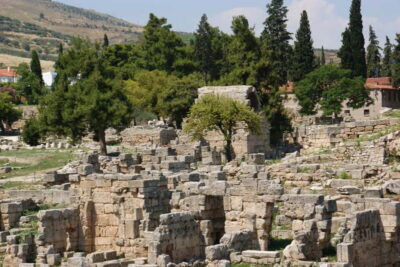
When you reach Ancient Corinth, you enter one of the most important settings for early Christianity. Corinth was a trade crossroads and a cultural magnet. Paul spent a substantial amount of time there, building a community that later reflected back in his letters to the Corinthians.
One key stop is the Bema, the stone platform connected to Paul’s appearance before Roman authorities. The story centers on Proconsul Gallio, who is described as refusing to judge what was essentially an internal religious dispute among Jews. Standing near this spot makes Paul’s lack of interference feel less like plot armor and more like how Roman law functioned in practice.
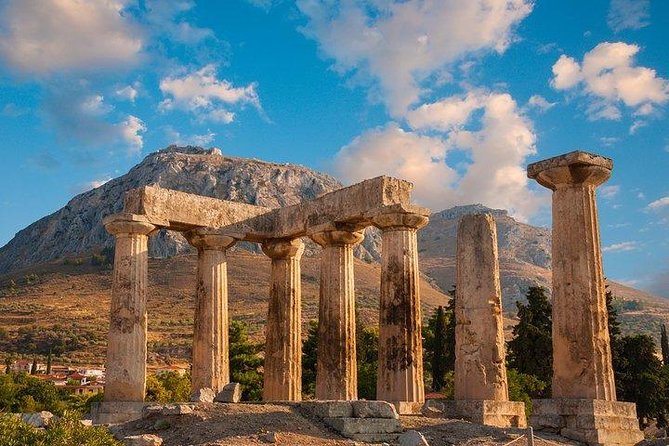
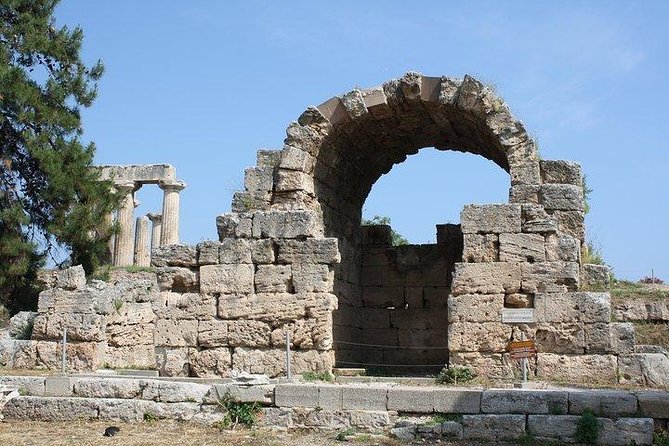
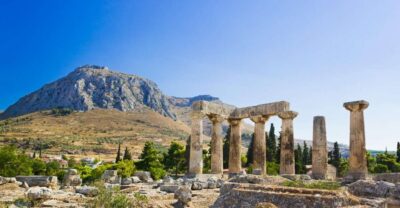
You also visit the Temple of Apollo, built around 560 BC, with early Doric columns still visible. Even if you do not know much archaeology, the scale helps you grasp how dominant temple culture was in the Corinth skyline. Apollo’s temple is a visual reminder of the polytheistic world Paul navigated, and the contrast shows up clearly when you remember that Paul preached the message of one true God and Jesus Christ crucified in a city where major worship systems were publicly celebrated.
For me, the most meaningful thing about Ancient Corinth is that it is not just “ruins.” It is a map of civic, religious, and commercial life in one place. That makes Paul’s letters feel more practical, because the city itself pushes people toward choices, conflicts, and compromises.
- All Day Cruise -3 Islands to Agistri,Moni, Aegina with lunch and drinks included
★ 5.0 · 4,958 reviews
Kechreai and Apostolou Pavlou: ports, vows, and letters that traveled
Next you head to Kechreai, the ancient eastern port of Corinth. This is where Paul’s second missionary journey details become more tangible. The account includes Paul departing with Priscilla and Aquila for Syria and cutting his hair to fulfill a vow. That detail matters because it reminds you that Paul’s story is not only ideas. It is also commitments made and kept while he moved from place to place.
You also connect this port to early Christian networks. The Bible references Phoebe, described as a diakonos, connected to the church at Cenchreae. Seeing the port setting helps you understand how messages could move alongside ships and trade routes, not just by word of mouth.
Then you visit Apostolou Pavlou, a church in tribute to Paul, reflecting his time in Corinth and his work in establishing the early Christian community. Even though churches are not the same as ruins, this stop can help you shift from “history at ground level” to “faith remembered and practiced.”
Lunch in Corinth: a proper break after walking and viewpoints
You get a lunch stop in Corinth at a traditional seaside taverna. If you choose the option with Greek traditional food, the meal cost is included.
I like this structure because it keeps the day from turning into a nonstop sprint. After hours of sites tied to religion, courts, and ships, you need a human pause. Plus, a taverna lunch gives you a chance to cool down, regroup, and plan your energy for Akrokorinthos.
Practical note: ask your driver where you can sit for the view and when the kitchen is busiest. One review story highlighted how guides coordinated good break timing, including coffee and bathroom planning away from crowds. That kind of attention makes a long day feel smoother.
Akrokorinthos fortress hill: the view that makes the whole route click

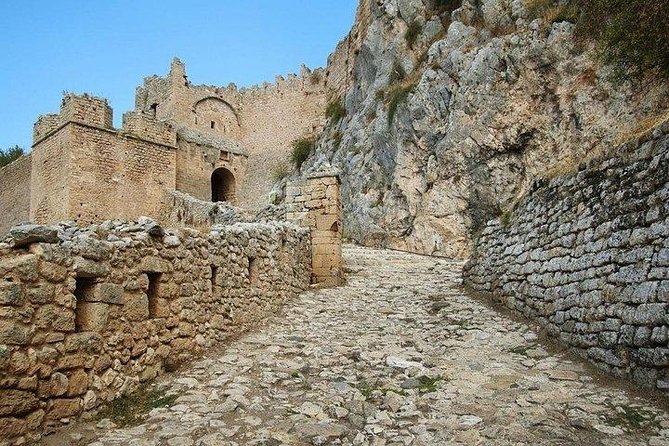
Akrokorinthos is the fortress overlooking Ancient Corinth. This is the part of the day that rewards you for the effort. As you climb, you start understanding why Corinth was defended and why it controlled movement through the isthmus.
From the top, the scenery helps you see Paul’s world in terms of position and power. You can look down over the city and imagine how the message would have traveled through different neighborhoods, marketplaces, and gatherings. It is also a strong “reflection” stop, because you can stand there and think about how a messenger works in a place where authority and belief systems are both visible.
Even if you are not into viewpoints, Akrokorinthos often becomes the memory you talk about later, because it turns a list of sites into one coherent picture.
Price and entrance fees: is $218.43 good value?
At $218.43 per person for about 8 to 9 hours, you are paying for a private vehicle, professional driving, Wi-Fi, bottled water, and hotel or port pickup plus drop-off. You are also buying time, meaning you spend less effort coordinating transport and more time moving through the specific Paul-related stops.
The trade-off is that some costs are not included. Entrance fees for Ancient Corinth and the Archaeological Museum of Isthmia are listed as not included, at €15 per person. Everything else on the plan is marked as free admission.
So the value calculation is fairly straightforward:
- If you want a private, comfortable way to hit multiple Paul-linked locations in one day, the base price makes sense.
- If you strongly prefer a licensed archaeologist-style guide inside the ruins, you may want to add that option so you are not relying only on driver explanations.
In plain terms: this is good value for people who like a structured day with flexibility, not only for people who want a formal site-by-site guided lecture inside each ticketed zone.
Should you book this Paul-focused Corinth day trip?
Yes, if you want a Paul-centered day that connects Athens, Corinth, and the isthmus geography without rushing. It is especially a good fit if you like asking questions while you walk, because the driver approach is built for conversation and context. Guides such as Alex or George are repeatedly noted for answering questions, keeping the pace relaxed, and making sure the Paul stops feel intentional.
Consider a different setup if you expect a licensed, step-by-step guided walk inside Ancient Corinth every time. The default is driver commentary and self-guided site time. You can still learn a lot, but you should plan for the possibility of requesting a licensed guide if you want deeper inside-the-site interpretation.
One last practical tip: if you have limited time due to a cruise or ship schedule, coordinate return timing early. Several guides are praised for going out of their way to help guests make sailing cutoffs, including sharing tracking details.
FAQ
How long is the tour?
It runs about 8 to 9 hours.
Is pickup from hotels or the port included?
Yes. Hotel or port pickup and drop-off are included.
Is this tour private?
Yes. It is private, and only your group participates.
Is there Wi-Fi on the vehicle?
Yes. Wi-Fi is provided onboard.
Is lunch included?
Lunch is included if you choose the option with Greek traditional food.
Are entrance fees included?
Entrance fees are not included for Ancient Corinth and the Archaeological Museum of Isthmia. Those can be purchased on-site for €15 per person. Other listed stops are free admission.
Do the drivers enter the archaeological sites with you?
No. Drivers are not official tour guides for site entry, but they can provide commentary and answer questions while you visit.
Is a licensed tour guide included?
A licensed tour guide is not included by default. It is available upon request depending on availability.
What is the cancellation policy?
Free cancellation is available. You can cancel up to 24 hours in advance for a full refund. Less than 24 hours before start time is not refunded.
What is the price per person?
The price is $218.43 per person.
Final verdict
Book it if you want one well-paced day that connects the places behind Paul’s story, with private comfort and strong driver commentary. Skip or add a licensed guide request if you need a formal, in-ruins explanation every step of the way. Either way, this is a strong way to turn biblical references into places you can stand in, look around from, and understand in context.
More Tour Reviews in Athens
- All Day Cruise -3 Islands to Agistri,Moni, Aegina with lunch and drinks included
★ 5.0 · 4,958 reviews
Not for you? Here's more nearby things to do in Athens we have reviewed





Corinth Day Trips from Athens, compared.
 ★ 4.6From Athens: Ancient Corinth Day Trip with Canal & VR GuideFrom $411,073 reviews
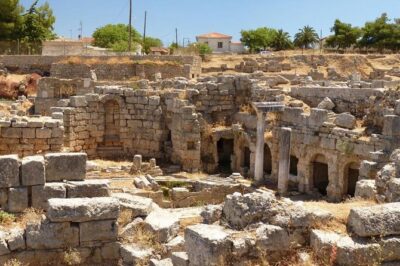 ★ 5.0Private Biblical Tour Ancient Corinth & Isthmus Canal from AthensFrom $301762 reviews
 ★ 4.8Ancient Corinth & Nafplio Full Day Trip with SwimFrom $44523 reviews
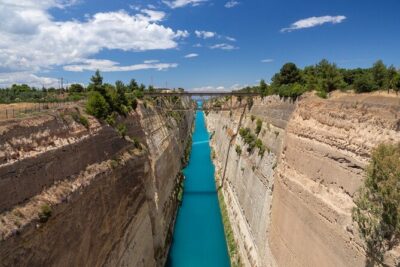 ★ 5.0Private Tour of Apostle Paul’s Footsteps in Ancient CorinthFrom $169275 reviews
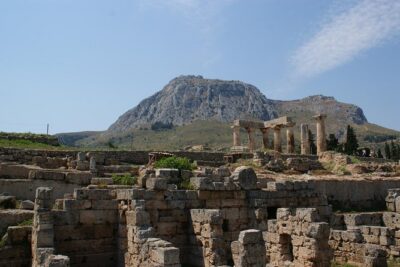 ★ 4.5Corinth Half-Day Trip from Athens with Entrance TicketsFrom $91242 reviews
 ★ 4.7Ancient Corinth & Nafplion Guided Premium TourFrom $34237 reviews
 ★ 4.4Corinth Canal, Mycenae and Nafplio Day TourFrom $33233 reviews
 ★ 4.6From Athens: Ancient Corinth Tour Official Guide & TicketsFrom $86208 reviews
Browse the lists this tour appears in