
Reviewed · CORINTH DAY TRIPS FROM ATHENS
8 Days Apostle Paul tour/Neapolis, Philippi, Veria,Thessaloniki, Athens,Corinth
Paul’s footsteps take you far beyond Athens.
This 8-day mainland route is built around the Apostle Paul journey and the big crossroads of the early Christian world, with long, scenic drives that take in Greek mountain country and key ancient cities. I really like the way the pacing mixes major “must-see” sites with smaller, story-driven stops, and I also like that you get Meteora included twice, first for classic monastery views and then for an early, calmer start. A possible drawback: like most Greek touring, entrance fees and museum tickets are not included, so you’ll want to budget for add-ons that can add up.
You’ll also appreciate the tour’s human touch. The driving is handled by Nikolaos (often called Nikos), and several guests highlighted that his wife, Angela, plays an active role in setting up comfortable stays and very solid meal recommendations, which matters on a trip like this. If you need a deep archaeological guide for museum interiors, note that the tour driver is not a licensed archaeologist, so you may have to hire one separately for that extra layer.
Key things that make this trip work
- Paul’s route across Macedonia to Greece’s classical heart rather than an Athens-only sightseeing binge
- Meteora twice, including an early morning option for better light and fewer crowds
- UNESCO-class ancient sites from Aigai (Vergina) to Delphi, plus major Thessaloniki monuments
- Comfort in real travel time, with private, air-conditioned transport and a driver who knows mountain roads
- Local food and wine built into the plan, not left to guesswork
- Value balancing, since the big ticket price covers transport and logistics, while site tickets are your responsibility
Why this Apostle Paul route feels different from a normal Greece tour
This is not a “grab photos at each stop” itinerary. The focus is on connecting locations to the early Christian story as you move through Greece from Macedonia down toward Athens. That theme changes how you look at ruins and churches. Instead of just seeing stones, you start spotting the human geography behind the biblical narrative.
You also spend a lot of time outside of the usual postcard loop. You’ll pass through central Greece, Thessaly, Macedonia, and coastal stretches, which is a big deal because the mainland is dominated by mountains. The result is a trip that feels like travel through real regions, not just a list of landmarks.
You can also read our reviews of more tours and experiences in Athens.

Price and what you actually get for about $2,961.45 per person
At $2,961.45 per person for roughly 8 days, you are paying mainly for private logistics: transportation, driver service, and the time to move efficiently between far-apart sites. The tour includes pickup and drop-off from your place in Athens or Piraeus (or another requested location), plus an air-conditioned vehicle and an English-speaking driver who provides an audio documentary during travel.
What’s not included is where your budget needs attention. Entrance fees and museum tickets are not part of the package, and the tour notes that summer site costs can be around 20€ per site on average (winter is often about half). Specific museums can run higher, like the Archaeological Museum at Pella and the Aigai royal tombs museum. You’ll also want to plan for optional upgrades where the itinerary suggests different overnight options.
Bottom line: the price can feel high until you separate what you’re buying. You’re buying driving, timing, and reduced friction. You’re also buying the reassurance of a driver who handles long stretches and mountain roads well.
Day 1: Thermopylae, Trikala bridges, and Meteora’s first monastery visit
Your day opens with Thermopylae, the pass made famous by the Persian Wars. The visit isn’t just a quick stop at a monument. You also get the interactive museum tied to the 480 BC battle, which helps you understand why this narrow corridor mattered. If you like story-backed history, this is an excellent first anchor.
Next comes Trikala, a lived-in town built near an ancient predecessor. The interesting detail here is the connection to Asclepius and healing temples, which shifts the vibe from battle history to the ancient “health and refuge” side of Greek life. Even if you keep it casual, the metal bridge built in 1886 gives you a sense of how modern infrastructure sits over older layers.
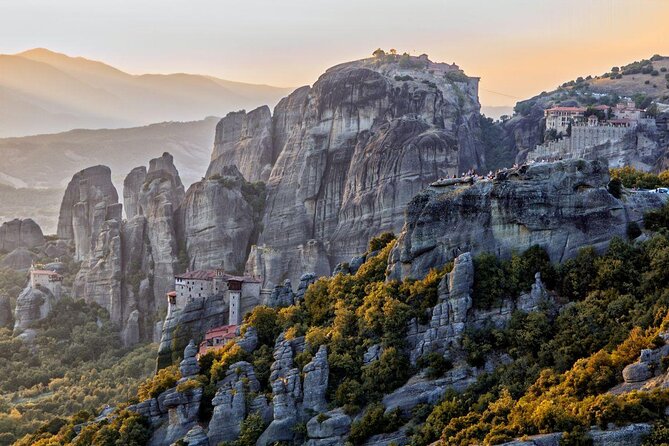
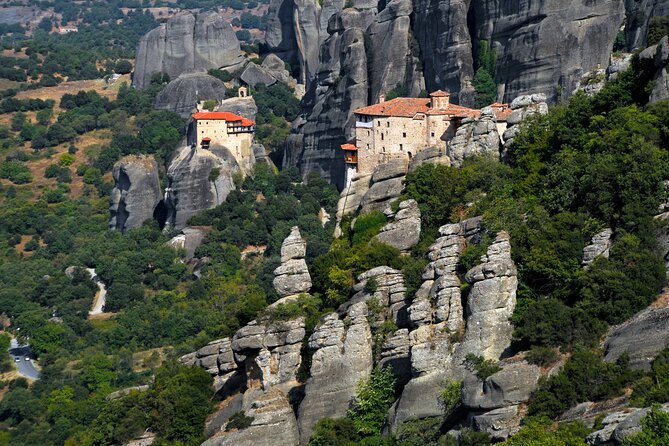
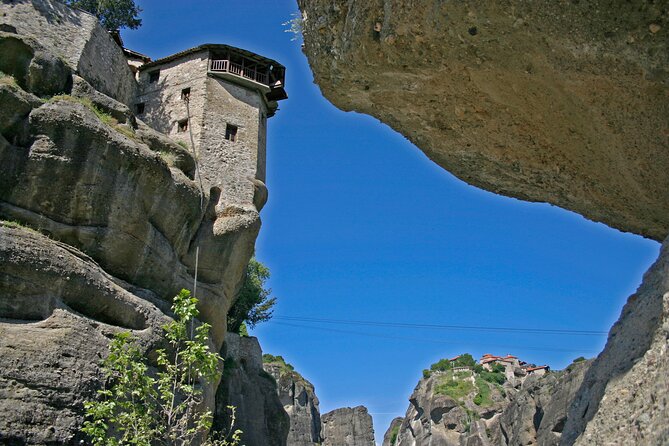
Then you land in the Meteora area for your first big spiritual stop: Great Meteoron Monastery. Meteora is one of those places where the architecture feels like it was designed to scare off ordinary life. Monasteries sit on massive rock pillars, and you’ll feel why they became Orthodox centers. Expect at least some time for viewpoints and orientation, not just a single doorway photo.
You also overnight in Kastraki, described as a small village that looks like an eagle’s nest from a distance. The day’s payoff is the sunset and photography-style rock viewing, guided to good spots by the drivers. That’s one of those moments where you stop thinking about the next museum and just enjoy the scale.
Day 2: Early Meteora light, Vergina royal tombs, Aristotle’s classroom, and Loutra Pozar
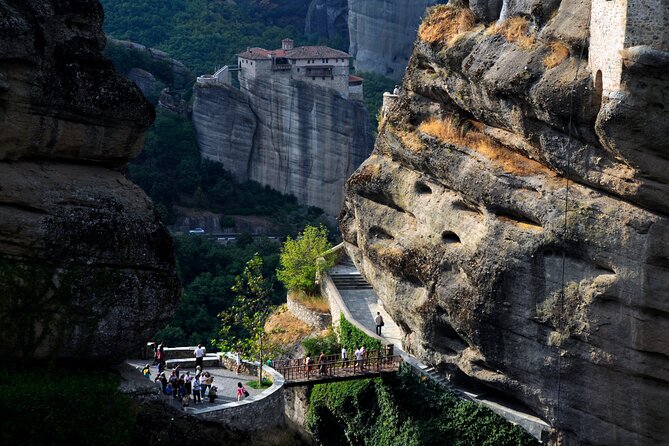
Day 2 starts with Meteora again, this time with the advantage of early timing for different light and generally fewer people. If you’ve ever wished you could see the same place twice, better lit, this is your chance.
After that, you head to Vergina (Aegai) and the Museum of the Royal Tombs. The highlight is the royal burial context tied to Macedon’s leadership, including the tomb of Philip II, plus the broader palace setting. Even if you’re not a “museum person,” this tends to land well because the story is clear and the finds are famous.
Then you get a distinctly biblical turn with Vima Apostolou Pavlou at Veria area. This is tied to Apostle Paul preaching in the Jewish and Greek communities mentioned in Acts. It’s a smaller, quieter type of stop, but that’s part of the value. It gives your brain a break from “big ruins” mode.
Later you visit Mieza, where Aristotle taught Alexander the Great. The site is linked to the Temple of the Nymphs concept, which helps you picture learning as something tied to landscape and myth, not just a classroom building.
Finally, the day shifts gears with Loutra Pozar Thermal Baths on the slopes of Mount Kaimaktsalan area. These are thermal springs you can actually bathe in, and the tour notes the water runs around 37°C with a reputation for healing and even drinkability. It’s a smart move near the middle of a long road trip. Your feet will thank you, and your shoulders will unclench.
Optional overnight add-ons around this area are mentioned, so it’s worth asking what hotel tier is being used for your dates and how that affects comfort.
Day 3: Pella artifacts, Thessaloniki churches, and the White Tower viewpoint
Day 3 includes a strong trio in Thessaloniki, but you start with Pella, Macedonia’s capital and linked to Alexander the Great’s birth and the palace setting. Even with only a couple of hours, you can see how the city’s layout and surviving objects connect to the political shift from small kingdoms to larger power structures.
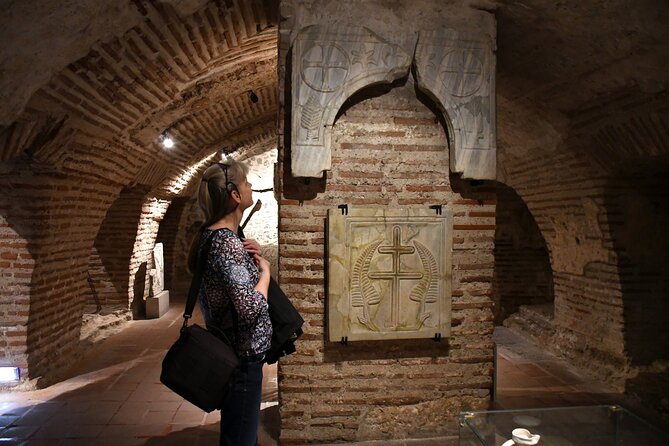
Then you move to Holy Church of Saint Demetrius. The most meaningful part here is that the church is tied to the tradition of Demetrius’ martyrdom and the way the crypt area evolved as levels changed over time. You’re not just touring a landmark. You’re walking into layers of Christian memory.
Next is the White Tower of Thessaloniki, a waterfront monument that became a prison during Ottoman rule and later became a symbol after Greek control. The view from the top is useful for orientation. Once you look down, you understand the city’s shape in a way street-level walking can’t always provide.
You finish with Rotunda (INSPOT Rotonda), built in the era of Emperor Galerius and later adapted into a Christian worship space. This stop works best for people who enjoy transitions, like when a structure changes religious identity over time. If you like “one building, many eras,” you’ll appreciate this.
- All Day Cruise -3 Islands to Agistri,Moni, Aegina with lunch and drinks included
★ 5.0 · 4,958 reviews
Day 4: Philippi’s Roman story, Lydia’s baptism memory, and Neapolis at Kavala
Day 4 is where the early Christian theme gets heavier. You start with the Archaeological Museum of Philippi, tied to Roman colonization after the battle of Philippi. The exhibit focus makes sense here: Philippi isn’t just ruins. It is a city reshaped by political outcomes, and the museum helps connect that to the later Acts story where Paul moves through the region.
Then you visit Saint Lydia’s Baptistery, associated with Lydia of Thyatira, often described as the first documented convert to Christianity in Europe in tradition. The stop is connected to hospitality to Paul and his companions in Philippi, which gives this more than “tourist interest.” It’s a place anchored to everyday community support, not just grand events.
You also visit Palea Kavala, which the tour connects to Neapolis and the moment when Kavala becomes the first European city tied to Christian reception in Paul’s route. You’ll see local memorial context, including the monument linked to Apostle Paul outside the church of Agios Nikolaos.
One practical note: this day has multiple “meaning stops,” but not all are large museums. Wear comfortable shoes and keep your pace steady. The thematic stops can make time feel slower in a good way, but you don’t want to be sprinting for the next bus.
Day 5: Amphipolis, Dion’s Zeus sanctuary, and a night near Mount Olympus
This day starts with Amphipolis, connected to ancient battles and also Alexander the Great’s broader campaign era. It’s also tied to the tragic aftermath after Alexander’s death. The museum framing is helpful because it provides context quickly, without forcing you to guess what you are looking at.
Next is Dion Archaeological Park, known for the sanctuary of Zeus and a large portion of the ancient city visible in the park. Dion is also linked to Macedonian celebrations and Alexander preparations. If you’re the type who enjoys connecting political power to religious ritual, this place hits the right note.
Then you head toward Mount Olympus and overnight on its slopes. The tour describes Olympus as Greece’s highest mountain, with many peaks and deep gorges, plus its role in Greek mythology. Even if you keep the “myth” side in the background, the practical value is the dramatic mountain setting. Nights here can feel cooler and quieter, which is welcome after a few intense archaeology days.
Day 6: Delphi’s oracle world, Athena Pronaia, and scenic drives over Parnassus
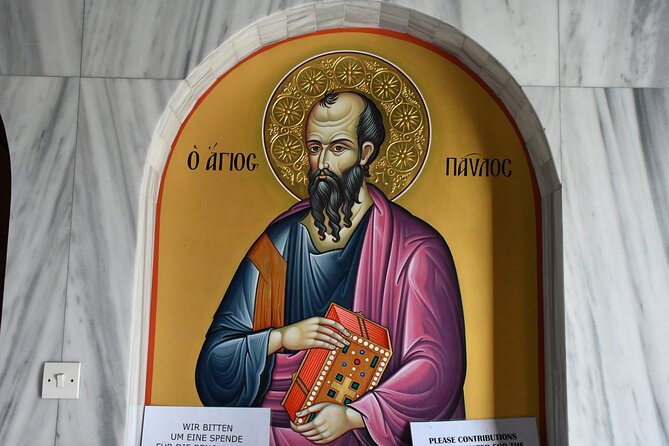
Delphi is the classical heavy hitter, and you get the key pieces without wasting time. You start with the Temple of Apollo, the oracle area, and the UNESCO significance tied to how Delphi influenced much of the ancient Greek world.
Then you go to the Delphi Archaeological Museum, where the story of the sanctuary unfolds through sculpture and artifacts. This museum visit is especially helpful because Delphi can feel scattered if you only walk the site. Seeing the objects first or alongside the ruins makes it click.
You also visit the Tholos of Athena Pronaia, a circular structure linked to the sanctuary of Athena Pronaia. It’s shorter than the main Apollo area, but it gives you a sense of the sanctuary’s wider complexity.
Finally, the day includes scenic driving over Mount Parnassus, with views across olive groves and countryside. You overnight in a traditional village on the mountain slopes. This part works because it balances “ancient facts” with “human scale living.” It’s harder to explain, but you feel it in the quiet, especially at night.
Day 7: Livadia oracle country, Eleutherai by Kithaeron, and Ancient Corinth
Day 7 is a mix of myth geography and Paul-relevant Greece. You begin in Livadia, passing through Boeotia and stopping near the river Karya and the ancient oracle context connected to Trofonios. The tour ties it to springs of Mnemosyne and Lethe. Even if you do not take the mythology literally, it’s a good example of how Greek spiritual life often wrapped itself around water and place.
Then you drive via Mount Kithaeron toward Eleutherai. The tour highlights Eleutherai as allegedly connected to the birthplace traditions of Dionysus Eleuthereus, plus the strategic position on the border between Athenian territory and Boeotian control. You’ll also see the fortress named Gyftokastro mentioned in the drive.
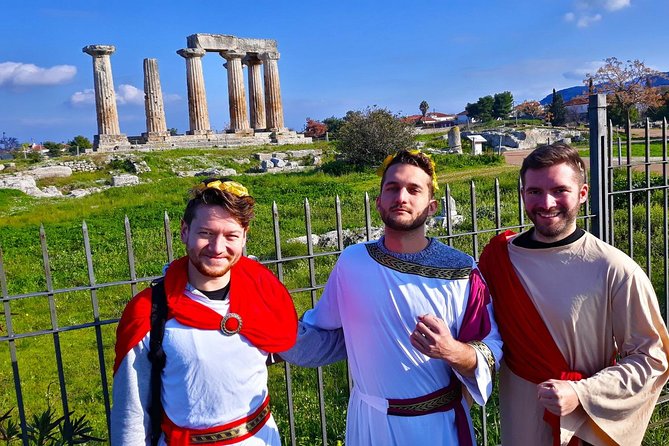
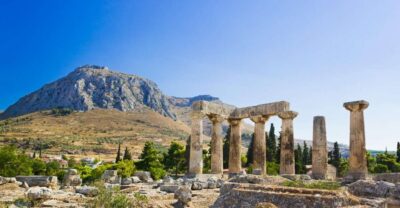
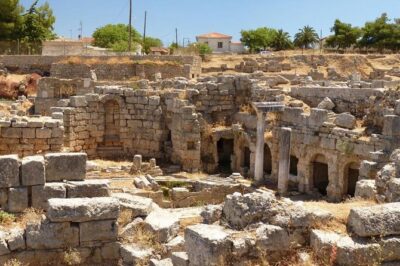
You end the day at Ancient Corinth. Corinth matters for you twice, because you are in the setting tied to Paul’s letters in the New Testament, and it’s also a major Acts travel point. The site includes the Apostle Paul Vema in the middle of the Ancient Agora area. Walking this space is one of those “your Bible pages start feeling real” experiences.
Overnight is in Nafplio, a modern historical town that served as Greece’s first capital in modern times. It’s a smart place to land because the setting feels more relaxed than the big archaeological nodes.
Day 8: Corinth Canal photos, Athens Acropolis and Areios Pagos, then the museum
Your final day begins at the Corinth Canal, a man-made cut connecting the Aegean and Ionian seas. You stop for photography and can walk across a pedestrian bridge to admire the canal from a high angle. It’s quick, but it’s a great visual punctuation mark before Athens.
Then you go straight to Athens with a focus on the big biblical moment. You visit the Acropolis and Areios Pagos Hill, where Paul is connected in tradition to preaching to Athenians. Even if you don’t need religious context, the hilltop setting matters. It forces you to see how elevated places shape how crowds listen and how ideas spread.
You also visit the Acropolis Museum, which specifically houses findings from the Athenian Acropolis site. This is a strong way to close the loop, because you can see objects and learn what survives from what you walked on.
You finish with a general Athens highlights visit and a drop-off at your hotel.
What to pack and how to keep the trip from feeling rushed
This tour involves a lot of driving and a lot of “standing and walking time” spread across multiple days. Pack for layers, because mountain regions can feel cooler even when Athens feels warm.
For monasteries at Meteora, you should expect practical clothing rules common in Orthodox sites. Bring something that covers shoulders and knees, and keep it easy to layer. Also bring a hat and water. Even when the day is not the hottest part of summer, sun hits hard on open ruins and hilltops.
Because entrance fees are extra, I suggest you budget daily from the start instead of treating tickets as surprises. The tour notes that summer can average about 20€ per site, and you’ll see museum-specific costs like the Aigai museum rates and Delphi combined ticket structure.
One more practical note: if you want a true archaeology guide for museum walkthroughs, the tour driver is not a licensed archaeological guide for site interiors. That’s not a deal breaker. It just means you should either read up before or consider hiring a guide for the specific stops you care most about.
Finally, treat meals as part of the plan. Guests praised the restaurant recommendations and the way Nikolaos and Angela fit food and wine into the trip. If you let that happen, the journey feels like Greece, not just history.
Who this tour is best for
This suits you if you want a faith-and-history road trip that connects biblical places with the real geography of northern Greece and mainland classics. It also suits you if you like slow-better thinking, meaning fewer snap visits and more attention to why a site mattered.
It’s also a good fit for small groups who prefer privacy and flexibility. The tour is private, so you are not negotiating your day with strangers. If you like scenic road time and can handle some early starts, you’ll get a lot out of it.
If you only want Athens and a couple of famous ruins, this may feel like too much moving. But if you want the broader Paul story with Macedonia and the ancient world as context, it’s built exactly for that.
Should you book this Apostle Paul Greece tour?
I would book it if your top priority is a themed route across Macedonia to Athens, with Meteora done properly and major stops like Thessaloniki, Philippi, Delphi, and Corinth handled in a way that connects stories to place. I’d also lean yes if you value a driver you can trust on mountain roads and you like the idea of Nikolaos and Angela arranging stays and meals that actually fit the trip.
I’d hesitate if entrance fees would be a stress point for you, or if you need a licensed archaeologist on every museum floor. Since most museum tickets are not included and that specific guide level is not part of the driver role, you’ll want to plan around those needs.
If you want, tell me your travel month and whether you prefer more museums or more outdoor viewpoints, and I’ll suggest a realistic budget for site tickets and the best strategy for pacing.
FAQ
Where does pickup and drop-off happen?
Pickup and drop-off are offered from/to your hotel or apartment in Athens or Piraeus. You can also request another location.
How long is the tour?
The tour lasts about 8 days.
What time does the tour start each day?
The meeting start time is 8:00 am.
Are entrance fees included?
No. Entrance fees to sites and museums are not included. Summer costs are approximately 20€ per site (winter is about half, based on the tour notes).
Is the tour private?
Yes. This is a private tour/activity, and only your group participates.
Is the tour driver an archaeological guide?
No. The tour driver is not a licensed archaeological tour guide for site interiors. If you require an archaeologist guide to tour museums or archaeological sites with you, you need to hire one separately.
More Tours in Athens
More Tour Reviews in Athens
- All Day Cruise -3 Islands to Agistri,Moni, Aegina with lunch and drinks included
★ 5.0 · 4,958 reviews
Not for you? Here's more nearby things to do in Athens we have reviewed




Corinth Day Trips from Athens, compared.
 ★ 4.6From Athens: Ancient Corinth Day Trip with Canal & VR GuideFrom $411,073 reviews
 ★ 5.0Private Biblical Tour Ancient Corinth & Isthmus Canal from AthensFrom $301762 reviews
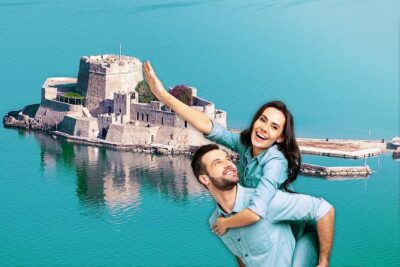 ★ 4.8Ancient Corinth & Nafplio Full Day Trip with SwimFrom $44523 reviews
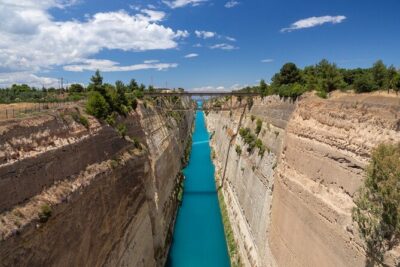 ★ 5.0Private Tour of Apostle Paul’s Footsteps in Ancient CorinthFrom $169275 reviews
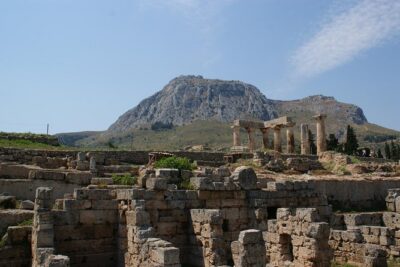 ★ 4.5Corinth Half-Day Trip from Athens with Entrance TicketsFrom $91242 reviews
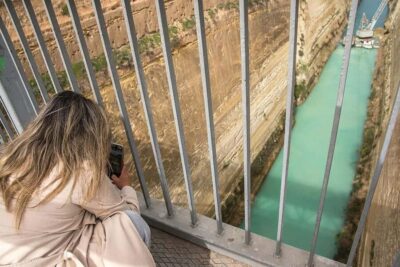 ★ 4.7Ancient Corinth & Nafplion Guided Premium TourFrom $34237 reviews
 ★ 4.4Corinth Canal, Mycenae and Nafplio Day TourFrom $33233 reviews
 ★ 4.6From Athens: Ancient Corinth Tour Official Guide & TicketsFrom $86208 reviews
Browse the lists this tour appears in