
Reviewed · CORINTH DAY TRIPS FROM ATHENS
“Tour of Ancient Corinth:Follow in the footsteps of Apostle Paul”
Corinth brings Paul’s story to street level. This private outing threads together the Isthmus, the ruins, and the hilltop fortress of Acrocorinth, so you get context fast, with the history explained on the drive.
I love how the plan starts with hotel pickup and runs in an air-conditioned Mercedes, which means you lose less time to heat and logistics. I also like the flexible, small-group feel, where you can pause where the stones and views actually pull you in.
One thing to consider: the Archaeological Museum of Ancient Corinth entry is not included, and you will still pay standard admission at the paid sites on your route. Also, the driver is not a licensed museum guide at each stop, so if you want deep, site-by-site interpretation, you may want to request a licensed tour guide.
Key highlights to notice before you go
- Private transport with A/C: easy pacing over a 4 to 5 hour window.
- Isthmus + Corinth Canal history: a quick geography lesson that makes the peninsula make sense.
- Ancient Corinth in layers: ruins, marketplace area, and the healing sanctuary zone.
- Museum time that’s actually useful: about 1 hour to see prehistoric to Byzantine finds.
- Acrocorinth viewpoints: a steep fortress hill tied to defense stories and early Christian sites.
- Skip-the-line help: your driver helps with purchasing where it applies, while you cover ticket costs.
Why Corinth matters for your Athens-to-Paul timeline
If you are doing Athens and only hitting the big-name sites, Corinth is the missing link. Corinth sits on that narrow connection between mainland Greece and the Peloponnese, so it was important for movement, trade, and control. When you walk among the remains here, the place stops feeling abstract, and you start seeing why Apostle Paul’s routes and messages would have landed with real weight.
This tour is set up for that kind of understanding. You get a road-to-ruins flow: a geography stop at the Isthmus, then Ancient Corinth itself, then the museum, and finally the hilltop of Acrocorinth. The order matters. Each stop answers a new question, starting with where people could travel, then where they lived and worshipped, and ending with what someone would see from above when defending the region.
You can also read our reviews of more tours and experiences in Athens.


Pickup and timing: the practical value of a private half-day
This is a 4 to 5 hour private experience, and that time window is the sweet spot for Corinth. Too short, and you end up skipping the museum or rushing the viewpoints. Too long, and you risk turning the day into a long bus ride with too many stops. Here, the pacing feels built for a half-day, with breaks and travel baked in.
You can also tailor the pickup. Your driver can meet you at a hotel, Airbnb, or right at Port Piraeus with a sign. Pickup times are flexible to fit your schedule, and you are not locked into one rigid departure hour. If you are arriving by ship and want to avoid messy transfer days, this structure helps you use your limited time more efficiently.
On top of that, the vehicle details are not fluff. You get WiFi, mobile chargers, bottled water, and A/C. That combination matters in Greece. Heat and dehydration can wreck your ability to enjoy stone ruins, and the onboard setup helps you stay comfortable without hunting for power banks or a cold drink mid-day.
Isthmus of Corinth: the “choke point” that shaped everything
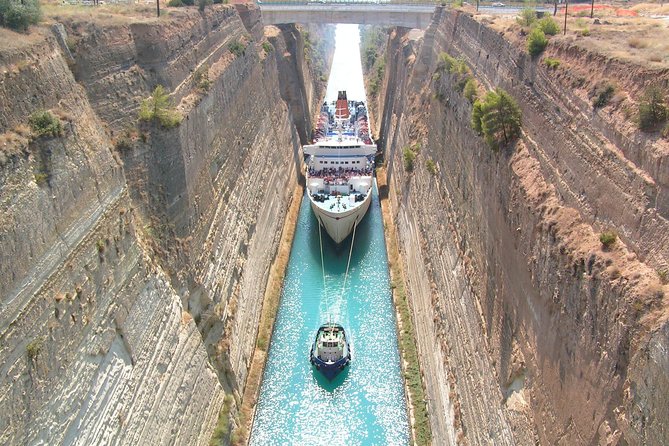
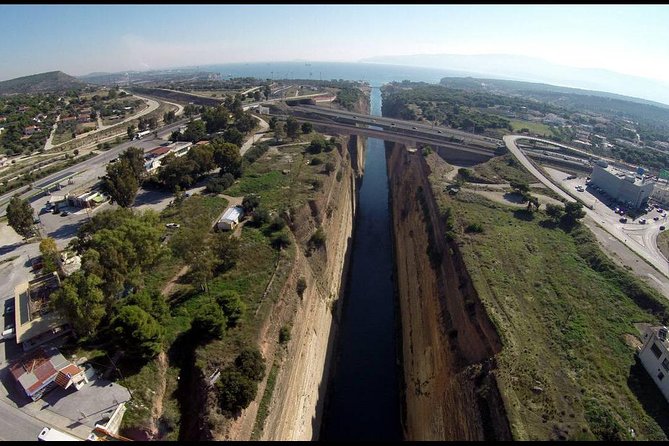
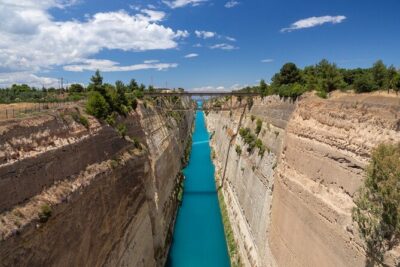
Your first stop is the Isthmus of Corinth, the narrow strip of land that links Central Greece to the Peloponnese. Even if you never sail through the Corinth Canal, the location explains why armies, travelers, and traders cared so much about this spot.
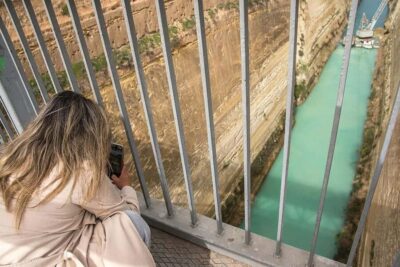
You also get the story behind the canal itself. The canal, opened by connecting the Saronic Gulf with the Gulf of Corinth, is a modern achievement built around an older geographic reality. The narrowest point is where the canal was built, and the construction dates are 1880 to 1893. That gives you a nice bridge between ancient strategy and later engineering.
Then comes the part that really makes your eyes change. A wall was built in ancient times at this strategic point, preserved until the Byzantines as the Hexamilion. In plain terms, someone once decided that holding this corridor mattered enough to fortify it repeatedly. When you look around afterward, you can better understand why Corinth was never just a city. It was a checkpoint.
This stop is about 30 minutes, and the admission at this stage is free on the tour plan. That makes it a good warm-up before you commit to the longer walking at the archaeological areas.
Ancient Corinth ruins: where the marketplace feeling meets Paul’s world
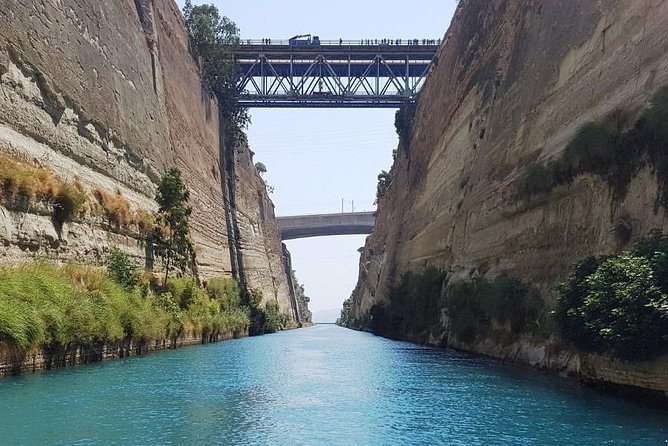
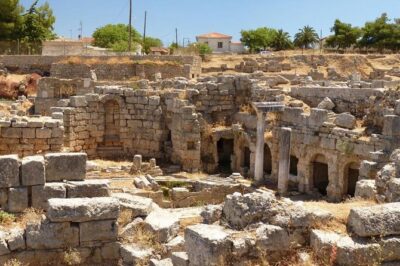
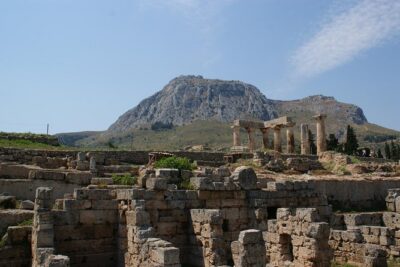
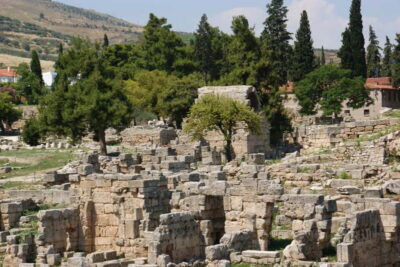
Next you move into Ancient Corinth, also called Archaia Korinthos. Corinth was a polis, a city-state, on the Isthmus. The ruins are roughly 5 kilometers northeast of modern Corinth, and you are viewing an area that has been actively excavated over time.
This stop is also about 30 minutes with free admission on the tour plan. That means the goal is not to memorize every column. It is to build a clear mental map: where the city’s public and sacred spaces sat, and how the geography shaped daily life.
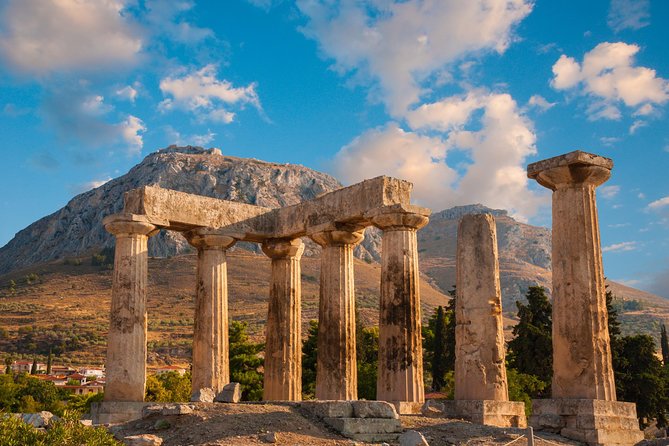
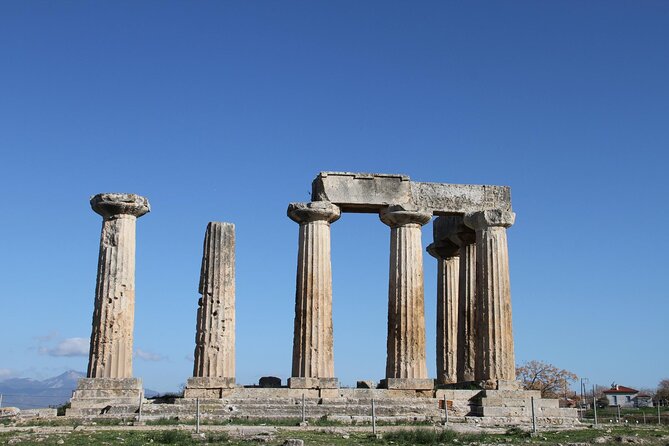
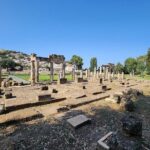
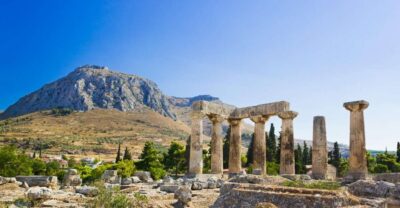
One highlight here is the temple area tied to Apollo. The temple of Apollo is described as being built with 40 monolithic Dorian columns, with only seven still standing over the ruins of the ancient market area. Even with parts missing, the scale tells you why this was a statement building, not a small neighborhood shrine.
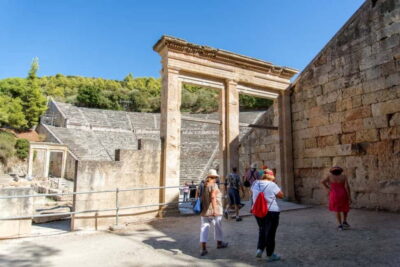
You also encounter the Asklepieion, the healing sanctuary. That matters because it shows Corinth’s spiritual life was not only political or civic. People came here for healing, and that kind of sanctuary sat right inside the city’s cultural rhythm. The tour also frames Corinth as a Roman colony, which helps you understand the layers you will see in the stonework and layout. Corinth did not freeze at one moment. It kept changing.
A quick heads-up: because your time is limited here, you will get the best experience if you decide in advance what you most want. If you care about religion, focus your questions around Apollo and Asclepius. If you care about daily life, aim your attention at the marketplace zone and how the city’s public spaces are arranged.
Archaeological Museum of Ancient Corinth: 1 hour that’s worth using well
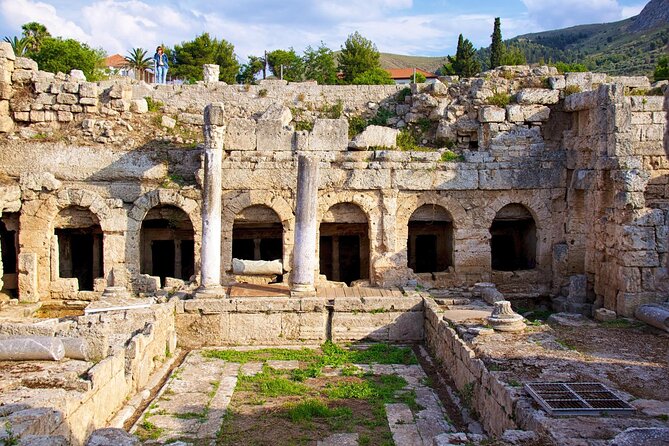
The Archaeological Museum of Ancient Corinth is built at the archaeological site of Ancient Korinthos and was constructed in 1932. It is a smart stop after you walk the ruins, because it helps you identify what you just saw and what you missed.
Your museum time is about 1 hour, and museum admission is not included. The entrance fee is listed as €20.00 per person, so budget for that. The museum’s role here is practical: it links objects to stories, from early periods right through to Byzantine times.
What you can expect to see fits the theme of the day. The museum includes prehistoric collections and finds from the Asklepieion, plus artifacts stretching from the Geometric era through Byzantine period. That sweep helps you realize how long this region stayed important.
There is also a notable piece highlighted in the tour description: the Twin Kouroi from ancient Tenea. Kouroi are kouros figures, carved human forms that reflect Archaic Greek artistic style. Seeing a piece like that in context makes the museum feel more than a storage room. It becomes a museum of specific cultural shifts.
Finally, pay attention to the museum’s atrium. Even when you are on a schedule, the space around you can help you orient yourself. If you like archaeology that connects to real architecture, the atrium can be a quick “reset” moment before you head back outdoors.
- All Day Cruise -3 Islands to Agistri,Moni, Aegina with lunch and drinks included
★ 5.0 · 4,958 reviews

Akrokorinthos: the fortress hill with Paul connections and early Christian sites
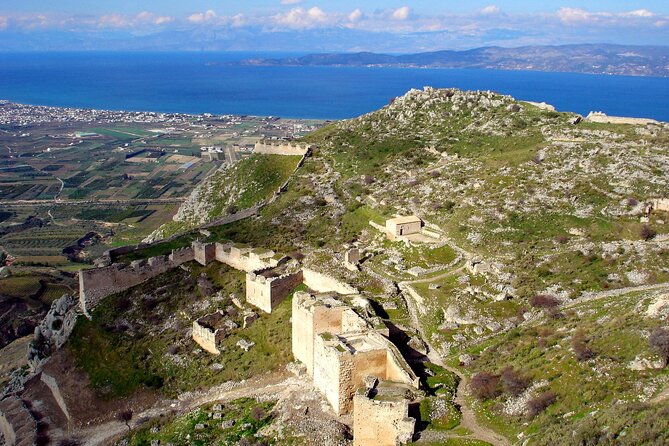
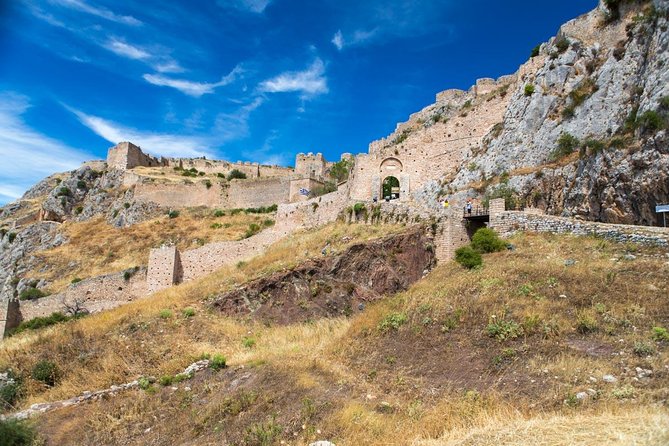
Acrocorinth, also called Akrokorinthos, is the tour’s big finale. This is a steep rock, about 575 meters high, and it functioned as a viewpoint and defensive acropolis. In ancient times, it gave control and warning if an enemy approached from central Greece or from the sea.
If you like strategic geography, this stop is for you. The hill commands the Isthmus, which means it could help repel attempts to enter the Peloponnese peninsula. The fortress had a secure water supply, and that detail explains why it was repeatedly used as a last line of defense in southern Greece.
The tour also frames a personal connection through the idea of Apostle Paul’s step. Even if you do not need the literal pinpoint, you do need the atmosphere. Walking here, you understand why a message traveler like Paul would not think of Corinth as one flat place. He would be aware of the city below and the power on the hill.
Expect about 1 hour at Akrokorinthos, with admission not included on the tour plan. The walking can be uneven and uphill, so wear shoes you trust on rough ground and bring water. The good news is that the payoff is visual. You are not just reading about a fortress. You are standing on it.
There is a long list of sites you may spot on the hill. Some of the ones named in the tour description include:
- Amphitheater and theater areas
- Sanctuary of Asclepius
- Sanctuary of Demeter and Koris
- Fountain Glavki
- Temple of Apollo and Temple of Octavia
- Early Christian Basilica of the Skull and Early Christian Basilica of Lechai
- Pirine and the conservatory
You do not need to treat this like a checklist. Let your driver point out the ones that match your interests. If you are into Roman-era history, ask about the Temple of Octavia. If early Christianity is your focus, keep an eye out for the basilicas named here. The point is to make the hill feel like a map, not a pile of ruins.
Also, there is a fun scholarly detail tied to this place: George Forrest has called it the most impressive of the acropolis of mainland Greece. You do not need to agree with the critic to see why the quote lands.
Museum vs. ruins: how the day fits together without feeling rushed
One reason this tour works is the rhythm between outdoors and indoor interpretation. You start with a wide view and a geography story at the Isthmus. Then you shift to Ancient Corinth ruins, where you can grasp the city layout at street level. Next comes the museum, which clarifies what the stones might have looked like when complete. Then you end with the hilltop, where you understand why the area’s power structure was built upward.
If you skip the museum, you will still have a good day. But you will also miss the chance to see smaller artifacts that explain how people lived and worshipped beyond what stands in the open. If you are the type who likes “objects plus context,” do not treat the museum as optional. Even at 1 hour, it is the stop that turns walking into learning.
That said, you should also know what you are not getting. The driver is an English-speaking history guide in the sense of explaining the sites from the vehicle and during the stops, but they are not described as a licensed tour guide who accompanies you inside each museum. So expect friendly and helpful explanations, but not the kind of deep, scripted museum narration you might get from a specialist guide on a different format.
Price and value: what you pay for, what you still need to budget
The price is $204.50 per person, and it is for a private tour experience with hotel or port pickup and drop-off. The core value is that you get the transportation and time structure handled for you, using a Mercedes-Benz vehicle with A/C and WiFi. You also get bottled water and mobile chargers, which sound minor until you are on a hill or between stops.
Another value piece is the convenience around tickets. The tour includes assistance with purchasing skip-the-line tickets, but the customer covers the ticket costs. On this route, some admission is free at the first two stops, while paid admission applies to the museum and the archaeological sites as indicated.
From the provided details, the museum entrance is €20.00 per person and ticket costs vary seasonally for archaeological sites. That variability is normal in Greece, but it means you should not assume your final total is just the base price.
A simple way to judge value: if you are traveling as a couple or small group, paying for a private vehicle can actually be efficient, because you avoid juggling taxis and you keep a dedicated plan. If you are solo and happy with buses, you might find cheaper options. But if you care about comfort and time control, this format usually makes sense.
What to ask your driver so you get more out of each stop
Because the driver is not a licensed museum guide, your best strategy is to guide the conversation. Ask for a quick “what matters most” before you enter a site. Then ask a follow-up while you are still standing there.
Good question types for this route:
- For the Isthmus: ask how the canal changed travel compared with ancient times.
- For Ancient Corinth: ask which structures connect most directly to Apollo and the healing sanctuary.
- For the museum: ask which artifacts relate to what you just walked past outdoors.
- For Akrokorinthos: ask what view points help you understand defense and movement.
The tone of the ride can matter too. Some drivers on this service are known for balancing clear explanations with conversation, and that makes the drive feel less like downtime. If your group wants quiet, you can also set that expectation early.
Who this tour suits best (and who might want a different format)
This is a strong choice for first-timers to Corinth who want the main sites without spending the whole day on transit. It is also a great match for travelers who like their history explained in plain language, with time for photos and a real sense of geography.
It is especially suitable if:
- You want a private plan rather than a crowded bus schedule
- You care about comfort, heat control, and a smooth pickup from your exact location
- You want both ruins and museum context
You might look elsewhere if you want a licensed, hands-on guide constantly inside each museum and every room. This tour can still be informative, but it is not positioned as a full museum-guided experience at every stop. Also, Akrokorinthos involves uphill terrain, so if walking is an issue, plan your pace and wear the right shoes.
Should you book this tour?
Book it if you want Corinth to feel like a connected story: geography first, then city life, then artifacts, then the hilltop power center tied to the Paul-era setting. The private A/C vehicle, pickup convenience, and the museum-to-ruins flow make it a practical use of half a day.
Skip it or consider alternatives if you are chasing the most expert, room-by-room narration inside museums. In that case, a tour that includes a licensed guide at each site might match your expectations better. Otherwise, for most people, this hits the sweet spot between comfort, time control, and real-world Corinth context.
If you do book, bring comfortable shoes, plan for at least one paid stop (the museum entrance is listed), and do not over-pack your expectations. Let the day teach you step by step, from the Isthmus up to Acrocorinth.
FAQ
How long is the Tour of Ancient Corinth?
It runs for about 4 to 5 hours.
Where can you get picked up?
You can be picked up from your hotel, Airbnb, or Port Piraeus, or from nearby metro or bus stations. You provide the exact address or meeting point when booking.
Is the tour private?
Yes. It is a private tour/activity, with only your group participating.
Does the price include museum admission?
No. The Archaeological Museum of Ancient Corinth ticket is not included. The listed entrance fee is €20.00 per person.
Is the transportation air-conditioned?
Yes. You travel in a Mercedes-Benz vehicle equipped with A/C, WiFi, bottled water, and mobile chargers.
Does the tour include skip-the-line tickets?
The tour offers assistance with purchasing skip-the-line tickets. You cover the ticket cost yourself.
What if I cannot find the driver at pickup?
If you cannot locate your driver, contact the emergency number shown on your voucher.
More Tours in Athens


More Tour Reviews in Athens
- All Day Cruise -3 Islands to Agistri,Moni, Aegina with lunch and drinks included
★ 5.0 · 4,958 reviews
Not for you? Here's more nearby things to do in Athens we have reviewed







Corinth Day Trips from Athens, compared.
 ★ 4.6From Athens: Ancient Corinth Day Trip with Canal & VR GuideFrom $411,073 reviews
 ★ 5.0Private Biblical Tour Ancient Corinth & Isthmus Canal from AthensFrom $301762 reviews
 ★ 4.8Ancient Corinth & Nafplio Full Day Trip with SwimFrom $44523 reviews
 ★ 5.0Private Tour of Apostle Paul’s Footsteps in Ancient CorinthFrom $169275 reviews
 ★ 4.5Corinth Half-Day Trip from Athens with Entrance TicketsFrom $91242 reviews
 ★ 4.7Ancient Corinth & Nafplion Guided Premium TourFrom $34237 reviews
 ★ 4.4Corinth Canal, Mycenae and Nafplio Day TourFrom $33233 reviews
 ★ 4.6From Athens: Ancient Corinth Tour Official Guide & TicketsFrom $86208 reviews
Browse the lists this tour appears in