

Reviewed · ATHENS ACROPOLIS & PARTHENON TOURS
Athens: Acropolis Guided Private Tour without Entry Ticket
The Acropolis is a stairway to legend. This private guided walk turns the big stones of Athens into stories you can actually picture, with plenty of time to ask questions.
Two things I especially like are the licensed guide and the way the tour connects the ruins to Greek mythology and major festivals. The main thing to watch is that this is the tour only, so you must handle the Acropolis entry ticket yourself.
You also get a small-group feel without feeling rushed. In a spot where crowds often flatten the experience, a private format helps you slow down at the places that matter, like the Propylaea gateway and the Caryatid carvings. A possible drawback: it’s a 2-hour walking tour uphill on uneven ground, so you’ll want comfortable shoes and a steady pace.
Key highlights worth planning for
- Private, small-group Q&A time with a Spanish live guide
- Myths tied to the stones, from Athena’s role in Athens to festival stories
- Top monument stops including Parthenon viewpoints, Propylaea, and the Temple of Athena Nike
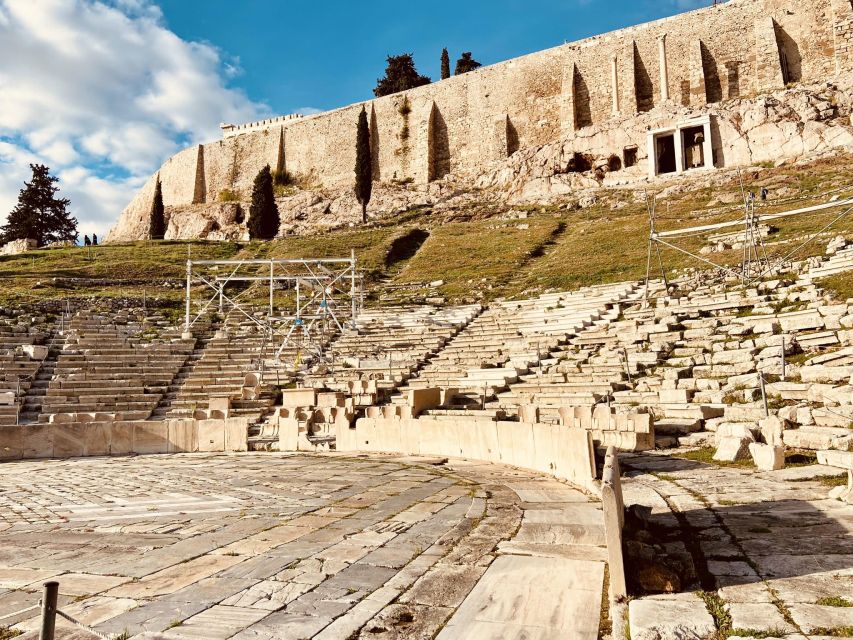
- Major theaters and sacred buildings, like the Theater of Dionysus and Odeon of Herodes Atticus
- Caryatids and Erechtheion details that are easy to miss without guidance
- Free time after the tour so you can linger at your own pace
Why this Acropolis tour feels different without the entry ticket

The Acropolis is famous for a reason. You can stand in front of the Parthenon and see why ancient Athens mattered. But without context, it can feel like a list of impressive rocks.
This tour is built to fix that. You’re guided through the main areas while your guide explains how myths, religious festivals, and city life shaped what you’re seeing. That’s the value of a licensed guide here, not just a quick route from point A to point B. The other big win is the private setup, so you can ask follow-up questions instead of waiting your turn while everyone shuffles forward.
You should also know the tour does not include your entry ticket. That isn’t automatically bad value, but it does change the planning. If you hate logistics, you’ll need a quick ticket game plan before you go.
More Athens tours and experiences for the shortlist



Meeting at Acropolis Metro, then heading uphill with a plan
Your start is simple: meet your guide at the entrance of the Metro station Acropolis, at street level. The tour ends back at the same meeting point. No hotel pickup, so plan to arrive on your own, then begin the walk from there.
From the start, you should expect the terrain to do its own thing. This is walking uphill and on uneven surfaces, which is normal for the Acropolis. Wear shoes with grip, bring water, and give yourself a little extra buffer time if you get winded easily.
Because it’s 2 hours, the route is focused. You won’t have time for long detours. But you also won’t just sprint through the highlights. The best part of a private guided walk is that it lets you spend a bit longer in the spots that connect with your interests, like theaters or carved details.
Propylaea and the gateway moment you should not rush
The Propylaea is more than a doorway. It’s the monumental entrance into the citadel, and it helps you understand what it meant to move from normal Athens into a sacred space.
When you reach the gateway, your guide’s commentary is key. You’ll get help reading the site as a sequence of spaces with purpose: approach, enter, and then shift into the world of temples, rituals, and performances. This is where many first-time visitors feel like they’re standing inside the stage of ancient life, even before you get to the biggest names.
If you’re the type who likes structure, you’ll appreciate this pacing. It turns the Acropolis from a chaotic sightseeing stop into a route you can remember.
Parthenon area viewpoints and temple storytelling
The tour includes time around the Parthenon area and the broader complex dedicated to Athena, the city’s protector. Your guide ties what you see to the role Athena played in Athens, including the way religious festivals shaped public life.
What I like about this approach is that it explains why these buildings were important beyond their architecture. You’re not just learning dates or names. You’re learning what the site represented to the people who lived there, including the political and religious weight of major ceremonies.
One practical consideration: the Acropolis is crowded at peak times. Even with a private group, there will still be other visitors in the same spaces. The guide can help you time your attention so you’re not stuck staring at the top of someone else’s head.
Theater of Dionysus and the 17,000-seat festival idea
The stop at the theater of Dionysus is one of the most memorable parts. This venue held festivals honoring the birth of the Greek god, and it could seat around 17,000 spectators. That number is your mental key. It helps you scale up what kinds of gatherings happened here.
Your guide also connects the theater to mythology and festivals, so it makes more sense than a generic “big ancient theater.” You start to see why plays and performances were not just entertainment, but part of a civic and religious calendar.
If you love theater, history, or mythology, you’ll likely linger here in your mind even after the tour ends. That’s the point of pairing the structure with the story.
You can also read our reviews of more guided tours in Athens



Odeon of Herodes Atticus: a theater that still grabs you
Next comes the Odeon of Herodes Atticus, described as a giant stone theater. Even if you’ve seen modern venues, standing near this one gives you a sense of permanence. Stone theaters were built to last through generations of ritual and performance.
This is one of those spots where guidance matters. Without context, you might admire the scale and move on. With a guide, you learn what it represented in the cultural landscape. And when you combine that with the earlier Dionysus stop, the Acropolis starts to feel like it had a performance rhythm, not just temples.
If you’re interested in how public events shaped ancient cities, this section is a highlight.
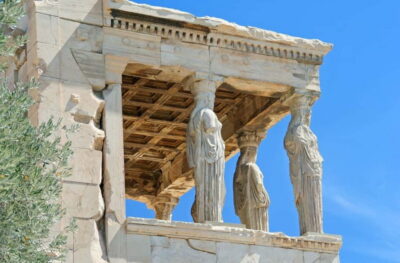
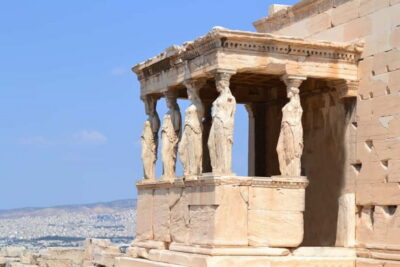
Erechtheion and the Caryatids: when details start talking
The tour also includes the Erechtheion, named after the demi-god Erechtheus. Even people who love ruins often underestimate how much meaning can hide in the small stuff. That’s where the Caryatid figures come in.
You’ll see Caryatid stone carvings as part of the guided walk. These aren’t just decorative. They’re part of how the site communicates power, protection, and myth. With a guide, you’re better able to read the carvings as a language rather than a random set of statues.
I’m also glad the tour points you to these details. The Acropolis can pressure you to prioritize the biggest icons only. Erechtheion and Caryatids pull you toward the “why does this look like this?” side of the experience.
Temple of Athena Nike: small temple, big symbolism
The Temple of Athena Nike is included, and it’s specifically noted as the smallest temple. That detail matters. You might expect the most impressive structure to be the most massive one, but sacred meaning often shows up in size and placement too.
Your guide’s storytelling helps you connect it to Athena’s identity as the protector of Athens. If you enjoy symbolic architecture, this is a good moment to slow down. Let your eyes do their work. Then let the guide explain what the stone is trying to say.
Asclepius and how health fits into the myth landscape
The tour also mentions the temple of Asclepius. That inclusion is a smart reminder that ancient Athens wasn’t only about war and politics. It also had religious ideas connected to healing and wellbeing.
If you’re used to thinking of mythology as purely dramatic stories, this part can reframe it. You see how belief systems were woven into daily life, including how people understood health and recovery.
You don’t need to be a mythology expert to enjoy this stop. The guided explanations are meant to make the connections clear, even if your background is light.
What the 2-hour format really means for your time
Two hours on the Acropolis is a sweet spot. It’s long enough to hit the core monuments and still slow down at details. It’s short enough that you’re unlikely to burn out before you get to the big sights.
Because you’re not limited by entry ticket handling during the tour itself, your guide can spend the time on interpretation rather than logistics. And because it’s a private group, you avoid the constant disruption of a larger crowd moving at different speeds.
Also, after your guided portion, you get free time to stay longer and explore on your own pace. That’s a big practical perk. You can return to the spot you care about most, snap photos without feeling rushed, or just wander a little longer while your legs still work.
Ticket planning for the Acropolis entry time slot you must choose
Here’s the essential planning reality: you must purchase Acropolis entry tickets in advance, and the tour does not include them. Tickets can be purchased online.
The time slot you select depends on season:
- For low season (01/11 to 31/03), choose 09:00 to 10:00
- For high season (01/04 to 31/10), choose 08:00 to 09:00
If you can’t get a ticket because of availability, the provider states they will help you. That’s a relief if you’re traveling during peak months when inventory can disappear fast.
One more timing rule matters if you end up without a ticket: go to the ticket office area of the South entrance about 30 minutes before your tour time. You’ll need that buffer to buy while you wait in line. Then you’ll move to the meeting point, which is less than 2 minutes walk from the ticket office.
Practical tip: if you want the smoothest experience, buy your ticket early and arrive early to handle any small surprises like lineups, security checks, or just getting your bearings.
Price and value: $292 per group up to 3
At $292 per group up to 3, you’re paying for a private, licensed Spanish guide plus a focused 2-hour route. Compared to a standard group tour, the biggest value is control of pacing and the chance to ask questions.
This price starts to look especially fair if:
- You’re traveling with two people and can split the group cost
- You care about the stories behind the monuments, not just the photos
- You’d rather pay for interpretation than spend time reading and guessing on your own
It’s also important to remember the entry ticket is not included. Your total cost will be ticket plus tour. Still, if you would otherwise do a self-guided visit, a private guide can convert the Acropolis from impressive to meaningful in a way that takes real effort to replicate solo.
Who this tour suits best, and who might prefer something else
This tour is a strong match for couples and small groups who want the Acropolis highlights with real explanations. It’s also ideal if you travel in short time windows and want a structured plan that still leaves space to wander afterward.
You might want a different format if:
- You have limited walking tolerance, since the tour includes uphill and uneven surfaces
- You need stroller access, since baby strollers are not allowed
- You rely on a wheelchair type that is listed as not permitted (non-folding wheelchairs and electric wheelchairs)
For everyone else, the private setup plus mythology-focused storytelling makes this a smart way to get more out of the stones you’ll see anyway.
Guide quality that can make or break the visit
The operator lists licensed guides, and the standout theme from the guide experiences you can draw from is clear communication. Names like Sara and Amancio have been called out for excellent guiding, which matters here because the Acropolis rewards context.
Good guidance does two things. It helps you notice what you’d otherwise miss, like how Caryatids and temple details connect to myth. And it helps you keep moving without feeling like you’re rushing. This tour is built to support both.
My decision: book it if you want meaning, not just monuments
Should you book this Acropolis guided private tour without an entry ticket? My take is yes, if you’re the type who wants the stories behind the site and you’ll appreciate a private, Q&A-friendly pace.
Skip it or consider alternatives if you’re allergic to planning around entry tickets, or if your mobility makes uphill, uneven walking hard. In that case, you might prefer a different timing, shorter option, or a different format.
If you do book, come prepared with your ticket strategy, wear grippy shoes, and plan to spend a bit of time after the tour re-visiting your favorite area.
FAQ
Is the Acropolis entry ticket included in the tour price?
No. The guided tour is included, but you must purchase the Acropolis entry ticket separately.
Where do I meet the guide?
Meet your guide at the entrance of the Metro station Acropolis, on the street level.
How long is the guided portion?
The duration is 2 hours.
What language is the guide?
The live tour guide speaks Spanish.
Is hotel pickup or drop-off included?
No. Hotel pickup and drop-off are not included.
Do I need to buy tickets online before the tour starts?
Yes. Tickets to the venue must be purchased prior to the start of the activity, and you can buy them online.
What time slot ticket should I choose in different seasons?
For low season (01/11 to 31/03), select 09:00 to 10:00. For high season (01/04 to 31/10), select 08:00 to 09:00.
What if I cannot get a ticket due to no availability?
If you can’t get the ticket because there is no availability, the provider says they will help you.
What if I do not have a ticket when my tour starts?
If you do not have your ticket purchased, you should go to the ticket office area of the South entrance 30 minutes before the tour time to buy while waiting in line, then go to the meeting point right after.
Are strollers allowed?
No. Baby strollers are not allowed.
What is the cancellation policy?
Free cancellation is available if you cancel up to 24 hours in advance for a full refund.
More Tickets in Athens


More Tours in Athens




More Tour Reviews in Athens
- All Day Cruise -3 Islands to Agistri,Moni, Aegina with lunch and drinks included
★ 5.0 · 4,958 reviews



Not for you? Here's more nearby things to do in Athens we have reviewed











Athens Acropolis & Parthenon Tours, compared.
 ★ 4.4Acropolis & up to 5 Archaeological Sites Combo PassFrom $4812,619 reviews
 ★ 4.2Acropolis Ticket with Optional Audio or Live GuideFrom $4211,055 reviews
 ★ 4.8Acropolis, Parthenon & Acropolis Museum Guided TourFrom $409,316 reviews
 ★ 4.6Acropolis and Parthenon Guided Walking TourFrom $385,882 reviews
★ 4.8Acropolis, Parthenon & Acropolis Museum Guided TourFrom $413,579 reviews
★ 4.6Acropolis and Parthenon Guided Walking TourFrom $385,882 reviews
★ 4.8Acropolis, Parthenon & Acropolis Museum Guided TourFrom $413,579 reviews
 ★ 4.0Acropolis Ticket with Audio GuideFrom $473,575 reviews
 ★ 4.7Acropolis: Acropolis and Parthenon Guided Walking TourFrom $363,442 reviews
 ★ 5.0Acropolis monuments & Parthenon Walking Tour with Optional Acropolis MuseumFrom $422,678 reviews
Browse the lists this tour appears in