

Reviewed · ATHENS ACROPOLIS & PARTHENON TOURS
Athens: Acropolis, Parthenon and Acropolis Museum Guided Tour
If you only see the Acropolis once, do it with a guide. This tour strings together the hilltop monuments and the museum displays so the stones make sense, not just look impressive. You get a licensed English speaking guide, a route built for photos and questions, and a convenient meet-up near the metro.
Two things I like a lot: the storytelling focus (myth, religion, and what changed over time) and the way the museum turns copies into context. You also get the chance to see original sculpture, including parts of the Parthenon, up close.
One drawback to plan around: it is a steep climb on uneven stone. If you need elevator access or mobility support, this group format may not be your best match.
Key things you should know before you go

- Licensed English speaking guide with a clear plan and time for questions
- Hilltop route with photo stops at major landmarks like the Parthenon and Erechtheion
- Acropolis Museum focus on originals, including the Parthenon frieze and archaic statues
- Skip line at the ticket offices for Acropolis and Museum when you choose the right ticket option
- Small group size (up to 24) that helps keep the pace manageable
Why a guided Acropolis visit beats wandering
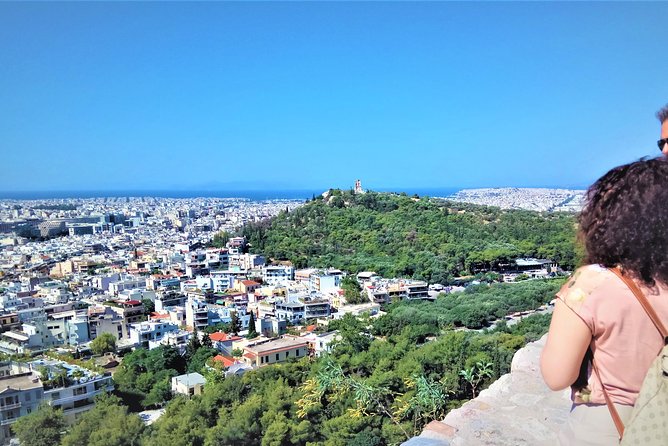
The Acropolis is the kind of place where you can easily end up staring at pretty columns without fully getting what you are looking at. A good guide keeps it grounded in people, politics, and belief, so the Propylea gateway, Temple of Nike, and Parthenon feel like parts of one big system instead of separate sights.
This tour is built for that. You are not just handed dates. You learn why the buildings were here, how the Greeks used sacred space, and why certain statues and design choices mattered. Even better, the museum stops are timed to reinforce what you just saw on the hill.
And yes, it is still awe-inspiring on your own. But with a guide, you leave with actual meaning in your head, and you understand the differences between what is on top versus what was moved into the museum for preservation.
You can also read our reviews of more guided tours in Athens



Meeting point, timing, and how not to miss the entry window
You meet at the Athens Tours Office, Mitseon 2, Athina 11742. It is a short walk from the Acropolis metro area, and it is the kind of meeting spot that is easy to reach even if you are using transit.
Timing is the key here. The Acropolis has strict entry times. The operator is clear that latecomers cannot be accommodated and no refunds are available for missed entry. So I strongly suggest arriving at least 15 minutes early, even if your map app says you are “fine.”
The tour lasts about 3 to 4 hours. That is a realistic amount of time to cover the high points without burning your whole day. It also means you should plan to do the rest of your Athens sightseeing around this block.
If you travel in winter, bring warm layers. One winter tip I took from people’s experiences is that it can get cold up top even when you expect mild weather.
The Acropolis hill walk: Dionysus Theater to Parthenon views
The day starts by heading up the hill with your guide. On the way, you hit some of the Acropolis story before you reach the big temple zone. That order matters, because it helps you understand the theater spaces and healing sanctuary within the broader sacred landscape.
Stop 1 on the hill: Dionysus Theater and the early drama stage
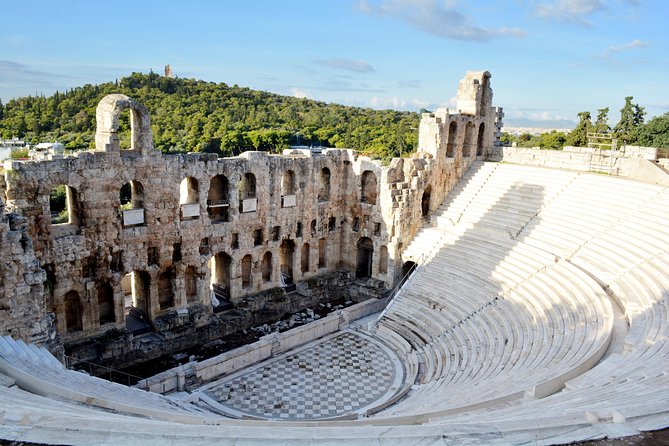
Right as you begin, you visit the Dionysus Theater, where ancient comedies and tragedies were first performed. This is more than a scenic ruin. Your guide connects it to how Athenians used performance, public life, and religion in the same space.
Then: Odeon of Herodes Atticus and Asclepius sanctuary
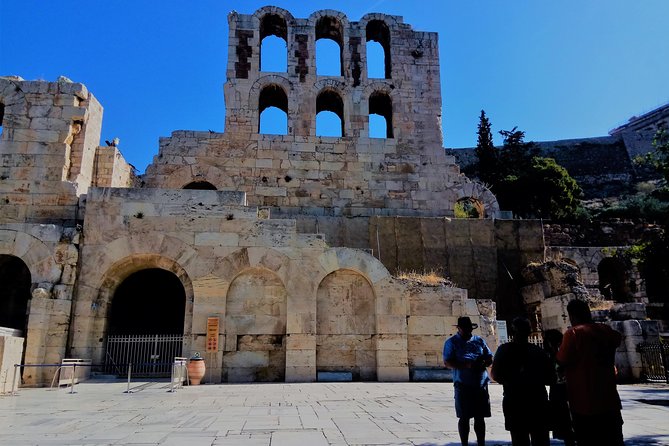
As you keep walking, you pass by the Odeon of Herodes Atticus and the sanctuary of the healing god Asclepius. These are the “why this place mattered” moments. If you like history that feels human, this is where the tone shifts from monuments to daily belief and community ritual.
You can also read our reviews of more museum experiences in Athens




Gateway and temples: Propylaea, Temple of Nike, Erechtheion
Once you reach the higher zone, the route is designed around the major architectural landmarks.
- Propylaea: the gateway to the Acropolis top
- Temple of Athena Nike: the classic view stop for Nike and the city beyond
- Erechtheion: one of the most striking structures on the hill
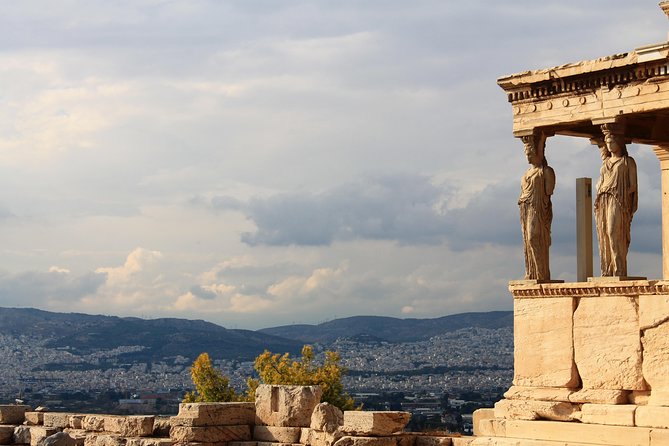
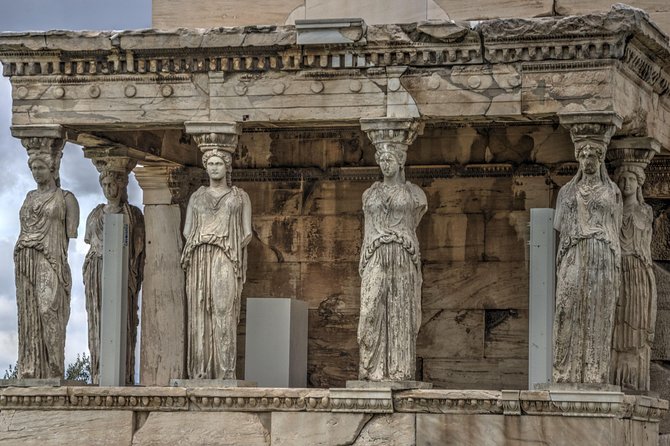
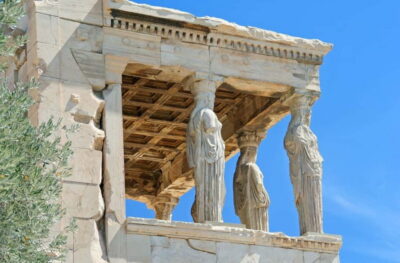
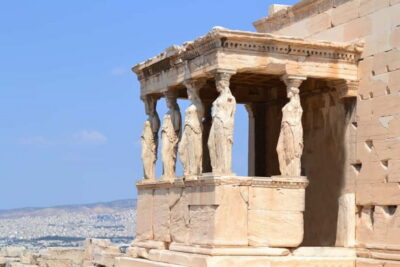
The Erechtheion is especially memorable for its asymmetrical feel and the sculpted female figures used as architectural supports. Seeing it in person helps you understand why people talk about it as a design outlier.
The Parthenon: democracy in stone
Of course, the highlight is the Parthenon, dedicated to Athena, built during the 5th century B.C. This tour positions the Parthenon as more than an impressive temple. Your guide frames it as a statement tied to the civic pride and ideals of Athens in the Periclean era.
You also get a dedicated Parthenon viewing segment, with enough time to take photos and let the details register. And because you come to it through guided context, the Parthenon feels less like a selfie backdrop and more like a monument with arguments behind it.
Quick break built in
There is a short break before moving to the museum, and it includes bathroom time. I really appreciate that. On a steep hill walk, you do not want your schedule hinging on finding a restroom at the exact moment your body demands it.
Important note: the tour’s instructions are realistic. There is no café on site, only a water fountain. Bring water and expect a short, no-frills pause.
Acropolis Museum: why original artifacts matter
The Acropolis Museum sits just a few minutes walk from the Acropolis site. You head there right after the hill, which is exactly when you benefit most from a museum guide. The buildings are still fresh in your mind, and the artifacts click faster.
Ground floor: daily life, not just temples
On the ground floor, the exhibits focus on daily Athenian life. You see themes like wedding customs, children’s favorite toys, healing techniques, and religious practices. That is a smart switch, because the Acropolis can otherwise feel like it belongs to kings and philosophers only. Here, it connects back to normal people.
First floor: archaic statues and huge sculptural pieces
On the first floor, you get close to archaic statues from the 6th century B.C. These are the kinds of works that help you understand what earlier versions looked like before the Classical era took shape.
You also see big sections and elements from the Acropolis entrance area, plus the Caryatids. Walking next to these figures is a lot more powerful than seeing them in photos. They have weight and presence, even when you are looking at fragments.
Top floor: Parthenon frieze and a view that hits
On the last floor, the museum brings you to the original Parthenon frieze. This is the part many people remember because you are seeing work tied to what you just saw on the hill, but in a preservation-first setting.
The view of the Acropolis from inside the museum also helps. It is like stepping back and using the museum to check your mental map of the hill.
How long you get
Plan on about 2 hours at the museum. That is enough for the key displays without treating it like a research project. If you love museums and want to linger, you might wish for more time, but the tour structure keeps you moving so you can still enjoy the hill experience fully.
Parthenon details, Dionysus Theater, and the hill’s architectural sequence
The tour does more than repeat the same landmarks in a loop. It threads through the hill in a way that helps you build a mental model of how the Acropolis functioned.
Here are the “you will actually notice this” stops and why they matter:
The Theater of Dionysus: where myth turns into performance
Even if you have seen ancient theaters elsewhere, this one anchors stories in a specific Athenian setting. You are not just looking at seating. You are hearing why these performances mattered in public life, tied to religious context.
Roman Herodion Theater: history changes the space
The route also includes the Herodion, a Roman theater built in memory of Herodes Atticus’s wife. This is a useful reminder that the Acropolis stayed important even as new powers reshaped Athens. The ruins are not frozen in time. They were repurposed and reinterpreted.
Propylaea again, but with a clearer purpose
You also get time at the Propylaea gateway area. By the time you reach it, you are not just admiring a gate. You understand it as a threshold between everyday approaches and sacred visibility.
Temple of Athena Nike: a view stop with meaning
The Temple of Athena Nike is listed as a specific viewing moment. I like this approach because it turns the famous skyline view into something more intentional. You are looking at the city, but you also have architectural context in your head.
Erechtheion: sculpture you can measure with your own eyes
The Erechtheion’s asymmetry and its six sculpted female figures are the kind of detail you cannot fake with a postcard. This is one of the best spots for close inspection, especially if your guide is good at pointing out what you are seeing.
Tickets, skip-the-line reality, and what costs extra
This tour is priced at $41.12 per person, and that number can feel like a bargain once you think about what you cover: a hilltop guided circuit plus the Acropolis Museum, with a licensed guide and a structured route.
But the big “value” depends on which ticket option you pick.
What is included
If you choose the option with admissions, you should get:
- Acropolis entry and Acropolis Museum entry included
- Skip-the-line at the ticket offices for Acropolis and Museum
- Separate entrance to the Acropolis Museum
What is not included
If you choose the option without tickets, you should expect to pay for:
- Acropolis admission, listed as €30 per person (adult tickets)
- Acropolis Museum admission, listed as €20 per person (adult tickets)
And you are asked to bring cash for purchasing at check-in if needed, or buy online at least 24 hours in advance for the correct time slot.
One important nuance: the operator says nobody can skip the lines to the Acropolis itself. So do not plan your day around a guaranteed bypass of every queue. The skip is mainly for ticket offices, and for the museum there is a separate entrance.
Elevator note
You should also know that elevator use to the Acropolis is not permitted on group tours. If you were hoping to avoid the steep climb with an elevator, this tour likely will not match your needs.
Pace, group size, and what to bring for a comfortable climb
This is not a sit-and-talk tour. You are walking a lot on stone. The good news is the group size caps at 24 travelers, and the schedule includes breaks, so you are not stuck in an endurance test.
Still, I recommend you show up prepared:
- Comfortable shoes with grip, because paths can be slippery if it is wet
- Water and a hat in warmer months
- Sunglasses, and an umbrella if rain is in the forecast
- A quick bathroom mindset, since the hill has limited options and the break is timed
One practical tip from people’s experiences: use the restroom break when it is offered. It is timed to keep the tour on schedule, and you do not want to lose time searching for facilities later.
Also, audio can occasionally be affected by other groups’ equipment, so do not assume you will always hear perfectly through a headset. Bring patience, smile, and ask questions directly when you can.
Who this fits best
This tour is listed as most travelers can participate, but it is not suitable for:
- Children under 6
- People with mobility impairments
If you are good with a steep climb and you want a first-time orientation to the Acropolis and the museum originals, it is a strong match.
Price check: is $41.12 worth it?

For an Acropolis experience that includes a licensed English speaking guide plus a structured visit to both the hilltop and the museum, $41.12 is usually good value. The biggest reason is that you are saving time and confusion.
Instead of figuring out what to look for, where to stand, and how to interpret the monuments, you get a guided route with defined stops. That reduces wasted time and turns “I saw it” into “I understood it.”
The only cost curve to watch is whether you choose admissions included. The admissions can add a meaningful chunk if you are paying separately. So when you price it, treat the tour as two parts:
1) The guided walking route and museum orientation
2) The timed museum and Acropolis entry tickets
If you already know your entry times and you want the smoothest day, picking the option that includes tickets often feels simplest.
The bottom line: should you book this Acropolis, Parthenon, and Museum tour?
If you want your Acropolis visit to feel like a story you can follow, book it. This tour is especially worth it if you care about understanding why buildings look the way they do, not just taking photos.
Choose it if:
- You are visiting Athens for the first time and want a clean overview
- You want the museum’s original pieces explained in plain language
- You like guided pacing with built-in breaks
Consider another plan if:
- You cannot handle steep walking or need elevator access
- You want a slow, independent museum day with no schedule pressure
If you are ready for a half-day workout with real payback in understanding, this is one of the best ways to see the Acropolis and leave with more than a memory.
FAQ
Is this tour in English?
Yes. The tour is offered in English with an English speaking licensed guide.
How long is the Acropolis, Parthenon and Acropolis Museum guided tour?
It runs about 3 to 4 hours, approximately.
Where do I meet the guide?
You meet at Mitseon 2, Athens 11742 (near the Acropolis metro), at least 15 minutes before the start time.
Are Acropolis and Acropolis Museum tickets included?
It depends on the option you select. Tickets are included if you choose the option with tickets. If you choose without tickets, you will need to purchase entry tickets, either online ahead of time or from the check-in spot as instructed.
Can the guide skip the line to the Acropolis?
The information says that no one can skip the lines to the Acropolis. The tour may include skip-the-line help at the ticket offices if you choose the option with the right ticket setup.
Is the tour suitable for people with mobility impairments?
No. The tour is not suitable for people with mobility impairments.
What should I bring for the walk?
Bring water, a hat, sunglasses, and an umbrella if it rains. Wear comfortable, grippy shoes because the hill paths are steep and can be slippery when wet.
More Guided Tours in Athens

More Tours in Athens



More Tour Reviews in Athens
- All Day Cruise -3 Islands to Agistri,Moni, Aegina with lunch and drinks included
★ 5.0 · 4,958 reviews



Not for you? Here's more nearby things to do in Athens we have reviewed










Athens Acropolis & Parthenon Tours, compared.
 ★ 4.4Acropolis & up to 5 Archaeological Sites Combo PassFrom $4812,619 reviews
 ★ 4.2Acropolis Ticket with Optional Audio or Live GuideFrom $4211,055 reviews
 ★ 4.8Acropolis, Parthenon & Acropolis Museum Guided TourFrom $409,316 reviews
 ★ 4.6Acropolis and Parthenon Guided Walking TourFrom $385,882 reviews
★ 4.8Acropolis, Parthenon & Acropolis Museum Guided TourFrom $413,579 reviews
★ 4.6Acropolis and Parthenon Guided Walking TourFrom $385,882 reviews
★ 4.8Acropolis, Parthenon & Acropolis Museum Guided TourFrom $413,579 reviews
 ★ 4.0Acropolis Ticket with Audio GuideFrom $473,575 reviews
 ★ 4.7Acropolis: Acropolis and Parthenon Guided Walking TourFrom $363,442 reviews
 ★ 5.0Acropolis monuments & Parthenon Walking Tour with Optional Acropolis MuseumFrom $422,678 reviews
Browse the lists this tour appears in