
Reviewed · ATHENS ACROPOLIS & PARTHENON TOURS
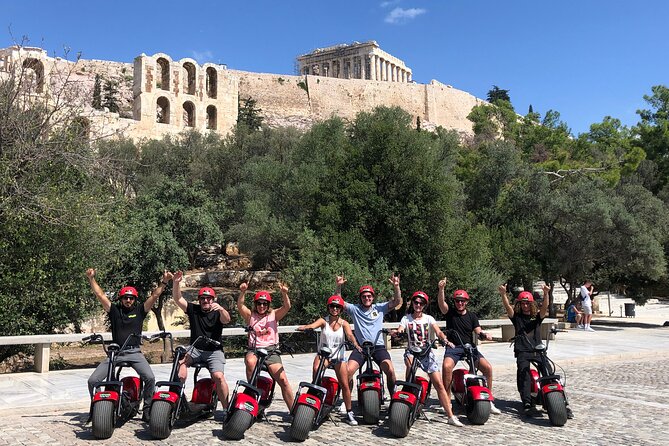
Athens Acropolis Official E-Scooter Guided Tour Fat E-Bike
A bike ride through Athens history is smarter. This guided fat e-bike tour strings together photo stops and classic viewpoints around the Acropolis area, with a professional guide who answers questions as you go.
I especially liked how the fat tires make the ride feel steady, even when the streets get busy. You get helmets and free bottled water, so you can focus on the city instead of managing gear.
One thing to consider: you need to be comfortable riding a bicycle to use the bikes, though the guides can help families figure out the best way to join.
Quick hits

- Two-hour Acropolis-area loop with short, photo-focused stops and moving time between them
- Fat e-bikes and eco-scooters available, plus helmets and bottled water
- Small groups up to 25 with a guide who keeps everyone together and safe
- English-guided route with real answers, not just monument names
- A guide-led mix of big sights and calmer back-street views
- Family-friendly options, including ways for kids or non-cyclists to still participate
Why this 2-hour Athens e-bike tour works so well
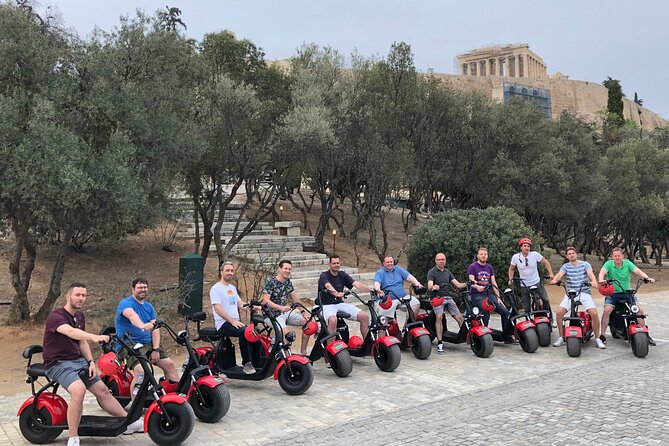
If you only have a day in Athens and you want the Acropolis area without spending it in knee-busting stair mode, this format makes sense. In about two hours, you get a guided run through a cluster of sites that would take much longer on foot.
The key is that the stops are short and useful. You’re not stuck waiting around at one place. Instead, you ride, pause for photos, and get context fast from your guide, which helps you connect what you see to the bigger story of Athens.
And yes, it’s also just fun. The fat tire electric scooters and e-bikes are easy to maneuver, and the pace is slow enough that you do not feel like you are in a rush. You are moving through the city, not racing it.
You can also read our reviews of more cycling tours in Athens



Getting to the start point, then staying oriented
You meet at Chatzichristou 6, Athina 117 42. This matters because the tour is built for an efficient city loop, not a “meet at the monument” situation.
One practical tip from experience with tours like this: give yourself a little extra time at the start. The meeting spot can be easy to miss if signage is limited. I’d rather you show up early and settle in than try to sprint across the neighborhood mid-briefing.
Once everyone is geared up, the guide sets the tone. You typically ride together in a controlled way, and the guides use a lead-and-rear approach so no one gets left behind, even when you stop to take pictures or pass through more crowded pedestrian areas.
Your ride setup: fat e-bikes, eco-scooters, helmets, and water
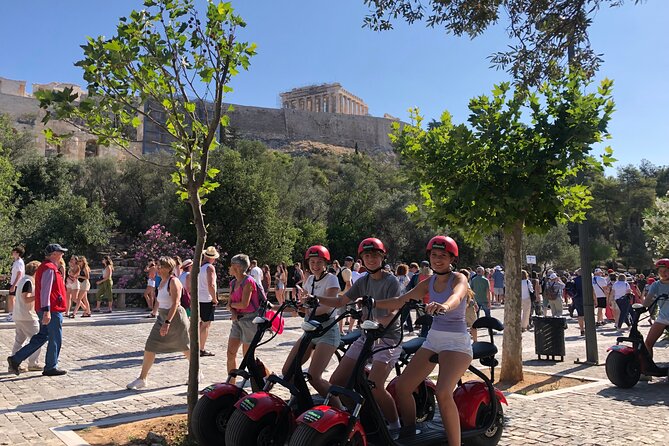
This tour uses electric fat bikes plus one seated and two seated eco scooters. Helmets are provided, and you also get free bottled water. That combo is more than convenience. It reduces friction, which keeps the tour relaxed.
Here is what that means for you day-of:
- You do not have to bring your own helmet or figure out logistics for a bike rental.
- The water helps because you are out in the sun and doing stops back-to-back.
- The fat tire design makes the ride feel stable, which helps if you are not an advanced cyclist.
Also, the guides stress safety and keep speeds low. That is important in Athens, where sidewalks can be crowded and traffic can surprise you. The benefit of a guided group is that you are not negotiating every turn by yourself.
Do you need to know how to ride a bike?
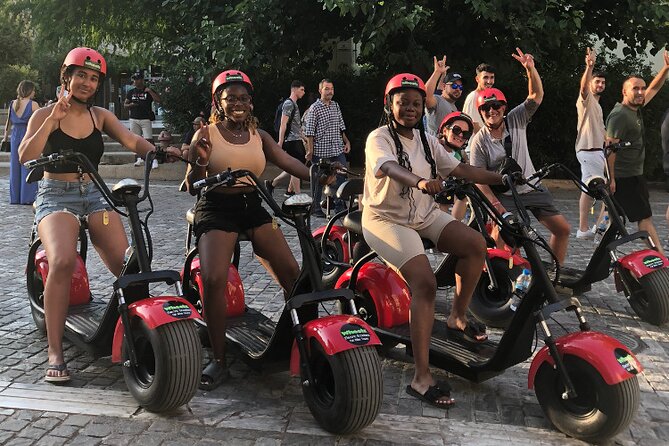
This is the one make-or-break detail. If you plan to use the bikes, you need to know how to ride a bicycle. That is how the experience works in practice.
That said, the guides are used to mixed groups, including families. One family-related detail you should know: there can be options that let someone who cannot ride still join by riding seated behind the guide. If you have any uncertainty, ask the provider when you book so you get the setup that matches your group.
The route: from Odeon views to Olympian Zeus photo stops
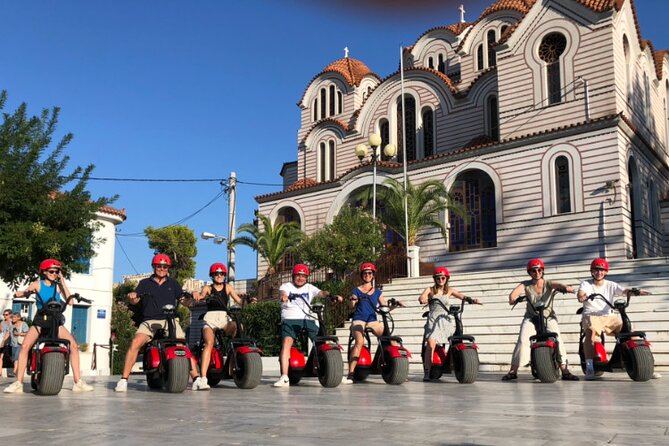
The route is built around short photo stops with a clear flow. You ride between them at a careful pace, so you see more than you would if you only walked.
Below is how the experience typically unfolds, and what each stop adds to your understanding of Athens.
You can also read our reviews of more guided tours in Athens



Herod Atticus Odeon: a quick orientation moment
You start with a photo stop at Herod Atticus Odeon. Even if you have heard the name before, being there in person gives you scale and context. Your guide uses the moment to connect what you see to the wider history of the area and to answer questions right away.
Areopagus (Mars Hill): a view break with context
Next is Areopagus, also called Mars Hill. This stop is short, but it’s useful because it gives you a pause point where the guide can explain what you are looking at and why people have focused on this spot for centuries.
You also get a mental reset. When you hop off an e-bike for five minutes, you notice details you would miss while moving through.
Pnyx: a less frantic hilltop pause
Then you head to Pnyx for about 10 minutes. This is the kind of stop that feels different from the big crowd magnets. You get a bit more time to look around and absorb the setting, without feeling like you are herded along.
If you like your sightseeing with a little breathing room, this stop helps balance the day.
National Observatory of Athens: another photo beat
A photo stop at the National Observatory of Athens follows. Expect this to be a snapshot moment, not a long break. That’s the theme of the route: quick stops where you capture the view and grab the main takeaway from the guide.
St. Marina Church: short stop, useful perspective
Next is St. Marina Church, another photo stop. Stops like this might seem small on a map, but they add texture. They remind you this is not just one ancient site, it is a living city shaped by layers of time.
Gazi viewpoint: a change of angle
After passing through other areas, you reach Gazi for a viewpoint. This is where the tour shifts a bit from pure monument sightseeing to the feeling of Athens as a whole.
A viewpoint stop is a smart move on a bike tour because you get the city perspective without adding a hike. You can take a photo, listen for the guide’s explanation, and then roll on.
First Cemetery of Athens ceramics: a quieter detour
You then visit the First Cemetery of Athens, with attention to ceramics. This is one of those stops that can be a great contrast if you have been on only major-site tours. Even when the stop is brief, it gives you a different angle on Greek life and culture beyond the most famous temples.
Temple of Hephaistos: the best-preserved temple stop
The route includes Temple of Hephaistos, described as the best well preserved temple in Greece. This is a major highlight for a reason. When a temple is so well preserved, you can often pick up more detail than you can at heavily ruined sites.
The guide’s job here is to connect the monument to Greek history in a way that makes sense on the spot. You are not just looking at stones, you are learning how to read the place.
Arch of Hadrian: a photo moment you will remember
Next is the Arch of Hadrian, again a photo stop. Arches are quick, but they are also memorable. A guided stop helps because the guide can tell you what to notice, which makes a short stop feel like it was worth the detour.
Temple of Olympian Zeus: big scale, quick capture
Finally, you reach Temple of Olympian Zeus for a photo stop. This is the kind of site where scale hits you even if you are there for only a few minutes.
Because you are on a bike tour, you do not sit around in one place all day. You get to see it and keep moving, which is great if you want to fit this into a busy itinerary.
Passing through other areas: where the time savings really happens
You also pass through additional areas between stops. This is not filler. It is how the tour delivers value, because it lets you cover ground without wasting time on long walks between far-apart viewpoints.
The moving time can also be the most fun part, because Athens streets feel alive while you glide slowly through them with your guide calling out points of interest and keeping you on track.
Safety in crowded pedestrian zones and mixed traffic
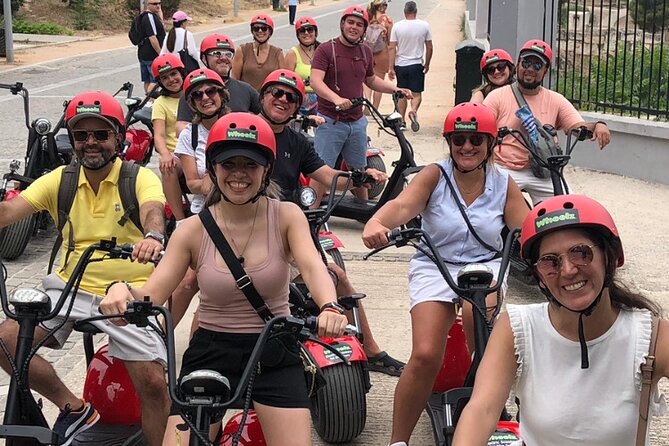
Athens can feel like a puzzle of people, cars, motorbikes, and crossing points. On this tour, you will ride at a careful speed and your guide takes time to move through crowded sections safely.
One thing to mentally prepare for: there can be moments where the path is busy with walkers, and you might feel slightly unsure for a minute. The fix is not to panic. The guides handle it with patience, regrouping as needed and using a clear lead-and-rear pattern so everyone follows the same path.
The overall vibe is calm safety, not fear. The guides emphasize safe riding, and the bikes and scooters are easy to handle, which helps you relax.
What you actually learn from the guide
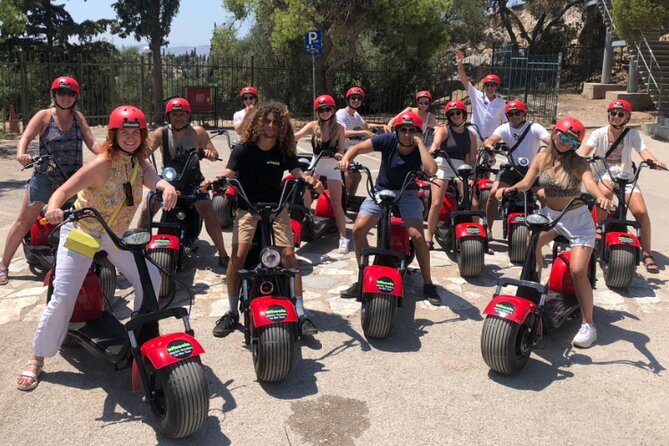
This is where the tour earns its excellent reputation. The guides are there to explain what you are seeing, and to answer questions throughout the loop.
Across different guide names you might meet, the common thread is active conversation and clear explanations. People often mention guides by name, like Venice, John, Giannis, Nick, Celina, and Nicolas, and the point is consistent: you get history placed in context while you are looking at the actual sites.
For you, that means the tour is not just about photo ops. It helps you build a mental map. After the ride, you will usually feel like you understand how the different stops connect, rather than just collecting images.
Price and value: what $71.35 buys you
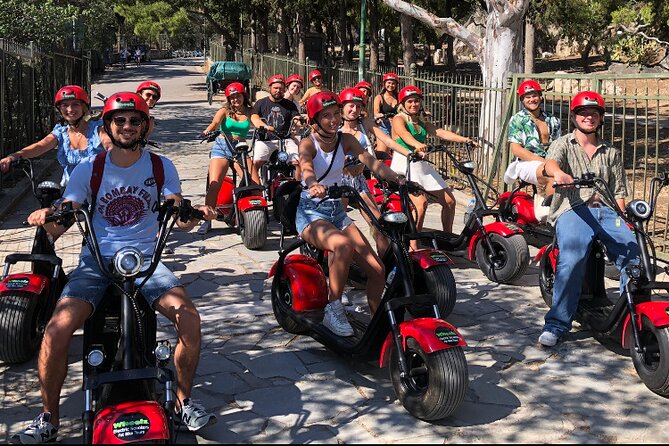
At $71.35 per person for about two hours, the value comes from three buckets:
- Equipment and essentials included: helmets and bottled water are part of the deal.
- Time saved vs walking: you cover multiple major and minor stops without burning an entire day on legs.
- Guide-led context: you get explanations and can ask questions, which makes the stops more than scenic pauses.
If you were paying for bike rental plus trying to self-navigate the Acropolis area, you would likely spend more time coordinating and still miss the “why this matters” part. This tour bundles the practical side with guided interpretation.
And because the group max is 25 travelers, you are not stuck in a huge crowd. You get more personal attention when you have questions or need help adjusting your comfort level.
Who should book this tour
This fits best if you:
- Want to see a lot of Acropolis-area highlights without doing it all by foot
- Like guided history explanations while you move
- Prefer a slower, safety-focused pace over independent cycling stress
- Are traveling with a family and want an activity that breaks up the day
It is also a good choice if your day includes other walking-heavy plans and your body needs a break. People often describe the tour as a highlight precisely because it feels like a reset from constant strolling.
Weather matters more than you think
This experience requires good weather. If conditions are poor, the tour can be canceled and you are offered a different date or a full refund. If you are visiting Athens in shoulder season or during changeable weeks, it’s smart to keep some flexibility in your schedule so you can ride when conditions are right.
If it rains hard, you might not be the only one rescheduling. The good news is that flexibility has happened for groups due to weather problems, which suggests the team tries to make it work when possible.
Should you book it?
Book this tour if you want a fast, fun, guided way to cover a cluster of Athens sites in about two hours, with helmets, water, and a pace that keeps you comfortable. It is especially worth it when you feel overwhelmed by how much there is to see around the Acropolis.
Skip it only if you cannot or do not want to ride a bicycle and there is no alternative setup for your group, or if you have very limited mobility and would struggle with the riding format.
If you fall into the typical bucket of “we want the highlights, but we also want our legs to survive,” this is one of the better bets in Athens.
FAQ
How long is the Athens Acropolis e-scooter guided tour?
It runs for about 2 hours.
How much does the tour cost?
The price is $71.35 per person.
What is included in the tour?
You get bikes or eco scooters, helmets, and free bottled water. It is also a guided tour with photo stops and time to ask questions.
Do they offer the tour in English?
Yes, the tour is offered in English.
Do I need to know how to ride a bicycle?
If you plan to use the bikes, you need to know how to ride a bicycle. There may be options for certain people in a group to still join, such as riding seated behind the guide.
What happens if the weather is bad?
The experience requires good weather. If it is canceled due to poor weather, you will be offered a different date or a full refund.
More Cycling Tours in Athens



More Tours in Athens




More Tour Reviews in Athens
- All Day Cruise -3 Islands to Agistri,Moni, Aegina with lunch and drinks included
★ 5.0 · 4,958 reviews



Not for you? Here's more nearby things to do in Athens we have reviewed









Athens Acropolis & Parthenon Tours, compared.
 ★ 4.4Acropolis & up to 5 Archaeological Sites Combo PassFrom $4812,619 reviews
 ★ 4.2Acropolis Ticket with Optional Audio or Live GuideFrom $4211,055 reviews
 ★ 4.8Acropolis, Parthenon & Acropolis Museum Guided TourFrom $409,316 reviews
 ★ 4.6Acropolis and Parthenon Guided Walking TourFrom $385,882 reviews
★ 4.8Acropolis, Parthenon & Acropolis Museum Guided TourFrom $413,579 reviews
★ 4.6Acropolis and Parthenon Guided Walking TourFrom $385,882 reviews
★ 4.8Acropolis, Parthenon & Acropolis Museum Guided TourFrom $413,579 reviews
 ★ 4.0Acropolis Ticket with Audio GuideFrom $473,575 reviews
 ★ 4.7Acropolis: Acropolis and Parthenon Guided Walking TourFrom $363,442 reviews
 ★ 5.0Acropolis monuments & Parthenon Walking Tour with Optional Acropolis MuseumFrom $422,678 reviews
Browse the lists this tour appears in