
Reviewed · ATHENS PRIVATE TOURS
2 Days Private Tour: Delphi & Meteora
Two UNESCO sites in two days, with breathing room. This private trip is built to beat the crowds and move at your pace, with round-trip transport from Athens. You’ll also get an overnight base in Kalambaka, the gateway to Meteora’s rock-top monasteries.
I love how the schedule blends big-history stops with actual time to look, not just stand in a line. In Delphi you spend focused time at the Apollo complex and the Delphi Archaeological Museum, then you wake up close to Meteora for the best chance at dramatic light. The one thing to weigh is that entrance fees and a licensed on-site guide are not included, and the driver is not licensed to walk through sites with you.
If you want the experience mostly as driver-led context plus self-paced site visits, it’s a strong fit. If you need someone licensed inside every museum and sanctuary, you’ll likely want to add a licensed tour guide.
Key highlights worth your attention
- Private pacing: your group moves without coach crowds.
- Delphi Apollo time plus museum: temple, theater, stadium, and key museum pieces like the charioteer.
- Kalambaka overnight: you’re not rushing in and out the same day.
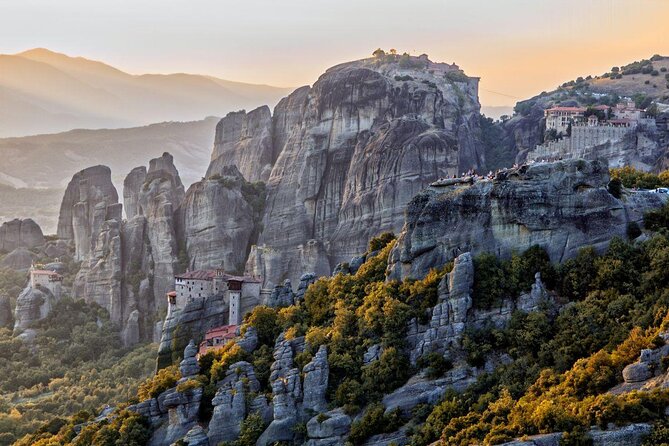
- Meteora monasteries from multiple angles: viewpoints plus stops at Roussanou, Agios Stefanos, and Great Meteoron.
- Thermopylae on the return: Leonidas memorial plus a 3D historical film.
- Driver-led value: from time-allocation help to lunch ideas, guides often handle the practical pieces smoothly.
Why this Delphi and Meteora route feels worth the long drive
Delphi and Meteora are not close to Athens. That’s why this itinerary uses a full two days, not a rushed day-trip shuffle. You spend Day 1 in Delphi and sleep in Kalambaka so Day 2 in Meteora starts fresh, with daylight and fewer time pressures.
Another smart choice is the way the day is paced between big sites and scenery breaks. The drive uses mountain roads and scenic countryside rather than staying locked to a highway the whole way, so you’re getting the sense of northern Greece, not just staring at roads.
And yes, you do stop outside the headline sites too. Thermopylae on the way back adds meaning, so the trip ends with a stronger story than just more sightseeing.
You can also read our reviews of more private tours in Athens


Delphi day: Apollo’s sanctuary, the museum, and real time to look
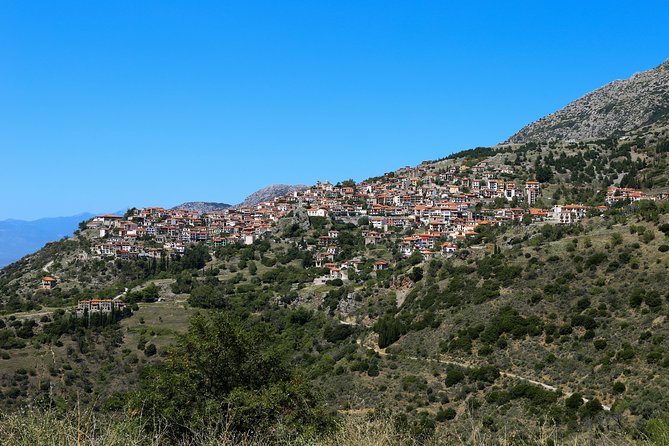
Day 1 starts with a countryside drive through areas linked to legend and local life, heading toward the slopes of Mount Parnassus and then Delphi. Before you hit the archaeological zone, you’re moving through small-city and mountain-country scenery, which helps Delphi feel like a destination, not an appointment.
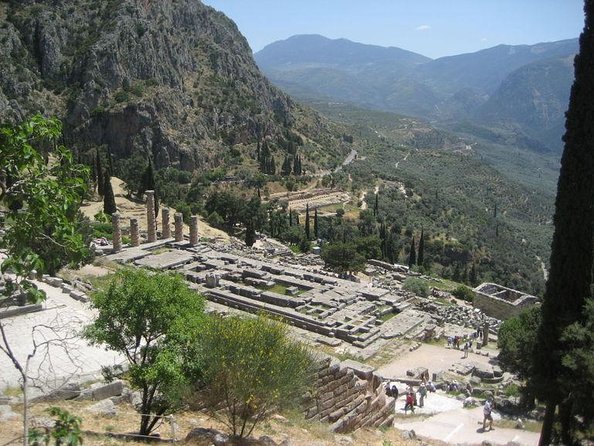
Delphi Archaeological Site: the sanctuary with the big views
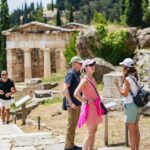
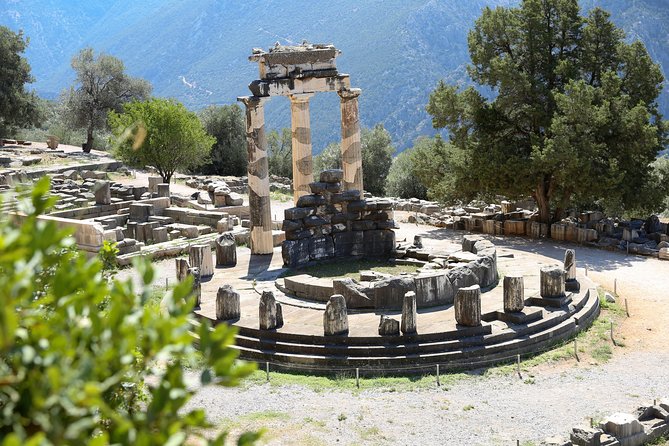
You’ll visit Delphi itself at the ancient sanctuary level. Delphi is presented as a sacred center tied to Apollo’s oracle and celebrated as a Pan-Hellenic site, which helps explain why it mattered to so many Greek communities.
Practical tip: plan to spend a little time simply scanning. The site’s hillside setting gives you constant visual anchors back to the mountains around it, and that helps you connect what you’re seeing to why Delphi was built where it was.
Temple of Apollo plus theater and stadium
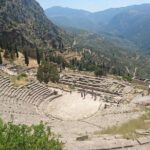
Next is the Temple of Apollo area, including the theater and stadium. Pytheia speaking the oracle is part of the story here, and the theater and stadium matter because you’re not just seeing ruins, you’re seeing how people gathered, performed, and lived within the sanctuary.
One possible drawback: this portion can involve more walking than people expect, especially if you want to get good angles on the stadium area. If you’re the type who likes to climb to viewpoints, bring sturdy shoes and don’t plan a tight snack schedule.
Delphi Archaeological Museum: the charioteer and a famous sculpture
You’ll also stop at the Delphi Archaeological Museum. This is the place to see major works, including the famous charioteer and a Gold and Ivory statue mentioned in the tour details.
Museum time is where the myths become objects. Outdoors you understand Delphi from spacing and sightlines; inside you can connect the scale and craftsmanship to what people once valued here.
More Athens tours and experiences for the shortlist
Lunch in the village of Delphi and a calmer pace
Lunch is scheduled in the current village of Delphi, with views toward the mountains of Fokis. This is a good place to slow down, recharge, and make lunch feel like part of the day, not an obstacle between stops.
From the way drivers handle pacing, you can often rely on practical help here, including lunch recommendations that fit what you like to eat. If you have dietary needs, it’s smart to mention them before the trip starts, since drivers have been known to help with food choices.
The drive to Kalambaka: mountain roads and evening free time
After Delphi, the plan is to continue by mountain roads, passing through cities such as Lamia, Trikala, and Karditsa before reaching Kalambaka. The point is to arrive not just at Meteora, but with the sense of how the region connects.
Once you settle in your overnight accommodation, you’ll have time for an evening walk and a local dinner. This matters because Meteora is best enjoyed when you’re not rushing. Even a short stroll in the evening can help you see those iconic rock pillars in a softer light.
Kalambaka overnight: your advantage for Meteora timing
Kalambaka is where the trip stops trying to do everything at once. It’s your base for Meteora monasteries, meaning you can handle the next day with less stress than travelers who try to cram Meteora into a single daylight sprint.
This is also where comfort counts. The tour includes overnight accommodation and breakfast according to your booking, so you’re not spending energy finding lodging while thinking about what time you’ll reach the rocks.
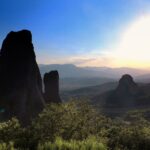
The strongest value of an overnight base is timing. Meteora light changes fast, and having that extra night gives you a better shot at the dramatic look people chase. Many visitors focus on sunset or sunrise, and in this setup, you’re far more likely to catch it without feeling like you’re sprinting.
Meteora on Day 2: rock-top monasteries and viewpoints that make sense
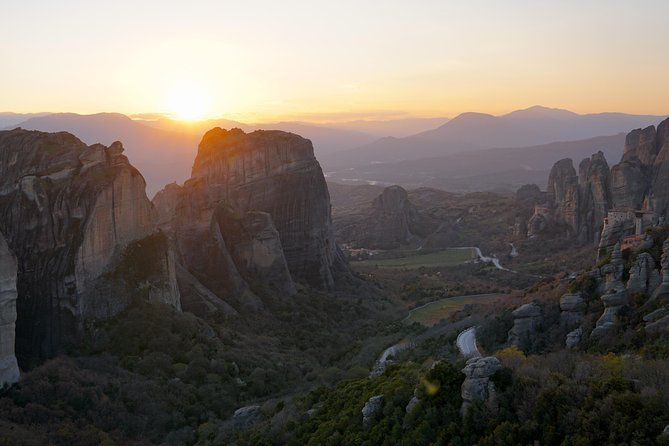
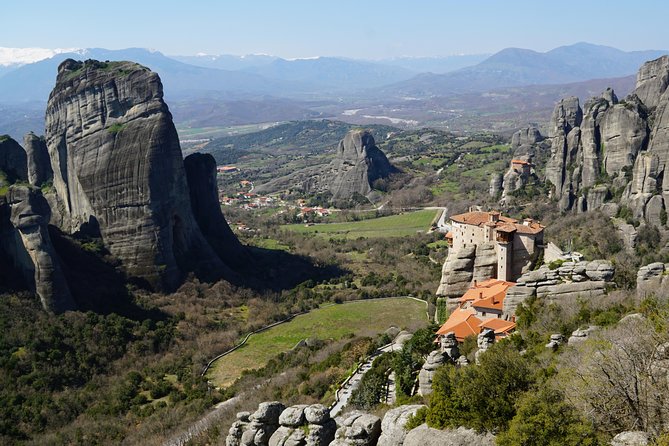
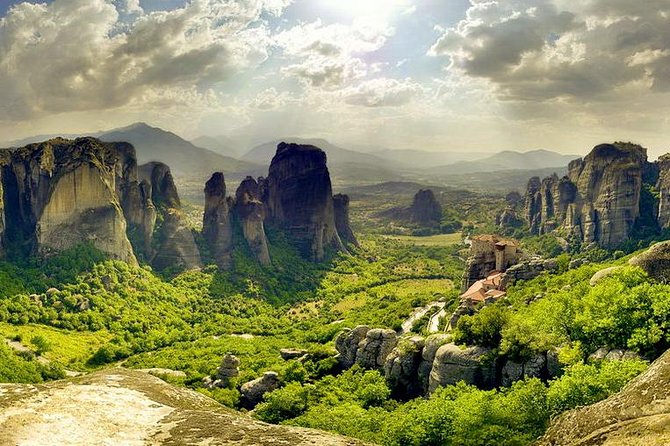
Day 2 starts with a morning visit to the Meteora area, described as rock-topped monasteries still in use and shaped by the meaning of the word Meteora, suspended in the air. The natural rock formations are the headline, but the monasteries provide the cultural backbone that makes the scenery feel purposeful.
Meteora visit: getting the scale right
The first Meteora stop is short on paper, but it’s where you get bearings. You’ll see how massive the rock columns are and how monastery layouts take advantage of narrow paths and elevated platforms.
If you’re someone who likes photos, this is also the moment to get perspective. From a distance the rocks can look like statues. Up close they become a real system of steps, walls, and outlooks.
Roussanou Monastery: a different cliff view
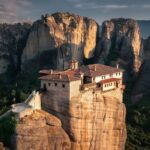
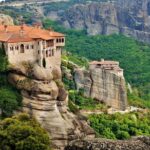
Roussanou is next, with time for a closer look at the surrounding cliffs and the neighboring monasteries. There’s also a mention of a pathway that leads to an off-the-road panoramic viewpoint where you can walk on bear rocks.
That last detail matters because it’s an example of why Meteora rewards a slower pace. Instead of only seeing buildings, you’re getting the wider visual story of how the monasteries relate to the cliffs and valley below.
Agios Stefanos: a female monastery with wall paintings
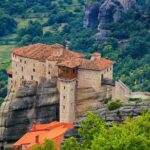
Agios Stefanos is one of the few female monasteries of Meteora. The tour notes evidence suggesting a 15th-century construction, with wall paintings in the Catholicon executed in 1560.
This stop is a nice contrast to the other monasteries. You’ll see how different communities adapted to the same rock-world constraints, and the paintings give a human touch to all that stone height.
Great Meteoron: the biggest and most famous stop
Great Meteoron is described as devoted to the Transfiguration and presented as the biggest and most famous monastery complex on the rocks. This is likely where you feel the most scale, both in terms of architecture and the sense of where the site’s central energy went.
Practical consideration: monastery interiors can have rules and slower movement, so it helps if you keep time buffers. In private format, you can adjust, but the rocks still ask for good shoes and a steady walking pace.
Entrance fees note for Meteora
The tour details list some parts with free admission and other monastery entrances as not included. So you’ll want to plan for extra ticket costs on the spot for the monasteries where entrance is required.
Thermopylae on the return: Leonidas, the film, and a short but meaningful goodbye
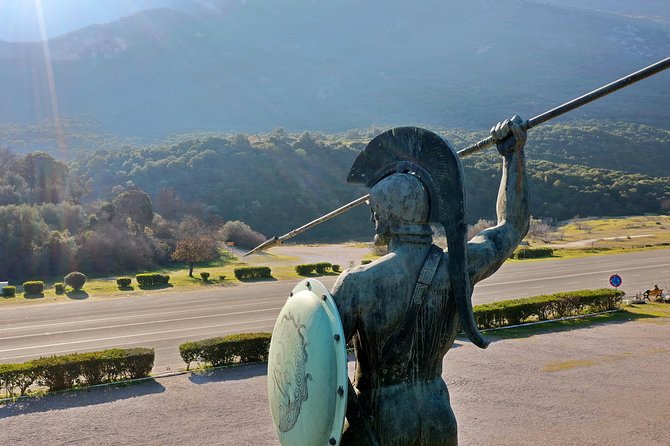
The trip doesn’t end with Meteora and a straight highway run. On Day 2 you stop at Thermopylae, the place associated with King Leonidas and the 300 Spartans facing the Persian army.
The first Thermopylae stop is the battlefield memorial area. It’s short on the schedule, but it’s a powerful way to anchor the trip in a story people know from textbooks.
Then there’s a stop at the historical center, where you watch a 3D film as part of the site experience. The goal is to give you a time-journey feeling for those who sacrificed their freedom, as described in the tour information.
Finally, you see the Leonidas Monument opposite Kolonos Hill. Even if you only have minutes, this is a nice way to end the day with a clear visual marker.
Food stops and driver-led help that make the days smoother
Food isn’t a separate activity in this plan, it’s woven into the day. After Delphi, lunch is scheduled with mountain views, and the overall structure is designed to avoid starving your way between major stops. On Day 2, the tour includes a traditional Greek lunch by the sea in Kamena Vourla.
The Kamena Vourla stop is one of those details that turns a long return drive into something enjoyable. You’re not just backtracking to Athens. You’re breaking the trip with a coastal pause.
Diet matters too. One guide story tied to this tour includes help for vegetarian needs, with lunch and dinner options found that worked for the group. That’s a big deal if you’ve ever arrived at a historic area and realized you’re stuck eating fries.
Photo help is another practical win. Multiple guides are praised for guiding photo timing, helping with picture angles, and managing when to move. That kind of hands-on guidance matters most at places like Meteora, where getting the right angle can mean the difference between a snapshot and a keeper.
Price and logistics: what $712.03 per person buys you, and what it doesn’t
Let’s talk value in plain terms. At $712.03 per person, the price is not cheap, but it’s not just paying for a car ride either. What you’re buying is a private vehicle, pickup and drop-off, bottled water, and an overnight stay with breakfast included based on your booking.
You also get a professional driver with deep historical storytelling, and the tour is offered in English. For many people, the real value is time saved and coordination handled: you’re not designing your own two-day route, chasing ticket timing, and figuring out the order of monasteries on short notice.
Now the part you should confirm early in your planning: entrance fees are not included. The tour lists some areas with admission free and other stops as not included, including Apollo Temple, the Archaeological Museum, and several Meteora monasteries. So your final per-person total will depend on which specific entrances you pay for during the visit.
Also, the driver is not licensed to accompany you inside sites or museums. That means if you want a fully licensed guide walking through interiors and explaining as you go, you’d need to request or add a licensed tour guide at an extra cost.
Who should book this Delphi and Meteora private tour
This is a great match if you love history and archaeology and you want to see two UNESCO World Heritage sites without white-knuckling a timetable. The overnight in Kalambaka is especially good for people who want real time for photos and viewpoints.
It also suits families and mixed-age groups who can handle moderate walking and want the flexibility of a private vehicle. Some guide notes include handling needs for kids in the group, which hints that the pace can be managed for different interests.
You might want to skip or adjust expectations if you require licensed on-site guiding inside every museum and sanctuary. Since the driver is not licensed to accompany you in sites, you should plan for self-paced interior time unless you add a licensed guide.
Finally, consider your tolerance for driving. Even with comfort, the route is a commitment. If you’re the kind of traveler who hates long hours in transit, you may prefer a different format, but if you like getting out of Athens and seeing the northern Greece feel, this is set up for that.
Should you book it? A quick decision checklist
Book this private Delphi and Meteora tour if you want:
- Crowd avoidance with a private group setup and your own pace
- An overnight base in Kalambaka instead of a rushed day trip
- Time at Delphi’s sanctuary areas and the museum, plus Meteora monasteries
- A meaningful stop at Thermopylae, including the 3D film option
Consider adding a licensed guide or budgeting for entrance fees if:
- You want detailed interior interpretation from a licensed professional
- You’d rather not think about which entrances require tickets
If your priority is a smooth, well-organized two-day route with strong scenic payoff, this is one of the easier ways to do Delphi and Meteora in one trip.
FAQ
Is this tour private?
Yes. It is a private tour/activity, so only your group participates.
What is included in the price?
The tour includes accommodation and breakfast according to your booking, hotel or AirBnb or port pick up and drop-off, bottled water, and transport by private vehicle. You’ll also have access to the tour in English, with a mobile ticket and group discounts.
Are entrance fees included?
No. Entrance fees are not included, including tickets listed as not included during stops. Some site areas may show free admission for certain time blocks, but you should still expect extra ticket costs.
Is accommodation included for the overnight?
Yes. Accommodation and breakfast are included according to your booking.
Do I get a licensed tour guide inside the sites?
The tour notes that the driver is not licensed to accompany you inside any site or museum. If you need a licensed guide, it can be added at an additional cost.
How long is the tour?
The duration is approximately 2 days. Pickup time is adjustable upon your request.
More Private Tours in Athens


More Tours in Athens

More Tour Reviews in Athens
- All Day Cruise -3 Islands to Agistri,Moni, Aegina with lunch and drinks included
★ 5.0 · 4,958 reviews

Not for you? Here's more nearby things to do in Athens we have reviewed



Athens Private Tours, compared.
 ★ 5.0Best of Athens Half Day Private TourFrom $913,714 reviews
 ★ 5.0Athens Full Day Private TourFrom $2442,903 reviews
 ★ 5.0Athens Greece Full Day private tourFrom $683785 reviews
 ★ 5.04 Hours – Athens & Acropolis Highlights Private TourFrom $181681 reviews
★ 5.0Athens Full Day Private TourFrom $205667 reviews
★ 5.04 Hours – Athens & Acropolis Highlights Private TourFrom $181681 reviews
★ 5.0Athens Full Day Private TourFrom $205667 reviews
 ★ 5.0Lake Vouliagmeni Thermal Spa And Temple Of Poseidon Private Full Day TourFrom $171578 reviews
 ★ 5.0Acropolis and Acropolis Museum Private Tour with Licensed ExpertFrom $188445 reviews
 ★ 5.0Athens Highlights Half Day Private TourFrom $305407 reviews
Browse the lists this tour appears in