
Reviewed · TOURS
Small Group Tour: 7 Balkan Countries Athens to Dubrovnik / Split
UNESCO stamps, mountain sunsets, and castles in a bus. This small group tour strings together the big sights across Greece, Albania, North Macedonia, Kosovo, Montenegro, Bosnia, and finishes in Croatia, with hotel pickup in Athens and private transport between stops. I especially loved how the morning at Delphi makes ancient Greece feel real, and how the late-day Meteora sunset turns the whole drive into one big payoff.
The pacing is full on. You get guided context and key entries handled for you, but you still move every day, so you will want patience on long border days and you will likely spend most meal time on your own since breakfast is included while lunch and dinner are not.
Key highlights worth planning around
- Max 10 travelers, so you actually hear your guide and you get questions answered without the usual bus chaos
- UNESCO-heavy route with entry tickets handled on the stops that require them
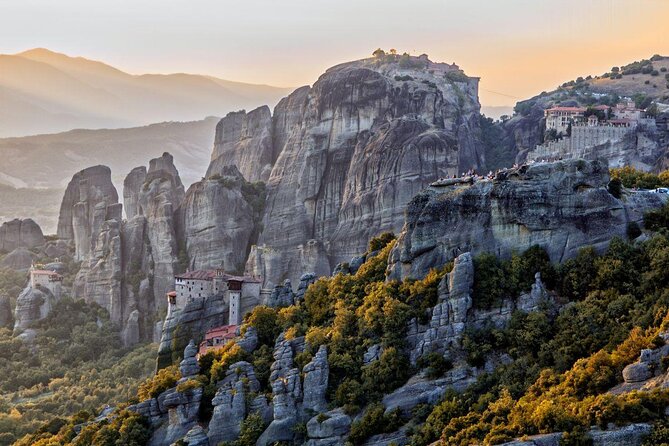
- Meteora at sunset, when the rocks look unreal and the timing feels intentional
- Food and local neighborhoods in Tirana instead of only monument-photo stops
- Mostar and Sarajevo, where different empires show up in the streets and in the scars of the 20th century
Price and value for a 14-day, 7-country route
At $5,116.01 per person, this is not a budget sampler. But when you price it the way it actually costs to travel here, the value starts to make sense: you get 14 breakfasts plus private transportation, a professional tour leader, and hotel pickup and drop-off at the ends (Athens at the start, then Dubrovnik or Split at the finish).
Most of the big savings come from two things you would otherwise pay extra for on your own: dedicated logistics and the guided, time-saving way you hit major sites across multiple borders. You also get tourist taxes and key running costs like road taxes, petrol, and international car insurance. That reduces the “surprise fees” stress.
One detail to keep in mind: the price is calculated based on 3-star hotel rooms using double, twin, triple, or quad occupancy. If you are traveling solo or want a different room setup, you may need to check how your booking is priced, since the tour explicitly frames pricing around those occupancy categories.
You can also read our reviews of more tours and experiences in Athens.


How the schedule really feels: fast moves, guided pacing, and cross-border days
This tour runs about 14 days, starting at 8:00 am in Athens, and it is built around “see the essentials” momentum. That can be a dream if you like structure and hate the mental work of planning. It can be frustrating if you want lots of slow hours in one city.
Expect a lot of driving days, especially once you start linking Greece to Albania and then onward through North Macedonia, Kosovo, Montenegro, and Bosnia. The itinerary also includes a day described as walking on uneven terrain in Sarajevo, so comfortable shoes matter more than fancy ones.
Meal planning is another reality check. Breakfast is included, but lunch, dinner, drinks, and snacks are not listed as included. So if you do better with planned meals, budget for regular stops, or carry simple snacks so your day stays smooth.
Athens pickup, Delphi’s scale, and why day one clicks
Your tour begins in Athens with a hotel pickup by the tour leader. This matters because Athens traffic and parking can make day-one exploring feel like work. With pickup handled, you start with less hassle and more time for the actual sites.
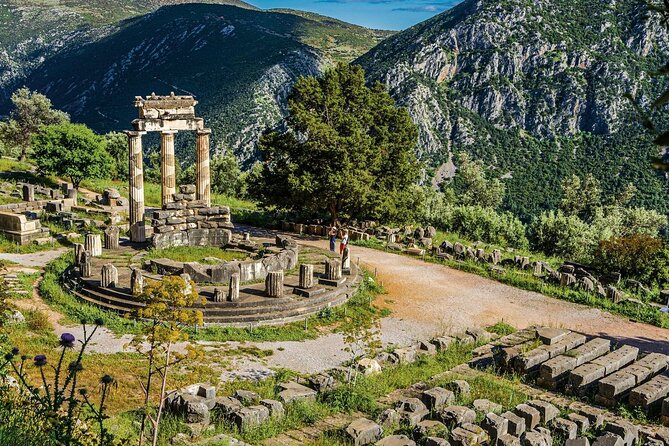
From there you head to Delphi, a UNESCO site that feels almost unreal once you are standing there. Delphi is not just a single temple ruin. You are moving through major monuments like the Temple of Apollo, the Castalian Fountain area, and the Theatre and Stadium zones, plus museum time connected to famous antiquities like the Charioteer statue. The museum component is a nice balance to the open-air ruins, because it helps you understand what you are looking at instead of only taking photos and guessing.
Day one keeps the emotional arc tight: ancient Greece in the morning, then a dramatic change in scenery at Meteora. If you like history, this is a strong setup. If you prefer views, it is still a strong setup because Meteora is waiting.
Meteora sunset: the timing is the product
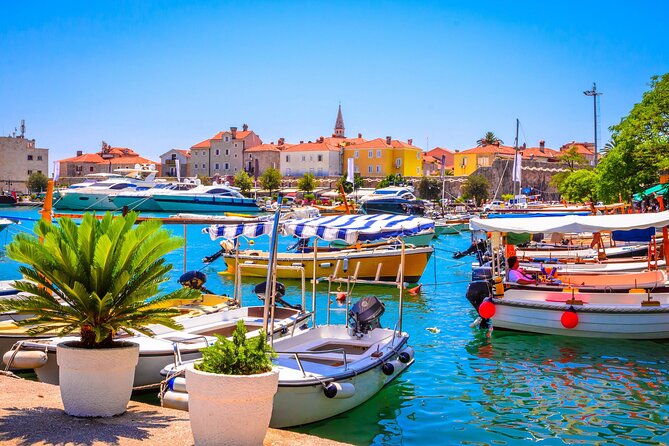
Meteora is one of those places where you can see the rocks anytime, but you do not get the full effect unless the day is timed right. Here, the schedule is designed for the sunset payoff after you travel in and settle your viewpoint.
The monasteries perched on top of rock formations create a scene that does not feel like a museum set. It feels like people chose difficulty on purpose. And sunset changes how those cliffs and monastery silhouettes look, so the late-day timing is doing real work for you, not just filling the calendar.
Since Meteora is listed as part of UNESCO and connected to the monasteries dating to the 14th and 15th centuries, you are not only getting a view. You are also getting a historical setting that explains why these places were built here in the first place.
Ioannina, Gjirokaster, and the Stone City vibe
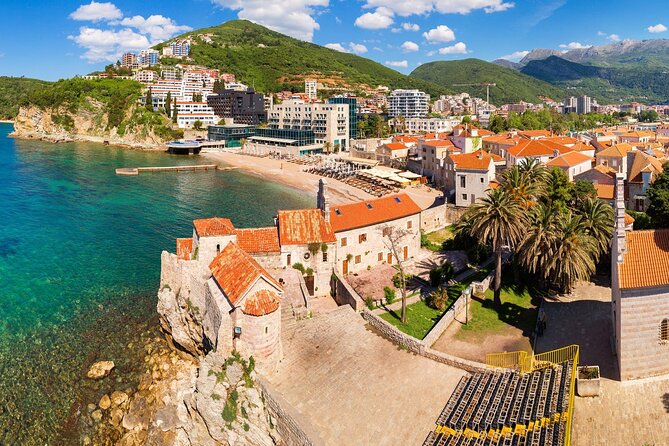
Once you move into Albania, the tour leans into towns where architecture tells the story. Ioannina gives you old-town cobbled streets and layers from Byzantine and Ottoman eras. The guide-led time also includes a stop at Ioannina Castle and free time to wander, which is useful because you can shift from structured walking to your own pace.
Then comes Gjirokaster, often called the Stone City. This is the kind of town where houses look like forts, and the old city sits on a hillside in a way that makes you feel the terrain. The tour includes time with the castle area and also a visit to the medieval bazaar area before or around the main castle. That bazaar time is not just shopping. It is where the town feels like a living place rather than a photo location.
The UNESCO setting and the way Gjirokaster is described as one of the best-preserved medieval towns in the Balkans makes the visit feel like more than a quick stop. You get at least a couple hours that let you see both the fortified layout and the daily-life fabric.
- All Day Cruise -3 Islands to Agistri,Moni, Aegina with lunch and drinks included
★ 5.0 · 4,958 reviews
Berat’s 1001 windows, Onufri museum, and living inside a fortress
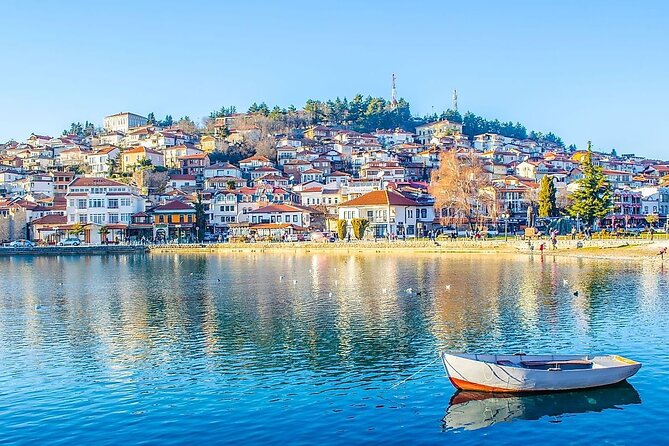
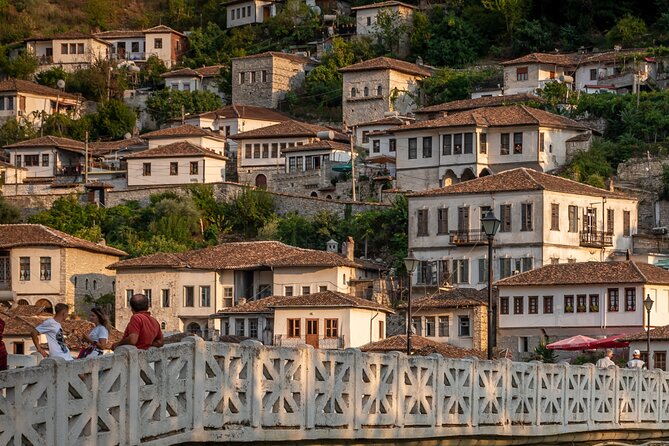
Berat is a highlight for many people for a reason: you get that famous “1001 windows” look when you walk the narrow stone streets. The windows stacked across hillsides create a visual rhythm that photographs well but also feels different when you are actually walking close to the buildings.
The tour includes Berat Castle, plus time at the National Iconographic Museum Onufri. Onufri is described as the painter of church iconography across the Balkans, known for a reddish tone that is still hard to imitate. That museum stop gives context, so Berat is not only a view deck.
One practical plus: Berat is also described as a town where residents still live inside the castle walls. That is a meaningful distinction. You are not just touring an abandoned historic area. You are seeing a place where people keep living, which changes the feel immediately.
Drilon to St Naum: water, monastery calm, and protected nature
A day that mixes nature and history starts with Drilon National Park, described with springs forming a small lake, ringed by greenery and weeping willows. It sounds simple, but those small, calm settings are exactly what breaks up the otherwise fast pace of a multi-country tour.
Then you stop at Tushemisht, described as a smaller, quieter spot with natural beauty and hospitality. It is not framed as a major monument stop, so it works as a reset before the next big cultural site.
Next comes St Naum, a monastery complex at the source of the river Crni Drim, which flows into Lake Ohrid. The description emphasizes crystal-clear spring water reflecting greenery and mountain peaks, and it is set within the protected area tied to National Park Galicica. Even if you are not a “monastery person,” the setting here is the main point: the water and the protected landscape support the quiet mood of the visit.
Ohrid Lake UNESCO: churches, views, and spiritual layers in one city
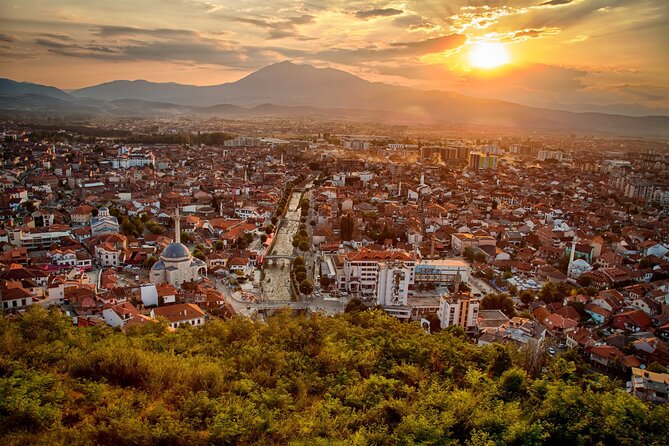
Ohrid and Ohrid Lake are UNESCO-listed, and the tour packs in both city viewpoints and key religious sites. Ohrid is described as one of the oldest human settlements in Europe, with deep ties to Illyrian heritage and Roman-era naming, before later importance through Byzantine and Orthodox traditions.
Your guided time includes major points like the viewpoint by the Church of St. John, the Church of St. Nicolas, and the Halveti Hayati Tekke mosque. It also includes context about Ohrid becoming an Orthodox center during the Byzantine Empire, and the city’s claim of 365 Orthodox churches.
If you like a city that works on multiple levels, Ohrid does. It has religion, old-town architecture, and lake scenery. And it is also a very natural place to walk, because the sights are clustered enough that you do not feel like you are constantly in transit.
Tirana by local rules: byrek, markets, coffee culture, and Bunk’Art
Tirana is where the tour shifts from monuments to daily life. You start with a city discovery, then go into food stops with a local companion style of guiding.
There is a dedicated stop for byrek and a first taste of breakfast like locals. Then you move through Çam bazaar, which ties the Albanian Çam community history to goods and crafts. That is a nice touch because it explains why the market exists, not only what you can buy.
Later, the tour time is described around skipping tourist traps, moving through neighborhoods, tasting dessert, joining locals for Albanian coffee, and working through street markets. If you want a city feel instead of only a highlights list, this part of the day is built for you.
You also get food and culture time again at Pazari i Ri (New Bazaar) with traditional lunch described as Qofte for the group, plus mentions of vegetarian options with bread and Albanian Gjize (cottage cheese). Then the day includes a taste of Albanian raki, and it finishes with Bunk’Art 2.
Bunk’Art 2 is based in a nuclear bunker planned for Enver Hoxha during the Cold War period, later converted to a museum in 2014. It is presented as a video museum about communist military history and daily life under the regime. This is one of those stops that can feel heavy, but it gives a clear frame for a part of Balkan 20th-century history many people only skim.
Kruje, Prizren, and Kosovo’s layered stops
The Albania-to-Kosovo stretch keeps the fortress theme going. In Kruja, you visit the medieval old bazaar area and the Kruja Castle, with a note that the castle’s layout included hidden paths used by locals during enemy sieges. That detail helps you imagine the town as a defense system rather than just an old site.
Kruja’s bazaar time is also positioned as the best place in Albania for souvenirs, with handmade items like carpets and jewelry. Even if you do not shop much, it is still useful because bazaars show you materials and craftsmanship styles you will not get from souvenir racks.
Then you cross into Prizren, described as Kosovo’s cultural capital with religious tolerance and a river running through the old town under many bridges. The schedule includes time at Sinan Pasha Mosque with its richly patterned arabesque design, plus Kalaja Fortress for a hilltop panorama and free afternoon time in town.
There is also a note about Dokufest in August, when the city hosts a short film festival. Even if your travel month is different, Prizren’s feel is linked to that international energy described in the planning, and it is a good reason to think of Prizren as more than a stop for churches and mosques.
Gjakova bazaars, Decan monastery frescoes, and Rahovec wine country
After breakfast, you head to Gjakova, where the oldest and largest bazaar of Kosovo is described as having been rebuilt after major conflicts. That gives the market a special emotional weight. It is not only commerce. It is recovery and rebuilding visible in brick and storefronts.
Next is Decan monastery, noted for its white color and for having Orthodox monks still living there and making fresh organic food such as cheeses. The UNESCO detail here is the frescoes, described as portraying 14th-century life and the Palaeologan renaissance. If you like art history, this stop gives you a reason to look closely rather than only glance.
Then comes Rahovec, framed as the viticulture area and capital city of wine production in the region around Prizren. You get context that grapes were cultivated since Illyrian times, 2,000 years ago, and that vineyards are at altitude between 350 and 520 meters. There is also mention of an annual wine festival every September.
Slow food at Mrizi i Zanave and Rozafa above Shkodra
One of the most “travel like a local” parts of this tour is the agro-tourism time at Mrizi i Zanave – Restorant Agroturizëm. The farm tour is described as collecting, processing, and preserving regional bio fresh local products, and adapting old communist buildings as storage for those products. It also notes the farm created jobs for more than 400 people in the surrounding area, which is an important sustainability and community detail, not just a cute visitor pitch.
You also get free time to enjoy a traditional lunch or buy fresh produce from the farm. Even though lunch is not listed as included in the overall price, this is one of the places where spending on food makes sense because the setting is part of the experience.
In the afternoon, you move to Shkodra (Shkoder), an old city named as giving its name to the biggest lake in the Balkans. You visit Rozafa castle, and the tour focuses on the scenery of the lake and three rivers melting into the Adriatic Sea. The city’s architecture is described as Venetian-influenced, with an extra note that in February you might catch the carnival festival and that many Venetian masks are handmade and produced in Shkodra.
Budva and Kotor: Montenegro’s old towns and UNESCO street logic
In Montenegro, the first stop is a viewpoint near Sveti Stefan. You can see it from the coast even though the island itself is described as unavailable for visits now, because it turned into an exclusive residential resort. Still, it is an easy photo stop that sets the mood for the Adriatic coastline.
Then you reach Budva, split into new and old parts. The old town visit includes the medieval center and listed religious stops like St. Ivan church and the small church of St. Mary. This is a good balance if you like walking historic streets but you also want a clear “where to go” plan.
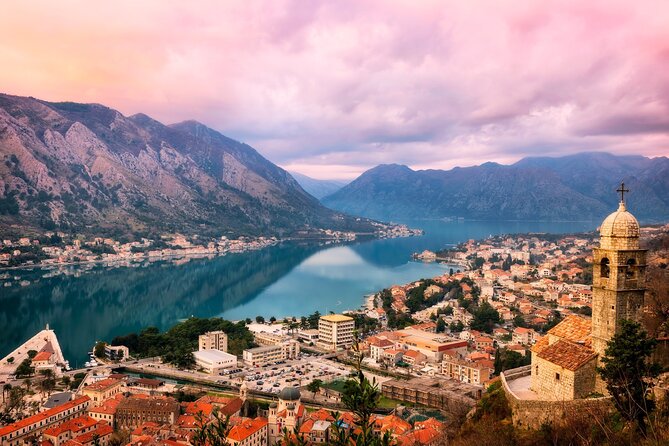
Next is Kotor, a UNESCO site. Kotor is described as a maze of narrow cobblestone streets designed to confuse intruders. Today, that street logic becomes the fun part because you weave through tiny lanes and old building plaques with dates of construction and original use. The tour includes a church stop at Saint Luke’s, described as significant to locals as a symbol of unity.
Mostar’s Stari Most and Blagaj’s Buna springs
From Montenegro, you cross into Bosnia and Herzegovina for Mostar. Of course, the star is Stari Most, the Old Bridge, UNESCO-listed and built in typical Islamic architectural style in the 16th century. This is the kind of monument that feels most impressive when you see how the bridge connects two sides of a living city.
The tour then includes the Old Bazaar with colourful streets and lively atmosphere, plus references to “Don’t Forget” memorial stones throughout town. That detail matters because it signals that Mostar carries memory in public spaces, not just in museums.
You then drive to Blagaj tekija, a monastery outside Mostar at the foot of a cliff with blue waters in front of it, tied to the spring of the river Buna. It is described as an Ottoman medieval town in Herzegovina with stunning nature and the iconic spring. This stop is one more reset day, where the water and cliff setting does the work for you.
Sarajevo ruins, Latin Bridge, and the city where empires left marks
Your next morning starts with the drive from Mostar to Sarajevo. The tour explicitly includes walking on uneven terrain while visiting ruins, and it mentions visible reminders of the Yugoslav War through bullet holes and cannon marks. That context gives weight to what you are seeing, and it makes the history feel grounded in real streets.
The tour covers Ottoman and Austria-Hungarian parts of Sarajevo, with a plan that includes markets, bazaars, mosques, churches, and synagogues. The route is framed as showing Sarajevo’s identity as a multi-faith European city.
You also stop at the Latin Bridge, tied to the story that WWI was triggered there. The name “Latinluk” is mentioned as the Catholic quarter in Ottoman times, connecting the geography to the story. Then you get free time to eat Sarajevo’s meat dishes and desserts in the old town area.
Dubrovnik or Split finish: what to do after the last shuttle
On day 14, you cross at the Croatian border and then a local representative shuttles you to your hotel in Dubrovnik or Split. This finish is practical because it avoids last-day scramble.
You will arrive having seen a lot of cities and castles. So I would treat the first day after arrival like a soft landing: pick one area to walk, find a single good meal, and give your feet a day off. If you have extra time, you can then choose whether Dubrovnik is your priority for walls and views, or Split for palace area history and sea strolls.
Should you book this Athens to Dubrovnik/Split tour?
Book it if you want guided structure, like UNESCO site hits, and prefer having transportation and entry planning handled across borders. I also like that this tour includes more than monuments, especially in Tirana, where the focus is food, coffee culture, and markets with a local companion. The experience also benefits from strong leadership, and the tour feedback highlights guides like Elton and Eri Veseli for being kind, helpful, and passionate with clear explanations.
Skip it or choose a different style if you hate moving every day. The itinerary is designed for coverage, not for slow afternoons. Also remember lunch, dinner, drinks, and snacks are on you, so build a simple daily budget and do not rely on “tour meals” to carry the day.
FAQ
What does the tour price include?
The price includes BB (accommodation and breakfast) for all overnights, private transportation, a professional tour leader, hotel pickup in Athens, hotel drop off in Dubrovnik or Split, entry tickets for the sites that are visited, tourist taxes, and international car insurance, road taxes, and petrol. Breakfast is listed for 14 days.
Are lunch and dinner included?
No. Lunches, dinners, drinks, and snacks are listed as not included.
How big is the group?
The tour has a maximum of 10 travelers.
What time does the tour start in Athens?
Start time is listed as 8:00 am.
Where do you get picked up and dropped off?
You get hotel pickup in Athens, and on the last day you get hotel drop off in Dubrovnik or Split.
Are entry tickets included?
Entry tickets for the sites that are visited are included. The itinerary also marks some stops as admission ticket free and others as admission ticket included.
Do I need my own travel insurance?
Yes. All participants are responsible for having their own health or travel insurance.
Is the tour refundable if I cancel?
No. The experience is non-refundable and cannot be changed for any reason, so the amount paid would not be refunded if you cancel or amend your booking.
More Tours in Athens

More Tour Reviews in Athens
- All Day Cruise -3 Islands to Agistri,Moni, Aegina with lunch and drinks included
★ 5.0 · 4,958 reviews
Not for you? Here's more nearby things to do in Athens we have reviewed



Tours, compared.
 ★ 4.8Acropolis, Parthenon & Acropolis Museum Guided TourFrom $409,316 reviews
 ★ 4.6Acropolis and Parthenon Guided Walking TourFrom $385,882 reviews
 ★ 5.0Greek Food Walking Tour in AthensFrom $874,740 reviews
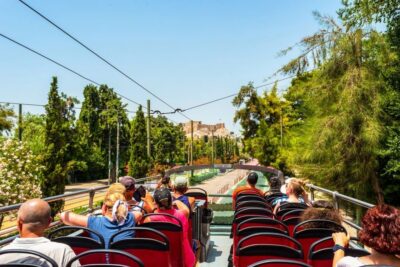 ★ 4.3City Sightseeing Hop-On Hop-Off Bus TourFrom $254,520 reviews
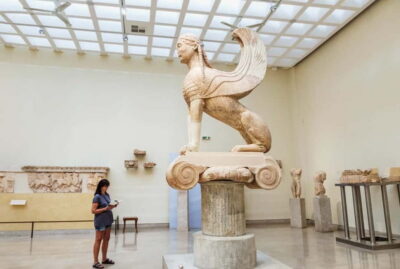 ★ 4.6Mythology of Delphi, Museum and Arachova Guided TourFrom $314,008 reviews
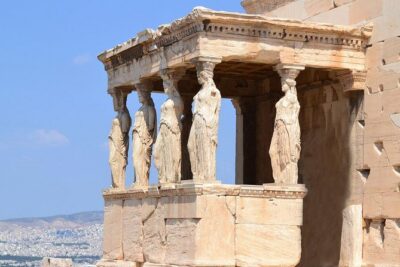 ★ 5.0Best of Athens Half Day Private TourFrom $913,714 reviews
★ 4.8Acropolis, Parthenon & Acropolis Museum Guided TourFrom $413,579 reviews
★ 5.0Best of Athens Half Day Private TourFrom $913,714 reviews
★ 4.8Acropolis, Parthenon & Acropolis Museum Guided TourFrom $413,579 reviews
 ★ 4.7Acropolis: Acropolis and Parthenon Guided Walking TourFrom $363,442 reviews