
Reviewed · TOURS
Biblical Tour Letters ToThe Corinthians St Paul’s Footsteps 6Hour
Paul’s footsteps, minus the stress. This half-day tour strings together Areopagus Hill, Ancient Corinth, and the Corinthian coastline, so the Bible reads like it has a map. I love the door-to-door pickup and drop-off, and I also like the calm, air-conditioned drive with bottled water and Wi-Fi. The main drawback to plan for is extra site costs, since places like Ancient Corinth and parts of Isthmia have entrance fees not included.
One reason this tour works so well is the “small group only your party” setup, usually 2 to 4, with a vehicle designed to keep you comfortable for the whole stretch. Guides like Chris, Yiannis, Panos, Ares, and Christof are known for turning the day into a story you can actually follow, even when the stops are brief.
Key highlights I’d book for
- Cruise-friendly timing: Built for limited port time, with the priority of getting you back to your ship.
- Comfort that keeps you fresh: Air-conditioned private vehicle, bottled water, and onboard Wi-Fi.
- Paul in the real geography: You connect Athens, Corinth, and the nearby ports of Kenchreai to Paul’s letters.
- Great short-stop pacing: Lots of meaningful stops without long “dead time” in between.
- Entrance fees to budget: Expect extra tickets for Ancient Corinth and the Archaeological Site of Isthmia.
- Inside-site guiding is optional: Your driver can explain, but for inside the sites you’ll need an official licensed guide if requested.
Door-to-door timing, made for real schedules
This is set up as a direct, point-to-point day from Athens to the Corinth area. You get picked up from your Athens hotel, Airbnb, or the cruise port, and you return to the same place when the tour ends. That matters because Corinth is not just a single ruin, it is a whole cluster of sites, and you want someone managing the gaps.
The tour runs about 6 hours 15 minutes, which is long enough to hit the key stops, but short enough to still feel like a day and not a marathon. If you’re on a cruise, this length is also one of the better formats, since you can keep your timing clean.
You can also read our reviews of more tours and experiences in Athens.


The private minivan comfort that makes “a lot of stops” feel easy
Instead of bouncing between crowded buses, you ride in a premium, air-conditioned luxury minivan. The group size is kept intimate, and the goal is that only your group participates, so you are not fighting for headsets or space.
On board you get bottled water and complimentary Wi-Fi, which sounds small until you realize how helpful it is when you’re checking maps, messaging family, or just staying sane during transfer time. You can also store luggage in the car during the tour depending on how much you have, which is handy if you’re coming from a port day with bags.
And yes, guides can be funny and warm. Names like Chris with Ares show up repeatedly as examples of the kind of driver who keeps the ride moving, answers questions, and makes the hours fly.
Areopagus Hill: the Unknown God talk in front of the view
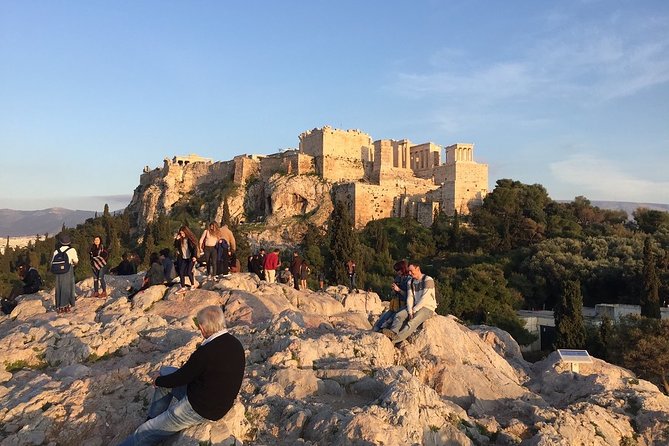
Your day begins with Areopagus Hill, described as the Holy Rock of the Acropolis area. This is the place tied to Paul’s speech to Athenians about the Unknown God. Even if you do not memorize every detail, the location adds meaning, because you can feel how public speaking and worldview clashes happened in a real civic setting.
The stop is short, about 15 minutes, but that can be the right length for a first “Paul in Athens” moment. You get the basics, then you move on while the drive is fresh and the day still feels coordinated.
Practical tip: wear shoes you trust for uneven stone. This stop is not designed for a slow, long stroll, so you’ll want to stay steady and not rush.
Daphni Monastery: Byzantine mosaics with layers underneath
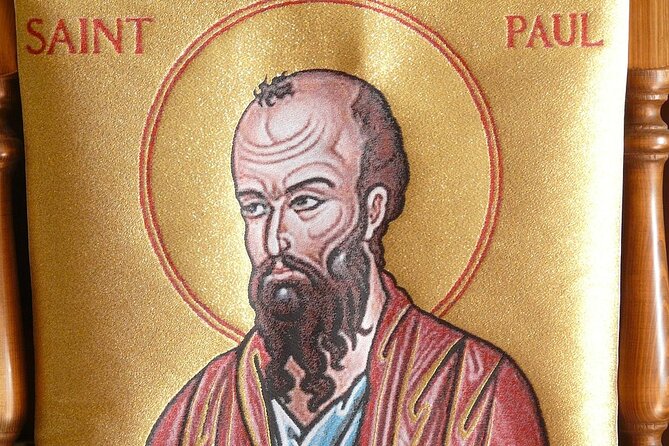
Next comes the Monastery of Daphni on the slopes of Mount Aigaleo. This is not just a church stop. The site sits on the idea that an Ancient Temple of Apollo stood here before, likely connected to the sanctuary of Apollo as well as later Christian reuse.
Daphni is also a good “how history keeps building on itself” stop. You see fortified walls, towers, and east and west gates, plus the story of how it shifted between monastic communities, Frankish-era Cistercian monks, Orthodox control after Ottoman conquest, and rebuilding after earthquake damage. The mosaics are a big part of why it’s famous.
You get about 20 minutes here, which is enough to appreciate the setting and focus on the main features without turning the day into a museum marathon.
Corinth Canal: the 2000-year idea of cutting across
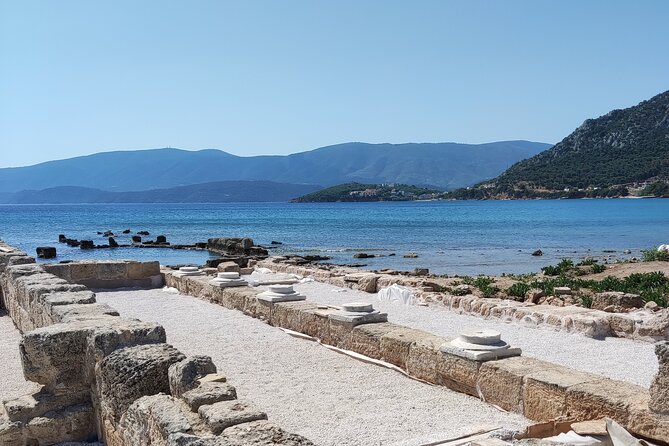
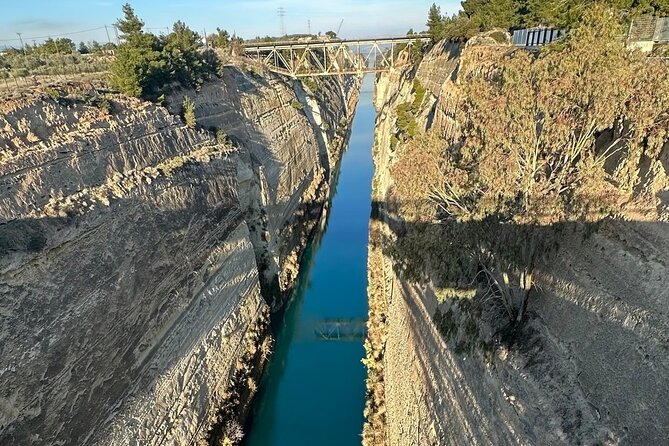
Then you hit the Corinth Canal, a modern waterway that separates mainland Greece from the Peloponnese. The canal is only about late 19th-century execution, but the idea goes back far longer. It’s tied to the old dream of saving ships time instead of making the long circle around the Peloponnese.
The tour gives context like the ancient shipping problem, and it even explains how a ruler tied to Corinth conceived the plan centuries earlier, with the workaround of the diolkos, a stone road used to move ships over land on wheeled platforms.
This stop is around 20 minutes, and it works as a reset. You get a break, a change of scenery, and a clean story transition toward the archaeological world of Isthmia.
- All Day Cruise -3 Islands to Agistri,Moni, Aegina with lunch and drinks included
★ 5.0 · 4,958 reviews
Isthmia museums and ruins: sports, faith, and sailors
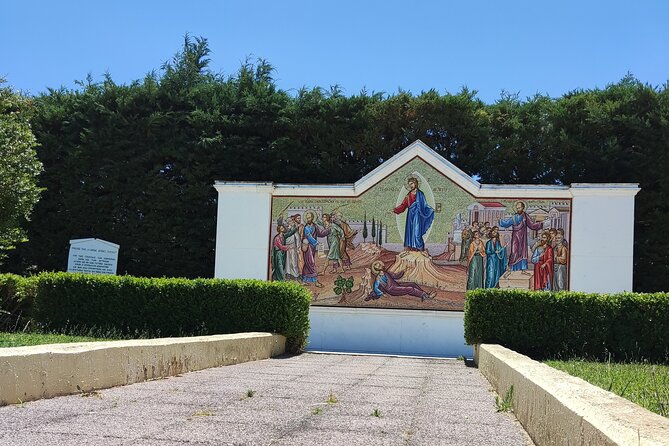
The tour treats Isthmia like more than a single ruin. It’s a whole region connected to major ancient games, and it is also tied to Paul.
You visit the archaeological area near Isthmia with a focus on the Temple of Poseidon and Amphitrite, plus other parts of the sanctuary complex. The Temple of Poseidon is presented with its rebuild cycles, including fires that destroyed earlier structures and later Doric reconstruction. You also get the stadium context and the sanctuary of Palaimon.
One of the most useful things about this stop is the way it connects to the Bible. Paul’s presence in the Isthmian area is treated as significant, including the idea that he worked as a tent maker linked with the games and proclaimed Christ to visitors and athletes. Even if you think of Paul mainly through letters, this approach adds the social setting.
There are also small but memorable “detail stops” you can expect:
- the Temple of Poseidon and Amphitrite context (built, destroyed, rebuilt)
- the stadium and what makes it technically interesting
- the Sanctuary of Palaimon, tied to sailors and nocturnal services, with bulls sacrificed
The tour timing for the Isthmia area is about 1 hour, and it includes guided explanation from the driver as you see what’s there.
Museum of Isthmia: the glass and the names you’ll remember
You may also stop at the Archaeological Museum of Isthmia. Museum time is 20 minutes, and admission is not included.
This museum has a strong payoff if you like objects. Highlights mentioned include colored glass glazing from Kechreon, found submerged near a temple. The display ties to ideas like stained-glass-like color, harbor scenes, exotic landscapes, animals and plants, and full-length figures such as philosophers (including Homer and Plato). There are also artifacts like an imperial statue type of Zeus, an epinician stele with a portrait linked to a Corinthian musician named Lefkios Cornelius, and a golden bull vowed to a sanctuary.
If you care about turning ruins into “real life,” this is one of the stops that makes the day feel richer without adding hours.
Ancient Corinth: Paul’s letters on a city scale
Then you arrive at Ancient Corinth (Archaia Korinthos). This is one of the most important biblical geography stops on the day. Corinth is tied to Paul’s two letters to the Corinthians and also to Acts in the Bible narrative.
The site context is laid out clearly: Corinth was a city-state on the narrow strip connecting the Peloponnese to central Greece. Over time, it rose and changed hands. The Romans demolished Corinth in 146 BC, later built a new city in 44 BC, and made it a provincial capital. The tour also points out how the scale of the city helps explain why Paul’s message could spread quickly.
Your time is about 1 hour, and admission is not included for this part. You’ll see the main archaeological highlights, while your driver connects what you’re looking at to Paul’s story.
Agora and the Bema: where public faith met public power
In and around the Ancient Corinth area, the day includes the Agora and the Bema. The Bema is described as an elevated podium, associated with where Paul addressed the Corinthians around 52 AD, and it’s linked in tradition to the site of his judgment. The tour also explains how the Bema was later transformed into a Christian church during the Byzantine period.
Even if you do not go deep into architecture, this is a powerful stop because it adds a sense of scale and civic life. Paul’s life was not lived in a vacuum. He spoke into a real public system.
Plan for this to be more “stand and absorb” than “wandering.” The stop length is designed to keep the whole day on track.
Kenchreai (Kechries): where Paul’s vow ties to Phoebe
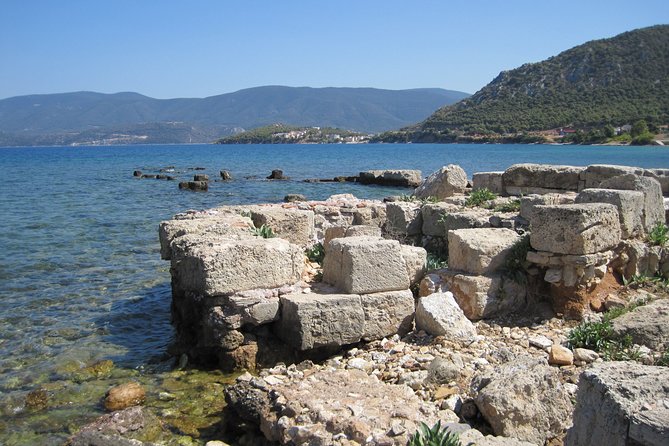
Next is Kechries, a village connected to the ancient port town of Kenchreai. This is the kind of stop that makes the Bible feel specific, not generic.
The tour ties it to Acts 18:18, where Paul cuts his hair in connection with a vow. It also connects Kenchreai to the church community referenced through Paul’s letter to the Romans, including the mention of Phoebe.
This stop is short, about 30 minutes, but it’s memorable because it’s a real place name. You go from broad teachings to named people and practices.
Temple of Apollo: early Doric power in Corinth
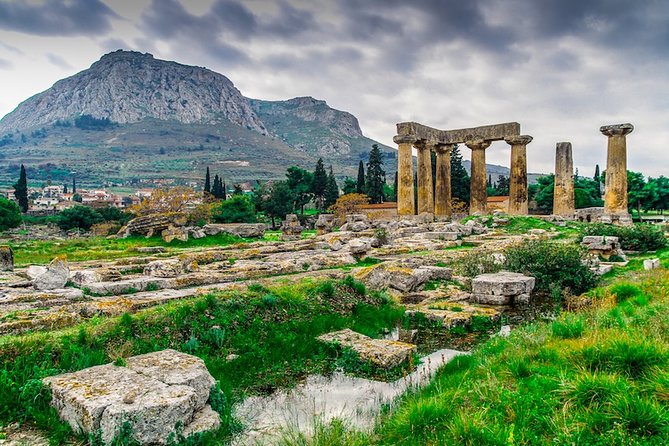
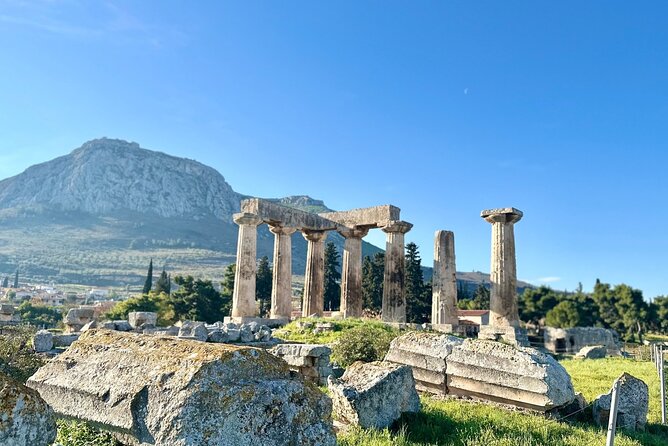
You also visit the Temple of Apollo at Corinth. The tour dates this temple to around 550 to 560 BC and describes it as one of the earliest Doric temples on the Peloponnese and Greek mainland, including monolithic columns.
Time is brief, about 10 minutes, and admission is not included. I like this stop for two reasons. First, it gives a sense of what Corinth’s religious identity looked like before and alongside later Christian growth. Second, it helps you see Corinth not only as a stage for Paul, but as an active cultural center.
Apostolou Pavlou: the church tied to Paul’s long stay
Finally, you end with the Apostolou Pavlou Church in Corinth. This stop is free, about 20 minutes, and it’s tied directly to Paul’s stay of around one and a half years in 51 to 52 AD. The tour frames it as a metropolitan church linked to Acts and the two Corinthians letters.
This last stop is a good emotional landing. After ruins, ports, and ancient civic spaces, you shift into a living Christian site, with a clear sense of continuity.
Price and logistics: where the real value comes from
The base price is $170.50 per person, and the value is in how it’s organized for a tight timeframe. You’re not just paying for transport. You’re paying for:
- the schedule that connects multiple Corinth sites in one day
- the interpretation of Paul’s story with locations in sequence
- the door-to-door pickup and drop-off from your Athens location or port
That said, you should budget for extra admissions. Based on the tour details you’ll want to plan for:
- Ancient Corinth entrance fee: €15 per person (not included)
- Archaeological Site of Isthmia entrance fee: €5 per person (not included)
- Archaeological Museum of Isthmia and Temple of Apollo admissions are not included
- Licensed guide inside sites is optional and costs €160 per booking depending on availability
One key rule: your driver can explain and guide from the outside, but Greek legislation limits who can enter archaeological sites as an on-site guide. If you want a licensed guide inside, request it in advance so it can be arranged.
If you hate surprise fees, ask yourself if you’ll truly use the optional inside guidance. If you only want a clear narrative and solid explanations, the driver’s role may be enough.
Who this is best for (and who should shop around)
This tour is ideal if you:
- want Paul’s Athens and Corinth story in one smooth half-day
- are on a cruise and need reliable timing back to the ship
- like religious travel that still includes real archaeology, not just churches
- appreciate humor and patient storytelling from drivers like Yiannis, Chris, Panos, Ares, and Christof
You might want something else if you:
- want to spend long hours inside multiple museums, since most stops are time-boxed
- are seeking a fully licensed, inside-site guided tour across every stop, since that’s optional and costs extra
Should you book this St Paul’s footsteps tour?
If you want a day that turns Bible geography into something you can picture, this is a strong choice. The biggest reason to book is the balance of comfortable logistics and meaningful locations tied to Paul’s life and letters, without dragging you through long transfers or confusing directions.
I’d book it especially if you’re short on time, like a cruise visitor, or if you want a calm, driver-led day where questions are welcome. Just go in with eyes open about entrance fees and the inside-guiding rule, and you’ll have a satisfying, well-paced “Paul’s world” day.
FAQ
How long is the tour?
The duration is approximately 6 hours and 15 minutes.
Where do you pick me up and where do you drop me off?
Pickup is offered from your Athens hotel, Airbnb residence, or the cruise ship port. After the tour ends, you are returned back to the same starting meeting point.
What group size is this tour designed for?
It is described as a small group tour with an intimate group size, generally 2 to 4 people, while also being described as maximum 2 to 6 passengers in the vehicle setup.
Is Wi-Fi and bottled water included?
Yes. Complimentary Wi-Fi and bottled water are provided during the ride.
Do I need to pay entrance fees during the tour?
Some entrances are included, but key sites have extra fees not included in the base price. Ancient Corinth is €15 per person, and the Archaeological Site of Isthmia is €5 per person. Admission for the Archaeological Museum of Isthmia and the Temple of Apollo is not included.
Can the driver guide me inside archaeological sites?
The driver can provide information and explanations, but Greek legislation allows only officially licensed tour guides inside archaeological sites. A licensed guide can be arranged on request at an additional cost, depending on availability.
Is lunch included?
Lunch stops are scheduled, but meal costs are not included.
What if I cancel or the weather is bad?
Free cancellation is available up to 24 hours in advance for a full refund. The experience requires good weather, and if canceled due to poor weather, you will be offered another date or a full refund.
More Tours in Athens

More Tour Reviews in Athens
- All Day Cruise -3 Islands to Agistri,Moni, Aegina with lunch and drinks included
★ 5.0 · 4,958 reviews
Not for you? Here's more nearby things to do in Athens we have reviewed




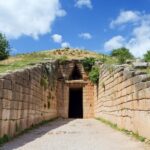


Tours, compared.
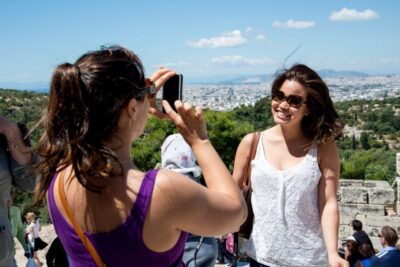 ★ 4.8Acropolis, Parthenon & Acropolis Museum Guided TourFrom $409,316 reviews
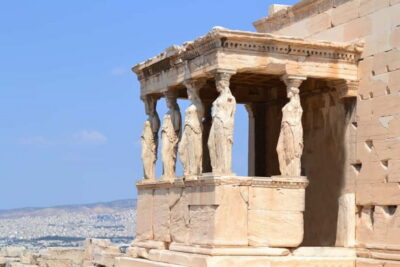 ★ 4.6Acropolis and Parthenon Guided Walking TourFrom $385,882 reviews
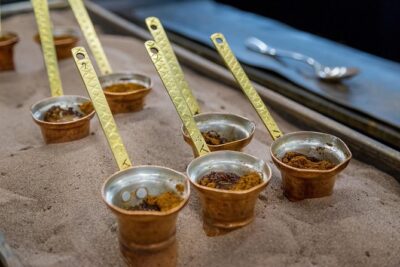 ★ 5.0Greek Food Walking Tour in AthensFrom $874,740 reviews
 ★ 4.3City Sightseeing Hop-On Hop-Off Bus TourFrom $254,520 reviews
 ★ 4.6Mythology of Delphi, Museum and Arachova Guided TourFrom $314,008 reviews
 ★ 5.0Best of Athens Half Day Private TourFrom $913,714 reviews
★ 4.8Acropolis, Parthenon & Acropolis Museum Guided TourFrom $413,579 reviews
★ 5.0Best of Athens Half Day Private TourFrom $913,714 reviews
★ 4.8Acropolis, Parthenon & Acropolis Museum Guided TourFrom $413,579 reviews
 ★ 4.7Acropolis: Acropolis and Parthenon Guided Walking TourFrom $363,442 reviews