

Reviewed · AUDIO TOURS
Athens: Roman Agora E-Ticket and Audio Guide
Athens can feel huge, but the Roman Agora is a smart place to start. This experience pairs an e-ticket with a self-guided smartphone audio tour that helps you make sense of the Gate of Athena Archegetis, the Tower of the Winds, and more, without waiting around. The big catch is also the main tradeoff, you are navigating on your own, so if you do not download and follow the app maps, it can be harder to orient.
I like how practical this setup is. You get an email ticket, then you download the audio before you go, which means you can walk in, press play, and focus on the ruins and street-life details. It also helps that the stories are designed as short, research-based tracks you can replay later, so the site keeps teaching you after you leave.
One more consideration before you commit: this is not a live guide experience. If you want a person to answer questions on the spot, or to re-route you when you get turned around, you may find a self-guided format less satisfying. Still, for most visitors who want an easy, friction-free visit, it is a very workable way to spend an hour in a key Athens landmark.
Key Things I’d Prioritize
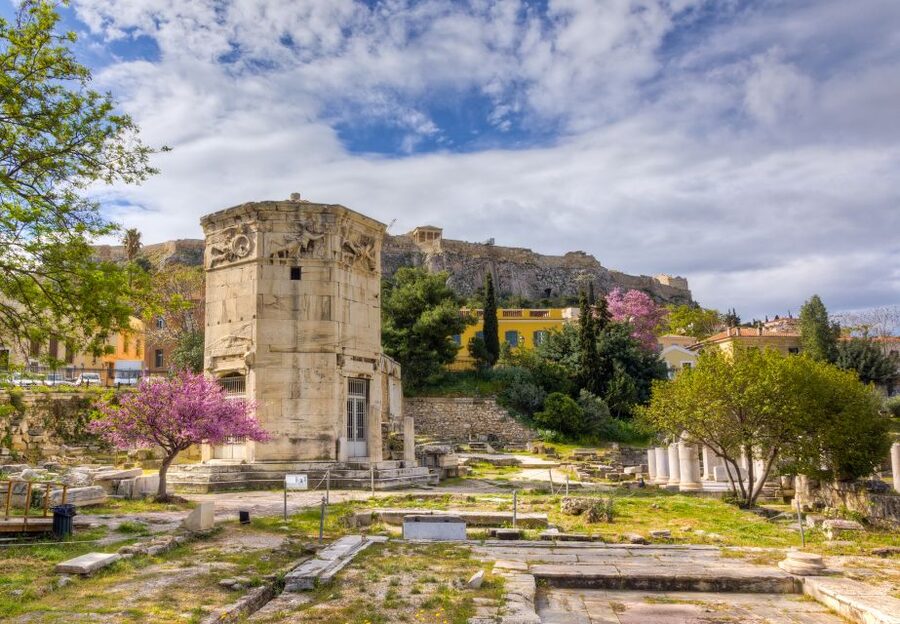
- Skip-the-line e-ticket so you can spend your time inside the site, not in queues
- Offline audio and maps you download ahead, so you can avoid roaming charges
- Compact, story-driven route through landmarks like the Tower of the Winds and the Mosque
- Designed for repeat listening, so you can refresh what you learned after the visit
- Smartphone dependent experience, which makes charging your phone essential
Roman Agora in 45 to 60 Minutes, and Why That’s a Sweet Spot
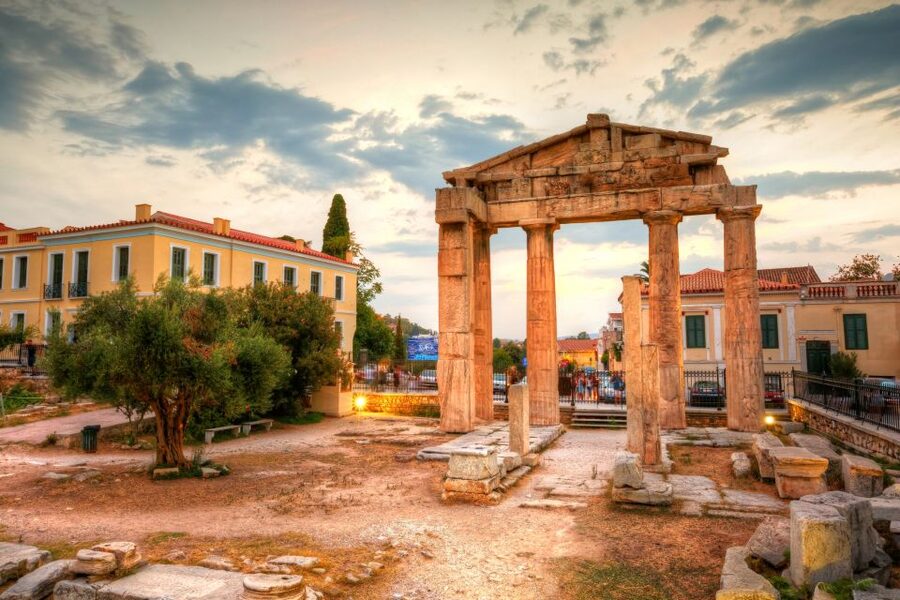
The Roman Agora is often described as small, and you should treat that as good news. You are not signing up for an all-day marathon of stone and signage. With this format, you can plan for about 45 minutes to 1 hour, then move on to the rest of Athens with your head still clear.
That time window matters because the Roman Agora is about contrasts. It is Roman-era use of an older Greek space, and it is also a place where the site layout helps you understand daily civic life rather than just heroic monuments. In an hour, you can take in the big set pieces plus the in-between details like fountains, shop areas, and the practical infrastructure that made the place run.
If you are visiting in summer, or you like to keep your walking efficient, a short, self-paced visit is often the best value. You will not feel trapped by a long tour schedule, and you can pause for views when you want them.
More Athens tours and experiences for the shortlist



Getting the Ticket and Audio Ready Before You Arrive
This experience is built around one idea: prep first, relax later. After booking, you receive an email with instructions to access and download the audio tour. Make sure you check your spam folder too, because the most annoying travel moment is hunting for an email you already got.
On your smartphone, you download the app and the audio tracks ahead of time. The content is available for offline use, including text, audio narration, and maps. That offline approach is a real quality-of-life upgrade in Athens, where data coverage can be spotty and you do not want your audio dying in the middle of a story.
Practical tip: storage matters. The audio package needs about 100 to 150 MB, so download with Wi-Fi and make sure your phone has room. Also, bring a charged phone. The tour materials assume you will be using your device as your navigator and storyteller.
What the Roman Agora Covers, and How Each Stop Works With the Stories
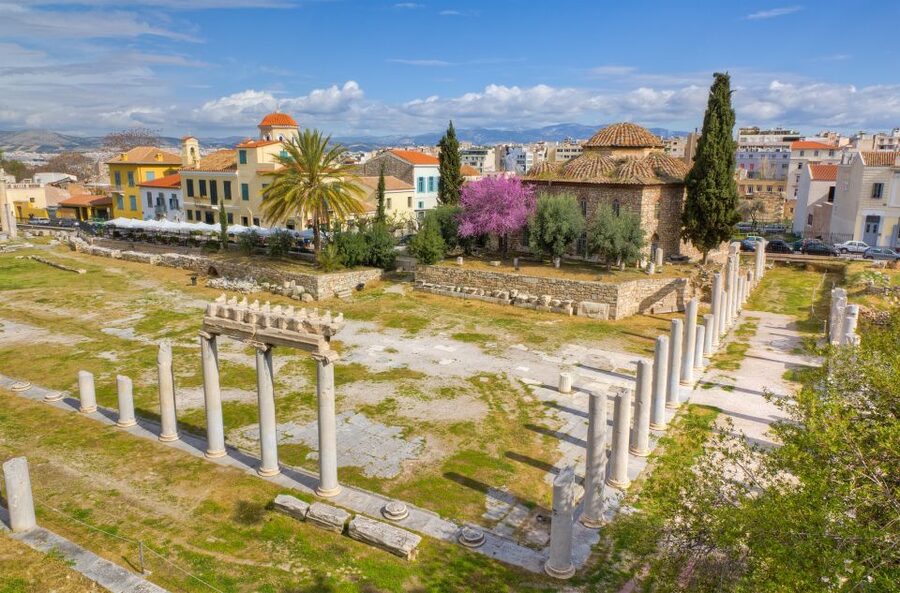
You are not just walking from one sign to the next. The audio tour is structured around key landmarks, so each site feature comes with context. You can treat it like a guided walk in audio form, but with your pace. If you pause to look closely at a detail, you can usually take your time and then catch up.
Gate of Athena Archegetis, where the story starts
Your audio tour begins with the Gate of Athena Archegetis. This gate is a powerful starting point because it sets the tone. You are reminded that the Roman Agora was not a museum piece, it was a functioning public space shaped by Greek religious meaning and Roman civic use.
When you reach the gate area, listen for how the narrative connects architecture to people. Gates are not only entrances. They were also statements about identity, protection, and power. Once the story clicks, the gate stops feeling like a random slab of stone and starts feeling like a real part of daily movement.
One thing to know: if you move fast without checking your app navigation, you may miss the location cues that help line up the audio. The site is compact, so getting lost is not likely, but getting slightly out of sync with the track is possible.
Tower of the Winds, the place where you can meet the weather
Next, you will be guided toward the Tower of the Winds. This is one of the most memorable stops in the Roman Agora area because it is so visually distinctive and because the theme is easy to grasp. You are literally walking toward a landmark tied to how people measured and understood wind.
If you are curious about how ancient cities worked, this stop is a good payoff. The audio approach helps you see the Tower of the Winds as more than a cool vertical structure. It ties the space to a practical way of reading the environment, something that mattered before modern forecasts.
Also, this is a good point in your walk to slow down and look around. Even if you are following audio, take a moment to scan your surroundings, because the tower’s setting helps you understand why this area felt important in the first place.
You can also read our reviews of more guided tours in Athens


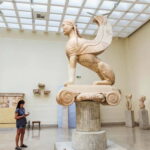

Mosque of the Conqueror, a layered Athens you can actually see
Then comes the Mosque component, described as the Mosque of the Conqueror in the highlights. This is where the Roman Agora becomes a lesson in how Athens keeps reusing spaces. You can experience the physical layering, then the audio helps you make sense of why one era does not erase the previous one.
For many visitors, this is the turning point of the experience. If you came expecting purely Roman ruins, the mosque association nudges you toward a more honest understanding of how the city changed over time.
The practical takeaway: listen closely here, because the mindset shift is the point. The more you treat the site like a palimpsest of eras, the more satisfying the walk becomes.
Fountain house, Vespasianae, and the infrastructure of daily life
After the headline structures, the tour moves into the “how the place worked” zone: the fountain house, the Vespasianae, and the shop areas. This is the part I enjoy most because it feels real. You start picturing what people did there, not just what kings or emperors wanted you to remember.
Fountains and water features reveal daily priorities. Vespasianae help you connect Roman civic comfort with how the public space operated. And the shop areas are a reminder that ancient cities were marketplaces and meeting points, not just grand backdrops for photographs.
If you are a history buff, this is where you will likely appreciate the shorter audio stories. Instead of one long lecture, you get bite-sized explanations that fit the space. And if you are not a deep-ruins person, these segments can still land, because daily-life details are usually easier to visualize than abstract political history.
The View Factor: Why This Walk Still Feels Worth It
One of the best reasons to do the Roman Agora stop is what it can do for your larger Athens day. The site offers a splendid view of the Acropolis, and that matters even if your priority is ruins over viewpoints.
In practice, that view creates an easy rhythm. Walk through the lower-level landmarks, listen to the stories, then lift your head toward the Acropolis when the audio pauses or when you reach a natural open angle. That mental reset helps you connect the Roman Agora to the bigger city picture.
The other hidden value is pacing. A small site with a tight time commitment can act like a warm-up or a decompression break. You can do it early to get oriented, or later when you want an easier walking day.
Price, Value, and What You’re Actually Paying For
The price is $18 per person, and the value depends on what you want from the hour.
You are paying for three things:
- Entry plus skip-the-line service, which cuts waiting time.
- A smartphone self-guided audio tour that you can download in advance and use offline.
- Repeatable content, since the audio tour can be used again after your visit.
If you compare this to paying for a live guide, this is not trying to replace a person. It is designed to replace hesitation, confusion, and wandering. If you tend to lose the thread at archaeological sites without context, a guided-by-audio format can be a strong bargain.
On the flip side, the price can feel high if you are the type who just wants to wander and read a few signs. The site is not massive, so you may feel like you did not spend enough time to justify the cost, which is a common reaction to any timed, compact attraction.
My practical advice: if you arrive with a charged phone, downloaded audio, and headphones ready, you will likely feel the money was well spent.
The Main Drawback: You Own the Navigation
Here’s the honest tradeoff. This is not a live guide, and there is no one to redirect you. If you rely on the app for your track and maps, orientation becomes part of the experience.
One visitor noted that it was difficult to orient with the audio guide. You can reduce that risk in simple ways:
- Download everything before you arrive, so you are not scrambling mid-walk
- Use the maps in the app to stay on track
- Wear comfortable shoes so you can move slowly enough to match what you are hearing
Also remember the tour is per device, not per participant. If you have two people and two separate phones, each person should have their own device setup for the best experience. If you only have one phone, you will be sharing screens and that can interrupt the flow.
Who This Roman Agora Audio Visit Suits Best
I would put this tour in the “good fit for most independent travelers” category, especially if you like your sightseeing structured but not rigid.
It is a great choice if you:
- Want an easy skip-the-line entry
- Prefer self-paced walking with a soundtrack
- Like offline travel tools and hate last-minute data use
- Are comfortable using a smartphone as your guide
It might be less ideal if you:
- Strongly prefer a live guide for Q and A
- Get anxious about navigation without staff support
- Know you will forget to charge your phone or download content ahead of time
If you want a single hour that connects Roman Agora landmarks to real stories, this one fits that goal nicely.
Should You Book This Athens Roman Agora E-Ticket and Audio Guide?

Book it if you want a low-stress Athens stop that teaches you what you are looking at, fast. With offline audio, entry, and a designed route through recognizable landmarks like the Gate of Athena Archegetis and the Tower of the Winds, it is a practical way to make a compact site feel full.
Skip it only if you already love Roman Agora ruins so much that you do not need audio context, or if you know you will struggle with smartphone-based navigation. Also keep in mind the activity is non-refundable, so you’ll want to be confident your phone is compatible and you can download ahead.
FAQ
How long does the Roman Agora e-ticket and audio guide take?
The visit lasts about 45 minutes to 1 hour. Check availability to see starting times.
Does this include entry to the Roman Agora and skip-the-line service?
Yes. Your booking includes an adult entry ticket to the Roman Agora and skip-the-line service.
What languages are available for the audio guide?
The self-guided audio tour is available in English, Spanish, German, French, Italian, and Greek.
How do I access the audio tour before I arrive?
You receive an email after booking with instructions. You download the app and the audio tour on your smartphone prior to your visit, and the content is available offline.
What phones are compatible?
You need an Android (version 5.0 and later) or iOS smartphone. It is not compatible with Windows phones, and it is incompatible with certain older iPhone and iPod Touch models listed in the activity details.
Is this activity refundable?
No. The activity has a non-refundable cancellation policy.
More Guided Tours in Athens

More Tickets in Athens



More Tour Reviews in Athens
- All Day Cruise -3 Islands to Agistri,Moni, Aegina with lunch and drinks included
★ 5.0 · 4,958 reviews



Not for you? Here's more nearby things to do in Athens we have reviewed










Audio Tours, compared.
 ★ 4.2Acropolis Ticket with Optional Audio or Live GuideFrom $4211,055 reviews
 ★ 4.4Cape Sounio & Poseidon Temple Trip with Audio GuideFrom $234,521 reviews
 ★ 4.0Acropolis Ticket with Audio GuideFrom $473,575 reviews
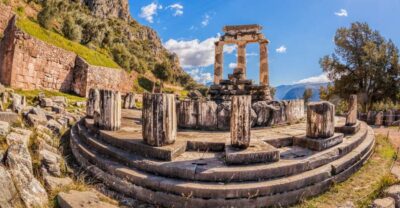 ★ 4.6From Athens: Delphi Full Day V.R. Audio Guided TourFrom $303,028 reviews
 ★ 4.4Acropolis Museum Ticket with optional Audio GuideFrom $302,652 reviews
 ★ 4.1Acropolis Ticket & Optional Self-Guided Audio ToursFrom $462,542 reviews
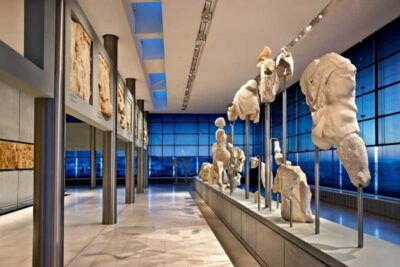 ★ 4.1Parthenon & Acropolis Museum with Audio or Live Tour OptionFrom $702,446 reviews
 ★ 4.5Peloponnese Highlights Day Trip and V.R. Audio GuideFrom $331,425 reviews
Browse the lists this tour appears in