
Reviewed · 5-DAY EXPERIENCES
5 Days Private Ancient Cities Tour of Greece from Athens
Ancient Greece in five days is a lot, but it works here. I like the private, door-to-door setup that takes the logistics off your plate, and I also love the way the route strings together famous ruins with less obvious stops, from Mystras to Monemvasia. One thing to consider upfront is that entrance fees are not included, so your total day-by-day cost will depend on what you choose to pay for.
This is a smart fit if you want history and flexibility without wrestling buses. Your driver is professional and can share context, but they are not licensed to guide you inside museums and archaeological sites, so you may want to budget extra if you want a licensed guide for the “talk and point” experience.
Key points worth knowing before you go
- Private pickup and drop-off in Athens with a dedicated vehicle, so you are not waiting on big-group transfers.
- A tightly planned route across the Peloponnese, built around major archaeological highlights.
- Mystras and Monemvasia add a medieval flavor, not just classical ruins.
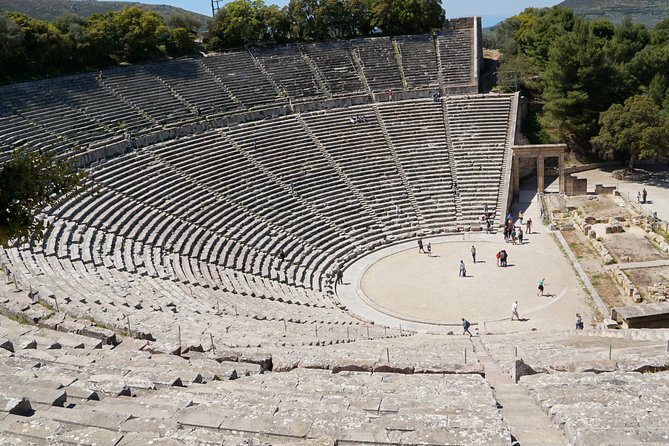
- Epidaurus theater acoustics are a star moment, and you get time to climb to the upper seats.
- Accommodation and breakfast are included based on your booking, plus bottled water during the tour.
- Licensed guides are optional, and only needed if you want someone certified to escort you inside sites.
Why This 5-Day Peloponnese Plan From Athens Feels Efficient
The big win here is simple: you wake up in Athens and you are already traveling toward the good stuff by 8:00 am. In five days, you cover Corinth, Olympia, Sparta and Mystras, Monemvasia, Nemea, Mycenae, Tiryns, Nafplio, Epidaurus, and Ancient Corinth. That is a lot of “greatest hits,” but the pacing is spread with real stops that give you time to walk, not just photo stops.
I also like that this is private. That usually means you can move at a human pace, pause when something grabs your attention, and ask questions on the ride. If you hate rushing through museums and archaeological sites, this setup is designed to reduce that stress.
The one caution is budgeting for site entries. Since entrance fees are not included, you’ll want to carry enough cash or a card that works for paying on-site.
You can also read our reviews of more private tours in Athens


Getting Around: Private Transit and a Driver Who Shares the Story
This tour runs with private transportation and a pickup from your Athens accommodation (including options like AirBnb or port pickup/drop-off). You also get bottled water, which sounds small until you are actually doing long, sun-heavy touring days.
Your driver is described as professional with deep historical knowledge. That matters, because it turns the drive between sites into part of the experience, not dead time. In one past trip, a driver named George was praised as kind, attentive, and as comfortable to travel with as a friend.
Do note the boundary: drivers are not licensed to accompany you inside museums or archaeological sites. If you want someone allowed to guide you in those spaces, you need to arrange a licensed tour guide as an upgrade.
Day 1: Corinth Canal, Olympia, and the Museums That Explain the Games
Day 1 starts with the Corinth Canal, and it is a good warm-up because it mixes modern engineering with ancient geography. You drive along the coast, pass seaside villages, and see Salamis, tied to the historic naval battle between Athenians and Persians. Then you reach the Corinth Canal, opened in 1892, which separates the Peloponnese from the rest of Greece and links the Saronic Gulf with the Corinthian Sea.
You get about 15 minutes here, including time to walk across via the pedestrian bridge to view the canal closer. On some days, bungee jumping may be an option if you feel adventurous. Even if you skip that, standing at the canal gives you a sense of how narrow this connection is.
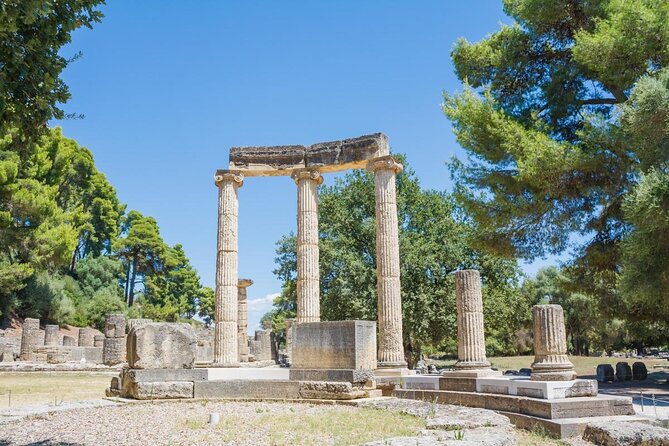
Next up is Ancient Olympia, one of Greece’s biggest archaeological sites and the birthplace of the Olympic Games. You also visit the museum at Olympia. The walk can feel like an on-foot history course: you pass the Gymnasium, the Palaistra, the workshop of Phidias, the Temple of Zeus, and you end at the Stadium. It is the kind of place where the setting helps you understand why the Olympics mattered beyond sport.
You also have a separate museum stop focused on Olympia’s Olympic Games history. This museum includes notable works, and it spans a long timeline from the 2nd millennium BC to the 5th century AD. If you care about how traditions evolve, this is where the ancient games become more than a name on a map.
Lunch is built into the day, with time at a village after your Olympic walking. Entrance tickets are not included, so plan for that. The good news is that with a private day like this, you are not competing with a crowd for the same quick moments.
Day 2: Mystras Ghost City, Sparta, and Learning Why Olive Oil Matters
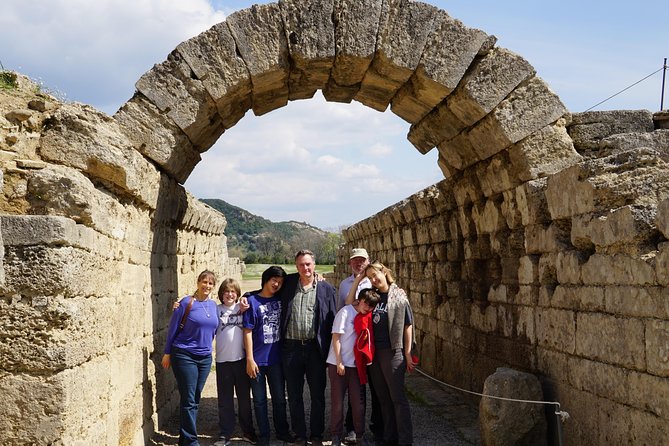
Day 2 is where the tour adds an extra layer. You head to Mystras in the southern Peloponnese through mountainous countryside, then arrive at a site that really does change the mood.
Mystras is often called a ghost city because it feels quiet and timeless, perched on a citadel. What makes it special is that it preserves medieval churches alongside ordinary houses, mansions, and palaces linked to the Byzantine Empire, with Frankish elements mixed in. Even better, some monasteries are still in use, and monks can show you their small living society.
You spend around two hours at the archaeological site. Walking down from the upper citadel you reach the palaces and royal courtyards, with views over the surrounding area. At the chapel of St. Demetrios, there is a plaque depicting a two headed eagle symbol of Byzantium. The account says Konstantine Palaiologos kneeled there before he was crowned the last emperor of Byzantium. This is one of those moments where the place gives you a sharper sense of what “history” means as a lived process.
After Mystras, you shift to Sparta. Here, the tone becomes more military and political, and the tour references Sparta as the eternal rival city to Athenian democracy. You pass notable points tied to Spartan kings and the Thermopylae story, including the Leonidas monument. You also stop near the stadium area, connected to the Spartathlon race endpoint (Athens to Sparta).
Then comes a smart “food and culture” detour: the Museum of Olive and Greek Olive Oil. It is brief, about 20 minutes, but it adds a grounded look at a product that sits at the heart of daily Greek life.
Entrance fees apply if you want to go inside, and those are not included. Still, the overall rhythm on this day helps you understand Greece in more than one era.
Day 3: Monemvasia Castle on the Sea, Plus Agia Sofia Church Views
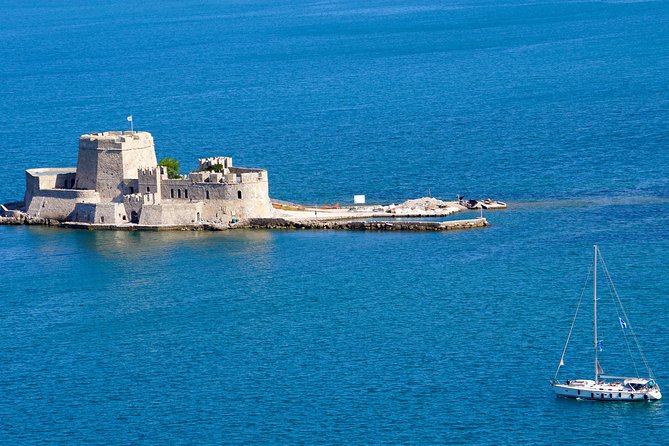
Day 3 is a major scenic and slower-day change. You go to Monemvasia Castle, described as a living old city connected to the mainland. It was a fortress and prosperous Byzantine-era city, and it survives with narrow streets, mansions, small houses, churches, wall segments, gates, and a citadel, with people still living there.
You get about half the day here, roughly two hours. The time is designed for wandering, not just ticking boxes. You can have lunch by the sea near the old wall, then keep walking to discover new corners as you go.
Agia Sofia Church is a highlight within Monemvasia. It is built at the edge of a cliff, with a vertiginous view over the bay. The façade includes a Venetian loggia, and inside you’ll notice the dome, finely sculpted marble capitals, and fragments of 13th century frescoes. Even if you are not a church person, the setting makes it worth pausing.
If you want a break from fast-moving ancient sites, this day is your reset. The castle town also gives your trip variety, so you do not feel like you are only watching ruins.
More Athens tours and experiences for the shortlist


Day 4: Nemea, Mycenae, Tiryns, and an Overnight That Makes Nafplio Shine
Day 4 is the heaviest “ancient core” day, starting at Ancient Nemea. Nemea ties to Greek mythology through Heracles overcoming the Nemean Lion, and it also hosted the Nemean Games during Antiquity. You also learn about the Nemean Games timeline and Pindar’s Nemean odes, which connects athletics to literature and politics.
You visit the Nemea archaeological site and then the archaeological museum. It is shorter than a full museum day, but it gives you the essentials, plus context about what is there and why it mattered. The day also connects the area to vineyards and wine culture, noting that Nemea has many wineries and grape growing traditions reaching back to ancient times.
Back at the site, you focus on the stadium, described as one of the best preserved, including tunnels athletes entered through. That detail makes the site feel less abstract. It is one thing to see architecture, but it is another to understand how people moved and performed.
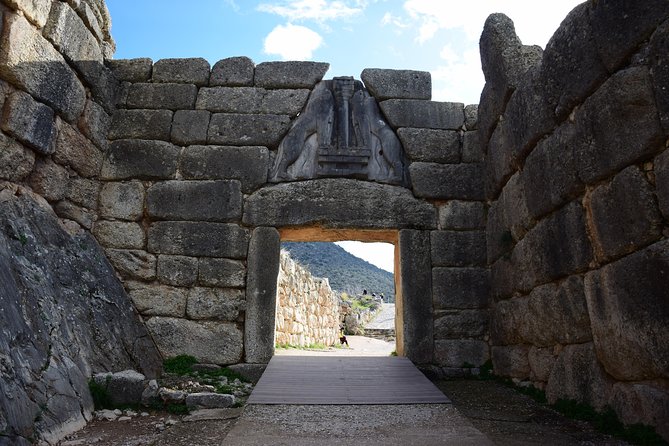
Then you move to Mycenae, a UNESCO-protected site. Mycenae evokes the era of Achilles, Agamemnon, and Helen of Troy. You walk cyclopean walls, visit the burial circle A, and see remains tied to Agamemnon’s palace. Time here is about an hour, enough for an intentional first visit without feeling like you’re sprinting.
You also stop at Lion Gate, described as the oldest architectural sculpture in Europe. Even for a quick look, it is the kind of feature that makes you stop talking and just stare.
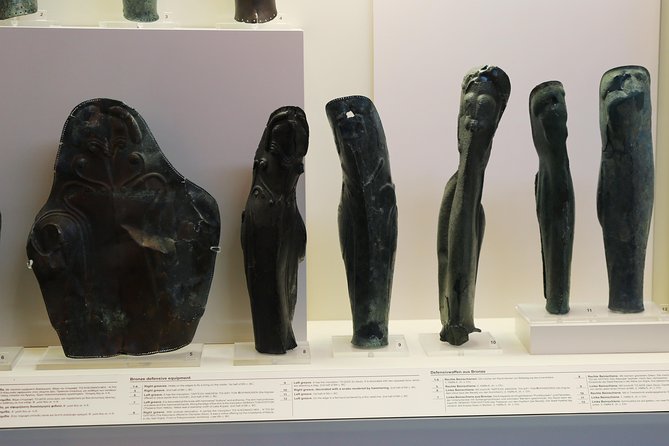
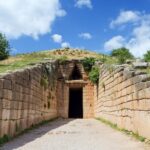
You then visit the Archaeological Museum of Ancient Mycenae, described as a modern museum displaying findings from the City of Gold. After that, there is a short stop at the Treasury of Atreus, one of the best preserved tholos tombs and a fine example of Mycenaean architecture.
Tiryns follows, another Mycenaean archaeological site tied to Heracles and the Twelve Labors. It is a good pairing with Mycenae because it reinforces the broader world of Mycenaean heroes, not just one citadel.
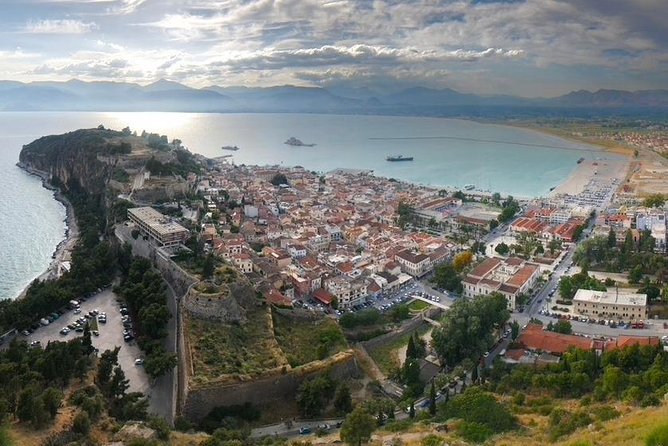
The day shifts into newer Greek history with Nafplio. This city is described as the most scenic in the region and served as the capital until 1834. You’ll walk through old town streets with Venetian, neoclassical, and oriental elements, plus fortresses and castles like Palamidi and Bourtzi. You also get harbor views over the Aegean.
Lunch is planned at a traditional tavern by the sea, and then you overnight in Nafplio. You also have a stop at Acronauplia for panoramic views. Bourtzi is a little islet fortress in the big harbor opening to the Aegean, and it’s mentioned as part of the sight line.
That overnight matters. If you were only passing through Nafplio, you would miss how the city changes when it cools down. With an overnight, your day is not just driving and ruins.
Day 5: Asklepios Healing Sanctuary, Epidaurus Theater, and Ancient Corinth
Day 5 begins with the Sanctuary of Asklepios, dedicated to Asclepius, the god of healing and medicine. It is set across a hilly area, and that helps it feel different from the earlier citadels. Even in a short visit, you get a sense of how spiritual care was built into ancient landscapes and daily life.
Then you go to the Ancient Theatre of Epidaurus, famous for being among the best preserved ancient Greek theaters, dated to the 4th century BC. You spend about 30 minutes here, including time to test acoustics. The description encourages you to climb toward the upper seats and close your eyes, as if you were at a tragedy. It’s one of those experiences where you realize why ancient architects cared so much about sound.
Next, you stop at Akrokorinthos, the hilltop castle described as the oldest and largest castle in southern Greece. It is a quick photo stop, but the photo stop is worth it because it gives you context before you enter Corinth proper.
Ancient Corinth follows. This includes the Roman Agora of Corinth, the Temple of Apollo, and a small museum. It is also tied to Christianity in addition to Greek religious traditions. The account notes that Apostle Paul preached Christianity here, was judged by the tribunal in the Agora, and helped establish a best organized Christian church of that period.
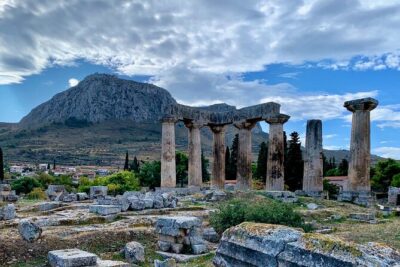
Finally, you reach the Temple of Apollo at Corinth, described as an early Doric temple built around 560 BC, made from local monolithic limestone, and perched on a rocky hill north of Acrocorinth. It is a fitting closing act after Epidaurus and Asklepios, because you end the trip with another kind of ancient belief system.
At the end of the day, you drive back to Athens.
Price and Value: What You Get for $1,735.23 Per Person
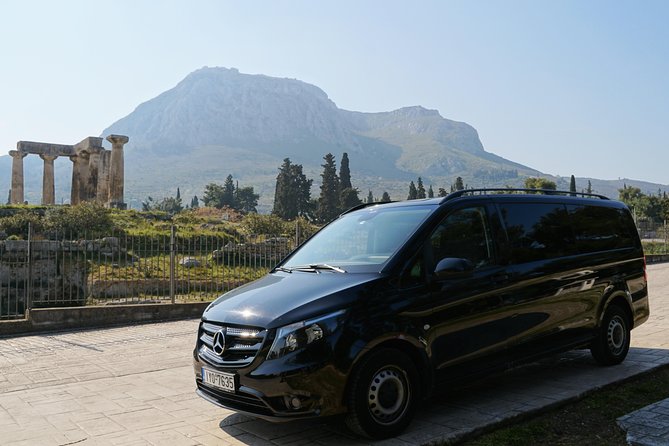
At $1,735.23 per person for a 5-day private experience, you’re paying for convenience and time, not just ticketed sightseeing. Private transportation, pickup and drop-off, bottled water, and accommodation with breakfast based on your booking are all part of what you’re buying.
The best value angle is that you are not planning the route, calling taxis between far-flung ruins, or guessing driving times. On a trip like this, that planning can eat days. Here, the structure is handled.
The main cost variable you should plan for is entrance fees, since those are not included. Also, if you want a licensed guide inside sites and museums, that becomes an additional cost. The tour does offer the option, and that can be worth it if you love commentary and want someone authorized to lead you through indoor collections.
One more value point: the tour can be customized by request, and the company has a track record of building itineraries around what you actually want. A previous experience with Olive Sea Travel included major itinerary changes, and the organizer named Dimitra was praised for helping shape holidays based on dreams. If you have strong preferences, it is worth asking early.
What to Pack and How to Tour Smart on Long Ancient Days
You’ll be doing lots of walking, and some parts are uneven, especially in citadel areas. Wear comfortable shoes with grip, bring a hat, and use sunscreen. If you get car-sick, consider sitting toward the front and staying hydrated.
Since entrance fees are not included, bring payment options that work on-site. Some places can be strict about hours and payment types. A good habit is to carry a small amount of cash alongside your card.
Also think about how you like learning. If you want mostly self-guided walking, the driver’s context may be enough. If you want in-depth explanations inside museums, budget for a licensed guide upgrade.
Who This Tour Fits Best (and who might want something else)
This tour is a strong match if you want to see a lot of southern Greece without planning, and you prefer private pacing over group bus schedules. It is especially good if you like variety: classical sites like Olympia and Mycenae, medieval layers in Mystras and Monemvasia, and then modern Greek charm in Nafplio.
It may be less ideal if you want unbroken time with one deep specialist guide for every stop, because drivers are not licensed to escort you inside sites. Still, you can address that by adding licensed guidance.
If you are traveling as a couple, friends, or a small family group and you want a safe, comfortable vehicle plus a clear route, this is designed for you.
Should You Book This Private Ancient Cities Tour?
I’d book it if you want the Peloponnese highlights with less stress and more structure. The mix of Olympia, Mystras, Monemvasia, Mycenae, Nafplio, Epidaurus, and Corinth gives you both famous ruins and the kind of places that feel like you discovered them on your own.
Do it with eyes open if you hate paying extra for entrances, or if you need licensed interpretation at every stop. In that case, plan your budget for entrance fees and consider arranging a licensed guide upgrade.
If you want a trip that feels organized but not rigid, start here and then ask for sensible adjustments early.
FAQ
What time does the tour start?
The tour starts at 8:00 am.
Is pickup and drop-off included?
Yes. The tour includes hotel or AirBnb pickup and drop-off, and it also mentions port pickup and drop-off.
Is this a private tour?
Yes. It is private, and only your group participates.
Are entrance fees included?
No. Entrance fees are not included.
Are licensed guides included with the tour?
A licensed tour guide is not included by default. You can upgrade and hire a licensed guide on request for additional cost.
Is accommodation and breakfast included?
Accommodation and breakfast are included according to your booking.
Do I get a mobile ticket?
Yes. The tour includes a mobile ticket.
More Private Tours in Athens


More Tours in Athens


More Tour Reviews in Athens
- All Day Cruise -3 Islands to Agistri,Moni, Aegina with lunch and drinks included
★ 5.0 · 4,958 reviews


Not for you? Here's more nearby things to do in Athens we have reviewed






5-Day Experiences, compared.
 ★ 5.05-Day Best of Peloponnese Private Tour: Nafplio/Olympia/Mycenae/Epidaurus/moreFrom $3,49636 reviews
 ★ 5.05 Day Mykonos & Santorini TripFrom $2,39116 reviews
 ★ 5.05-Day Ancient Greece & Zakynthos Turtle Island TourFrom $2,99212 reviews
 ★ 4.55-Day Tour in Mykonos & Santorini Sun & SeaFrom $1,87511 reviews
 ★ 5.05-Day Best of: Nafplio Mycenae Epidaurus Olympia Zakynthos island Delphi MeteoraFrom $3,5586 reviews
 ★ 4.05 Day Tour in Delphi, Meteora, Santorini, Mykonos and DelosFrom $1,6376 reviews
 ★ 5.0BEST 5-Day CLASSICAL GREECE Corinth Olympia Delphi Meteora & MoreFrom $2,9133 reviews
Browse the lists this tour appears in