
Reviewed · DELPHI DAY TRIPS FROM ATHENS
9-Day Ultimate Greek Experience: Peloponnese, Delphi, Zagori, Meteora, Vergina
Nine days, five regions, one Greece lesson. This is the kind of trip that leans into real Greece instead of just checklist sightseeing, with a private, flexible flow from the Peloponnese to Delphi, Zagori, Meteora, and Vergina. You get boutique-style overnights, lots of time in the evening, and a route that balances famous sites with mountain villages that feel lived-in.
What I like most is the way meals are handled. Breakfast and lunch are included each day, and the lunches are not afterthoughts. Second, the itinerary mixes world-famous anchors like Delphi and Meteora with places that most people skip, like Mani, Diros caves, and the rock pools and stone villages of Zagori.
One consideration: entrance fees add up, since most site tickets are not included, and some days involve a lot of driving plus moderate walking. If you want a totally fee-free, low-effort tour, you may want to budget extra time and money for tickets, especially for the caves, trains, and major museums.
Key takeaways before you commit
• Private and flexible routing, designed to bend around your pace
• Included breakfast and lunch at good places, a true value booster
• Big sites plus mountain Greece, from Delphi to Zagorochoria
• Iconic views with fewer crowds when the timing works out
• Boutique hotel focus, plus hotel breakfasts that start the day right
Price and what you actually get for $6,466.93
This tour costs $6,466.93 per person and that number will feel steep until you look at what’s wrapped into the package.
You’re paying for a fully private experience (only your group), with hotel pickup and drop-off, new vehicles (2021 to 2023), bottled water in the car, and an information booklet for the sites. The big money saver is that breakfast and lunch are included for 9 days, and meals often make or break a long road trip.
Here’s what is not included: entrance fees, dinners, and personal expenses. Also, a professional licensed guide is optional. In other words, you’re still responsible for tickets at places like Delphi, museums, monasteries, caves, and any optional add-ons.
So what’s the value angle? If you compare this to renting a car plus trying to park and book your own timing for major sites while also chasing good lunch stops, the cost starts to look more reasonable. If you hate logistical work and you want the day to run cleanly, this pricing fits that goal.
You can also read our reviews of more tours and experiences in Athens.


Entering the Peloponnese classics: Corinth, Mycenae, Nafplio, Epidaurus
Day 1 is a strong landing into the Greek past, with a classic sequence: Corinth Canal, Mycenae, Nafplio, Palamidi (optional), Epidaurus, and Ancient Corinth (optional).
Corinth Canal is quick but visually satisfying, because it connects the Gulf of Corinth and the Saronic Gulf, cutting through the Isthmus of Corinth. Even if you do it in 15 minutes, it’s a helpful “spatial lesson” in how the Peloponnese feels like a separate world.
Mycenae is the heavyweight. You get 1 hour 30 minutes, and it’s the home of King Agamemnon and the Mycenean civilization. This is one of those sites where time matters. If you rush, you miss the scale and the story in the stones.
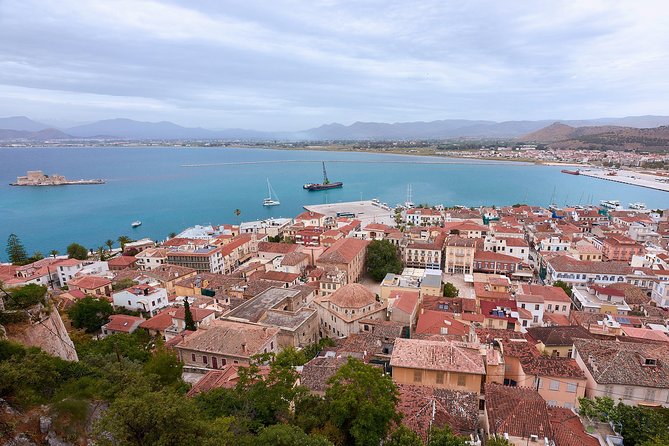
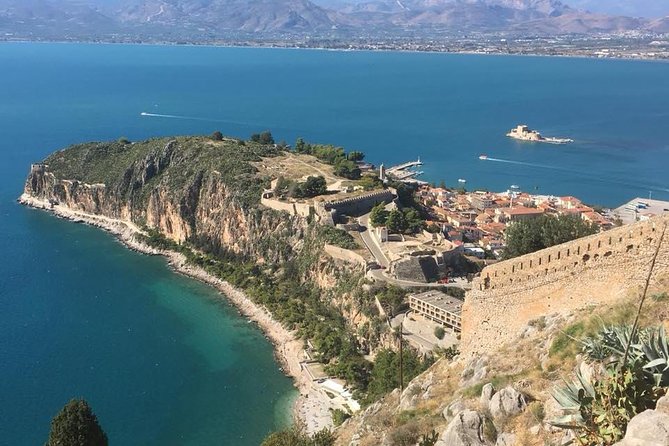
Nafplio is where the trip softens into charm. You get about an hour, and the goal here is simple: get your bearings in one of the most scenic towns in the area of Argolis. Add Palamidi Castle if your legs are ready. The tour notes a walk down the 999 steps, and even if you do it partly, the views over Nafplio are the payoff.
Epidaurus is about the theater, and its reputation is earned. The ancient theatre is known for its acoustics, and you get 1 hour. Ancient Corinth is listed as optional later, and it’s a nice add if you want a little extra Paul-related context (Saint Paul is part of the area’s story).
Possible drawback for Day 1: it’s historically packed early, so if you’re jet-lagged, prioritize Epidaurus and Mycenae. You can treat some optional stops as “nice if you feel good,” not must-dos.
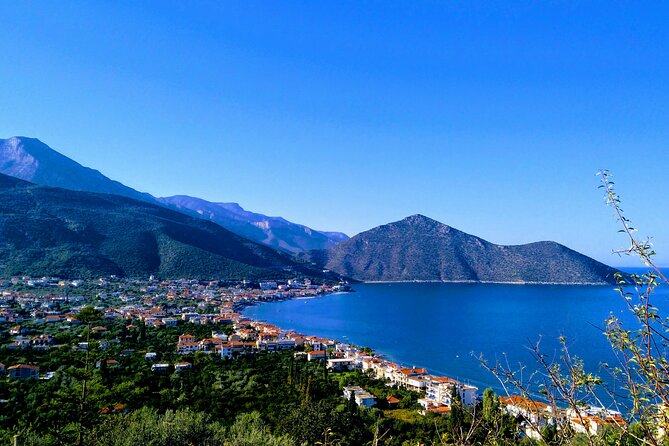
Monemvasia and the Parnon coast, a medieval castle town by the sea
Day 2 leans into coastline and cliffside monasteries before you hit one of the most unusual places in Greece: Monemvasia.
The day starts at Tyros with a coffee next to the ocean, then climbs up the Parnon mountain range. This is a smart early rhythm. You ease into the day, then you gain elevation, so the scenery keeps changing.
Monastery of Panagia Elona is described as cliff-hanging. In practice, that means you should be prepared for a short stop that feels like a snapshot, not a long museum visit. Then comes a scenic coastline section after leaving Nafplio, plus Greek coffee by the water and lunch in mountain villages around the Kosmas area. The tour structure signals that lunch is not just “food,” it’s part of the travel experience.
Monemvasia is the main event, with a massive time block listed (15 hours). That’s a clue you’ll have more than a quick look. Monemvasia is a castle town built into and on the back side of a sea rock, and in medieval times it was carved and built into that dramatic setting. If you love places that feel like time travel, this is a highlight.
One practical note: with a long day there, wear shoes you trust and plan for heat. If you want a calmer pace, tell your driver early so your time in Monemvasia tilts toward slow wandering rather than checking every view platform.
Mani, Diros caves, and Mistra, when Greece turns wild and Byzantine
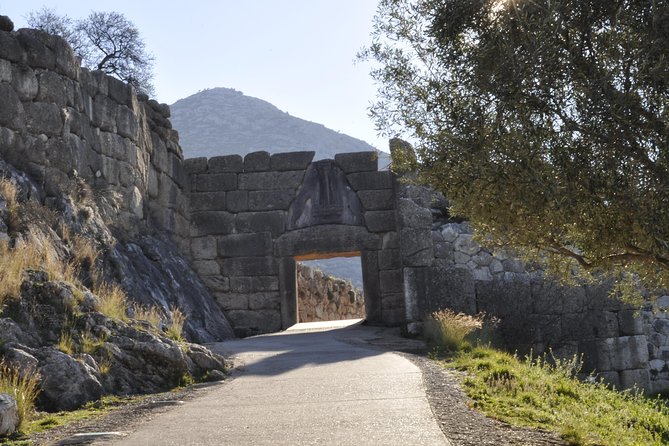
Day 3 goes for raw beauty and fortress-town atmosphere: Mani Peninsula, Caves of Diros (boat), Areopoli, and Mystra (Mistra).
Mani Peninsula is described as wild and beautiful, and that’s exactly how it feels when you’re driving through it. This is not the most polished postcard route, which is why it can be the most memorable.
Caves of Diros are a guided boat experience. The tour emphasizes the variety of rock formations and the way the cave lighting is handled to help you see the formations rather than just “spotlights in the dark.” You get 1 hour. If you’re even mildly claustrophobic, know that caves can be tight, but a boat format generally keeps things manageable.
Areopoli is a typical stone-built town with pirates as a historical threat. It’s listed with 1 hour, and it works as a cultural breather between dramatic landscape stops.
Then Mystra takes over. The Archaeological Site of Mystra is a Byzantine castletown above Sparta with views over Lakonic olive groves. You get 1 hour 20 minutes, and you’ll likely spend part of that simply looking out. Mystra is one of those “buildings plus views” places, and it tends to reward slower wandering.
Olympia plus Arcadia options: choosing your pace in Antiquityland
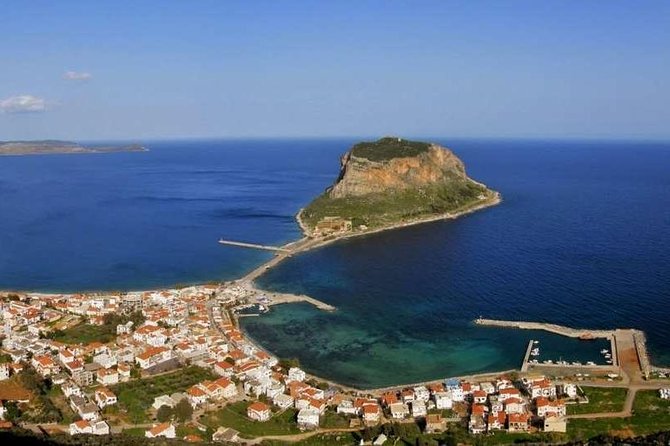
Day 4 starts with Ancient Olympia after breakfast at one of the best hotels on the tour. Ancient Olympia hosted the original Olympic Games founded in the 8th century BC. You get 2 hours and the ruins cover athletic training areas, a stadium, and temples dedicated to Hera and Zeus.
Olympia is often crowded in high season. The timing and the private format can help, but the bigger truth is that the site is extensive. Two hours is a good window if you like history but also want time to look up and around.
Messene is next as an option. Ancient Messene is presented as highly important in size, form, and preservation, with religious and public buildings plus fortifications and funerary monuments. The tour gives you 1 hour 20 minutes if you choose it. If you want a more “Roman-style strong walls” vibe rather than Olympia’s worship-and-games feel, Messene can be your better match.
Dimitsana is also optional and tied to an extra night in Arcadia mountain villages. The tour explicitly frames this as a good move if you want to slow down halfway through. It’s the rare itinerary that acknowledges you might want an extra day to breathe.
If you tend to get museum fatigue, keep the optional choices limited. If you love ancient stone cities, picking Messene or the Arcadia overnight can make your trip feel less like a race and more like a story.
- All Day Cruise -3 Islands to Agistri,Moni, Aegina with lunch and drinks included
★ 5.0 · 4,958 reviews
From caves and trains to Delphi: the long Greece road that still feels fun
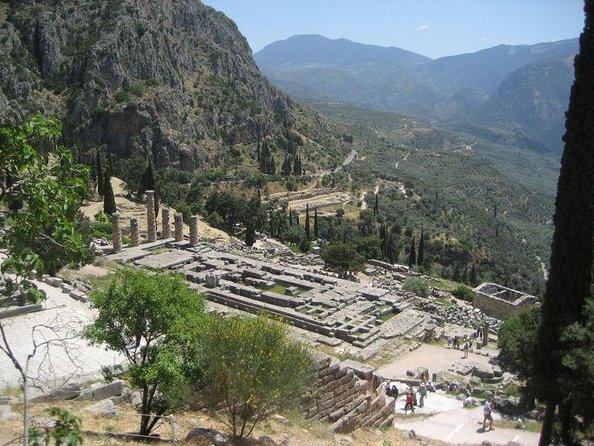
Day 5 is a full day of contrasts: Kastria Cave of the Lakes, Odontotos Rack Railway, Rio-Antirrio Bridge, then the Delphi museum.
The Kastria Cave of the Lakes visit is a guided cave experience with a “mythical” feel. You get 1 hour. The tour notes that this cave has something unique compared to other well-known caves, with mysterious galleries and strange stalactite formations. Practically, caves make a great mid-trip reset because you’re not just staring at ruins.
Then you ride the Odontotos rack railway from Diakopto to Kalavrita through bridges and tunnels. The train ride is 1 hour, and the tour calls attention to how the railway fits the ecosystem by using local stone and wood and not straining the gorge. If you’re the type who thinks trains are boring, this one can surprise you because the route is built into the gorge drama.
Lunch comes before the train ride, and the tour calls this one of the best lunches of the trip. That matters, because the train works best when you’re energized and comfortable.
Rio-Antirrio Bridge is a quick crossing on the way to Delphi. It’s one of the world’s longest multi-span cable-stayed bridges and described as the longest of the fully suspended type. It’s listed as only 10 minutes, but even at speed, it gives you a sense of scale for the region.
Delphi Archaeological Museum is the final stop, with 1 hour 30 minutes. You see collections tied to the Delphic sanctuary, the oracle, and famous sculpture pieces like the Charioteer and the Sphinx of the Naxians. This is a good move because museum time helps you understand what you’ll see outdoors the next morning, even if your itinerary later focuses on Meteora.
Ioannina and Lake Pamvotis: the quieter northwestern stop that changes the mood
Day 6 moves north toward Ioannina, with breaks built in so you’re not just “in the van” the whole time. The tour frames this day as long, but with coffee breaks and leg stretching at multiple points.
Ioannina City is the “jewel” of northwestern Greece in the tour description. You get 2 hours, plus time for the lake atmosphere. Ioannina Castle is then visited for about an hour, with Ali Pasha legends, narrow castle district streets, and the lake in the background.
There’s also a short stop at the Silversmithing Museum focused on pre-industrial techniques and local silver history. It’s only 20 minutes, but in a trip full of monumental sites, a small craft museum can be a relief. It’s also practical if you prefer your culture stops to be human scale.
Lake Pamvotis rounds out the day with 1 hour. The lake island (Pamvotida) plus viewpoints let you experience Epirus from the water and the hills rather than the ruins.
If you’re trying to photograph, bring something for shade. Even if weather is mild, lake light can be harsh.
Zagorohoria village hopping, from rock pools to Stone Forest
Day 7 is the Zagori day, and it’s built like a hiking-and-stops sampler. You start from Ioannina, drive to western Zagorochoria, and then move village to village.
Zagorohoria villages like Aristi, Megalo Papigo, and Mikro Papigo sit under the Astraka cliff. The tour mentions 2 hours in the approach zone, then a stop chance by the Voidomatis river at the Aristi bridge.
Papingo Rock Pools (Kolymbithres) is your hiking-lite stop: a small canyon cut by the Rogovo river. Some pools are deep enough to dive into, so if you plan to wade, bring water-friendly shoes and accept that your day can turn into a light adventure.
Mikro Papigko is listed for 1 hour, amphitheatrically built on Mt Timfy slopes, with cobblestone alleys and Zagorian architecture. You also visit Monodendri for 30 minutes at about 1,060 meters altitude, with stone houses and cobbled roads. The Rizario Centre of Handicrafts is mentioned there, operating with traditional embroidery and weaving.
Then comes the Stone Forest area, where limestone looks carved into tree shapes. The tour notes it as a viewpoint spot for the Vikos Gorge. Finally, the itinerary adds optional village exploration on stone bridges, plus Dilofo as optional.
The way this day is designed is smart for value. You’re not spending the whole day walking a single trail. You get several short “scene changes,” which keeps fatigue down while still giving you variety.
Possible drawback: this day is scenic, but it can feel rushed if you like long photo pauses. If you want more unstructured time, tell your driver early that you prefer fewer stops with longer breaks.
Vergina’s royal tombs and Meteora’s monasteries, then Thermopylae to finish
Day 8 and Day 9 are about Macedonia-to-Meteora to Sparta area gravity.
Metsovo is your first stop on Day 8, a mountain village between Ioannina and Meteora. It’s tree-shaded and known for cheeses, with a lively central square for coffee. You get 30 minutes. Think of Metsovo as a breathing checkpoint where you can reset your eyes after the mountains of Epirus.
Vergina follows with the Museum of the Royal Tombs of Aigai (Vergina). The museum is 1 hour, and the tour frames the thrill around the discovery of King Philip II’s tomb findings, Alexander’s father. This is one of those stops where you can feel “this matters,” because the museum context turns random ancient objects into a coherent story.
Then you continue toward Meteora with a possible first visit late afternoon if time allows. It’s 30 minutes listed for the Meteora drive and possible check-in sightseeing.
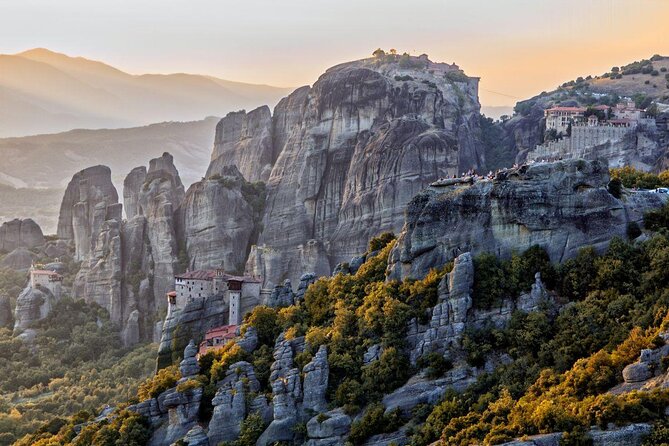
Day 9 is full Meteora monastery time: Great Meteoron (1 hour), Varlaam (40 minutes), and the Holy Trinity monastery (45 minutes). These are the major names, and the driving point here is scale. Meteora’s monasteries sit on gigantic rocks over Kalampaka, and the rocks dominate the skyline for a reason. You’ll be walking uneven stone and climbing steps, so good shoes matter.
After Meteora, Thermopylae closes the loop. You get a short break at the battlefield location with King Leonidas’ statue for 15 minutes. It’s brief, but it’s a fitting end cap to a trip that started with ancient power centers.
The itinerary also lists an optional Pelion addition after Meteora, framed as lush, lush with streams and rivers, and a balcony view over the Aegean Sea. But Pelion is only an option, not part of the core 9-day run.
Then you return to Athens, with drop-off at Syntagma Square around 5 pm. There’s also an option to be dropped at a cruise ship or the airport.
Food, hotels, and why this tour feels smoother than self-planning
The included breakfast and lunch are not just perks. They change the shape of a road trip.
When lunch is built into the schedule, you avoid the “find something decent while driving” problem. It also means you’re more likely to eat local, sit down, and keep energy stable for the afternoon. The tour specifically calls lunches a highlight, and the hotel breakfasts are called a standout too.
The accommodation is described as top quality and “top-class locations and hotels,” which matters more than it sounds on a big route. If you want to experience Monemvasia, Mani, Mistra, and Meteora without feeling like you’re constantly crashing, good lodging is part of the value equation. You also get “take advantage of your evenings” baked into the plan, so you’re not always squeezed into late-night logistics.
Flexibility, communication, and the role of your driver-guide
This is private, personalized, and designed to stay flexible. That’s the part that can feel invisible until you need it.
If the weather turns, or you’re tired earlier than expected, the ability to adjust can save the day. If you care more about one stop than another, you can usually shift priorities. The tour description also mentions special moments that may be planned but not shown in the itinerary.
From prior real-world experiences with this operator, guides like Theo and Nikos have been highlighted for strong communication before travel and for being responsive during the trip. Even if your guide is different, the lesson is the same: the best trips happen when you connect early and clearly about what you want from Greece.
Practical expectations for comfort and timing
This itinerary works best if you’re okay with:
- Moderate physical fitness, since there are walking options like Palamidi steps and monastery visits on Meteora rocks
- Long days of driving, especially when moving from Peloponnese up to Ioannina and then to Meteora
- Paying attention to what’s included versus what has entrance fees, since many of the stops list admission as not included
Also note that a few elements are optional or time-permitting, like Ancient Corinth, Palamidi Castle, Messene, rail and cave admission, and certain village visits around Zagori and Kokkorou bridges. Optional pieces can be great, but they are also where costs and time can shift.
Should you book this 9-day Ultimate Greek Experience?
Book it if you want a private road-trip structure with good hotels, included breakfast and lunch, and enough flexibility to make the day feel like yours. If you like mixing iconic sites (Delphi, Meteora, Olympia, Thermopylae) with less crowded mountain scenery (Zagorohoria) and dramatic Peloponnese landscapes (Mani, Monemvasia), this route makes sense.
Don’t book it if your top priority is minimizing paid tickets and you want minimal walking. Since entrance fees are mostly not included and Meteora involves real steps, it’s better to budget and come prepared.
If you do book, I’d suggest you tell your guide your priorities early: which sites you never want to skip, how you feel about optional add-ons, and whether you want more time in villages or more time at major monuments. That’s where the “flexible” promise turns into a better trip.
FAQ
What time does the tour start, and where does it end?
The tour start time is 8:00 am. You’re expected to be back in Athens around 5 pm, with optional drop-off at a cruise ship or the airport.
Is this tour private?
Yes. It is listed as a private tour/activity, and only your group will participate.
What meals are included?
Breakfast is included 8 times and lunch is included 9 times. Dinners are not included.
Are entrance fees included?
No. Entrance fees to all the sites are not included, and the same goes for dinners and personal expenses.
Do I need a professional licensed guide?
A professional licensed guide is marked as optional. The itinerary can run without that as part of the listing.
Can I cancel for a full refund?
Yes. You can cancel up to 6 days in advance for a full refund, as long as you cancel at least 6 full days before the experience start time. A 50 percent refund is available if you cancel 2 to 6 full days before. Less than 2 days before is not refunded.
More Tour Reviews in Athens
- All Day Cruise -3 Islands to Agistri,Moni, Aegina with lunch and drinks included
★ 5.0 · 4,958 reviews
Not for you? Here's more nearby things to do in Athens we have reviewed




Delphi Day Trips from Athens, compared.
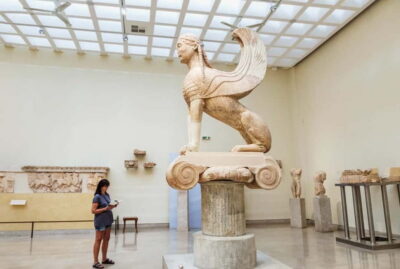 ★ 4.6Mythology of Delphi, Museum and Arachova Guided TourFrom $314,008 reviews
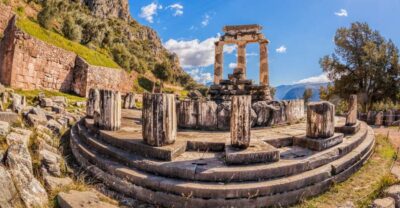 ★ 4.6From Athens: Delphi Full Day V.R. Audio Guided TourFrom $303,028 reviews
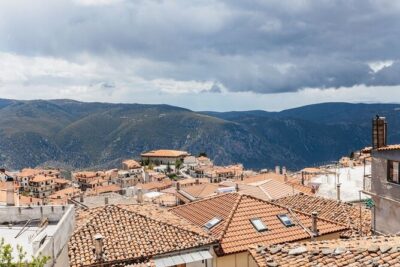 ★ 4.8From Athens: Small-Group Delphi, Museum & Arachova Day TripFrom $342,476 reviews
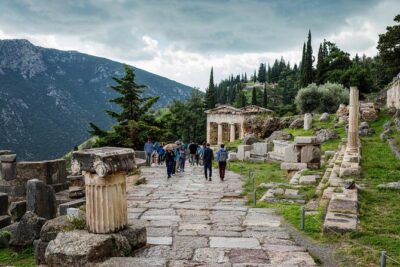 ★ 4.5Delphi English Day Trip from Athens with Official GuideFrom $782,199 reviews
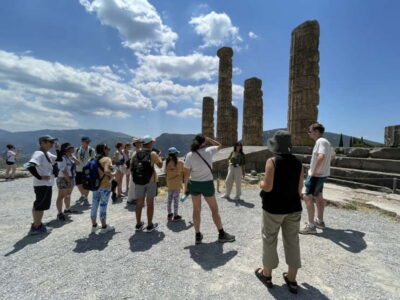 ★ 4.7Delphi Guided Trip with Optional Lunch and EntryFrom $331,553 reviews
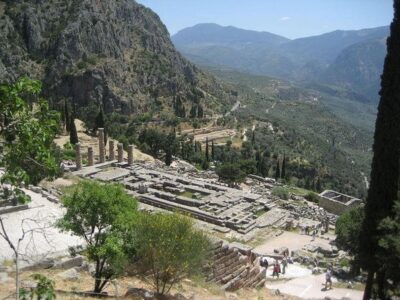 ★ 4.5Historical Delphi One Day Tour with Arachova Stop & Expert GuideFrom $341,247 reviews
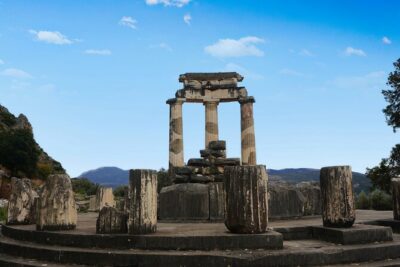 ★ 4.5Premium Delphi Day Trip with an Expert Guide, Museum & LunchFrom $381,100 reviews
 ★ 4.5From Athens: Delphi and Meteora 2-Day Guided TourFrom $271825 reviews
Browse the lists this tour appears in