
Reviewed · 3-DAY EXPERIENCES
3-Day Ancient Greek Archaeological Sites Tour from Athens
Ancient Greece, packed into three days. This carbon-neutral tour strings together the big names Mycenae, Delphi, and Olympia, with a stop at Epidaurus theater that makes you listen instead of just look. I love the way the guide turns myths into clear story points, like Anna and Panos, or Marianna Tsigaridou at Delphi, and I love that you get Oracle of Delphi time with real museum context, not rushed photo stops. The main thing to plan for is a lot of bus time and sun, especially during the midday visits to Olympia and Delphi.
You start by leaving Athens, then work your way through key Peloponnese and central Greek sites, with overnight stays in Olympia and Delphi. Even the stop-and-stretch moments are useful, because the driving covers serious distance, and the itinerary breaks that into manageable chunks. If you want to do all this on your own, it becomes a logistics project fast.
One more practical note: this trip is not for wheelchair users, and you will do plenty of walking on uneven ancient ground. The good news is that many guides actively help you find shade spots while they explain what you are standing in front of.
Key highlights that make this tour worth your time
- Epidaurus theater acoustics: you see the structure and get the story that makes it click
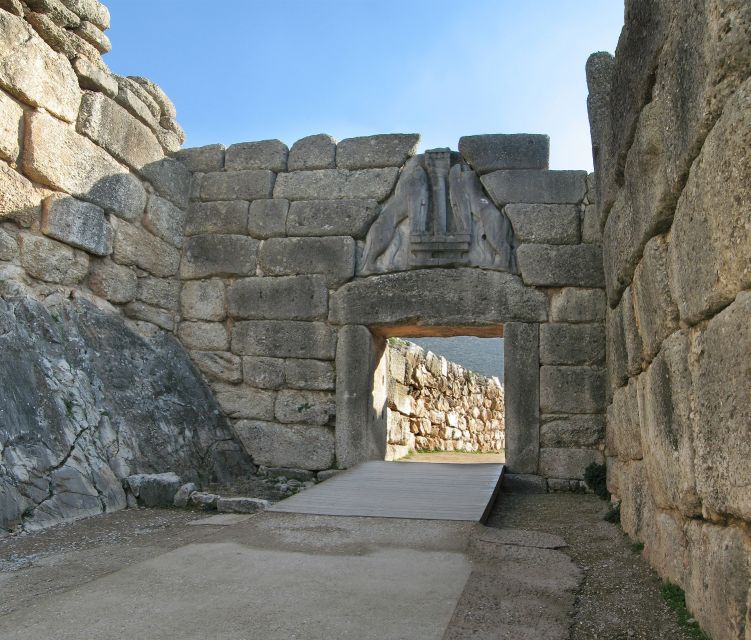
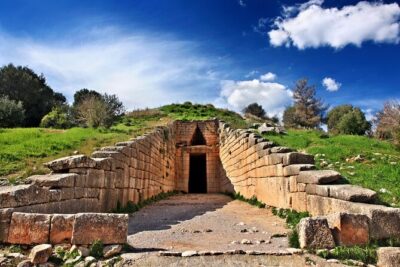
- Mycenae’s citadel and the Tomb of Agamemnon: a strong contrast to Delphi and Olympia
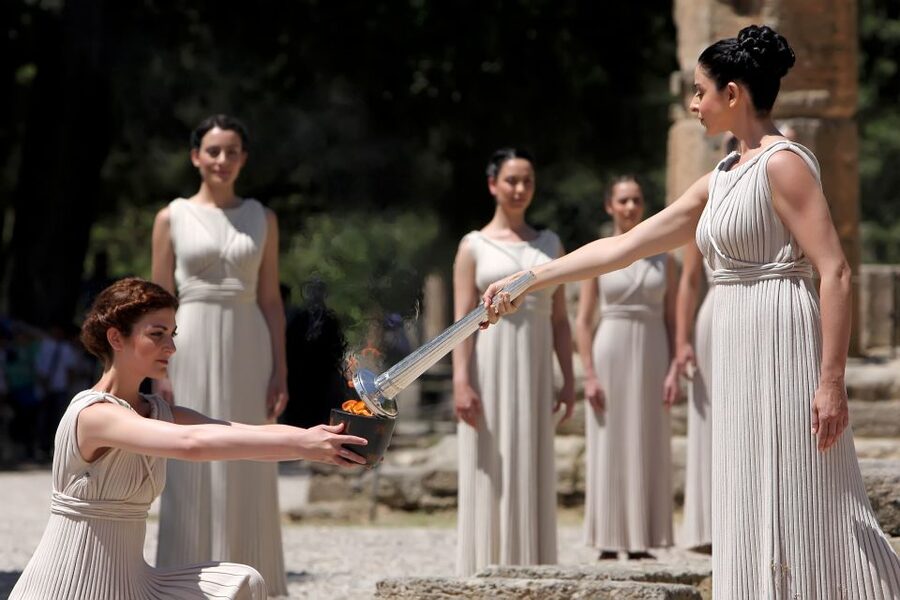
- Olympia on sacred ground: temples, stadium remains, and the altar connected to the Olympic flame
- Delphi with museum support: site views plus an artifacts-heavy archaeological museum visit
- Guides who connect myth and terrain: story-led explanations from guides like Anna, Marianna Tsigaridou, and Dimitris
- Two included dinners plus breakfasts: helps you keep the trip affordable versus paying every meal out
The value question: what you actually get for about $506
At $506 per person for three days, this tour is priced for convenience and structure. You are not just riding a bus and buying tickets at each stop. You get a live English guide, entrance fees, a hotel for two nights (3-star or 4-star depending on your option), and breakfast plus dinner each day you are in your hotel base.
That matters because the real cost of an ancient-sites trip adds up in three buckets. First, you pay guide time and transport. Second, you pay entrance fees across multiple sites and museums. Third, you pay two hotel nights. Lunch is not included, and drinks are not included either, so you should still budget for those daily meals and snacks. But with breakfast and dinner handled, you avoid the classic problem of ending up hungry and overpaying.
And yes, the operator markets the route as carbon-neutral. You should not think of that as a magical invisibility cloak for emissions, but as a practical way to reduce your footprint compared to cobbling together multiple private vehicles and parking hassles.
More Athens tours and experiences for the shortlist

Day 1: Athens to Epidaurus, Nafplion area, Mycenae, then onward to Olympia
This first day is built to set context. You start leaving Athens, then you get a viewpoint stop at the Corinth Canal on the Saronic Gulf. The canal is a modern engineering moment, a useful reminder that Greece is not only marble ruins but also bold construction. Seeing it from the roadside helps it feel real, not like a random roadside photo.
From there, the tour continues to Epidaurus, then to the Nafplion area, and finally to Mycenae. You get some time to walk and look, but the real value is how the guide ties each location to the larger myth-and-history picture. People often underestimate how much that connection changes your experience. Standing in one site without context can make everything feel like disconnected piles of stones. Here, the connections are part of the package.
By evening, you reach Olympia for your overnight stay via stops in Tripolis and Megalopolis. The short breaks are not just to stretch, they also make a difference when you hit the next day’s big archaeological visit.
Corinth Canal and the Nafpaktos harbor break: modern Greece between ruins
Even if your heart is set on ancient sites, the canal and the harbor town stop are smart pacing tools. They break up the drive, and they give your brain a reset before you switch from modern Greece back to classical Greece mode.
If you like small detours that explain why a place matters, you will likely enjoy these moments. One of the joys of this tour style is that it does not treat you like you are only there for the main ticketed attractions. It builds a route you can actually remember.
Epidaurus theater: the “outstanding acoustics” moment
Epidaurus is the day’s special skill test: not with puzzles, with listening. You tour the ancient theater, and the big takeaway is its famous acoustics. The guide helps you imagine how performances traveled through the space, and that turns a steep, stone seating bowl into something functional and alive.
This is also where you learn a practical travel habit for ancient sites. Move slowly. Stop where the guide says to stop. Take in how sightlines and sound relate to the hillside. If you only take quick snapshots, you lose the point.
Nafplion area and Argos plain drive: a geography lesson that pays off later
Driving through the Argos plain and making it into the Nafplion area gives you a better mental map of the region. Delphi and Olympia can feel like they come out of nowhere if you only focus on them. A tour like this helps you connect the dots between where stories happened and how people traveled.
You do not spend all day sightseeing Nafplion itself, but you do get enough time for a stretch and a sense of the setting. That matters because Delphi and Olympia are both on elevated terrain, and understanding the surrounding geography helps you read the ruins with more clarity.
- All Day Cruise -3 Islands to Agistri,Moni, Aegina with lunch and drinks included
★ 5.0 · 4,958 reviews



Mycenae: citadel ruins and the Tomb of Agamemnon
Mycenae is where the tour really shifts from myth-as-talk to myth-as-place. You visit the citadel ruins and the Tomb of Agamemnon, which makes the site feel dramatic, even when much of it is only foundation lines and stone walls.
Mycenae also gives you a useful contrast to Delphi and Olympia. Delphi is tied to oracle worship. Olympia is tied to sacred games and temples. Mycenae, by comparison, feels like power and rule, built for authority and control.
A good guide makes the difference here. In past departures, guides like Christine or Dimitris have been praised for connecting myths to what you can still see on the ground, and for helping the time feel more organized. If you care about understanding rather than just checking boxes, this is one of the stops you should slow down for.
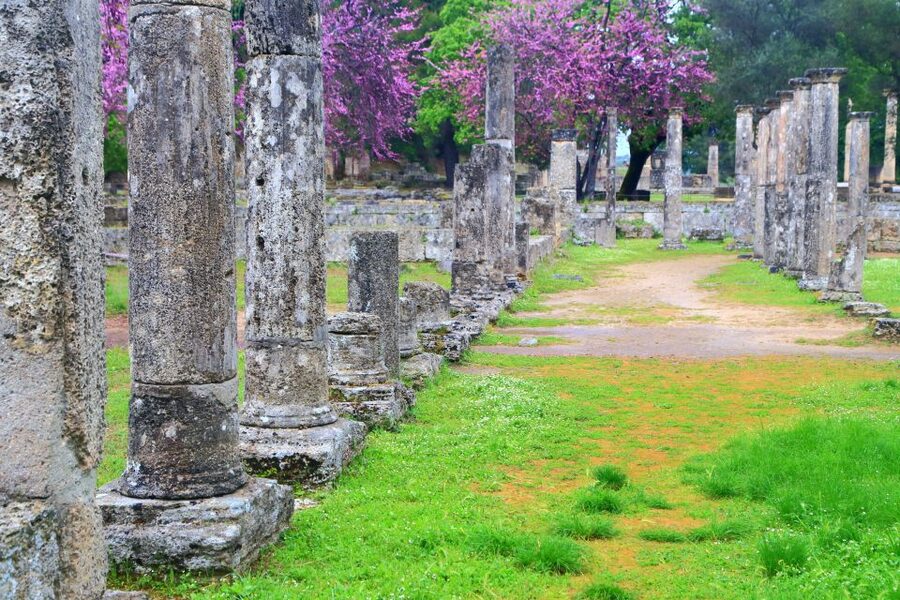
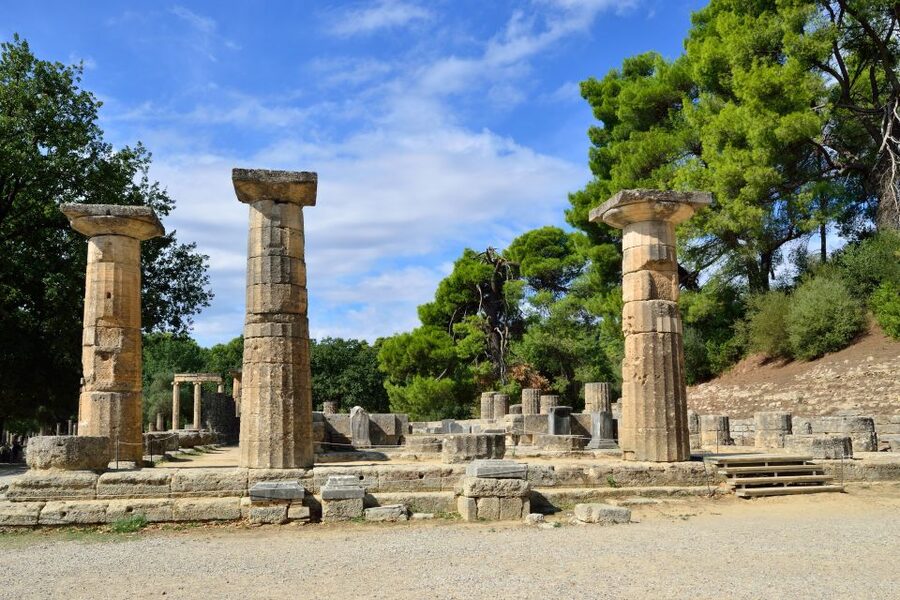
Olympia: temples of Zeus and Hera, stadium remains, and the Olympic flame altar
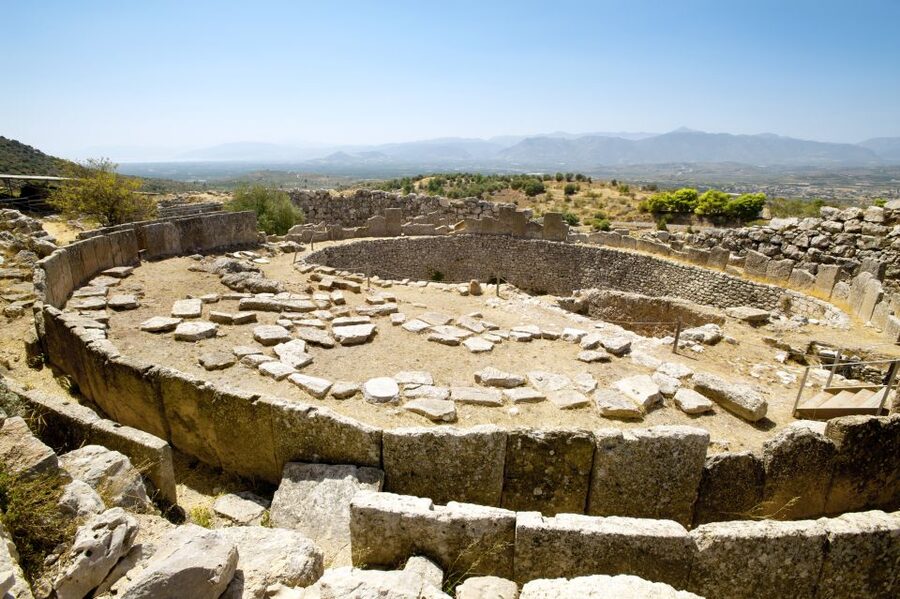
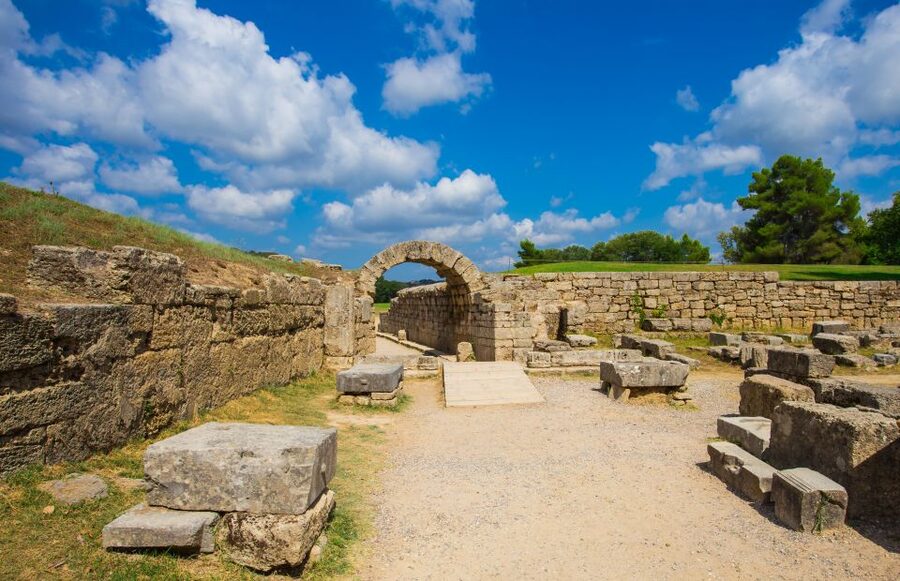
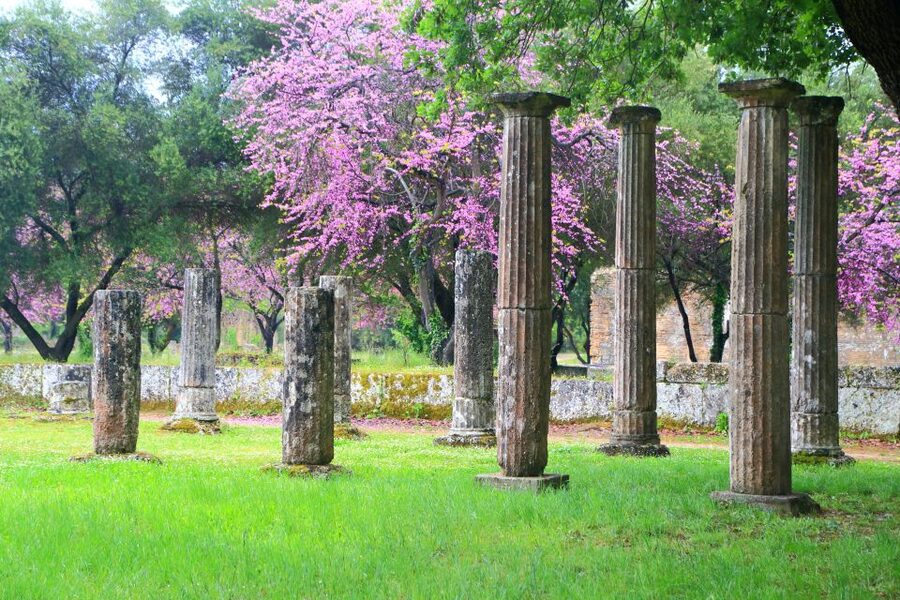
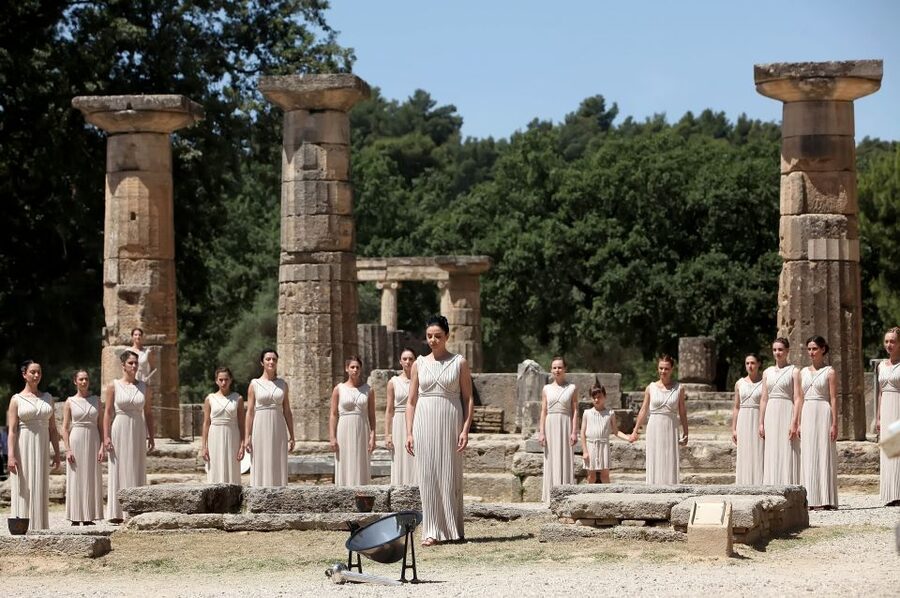
Olympia is classical Greece as ritual. You visit the archaeological remains where the Olympic Games happened in antiquity, and you see Doric columns connected to the Temples of Zeus and Hera. You also walk past the remains of the stadium, which gives you a clear sense of how sports and religion shared space.
One standout moment is the altar of the Olympic flame. It is a modern symbol grounded in an ancient setting, and the guide usually makes the connection easy to grasp. You do not just see a memorial. You understand why it belongs here.
Right across from the ruins, the Archaeological Museum of Olympia adds weight to what you see outside. If you get museum fatigue on other trips, keep an open mind here. Museum time works because Olympia’s main structures are partly ruined, and the artifacts help you rebuild the full picture.
The Antirrio crossing and the drive to Delphi via Nafpaktos
After Olympia, you head toward Delphi. There is a transfer via Rion and crossing the Corinthian Bay to Antirion on the newer bridge. This is a classic “in between” moment, not an ancient monument, but it does help the day’s geography make sense.
The coastal road stop at the harbor city of Nafpaktos adds another gentle reset. You get a change of scenery without wasting your schedule. A good rhythm matters when you are moving between two major sites and an overnight hotel again.
Arachova village in the afternoon: a cooler pacing choice before Delphi night
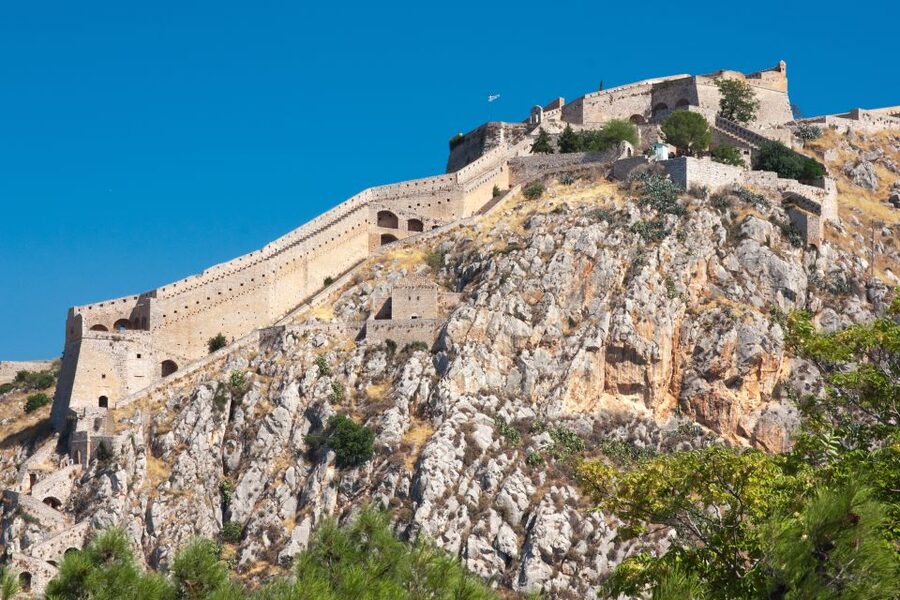
Instead of going straight into Delphi and calling it a day, the tour includes an afternoon visit to Arachova on the slopes of Mount Parnassus. Even if you only take in the village atmosphere briefly, it gives you a human-scale break from ancient stones.
That village stop is also a smart buffer for energy. Delphi is intense once you start walking.
Delphi: Apollo temple, Oracle legends, theater views, and the museum collection
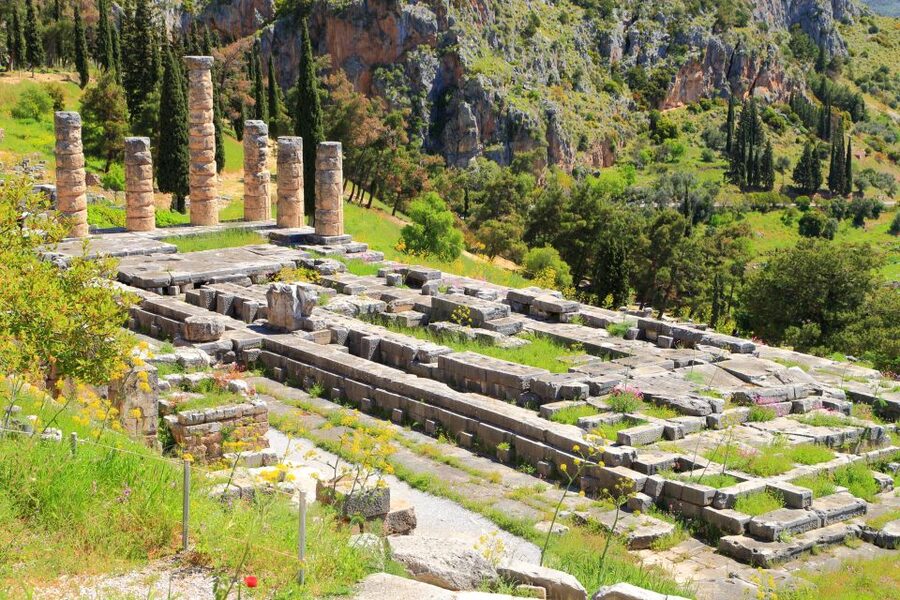
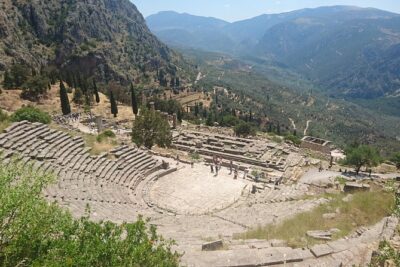
Delphi is often the emotional center of this route. You visit the archaeological site perched on the Parnassus Mountains, in the area tied to the worship of Gaia, or Mother Earth, and the Oracle stories that link it to Apollo. Even if you are not a mythology fanatic, the site layout makes the oracle concept feel logical: you are in a place meant for questions.
You visit the Temple of Apollo and learn about the Oracle of Delphi. Then you continue to the theater, where up to 5,000 spectators watched plays, poetry readings, and festivals. That number is big, but the feeling is more useful than the stat. You get those wide views over the valley and mountains, and the setting explains why Delphi became known as the center of the world.
You also have museum time. The Archaeological Museum of Delphi holds an impressive collection of artifacts tied to ancient Delphi. Museum visits help you understand what you are looking at back in the ruins. And they give you something to do that is not only walking in sun.
Where you sleep and eat: hotels in Olympia and Delphi, and what to expect
You stay two nights, one in Olympia and one in Delphi, in a 3-star or 4-star hotel option. The tour includes breakfast and dinner, so you avoid the daily hunt for a budget meal after long walks.
Quality can vary by location and by what is available. Some departures have been praised for an excellent Olympia hotel and even rooftop dining. Other accounts describe a Delphi hotel that felt more worn. The honest way to think about this is: the route and guide are the core value, while the hotels are part of the package. If you choose a 4-star option, you are stacking the odds in your favor, but it is still not something you should treat like a luxury resort.
Also budget for the hotel accommodation tax. It is paid directly to the hotel: €10 per room per night for 4-star hotels, and €5 per room per night for 3-star hotels.
Heat and pace: how to stay comfortable at Olympia and Delphi
This is a practical itinerary with a practical challenge: walking in summer sun. One strong caution from past groups is that Olympia and Delphi can feel harsh when temperatures are high, with limited shade. That is not a reason to avoid the trip, but it is a reason to pack smart.
Bring a hat, sunglasses, and something for sun protection. Plan on water breaks and follow your guide’s advice on where to pause. Several guides are praised specifically for finding shade spots so you can rest while they keep the story going.
The pace is also not a lazy stroll. You get time to explore on your own after the guided stops, but you should expect a full program. If your ideal day includes long, quiet museum hours and minimal movement, you might find three sites in three days to be a lot. If your ideal day includes seeing the main hits and learning how they connect, you will likely love the format.
Who should book this tour, and who might want a different plan
This trip fits best if you want a structured sampler of classical Greece without wrestling with transit schedules. I think it is a great match for first-time visitors to Athens who want more than one day trip. It also suits people who like mythology but prefer it explained with specific references to what they are seeing on the ground.
It may be less ideal if you need step-free access, since it is not suitable for wheelchair users. It can also feel intense if you get overwhelmed by ruins that are mostly foundations. A strong guide helps a lot here, so choose this kind of tour if you value explanation and museum context.
Should you book this 3-day Athens to Peloponnese and Delphi tour?
Book it if you want maximum classical Greece coverage with one planning headache instead of several. The price makes more sense when you remember what is included: guided interpretation, entrance fees, two hotel nights, and meals (breakfast and dinner).
I would also book it if you care about the story connection. This route works because the guide’s job is not only to point at stones. It is to connect Mycenae, Delphi, and Olympia into one bigger picture of where myths and rituals lived. Past guides like Anna, Marianna Tsigaridou, and Dimitris have been praised for exactly that style of teaching, with clear instructions and good pacing.
Skip it or consider a lighter option if you hate long driving days, struggle with heat, or want a slower pace with more free time at fewer sites. For most people who want an efficient, guided classical Greece immersion, though, this tour is a smart buy.
FAQ
What are the main sites visited on this 3-day tour?
You visit Epidaurus (ancient theater), Mycenae (citadel ruins and the Tomb of Agamemnon), Olympia (temples of Zeus and Hera, stadium remains, and the altar of the Olympic flame), and Delphi (Temple of Apollo, theater, plus the archaeological site and museum). You also pass or stop at places like the Corinth Canal, Tripolis and Megalopolis, and the harbor city of Nafpaktos, with an afternoon visit to Arachova.
What meals are included, and what is not?
Breakfast and dinner are included. Lunch and drinks are not included.
What kind of hotels do you stay in?
You stay in a 3-star or 4-star hotel depending on the option you choose. Hotel accommodation tax is paid directly to the hotel (3-star: €5 per room per night, 4-star: €10 per room per night).
Is pickup from Athens included?
Yes. Free pickup is available from most centrally located hotels in Athens, and it happens about 1 hour before departure time. You can also meet at the tour supplier’s office 15 minutes before departure.
How long is the tour?
The duration is 3 days.
What language is the guide?
The tour is guided in English.
Is this tour suitable for wheelchair users?
No, it is not suitable for wheelchair users.
Do I need to book a single room separately?
Each booking corresponds to a double or triple room. If you want a single room, you need a separate booking for one person only.
Can I cancel and book without paying right away?
Yes. You can cancel up to 24 hours in advance for a full refund. You can also reserve now and pay later.
More 3-Day Experiences in Athens


More Tours in Athens

More Tour Reviews in Athens
- All Day Cruise -3 Islands to Agistri,Moni, Aegina with lunch and drinks included
★ 5.0 · 4,958 reviews
Not for you? Here's more nearby things to do in Athens we have reviewed





3-Day Experiences, compared.
 ★ 4.53-Day Classical Greece Tour: Epidaurus, Mycenae, Nafplion, Olympia, DelphiFrom $520342 reviews
 ★ 4.6From Athens: 3 Days in Meteora & Delphi with Tours & HotelFrom $34197 reviews
 ★ 4.5Meteora & Delphi 3 Days Semi Private TourFrom $34980 reviews
 ★ 5.03 days 2 nights Meteora with small size tours & hotelFrom $16863 reviews
 ★ 4.03-Day Trip to Delphi and Meteora from AthensFrom $48053 reviews
 ★ 4.03 Day Private Tour in Santorini & Mykonos at the Best of CycladesFrom $1,31921 reviews
 ★ 5.0BEST 3-Day CLASSICAL GREECE: Corinth Epidaurus Olympia DelphiFrom $1,73718 reviews
 ★ 4.5Classical Greece 3-Day Tour: Epidaurus, Mycenae, Olympia and Delphi from AthensFrom $51715 reviews
Browse the lists this tour appears in