
Reviewed · PRIVATE
10 Day Private – The Ultimate Ancient Greece Tours Experience
Ten days, one private driver, zero guesswork. This Ancient Greece route connects the big monuments with real towns, so you can enjoy iconic sites without spending every day on buses. You get pickup and private transfers plus smart stop choices that keep the focus on the places that shaped Greece.
I like the private, in-depth driver approach. You ride in comfort (WiFi on board, bottled water, wipes, and fresh handmade Greek biscuits), and your driver can help with practical decisions like where to eat and how to handle busy entrances.
One thing to plan for: site entrance fees and meals are not included, and a licensed guide inside museums and sites is only available as an add-on. It is still a great value for what you cover, but your budget needs to include those extras.
Key moments worth caring about
- One-on-one pacing: it is truly private, just your group, so you can move at your rhythm.
- Meteora at the right time of day: sunset views from the monasteries plus full daytime exploration.
- The Delphi and Olympia one-two: you get both sacred sites, not just a quick photo stop.
- Mani and Monemvasia contrast: castle drama in Monemvasia, then slower sea time in Limeni.
- Epidaurus acoustics experience: theater design meant for hearing, even from the last seats.
- Athens with serious stops: from Kallimarmaro and the National Archaeological Museum to the Acropolis and Parthenon.
What a private Ancient Greece route is actually like
This tour is built around a simple idea: let a driver handle the driving so you can focus on the sites. With a fully private setup, you are not sharing time with strangers or timing your day around another group’s pace.
You also get real comfort for long days. The vehicle is private and luxury-style, and the tour includes WiFi, bottled water, refreshing wipes, and Greek biscuits. Those small touches matter when you are moving between Meteora, Delphi, Olympia, and the Peloponnese, all in a tight 10-day arc.
The big tradeoff is that your driver is not the same as a licensed guide in every museum and site. Entrance fees are also not included, so your budget needs room for tickets. If you want someone walking you through inscriptions and context inside each stop, plan on requesting a licensed guide for select days.
You can also read our reviews of more private tours in Athens


Day 1: Thermopylae first, then Meteora monasteries at sunset
You start with Thermopylae, a place tied to the Persian Wars and King Leonidas. You can walk the monuments, and you also get a museum time option that helps you connect the battlefield to the story. Even if you are not a history buff, Thermopylae is one of those stops where the setting makes the lesson stick.
From there, you drive to Meteora, where the famous monastery complex rises on rock towers above the valley. You spend your first Meteora portion exploring the town of Kalambaka and the village area of Kastraki, then you get a shot at that classic sunset glow.
The practical win on day one is the rhythm. You do not just arrive, sprint, and leave. You get time to settle, browse local shops, and enjoy a traditional taverna meal before you sleep in Kalabaka or Kastraki.
What to watch: Meteora is weather dependent. If skies are clear, the sunset payoff can be huge. If not, you still get monastery views and architecture, but plan to stay flexible with timing.
Day 2: All-day Meteora, then Delphi and Arachova evenings
Day two leans into Meteora with breakfast and visits to the remaining monasteries. This is where the experience changes from scenic to unforgettable, because Meteora is not one view, it is a whole set of viewpoints, churches, courtyards, and cliffside paths. You get another chance to linger with coffees and a traditional taverna lunch.
Then it is off to Delphi, one of Greece’s most important archaeological landscapes tied to the oracle tradition. You check in at your chosen hotel, and the evening is yours. If you like the idea of a mountain town atmosphere, Arachova is offered as an optional dinner stop.
Why Delphi is such a good pivot from Meteora: you move from a monastery story of stone and faith to a sanctuary story of prophecy, sport, and cultural events. The site feels layered, and even a few hours can help you understand why people came here for answers.
Logistics to consider: Delphi can be busy. Skip-the-line tickets are available on request, which can help, but entrance fees are not included, so expect to pay on site.
Day 3: Olympia temples, Hera, Zeus, and the Olympic flame story
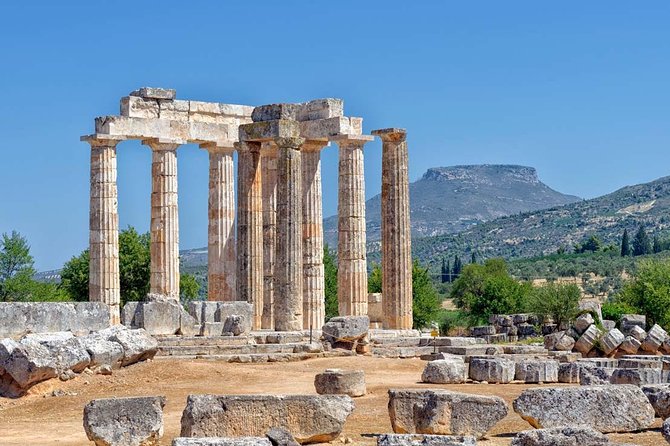
You shift to Olympia, the birthplace of the Olympic Games tradition. The day includes time at the archaeological site and major temple areas, plus a classic highlight tour through the key ruins.
You can see the Temple of Zeus, the Temple of Hera, and the Philippeion. The Philippeion is especially interesting because it is circular and distinctive, not just another rectangular ruin. Even the framing detail around the Olympic flame helps you connect myth and modern ritual.
This is one of the most satisfying days on the trip if you like symbolism. Olympia is not only stone. It is competition, ritual, and the idea that certain places set rules for the wider Greek world.
If you are short on energy after earlier driving days, Olympia is still manageable because you can pace yourself. You can keep it to the big areas and then decide if you want more museum time.
Day 4: Monemvasia Castle, then Limeni for Mani sea nights
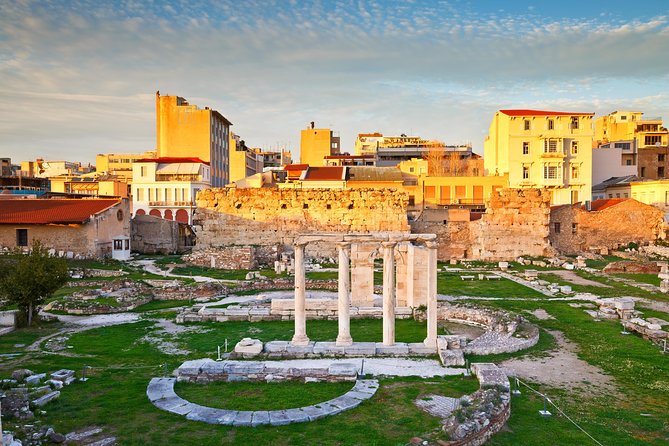
Day four turns the story toward the south, and it does so with a dramatic stop: Monemvasia Castle. You will explore the medieval fortress built on a rock called the Rock, and it has that cinematic feel of a place that was hard to reach and hard to forget.
Within the castle area, you can focus on highlights like the Christos Elkomenos Church and the St. Sofia stop, then step into the everyday rhythm of a medieval town. Lunch is built in with a village-style meal, and the tour includes time to enjoy panoramic views over the sea.
After that, you drive to the Mani peninsula and check in around Limeni. Dinner by the water gives you a totally different pace than Meteora or Delphi. It is not just sightseeing, it is recovery time, with time to enjoy the evening.
What to watch: Monemvasia’s castle areas involve walking on uneven surfaces. Comfortable shoes are worth it, even if you are not a long-distance hiker.
- All Day Cruise -3 Islands to Agistri,Moni, Aegina with lunch and drinks included
★ 5.0 · 4,958 reviews


Day 5: Diros caves and Aeropoli, plus Limeni by the sea
Day five keeps you in the Mani with a mix of nature and small-town texture. Breakfast is in Limeni, and then you get Diros caves time, which shifts the mood from stone cliffs and fortresses to underground formations.
Next comes Aeropoli, giving you a break from pure ruins and a chance to experience the local feel of the region. Then it is back to Limeni for sea and sun at your own pace, followed by dinner at a fish taverna.
This day is valuable because it prevents “ancient Greece overload.” You still get a major attraction, but you also get a chance to decompress and enjoy coastal life.
Planning tip: cave time can be cooler than outdoors. Bring something light just in case, even in warmer seasons.
Day 6: Nafplio, Palamidi 999 steps, and Venetian harbor details
You head to Nafplio, one of the most pleasant bases for combining sightseeing and downtime. The day includes time at Palamidi Castle, which sits on a hill with an eye-catching climb. The popular detail is the 999 steps, and yes, you can choose your level of effort.
You also visit key squares and harbor features such as Freedom Square and Bourtzi, the water castle. The tour frames Nafplio through both history and views, so you get more than just a list of monuments.
This is a strong day if you like cities that feel walkable. You can explore at your own tempo, stop for coffee, and still hit the big fortress and harbor points before evening.
Consideration: if you do not want the climb, you can still enjoy the fortress views and pick the level of walking that feels right for your group.
Day 7: Epidaurus amphitheater, Asclepius sanctuary, Mycenae, and Ancient Nemea
Day seven is one of those intense “major hits” days, and it is packed for a reason. Epidaurus is famous for the amphitheater, including its acoustics. The stop includes the archaeological museum and the sanctuary of Asclepius, the ancient healing retreat.
If you enjoy theater design, Epidaurus is worth your time. The layout is built so sound carries, so it is not just impressive because it looks old. It is impressive because it was meant to work.
From there, you drive to Mycenae, a major Bronze Age site tied to Homer’s world. You can walk to the Lions Gate, see the Royal Palace areas, and explore features like the Grave Circles and Cyclopean Walls made of huge stone blocks. It gives you that “this is what power looked like” feeling.
Then you also get Ancient Nemea, described as a land of vineyards and wines, with the Temple of Zeus and sanctuary bath areas. Even though it is a lot, it connects the dots between sacred sites and athletics.
This day may feel like information overload if you prefer slow travel. But if you love big-name ancient places and you want them all in one concentrated stretch, it is a standout.
Day 8: Acrocorinth, Ancient Corinth, the Corinth Canal, then back to Athens
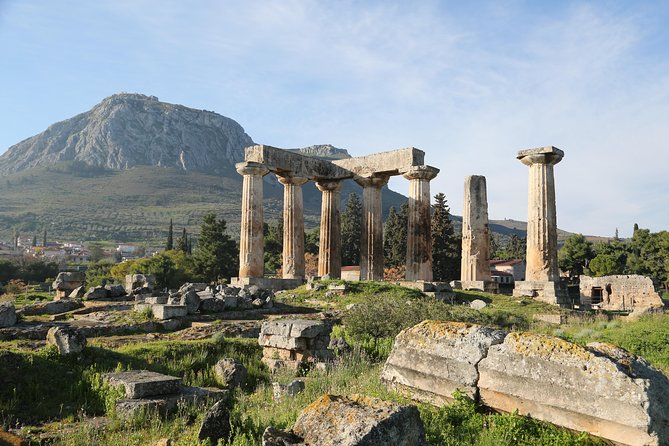
Day eight is where the tour compresses serious Corinth-area history into one day. You start at Acrocorinth, the acropolis dominating ancient Corinth. The fortification system and key features like the Peirene Spring and the traces of the Temple of Aphrodite help you understand why this site controlled the region.
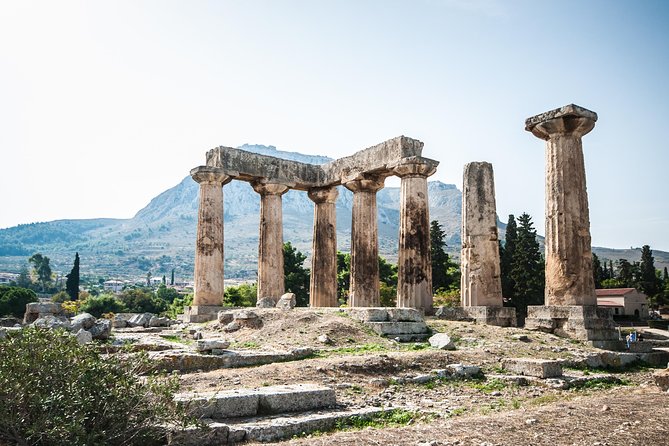
Next is Ancient Corinth, with the archaeological museum and major areas like the Temple of Apollo, the Agora, and the Bema area linked with Apostle Paul. The stop also includes Roman building areas, so you get a sense of how later eras layered over earlier ones.
Then comes the Corinth Canal, one of Greece’s major engineering landmarks. After that, you head back toward Athens, with a lunch by the Saronic Sea near the Baths of Helen of Troy and an optional evening dinner by the Acropolis views.
Why this day works: you get both the hilltop view of power and the street-level archaeology of daily life and worship. It is not just a drive-by.
Consideration: it is a long day with multiple stops, so you will want to keep your pace realistic and take breaks as needed.
Day 9: Athens highlights, from Kallimarmaro to Parthenon and Cape Sounion
Athens day is split into a mix of quick drive-bys and targeted time at major stops. You start with pickup from your hotel area, then you get views of Olympic Zeus by passing the colossal temple area.
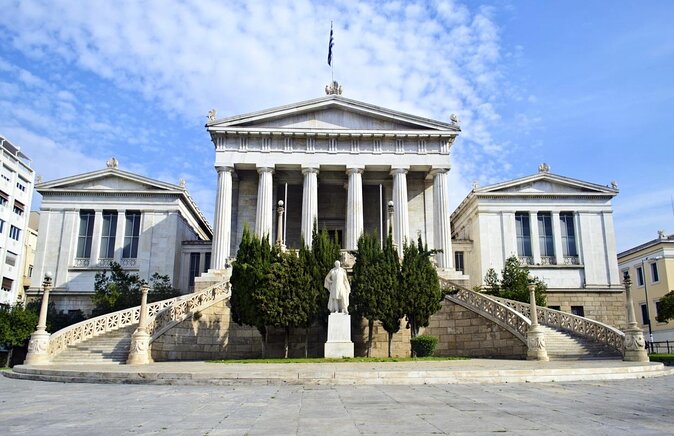
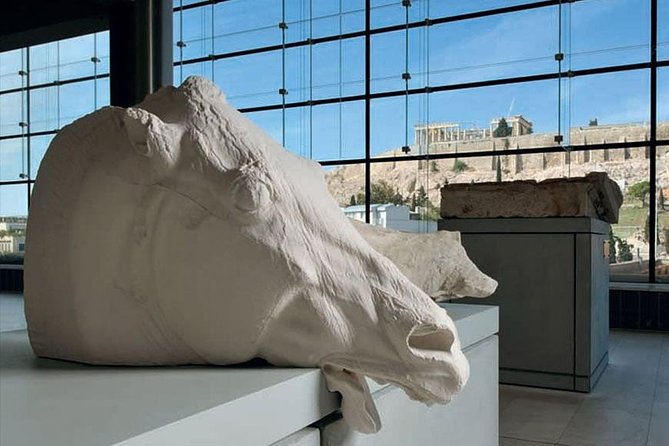
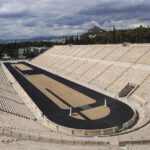
You can also visit the Kallimarmaro Olympic Stadium, built in marble, then head to Mount Lycabettus for panoramic views. After that, you visit the National Archaeological Museum, which is highlighted as a key place for artifacts from around Greece.
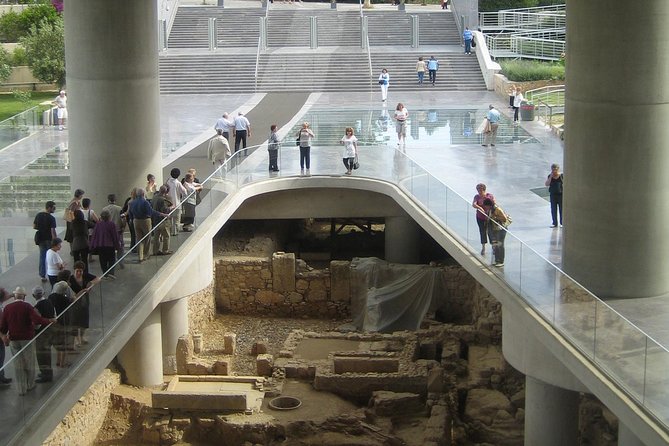
The tour also notes you can choose between the Acropolis Museum and the National Archaeological Museum. Since this is not fully specified as included at the same time, it is worth deciding what your priorities are before you go.
Later you visit the Hellenic Parliament area and see the changing of the guards. Then it is on to neighborhoods: Monastiraki for lunch and Plaka for shopping.
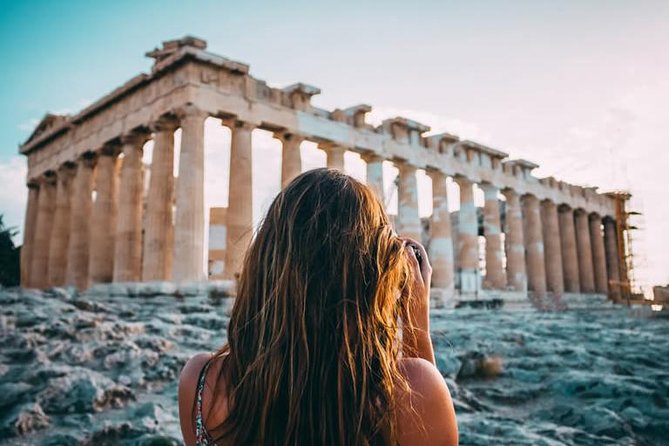
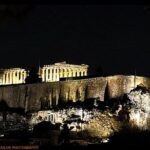
You also get time at the Ancient Agora of Athens and then the big finish at the Acropolis and Parthenon. After that, the day transitions toward the coast with time on the Athens Riviera route, ending with Cape Sounion and the Temple of Poseidon.
The best part of this Athens plan is pacing through variety. You get classical sites, modern ceremony, shopping streets, and then ocean views at Sounion, so the day does not feel like one long museum corridor.
Practical note: Cape Sounion and the Acropolis can both be high-demand. Skip-the-line tickets are on request, so if you care about reducing waiting times, ask ahead and be ready to pay entrance fees on site.
Day 10: Smooth Athens airport transfer day
Your last day is calm and straightforward. You start with breakfast in Athens, then you transfer privately to Athens International Airport for your journey home.
This is the right way to end a land-heavy tour. You avoid the stress of figuring out transport schedules at the finish line.
Because the tour data includes both an airport transfer mention and a note that airport services may cost extra, I recommend you confirm what your exact booking includes for airport pickup and drop-off.
Price and what you should budget beyond the headline cost
The price is $3,758.43 per person for a roughly 10-day private experience. That sounds high until you break down what you actually get: a private luxury vehicle, hotel or port pick-up and drop-off, WiFi, bottled water, wipes, and fresh handmade biscuits, plus a professional driver with in-depth context for the sites.
What you still need to budget for:
- 9 nights accommodation (with an option for hotel reservation upon request)
- Entrance fees for the sites
- Food and drinks (taverna meals are referenced, but meals are not listed as included)
- A licensed tour guide inside sites and museums is available only as an add-on
This is where the value becomes personal. If you prefer to travel with comfort and spend your energy on the sights instead of the driving and logistics, the private format can be a bargain compared to stitching together multiple tours. If you are already booking your own hotels and you are happy with public transport or DIY drive routes, the cost might feel steeper.
Who this private Ancient Greece tour suits best
This tour fits you if you want a “greatest hits” Ancient Greece route without the stress of constant navigation. It is also a good match if you like a mix of famous sites and real regional stops like Kalambaka, Kastraki, Limeni, and Nafplio.
It is especially good for groups that want privacy, such as families or friends traveling together. Because it is fully private and just your group, you can choose how long you stay in each place.
If you hate long travel days or you need a very slow pace, this might feel heavy. The itinerary moves between major anchors like Meteora, Delphi, Olympia, the Mani, and Corinth, then closes in Athens. In that case, you might still enjoy it, but you should be honest with your energy level and ask for pacing adjustments where possible.
Should you book this private Ancient Greece tour?
Book it if you want high-value convenience: private transfers, comfortable ride time, and a route that hits Thermopylae, Meteora, Delphi, Olympia, Mycenae, Epidaurus, Corinth, and Athens without you spending your holiday on planning spreadsheets.
Before you commit, do three quick checks:
- Confirm what your quote includes for airport services on day 10.
- Ask how skip-the-line tickets are requested and applied for the days you care most about.
- Budget for entrance fees, meals, and optional licensed site guiding, so you are not surprised later.
If you like structured adventure with room to breathe, this tour is a strong choice. You’ll come home with the big monuments, plus enough time in coastal and castle towns to feel the Greece beyond the postcards.
More Private Tours in Athens


More Tours in Athens

More Tour Reviews in Athens
- All Day Cruise -3 Islands to Agistri,Moni, Aegina with lunch and drinks included
★ 5.0 · 4,958 reviews
Not for you? Here's more nearby things to do in Athens we have reviewed





Private, compared.
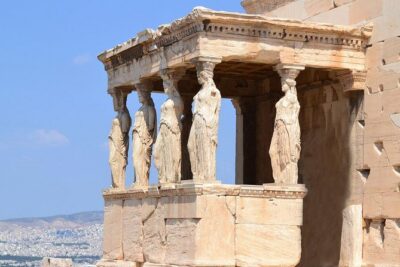 ★ 5.0Best of Athens Half Day Private TourFrom $913,714 reviews
 ★ 5.0Athens Full Day Private TourFrom $2442,903 reviews
 ★ 4.5Athens Airport Private Arrival Transfer with Meet & GreetFrom $491,495 reviews
 ★ 5.0Athens Airport to Athens Hotels Private Arrival TransferFrom $42947 reviews
 ★ 5.0Athens Greece Full Day private tourFrom $683785 reviews
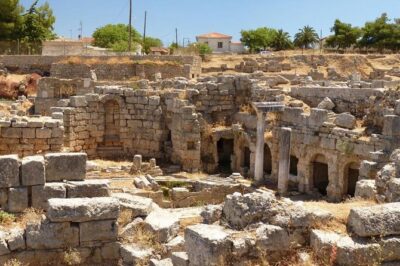 ★ 5.0Private Biblical Tour Ancient Corinth & Isthmus Canal from AthensFrom $301762 reviews
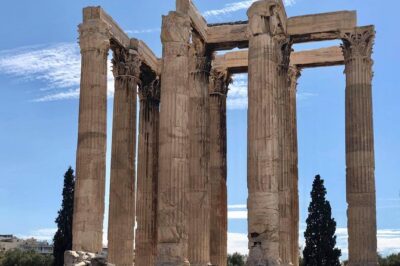 ★ 5.04 Hours – Athens & Acropolis Highlights Private TourFrom $181681 reviews
★ 5.0Athens Full Day Private TourFrom $205667 reviews
★ 5.04 Hours – Athens & Acropolis Highlights Private TourFrom $181681 reviews
★ 5.0Athens Full Day Private TourFrom $205667 reviews